




Custom KYC/AML System for Crypto Exchange – Balanced Compliance

We design and develop full-cycle blockchain solutions: from smart contract architecture to launching DeFi protocols, NFT marketplaces and crypto exchanges. Security audits, tokenomics, integration with existing infrastructure.
Showing 1 of 1All 1305 services
Custom KYC/AML System for Crypto Exchange – Balanced Compliance
Complex
~1-2 weeks
Frequently Asked Questions

Blockchain Development Services

Blockchain Development Stages

Latest works

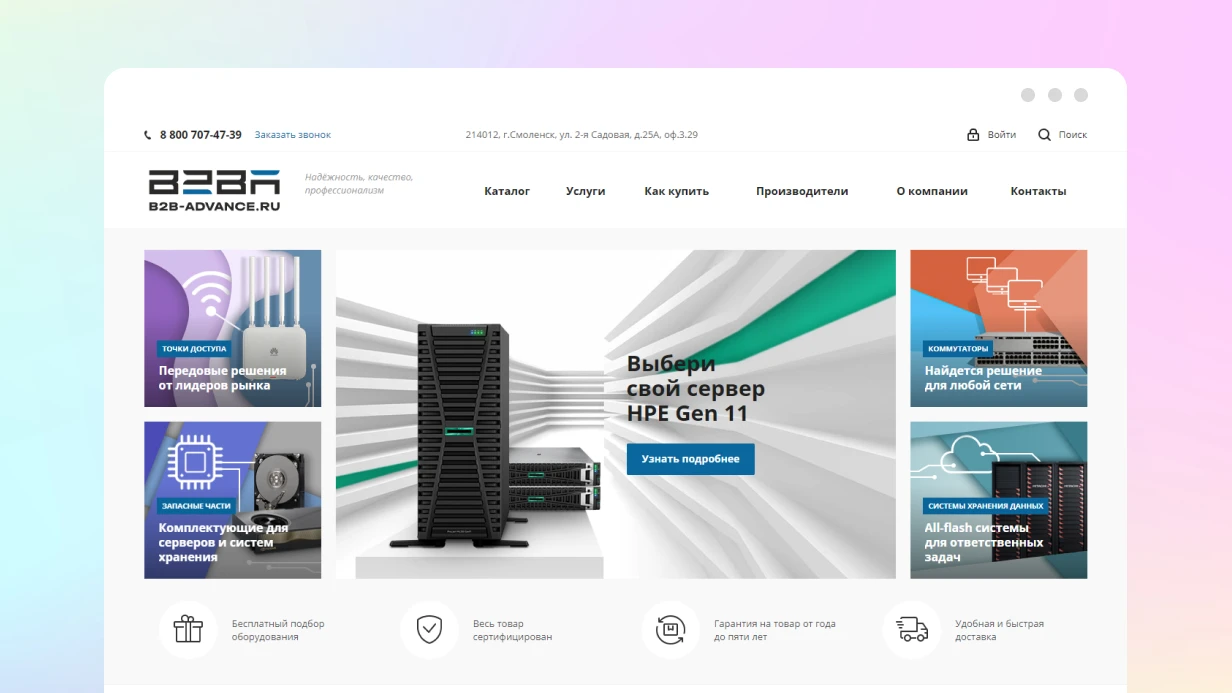
  • image_website-b2b-advance_0.webp
    B2B ADVANCE company website development
    1349
  • image_web-applications_feedme_466_0.webp
    Development of a web application for FEEDME
    1247
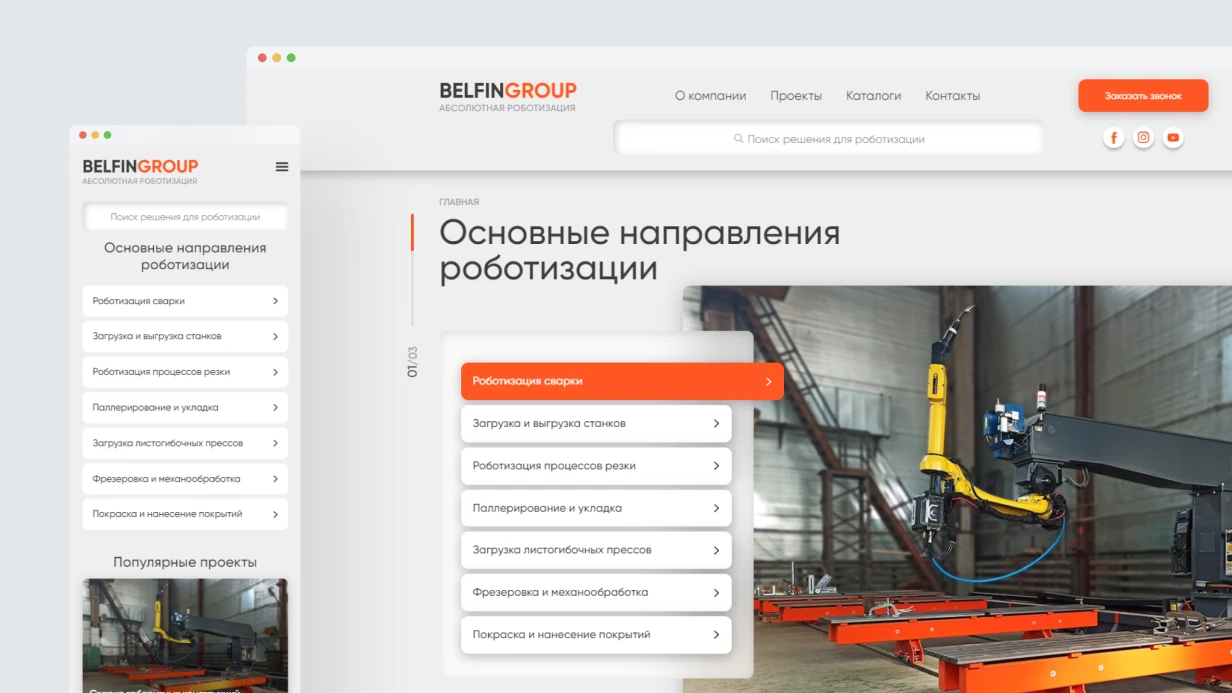
  • image_websites_belfingroup_462_0.webp
    Website development for BELFINGROUP
    949
  • image_ecommerce_furnoro_435_0.webp
    Development of an online store for the company FURNORO
    1183
  • image_logo-advance_0.webp
    B2B Advance company logo design
    642
  • image_crm_enviok_479_0.webp
    Development of a web application for Enviok
    921

Developing a KYC/AML System for a Crypto Exchange

A crypto exchange without KYC/AML is a ticking time bomb. Regulators (FATF, MiCA, local central banks) impose heavy fines, banks terminate correspondent accounts, and users lose trust. A system that thoroughly checks every user filters out 40–60% of traffic — a fact confirmed by hundreds of projects. FATF Recommendation 16 recommends anti-money laundering and counter-terrorist financing measures. We build balanced KYC/AML: compliance without killing conversion rate.

A typical problem: an exchange launches with basic verification, and six months later gets a first request from a regulator demanding a suspicious transaction report. Without a monitoring system — fines and account freezes. Fines for missing KYC/AML can reach up to 4% of turnover. To avoid this scenario and reduce compliance costs, we embed KYC/AML from the first commit, not patched after an audit. Our team has 5+ years of experience in web3 compliance, with over 30 implemented KYC/AML projects for crypto exchanges.

Multi-Tier KYC Architecture

Single-level verification is an architectural mistake. The right approach is a multi-tier system:

Tier 0 (No KYC)

Only platform browsing. No transactions. Needed for user onboarding.

Tier 1 (Email + AML Check)

Up to a small limit in stablecoins per month. Deposit and withdrawal only in crypto. Automatic wallet screening via Chainalysis or Elliptic on each deposit. Verification time: under 1 minute.

Tier 2 (Full KYC)

Up to the limit for full verification. Passport + liveness check. Provider: Sumsub, Onfido, Jumio. Time: automatic 2–5 minutes, manual review up to 24 hours for complex cases. Unlocks: fiat deposit/withdrawal, unlimited crypto withdrawal.

Tier 3 (Enhanced Due Diligence)

No limits. Source of Funds + Source of Wealth + extended background check. Only for VIP clients, manual processing by compliance officer.

On-Chain AML Screening: Architecture

Every incoming deposit and every withdrawal is screened via wallet screening. We use a custom engine that aggregates data from multiple providers for higher accuracy:

Code example: WalletScreeningService
class WalletScreeningService {
  async screenDepositAddress(
    walletAddress: string,
    asset: string,
    amount: number,
    userId: string
  ): Promise<ScreeningResult> {
    
    // Cache: same address not rechecked each time
    const cached = await this.cache.get(`wallet:${walletAddress}`);
    if (cached && cached.age < 3600) return cached.result; // 1 hour TTL
    
    const [chainalysisResult, ellipticResult] = await Promise.all([
      this.chainalysis.getAddressRisk(walletAddress, asset),
      this.elliptic.getWalletRisk(walletAddress),
    ]);
    
    const riskScore = Math.max(chainalysisResult.riskScore, ellipticResult.riskScore);
    const categories = [...new Set([
      ...chainalysisResult.categories,
      ...ellipticResult.categories,
    ])];
    
    const result: ScreeningResult = {
      allowed: riskScore < 70 && !this.hasBlockedCategory(categories),
      riskScore,
      categories,
      requiresReview: riskScore >= 40 && riskScore < 70,
    };
    
    await this.cache.set(`wallet:${walletAddress}`, { result, age: Date.now() });
    await this.logScreening(userId, walletAddress, result);
    
    if (!result.allowed) {
      await this.alertComplianceTeam(userId, walletAddress, result);
    }
    
    return result;
  }
  
  private hasBlockedCategory(categories: string[]): boolean {
    const BLOCKED = ['darknet_market', 'ransomware', 'stolen_funds', 'sanctions'];
    return categories.some(c => BLOCKED.includes(c));
  }
}

Transaction Monitoring and SAR Automation

Ongoing transaction monitoring to detect suspicious patterns after verification:

  • Structuring detection: many transactions just below the reporting threshold (classic smurfing).
  • Velocity monitoring: sudden increase in activity — 10x above normal daily volume.
  • Round-trip detection: funds withdrawn and returned through several hops.
  • Mixing/tumbling indicators: transactions through known mixing services (e.g., Tornado Cash).

The transaction monitoring engine processes 5x more events without lag compared to off-the-shelf solutions. Our custom solution is 3x more flexible in configuring screening rules.

class TransactionMonitor {
  async analyzeTransaction(tx: Transaction): Promise<AlertLevel> {
    const userHistory = await this.db.getUserTxHistory(tx.userId, 30); // 30 days
    
    const checks = await Promise.all([
      this.checkStructuring(tx, userHistory),
      this.checkVelocity(tx, userHistory),
      this.checkGeographicAnomalies(tx),
      this.checkTimePatterns(tx, userHistory),
    ]);
    
    const maxLevel = Math.max(...checks.map(c => c.level));
    
    if (maxLevel >= AlertLevel.HIGH) {
      await this.createSAR(tx, checks.filter(c => c.level >= AlertLevel.MEDIUM));
    }
    
    return maxLevel;
  }
  
  private async checkStructuring(tx: Transaction, history: Transaction[]): Promise<Check> {
    const threshold = await this.getReportingThreshold(tx.currency);
    
    const last24h = history.filter(h => 
      Date.now() - h.timestamp < 86400000 && h.amount < threshold
    );
    const total24h = last24h.reduce((sum, h) => sum + h.amount, 0) + tx.amount;
    
    if (total24h >= threshold * 0.9 && last24h.length >= 3) {
      return { level: AlertLevel.HIGH, reason: 'structuring_detected' };
    }
    
    return { level: AlertLevel.NONE };
  }
}

What's Included in SAR Automation?

When alerts trigger — automatic generation of a SAR draft for the compliance officer:

async function generateSARDraft(
  userId: string,
  transactions: Transaction[],
  alerts: Alert[]
): Promise<SARDocument> {
  const user = await getUserKYCData(userId);
  
  return {
    reportType: 'SUSPICIOUS_ACTIVITY',
    filingEntity: COMPANY_DETAILS,
    subject: {
      name: `${user.firstName} ${user.lastName}`,
      address: user.residenceAddress,
      dob: user.dateOfBirth,
      idNumber: user.documentNumber,
    },
    suspiciousActivity: {
      dateRange: { from: transactions[0].date, to: transactions[transactions.length - 1].date },
      totalAmount: transactions.reduce((sum, t) => sum + t.usdValue, 0),
      description: generateNarrative(alerts, transactions),
      alertTypes: alerts.map(a => a.type),
    },
    supportingTransactions: transactions.map(formatForSAR),
  };
}

How We Build Balanced KYC/AML?

A custom solution based on Sumsub and Chainalysis offers 3x more flexibility than off-the-shelf products: you define screening rules, risk thresholds, and verification levels. No vendor lock-in — providers can be swapped without rewriting the architecture.

Step-by-Step Implementation Plan

  1. Requirements analysis — define regulatory obligations (FATF, 5AMLD, local laws) and select providers.
  2. Architecture design — KYC state machine, AML screening pipeline, transaction monitoring engine.
  3. KYC provider integration — Sumsub/Onfido, webhook setup and state machine.
  4. AML screening implementation — connect Chainalysis KYT, Elliptic, result caching.
  5. Transaction monitoring development — custom detectors for structuring, velocity, mixing.
  6. SAR module — automatic report generation, compliance dashboard.
  7. Testing and compliance review — validation on real cases, load testing.
  8. Deployment and team training — 2-day workshop for compliance officers.

Comparison: Custom vs Off-the-Shelf

Criterion Custom Solution Off-the-Shelf Solution
Rule flexibility Full control over logic Limited configuration set
Time to implement 3-4 months 2-3 weeks
Cost Higher, but scalable Lower, but monthly fee grows
Vendor dependency Low (painless provider change) High (lock-in)

For exchanges with over 1000 users, a custom solution pays off in 6-12 months through savings on provider fees and penalty prevention.

Technical Stack and Timelines

Component Technology Development Time
KYC provider Sumsub (primary) / Onfido (fallback) 3-4 weeks
On-chain AML Chainalysis KYT + Elliptic 2 weeks
PEP/Sanctions Refinitiv World-Check or ComplyAdvantage 2 weeks
Transaction monitoring Custom + Chainalysis Reactor 4-5 weeks
SAR management Custom compliance module 2-3 weeks
Backend Node.js + TypeScript + PostgreSQL -
Queue BullMQ (Redis) for async -

Full KYC/AML system for an exchange: 3-4 months development.

The scope of work includes: full architecture documentation (UML diagrams, API specs), integration with selected providers, custom transaction monitoring engine, compliance dashboard, automatic SAR module, source code, deployment instructions, team training (2-day workshop), and 6-month bug warranty.

Contact us for a free consultation — we will assess your project in 2 days. Order turnkey KYC/AML system development and ensure compliance with regulatory requirements.

Why does your project risk without blockchain compliance services?

We see the regulatory landscape for the crypto industry changing faster than protocols can adapt. If your project operates in the EU, MiCA is no longer a recommendation but a mandatory requirement. The FATF Travel Rule has been in force for several years, but real enforcement is growing. Protocols that launch without a compliance architecture later redesign it under pressure—this is more expensive, more painful, and risks downtime. Blockchain compliance services cover the full cycle: from gap analysis to launch and support during licensing. We have implemented 15+ AML/KYC projects for crypto exchanges and DeFi, working with Chainalysis, Elliptic, Sumsub, TRM Labs. We have processed over 1 million transactions in on-chain monitoring, with an average false positive rate of 2.3% for AML screening.

Why is the Travel Rule a technical, not a legal challenge?

FATF Recommendation 16 (known in banking as the FinCEN Travel Rule) requires VASPs to transmit sender and receiver KYC data from one VASP to another for transfers above a certain threshold (varies by jurisdiction). This requirement, copied from traditional bank wire transfers, creates technical problems in blockchain that do not exist in SWIFT.

The first problem is determining VASP-to-VASP. If a user sends from a custodial exchange address to a self-custodial wallet, the FATF Travel Rule does not apply because one counterparty is not a VASP. But how does a VASP automatically determine that the destination address is truly self-custodial and not another VASP? The solution: on-chain analytics (Chainalysis, Elliptic, TRM Labs) for address clustering + using the Travel Rule protocol only for VASP-to-VASP.

The second problem is interoperability between VASPs. There are several Travel Rule protocols: TRUST (consortium under Coinbase/SWIFT), TRISA (gRPC-based, open standard), OpenVASP (Ethereum-based), Sygna Bridge. They are not interoperable. Most major exchanges support several simultaneously. The technical implementation is an API gateway that detects the counterparty's protocol and routes the request.

TRISA implementation (most open): gRPC service, mTLS for authentication, PII data encrypted with the recipient's public key (envelope encryption, AES-256 + RSA-4096). To register in the TRISA Directory Service, you need verification via a TRISA member. The code is an open SDK in Go and Python.

Specific pain point: timing. Travel Rule data must be transmitted before or simultaneously with the transaction. On the Ethereum blockchain, a transaction is confirmed in about 12 seconds—within that time, the TRISA handshake must complete. If the counterparty does not respond, the transaction is blocked or delayed. The UI must explain this to the user, otherwise a flood of support tickets is guaranteed.

TRISA handshake implementation details

Example gRPC request for Travel Rule data transfer:

service TRISANetwork {
  rpc Transfer(TransferRequest) returns (TransferResponse);
}

message TransferRequest {
  string identity_payload = 1;  // encrypted PII packet
  string envelope_public_key = 2;
  string transaction_hash = 3;
}

The handshake takes 3-5 HTTP rounds, including verification of the counterparty's mTLS certificate via PKI Directory.

How to choose a KYC/AML provider for a crypto project?

KYC providers for cryptocurrencies fall into several tiers:

Tier 1 (enterprise, regulatory grade): Jumio, Onfido, Sumsub, Veriff. Support 200+ countries, video verification, liveliness checks, AML screening via Refinitiv/Dow Jones. Integration via REST API + webhooks. Sumsub is popular in European crypto projects—good SDK documentation for mobile apps.

Tier 2 (DeFi-native, privacy-focused): Fractal ID, Synaps, Persona. Less regulatory overhead, faster integration, but less global coverage for high-risk jurisdictions.

On-chain KYC via credentials: Quadrata Passport, Civic, PolygonID—user verifies once, gets an on-chain credential, protocols verify it without repeated verification. Privacy-preserving via ZK. Not mainstream yet, but we are laying the groundwork in the architecture.

Provider Tier On-chain credentials Average integration time Jurisdictions
Sumsub 1 no 3–4 weeks 220+
Fractal ID 2 yes (Ethereum) 2–3 weeks 80+
Quadrata 2 yes (zk-proof) 4–5 weeks global (non-custodial)

Architectural principle: KYC data is never stored on-chain. Personal data is stored with the provider or in your encrypted database; on-chain only a hash (commitment) or credential (if using VC/SBT approach). This ensures GDPR compliance: the right to erasure is achievable if data is off-chain.

Typical mistake: storing wallet-to-identity mapping in plaintext in PostgreSQL without row-level encryption. One SQL injection and the entire KYC database is compromised. Minimum: column encryption for PII fields (PGP or AES via pgcrypto), separate key management (AWS KMS, HashiCorp Vault), audit log for all PII access.

For AML screening, we use Chainalysis, Elliptic, or TRM Labs. Integration is asynchronous via webhook: results come in 1–5 seconds. Threshold-based blocking: HIGH risk — auto-block, MEDIUM — manual review. Hold period for suspicious transactions is 24–72 hours until manual review. Sanctions screening separately: OFAC SDN list updates several times a week; we use direct OFAC list integration (free) with custom address matching logic.

How do we implement MiCA support?

Markets in Crypto-Assets Regulation (EU 2023/1114) requires CASP (Crypto-Asset Service Provider) licensing in one EU state with passporting. Technical requirements affecting development:

White paper is mandatory for issuers of ART (Asset-Referenced Tokens) and EMT (E-Money Tokens)—not a marketing document but a legally binding prospectus with technical description, holder rights, and redemption mechanisms.

Custody requirements: client assets separate from operational assets. Technically: separate wallets/accounts per client (or omnibus with off-chain mapping + regular reconciliation), no possibility to use client funds for operational needs.

Transaction monitoring and reporting: CASPs must keep records of all transactions for at least 5 years and provide them to the regulator upon request.

Travel Rule in MiCA: the threshold for VASP-to-VASP transfers is zero (not the FATF threshold). Implementation requires a Travel Rule endpoint operating 24/7.

Organization type Key MiCA requirements Technical impact
ART/EMT issuer White paper, redemption mechanism, reserve audit Smart contract with redemption function, oracle for reserve proof
CASP (exchange, custodian) License, custody segregation, Travel Rule Separate wallets per client, TRISA/TRUST integration
DeFi protocol (no issuer) Currently out of MiCA scope (review pending) Monitor, prepare architecture

Compliance infrastructure implementation process

Compliance architecture is not added on top of an existing product without pain. The correct order: compliance requirements → data model → business logic → UI. If you already have a product without a compliance layer, we start with a gap analysis: what data is already collected, where the gaps are, what will require schema migration.

  1. Gap analysis — audit of current architecture and data flow (1–2 weeks).
  2. Design — selection of KYC provider, Travel Rule protocol, AML tool, data model.
  3. Integration — connecting KYC API, implementing AML screening in the pipeline, setting up Travel Rule gateway.
  4. Testing — end-to-end tests, simulating Travel Rule handshake, verifying sanctions screening.
  5. Deployment and monitoring — rollout with feature flags, setting up alerting for compliance service errors, audit trail.
  6. License support — preparing documentation for the regulator, assisting with inspections.

What does the blockchain compliance service include?

  • Compliance architecture documentation (data flow, ER diagrams, API specifications).
  • Integration of KYC/AML/Travel Rule APIs with your backend.
  • Setup of monitoring and alerting for compliance services.
  • Training your team on tools (Chainalysis, Sumsub, etc.).
  • Support during the licensing process (MiCA, FATF).

Timeline benchmarks

  • KYC/AML integration with Sumsub or Jumio — from 3 to 6 weeks.
  • Travel Rule (TRISA or Sygna) — from 6 to 10 weeks.
  • Full compliance infrastructure for CASP licensing — from 4 to 8 months.
  • On-chain compliance via VC/SBT with ZK (MiCA-ready) — from 5 to 9 months.

Scope is refined after gap analysis. To evaluate your project, contact us—we will conduct a free analysis of your current architecture and select the optimal set of tools. Get a consultation on compliance architecture for MiCA or Travel Rule. Our team has over 7 years of blockchain development experience and 15+ deployed compliance solutions. Request an audit of your protocol for compliance with current regulatory requirements.