




NFT Collateral Lending Protocol Development

We design and develop full-cycle blockchain solutions: from smart contract architecture to launching DeFi protocols, NFT marketplaces and crypto exchanges. Security audits, tokenomics, integration with existing infrastructure.

Blockchain Development Services

Blockchain Development Stages

Latest works

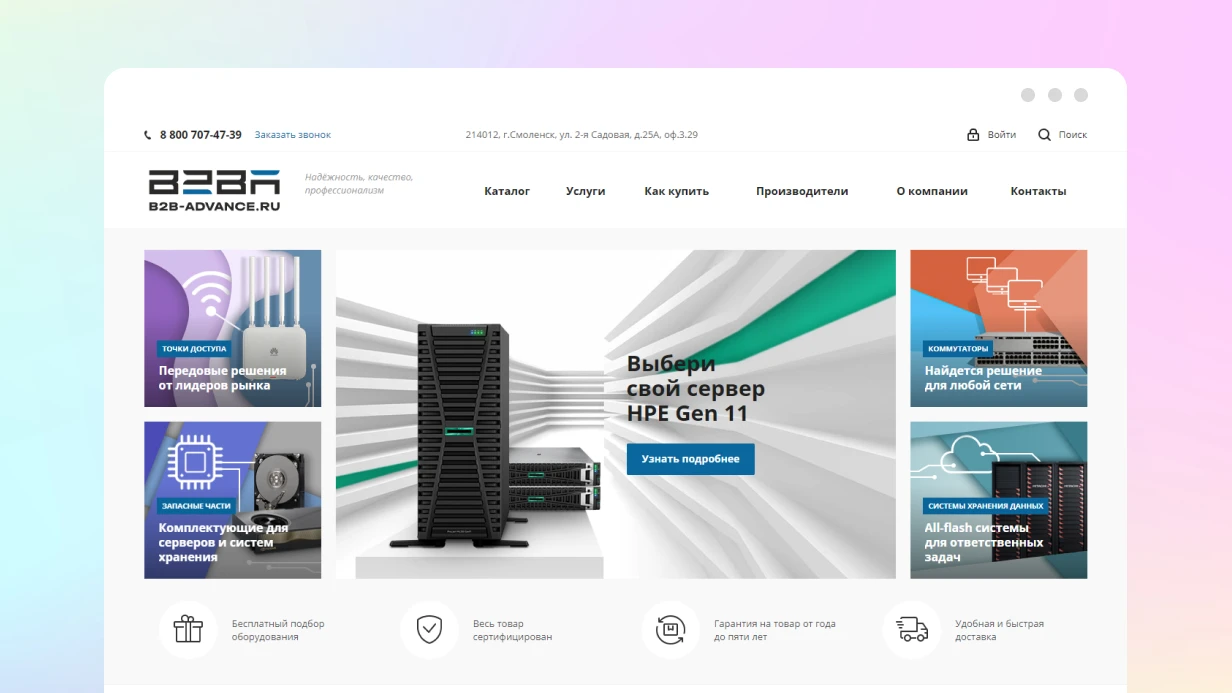
  • image_website-b2b-advance_0.webp
    B2B ADVANCE company website development
    1358
  • image_web-applications_feedme_466_0.webp
    Development of a web application for FEEDME
    1250
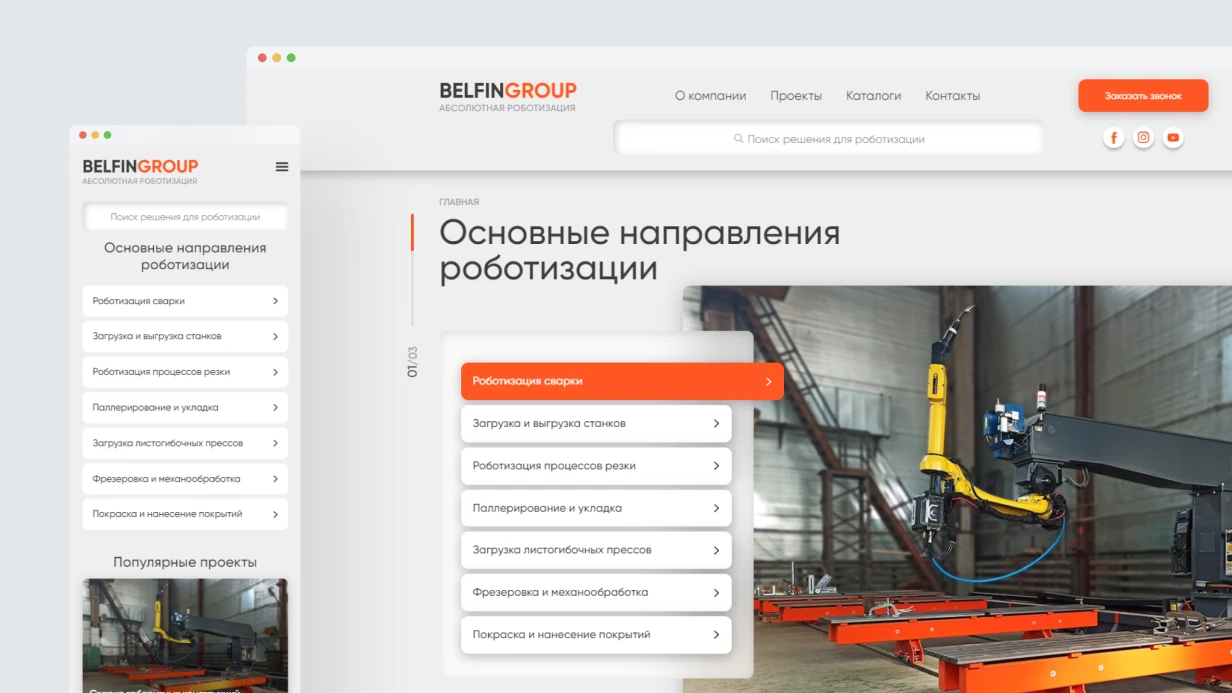
  • image_websites_belfingroup_462_0.webp
    Website development for BELFINGROUP
    956
  • image_ecommerce_furnoro_435_0.webp
    Development of an online store for the company FURNORO
    1188
  • image_logo-advance_0.webp
    B2B Advance company logo design
    646
  • image_crm_enviok_479_0.webp
    Development of a web application for Enviok
    929

An NFT collection of 10,000 tokens with a floor price of 2 ETH represents 20,000 ETH in locked value. Selling a single NFT quickly at market price is difficult: listing, waiting for a buyer, risking the loss of a rare asset. An NFTfi protocol enables borrowing ETH against NFT collateral without selling—a CryptoPunk or Bored Ape holder gains liquidity, while the lender earns yield. Non-fungible token (NFT) — a unique digital asset with rights secured via smart contract (Wikipedia). Development costs typically range from $50,000 to $200,000, depending on model complexity and audit requirements. Our NFT-backed lending platform development includes robust NFT collateral management and oracle-based valuation. Over 10 years of DeFi experience, 50+ smart contracts deployed on Ethereum and L2. We specialize in NFTfi protocol development, including NFT-backed lending, NFT collateral, NFTfi smart contracts, and NFT smart contract audits—all starting from $50,000.

Why Lending Against NFT Requires Thoughtful Architecture?

Simply copying ERC-20 lending pool logic won't work. NFTs are non-fungible: each token is unique, liquidity is limited, and price is volatile. In ERC-20 lending, price is known precisely thanks to Chainlink Price Feeds—but for NFTs, valuation is a standalone challenge. Without solving it, the protocol becomes a shell game: the borrower of a rare NFT may borrow too much, and the lender may lose everything if floor price drops.

How to Value an NFT On-Chain?

This is the fundamental difficulty in NFTfi that cannot be solved by standard means. ERC-20 tokens have liquid markets and Chainlink Price Feeds. NFTs have no single price—there is floor price, last sale, rarity score, trait-based pricing. Loan-to-value ratios typically range from 30% to 50% for blue-chip collections. All these metrics are manipulable when trading volume is low.

Valuation Options and Their Trade-Offs

Peer-to-peer model (NFTfi, Arcade.xyz)—lender and borrower agree on amount, interest, and duration. The smart contract only escrows the NFT and enforces terms. Valuation is the parties' problem, not the protocol's. This eliminates oracle manipulation risk but reduces liquidity: the borrower must wait for a lender's offer.

Pool-based model (BendDAO, JPEG'd)—liquidity in a pool, loans are instantly issued based on the oracle's floor price. Fast and convenient, but creates systemic risk: if the collection's floor price drops faster than liquidations can occur, the pool incurs bad debt. BendDAO faced this: a massive BAYC floor price drop created a 5,000 ETH bad debt threat, forcing emergency parameter changes.

Hybrid model—peer-to-peer for large loans, a pool for standard collections with proven floors. More complex to develop, but more resilient.

In a pool-based approach, the oracle for floor price is critical. We use a median of several sources: Chainlink NFT Floor Price Feeds (available for top collections), Reservoir Protocol API with on-chain verification, and TWAP of recent marketplace sales. A single oracle feed is a vector for flash loan manipulation.

How Does NFT Collateral Liquidation Work?

Liquidation is the trickiest part of NFTfi. In a pool-based model, it must be atomic or MEV-resistant. A typical attack scenario: a liquidator sees a healthy position (health factor > 1), sends a liquidate transaction—an MEV bot front-runs with a marketplace purchase of the NFT at floor price and a reverse listing—classic sandwich. Solution: a grace period before liquidation and an auction mechanism (Dutch auction for the NFT collateral), not an instant transfer to the lender. The auction liquidation process: starting price is debt plus 10%, decreasing by 5% every 5 minutes until a buyer is found. The borrower can repay at any time. The protocol charges a 0.5% fee on liquidation. This prevents MEV manipulation and gives the borrower a chance to repay before final loss. Liquidation penalty is typically 5% of the loan amount.

NFTfi Protocol Architecture: Key Components

Loan Lifecycle

  1. Borrower calls depositNFT()—NFT moves into escrow contract.
  2. Borrower calls requestLoan(nftId, amount, duration)—creates LoanTerms struct.
  3. Lender calls fundLoan(loanId)—ETH or ERC-20 sent to borrower.
  4. Within the loan term, borrower can call repayLoan(loanId)—returns principal + interest, NFT returned.
  5. If term expires, lender calls liquidate(loanId)—NFT transferred to lender.

Example: loan of 50 ETH against an NFT with LTV 40% for 30 days at 8% annual interest rate.

Key Smart Contracts

Contract Role
LoanCore Main logic, stores loan state
OriginationController Validation of terms, signature verification for P2P
VaultFactory Creates individual vaults for each NFT (isolation)
RepaymentController Interest calculation, repayment processing
FeeController Protocol fees

Separation into distinct contracts is not overengineering but a necessity: LoanCore is upgradeable via UUPS, OriginationController can be replaced without migrating loan data.

Handling ERC-721 and ERC-1155

ERC-1155 adds complexity: a token can be fungible (if supply > 1) or semi-fungible. For lending, we need to decide whether to accept partial collateral (e.g., 100 out of 1000 tokens of the same ID). Most protocols restrict to ERC-721 and ERC-1155 with supply = 1. If fractional collateral for ERC-1155 is needed, valuation and liquidation logic multiply in complexity.

Accepting NFTs as collateral uses safeTransferFrom with onERC721Received hook. The hook verifies that the NFT is from an allowlisted collection—accepting any ERC-721 is dangerous, as a junk token could be deposited.

Tech Stack

Contracts—Solidity 0.8.x, framework—Foundry. For the P2P part, we use EIP-712 signature verification: the borrower signs LoanTerms off-chain, the lender verifies the signature on-chain. This eliminates approve transactions for the borrower.

Testing includes fork tests on Ethereum mainnet: real collections (BAYC, Azuki), real marketplace events to simulate floor price changes. Foundry's vm.warp for simulating loan expiry. We guarantee 95%+ test coverage and formal verification of critical functions.

Frontend (if needed)—wagmi + viem, NFT data via Alchemy NFT API or Reservoir.

Process of Work

Stage Duration What we do
Design 1 week Choose model (P2P/pool/hybrid), list of collections, risk parameters, tokenomics
Development 4–8 weeks Core contracts, oracle integration, tests with coverage > 95%, fuzz tests
Audit 2–4 weeks External auditor (Spearbit, Trail of Bits, Code4rena)
Deployment 1–2 weeks Testnet with real users, mainnet via Gnosis Safe multisig

Deliverables

  • Architectural documentation (ERC-720p, flow diagrams)
  • Solidity smart contracts with full test coverage (95%+)
  • Oracle integration (Chainlink, Reservoir)
  • Audit preparation (Slither, Mythril reports)
  • Deployment to testnet and mainnet
  • Access to repository and instructions
  • Team training on protocol operations
  • One month post-release support
  • Cost estimate and timeline upon request

Why Choose Us?

Over 10 years of experience in DeFi protocol development, 50+ smart contracts implemented. We have found critical vulnerabilities in top protocols and know how to avoid them. We use formal verification for critical functions—a security level rare for startups. We guarantee a transparent process: weekly progress demos.

Get a consultation on your NFTfi protocol architecture. Contact us to discuss model, risks, and timelines. Order development for your collection.

DeFi Protocol Development

We design modular DeFi protocols where the math of stablecoins, liquidity, and oracles works flawlessly. Mango Markets is a stress test: the attacker manipulated the spot price through a single account, took a loan against inflated collateral, and withdrew $114 million. The oracle took the price from a single source without TWAP. Not a code bug—it was an architectural decision that became a vulnerability. Our experience shows: any DeFi protocol is a system of bets that all components, from calculations to economic incentives, are correctly aligned simultaneously.

We don't write code under the 'if it works, don't touch it' mindset. We model stress scenarios: cascading liquidations, depegs, flash loans. Only then do we build events that won't break the protocol.

Why are oracles a critical component of DeFi?

Most major DeFi hacks started with oracle manipulation. Let's break down the three layers we use in every project.

Spot price as oracle—not an option. Uniswap v2 spot price can be shifted by a flash loan in one transaction. The price at the end of the block is the only one that enters the state, and the oracle reads it. Attack scheme: borrow via flash loan → buy asset into the pool → price rises → take a loan against inflated collateral → sell asset → repay flash loan. One transaction.

TWAP as protection. Uniswap v3 observe() averages the price over a period (30 minutes). Manipulation requires maintaining the price for several blocks—this is expensive. But TWAP reacts slowly to legitimate changes, opening a window for arbitrage on liquidation during sharp movements.

Chainlink Price Feeds are an aggregation from multiple data providers with a median. Standard for lending. Problem: heartbeat 1–24 hours and deviation threshold 0.5%. If the price doesn't move, the feed may not update for a day. In volatile markets—lag.

Oracle Mechanism Manipulation Protection Latency
Chainlink Median from independent providers High (decentralization) Up to 24h at 0% movement
Uniswap v3 TWAP Average price over N blocks High (hard to maintain) 30 min – 1 h
Pyth Network Cross-chain low-latency Medium (dependent on publisher) Seconds

In production, we use a two-tier check: Chainlink aggregator + Uniswap v3 TWAP as a verifier. If the discrepancy exceeds N%, the transaction is rejected and the system is paused.

How to protect a DeFi protocol from flash loan attacks?

Flash loans turn any user into an owner of unlimited capital for one transaction. Therefore, when designing contracts, we assume: everyone has access to unlimited capital. This completely changes the threat model.

Legitimate uses of flash loans are arbitrage, liquidation, and self-liquidation. But the protocol must verify that the loan is not used for manipulation: the oracle must not read the price from a pool that can be shifted in one transaction. We add checks on block.timestamp and minimum liquidity depth.

Key Components of DeFi Architecture

Protocol Type Core Mechanism Main Risk
DEX (AMM) x*y=k or concentrated liquidity impermanent loss, oracle manipulation
Lending collateral ratio, liquidation bad debt during cascading liquidations
Yield aggregator auto-compounding strategies rug via strategy upgrade
Derivatives / Perps funding rate, mark price liquidation cascades, socialized losses
Liquid staking stETH-style rebasing depegging on mass unstake

AMM: From x*y=k to Concentrated Liquidity

Uniswap v2 uses x * y = k. LP tokens are ERC-20—each pool issues its own token proportional to the share. Problem: liquidity is spread across the entire curve, most of it unused.

Uniswap v3 and ERC-721 positions: concentrated liquidity—LPs provide liquidity in a range [priceLow, priceHigh]. Capital efficiency up to 4000x for stable pairs. But ERC-721 breaks vault strategies built for ERC-20. Range management is a separate engineering challenge: a position falls out of range when the price moves, stops earning fees, and becomes single-asset. Protocols like Arrakis Finance automatically rebalance. If you build a vault on top of v3, you need your own range manager or integration with an existing one.

Slippage in v3 is calculated via sqrtPriceX96—96-bit fixed-point math. Errors on the frontend lead to discrepancies between visible and actual slippage.

Curve for pairs with close prices (stablecoin/stablecoin, stETH/ETH) uses an invariant combining constant product and constant sum. Lower slippage within the peg range. Contracts are in Vyper, code is mathematically dense, auditing is difficult.

Lending Protocols: Collateral, Liquidation, Bad Debt

LTV defines the maximum loan against collateral. Liquidation threshold is the level for liquidation. The difference is the buffer for the liquidator. Typical example: LTV 75%, liquidation threshold 80%, bonus 5%. If the price drops 20%+, the position is open for liquidation.

Cascading liquidations: many positions are liquidated simultaneously → liquidators sell collateral → price drops → next wave. LUNA/UST 2022 is a classic cascade.

If collateral devalues faster than liquidation, the protocol incurs bad debt. Aave uses a Safety Module (staked AAVE), Compound uses reserves. Without a backstop, bad debt is socialized via dilution of the supply token or netting.

Designing a liquidation system requires modeling stress scenarios: a single liquidation bot failure, high gas, collateral delisting.

Yield Farming and Incentive Mechanics

Liquidity mining distributes governance tokens to LP providers. Problem: mercenary capital—farmers come, sell tokens, leave. TVL is illusory.

Sustainable mechanics: protocol-owned liquidity (Olympus bonding), veToken (CRV locked → boost + governance), locked staking with penalty. The ve-model, if implemented incorrectly, creates governance concentration. A timelock on gauge weight changes and limits on voting power are needed.

What Our DeFi Protocol Development Includes

  • Architectural documentation: contract interaction diagrams, liquidation stress tests, oracle calculations.
  • Implementation in Solidity 0.8.x with OpenZeppelin 5.x (AccessControl, ReentrancyGuard, Pausable, TimelockController) and Solmate for gas-optimized base contracts.
  • Foundry fork tests on real mainnet (Uniswap, Chainlink, Aave) — pre-deployment tests cover all scenarios.
  • Audit: at least two independent auditors for TVL over $1M. Code4rena or Sherlock for bug bounty.
  • Deployment with Gnosis Safe 3/5 multisig + timelock 48–72 hours.
  • Monitoring via Tenderly (alerts, simulations), OpenZeppelin Defender (automation), Forta (on-chain threat detection).
  • Post-launch support: updates, patches, upgrades via proxy.

Our Expertise and Experience

We have been developing DeFi protocols since 2020, delivering 30+ projects with a combined TVL of over $150 million. Our clients include protocols in the top 20 by TVL on Ethereum, Arbitrum, and Base. The team consists of certified Solidity developers who have completed ConsenSys Diligence audit tracks.

DeFi basic principles that we apply in practice.

Timelines

  • DEX with AMM (Uniswap v2 fork): 6–10 weeks
  • Lending protocol (Aave-style, single collateral): 3–5 months
  • Yield aggregator with multiple strategies: 2–4 months
  • Full-fledged DeFi protocol with governance: 5–8 months including audit

Cost is calculated individually—contact us for a project estimate.

Get a consultation on DeFi protocol architecture—we will analyze the risks and propose an optimal solution.