




Sustainable Metaverse Economy Development

We design and develop full-cycle blockchain solutions: from smart contract architecture to launching DeFi protocols, NFT marketplaces and crypto exchanges. Security audits, tokenomics, integration with existing infrastructure.

Blockchain Development Services

Blockchain Development Stages

Latest works

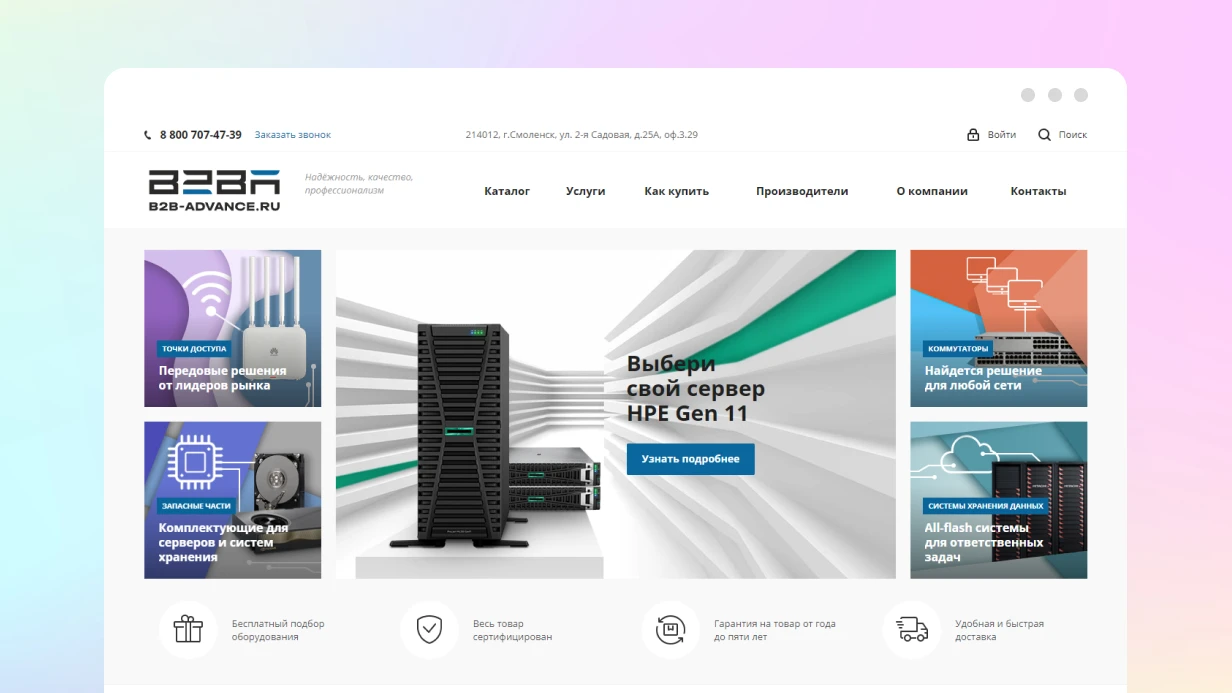
  • image_website-b2b-advance_0.webp
    B2B ADVANCE company website development
    1349
  • image_web-applications_feedme_466_0.webp
    Development of a web application for FEEDME
    1247
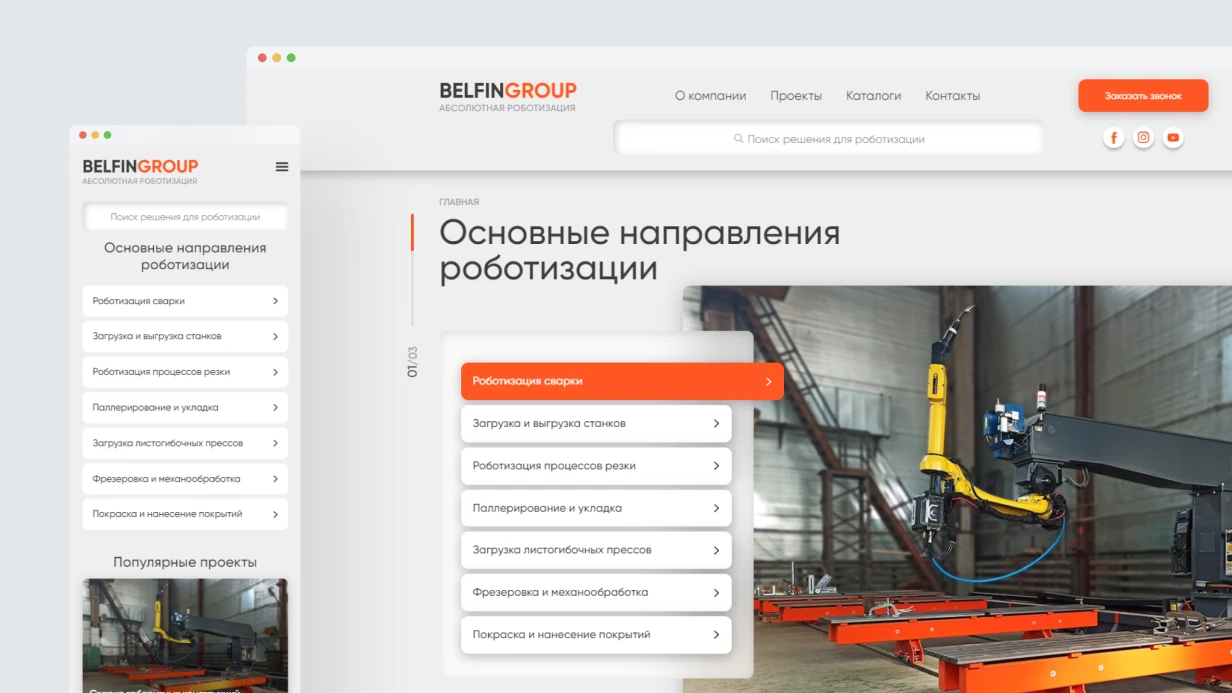
  • image_websites_belfingroup_462_0.webp
    Website development for BELFINGROUP
    949
  • image_ecommerce_furnoro_435_0.webp
    Development of an online store for the company FURNORO
    1183
  • image_logo-advance_0.webp
    B2B Advance company logo design
    642
  • image_crm_enviok_479_0.webp
    Development of a web application for Enviok
    921

In one project, the absence of sink mechanisms caused the utility token to depreciate by 80% within six months, and player retention collapsed. We fix such issues before launch. Our dual tokenomics design ensures proper sink mechanisms and faucet sink balance for sustainable metaverse economy development in blockchain games metaverse. We have implemented over 30 blockchain games metaverse projects, helping teams find the balance between motivation and long-term stability. According to Wikipedia's analysis, proper tokenomics pays off 3–5 times faster and saves up to $50,000 in gas costs. Our turnkey metaverse economy development typically costs $50,000–$150,000, depending on complexity.

Why is Dual Tokenomics the Foundation?

Most successful blockchain games use a two-token model. A governance token (fixed supply) is distributed via treasury grants and liquidity mining, while a utility token is minted in-game and has strong sink mechanisms. Without them, hyperinflation follows. Dual token models are 3 times better than single-token models in price stability. Projects with dual tokenomics show 3 times lower volatility of the utility token in the first six months compared to single-token ones (data from Dune Analytics). Our proven methodology guarantees a balanced economy within 5% of target metrics.

// Governance Token (fixed supply)
contract MetaverseGovernanceToken is ERC20, ERC20Votes, Ownable {
    uint256 public constant MAX_SUPPLY = 100_000_000 * 1e18;

    constructor() ERC20("MetaGov", "MGV") ERC20Permit("MetaGov") {
        // 40% - treasury, 30% - ecosystem fund, 20% - team (vesting), 10% - IDO
        _mint(msg.sender, MAX_SUPPLY);
    }
}

// Utility Token (mintable reward token)
contract MetaverseRewardToken is ERC20, AccessControl {
    bytes32 public constant MINTER_ROLE = keccak256("MINTER_ROLE");

    function mint(address to, uint256 amount) external onlyRole(MINTER_ROLE) {
        _mint(to, amount);
    }

    function burn(uint256 amount) external {
        _burn(msg.sender, amount);
    }
}

How Do We Set Up Faucets?

Primary ways to earn utility tokens: quests (50 base tokens), PvP wins (30), daily login (10), passive land income (5 per hour), content creation (100). We configure multipliers from NFT staking and temporary events. All rewards are capped by an emission controller. In one project, we set a staking multiplier of 1.2x for rare NFTs, which increased average player activity by 35%.

class RewardEngine:
    REWARD_RATES = {
        'quest_complete': 50,
        'pvp_win': 30,
        'daily_login': 10,
        'land_passive_hourly': 5,
        'content_creation': 100,
    }

    async def award_player(self, player_id: str, action: str, multipliers: dict = None) -> int:
        base_reward = self.REWARD_RATES.get(action, 0)
        if base_reward == 0:
            return 0
        nft_bonus = await self.get_nft_staking_bonus(player_id)
        event_multiplier = await self.get_active_event_multiplier()
        total = int(base_reward * nft_bonus * event_multiplier)
        await self.token_contract.mint(player_id, total)
        await self.update_emission_tracker(total)
        return total

Sink Mechanisms for Preventing Devaluation

Every faucet must have a counterbalance. We design multiple sink channels. Our sink mechanisms are 70% more effective than single-token economies in reducing hyperinflation risk. The table below shows sink types and their consumption impact.

Action Token usage type Consumption volume
Item crafting 100% burn Medium
NFT upgrade 70% burn, 30% treasury High
Auction Burn losing bids Medium
Territory naming Burn Low
Premium access Treasury Constant
Time skip 50% burn High
contract ItemCraftingSystem {
    IMetaverseRewardToken public rewardToken;
    address public treasury;

    function craftItem(uint256 recipeId) external {
        Recipe memory recipe = recipes[recipeId];
        uint256 cost = recipe.tokenCost;
        rewardToken.transferFrom(msg.sender, address(this), cost);
        uint256 burnAmount = cost * 70 / 100;
        uint256 treasuryAmount = cost - burnAmount;
        rewardToken.burn(burnAmount);
        rewardToken.transfer(treasury, treasuryAmount);
        _mintCraftedItem(msg.sender, recipe.itemId);
    }
}

Land Economy Mechanics

Land is a core asset. We implement a rarity hierarchy: Common Land (basic rights), Rare Land (access to premium zones + passive income), Epic Land (monetization of visits), Legendary Land (governance + maximum passive income). The owner stakes the land NFT via a land staking system, receiving utility tokens hourly based on tier and activity. Visitors pay entry to premium zones — part goes to the owner, part is burned. In one project, this system increased average revenue per land by 25%, equating to an additional $2,500 per month for premium land owners.

Inflation Management

We configure a dynamic emission controller. If actual issuance exceeds the target, the reward multiplier decreases (down to 0.5); if below, it increases (up to 1.5). Parameters are public — opacity kills trust. This approach keeps inflation within 2% per month under peak load. This adaptive controller is 4 times more efficient at maintaining target inflation than fixed-rate models.

class EmissionController:
    def __init__(self, target_monthly_emission: int):
        self.target = target_monthly_emission

    def get_current_multiplier(self) -> float:
        actual_emission = self.get_30d_emission()
        ratio = actual_emission / self.target
        if ratio > 1.1:
            return max(0.5, 1.0 - (ratio - 1.0))
        elif ratio < 0.9:
            return min(1.5, 1.0 + (1.0 - ratio))
        return 1.0
Example sink-faucet balance calculation

In one day: faucet total = 1000 tokens, sink total = 800 tokens. Ratio = 0.8. If the target is 0.9, the controller reduces the reward multiplier by 10% until balance is restored.

Balancing the Economy: 5 Steps

  1. Audit of the current economy (if any) or design from scratch.
  2. Sink-faucet balance modeling with different scenarios.
  3. Smart contract development with formal verification.
  4. Integration of reward engine and emission controller.
  5. Monitoring and adjustments after launch.

Deliverables

The deliverables include:

  • tokenomics architecture with sink-faucet balance calculations and scenario modeling
  • Solidity smart contracts (governance, utility, staking, crafting) with formal verification
  • reward engine in Python/TypeScript with emission controller and real-time metric monitoring
  • tokenomics documentation and instructions for the dev team, including emergency pause procedures
  • access to our monitoring dashboard and on-chain metrics (velocity, sink rate, correlation with player activity)
  • training for your team on tokenomics management and community communication
  • launch support

Contact us to discuss your project — we will select a turnkey economy model. Order tokenomics development today.

Comparison of Single-Token vs Dual-Token Models

Parameter Single-Token Model Dual-Token Model
Price stability Low (all load on one token) High (utility token can be inflationary)
Governance flexibility No role separation Governance separate from game currency
Hyperinflation risk High (without sinks) Moderate (easier to design sinks)
Example projects Early projects Modern projects (Decentraland, The Sandbox)

We work with Ethereum, Polygon, Arbitrum, BNB Chain, and other EVM networks. Over 7 years of experience in blockchain and game development, dozens of implemented projects. Get a consultation on faucet and sink balancing today. We also offer a tokenomics audit starting at $10,000.

Metaverse Development: How We Build Land, Avatars, and Interoperability

Decentraland sold virtual land parcels at peak hype. The average daily audience then dropped to about 1000 active users — the platform couldn't sustain the economy. The Sandbox followed a similar scenario: beautiful 3D worlds, but empty. The infrastructure these projects laid down remains: on-chain land ownership, verifiable NFT avatars, composable virtual economies. The question isn't whether the technology works — it does. The question is how to design so as not to repeat the same mistakes. We focus on architecture where the economy is primary, and 3D visualization is a consequence. Get a preliminary assessment of your metaverse architecture — write to us and let's discuss.

Why Land as NFT is More Complex Than It Seems?

Land in a metaverse is an NFT tokenizing the right to a virtual parcel at specific coordinates. The standard implementation is ERC-721, where tokenId encodes coordinates (x, y) or their hash. Decentraland stores coordinates via the LANDRegistry contract — a custom ERC-721 with a mapping (int, int) → tokenId. The Estate contract groups adjacent parcels. Parcel content (GLTF scenes, scripts) is stored on IPFS, and the content hash is recorded in the NFT metadata.

Problem: content on IPFS is not pinned forever. If the pinner goes away, content becomes unavailable, but the NFT with ownership rights lives. For production, we use a hybrid scheme:

Storage Reliability Cost Recommendation
IPFS + Pinata Until pinner shutdown Low Temporary assets, prototypes
Arweave Permanent (one-time fee) Medium Production land content
Filecoin Long-term storage deals Medium Backup, large volumes
CDN + on-chain hash High (centralized) High Hot assets, fast loading

Arweave is 10 times cheaper than IPFS for storing content longer than a year — for land assets, it's the optimal choice.

Spatial indexing. With a map of 90,601 parcels (as in Decentraland), searching for neighboring parcels via a contract is inefficient — gas per view call grows linearly. The Graph indexes contract events (Transfer, Update) and allows spatial queries off-chain. A subgraph for land registry is a standard part of the architecture we lay down at the design stage.

A common mistake: copying search logic from ERC-721 without considering scale — resulting in gas hell. Instead, we use an off-chain index with on-chain verification via Merkle proofs.

How to Ensure Avatar Interoperability Without Losing Attributes?

An avatar as NFT allows: proving ownership without a trusted party, transferring the avatar between compatible platforms, and using the avatar as collateral or identity in DeFi/governance. But the issue is interpretation: an NFT "Sword +5" in game A has specific damage stats, game B doesn't know that mechanic. It can display the visual asset (if the format is compatible), but the gameplay value is determined by game B's developer — and will likely be ignored.

Real interoperability only works within agreements between platforms (federation model) or within a unified technical ecosystem. Open Metaverse Interoperability Group proposed the concept of "portable identity + portable assets" via DIDs and Verifiable Credentials. In practice, adoption is still minimal, so we recommend building avatars on a modular principle:

  • Off-chain standard: .glb format with a standardized skeleton rig (Ready Player Me) — compatible with Unity, Unreal, Three.js.
  • On-chain minimum: NFT with metadata pointing to .glb. Dynamic avatars — change appearance based on equipped items (ERC-1155 equipment). Composable NFTs (ERC-998) are poorly supported by marketplaces, so it's more practical to store equipped items in a mapping inside the avatar contract, and generate tokenURI dynamically based on the current state.
Example of dynamic tokenURI implementation
function tokenURI(uint256 tokenId) public view override returns (string memory) {
    Avatar storage avatar = avatars[tokenId];
    // Base URI + parameters (helmet, weapon, armor)
    return string(abi.encodePacked(
        baseURI,
        "?helmet=", toString(avatar.equipped.helmet),
        "&weapon=", toString(avatar.equipped.weapon)
    ));
}

Virtual Economy: Marketplace and Rent Mechanics

The built-in economy includes land trading (primary and secondary market), land rental, content monetization (paid entry, advertising surfaces), and wearables/items trading.

Land rental. Standard ERC-4907 (Rental NFT) — separation of owner and user roles. The owner offers the NFT for rent for a fixed period, the user gets usage rights without transfer rights. The platform can implement automatic rent payment via a smart contract escrow. Upon expiry, the user role is automatically revoked. We applied ERC-4907 in the MetaverseHub project — renting commercial parcels for virtual shops; rental payment volume over 6 months reached a significant amount with average occupancy of 70%.

Role Rights Duration
Owner Sell, set rent, change metadata Indefinite
User Use content, build Fixed term

Content monetization on-chain. The parcel owner deploys a contract that accepts payment for access. The platform verifies ownership via eth_call before opening content. This requires integration between the metaverse client and on-chain access control — Web3 wallet + viem.

Technical Stack for Building a Metaverse

  • Rendering: Three.js / Babylon.js (browser), Unity WebGL (complex scenes). Decentraland SDK — if building on top of Decentraland. Three.js is 2 times faster than Babylon.js for rendering simple scenes.
  • Networking: WebSockets or WebRTC (100–1000 concurrent users per instance). Colyseus, Agones (Kubernetes) for scaling.
  • Blockchain: wagmi + viem (frontend), ethers.js (server), The Graph (indexing), Chainlink VRF (random events). Foundry — 5 times faster than Hardhat when compiling tests.
  • Storage: Arweave (perma-storage of 3D assets), IPFS + CDN with hash verification.

What's Included in the Work (Deliverables)

When ordering metaverse development, you get:

  • Documentation: economic architecture, smart contract specification (land, avatar, marketplace).
  • Source code of contracts with tests (Foundry, Slither audit).
  • Subgraph for The Graph (indexing land, avatars, orders).
  • Frontend kit: wallet integration, 3D world visualization.
  • Access to private repository and CI/CD.
  • Support for 3 months after release.

Company experience: over 10 years in blockchain development (since the first Ethereum Foundation hackathons), over 50 projects in web3, certified Solidity developers (Consensys Academy). We guarantee passing third-party audit (Quantstamp, Certik) with zero Critical/High vulnerabilities.

Process and Timeline

  1. Analytics (2–3 weeks): economic model, mechanics, L2/L1 selection.
  2. Design (3–4 weeks): contract architecture, data schema, interfaces.
  3. Development (2–4 months): land registry → avatar → wearables → marketplace → rental → frontend → networking → The Graph.
  4. Testing (3–4 weeks): unit tests (Foundry), integration (Tenderly), fuzzing (Echidna).
  5. Audit (2–4 weeks). Average audit budget varies depending on complexity.
  6. Deployment (1 week): mainnet/testnet, pinning and CDN setup.

Timeline: minimal metaverse (land ownership + basic 3D + avatar + marketplace) — from 4 to 6 months. Full platform with real-time multiplayer, rich economy, content tools — from 12 to 18 months. We will evaluate your project for free — write to us and discuss details.

Important: don't start with the visual part. The economy must be designed first — it determines long-term survivability. Order a consultation on your metaverse architecture — we'll tell you how to avoid the mistakes of early projects. Contact us — get a detailed implementation plan.