

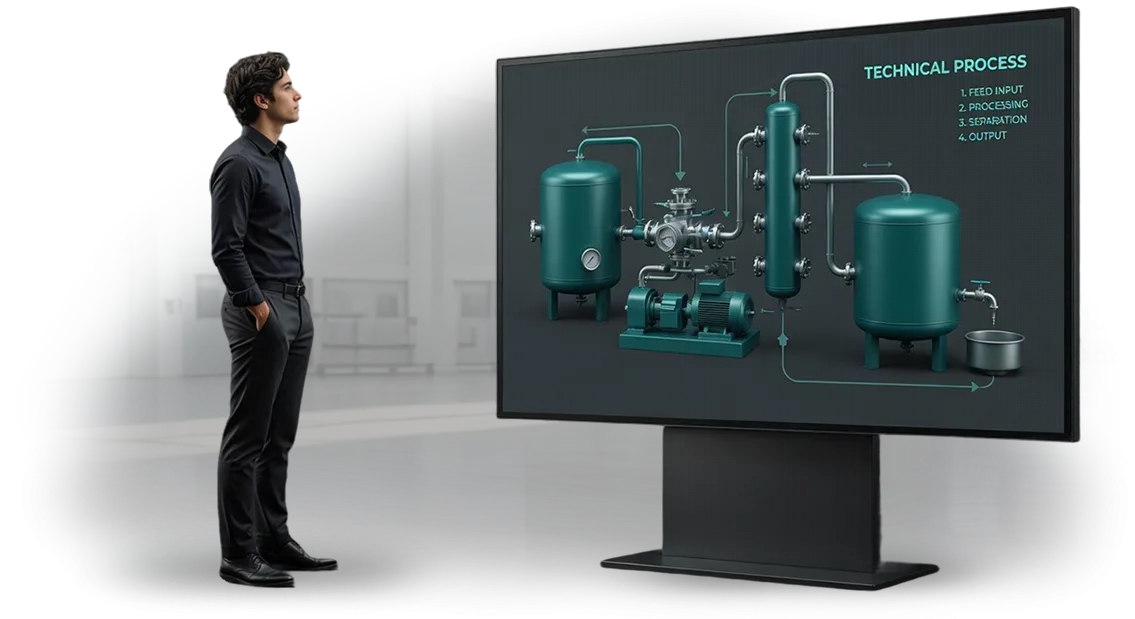
מדוע הוראות לא עובדות בייצור ציוד אריזה
כל ציוד חדש הוא השקעה בפרודוקטיביות, אבל ללא הכשרה מתאימה של הצוות, הוא לא מחזיר את ההשקעה.
בייצור ציוד אריזה, המחיר של טעות מפעיל גבוה במיוחד: הגדרה לא נכונה, שלב שהוחמץ, או רצף פעולות שגוי מובילים להשבתה ותקלות.
במקביל, הכשרה קלאסית היא יקרה: מדריכים מנוסים נמשכים מהעבודה שלהם, ועובדים חדשים עדיין עושים טעויות בגלל אי-הבנה של ההוראות.
תקנות טקסט סטנדרטיות ודיאגרמות סטטיות לא נותנות למפעיל תמונה מלאה. אדם רואה דפים מפוזרים אבל לא מבין איך הרכיבים מתקשרים בתוך המנגנון. כתוצאה מכך, הכשרת הצוות נמשכת, והידע נספג בצורה שטחית.
העובד זוכר את רצף הפעולות אבל לא רואה את ההשלכות של שלב שגוי — ובמוקדם או במאוחר זה מוביל לטעויות מפעיל.
כל טעות כזו מתורגמת להפסדים ספציפיים: עצירת קו ייצור, קריאות למהנדס שירות, החלפת רכיבים. תקלות ציוד הן לא רק עלויות תיקון ישירות, אלא גם החמצת מועדי אספקה, מה שאומר לקוחות לא מרוצים והפסד הכנסות.
לכן הבעיה חריפה במיוחד במתקני ייצור עם תחלופת עובדים גבוהה: החברה משקיעה בלי סוף בהכשרה חוזרת, אבל התוצאה נשארת לא יציבה.
הפתרון הוא הוראות וידאו תלת-ממדיות ויזואליות שמראות את מבנה הציוד מבפנים, עם פירוק לרכיבים ורצף פעולות ברור.
פורמט זה מקצר את זמן הכשרת הצוות, מוריד את מספר טעויות המפעיל, ומפחית את הסיכון לתקלות ציוד.
המומחיות שלנו ביצירת חומרים כאלה לייצור ציוד אריזה היא בדיוק הכלי שמטפל בכאב שלך והופך את ההכשרה לתהליך צפוי.
מה הוראות וידאו תלת-ממדיות מונפשות נותנות לעובדים ולעסק
עובד שרואה יחידת אריזה בפעם הראשונה לא יכול להבין את המבנה שלה משרטוט: זה לוקח ימים של ניסוי וטעייה.
הוראת וידאו תלת-ממדית מונפשת מראה את המנגנון בפעולה, עם מבט מפורק של כל החלקים — והמפעיל מתחיל לעבוד מהר יותר. עבור העסק, זה אומר פחות פסולת, עלויות עיבוד חוזר נמוכות יותר, ואיכות יציבה ללא תלות בעובדים "מנוסים".
פחות טעויות ותקן אחיד
פירוק תלת-ממדי של כל רכיב מבטל פרשנות שגויה: כולם רואים את אותו תהליך עם אותו דגש על נקודות קריטיות. עובד חדש לא מסתמך על "כך לימדו אותי" אלא פועל לפי התקן המקובל בארגון שלך.
אנחנו מייצרים הוראות וידאו כאלה ליצרני ציוד כבר למעלה מ-10 שנים, אז אנחנו יודעים איפה מפעילים בדרך כלל עושים טעויות ואיך להראות זאת בבירור.
קליטה מהירה ומעורבות
במקום שבועיים של תיאוריה — כמה סרטונים קצרים שאפשר לצפות בהם ממש ליד המכונה.
אנימציה מחזיקה תשומת לב טוב יותר מדיאגרמות סטטיות, כך שהחומר באמת נקלט, לא פשוט "מדלגים עליו." זה מאיץ את הקליטה ומפחית תחלופה: עובד חדש מתחיל להוסיף ערך מהר יותר במקום לשבת ולחכות למדריך.
כתוצאה מכך, אתה מקבל כלי שמחזיר את ההשקעה מהפגם הראשון שנמנע. ההכשרה הופכת לצפויה, והעובדים שלך הופכים לבטוחים בפעולותיהם על כל סוג של ציוד אריזה.
פורמטים של הוראות וידאו לציוד אריזה
לכל משימה בייצור יש פורמט הכשרה משלה. עובד לא צריך לדעת את כל מחזור התיקון אם הוא אחראי על הגדרה, ומפעיל לא צריך סכמה הידראולית מפורטת כשנדרשת תחזוקה בסיסית.
פורמטים שונים של הוראות וידאו פותרים בעיות עסקיות שונות: חלקם מקצרים את זמן הקליטה, אחרים מורידים את מספר הטעויות וההשבתות.
להלן טבלת השוואה של פורמטים לציוד אריזה. כולם מבוססים על אנימציה תלת-ממדית: היא מאפשרת להראות את המבנה הפנימי של מכונות ללא פתיחת מעטפות וללא סיכון לצוות.
| פורמט | למי | מה זה נותן ללקוח |
|---|---|---|
| הרכבה מלאה של ציוד | עובדים חדשים, מהנדסי הגדרה | הבנה מהירה של מבנה המכונה. במקום שבוע של לימוד שרטוטים — כמה סשנים של וידאו. |
| פירוק ומבט מפורק | מהנדסי שירות, צוותי תיקון | רצף ברור לפירוק והרכבה של רכיבים. פחות טעויות תיקון, פחות חלקים פגומים. |
| תחזוקה | מפעילים, מכונאים תורנים | לוח זמנים לתחזוקה: מה לשמן, להדק, להחליף. העובד רואה כל רכיב מקרוב ועוקב אחרי ההוראה בדיוק. |
| איתור תקלות | כל קטגוריות הצוות | תרחיש אבחון: מתסמין לגורם. במקום חיפוש תקלות ארוך — אלגוריתם פעולה מהיר, השבתה מופחתת. |
הודות לאנימציה תלת-ממדית, עובד רואה מנגנונים פנימיים כאילו הוא מחזיק אותם בידיים. זה חשוב במיוחד עבור ציוד אריזה, שבו רכיבים רבים מוסתרים מאחורי מעטפות ואינם נגישים לבדיקה ישירה.
אנחנו בוחרים את הפורמט למשימה הספציפית: אם יש לך תחלופה גבוהה — אתה צריך הרכבה מלאה ותחזוקה; אם יש תקלות תכופות — סעיף איתור התקלות.
כתוצאה מכך, כל עובד מקבל בדיוק את הוראת הווידאו שמכסה את תחום האחריות שלו — ללא עומס מיותר של מידע.
איך מפתחים סרטון הדרכה
כדי שתוכל לשלוט בתהליך ולבצע עריכות בזמן, בנינו מסלול שקוף: מהבריף ועד להטמעת הוראת הווידאו המוגמרת. להלן השלבים ליצירת הוראת וידאו לייצור ציוד אריזה.
- בריף וסקר. אנחנו דנים במשימה: איזה ציוד, לאילו עובדים, אילו פעולות צריך להראות. אנחנו לומדים את התיעוד והתקנות, ומבהירים איך מתבצעת ההכשרה כיום.
- תסריט וסטוריבורד. אנחנו מכינים את הטקסט, הלוגיקה של הווידאו ותיאור של סצנות מפתח. עבור רכיבים מורכבים, אנחנו מראים איך ייראה המבט המפורק — זה הבסיס לאנימציה התלת-ממדית העתידית.
- טיוטת אנימציה. אנחנו יוצרים גרסה מקדימה של הסצנות הראשיות עם גרפיקה פשוטה כדי שתוכל להעריך את הקצב, זוויות המצלמה ורמת הפירוט. בשלב זה קל להתאים את הדגשים.
- בחינה ועריכות. אנחנו אוספים משוב מהטכנולוגים והעובדים המנוסים שלך ומבצעים שינויים. לאחר נעילת הגרסה, אנחנו מתחילים ברינדור סופי.
- גימור. אנחנו מרנדרים את האנימציה הנקייה, מוסיפים קריינות, כתוביות ורמזי טקסט. הווידאו המוגמר מומר לפורמטים הנדרשים למערכת ניהול הלמידה שלך.
- הטמעה ותמיכה. אנחנו עוזרים למקם את הוראת הווידאו בפורטל הפנימי שלך או במערכת ההכשרה, ומגדירים גישה. אם הציוד משתנה, אנחנו מעדכנים את הווידאו במהירות.
מה כלול בתפוקות סרטון ההדרכה הארגוני
אנחנו מרכיבים חבילת הכשרה כך שתקבל לא רק "וידאו בוואקום," אלא כלי עבודה להכשרה ובקרה.
כל מה שאנחנו מספקים ללקוח מחולק לשלושה בלוקים: קבצי וידאו, תיעוד וגישה לספריית החומרים — כל בלוק מותאם לצרכים של ייצור ציוד אריזה.
מה אתה מקבל בסופו של דבר
- הוראות וידאו מוכנות לשימוש ברזולוציות לפורמטים שונים: ממסך מחשב ועד טאבלט ברצפת הייצור — ללא אובדן איכות או קריאות חלקים.
- פרויקטים מקוריים וקבצי עריכה — אתה יכול לבצע עריכות בעצמך או להזמין עדכונים מאיתנו ללא צילום מחדש.
- תקנות טקסט ורשימות בדיקה לעובדים — הן מלוות כל וידאו כך שההוראה נשארת בהישג יד גם ללא מסך.
- תסריטים עם חותמות זמן — קל לשלב במערכת ניהול למידה או לבדוק עד כמה העובד קלט את החומר.
- גישה למאגר מאובטח עם ספריית סרטונים — כל היסטוריית ההוראות במקום אחד, עם גישה מבוססת תפקידים למחלקות שונות.
למה זה חשוב
התפוקות הן לא רק אוסף קבצים אלא התוצאה המלאה של הפרויקט: אתה מקבל כלי לקליטת עובדים חדשים, הכשרה חוזרת והסמכה.
כל התיעוד וקבצי המקור נשארים אצלך, כך שאתה לא תלוי בקבלן בפיתוח מערכת ההכשרה שלך.
רוצה לראות איך נראית חבילה כזו באמצעות דוגמה אמיתית של ייצור ציוד אריזה? נראה לך קטעים ותפוקות במהלך הדגמה — ללא התחייבות.
מקרה בוחן: איך הוראות וידאו קיצרו את זמן השקת ציוד חדש
יצרנו הוראות וידאו ליצרן ציוד אריזה. החברה מייצרת כמה קווי מכונות, וכל דגם דורש עשרות פעולות במהלך הרכבה והגדרה.
בעבר, עובדים חדשים הוכשרו באמצעות תקנות טקסט ושרטוטים שטוחים: הקליטה ארכה עד שלושה שבועות, וטעויות הרכבה התרחשו עקב רצף פעולות שגוי.
הצענו להחליף דיאגרמות שטוחות בהוראות תלת-ממדיות עם מבטים מפורקים: העובד רואה את הרכיב מפורק, את הסדר הנכון להתקנת חלקים והדקת חיבורים. אין צורך לקרוא שרטוטים או לזכור את הרצף — הווידאו מראה בבירור כל שלב.
מה השתנה בייצור
חודשיים לאחר ההשקה, החברה מדדה את התוצאות:
- הקליטה של מרכיבים וטכנאי הגדרה ירדה ב-40% — במקום שלושה שבועות, עובד חדש מגיע לקצב רגיל בערך בשבועיים;
- מספר טעויות ההרכבה וההגדרה ירד בחצי, ועבודות חוזרות והפסדי חומרים ירדו באופן ניכר;
- הזמן להכנת אב הטיפוס הראשון קוצר בכמעט שליש — מהנדסים גם משתמשים בהוראות במהלך ההקמה.
הלקוח היה כל כך משוכנע בתוצאות עד שהזמין הוראות וידאו לקווי הציוד הנותרים. דגמים חדשים נשלחים כעת עם ערכת סרטוני הכשרה — הם משמשים ברצפת הייצור ובהכשרת שותפי שירות.
איך לבחור את פורמט הוראת הווידאו הנכון לייצור שלך?
בחירת פורמט מתחילה לא בטכנולוגיה, אלא בקהל ובמשימה. אותה מכונה משמשת אנשים שונים: טכנאי הגדרה מנוסה, מפעיל עם כמה חודשי ניסיון, ומהנדס שמגיע להקמת קו.
ברור שהוראה אוניברסלית נוחה לשלושתם לא קיימת — כל אחד צריך רמת פירוט והצגה שונה.
הקריטריון הראשון הוא מורכבות הפעולה. החלפת סרט או כוונון חיישן הם פעולות שגרתיות שאפשר להראות מספיק טוב בסרטון קצר של שתיים-שלוש דקות.
אבל איתור תקלות, החלפת בלוק סכינים או הרכבת רכיב באמצעות מבט מפורק דורשים פורמט אינטראקטיבי שלב-אחר-שלב שבו העובד יכול לעצור, לפרק את הרכיב על המסך, לבחון כל חלק ורק אז לגשת למכונה.
הקריטריון השני הוא מי ישתמש בהוראה ובאיזו תדירות. אם עובד צופה בחומר פעם ביום ליד הקו, הוא צריך גישה מהירה לשלב הנדרש ללא גלילה.
אם זו פעולה נדירה ויקרה, חשובה השלמות והבהירות; המחיר של טעות גבוה מדי. חשב כמה עולה שעת השבתה במהלך פירוק שגוי, ויהיה ברור אם כדאי להשקיע בוויזואליזציה תלת-ממדית מפורטת.
הקריטריון השלישי הוא רמת המיומנות של עובדים חדשים. בייצור ציוד אריזה, תחלופה בתפקידי קו תמיד קיימת, וכל עובד חדש מקבל הכשרה מאפס.
כאן, הפורמט שמנצח הוא זה שמאפשר למידה ללא מדריך, בקצב נוח, ועם אפשרות לחזור על חלקים קשים. הוראות תלת-ממדיות אינטראקטיביות פותרות את הבעיה הזו: העובד לוחץ, צופה, וחוזר לשלב לא ברור בעצמו.
ענה על שלוש שאלות: מי ישתמש בהוראה, איזו פעולה מוסברת, ובאיזו תדירות היא מבוצעת. אם זו פעולה תכופה ופשוטה — סרטון קצר מספיק. אם היא נדירה ומורכבת — אתה צריך מודל תלת-ממדי מפורט עם מבט מפורק של רכיבים.
אנחנו עוזרים לך לבחור את הפורמט למצב הספציפי שלך ולא דוחפים שום דבר מיותר — שאל אותנו את השאלות האלה, ואנחנו נציע פתרון שיחזיר את ההשקעה באמצעות הפחתת השבתות והאצת קליטת עובדים חדשים.
אנחנו עונים על שאלות נפוצות על פיתוח הוראות וידאו
זה נורמלי שיש ספקות לפני ביצוע הזמנה. אנחנו מתייחסים לשאלות טיפוסיות על הוראות וידאו לייצור ציוד אריזה כדי שתוכל לקבל החלטה עם הבנה ברורה של התוצאה.
האם הווידאו יתיישן לאחר שינויים בעיצוב הציוד?
הוראת וידאו קשורה לדגם הנוכחי, אבל אנחנו בונים אפשרות לעדכונים מהירים. אם רכיב או לוח זמנים לתחזוקה משתנים, מספיק לצלם מחדש קטע אחד — אין צורך לעשות מחדש את כל הווידאו. זה מהיר וזול יותר מהזמנת צילום חדש לגמרי.
האם קשה לעובדים לקלוט הדגמה תלת-ממדית?
להיפך: מבט מפורק מראה את מבנה הרכיב בבירור, ללא צורך בקריאת שרטוטים. העובד רואה איך חלקים משתלבים, בהילוך איטי ומהזווית הנכונה.
בפועל, זה מקצר את תקופת ההכשרה ומפחית את מספר הטעויות במהלך הרכבה ותחזוקה.
כמה זמן לוקח הפיתוח?
לוחות הזמנים תלויים במורכבות הציוד ובמספר הרכיבים. בדרך כלל, הוראה אחת לוקחת 2–4 שבועות להפקה. אנחנו קובעים את לוח הזמנים המדויק בחוזה, כך שאתה יודע מראש מתי תקבל את הווידאו המוגמר.
אילו ערבויות אתה מספק?
אנחנו תומכים בפרויקט לאחר המסירה: אנחנו בודקים שהווידאו עובד כראוי על המכשירים שלך ומבצעים עריכות אם שלב לא תואם לתהליך האמיתי. תנאי העדכון מצוינים גם בחוזה — אתה מוגן מהוצאות בלתי צפויות.
איך הוראות וידאו משתלבות בהכשרה?
אנחנו מספקים את הסרטונים בפורמט המתאים למערכת ניהול הלמידה או לפורטל הארגוני שלך. עובד צופה בהוראה לפני העבודה עם הציוד ויכול לחזור אליה בכל עת. זה מפחית את העומס על המדריכים ומאיץ את הקליטה.
הזמן הוראות וידאו תלת-ממדיות לייצור שלך
עבור עובדים שעובדים עם ציוד אריזה, כל דקת השבתה היא הפסד. הוראות טקסט רגילות ושרטוטים יבשים לא נותנים תמונה מלאה: מפעיל חדש מבלה שבועות בהכשרה, וטעויות הרכבה או תחזוקה מובילות לתקלות.
אנחנו מקלים על הכאב הזה עם הוראות וידאו תלת-ממדיות, שבהן מבטים מפורקים ורכיבים מוצגים בבירור — מפירוק ועד הרכבה מחדש.
כדי להתחיל פרויקט, אתה צריך רק שלושה שלבים. השאר פנייה — ניצור איתך קשר תוך יום עסקים אחד, נבצע ייעוץ קצר על המשימות שלך, ונחשב במהירות לוחות זמנים ועלות. לאחר מכן תקבל את התסריט המושלם, אישור והשקת הפקה.
מה העבודה כוללת:
- פנייה: אתה מתאר את המשימה, הציוד ומספר ההוראות.
- ייעוץ: אנחנו מבהירים את הצרכים שלך, מורכבות הרכיבים ופורמטי היישום — להכשרת עובדים חדשים או למחלקת השירות.
- הערכת עלות ולוחות זמנים: הערכה שקופה ללא עמלות נסתרות; אנחנו קובעים את לוח הזמנים בחוזה.
- אישור תסריט: אתה רואה בדיוק מה יוצג בכל סצנה לפני תחילת ההפקה.
- הפקת אנימציה תלת-ממדית: רינדור על ציוד מקצועי, אישור גרסאות טיוטה.
- וידאו מוגמר: ההוראה בפורמטים לפורטלי הכשרה, טאבלטים או מאגר הידע הפנימי.
לאחר מסירת הפרויקט, אתה מקבל את הזכויות על הווידאו וקבצי המקור כדי שתוכל להשתמש בהוראה להכשרת כל קבוצת עובדים. התחל את הפרויקט שלך עכשיו — קבל הערכה תוך יום עסקים אחד והתחל להפחית את זמן הקליטה תוך כמה שבועות בלבד.