

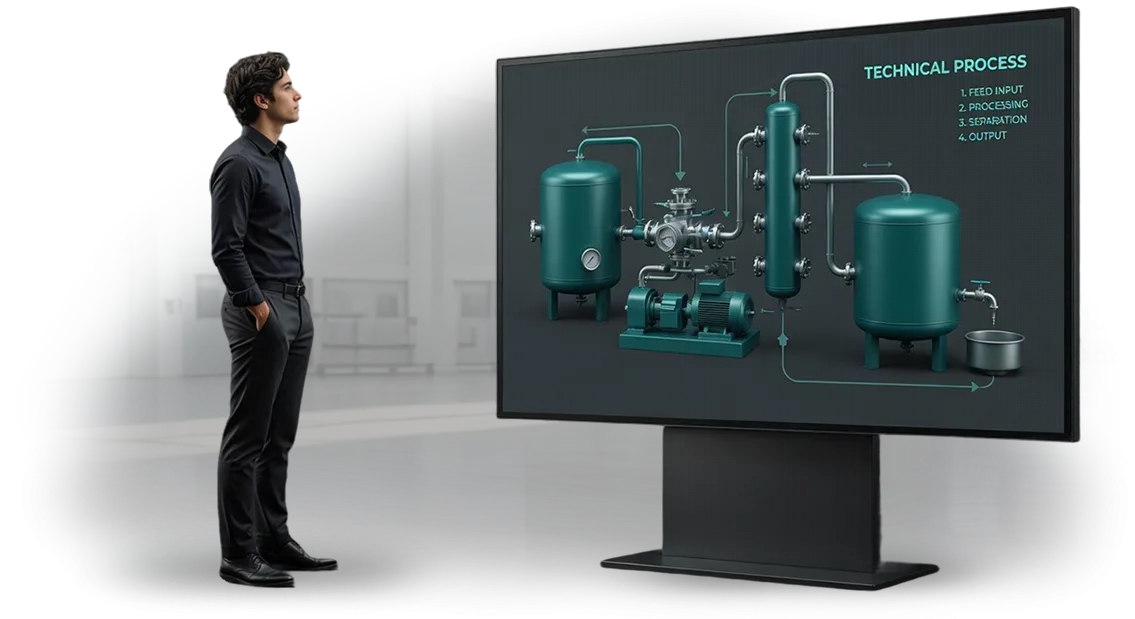
מדוע עובדים מתקשים ללמוד הוראות לשסתומי צנרת
הכשרת צוות לעבודה עם שסתומי צנרת היא אחת המשימות הקשות ביותר בייצור.
נהלים מבוססי טקסט ודיאגרמות שטוחות אינם נותנים לעובדים תמונה מלאה: הם לא יכולים לראות כיצד המכלול בנוי, מה קורה כאשר שלב מבוצע בצורה שגויה, או היכן הנקודות הפגיעות ביותר. הידע נשאר שטחי, והטעויות הרציניות הראשונות קורות רק באתר ההפעלה.
שגיאות בהתקנת שסתומים אינן רק פגם — הן סיכון אמיתי לתאונה תעשייתית. הידוק לא נכון של חיבור או הרכבה לא נכונה של חלקים עלולים להוביל לדיכאון (איבוד לחץ), דליפת מדיום, והשבתת בית מלאכה שלם.
המנהל לומד על הבעיה בדיעבד, כאשר תיקונה דורש תיקונים דחופים ופוגע בלוחות זמנים.
תחלופת עובדים הופכת בעיה זו לכרונית. מתקין מנוסה עוזב, ועובד חדש צריך לשחזר את התהליך מזיכרונות של עמיתים או משאריות של רשימות.
פרטים מרכזיים — רצף הפעולות, נקודות ביקורת, טעויות אופייניות — אובדים כאשר הניסיון מועבר. כל קבוצת כוח אדם חדשה מתחילה מאפס, והחברה שוב משלמת על טעויות בלתי נמנעות.
הוסיפו לכך את היעדר הערכת הכשרה מדידה. גם לאחר תדריך הקליטה, לא ברור עד כמה העובד קלט את החומר או האם הוא מוכן לעבוד עם דגם שסתום ספציפי. הבקרה מצטמצמת לחתימה פורמלית ביומן, ולא להוכחת מיומנויות.
כדי לשבור מעגל זה, יש צורך בחומרי הכשרה חזותיים המשמרים ניסיון ומעבירים אותו לכל עובד בדיוק שווה. לכן אנו מפתחים הוראות וידאו ארגוניות עם פירוק תלת-ממדי מעמיק של שסתומי צנרת.
העובדים רואים את המבנה הפנימי של המכלול, מבינים את ההיגיון של הפעולות, וזוכרים את רצף ההתקנה הנכון — ללא אובדן איכות ידע אפילו במעברי דורות בכוח העבודה.
מה הוראת וידאו תלת-ממדית מביאה לייצור שלך
הוראת וידאו תלת-ממדית הופכת את התהליך המורכב של הרכבה ותחזוקה של שסתומי צנרת לרצף חזותי ברור.
העובד רואה כל חלק בחתך, מבין כיצד הוא מתקשר עם רכיבים שכנים, וזוכר את הנוהל ללא קריאת מדריכים רב-עמודיים.
כתוצאה מכך, ההכשרה אורכת פי כמה פחות זמן, והסיכון לטעויות במהלך התקנה או תיקון יורד משמעותית.
אנו משתמשים בטכנולוגיית מידול תלת-ממדית כדי להפוך תיעוד טכני לשיעור וידאו ברור. זה לא רק אנימציה — זה עותק מדויק של השסתום שלך עם כל המכלולים והמחברים.
העובד רואה מבט מפורק: כיצד חלקים מתחברים, מה צריך להבריג, באיזה סדר, ובאיזה כוח. גישה זו חשובה במיוחד כאשר תקלה או התקנה שגויה עולות ביוקר — מהשבתת קו ועד תאונה.
תקן הכשרה אחיד הוא יתרון מרכזי נוסף. הוראת וידאו מובנת באותה מידה למתחיל ולמתקין מנוסה. אתה כבר לא תלוי ב"ניסיון האישי" של מומחה מסוים: כל העובדים עובדים לפי תוכנית אחת מוכחת.
זה מפשט את הקליטה, הסמכת כוח אדם ובקרת איכות. וכאשר הציוד מתעדכן, אתה רק צריך להחליף שיעור וידאו אחד — וכל הצוות חוזר לסנכרון.
מהירות ההכשרה עולה פי כמה. במקום קריאת הוראות וניתוח שרטוטים, העובדים צופים בוידאו של 3-5 דקות ועוברים מיד לתרגול. החומר נקלט חזותית, כך שיש פחות שאלות ופחות לולאות חוזרות.
עבור הייצור, זה אומר הגעה מהירה יותר לפעולה יציבה, פחות זמן השבתה, והביטחון שכל עובד מכיר את תחום האחריות שלו.
פורמטים של הוראת וידאו לשסתומי צנרת
כל משימת הכשרת עובדים לשסתומי צנרת דורשת פורמט הצגה משלה.
חלקם זקוקים להדגמה מהירה של עקרון הפעולה הכללי, אחרים זקוקים לפירוק תיקון עד לפרט הקטן ביותר, ואחרים זקוקים לדרך לבדוק עד כמה החומר נלמד. וידאו אחד לא יכול לכסות את כל הצרכים הללו.
אנו בוחרים את הפורמט למשימה טכנולוגית ספציפית, ולעתים קרובות משלבים מספר אפשרויות למערכת הכשרה אחת. כתוצאה מכך, הלקוח מקבל לא רק וידאו, אלא כלי שמקצר את זמן הקליטה ומוריד את מספר השגיאות במהלך התקנה ותחזוקה.
| פורמט | קהל יעד | תועלת ללקוח |
|---|---|---|
| אנימציה תלת-ממדית | עובדים חדשים, מחלקות שכנות | מציגה בבירור את מבנה השסתום וזרימת המדיום — העובדים מבינים את עקרון הפעולה מהר יותר, עם פחות שאלות למנטורים |
| מבט מפורק | מהנדסי שירות, צוותי תיקון | מפרקת מכלולים וחלקים ברצף — מקצרת את זמן הפירוק וההרכבה, מורידה את הסיכון לנזק לאטמים |
| אינטראקטיבי | מפקחי משמרות, מבקרי איכות | מאפשר בדיקת ידע במהלך הצפייה ומספק משוב — מבטל השלמה פורמלית של ההכשרה |
| וידאו מודולרי | סניפים ומשמרות מרוחקים | מבנה בלוקים מאפשר לימוד החומר בחלקים — ההכשרה משתלבת בלוח הזמנים של העבודה ללא עצירת ייצור |
כיצד אנו מפתחים הוראת וידאו: שלבי הפרויקט
כדי שהוראת וידאו אכן תפחית שגיאות כוח אדם ותאיץ קליטה, יש לבנות את התהליך כך שתראה תוצאות בכל שלב ותשמור על לוחות זמנים.
חילקנו את הפרויקט לשלבים ברורים — מהבריף הראשוני ועד מסירת הווידאו המוגמר ותמיכה שוטפת.
-
בריף ובדיקת תיעוד. אנו בוחנים את הבסיס הטכני שלך: דרכוני מוצר, מדריכים ונהלים. אנו מבהירים לאיזה קהל מיועדת ההוראה — מתקינים, מהנדסי שירות או צוות מכירות. התוצאה היא הבנה ברורה של מטרות והיקף.
-
תסריט וסטוריבורד. אנו הופכים שרטוטים יבשים לנרטיב: אילו מכלולים להציג, באיזה סדר, והיכן לשים דגש. אנו מיישרים את הטקסט וההיגיון הסיפורי כך שההוראה תענה בדיוק על השאלות שיש לעובדים שלך.
-
אישור לייאוט. לפני תחילת ההפקה, אתה רואה מודל של הווידאו העתידי: פריימים מרכזיים, רצף פעולות ותזמון. בשלב זה ניתן לבצע שינויים בקלות ללא עיבוד מחדש של כל העבודה.
-
יצירת סצנות תלת-ממדיות ומבטים מפורקים. אנו מדגמים שסתומי צנרת עם גיאומטריה מדויקת ורצף פירוק/הרכבה נכון. המבט המפורק מציג בבירור את המבנה הפנימי — העובדים זוכרים את פריסת המכלול מהר יותר.
-
אנימציה וצילום. אנו מביאים את התוכנית לחיים: הפרדות חלקים חלקות, סיבובים ודגש על אלמנטים חשובים. במידת הצורך, אנו מוסיפים קטעי וידאו אמיתיים או צילום להקשר. התוצאה היא וידאו דינמי שמושך תשומת לב.
-
עריכה וסאונד. אנו מרכיבים את הווידאו הסופי: טקסט קריינות, כתוביות וכיתובים אינטראקטיביים. אנו בודקים את משך הזמן — ההוראה צריכה להיות קצרה ותמציתית כדי שניתן יהיה לצפות בה ישירות בעמדת העבודה.
-
השקה ותמיכה. אנו מספקים את הקובץ המוגמר בכל הפורמטים הנדרשים ועוזרים לשלב אותו במערכת ניהול הלמידה שלך. אם עיצוב השסתום משתנה, אנו מעדכנים את הווידאו בעלות מינימלית עבורך.
התוצאה היא לא רק וידאו, אלא כלי הכשרה שמקצר את זמן המנטור ומוריד את הסיכון לשגיאות במהלך התקנה ותחזוקה של שסתומי צנרת.
מה אתה מקבל בחבילת המסירה של הוראת הווידאו
המסירה היא חבילה מלאה, לא רק קובץ וידאו. אתה מקבל כל מה שצריך כדי להשיק הכשרת עובדים מיד: מהתסריט המאושר ועד עדכונים כאשר נהלים משתנים.
- תסריט עם סטוריבורד וטקסט קריינות. אנו מאשרים אותו לפני הצילום כך שהווידאו פותר במדויק את משימת ההכשרה — ללא מידע מיותר או מילוי עבור מפעילי שסתומי צנרת.
- וידאו ראשי עם מבט תלת-ממדי מפורק. מציג בבירור את המבנה, רצף ההרכבה והפירוק, ומכלולים מרכזיים. העובדים רואים חלקים באופן שלעולם לא היו רואים על ציוד אמיתי.
- גרסאות לפורמטי הכשרה שונים. קבצים נפרדים ל-LMS, הכשרה בכיתה ולמכשירים ניידים — חבילה אחת מכסה את כל מקרי השימוש.
- מדריך למדריך. ממליץ כיצד לשלב את הווידאו בשיעור, על מה לשים דגש, ואילו שאלות לשאול עובדים כדי לוודא הבנה.
- קבצי LMS עם מבחנים והגדרות מעקב התקדמות. העלה את הקורס למערכת ניהול הלמידה שלך ועקוב מיד אחר התקדמות: מי סיים, מי קלט את החומר, ומי צריך עבודה נוספת.
- כרטיס עזר מהיר לעובד. סיכום קצר של פעולות מפתח — הדפס אותו ותלה אותו ליד עמדת העבודה כך שעובדים לא יצטרכו לחזור למסך עבור כל פעולה.
- עדכונים חינם. אם נהלים או חלקים משתנים, או מתווספות פעולות חדשות, אנו עורכים את הווידאו וחומרי החבילה ושולחים לך את הגרסה המעודכנת.
בסופו של דבר, אתה מקבל לא רק וידאו הכשרה, אלא מערכת למידה מלאה: העובדים שולטים בתהליכי עבודה מהר יותר, ולאחראי על ההכשרה יש כלי מוכן ללא שינויים נוספים או חיפוש חומרים.
מקרה בוחן: כיצד הוראת וידאו הפחיתה שגיאות בתיקון שסתומים
כאשר שגיאת תיקון במתקן ייצור שסתומי צנרת מובילה להשבתה או תאונה, ההימור הוא לא רק זמן אלא גם בטיחות אנושית.
חברת הנפט והגז Severneftegaz פנתה אלינו כאשר הבחינו שמכונאים חדשים לוקחים זמן רב מדי להגיע לכשירות מלאה, ועובדים מנוסים ביצעו את אותה פעולה בדרכים שונות. הם היו זקוקים לתקן אחד שלא ניתן לפרש בכמה דרכים.
החלפנו נהלי נייר ומצגות מפוזרות בספרייה אחידה של הוראות וידאו תלת-ממדיות עם מבטים מפורקים של שסתומים.
כל וידאו מציג את המבנה הפנימי של המכלול, רצף הפירוק, החלפת אטמים והרכבה מחדש — ללא צורך בפתיחת ציוד אמיתי על ספסל אימון.
מה השתנה לאחר ההשקה
בתוך הרבעון הראשון, מספר שגיאות התיקון ירד ב-37%, וזמן הקליטה של מכונאי חדש ירד משבועיים לארבעה ימים.
העובדים כבר לא היו תלויים בהוראות מילוליות: כל רצף הפעולות היה מולם, וניתן היה לפתוח אותו בטאבלט ישירות באתר. מהירות ההרכבה עלתה, והעלתה את מספר ההזמנות שהושלמו.
Severneftegaz משתמשת כעת בהוראות הווידאו הן להכשרה ראשונית והן להסבה תקופתית. הספרייה מתרחבת לכיסוי סוגי שסתומים חדשים — זו הייתה הזמנה חוזרת, מה שאומר שהפתרון הוכיח את ערכו בפועל.
כיצד לבחור את פורמט הוראת הווידאו המתאים למשימה שלך?
בחירת פורמט הוראת וידאו מתחילה לא בוויזואליה, אלא בשאלה: מה בדיוק העובד צריך ללמוד, ועד כמה מורכב המכלול שבו הוא עובד? אם מדובר בהתקנה פשוטה או תחזוקה שוטפת, וידאו מצולם רגיל מספיק.
אבל עבור שסתומי צנרת עם גיאומטריה פנימית מורכבת, פירוק ורצף הידוק ספציפי, אתה צריך אנימציה תלת-ממדית עם מבט מפורק. רק גישה זו יכולה להראות כל אלמנט בתוך הגוף, מיקומו ונתיב ההרכבה ללא סיכון לשגיאה.
הקריטריון השני הוא הקהל. מתחיל צריך היגיון מפורט שלב-אחר-שלב עם דגש על טעויות אופייניות; מומחה מנוסה צריך עזר מהיר למכלולים לא סטנדרטיים ונקודות קריטיות.
לכן אנו בוחנים תחילה מי יצפה בהוראה: מתקינים, מהנדסי שירות או עובדים ללא רקע טכני. רמת הפירוט, הקצב ועומק ההסבר תלויים בכך.
הקריטריון השלישי הוא תנאי השימוש: האם הווידאו נלמד בטאבלט בסדנה, בבית לפני הגעה לאתר, או בפורטל הכשרה. זה משפיע על אורך ומבנה הווידאו — מודולים קצרים נוחים יותר מסרט אחד ארוך.
תקציב ולוחות זמנים הם שיקולים חשובים לא פחות. דיאגרמה תלת-ממדית מלאה עם מבט מפורק דורשת יותר זמן הכנה, אבל היא משתלמת באמצעות הפחתת שגיאות ופגמים.
אם יש צורך בתוצאה מהירה, אנו מציעים פורמט משולב: צילום אמיתי לפעולות כלליות והכנסות תלת-ממד רק למכלולים מרכזיים — זה זול ומהיר יותר, אבל נושא את אותו ערך הכשרתי.
אנו תמיד מסבירים בכנות היכן ניתן לחסוך כסף ללא אובדן איכות, והיכן חיסכון יוביל לצילומים חוזרים או בלבול בקרב הצוות.
ההחלטה הסופית מתקבלת במשותף לאחר בריף קצר: אתה מתאר את סוג השסתום ורמת המיומנות של העובדים, ואנו מציעים את הפורמט האופטימלי עם נימוק ללוח זמנים ותקציב.
כך, אתה מקבל תוצאה ברורה ולא רק "וידאו נחמד": הוראה שאנשים באמת צופים בה, זוכרים ומיישמים בייצור.
שאלות נפוצות על פיתוח הוראות וידאו לשסתומים
ספקות לפני הזמנת הוראות וידאו לשסתומים הם שלב נורמלי. אנו עונים על אותן שאלות: לוחות זמנים, עלות, תיקונים ותאימות. הנה סקירה קצרה של איך זה עובד.
כמה זמן לוקח הפיתוח?
לוח הזמנים תלוי במורכבות השסתום ובמספר הסצנות. בממוצע, משבועיים: אנו מציגים טיוטות תסריט ראשונות תוך 3-4 ימים, ואת הווידאו הסופי לאחר שני סבבי ביקורת. אם יש צורך בהשקה דחופה, נוכל לדון בלוח זמנים נפרד.
כיצד מחושבת העלות?
אנו מחשבים את התקציב לאחר הבריף: מספר המודלים, המכלולים, רמות הפירוט והתיקונים. העלות קבועה בחוזה ואינה משתנה במהלך התהליך. אתה משלם רק על עבודה שמשפיעה על התוצאה, ללא תוספות נסתרות.
האם ניתן לבצע שינויים מאוחר יותר?
כן. בכל שלב — מהתסריט ועד ההרכבה הסופית — אתה מקבל גרסאות ביניים. תיקונים נעשים ללא תשלום לפני תחילת העיבוד; לאחר מכן, בתעריף מוסכם. זה שומר על הווידאו עדכני גם כאשר נהלים משתנים.
באילו מכשירים הווידאו יעבוד?
אנו מתאימים את הווידאו לסביבה שלך: LMS, פורטל ארגוני או ספסלי הכשרה. אנו מספקים אותו בפורמט אוניברסלי שנפתח בכל מחשב נייד וטאבלט ללא תוכנה מיוחדת. במידת הצורך, אנו מוסיפים כתוביות וקריינות מקצועית.
הזמן פיתוח של הוראות וידאו תלת-ממדיות להכשרת עובדים
הכשרת עובדים לעבודה עם שסתומי צנרת היא לא רק היתרים ונהלים. שגיאות במהלך התקנה או תחזוקה מובילות להשבתות, תאונות ועלויות מיותרות.
הוראות וידאו תלת-ממדיות עם מבטים מפורקים הופכות את התהליך לחזותי: העובדים רואים כל חלק, מקומו ורצף הפעולות הנכון.
אנו נעזור לך לשלב פורמט זה במערכת ההכשרה שלך. התחל בייעוץ קצר — נסביר כיצד הוראות וידאו ישתלבו בתהליכים שלך ונכין הערכת עלות ולוחות זמנים מדויקת עבור מגוון המוצרים שלך.
וכדי שתוכל להעריך את התוצאה לפני השקה מלאה, נציע פרויקט פיילוט על אחד מסוגי השסתומים.
לאחר בקשתך, תקבל:
- ייעוץ על תסריט ההכשרה, תוך התחשבות במאפייני הייצור שלך.
- חישוב מדויק של עלות הפיתוח ולוחות הזמנים, ללא תוספות נסתרות.
- בחירת פורמט: וידאו מלא, מודולים נפרדים או דיאגרמות אינטראקטיביות ל-LMS.
- דוגמאות של הוראות התלת-ממד שלנו למוצרים דומים.
- פרויקט פיילוט על אחד מסוגי שסתומי הצנרת — כדי למדוד את האפקט לפני הרחבה.
- תמיכה בכל השלבים: מצילום ומבטים מפורקים מורכבים ועד אינטגרציה במערכת ההכשרה שלך.
השאר בקשה באתר — נחזור אליך תוך יום עסקים אחד, נענה על שאלותיך ונציע את הפתרון האופטימלי. לאחר פרויקט הפיילוט, תקבל מודל מוכן שניתן לשכפל בקלות על פני כל קו השסתומים.