

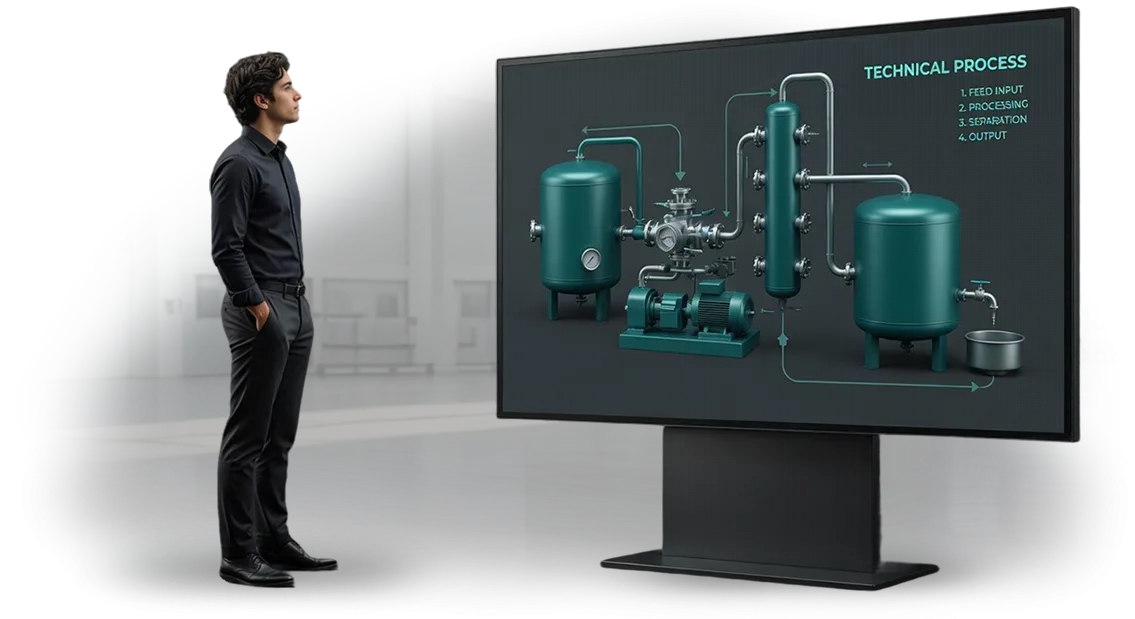
מדוע הוראות נייר לא עובדות עבור ציוד רפואי
אפילו עובד מנוסה המצויד במדריך נייר יכול לטעות בעבודה עם ציוד רפואי מורכב.
דיאגרמות סטטיות ותיאורי טקסט אינם מעבירים לא את רצף הפעולות ולא את הקשרים בין הרכיבים — כל אחד קורא אותם בדרכו שלו. התוצאה תמיד זהה: טעויות של צוות במהלך ההדרכה ובעבודה האמיתית, השבתת ציוד וסיכונים למטופלים.
ברפואה, המחיר של טעות גבוה במיוחד. שלב כיול שבוצע באופן שגוי או כשל בפרוטוקול ההליך אינו רק שעה אבודה — הוא איום ישיר על בטיחות המטופל ועל המוניטין של המרפאה. מנהלים מבלים חודשים באימון עובדים, אבל תחלופת עובדים מצמצמת את ההשקעות האלה לאפס.
זו הסיבה שיותר ויותר מרפאות מחליפות נייר בהוראות וידאו בצורת אנימציית תלת-ממד. היא מציגה את התהליך בתנועה: האלגוריתם הנכון, כיצד הציוד מתנהג בכל שלב, ונקודות כשל אופייניות.
הוראת וידאו כזו מובנת באותה מידה למתחיל ולעובד מנוסה — היא מבטלת פרשנות מעורפלת וקובעת תקן עבודה אחיד.
בצוות שלנו אנו יוצרים הוראות וידאו ארגוניות להדרכה עם הדמיית תלת-ממד ברורה של תהליכים טכנולוגיים. אנו שמים דגש על השלבים הקריטיים ביותר כדי שהדרכת הצוות תהיה מהירה ולא תדרוש סימולטורים יקרים.
זה פותר את נקודת הכאב המרכזית של הוראות נייר: פחות טעויות בעבודה, בטיחות יציבה ותוצאה צפויה אפילו עבור עובד חדש.
מה מקבלים מאנימציית תלת-ממד לציוד רפואי
אנימציית תלת-ממד מתרגמת הוראות משפת השרטוטים לשפת תמונות ברורות — וזה הכלי המרכזי לחיסכון בזמן ובמשאבים.
במקום שעובדים יבלו שבועות בשליטה במכשיר דרך תקנות מבוססות טקסט, הם רואים כל רכיב, תנועה ורצף פעולות כאילו הציוד כבר בידיהם. ההדרכה הופכת למהירה יותר, ועובדים חדשים מתחילים לעבוד באופן עצמאי בזמן קצר יותר.
הדבר הראשון שמקבלים הוא הדרכה מואצת של הצוות. ניתוח אינטראקטיבי של התהליך הטכנולוגי מצמצם שעות של תיאוריה למינימום, מכיוון שכל הפעולות המרכזיות מוצגות באופן דינמי, עם דגש על נקודות קריטיות.
במקום הסברים חוזרים ונשנים, מספיקה צפייה אחת — והעובד מבין את היגיון העבודה, ולא רק משנן רצף של כפתורים.
היתרון השני הוא שימור החומר. אנשים קולטים מידע חזותי הרבה יותר טוב מאשר טקסט או טבלאות, כך שלאחר צפייה באנימציה עד 80% מהתכנים נשארים בזיכרון, לעומת 20% בקריאת מדריך הוראות.
אנימציה מאפשרת להציג תהליכים פנימיים שלא ניתן לראות פיזית — וזה יוצר הבנה עמוקה, לא חזרה מכנית על פעולות.
היתרון השלישי הוא מזעור טעויות בעבודה עם ציוד רפואי. הדגמה ברורה של פעולות נכונות ומסוכנות מפחיתה את מספר הפעולות השגויות, ובכך מורידה את הסיכון לתקלות, ליקויים ופציעות.
בתחום הרפואי זה גם עניין של בטיחות המטופל: עובד שמבין בבירור את כל מחזור ההליך פועל בביטחון וללא כשלים.
בסופו של דבר, מקבלים מערכת הדרכה מוכנה שמתרחבת ללא עלויות נוספות: ניתן להציג אנימציה אחת למאות עובדים, בסניפים שונים, ובכל גל גיוס חדש.
זה לא רק וידאו אלא משאב חינוכי שלם שמחזיר את עצמו על ידי הפחתת עלויות הקליטה ושיפור איכות העבודה של הצוות שלכם.
פורמטים של וידאו הדרכה: אנימציה, תוכן אינטראקטיבי וסימולציה
הדרכה לעבודה עם ציוד רפואי אינה רק צפייה בוידאו הדרכה — היא הכנה לפעולות שבהן המחיר של טעות גבוה.
כל פורמט וידאו פותר משימה משלו: אנימציה מסבירה את העיקרון, תוכן אינטראקטיבי בודק הבנה, סימולציה מאמנת את המיומנות. כדי לבחור את האפשרות הנכונה, חשוב להבין איזו תוצאה רוצים בכל שלב של ההדרכה.
| פורמט | מתאים ביותר ל | מה הלקוח מקבל |
|---|---|---|
| אנימציה | הסבר על מבנה הציוד, הצגת מנגנונים ותהליכים נסתרים | הבנה מהירה ואחידה של החומר על ידי כל העובדים, עדכונים קלים בעת שדרוג ציוד |
| אנימציה אינטראקטיבית | בדיקת הבנת האלגוריתם, לימוד רצף הפעולות הנכון | פחות טעויות בפועל — עובדים מתאמנים ללא סיכון לציוד או למטופלים |
| סימולציית עבודה | תרגול המחזור המלא, כולל מצבי חירום ותקלות נדירות | ביטחון הצוות, מוכנות למקרים מורכבים, שימור הציוד |
בחירת הפורמט תלויה במשימה הספציפית. אם צריך להכיר לעובדים במהירות דגם מכשיר חדש, אנימציה מספיקה. אם צריך לוודא שעובד זוכר את רצף הפעולות, מוסיפים תוכן אינטראקטיבי.
ולפרוצדורות מורכבות שבהן טעויות אינן מקובלות, עדיף להשתמש בסימולציה קרובה ככל האפשר למציאות.
אנו משלבים את כל שלושת הפורמטים בתוכנית אחת: אנימציה מספקת את הבסיס, תוכן אינטראקטיבי מחזק אותו, וסימולציה מפתחת אוטומטיות.
גישה זו מבטיחה שלאחר ההדרכה העובד מוכן לעבוד באופן עצמאי, ולא רק שראה וידאו הדרכה. ספרו לנו על המשימה שלכם — נעזור לכם לבחור את הפורמטים ולוחות הזמנים הטובים ביותר.
כיצד אנו יוצרים הוראות וידאו בתלת-ממד: 6 שלבים מבריף ועד הפקה
כשמדובר בציוד רפואי, המחיר של טעות עובד גבוה מדי.
לכן אנו מבנים את התהליך כך שהוראת הווידאו פותרת את המשימה כבר מהצפייה הראשונה: היא מסבירה בבירור את האלגוריתם, מציגה את כל הפרטים ומבטלת פרשנות שגויה. בכל שלב אתם נשארים בקשר איתנו ושולטים בתוצאה.
- בריף. אנו מתחילים בסקירה מעמיקה: לומדים את הציוד שלכם, התקנות ורמות המיומנות של הצוות. אתם מספרים לנו על טעויות אופייניות — אנו מבינים על מה לשים דגש.
- תסריט. אנו מכינים תסריט מפורט: מה מציגים, באיזה סדר, איזה קריינות וכתוביות להשתמש. אתם מקבלים את הטקסט לפני תחילת ההפקה — תיקונים בשלב זה אינם עולים דבר.
- אישור. אתם מספקים משוב, ואנו מתאימים את התסריט ואת משך הזמן. הגרסה המאושרת הופכת לבסיס לכל העבודה הנוספת — זה מבטיח שהתוצאה תואמת את הציפיות.
- מידול. אנו יוצרים מודלי תלת-ממד של הציוד שלכם, המשחזרים את כל הפרטים המשמעותיים: ידיות, מסכים, מחוונים, מחברים. זה מאפשר לנו להציג את התהליך מכל זווית, עד למבנה הפנימי.
- ויזואליזציה סופית. אנו הופכים את המודלים לפריימים ריאליסטיים עם תאורה נכונה ותנועה חלקה. אתם רואים כיצד המכניקה עובדת, לא ייצוג סכמטי.
- מסירה והשקה. אנו מספקים את הווידאו המוגמר בפורמטים וברזולוציות הנדרשות — עבור LMS, טלפונים או מסכי מקום עבודה. אנו עוזרים לשלב את הווידאו בתוכנית ההדרכה ולעדכן חומרים מאוחר יותר אם צריך.
כל שלב לוקח זמן קבוע, ואתם יודעים את המועד הסופי כבר בשלב הבריף. בסופו של דבר, אתם מקבלים לא רק "תמונה יפה" אלא כלי עבודה שמאיץ את קליטת העובדים ומפחית את מספר הטעויות בהפעלת ציוד יקר.
מה כלול במסירה: תסריט, מודלי תלת-ממד, וידאו וקבצי מקור
חבילת המסירה המלאה עונה על השאלה "מה אנחנו מקבלים תמורת הכסף שלנו" ומאפשרת לצוות שלכם להתחיל בהדרכה מיד. אתם לא תלויים בנו לאחר מסירת הפרויקט — כל החומרים נשארים אצלכם לשימוש פנימי ולפיתוח תוכן עתידי.
חבילת המסירה כוללת:
- תסריט הדרכה — בסיס טקסט מוכן עם זרימה לוגית של החומר. ניתן להשתמש בו לקליטה, לבדיקות ידע וליצירת גרסאות טקסט של הוראות.
- מודלי תלת-ממד של הציוד — עותקים תלת-ממדיים מדויקים של המכשירים שעמם עובדים העובדים שלכם. המודלים נשארים שלכם ומתאימים למצגות עתידיות, פוסטרים או סרטונים חדשים.
- וידאו סופי — וידאו בפורמט מוכן להטמעה במערכת למידה מרחוק, פורטל פנימי או אפליקציה ניידת. הווידאו כבר מחולק לבלוקים לוגיים כך שעובדים יכולים למצוא במהירות את השלב שהם צריכים.
- קבצי מקור של הפרויקט — קבצי עבודה מכל השלבים: סצנות, טיוטות אנימציה, פסקולים. זה מבטיח עצמאות מהקבלן: המומחים שלכם יכולים לבצע עריכות או ליצור סרטונים חדשים מבלי להתחיל את הפרויקט מאפס.
- תיעוד — תיאור מבנה הווידאו, רשימת חומרים בשימוש, מילון מונחים והמלצות לעדכון תוכן. זה חוסך זמן לאלה שיתחזקו את ההדרכה בעתיד.
חבילה כזו היא לא רק "וידאו בונוס" אלא מאגר ידע שלם על הציוד שלכם. כאשר מופיעים דגמים חדשים או התקנות משתנות, תוכלו לעדכן במהירות את ההוראה מבלי לשלם שוב על פיתוח גדול. הבסיס הטכני נשאר אצלנו, אבל השליטה המלאה בתוכן היא שלכם.
מקרה בוחן: כיצד אנימציית תלת-ממד הפחיתה טעויות צוות במרפאה
הוראות טקסט ותזכירי PDF לא עובדות בתחום הרפואי: כל עובד מבין אותן אחרת, וטעות עולה לא רק בזמן אלא גם במוניטין של המרפאה.
מנהלים נאלצים לחזור על הדרכות בלי סוף, להסיח את דעתם של רופאים ואחיות מעבודתם, בעוד עובדים חדשים עדיין עושים את אותן טעויות בשלב הראשוני.
פתרנו את הבעיה הזו עבור רשת המרפאות MedLife. במקום הוראה סטנדרטית, הכנו סדרת אנימציות תלת-ממד של התהליך הטכנולוגי של עבודה על ציוד רפואי מורכב — מהכנת המכשיר ועד לפעולות במצבי חירום.
האנימציה מציגה כל שלב דרך עיניו של המפעיל: כיצד למקם את הידיים, באיזה רצף ללחוץ על כפתורים, והיכן מתרחשות תקלות לרוב. ההדרכה הופכת לחזותית וניתן להשלים אותה בזמן נוח, ללא צורך באיסוף קבוצה בחדר ישיבות.
התוצאה עלתה על הציפיות: מספר הטעויות בהכנת הציוד ירד ב-40%, וזמן הקורס המקדים לעובדים חדשים קוצץ בחצי. מנטורים מנוסים הפסיקו לבזבז משמרות שלמות על חזרה על שלבים בסיסיים והתמקדו במקרים מורכבים.
לאחר חודש, המנהלים שמו לב שהצוות עובד עם הציוד בביטחון רב יותר, שואל פחות שאלות ונקלט במשימות מהר יותר.
כעת MedLife הזמינה מאיתנו המשך — אנימציות לשלוש מחלקות, כולל יחידת הכירורגיה.
יחד עם המרפאה פיתחנו תרחישים שמתחשבים בתקנות בפועל ובטעויות אופייניות של מחלקות ספציפיות, כך שהסרטונים אינם "גנריים" אלא מותאמים בדיוק לתהליכי המרפאה.
עבורכם, מקרה זה אומר את הדבר הבא: ההדרכה מפסיקה להיות סעיף הוצאה והופכת לכלי להפחתת סיכונים תפעוליים. ההחזר על ההשקעה נראה לא בדוח הדרכה, אלא בפחות טעויות, הסתגלות מהירה יותר והפחתת עומס המנטורים.
אם לחברה שלכם יש נקודת כאב דומה — עובדים לא קולטים הוראות, או תחלופת עובדים מאלצת אתכם לחזור שוב ושוב לאותן בעיות — נציג לכם קטע ממקרה הבוחן ונדון כיצד להתאים את הגישה לתהליכים שלכם.
כיצד לבחור את פורמט הוראת הווידאו הנכון למשימה שלכם?
בחירת פורמט הוראת וידאו מתחילה לא בוויזואליה, אלא בשאלה: מה העובד צריך לעשות לאחר הצפייה? אם המשימה היא לרענן במהירות את הזיכרון לפני עבודה עם מכשיר, וידאו קצר של דקה-שתיים מספיק.
אם צריך ללמד מתחיל תהליך טכנולוגי מורכב, תצטרכו תסריט שלב-אחר-שלב עם דגש על טעויות וכללי בטיחות. שאלה זו קובעת את בחירת הפורמט למשימה שלכם — לא טרנדים עדכניים או כמה "יפה" האנימציה.
בחירת הפורמט תלויה גם בקהל ובתנאי השימוש. צוות טכני קולט וידאו אחרת: חלק מעדיפים לצפות בטאבלט ליד הציוד, אחרים מעדיפים הדרכה ליד השולחן.
לכן, אנו מתחשבים גם בזה, ומציעים או וידאו אחד לכולם או סדרת מודולים קצרים שקל לעדכן כשהתקנות משתנות. כך אתם לא משלמים יותר מדי על מה שאינכם צריכים ומקבלים בדיוק את רמת הפירוט שהעובדים שלכם דורשים.
ציוד רפואי דורש דיוק מיוחד בהוראות: כל השמטה עלולה להוביל לטעות בעבודה, לכן איננו משתמשים בתבנית מוכנה. אנו מקיימים ייעוץ, לומדים את התהליך שלכם, את הקהל ואת מטרות ההדרכה.
בהתבסס על מידע זה, אנו מציעים את הפורמט האופטימלי: היקף, משך, רמת מורכבות ושיטת מסירה. כתוצאה מכך, עובדים באמת קולטים את החומר ומיישמים אותו מיד בפועל, ולא רק "צופים בתמונה".
העיקרון המרכזי הוא שאתם מקבלים הוראת וידאו שפותרת את המשימה שלכם, לא "אנימציה יפה". גישה זו מקצרת את הזמן הנדרש להפעלת ההדרכה ומבטלת עבודה חוזרת לאחר הצפיות הראשונות.
אם אינכם בטוחים באיזה פורמט לבחור, התחילו בשיחה קצרה — יחד נקבע מה יהיה היעיל ביותר עבור המצב שלכם.
שאלות נפוצות על יצירת סרטוני הדרכה
מנהלים שמזמינים הוראות וידאו ארגוניות לציוד רפואי שואלים לרוב על לוחות זמנים, מחיר ואמינות. להלן אנו עונים על השאלות הנפוצות ביותר.
כמה זמן לוקח ליצור וידאו?
בממוצע, אנו מפיקים וידאו אחד תוך 2–3 שבועות. ראשית אנו מאשרים את התסריט, לאחר מכן בונים את מודל התלת-ממד ומבצעים את האנימציה, ולבסוף עורכים ומוסיפים קריינות. אם קיים תיעוד טכני, ניתן לקצר את לוח הזמנים.
במה תלוי המחיר?
המחיר מחושב באופן אישי — בהתבסס על מורכבות הסצנות, מספר הפרטים והדחיפות. לאחר הבהרת הפרטים, אתם מקבלים הצעת מחיר קבועה ללא חיובים נוספים נסתרים. כך אתם יודעים את התקציב מראש ולא משלמים יותר מדי.
מה קורה אם הציוד משתנה או מתקלקל?
אנו יוצרים סרטונים שקל לעדכן. אם אתם משנים את הדגם או מוסיפים פונקציות חדשות, פשוט עדכנו אותנו — נבצע את העריכות ונשלח לכם את הגרסה המעודכנת.
ואם הקובץ לא נפתח במכשירים של העובדים שלכם, צוות התמיכה שלנו יעזור להגדיר צפייה או יספק פורמט אחר.
אילו ערבויות איכות אתם מספקים?
אנו מגדירים את השלבים, לוחות הזמנים והתנאים לתיקונים ללא עלות בחוזה. אם החומר המוגמר אינו עומד בדרישות, אנו מחליפים אותו ללא עלות נוספת. אתם מקבלים את קבצי המקור ויכולים להשתמש בווידאו לכל מטרה פנימית.
הזמינו הוראת וידאו בתלת-ממד לציוד רפואי
הוראות טקסט והדרכות פנים-אל-פנים מזדמנות לא יכולות לעמוד בקצב עדכוני הציוד הרפואי. עובדים נאלצים לשאול שוב, לחפש תשובות במסמכים מפוזרים ולפעול בניחוש.
הוראת וידאו חזותית פותרת בעיה זו: כל שלבי העבודה מוצגים על המסך, כך שאדם חדש נקלט בתהליך מהר יותר ועושה פחות טעויות.
הזמינו פיתוח של וידאו הדרכה בתלת-ממד מהצוות שלנו — אנו יוצרים אנימציית CGI ריאליסטית של תהליכים טכנולוגיים לציוד רפואי.
המומחים שלנו השלימו יותר ממאה פרויקטים עבור יצרנים, מפיצים ומרכזים רפואיים, תוך התחשבות בדרישות הרגולציה ובמאפיינים הספציפיים של כל מכשיר.
מה כוללת העבודה
- וידאו תלת-ממד מוגמר באורך הנדרש — מקליפ קצר ועד מדריך מפורט;
- תסריט וסטוריבורד שאושרו על ידי הטכנולוגים והרופאים שלכם;
- קריינות עם הסברים לרמות מיומנות שונות של הצוות;
- התאמה לפורטל פנימי, למידה מרחוק, הדרכות פנים-אל-פנים והסמכה;
- מחזור מלא: מפרטים טכניים וסקירת תיעוד ועד רינדור סופי;
- תמיכה לאחר מסירה ותיקונים מהירים.
לקוחות מדווחים על עד 40% הפחתה בזמן ההדרכה לעובדים חדשים. הידע מתוקנן — כל מומחה עובד לפי תקן חזותי אחיד, מה שמשפר את איכות השירות ואת בטיחות המטופלים.
השאירו בקשה לפיתוח — נשלח דוגמאות של פרויקטים דומים, נחשב לוחות זמנים ונכין הצעה אישית. אנו עובדים מרחוק בכל רחבי הארץ, והתוצאה היא משאב וידאו שיחזיר את עצמו כבר בהדרכות הראשונות.