

מדוע ההפסדים גדלים בייצור מדחסים?
בייצור מדחסים, כל טעות עולה ביוקר: יחידה שהורכבה בצורה לא נכונה, סטייה מסבילות, כוונון לא תקין — וכל המנה הולכת לגריטה, בעוד הלקוח מקבל ציוד עם פגם.
ההפסדים גדלים לא בגלל ציוד ירוד אלא בגלל הגורם האנושי: עובד לא יודע כיצד לפעול במצב חריג ומקבל החלטה באקראי.
לרוב הסיבה היא הדרכה חלשה. עובדים חדשים מוכשרים "במהירות", מדריכים מנוסים מעבירים ידע בפורמט "עשה כמוני", ותקן תפעולי אחיד או חסר או קיים רק על הנייר.
בתעשייה שבה מדחסים מורכבים באמצעות שרשראות טכנולוגיות מורכבות, גישה זו מובילה בהכרח לשגיאות, לעיבודים חוזרים ולזמני השבתה בקו הייצור.
כל העסק מרגיש בהשלכות: העלויות עולות עקב פגמים, מועדי אספקה נדחים, והמוניטין נפגע מתביעות והחזרות אחריות.
החלק המתסכל ביותר הוא שרוב ההפסדים הללו היו יכולים להימנע — אם כל עובד היה יודע בדיוק כיצד לבצע את הפעולה בצורה נכונה.
אנו פותרים בעיה זו באמצעות הוראות וידאו ארגוניות המבוססות על אנימציית CGI של תהליכים טכנולוגיים.
העובד רואה כל שלב בהרכבת המדחס בפירוט, זוכר את רצף הפעולות הנכון, ועושה פחות טעויות — כלומר פחות פגמים וייצור יציב יותר.
יתרונות: מחיסול פגמים ועד שיפור מדדי KPI
ייצור מדחסים הוא תהליך שבו עלות טעות נמדדת לא בדקות של השבתה אלא בחוזים אבודים ובמוניטין. האם העובד עובד מהזיכרון בעוד דף התהליך נשאר במשרד הטכנולוג? זה מסכן כל יחידת מוצר.
למידה מניסיון אישי בתחום זה יקרה מדי. הוראת וידאו היא תקן אחיד וברור גם למתחיל וגם למומחה מנוסה.
אנו יוצרים סרטונים כך שהמפעיל לא צריך "לקרוא בין השורות" — הוא פשוט חוזר על הפעולות המדויקות של המומחה. אנו השותף שלכם להפיכת תהליכים טכנולוגיים מורכבים לפתרונות וידאו ברורים.
יתרונות מרכזיים לייצור שלכם:
- פחות פגמים. על ידי הדגמת רצף הפעולות הנכון וטעויות נפוצות. תוצאה: הפחתת הפסדי חומרי גלם ורכיבים.
- הדרכה מהירה יותר. על ידי צמצום זמן ההרצאות והחניכה. תוצאה: עובד חדש מוכן למשמרת תוך שבועיים, לא חודשים.
- בטיחות משופרת. על ידי הצגה ברורה של אזורי סיכון ודרישות בטיחות תעסוקתית. תוצאה: פחות פציעות ופחות השבתות נלוות.
- קליטת עובדים מואצת. על ידי הפיכת ההדרכה לתהליך ויזואלי עצמאי. תוצאה: טכנולוגים ומפקחים מתפנים למשימות אחרות.
- יעילות עלות. על ידי הפחתת הוצאות נסיעות והדרכות פרונטליות. תוצאה: החזר השקעה מהיר בעת הרחבה לכל אזור.
כל הוראה היא לא רק תמונה — היא כלי מוכן לבקרת איכות. יישמו את התקן פעם אחת ושכפלו אותו לכל אזור ללא אובדן משמעות או איכות.
פורמטים של הוראות וידאו לייצור מדחסים
פורמטים של סרטוני הדרכה נותנים מענה למשימות שונות בייצור מדחסים: הרכבת יחידות, בקרת פרמטרים, תחזוקת ציוד. טקסטים ודיאגרמות מאלצים מתחיל לדמיין את התהליך, וטעות על קו הייצור עולה ביוקר. הפורמט קובע באיזו מהירות עובד יכול להתחיל לעבוד באופן עצמאי.
כיצד הפורמטים פותרים משימות הדרכה
וידאו ליניארי — הקלטה של פעולות אמיתיות עם קריינות. מתאים כאשר צריך להראות תחנת עבודה, ציוד ופעולות אופייניות "כמו שהן".
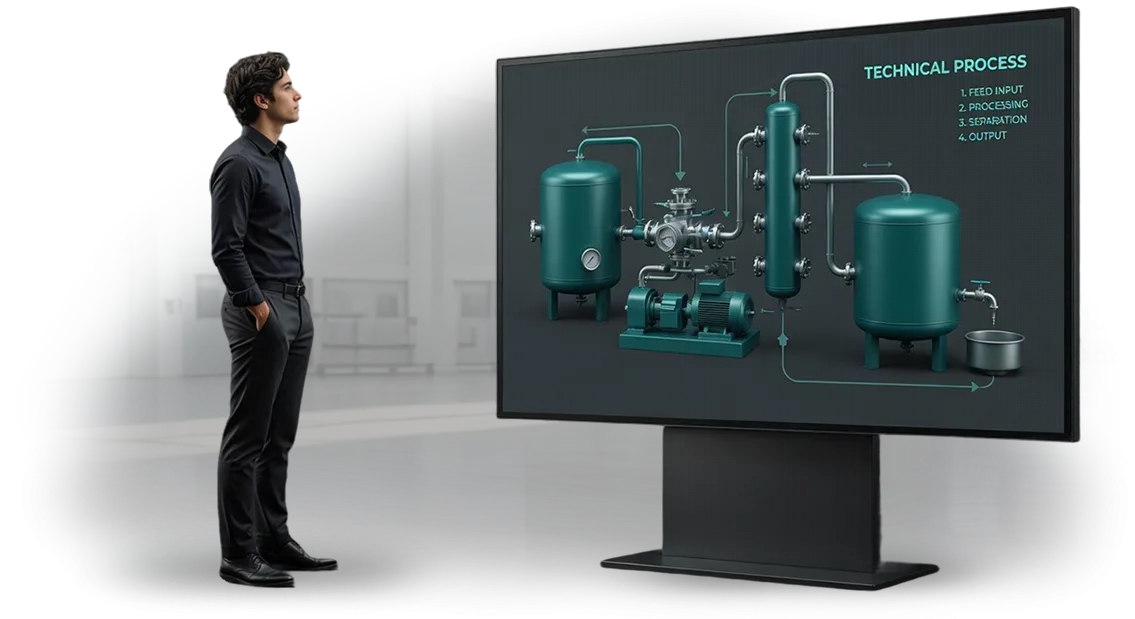
אנימציית תלת-ממד מציגה מנגנונים נסתרים: חתכי מדחס, תנועת גז, פעולת שסתומים. היכן שהמצלמה לא יכולה לראות את המהות, האנימציה הופכת את התהליך לברור ובלתי נשכח.
הוראות אינטראקטיביות הופכות את הצפייה להדרכה: העובד בוחר פעולות, רואה את התגובה, וחוזר על התרחיש עד לתוצאה ללא שגיאות. המיומנות מתחזקת לפני היציאה לקו.
| פורמט | קהל יעד | מה הוא נותן ללקוח |
|---|---|---|
| וידאו ליניארי | עובדים חדשים, צוות זמני | קליטה מהירה, תמונה אמיתית של רצפת הייצור |
| אנימציית תלת-ממד | תחזוקה ותיקונים | תצוגה ברורה של מבנה המדחס, פחות שגיאות הרכבה |
| אינטראקטיבי | הסמכה לציוד | בחינת ידע בסביבה בטוחה, פחות פגמים |
פורמט אחד ממלא רק לעתים רחוקות את כל המשימות — אנו משלבים אותם בתוכנית הדרכה אחת. עבור ייצור מדחסים, השילוב האופטימלי הוא וידאו ליניארי לסקירה כללית ואנימציית תלת-ממד להבנת תהליכים.
אנו נבחר אפשרות למשימה, לתקציב וללוח הזמנים שלכם ונראה איזו מהן תשתלם מהר יותר.
כיצד נוצרת הוראה: 6 שלבים
אנו מבנים את העבודה כפרויקט משותף וברור: אתם משתתפים בכל שלב מרכזי, כך שההוראה הסופית עונה על הצרכים הספציפיים שלכם. הדרך מהבריף ועד לקבצים המוגמרים אורכת שישה שלבים.
-
בריף והתעמקות בייצור. אנו מגדירים אילו פעולות מדחס יש להראות, מי יצפה בהוראה, ואילו טעויות חשוב לחסל. אנו לומדים את התקנות שלכם — כך שהאנימציה משקפת מיד את התהליך האמיתי.
-
תסריט וסטוריבורד. אנו הופכים את התהליך הטכנולוגי לרצף פריימים: מה קורה על המסך, אילו הערות והדגשים נדרשים. לאחר אישור הפרטים, אין צורך לחזור לתסריט.
-
אישור סגנון ויזואלי. אנו מאשרים את מראה החלקים, ערכת הצבעים וההצגה. אתם רואים כיצד תיראה ההוראה לפני האנימציה הסופית ומבצעים עריכות ללא עיבודים חוזרים ארוכים.
-
הפקת אנימציית CGI. זהו צילום וירטואלי: אנו מדגמים יחידות ומנגנוני מדחס בתלת-ממד ומציגים תהליכים שלא ניתן ללכוד במצלמה אמיתית — למשל, תנועת אוויר או פעולת שסתומים. האנימציה מופקת על ציוד מקצועי, כך שהתמונה יציבה ומציאותית.
-
עריכה, קריינות וכתוביות. אנו מרכיבים את הווידאו הסופי: קול הקריין מנחה את העובד צעד אחר צעד, והסברים טקסטואליים מחזקים נקודות מפתח. אתם מקבלים תצוגה מקדימה לאישור סופי.
-
מסירה סופית של חומרים. אנו מספקים קבצים מוגמרים וקבצי מקור בפורמטים הנדרשים, כך שתוכלו להשתמש בהוראה במערכת ההדרכה שלכם, בטאבלטים או במצגות. לאחר המסירה, אנו נשארים בקשר למקרה שתצטרכו עריכות.
מה כלול בחבילת המסירה
בהזמנת סרטוני הדרכה, חשוב להבין בדיוק מה תקבלו והאם תוכלו להשתמש בהם ללא מלכודות נסתרות.
אנו מרכיבים את המסירה כחבילה מוכנה ליישום — מסרטונים סופיים ועד מסמכי זכויות שימוש — כך שצוות ההדרכה שלכם יכול לעבוד עם החומר מיד במקום להתמודד עם "מוצרים חצי מוגמרים".
הנה מה שהחבילה כוללת:
- קבצי וידאו מוכנים — סרטונים סופיים בפורמטים מודרניים לכל מערכת למידה, מכשירים ניידים, פורטל ארגוני ואפילו פאנלי וידאו בסדנה. בחרו מדיה נוחה והטמיעו אותם בתוכנית ההדרכה שלכם.
- פרויקטי מקור — גרסאות ניתנות לעריכה עם כל השכבות והחומרים. כאשר התהליך הטכנולוגי משתנה או מופיע שינוי חדש במדחס, תוכלו לעדכן במהירות את הווידאו בבית או לחזור אלינו ללא אובדן איכות.
- חומרים מתודולוגיים — מדריך נלווה למדריכים: כיצד לשלב את הווידאו בקורס, לאילו נקודות להפנות את תשומת לב העובדים, וכיצד לבדוק שימור ידע. זה חוסך זמן למתודולוג והופך את ההדרכה לשיטתית.
- תסריטים וסטוריבורדים — הטקסט המאושר והתסריט החזותי לכל וידאו. זה משמש גם כבסיס לעדכונים עתידיים וגם כהוכחה שאישרתם בדיוק מה שיישמנו.
- זכויות שימוש — רישיון תמידי להדרכה פנימית של עובדי החברה שלכם. אין הגבלות על מספר צפיות, לומדים או סניפים, ואין עמלות נסתרות.
- גרסאות טקסט של קריינות וכתוביות — נוחות לעובדים עם ליקויי שמיעה, לעבודה בסדנה רועשת, ולתרגום עתידי של קורסים לשפות אחרות.
כל המסמכים והקבצים מועברים בצורה ברורה — ללא "חתמו ותבינו לבד". אתם מקבלים בדיוק את מה שצריך כדי להעביר הדרכה, למדוד תוצאות, ובמידת הצורך לעדכן במהירות את החומרים.
מקרה בוחן: כיצד שינינו הדרכה במפעל
יצרן מדחסים התמודד עם נקודת כאב אופיינית: מפעילים התחילו משמרות לאחר שבועיים-שלושה, אך בחודשים הראשונים עדיין עשו טעויות בהרכבה ובבקרת איכות.
תקנות טקסט לא עזרו — מדריכים מנוסים הוסחו מהעבודה, ומתחילים זכרו את הטכנולוגיה בדרכים שונות.
המשימה והפתרון
צמצמנו את נפח הוראות הנייר והחלפנו את הפעולות החשובות ביותר בהוראות וידאו קצרות.
הסרטונים צולמו במקום העבודה האמיתי בהשתתפות עובדים נוכחיים — כך שכל תנועה תואמת לפרקטיקה המפעלית האמיתית ולא לתוכנית אידיאלית מספר לימוד.
תוצאת היישום
הוראות הווידאו שולבו בתוכנית מרכז ההדרכה. הזמן שלקח למתחיל להתחיל לעבוד באופן עצמאי קוצר משלושה שבועות לחמישה ימים, ומספר השגיאות בהרכבה לבדיקה ירד בכמעט חצי.
העובדים צופים בסרטונים בטאבלטים ממש ליד המכונה — זה פישט את הקליטה גם עם תחלופת עובדים גבוהה.
ראש מרכז ההדרכה של המפעל העריך את התוצאות כך: "בעבר הסתמכנו על הזיכרון של המדריכים; עכשיו לכל עובד חדש יש תקן ייחוס זהה לביצוע פעולה. זה הוריד את העומס מהעובדים המנוסים והפך את התהליך לשקוף."
לאחר התוצאות הראשונות, הלקוח הרחיב את הפרויקט לסדנאות סמוכות. הזמנה חוזרת היא ההוכחה הטובה ביותר לכך שהוראות וידאו לייצור מדחסים פועלות לא כקישוט אלא ככלי שמפחית הפסדים ומאיץ הדרכה.
כיצד לבחור את הפורמט הנכון להוראות וידאו?
בחירת פורמט הוראת הווידאו תלויה לא בטרנדים אלא בשלושה גורמים: מורכבות התהליך הטכנולוגי, רמת המיומנות של העובדים, ומטרת ההדרכה הספציפית.
אין פתרון אוניברסלי — מה שעובד להצגת פעולה פשוטה לא יתאים להדרכה לאזור ייצור רב-שלבי.
בייצור מדחסים, דיוק, רצף פעולות ובטיחות חשובים במיוחד, ולכן הגישה לבחירת הפורמט חייבת להיות הנדסית.
התחילו בהערכת מורכבות התהליך. חלקו אותו לשלבים וזהו אילו מהם קריטיים: היכן טעות מובילה לתקלה, לפגמים או לסיכונים בריאותיים.
אם הפעולה מורכבת מעשרות שלבים וחלק מהפעולות מוסתרות בתוך היחידה — למשל, תנועת גז, פעולת שסתומים או שינויי לחץ — צילום רגיל לא יראה את העיקר.
כאן אנימציית CGI מנצחת: היא מדגימה בבירור תהליכים פנימיים ונותנת לעובדים הבנה מלאה של מבנה הציוד וההיגיון התפעולי.
השלב השני הוא להעריך מי יוכשר וכמה מהר צריך תוצאה. עבור עובדים חדשים ללא ניסיון, מתאימה הוראת וידאו מפורטת עם שלבים, הדגשת טעויות אופייניות ואמצעי בטיחות.
אם הצוות כבר מכיר את הציוד, מספיק סרטון קצר על טכנולוגיה שהשתנתה או יחידה חדשה.
חשוב גם היכן העובדים יבחנו את החומר: בטאבלט מפעלי, סמארטפון או מסך משותף בסדנה — רמת הפירוט ואורך הווידאו תלויים בכך.
המסקנה פשוטה: הפורמט הנכון הוא זה שהעובד מבין בצפייה ראשונה ויכול ליישם מיד בפועל.
אנו עוזרים ללקוחות לבחור ללא ניחושים: אנו מנתחים את התהליך, הקהל ומטרות ההדרכה שלכם, ואז מציעים וידאו חי, אנימציית תלת-ממד או תרחיש משולב.
כתוצאה מכך, אתם מקבלים הוראה שמקצרת את זמן הקליטה, מורידה את מספר השגיאות והופכת את ההדרכה לצפויה. צרו קשר לייעוץ — נציע פורמט למשימה שלכם ונראה דוגמאות לפתרונות דומים.
תשובות לשאלות נפוצות מלקוחות
אתם מגיעים אלינו עם שאלות שמעסיקות כל מנהל: "מה אם הווידאו לא יעבוד?", "כמה זמן זה ייקח?", "מה זה יעלה?". אספנו תשובות לדאגות הנפוצות ביותר של לקוחות — בקצרה ולעניין. אם השאלה שלכם לא ברשימה, נענה עליה אישית במהלך ייעוץ.
אנו עובדים עם יצרני מדחסים וציוד תעשייתי אחר, ולכן אנו מבינים את הפרטים: תהליכים מורכבים, דרישות בטיחות והדרכת עובדים חדשים "מאפס". הוראות הווידאו שלנו מכסות משימות אלה ללא מילים מיותרות.
אילו ערבויות אתם מספקים?
אנו מבטיחים תוצאה בחוזה: אתם מקבלים את העבודה לאחר שתאמתו שהווידאו עומד במפרט הטכני. אם נמצא שגיאה בהוראה לאחר המסירה, נתקן אותה על חשבוננו. אנו עובדים תחת חוזה פורמלי עם אומדן קבוע, כך שהסיכונים מצטמצמים לאפס.
כמה זמן אורך הפיתוח?
לוחות הזמנים תלויים במורכבות התהליך, אך בממוצע הוראת וידאו אחת אורכת 10–15 ימי עבודה. זה כולל ניתוח התהליך הטכני, כתיבת תסריט, צילום ועריכה.
למשימות דחופות, אנו יכולים להאיץ — למשל, להכין גרסה בסיסית מוקדם יותר ולחדד פרטים לאחר ההשקה.
כיצד נקבעת העלות?
העלות תלויה בנפח החומרים, במספר הסצנות, בצורך באפקטים מיוחדים ובאורך הווידאו. אנו נותנים את העלות המדויקת לאחר הבריף — אתם מקבלים אומדן לפני תחילת העבודה. הוא לא ישתנה במהלך התהליך אלא אם תוסיפו משימות חדשות.
התשלום הוא בשלבים: חלק בתחילת העבודה, חלק לאחר אישור התסריט, והיתרה לאחר מסירת הווידאו.
האם ניתן להתאים את הווידאו לייצור שלנו?
כן, זה ההתמחות שלנו. אנו לא משתמשים בחומרים תבניתיים — כל וידאו מפותח עבור התהליכים הטכנולוגיים, הציוד והתקנות שלכם.
ספרו לנו כיצד מתבצעת הרכבת המדחס ואילו יחידות קריטיות, ונהפוך זאת להוראת וידאו ברורה. במידת הצורך, נוסיף סגנון ארגוני, קריינות או כתוביות.
מה אם נצטרך תיקונים לאחר המסירה?
אנו כוללים שני סבבי תיקונים לפי המפרט הטכני שלכם. זה נורמלי: אתם בודקים את הטיוטה, מוסיפים הערות, ואנו מחדדים את הווידאו לתוצאה הרצויה.
אם תהליכי הייצור משתנים לאחר המסירה, אנו יכולים להציע לצלם קטע מעודכן תחת אומדן קטן ונפרד.
מוכנים לקבל סרטון הדרכה לארגון שלכם?
הוראות וידאו להדרכה הן השקעה בדיוק ובפרודוקטיביות שמחזירה את עצמה כבר במשמרות הראשונות. בייצור מדחסים, כל חוסר דיוק בהרכבה או בכוונון מוביל לפגמים ולאובדן זמן, בעוד העברת ניסיון למתחילים אורכת לעתים חודשים.
אנו הופכים את הידע של הטכנולוגים שלכם לקורס וידאו ברור שעובדים לומדים בקצב שלהם וחוזרים אליו בכל פעם שיש להם ספקות.
כדי להעריך את הערך עבור הארגון שלכם, השאירו פנייה — ללא התחייבות. תקבלו ייעוץ על מבנה הקורס, דוגמאות לעבודותינו וחישוב מדויק עבור התהליך הטכנולוגי שלכם.
- ייעוץ — נדון באילו פעולות כדאי לכסות בסרטוני הדרכה.
- אומדן עלות וזמנים עבור אזור ייצור מדחסים ספציפי.
- דוגמאות לפרויקטי אנימציית CGI שהושלמו עבור תהליכים טכנולוגיים.
- המלצות לתסריט: בטיחות, תקנות, תקלות אופייניות.
- תוכנית פעולה ברורה לאחר פנייתכם — מה אנו צריכים מכם ומתי אנו מתחילים.
- הוראות וידאו מוכנות בפורמטים לפלטפורמת ההדרכה שלכם.
הצוות שלנו עובד עם יצרנים כבר יותר מעשר שנים ויודע להציג תהליכים מורכבים ללא אובדן דיוק. השאירו פנייה היום — מחר תקבלו את האומדן ותבינו כיצד להאיץ את קליטת העובדים החדשים.
הזמנת הוראת וידאו היא צעד פשוט לעבר פחות שגיאות ופעולה יציבה של הקווים שלכם.