

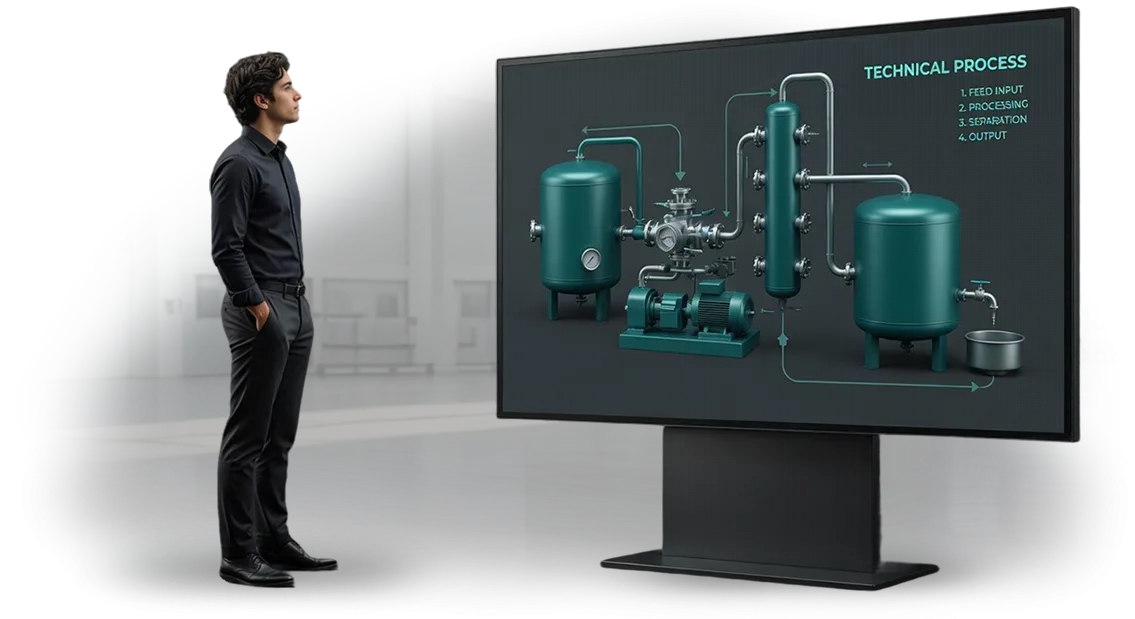
עובדים עושים טעויות? הוראות וידאו לייצור משאבות
טעויות של מפעילים על פס הרכבת המשאבות אינן רק גורם אנושי — הן הפסדים ישירים: עבודות חוזרות, החמצת מועדי משלוח ולקוחות לא מרוצים.
הבעיה חריפה במיוחד עם עובדים חדשים: לוקח שבועות לחניך לשלוט בתהליך, וכל צעד שגוי בייצור משאבות מגדיל את חלקם של הפגמים ומאט את תפוקת המנות.
חברות שמסתמכות רק על חונכים ותקנות מודפסות מגלות שהידע מועבר באופן לא עקבי. מפעיל אחד לומד רצף אחד, שני לומד רצף אחר, ובקרת האיכות דורשת כל הזמן התערבות של ההנהלה.
הכשרת עובדים הופכת למשחק אינסופי של השלמת פערים במקום לתהליך שיטתי של פיתוח כוח אדם.
אנחנו עוזרים לסגור את הפער הזה. במקום הוראות מופשטות והרצאות ארוכות, אנחנו יוצרים סרטוני הדרכה שמראים בבירור כל שלב בעבודה עם ציוד משאבות. העובד רואה את הפעולות הנכונות, זוכר אותן ויזואלית וחוזר עליהן עם מספר מינימלי של טעויות.
זה מפחית פגמים, מאיץ קליטת עובדים חדשים ומפנה זמן של חונכים למשימות מורכבות באמת. הוראות וידאו הופכות לתקן ידע אחיד שעובד בכל שלב — מבדיקת קבלה ועד אריזה סופית של משאבות מוגמרות.
מה הוראות וידאו נותנות להכשרת עובדים
ייצור משאבות דורש דיוק גבוה בכל שלב — מחומרי גלם ועד בדיקות סופיות. טעות של מפעיל יכולה לעלות במוניטין ובהפסדים גדולים. לכן הכשרת עובדים הופכת להשקעה אסטרטגית, לא רק פורמליות. הוראות וידאו הופכות ידע מפוזר למערכת ברורה הנגישה לכל עובד.
מהירות קליטת עובדים חדשים
עובדים חדשים לעיתים קרובות הולכים לאיבוד בגלל שפע המידע ומורכבות הציוד. במקום לקרוא הוראות נייר ולצפות זמן רב בחונך, הם מקבלים קורס וידאו ויזואלי עם אנימציית CGI מפורטת של תהליכים טכנולוגיים.
כל שלב — מהכנת חלקים ועד בדיקת הרכבת המשאבה — מוצג בתקריב, עם הסבר על מטרת הפעולה.
ככל שעובד מגיע מהר יותר לפריון מלא, כך ההשקעה בגיוס והכשרה מחזירה את עצמה מהר יותר. המנהל מפסיק לבזבז זמן על הסברים חוזרים ויכול להתמקד בפיתוח המחלקה.
סטנדרטיזציה של פעולות
בייצור משאבות נפוץ שצוותים שונים מרכיבים את אותו מוצר בצורה שונה: מישהו משנה את סדר ההידוק של מחברים, מישהו מדלג על בדיקה ויזואלית. הוראות וידאו לוכדות תקן עבודה אחיד שכולם פועלים לפיו ללא יוצא מן הכלל.
כתוצאה מכך, שונות האיכות יורדת, ומספר הפגמים והעבודות החוזרות פוחת. התהליך הופך צפוי, והלקוחות מקבלים מאפייני ציוד יציבים.
אי-תלות בחונכים
מומחים מנוסים שווים זהב, אבל הידע שלהם קיים לעיתים קרובות רק בראשם. אם חונך פורש או עובר לאתר אחר, החברה מאבדת מומחיות ייחודית. הוראות וידאו משמרות את הניסיון הזה בצורה ויזואלית והופכות אותו לזמין לכל עובד.
כשהטכנולוגיה משתנה, מספיק לעדכן סרטון אחד — וכל הצוות לומד מיד את הכללים החדשים, במקום לשמוע עליהם בעל-פה חודש אחר כך. הידע נשאר בתוך החברה גם עם תחלופת עובדים.
פורמטים של הוראות וידאו למשימה הספציפית שלך
בייצור משאבות, הכשרת עובדים מסתכמת בשלוש משימות אופייניות: הסברת תהליכים נסתרים בתוך הציוד, קליטה מהירה של עובד חדש במכונה, ותזכורת תקופתית של נהלים. אין סרטון אוניברסלי לכל המקרים — כל משימה דורשת פורמט הדרכה משלה.
להלן טבלת השוואה של פורמטים שתעזור לך לבחור את הפתרון הנכון למצב ספציפי. השתמש במורכבות הפעולה וברמת המיומנות של העובד כמדריך.
| פורמט | מתי להשתמש | מה זה נותן ללקוח |
|---|---|---|
| אנימציית תלת-ממד של תהליך מורכב | כשצריך להראות רכיבי משאבה, הידראוליקה, מבנה פנימי — דברים שאינם נראים לעין | בהירות: העובד רואה את כל התהליך ללא פירוק הציוד. הדרכה ללא סיכון של שבירה או השבתה |
| הוראה ליד המכונה | עובד חדש נמצא בסדנה וצריך לקלוט אותו במהירות | אלגוריתם פעולה שלב-אחר-שלב במקום העבודה האמיתי. מקצר את זמן הקליטה ומפחית את מספר הטעויות בשבועות הראשונים |
| סרטון תזכורת קצר | הדרכות בטיחות מתוזמנות, רענון ידע, כללי בטיחות | תשומת הלב נשמרת למשך 1–2 דקות. קל לחזור על הכללים המרכזיים לפני משמרת |
בפועל, כדאי לשלב את הפורמטים: אנימציית תלת-ממד מספקת הבנה של הציוד, הוראה ליד המכונה מפתחת מיומנות, וסרטונים קצרים מחזקים את הידע.
כשהם מאוגדים לספרייה אחת, הם יוצרים מערכת הדרכה שמאיצה קליטת עובדים ומפחיתה את העומס על חונכים ללא פגיעה באיכות.
איך נוצרות הוראות וידאו: מבריף ועד השקה
הוראות וידאו אינן "לצלם את רצפת הייצור ולהעלות לתיקייה משותפת" — זה תהליך מחושב שמתחיל בחקר פעולות אמיתיות.
אנחנו מבנים אותו כך שאתה שולט בכל שלב, והעובד מקבל תרחיש פעולה ברור ובטוח כבר מהריצה הראשונה.
- ניתוח פעולות. אנחנו חוקרים את תהליך ייצור המשאבות שלך, הוראות עבודה וטעויות אופייניות של עובדים חדשים. אנחנו קובעים את רשימת הסרטונים ואת סדר העדיפויות שלהם על סמך ההשפעה על האיכות ומהירות העבודה.
- תסריט וידאו. אנחנו מפרקים כל פעולה לשלבים לוגיים קצרים — מהכנת כלים ועד בדיקת היחידה המוגמרת. אנחנו מאשרים את הטקסט והלוגיקה כדי לחסל פרשנות שגויה.
- בחירת פורמט צילום. במקום שבו התהליך נראה מבחוץ, אנחנו משתמשים בצילום מקצועי. רכיבים פנימיים מורכבים ומנגנונים נסתרים מוצגים באמצעות אנימציית CGI — זה מספק בהירות שאי אפשר להשיג על ציוד אמיתי.
- אישור פרויקט. אתה מקבל גרסאות ביניים של התסריט, סטוריבורדים וחתך גס. אתה מבצע שינויים — אנחנו מתחשבים בהם לפני העיבוד הסופי.
- הפקה. אנחנו מצלמים קטעים, יוצרים אנימציה של חלקי משאבה והרכבה, מקליטים קריינות ומוסיפים כתוביות. הסרטון הסופי נמסר במספר פורמטים — לפורטל הדרכה, מסנג'ר ומסך לא מקוון.
- הטמעה ותמיכה. אנחנו עוזרים למקם את הוראות הווידאו במערכת ההדרכה שלך, בודקים זמינות ונותנים המלצות למעקב אחר צפייה. כשהתהליך משתנה, אנחנו מעדכנים את הסרטונים הרלוונטיים ללא צילום מחדש של כל הקורס.
תהליך עבודה זה מסיר את הסיכון המרכזי — סרטון שמתיישן לפני ההשקה. אתה מקבל כלי מוכן שמשולב בפעולות הייצור ופותר משימות אמיתיות, לא רק "קובץ יפה".
מה כלול בחבילת הוראות הווידאו ללקוח
חבילת המסירה כוללת את כל מה שצריך כדי שעובדים יתחילו לעבוד עם הוראות הווידאו החדשות מיד, וכדי שתוכל לשלוט בתהליך ההכשרה. זה כלי מוכן לצוות שלך, לא רק אוסף קבצים. הלקוח מקבל:
-
סרטוני הדרכה על פעולות טכנולוגיות מרכזיות בייצור משאבות. כל שלב מוצג בתקריב עם דגש על פרטי הרכבה ובקרת איכות קריטיים — העובד רואה את רצף הפעולות הנכון גם אם מעולם לא עבד בתחום הזה.
-
תסריטים ותוכניות צילום מפורטות — הטכנולוגים והמתודולוגים שלך יכולים לבדוק אם התקנות משתקפות במדויק ולבצע שינויים לפני הצילום. אין "הפתעות" בגרסה הסופית: אתה מאשר את התוכן לפני העריכה.
-
חומרים מתודולוגיים לחונכים — רשימות בדיקה, שאלות לבדיקה עצמית ודפי עזר. החונך לא צריך להמציא דרכים לחזק את החומר או להעריך הבנה: הכל מוכן לשימוש במשמרת הבאה.
-
נוהל עדכון הוראות וידאו — תהליך ברור לעדכון סרטונים כשהטכנולוגיות, הציוד או התקנים משתנים. אתה יודע מי אחראי על עריכות וכמה מהר הסרטון יעודכן, כך שהוא נשאר רלוונטי וממשיך לספק ערך.
-
קבצי מקור ומבנה קטלוג — כל הסרטונים קלים לאחסון, להעברה לאזורי ייצור ולשימוש לא מקוון בטאבלטים ובמסופים. אין תלות בקבלן חיצוני.
-
תמיכה בהטמעה — ייעוץ קצר לצוות שלך כדי להשיק הדרכה ללא עיכובים. בפועל, הקבוצות הראשונות מסיימות הדרכה בתוך השבוע הראשון לאחר המסירה.
חבילה זו מכסה את כל המחזור: מהכנה ועד הערכת ידע. אתה מקבל לא רק "סרטונים" אלא כלי עבודה שעובדים משתמשים בו ושקל לעדכן.
זה חשוב במיוחד בייצור משאבות — טעויות הרכבה וכיוונון הן קריטיות, והוראת וידאו איכותית מפחיתה את הסיכון של גורם אנושי ומאיצה קליטת עובדים חדשים.
מקרה בוחן: הוראות וידאו לייצור משאבות הפחיתו פגמים
עבור יצרנית המשאבות התעשייתיות NasosProm, הכשרת מפעילים חדשים הפכה למקור להפסדים מתמידים. בגלל מחסור בחונכים מנוסים, עובדים חדשים עלו למשמרת אחרי 10–14 ימים אך עדיין עשו טעויות הרכבה שהובילו לפגמים ולעבודות חוזרות.
בסדנה עם 80 עובדים, הבעיה הייתה קריטית: בכל פעם שעובד מנוסה יצא לחופשת מחלה או חופשה, כל הקו הואט.
איך עשינו את זה
התחלנו בביקורת של טעויות אופייניות וניתוח גיליונות תהליך. יחד עם טכנולוגים והמפעילים הטובים ביותר, בחרנו שש מהפעולות המורכבות ביותר וצילמנו הוראות וידאו מפורטות.
כל סרטון נמשך 3–5 דקות ומראה את רצף הפעולות הנכון מנקודת המבט של העובד — כאילו הוא יושב ליד שולחן העבודה בעצמו. אחרי הצפייה, העובד עונה על שאלות ומבצע את הפעולה תחת פיקוח חונך.
המאפיין המיוחד של גישה זו הוא שהסרטונים קלים לעדכון. כשהרכיבים או הכלים השתנו, צילמנו מחדש את הקטעים הדרושים — במקום להכשיר אנשים מאפס.
מה השתנה
התוצאות נמדדו אחרי שלושה חודשים. פגמי הרכבה ירדו ב-37%, הזמן שעובד חדש צריך כדי להתחיל משמרת עצמאית ירד מ-14 ימים ליומיים, וחלקם של העבודות החוזרות קוצץ בחצי.
מנהל הסדנה העריך את הזמן שנחסך לחונכים: עכשיו הם מטפלים רק במשימות מורכבות ולא סטנדרטיות במקום להסביר את היסודות בכל משמרת.
שימור המיומנות אושר אחרי שישה חודשים — מפעילים עדיין עבדו ללא טעויות, והעובדים עצמם ציינו שהוראות וידאו עוזרות להיזכר במהירות בפרטים אחרי הפסקה או במעבר בין דגמי משאבות.
משוכנע ביעילות הפורמט, הלקוח הרחיב את הפרויקט: הוסיף סרטונים לסדנה שנייה ומתכנן לכסות את כל אזורי הייצור.
איך לבחור את פורמט הוראות הווידאו הנכון למשימה שלך?
אין תשובה אחת: בחירת פורמט הוראות הווידאו תלויה בשלושה דברים — מורכבות פעולת התהליך, מספר העובדים שצריכים הדרכה, ותדירות השינויים בתהליכים. אנחנו נעזור לך להחליט במהירות.
אם הפעולה מורכבת, רב-שלבית, עם כיוונונים עדינים של ציוד, אתה צריך הוראת וידאו מפורטת עם הפסקות, דגש על רגעים קריטיים ויכולת לחזור ולצפות.
פעולה פשוטה שעובד שולט בה ביום אחד יכולה להיות מכוסה במלואה בסרטון קצר של 1–2 דקות.
מספר העובדים משפיע גם הוא על הבחירה. כשצריך להכשיר שניים או שלושה אנשים, סרטון קצר אישי מספיק.
לסדנה או משמרת של חמישים איש, עדיף ליצור קורס מודולרי: חלק משותף לכולם וסרטונים נפרדים למכונות או אזורים ספציפיים. כך כל אדם מקבל רק את מה שהוא צריך ולא מבזבז זמן על דברים מיותרים.
הקריטריון השלישי הוא תדירות העדכונים. אם התהליכים הטכנולוגיים יציבים ולעיתים רחוקות משתנים, אפשר ליצור סרטון יסודי וארוך.
אבל אם ייצור המשאבות עובר מודרניזציה מתמדת, עדיף להשתמש בהוראות וידאו קצרות שקל לצלם מחדש ולהחליף. זה חוסך תקציב וזמן הכשרה חוזרת.
העיקר הוא לא להתאים את המשימה לפורמט, אלא לבחור את הפורמט למשימה. הסתכל על פעולת התהליך שלך, הערך את היקף ההכשרה ואת תדירות השינויים — והאפשרות הנכונה תתבהר.
ואם אתה לא בטוח, אנחנו נעזור לך להחליט: נראה דוגמאות ונציע פתרון למצב שלך.
שאלות נפוצות וחששות לפני הזמנה
לקוחות רבים בייצור משאבות שואלים את אותן שאלות: האם הסרטון יתיישן, איך לשלב הדרכה בלוחות משמרות, ומי יעדכן את הסרטונים. אנחנו עונים על החששות הנפוצים ביותר כדי שתוכל לקבל החלטה רגועה.
האם הוראות הווידאו יתיישנו אחרי שינוי טכנולוגיה?
כל סרטון מחולק לסצנות, כך שכאשר רכיב או פעולה משתנים, אנחנו מעדכנים רק את הקטע הנדרש. אתה מקבל את הגרסה העדכנית תוך מספר ימים — העובדים תמיד עובדים עם חומר טרי.
האם קשה לשלב הדרכת וידאו בשגרת המשמרות?
הוראות וידאו אינן מחליפות חונכים — הן מקלות עליהם. עובד משלים מודולים קצרים לפני משמרת או בהפסקה נוחה, והחונך בודק את התוצאה.
אנחנו נותנים המלצות לשילוב ההדרכה בקצב הייצור כך שהעבודה לא תיעצר.
האם זה会增加 את עומס העבודה על חונכים וטכנולוגים?
להיפך, הווידאו מסיר שגרה: החונך לא צריך לחזור על אותה פעולה עשר פעמים — הוא מראה את הסרטון ועונה על שאלות. טכנולוגים לא צריכים להסביר כל תהליך אישית — זה חוסך שעות של זמן עבודה בשבוע.
מה אם תתגלה אי-דיוק בסרטון אחרי ההשקה?
אתה מקבל גרסאות טיוטה בכל שלב ומבצע עריכות לפני האישור הסופי. אם מתגלה שגיאה אחרי ההשקה, אנחנו משפרים את הסרטון במסגרת אחריות — ללא עלות נוספת.
הזמן פיתוח הוראות וידאו לצוות שלך
עובדים שולטים בתהליכים מהר יותר כשהם רואים הוראת וידאו ברורה. לייצור משאבות, זה מקצר את תקופת ההכשרה, מפחית טעויות ומקל על העומס של חונכים — כלומר פחות השבתות ופגמים. הוראות וידאו פועלות כתקן אחיד: כל עובד פועל באופן עקבי ומדויק.
התחל בייעוץ: תוך 15 דקות ננתח את המשימות שלך ונציע את פורמט הוראות הווידאו — מסרטוני מסך ועד אנימציית CGI של התהליך הטכנולוגי.
אחרי פנייתך, תקבל אסטרטגיה, הערכת עלות ותוכנית ליצירת הוראות וידאו. תבין את היקף העבודה, העלות ולוח הזמנים לפני תחילת הפיתוח.
מה תקבל בהזמנה
- ביקורת של חומרים קיימים ותוכנית פעולה.
- בחירת פורמט המותאם לפרטי ייצור המשאבות.
- הערכת עלות שקופה ולוחות זמנים ללא תשלומים נסתרים.
- מערך הוראות וידאו לתקנות ולמערכת ההדרכה שלך.
- תמיכה ושיפורים אחרי המסירה.
- התאמת הוראות הווידאו לשינויי ייצור ועדכוני תקנות.
השאר פנייה — נחזור אליך תוך יום עסקים אחד. נספר לך על פרויקטים ליצרני משאבות ונציע פתרון ללא סיכון.
אתה יכול להזמין הוראות וידאו כבר עכשיו: מלא את הטופס וקבל אסטרטגיה, הערכת עלות ותוכנית פיתוח להכשרת הצוות שלך.