

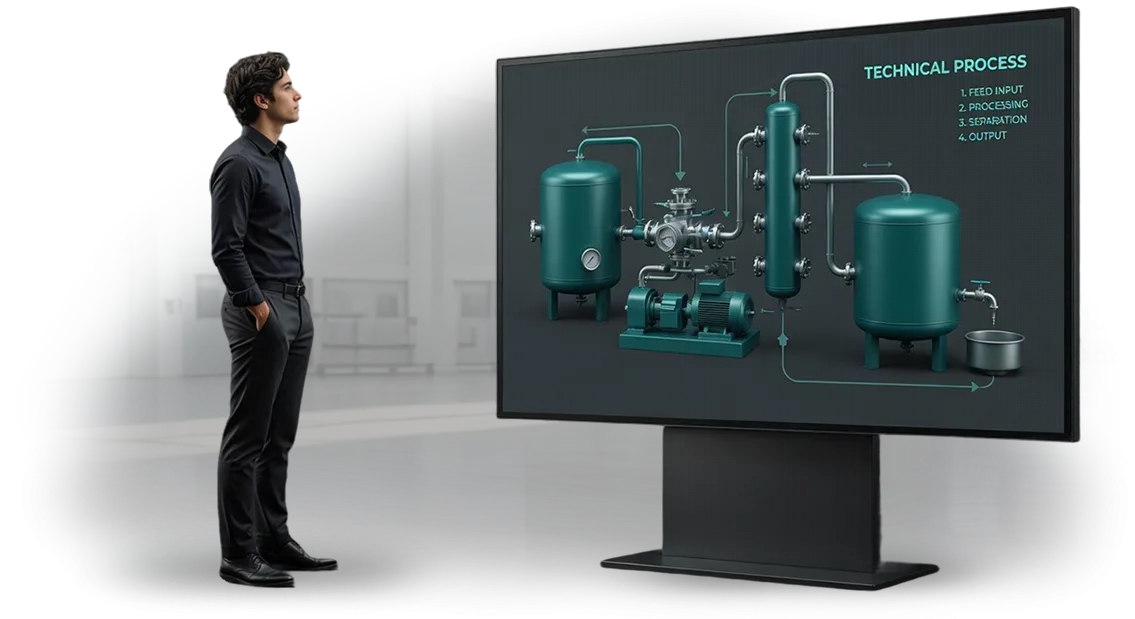
כיצד שגיאות בייצור זכוכית הופכות לפגמים ולזמני השבתה
בייצור זכוכית, כל אי-דיוק עולה ביוקר: סטייה ממשטר הטמפרטורה או מסדר הפעולות הופכת לפגמים ולזמני השבתה כפויים.
כל עצירת קו פירושה זמן אבוד, צריכת חומרי גלם עודפת, והחמצת מועדי אספקה — כל אלה על המפעל להתמודד איתם.
לרוב, הסיבה אינה עצלנות של עובדים אלא הוראות ייצור באיכות ירודה. תיאורים מבוססי טקסט ודיאגרמות סטטיות משאירים מקום לפרשנות אישית, וקשה למתחיל לדמיין איך התהליך הנכון נראה בפועל.
כתוצאה מכך, הכשרת העובדים נמשכת זמן רב: עובדים מנוסים מוסחים על ידי חונכות, והסיכון לשגיאות נשאר גבוה גם לאחר תקופת ההתמחות. הוראות ייצור חייבות להיות ויזואליות ביותר וחד-משמעיות — זה בדיוק מה שחסר בפורמטים הקלאסיים.
סרטוני הדרכה המבוססים על אנימציית CGI פותרים בעיה זו. הם מציגים את התהליך מכל זווית, כולל שלבים נסתרים שאי אפשר לראות בסדנה אמיתית, ומאפשרים לעובד לראות כל שלב ברצף הנכון. פורמט זה מבטל פרשנות שגויה ויוצר תקן אחיד לביצוע פעולות.
הפחתת פגמים וזמני השבתה אינה מתרחשת מעצמה — היא מושגת באמצעות חומרי הדרכה איכותיים. חברות שמיישמות הוראות מונפשות מביאות עובדים חדשים לרמת עבודה מהר יותר ומפחיתות הפסדים משגיאות.
וכל הניסיון של המפעל יכול להישמר בצורת סרטוני ייחוס לכל המשמרות.
אנו יוצרים סרטוני הדרכה לייצור זכוכית באמצעות ציוד מקצועי, והאנימציה משחזרת במדויק תהליכים טכנולוגיים אמיתיים.
הלקוח מקבל כלי מוכן להכשרת עובדים שברור לכל עובד ומפחית באופן מדיד את חלקם של הפגמים בייצור.
מדוע אנימציית CGI הופכת הכשרת עובדים ליעילה יותר
הכשרת עובדים בייצור זכוכית היא משימה בעלות גבוהה של שגיאה: תהליכים בלתי נראים לעין, מסות מותכות, ציוד מורכב.
הוראות טקסט והרצאות אינן מספקות את התמונה המלאה, והכשרה על העבודה בסדנה כרוכה בסיכון ובהפרעות לזרימת העבודה.
היתרונות של אנימציית CGI כאן ברורים: היא הופכת חוקים מופשטים לתרחישי וידאו ויזואליים שהעובד רואה לפני שהוא ניגש לכבשן.
ויזואליזציה של תהליכים מאפשרת להראות ייצור זכוכית "מבפנים": תנועת המסה המותכת, פעולת המנגנונים, רצף הפעולות הנכון — כל מה שאי אפשר לראות במציאות.
בזכות זה, עובדים חדשים מבינים את ההיגיון של מחזור הייצור מהר יותר, בעוד עובדים קיימים ממלאים פערים בידע שלהם. הוראות CGI ויזואליות נזכרות הרבה יותר טוב מדיאגרמות PDF.
הכשרה בטוחה היא יתרון מרכזי נוסף. עובד יכול לתרגל מצבי חירום באנימציה: סתימת נחיר, התחממות יתר, תאונה באתר. בכך, הוא אינו מסכן לא את בריאותו ולא ציוד יקר.
גישה זו מפחיתה פציעות והפסדים מפגמים, מה שמשפיע ישירות על ביצועי הייצור.
בנוסף, סרטוני CGI חוסכים בתקציב: הייצור אינו נעצר להדגמות, אין צריכת חומרים, והסרטון עצמו מנוצל מחדש לקבוצות עובדים שונות. עדכון אנימציה כאשר הטכנולוגיה משתנה קל יותר מאשר העברת ההכשרה לסדנה.
אנו יוצרים אנימציית CGI של תהליכים טכנולוגיים על בסיס התיעוד בפועל של הלקוח, תוך שימוש בתוכנה מקצועית לגרפיקה תלת-ממדית. זה מבטיח דיוק בפרטים וריאליזם, ולכן ערך מעשי להכשרה.
האנימציה מחזירה את השקעתה לאחר קבוצת העובדים הראשונה, מקצרת את זמן ההגעה לכשירות ומשפרת את איכות הידע.
פורמטי הוראות וידאו לייצור זכוכית: מה לבחור
בחירת הפורמט של הוראות וידאו לייצור זכוכית משפיעה ישירות על המהירות שבה עובדים שולטים בתהליכים ועל מספר השגיאות שהם עושים בעבודה.
צילום סדנה אמיתית מספק תמונה אותנטית, בעוד אנימציה מפעלית מציגה שלבים נסתרים — מתנועת מסת הזכוכית המותכת ועד תגובות כימיות. כדי להימנע מניחושים איזו אפשרות מתאימה למשימה שלך, נשווה אותן לפי קריטריונים של ערך עסקי.
| פורמט | מתאים לאילו משימות | מה הוא נותן ללקוח |
|---|---|---|
| צילום ייצור | הדגמת פעולות אמיתיות, כללי בטיחות, עבודה באתר ספציפי | אותנטיות: העובד רואה את הסדנה שלו ולומד לפעול בסביבה מוכרת |
| אנימציה (CGI) | הסברת תהליכים נסתרים: תנועת מסת זכוכית מותכת, מחזורים תרמיים, מבנה הכבשן | בהירות ויזואלית ללא עצירת ייצור, יכולת לבחון כל שלב בכל רמת פירוט |
| פורמט משולב | תרחישים שבהם גם צילומים אמיתיים וגם תהליכים פנימיים חשובים | תמונה מלאה: פעולות אמיתיות בתוספת אנימציה "מבפנים", פחות שגיאות בתרגול מיומנויות |
| הכשרה אינטראקטיבית | הערכת ידע, תרגול אלגוריתמי פעולה, הסמכה | מעורבות עובדים ובקרה ברורה: אתה רואה מי קלט את החומר ומי זקוק לרענון |
כפי שהטבלה מראה, פורמט אחד rarely מספיק. לרוב השילוב עובד הכי טוב: צילום ייצור מדגים תנאים אמיתיים, קטעים מונפשים מסבירים את מהות התהליך, ומודולים אינטראקטיביים מחזקים את הידע שנרכש.
גישה זו מקצרת את תקופת ההסתגלות של עובדים חדשים ומפחיתה את התלות במנטורים מנוסים.
אנו בוחרים את פורמט הוראות הווידאו בהתאם למשימה הספציפית: בטיחות בעבודה, תפעול ציוד, תקני איכות.
אם אינך בטוח מאיפה להתחיל, הראה לנו את התהליך — ואנו נציע פתרון שעובדים באמת יבינו ויזכרו, בעוד אתה מקבל מערכת הכשרה שקופה ללא עצירת ייצור.
כיצד עובדת יצירת סרטון הדרכה: 6 שלבים
יצירת סרטון הדרכה היא פרויקט שבו חשוב לא לדלג על אף שלב. מבננו את התהליך כך שאתה שולט בתוצאה בכל שלב, ועובדים מקבלים חומר שבאמת מפחית את מספר השגיאות ומאיץ את זמן ההגעה לכשירות.
-
בריף וניתוח משימה. אנו צוללים לתוך התהליך הטכנולוגי שלך, לומדים תקנות ושגיאות עובדים אופייניות. יחד אנו מגדירים את מטרות הסרטון: להכשרה ראשונית, לפיתוח מקצועי, או לתקינה של עבודה באתר ייצור זכוכית ספציפי.
-
תסריט וסטוריבורד. אנו הופכים שלבי ייצור לרצף פעולות ברור עם דגש על נקודות קריטיות. אנו מאשרים את הטקסט איתך — ללא אי-דיוקים במונחים ובפעולות, רק תקנות אמיתיות.
-
פיתוח אנימציה של התהליך הטכנולוגי. אנו יוצרים ויזואליזציה ברורה של פעולת המכונות, תנועת חומרים ופעולות המפעיל. העובד רואה את כל התהליך כמכלול, זוכר את סדר הפעולות מהר יותר, ומוסח פחות על ידי הוראות נייר.
-
אישור ביניים. אנו מציגים פריימים מרכזיים וסצנות טיוטה לפני הרינדור הסופי. אתה מבצע עריכות כשזה זול — לא לאחר הפרסום, אלא לפניו. זה חוסך שבועות ומבטל אי-התאמות לייצור בפועל.
-
גרסה סופית והתאמה. אנו מכינים את הסרטון לפורמטים שלך: מערכת ניהול למידה, פורטל ארגוני, או מפגשי הדרכה פרונטליים. אנו מוסיפים כתוביות ומפצלים את הסרטון למודולים — העובד מתאמן בקצב נוח.
-
תמיכה ועדכונים. אם הטכנולוגיה או הציוד משתנים, אנו מעדכנים סצנות בודדות או בונים מחדש את הסרטון כולו. הסרטון נשאר תמיד רלוונטי, ועובדים עובדים לפי הוראות נכונות ולא לפי רשומות מיושנות.
מה כלול במסירה: ערכת הכשרת עובדים
לאחר חתימת החוזה, אתה מקבל לא רק סרטונים מוגמרים אלא ערכה מלאה להפעלת הכשרה. כל החומרים מורכבים כך שהאחראי על כוח האדם יכול להתחיל בתוכנית ללא הכנה נוספת ולנטר את התוצאות.
המסירה כוללת:
- הוראות וידאו על תהליכים טכנולוגיים בייצור זכוכית — מהכנת תערובת ועד בדיקת המוצר המוגמר. הסרטונים הם חומר ההכשרה העיקרי שעובד צופה בו בתחילת משמרת או כסקירה לפני פעולה מורכבת.
- דף הנחיות טקסט — נוהל שלב-אחר-שלב עם נקודות בקרה מרכזיות ושגיאות אופייניות. ניתן להדפיסו ולהציבו בעמדת העבודה כך שהעובד יוכל לעיין בו בכל עת.
- מטלות מבחן להערכת ידע — שאלות על כל סרטון עוזרות להעריך כמה טוב עובד חדש קלט את התהליך והאם עובד מנוסה החמיץ שלבים קריטיים. תוצאות המבחנים מראות מיד מי זקוק להכשרה נוספת.
- תיעוד תומך למשאבי אנוש ולמנטורים — תסריטים, מדריך מתודולוגיית הדרכה, תבניות יומן הדרכה, ותוכנית לשילוב קורס הווידאו בלוח הזמנים של עבודת הסדנה. לא תצטרך לבנות את התהליך מאפס.
- שאלוני משוב — לאחר הצפייה, העובד מציין מה נותר לא ברור. זה עוזר לאסוף שאלות ולשפר את הקורס, וגם מראה את מעורבות העובדים בהכשרה.
כל החומרים נמסרים בפורמטים נוחים ומותאמים בקלות לתקנות הפנימיות של המפעל שלך.
אנו לא סוגרים את הפרויקט לאחר המסירה: אם צריך, נעדכן את הסרטונים כאשר התקנות משתנות ונייעץ למנטורים באיזו ערכת הדרכה להשתמש בכל שלב.
מקרה בוחן: כיצד הפחתנו פגמים במפעל זכוכית ב-30%
כל עובד חדש בייצור זכוכית עובר ממתאמן למפעיל קו.
אבל הוראות PDF קלאסיות או תקנות טקסט משאירות יותר מדי מקום לשגיאה: קל לבלבל בין שלבי ההתכה, העיצוב והחיסום, וההשלכות נראות רק בסוף המשמרת — בתפוקת היריעה המוגמרת.
מפעל זכוכית פנה אלינו כאשר הפגמים באחד הקווים הגיעו לכמעט שליש מהתפוקה. לא רק שברים ועיבוד חוזר היו יקרים, אלא גם זמני השבתת ציוד. מנטורים מנוסים היו מתוחים בין משמרות — לא היה מי שיאמן עובדים חדשים.
מה עשינו
במקום מאות עמודים של הוראות, פיתחנו סדרת סרטונים קצרים עם אנימציית CGI של תהליכים טכנולוגיים. העובד רואה כל שלב: איך המסה המותכת נעה, היכן נוצרים לחצים בזכוכית, איך לשנות הגדרות תבנית. זה ברור יותר מכל טקסט ומובן באותה מידה למתחיל ולמומחה.
האנימציה נבנתה על פרמטרי ייצור אמיתיים, כך שעובדים לא למדו "תיאוריה כללית" אלא התאמנו על הפעולות שלהם עצמם.
ההכשרה שולבה ישירות בתהליך: המתאמן צופה בסרטון, חוזר עליו בסימולטור, ואז על הקו תחת פיקוח מנטור.
מה המפעל קיבל
התוצאה נמדדה חודשיים לאחר השקת ההכשרה. הפגמים בקו ירדו ב-30% — זה אלפי מטרים רבועים של זכוכית שנחסכו בחודש. זמן ההגעה לכשירות של עובדים חדשים נחתך בחצי: מתאמנים הגיעו לעבודה עצמאית מהר יותר ולא העמיסו על המנטורים.
הבטיחות צוינה בנפרד: בזכות סקירת מצבי חירום באנימציה, פציעות מיקרו באתר פחתו, ועובדים פועלים בביטחון רב יותר כאשר יש סטיות בפעולת הכבשן.
כעת אותם סרטונים משמשים להסבה של עובדים ולאישור עבודה לאחר זמני השבתה. הלקוח חזר אלינו עם משימות חדשות — הכשרה למפקחי בקרת איכות ולמפעילי חיתוך.
העבודה שלנו אינה רק "ציור תמונות יפות" — היא מציאת הנקודה המדויקת שבה כסף אובד וסגירת הפער הזה באמצעות הכשרה.
שאלות נפוצות על יצירת הוראות וידאו
בעלי מפעלים ומנהלי משאבי אנוש שואלים לרוב את אותן שאלות על הוראות וידאו: האם לוחות הזמנים יחליקו, האם התקציב "יתנפח", כיצד לשלב סרטונים בתהליכים טכנולוגיים אמיתיים, ומה קורה אם התקנות משתנות. אנו עונים בקצרה ולעניין, כמו בכל פרויקט.
כמה זמן לוקח ליצור הוראת וידאו?
בממוצע, 2 עד 4 שבועות תלוי במורכבות התהליך ובמספר הסצנות.
אנו מכינים את התסריט, אוספים חומרי ייחוס ומאשרים פריימים מרכזיים במקביל, כך שאתה לא מחכה ל"סרטון מוגמר" בסוף — אתה רואה שלבי ביניים ומתקן אותם תוך כדי.
לוח הזמנים קבוע בחוזה ונשמר גם תחת לוח זמנים לחוץ להכשרת קבוצת עובדים חדשה.
כמה עולה הפיתוח וכיצד מחושב המחיר?
העלות תלויה לא באורך הסרטון אלא בהיקף התסריט, ברמת הפירוט של המודלים התלת-ממדיים ובמספר הסצנות שצריך לרנדר.
לאחר הבריף, אנו מספקים הצעת מחיר שקופה המפולחת לפי שלבים — אתה רואה על מה אתה משלם ויכול להפחית את התקציב, למשל, על ידי פישוט הוויזואליזציה של פעולות משניות. לקוחות קבועים מקבלים תנאים נוחים לעדכון הוראות וידאו בהנחה.
כיצד הוראות וידאו מותאמות לתהליכי ייצור זכוכית ספציפיים?
אנו לא מציירים סדנה מופשטת. אנו מבקרים באתר, לומדים פעולות אמיתיות, מצלמים חומרי ייחוס ומאשרים כל פרט: מסדר הפעולות ועד למראה הציוד.
כתוצאה מכך, האנימציה משחזרת את התהליך הטכנולוגי בפועל שלך, לא תמונה "ממוצעת" מספר לימוד — העובד לא צריך ללמוד מחדש כלום, הוא מזהה את אזור העבודה שלו.
מה קורה אם התקנות או הציוד משתנים?
מספיק לבצע עריכות בתסריט — אנו בונים מחדש רק את הסצנות ששונו, לא את כל הסרטון. זה לוקח 3–5 ימי עסקים ועולה משמעותית פחות מיצירת הוראה חדשה.
אתה מקבל את הגרסה המעודכנת בסגנון אחיד, ועובדים תמיד רואים את רצף הפעולות העדכני.
אם אינך בטוח מאיפה להתחיל, שלח לנו בריף המתאר את התהליך, ואנו נציע פורמט, לוח זמנים ושלבים שיתאימו לתקציב שלך. נענה על כל השאלות תוך יום עסקים אחד.הזמן פיתוח סרטון הדרכה למפעל שלך
מה אתה מקבל לאחר פנייתך: תוכנית ברורה, לוח זמנים והערכת עלות המותאמים למשימה שלך. מלא בריף קצר — נבהיר אילו פעולות צריך להראות, איזה פורמט נוח יותר להכשרת עובדים, ואיזו תוצאה אתה מצפה מהוראת הווידאו. זה לוקח 10–15 דקות, ולאחר מכן אתה מקבל הצעה קונקרטית ללא התחייבות.
השלבים הבאים נראים כך:
- אתה שולח פנייה — אנו שולחים בריף ודוגמאות מעבודתנו לענף שלך.
- אנו מנתחים את התהליך הטכנולוגי ומציעים תרחיש: כמה סרטונים נדרשים, איזה סגנון אנימציה מתאים ביותר, ואילו שלבי ייצור לכסות תחילה.
- אנו מסכמים על הערכת העלות ולוח הזמנים. החוזה קובע את לוח הזמנים, היקף השלבים ונוהל התיקונים — ללא תנאים נסתרים.
- אתה מקבל ערכה מלאה של הוראות וידאו שניתן להעלות מיד למערכת ההכשרה שלך ולכלול בתוכנית הקליטה לעובדים חדשים.
- לאחר המסירה, אנו נשארים בקשר: אנו מעדכנים סרטונים אם הטכנולוגיה משתנה, מוסיפים קטעים חדשים לסדנאות אחרות, או בונים מחדש את החומר לקהל אחר.
מדוע נוח להזמין אצלנו:
- נקודת אחריות אחת: תסריט, הפקת אנימציית CGI ועריכה תחת חוזה אחד.
- אתה מקבל לא "סרטון לראווה" אלא כלי עבודה: עם הפסקות, הדגשות ופירוט של הרכיבים שחשובים במפעל שלך.
- אנימציה של תהליך טכנולוגי נראית מקצועית ומובנת לעובדים בכל גיל — אין צורך לבזבז זמן על צילום אמיתי עם עצירת קו.
- אנו מספקים קבצי מקור למערכת ניהול הלמידה שלך — זה מסיר את בעיית האינטגרציה.
שלח פנייה דרך הטופס באתר או כתוב לנו בהודעה — בתשובתנו נשלח בריף ודוגמאות של אנימציית CGI לתעשיית הזכוכית.
נדון במשימה שלך ונציע פתרון שבאמת יקצר את זמן ההגעה לכשירות ויפחית את מספר שגיאות העובדים.
כיצד לבחור פורמט הוראת וידאו למשימה שלך?
יש לבחור את פורמט הוראת הווידאו על סמך שני פרמטרים: מורכבות התהליך הטכנולוגי ורמת המיומנות של הקהל.
אם מפעיל צריך להבין רצף רב-שלבי עם סובלנויות קריטיות ופרטים נסתרים מהעין, דיאגרמה שטוחה או תקנת טקסט לא יספקו את העומק הנדרש.
במקרה זה, העובד צריך לבנות את התמונה בראשו, מה שמוביל לשגיאות ומאט את הדרך לביצוע עקבי.
למשימות כאלה, אנימציה תלת-ממדית דינמית יעילה, ומראה בבירור את מבנה הרכיבים ואת הפיזיקה של התהליך.
הלקוח מקבל לא רק סרטון אלא כלי להפחתת זמן ההגעה לכשירות: מתחיל רואה את כל האלגוריתם וזוכר אותו מהר יותר מאשר מהוראת טקסט.
בייצור זכוכית, שבו שלבי החיסום, החיתוך או מריחת הציפוי לא תמיד נראים לעין בלתי מזוינת, דווקא הוויזואליזציה "מבפנים" פותרת את רוב השאלות לפני שהעובד בכלל מגיע לקו.
לשם כך, אנו משתמשים בגרפיקה תלת-ממדית תעשייתית — היא מספקת את הדיוק שמשפיע ישירות על הבטיחות ואיכות המוצר.
אם התהליך פשוט וליניארי — למשל, הגדרת פרמטרי מכונה או החלפת כלים בשלושה שלבים — סרטון סכמטי עם דגש על רצף הפעולות מספיק.
כאן חשוב לא להעמיס על העובד בפרטים אלא לתת תרחיש ברור של "עשה כך, עשה כך".
פורמט זה מהיר יותר להפקה וקל יותר לעדכון, ולצוות מנוסה הוא משמש כדף ייחוס קצר שמפחית את מספר הפניות למנטור.
המעורבות גם גדלה: אנשים מוכנים יותר לצפות בסרטון של שתי דקות מאשר לדפדף בתקנה מרובת עמודים.
ההחלטה הסופית היא תמיד שלך, אבל אנו עוזרים לך לקבל אותה ללא גרסאות ניסיון. במהלך ייעוץ, אנו מנתחים את התהליך, הקהל ושגיאות העובדים האופייניות, ואז מציעים פורמט שיסגור את המשימה בעלות הנמוכה ביותר.
תאר פעולה ספציפית אחת שצריך להפוך לדיגיטלית — ואנו נציע את האפשרות האופטימלית לתקציב ולזמן שלך.