

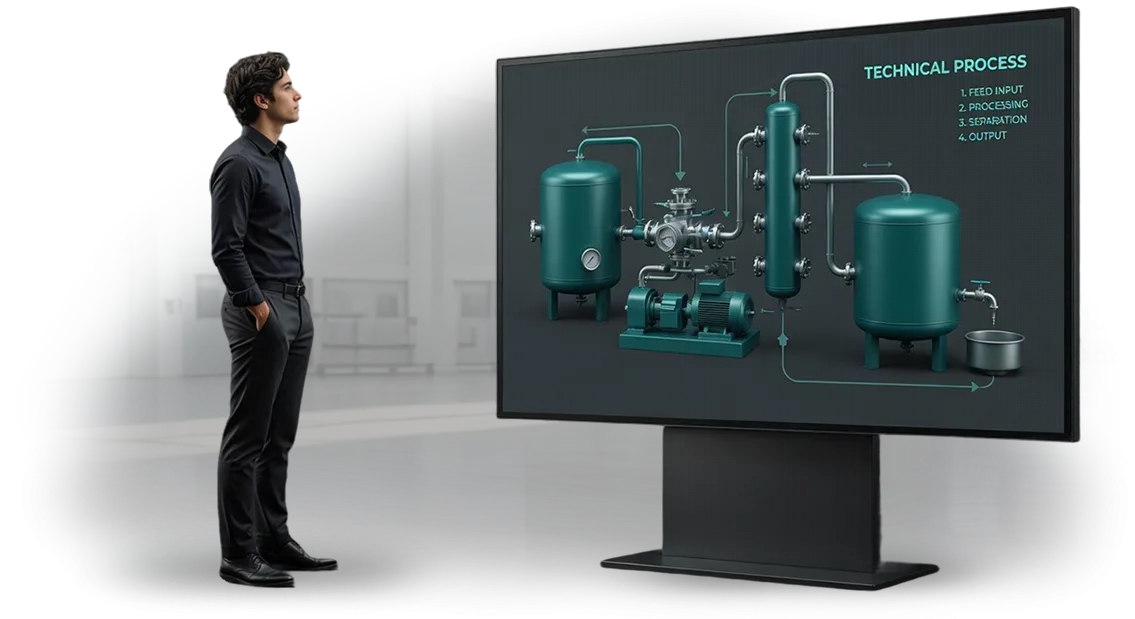
מדוע צוות מרכז תערוכות מאבד לקוחות בגלל הכנה
דוכן תערוכה עובד ללא הפסקות, ולצוות אין זכות לטעות.
מבקר ניגש עם שאלה ספציפית, ומצפה לתשובה מהירה ובטוחה — אבל אם ההכנה של הצוות הצטמצמה לקריאת חוברת או תדריך מילולי, במציאות הדברים מתנהלים אחרת.
העובד מהסס, בודק עם עמיתים, מחפש מידע בטלפון — והאורח כבר איבד עניין ועבר לדוכן השכן, שבו עונים בבהירות ומיד.
הבעיה היא לא האנשים, אלא פורמט ההכשרה של הצוות. תהליכים טכנולוגיים מורכבים, תכונות מוצר או מאפייני ציוד אי אפשר לזכור אחרי תיאור טקסטואלי אחד.
ללא חומרים ויזואליים, הידע דוהה תוך כמה ימים, ובעצם הדוכן, הלחץ וזרם המבקרים מסיימים את שאריות הביטחון. כתוצאה מכך, הצוות נתפס כלא מוכן — למרות שכל עובד עשה כמיטב יכולתו כדי לעשות הכל נכון.
למבקר לא אכפת מי אשם — הוא מגבש דעה על כל החברה. תשובה אחת לא בטוחה בדוכן תערוכה מבטלת שבועות של הכנה לאירוע, והמתחרים הסמוכים רק מחכים שלקוח פוטנציאלי יתאכזב.
לא רק קשרים חד-פעמיים אובדים — המוניטין והחוזים העתידיים, שבגינם החברה משתתפת בתערוכה, נפגעים גם הם.
אנחנו סוגרים את הפער הזה עם סרטוני הדרכה ואנימציה של תהליכים טכנולוגיים. במקום טקסטים מופשטים, העובדים מקבלים תסריט פעולה מדויק: איך לברך מבקר, מה לומר על המוצר, איך לענות על שאלות קשות.
הכשרת צוות כזו לוקחת זמן מינימלי, נקלטת במהירות, ונותנת לכל הצוות בדוכן תוצאות בטוחות באותה מידה.
מה סרטון הדרכה מונפש נותן לצוות שלך
סרטון הדרכה מונפש הופך את תקני העבודה של הצוות שלך לכלי ויזואלי שכולם מבינים. במקום תקנונים צפופים ותזכירים טקסטואליים — סרטונים קצרים שהעובדים צופים בהם לפני המשמרת ומרעננים בזיכרון בכל עת.
עבור מרכז תערוכות, זו דרך ישירה לשירות מבקרים עקבי באיכות גבוהה ולהפעלת דוכן צפויה.
קליטה מהירה של עובדים חדשים
עובדים חדשים מתחילים לעבוד בביטחון כבר בימים הראשונים, לא בחודשים. סרטון ההדרכה מציג תרחישים אמיתיים: איך לקבל אורח, איך לענות על שאלות נפוצות, איך לפעול במצב חירום.
עולה חדש לא צריך לקרוא עשרות עמודים שוב ושוב או להסיח את דעתו של חונך כל הזמן — מספיק לצפות בסרטון ולחזור על הפעולות.
זמן הקליטה מצטמצם פי כמה, והתהליך עצמו מובנה באותה דרך עבור כולם. אתה מפסיק להיות תלוי במי בדיוק מאמן את העולה החדש ותמיד מקבל עובד מוכן לעבודה בדוכן מהיום הראשון.
תקני עבודה אחידים לצוות
כל עובד בדוכן שלך פועל לפי אותם כללים: מברכת מבקרים ועד הצגת מוצגים. אנימציה מציגה את התרחיש האידיאלי, ומבטלת אי-עקביות בהתנהגות הצוות ופרשנויות אישיות של התקנון. זה חשוב במיוחד כשכמה אנשים עובדים בדוכן במשמרות שונות.
המבקרים רואים את אותה רמת שירות גבוהה ללא קשר לשעת הביקור. ההכרה במותג ונאמנות האורחים גדלות, והמנהל מקבל כלי לניטור איכות ביצועי הצוות בלי להיות נוכח בכל שלב.
הנחיות ויזואליות ופחות טעויות
אנשים זוכרים מידע ויזואלי פי כמה יותר טוב מאשר טקסט, ולכן הנחיות מונפשות נקלטות מהר יותר ונשארות בזיכרון זמן רב יותר. העובדים עושים פחות טעויות בהליכים סטנדרטיים: מחיבור ציוד ועד טיפול בפניית מבקר. פחות טעויות בדוכן — פחות מצבי קונפליקט ופחות קשרים שאבדו.
אפשר לפצל את הסרטון לתרחישים קצרים למשימה ספציפית, ועובד יכול לצפות בקטע הדרוש בכל עת. זה מפחית את העומס על החונכים ומבטל את הגורם האנושי בהכשרה.
פיתוח מקצועי לעובדים מנוסים
הנחיות מונפשות מועילות לא רק לעולים חדשים אלא גם לצוות מנוסה. צפייה קבועה בסרטונים מחזקת מיומנויות נכונות ועוזרת להטמיע תקני עבודה חדשים בלי ישיבות ארוכות.
העובדים משפרים את כישוריהם באופן עצמאי, ואתה בונה תרבות של למידה מתמשכת בתוך הצוות.
כתוצאה מכך, הצוות שלך עובד בצורה מתואמת, בטוחה ועם מינימום טעויות — בדיוק מה שצריך לדוכן תערוכה מצליח.
פורמטים של אנימציית CGI למרכזי תערוכות למשימות שונות
עבור מרכז תערוכות, חשוב שכל קהל יקבל מידע בפורמט נוח. אורחים רוצים להבין במהירות את מהות התערוכה, עובדים רוצים ללמוד תהליכי עבודה, שותפים עסקיים רוצים לראות את הטכנולוגיה בפירוט.
צילום מסורתי לא תמיד אפשרי כאן: תהליכים רבים מוסתרים מהעין או גדולים מדי למצלמה. אנימציית CGI מאפשרת ליצור פורמטים שונים לכל משימה, בלי צילומים ואישורים ארוכים.
להלן שלושת הפורמטים העיקריים של סרטוני הדרכה ואנימציה שבהם אנו משתמשים בפרויקטים עבור מרכזי תערוכות.
| פורמט | למי | מה זה נותן ללקוח |
|---|---|---|
| סרט הדרכה מלא | עובדים חדשים, צוות טכני | טבילה מהירה בתהליכים, פחות טעויות, תקן ידע אחיד |
| סרטונים קצרים | מבקרי תערוכה, שיווק | שמירת תשומת לב, הדגמה ויזואלית, חשיפה אורגנית ברשתות חברתיות |
| פירוט תהליך טכנולוגי | מהנדסים, שותפים, לקוחות עסקיים | שקיפות טכנולוגית, אמון, טיעון למשא ומתן |
קל לשלב בין הפורמטים: לדוגמה, סרטון קצר לרשתות חברתיות ופירוט מפורט לשותפים מופקים מפרויקט תלת-ממד אחד. זה מוריד את התקציב ומאיץ את ההשקה.
עבור תערוכה קבועה, אפשר גם ליצור אנימציה בלולאה שעובדת ללא מעורבות צוות ומושכת את תשומת לב המבקרים. כך הלקוח מקבל לא רק סרטון תאגידי, אלא כלי שמכסה כמה קהלים בבת אחת.
איך מתנהלת העבודה על סרטון הדרכה לדוכן שלך
מסלול ברור מבריף ועד להדרכה מוגמרת: אתה מאשר את נקודות המפתח, ואנחנו מטפלים בכל הפרטים הטכניים. זה שומר על שקיפות העבודה ולא מסיח את דעת הצוות מהמשימות העיקריות של הדוכן.
עבור מרכזי תערוכות זה חשוב במיוחד — כל עובד חייב ללמוד את התהליכים במהירות ולהתחיל לעבוד בלי היכרות ארוכה.
- בריף וטבילה. יש לנו שיחה קצרה על אופן ארגון העבודה בדוכן ואילו פעולות צריך להראות. אנחנו מגדירים את מטרת הסרטון, הקהל וערוצי ההצגה.
- תסריט וסטוריבורד. אנחנו מכינים את הטקסט ותיאור פריים-אחר-פריים של הסרטון העתידי. אתה מאשר את התסריט — ואנחנו עוברים להפקה בלי אישורים מיותרים.
- יצירת מודלים ודמויות. אנחנו ממדלים אלמנטים של הדוכן שלך ודמויות כך שהכל יהיה מזוהה על המסך. המראה מקצועי ולא מתיישן.
- אנימציית תהליכים. אנחנו מביאים לחיים פעולות טכנולוגיות: הפעלת ציוד, תקשורת עם מבקרים, הליכים. פעולות מורכבות הופכות לוויזואליות.
- קריינות ועריכה. אנחנו מוסיפים קריין, כתוביות והדגשות על שלבים מרכזיים. הסרטון הסופי קל לצפייה בטאבלט, מחשב נייד או מסך גדול.
- השקת ההדרכה. אנחנו מספקים קבצים בפורמטים הנדרשים ועוזרים לך למקם את ההדרכה במערכת ההכשרה שלך או ישירות בדוכן. העובדים מתחילים לצפות ביום ההשקה.
- תמיכה לאחר מסירה. אם תהליך משתנה, אנחנו מעדכנים את הסרטון במהירות ובלי אישורים חוזרים ארוכים.
המחזור כולו אורך בין כמה ימים לשבועיים, תלוי במורכבות. לאורך הדרך, אתה תמיד רואה תוצאות ביניים ועורך שינויים רק במקומות שבאמת חשוב. אנחנו חוסכים לך זמן: אתה מחליט מה להראות, ואיך לעשות את זה — זו המשימה שלנו.
מה אתה מקבל בחבילת מסירת הפרויקט
בהזמנת פיתוח סרטוני הדרכה למרכז תערוכות, אתה מקבל ערכה מוכנה לשימוש להשקת ההכשרה. כל החומרים זמינים לשימוש מיד לאחר מסירת הפרויקט — בלי השקעות נוספות או חיפוש קבלנים.
- סרטוני הדרכה מוכנים. סרטוני תלת-ממד מונפשים של תהליכים טכנולוגיים עם קריינות. כל אחד מהם נותן מענה למשימה ספציפית: תדריך היכרות, טיפול בציוד, נהלי חירום.
- חומרי מקור. סצנות בודדות, אלמנטים של אנימציה וכל הגרסאות של הסרטונים. אם תהליך משתנה, אתה יכול לבצע עריכות במהירות בלי צילום מחדש מלא ובלי לפנות אלינו.
- המלצות מתודולוגיות למדריכים. תרחישי שיעור, תזמונים לדיון ורשימות בדיקה להערכת ידע. תכנית מוכנה לשילוב הסרטון בתוכנית ההכשרה.
- זכויות שימוש. זכויות תמידיות להצגה בפורטלי הדרכה, מסכי תערוכה ובחומרים לשותפים — ללא הגבלות על מספר ההקרנות או משך הזמן.
- מיתוג בהתאמה לסגנון התאגידי שלך. לוגו, צבעי מותג, קול קריין, כתוביות וטרמינולוגיה פנימית. הסרטונים נראים כאילו נוצרו על ידי הסטודיו הפנימי שלך.
- תמיכה לאחר מסירה. עריכות חינם בתקופת האחריות אם נמצאה אי-דיוק בתיאור הטכנולוגיה או אם התקנות משתנות.
מקרה בוחן: איך אנימציית CGI האיצה השקת תערוכה
עבור מתחם התערוכות אוריון, פיתחנו סדרה של אנימציות CGI לתהליכים טכנולוגיים — מלוגיסטיקת מוצגים ועד ניווט בשטח.
המשימה הייתה תובענית: שלושה שבועות לפני פתיחת התערוכה, היינו צריכים לגייס ולהכשיר יותר ממאה עובדים כך שכולם יבינו איך התערוכה מאורגנת ואיך לעזור למבקרים.
הצוות לא למד את התקנון בן 40 העמודים, והמדריכים פיזית לא יכלו לקיים הרצאות פרונטליות לכל המשמרות.
הצענו להחליף את החוברות הקלאסיות בסרטוני הדרכה קצרים בתלת-ממד. כל סרטון כיסה תהליך אחד: איך לברך אורח, איך לנהל את הזרימה, איך לעבוד באזורים שבהם מודגמות טכנולוגיות.
העובדים צפו באנימציות בסמארטפונים שלהם בזמן נוח ועברו מבחן קצר המובנה בפלטפורמת ההכשרה. זה הסיר את התלות בלוחות זמנים של הרצאות ושחרר את המדריכים הבכירים לעבודה אמיתית בשטח.
מה זה נתן לעסק
זמן הקליטה הצטמצם מחמישה ימים לשניים — התערוכה נפתחה בדיוק לפי לוח הזמנים. כל 124 העובדים סיימו את ההכשרה לפני ההתחלה, ותחלופת העובדים בשבוע הראשון ירדה בכמעט חצי.
שביעות רצון המבקרים עלתה: לפי סקרים, הדירוגים לניווט ולסיוע הצוות עלו ב-38% בהשוואה לתערוכה הקודמת, שהתקיימה בלי סרטוני הדרכה.
התוצאה העיקרית היא לא רק חיסכון בהכשרה. מרכז התערוכות קיבל תבנית שהוא עכשיו משכפל לכל אירוע חדש: מספיק להתאים את תרחישי האנימציה לתערוכה ספציפית.
שישה חודשים לאחר מכן, אוריון הזמין סדרה שנייה של סרטונים לתערוכה הקבועה שלו, ונוספה לצוות משרת עורך תוכן לחומרי הדרכה. עבור הלקוח, זה אומר שההשקעה עובדת לאורך זמן, לא רק כפתרון חד-פעמי לאירוע בודד.
מה לעשות אם מוצג לא סטנדרטי וקשה להציג אותו?
כשתערוכה כוללת מוצג לא סטנדרטי שקשה להציג בשיטות מסורתיות, אנימציה הופכת לפתרון.
היא מאפשרת להדגים איך הוא עובד מבפנים — תנועת מכניקה מורכבת, אינטראקציה של רכיבים, תהליכים נסתרים. המבקרים רואים מה אי אפשר להראות בשידור חי ומקבלים הבנה מלאה של האובייקט.
אנחנו מתאימים את התסריט למאפייני כל מוצג. ראשית, אנחנו חוקרים את המאפיינים שלו, את המכניקה המורכבת ואת הציוד הספציפי שהוא עובד איתו.
לאחר מכן אנחנו מפתחים אנימציה שמציגה את האובייקט מהזווית הנכונה ועם הדגש הנכון — בלי להעמיס בפרטים טכניים, אבל עם דיוק הנדסי.
זו גישה אישית שהופכת את החומר למובן אפילו לאנשים רחוקים מייצור.
חשוב לציין, אנחנו לא רק יוצרים תמונה — אנחנו מספרים סיפור. הוא מדגיש את האלמנטים המרכזיים שחשובים לתערוכה שלך: פתרונות חדשניים, פרטים ייחודיים ועקרונות עבודה.
הדגשה כזו עוזרת להחזיק את תשומת לב המבקרים לכמה דקות נוספות, ומגבירה את המעורבות שלהם ואת הרצון לשתף את מה שראו ברשתות החברתיות.
כתוצאה מכך, אתה מקבל חומר וידאו מוגמר שמשתלב בקלות בכל דוכן. הוא מסביר דברים מורכבים בפשטות ובבהירות, ומעלה את ערך התערוכה.
אנחנו מטפלים בהתאמת התסריט ובהפקה לפי המשימות שלך — כל מה שנשאר זה לבחור את המדיה שעליה להציג אותו.
התייחסות לספקות לפני הזמנת אנימציה
הפחד העיקרי לפני הזמנת אנימציה הוא שהסרטון יאכזב ברגע הקריטי ביותר: הוא לא ירוץ על מסך גדול, יקפא במהלך מצגת, או יתיישן תוך כמה חודשים.
במרכז תערוכות, המחיר של טעות גבוה — מאות מבקרים ושותפים צופים בך. לכן אנחנו מבנים את העבודה שלנו כדי לבטל את כל הסיכונים לפני ההקרנה.
הערבות שלנו היא לא רק מילים, אלא התחייבויות קונקרטיות: אם הסרטון ידרוש עדכון במהלך השימוש או שיתרחש כשל טכני, אנחנו נבצע עריכות במהירות ונספק אפשרות הקרנה חלופית. אתה מקבל לא "קובץ על דיסק," אלא כלי עבודה עם התמיכה שלנו.
מה אתה מבטיח אחרי מסירת הסרטון?
אנחנו אחראים לכך שהאנימציה תעבוד על הציוד המוסכם ובפורמט המוסכם. אם הסרטון לא רץ או מוצג בצורה לא נכונה, אנחנו מתקנים את הבעיה בחינם ומספקים פורמט גיבוי כך שההקרנה תתקיים בכל מקרה. אנחנו כותבים את זה בחוזה, כך שהסיכונים שלך מינימליים.
מה אם ההדרכה מתיישנת?
תהליכים טכנולוגיים משתנים, והסרטון חייב לשקף אותם. אנחנו בונים אפשרות לעדכונים: לפי בקשתך, אנחנו מבצעים עריכות בסצנות בודדות או בונים מחדש את הסרטון לגרסה חדשה של התהליך.
זה מהיר וזול יותר מהזמנת סרטון מאפס, ואתה תמיד מציג לאורחים מידע עדכני.
איך מובטחת יציבות ההקרנה?
אנחנו יוצרים כמה אפשרויות גיבוי: הקובץ הראשי, גרסה קלה לחיבורי אינטרנט חלשים, ונגן עצמאי לשימוש לא מקוון.
בנוסף, אנחנו תומכים בך בשלב ההשקה הניסיוני — אנחנו בודקים את הסרטון על הציוד שלך מראש ומתאימים אותו למאפייני המסכים שלך. כתוצאה מכך, אתה יכול להיות בטוח שההקרנה תתנהל בצורה חלקה.
מי אחראי על תמיכה טכנית?
מנהל פרויקט ייעודי נשאר בקשר אחרי מסירת העבודה. אתה יכול לפנות אליו עם כל שאלה, מהחלפת גרסה ועד ייעוץ בהגדרת ציוד.
זמן התגובה הממוצע הוא כמה שעות, וביום האירוע אנחנו מוכנים להיות בכוננות מרחוק כדי לעזור במקרה של מצב בלתי צפוי.
דון במשימה שלך וקבל תכנית אנימציה לפרויקט שלך
מבקרים במרכז תערוכות זוכרים תמונות, לא טקסט. כשתהליך טכנולוגי קשה להסביר במילים או בתרשימים, אנימציה הופכת אותו לוויזואלי תוך 30 שניות.
אבל לפני שמתחילים בהפקה, חשוב להבין איך הסרטון ישתלב בתערוכה שלך, מה יהיה משכו, ואיך הוא יוביל מבקרים לדוכן הנכון.
אנחנו בוחנים את המשימה ומחזירים תכנית אנימציה לפרויקט שלך — ללא התחייבות. אתה מקבל לא "נעשה את זה יפה" מופשט, אלא פרטים: מה אנחנו מראים, באיזה סגנון, כמה זמן הסרטון, ומתי הוא יהיה מוכן.
מה כלול בהצעה
- ייעוץ לפרויקט — אנחנו מנתחים את מטרות התערוכה, קהל היעד ונקודת המיקום של הסרטון.
- הערכת לוח זמנים — לוחות זמני הפקה כנים שמתחשבים במועד פתיחת התערוכה שלך.
- תכנית עבודה — תרחיש שלב-אחר-שלב, מתיאורי פריימים ועד לרנדור ועריכה סופיים.
- הצעה מסחרית — עלות מחושבת אחרי בדיקה ושלבי תשלום ברורים, בלי תוספות נסתרות.
- אפשרויות פורמט — נייעץ מה יעיל יותר: סרטון למסך, אזור אינטראקטיבי או סרטון הדרכה קצר לעובדים.
גישה זו חוסכת לך זמן: אתה יודע מראש מה תקבל ומקבל החלטות על סמך עובדות, לא הבטחות. אם אנימציה לא מתאימה למשימה, נאמר זאת בכנות ונציע חלופה.
השאר בקשה לייעוץ — תוך יום עסקים אחד, נדון בפרויקט שלך, נחשב את לוח הזמנים ונכין תכנית. תקבל הצעה מסחרית עם תנאים ברורים, וההפקה תתחיל רק אחרי האישור שלך.