

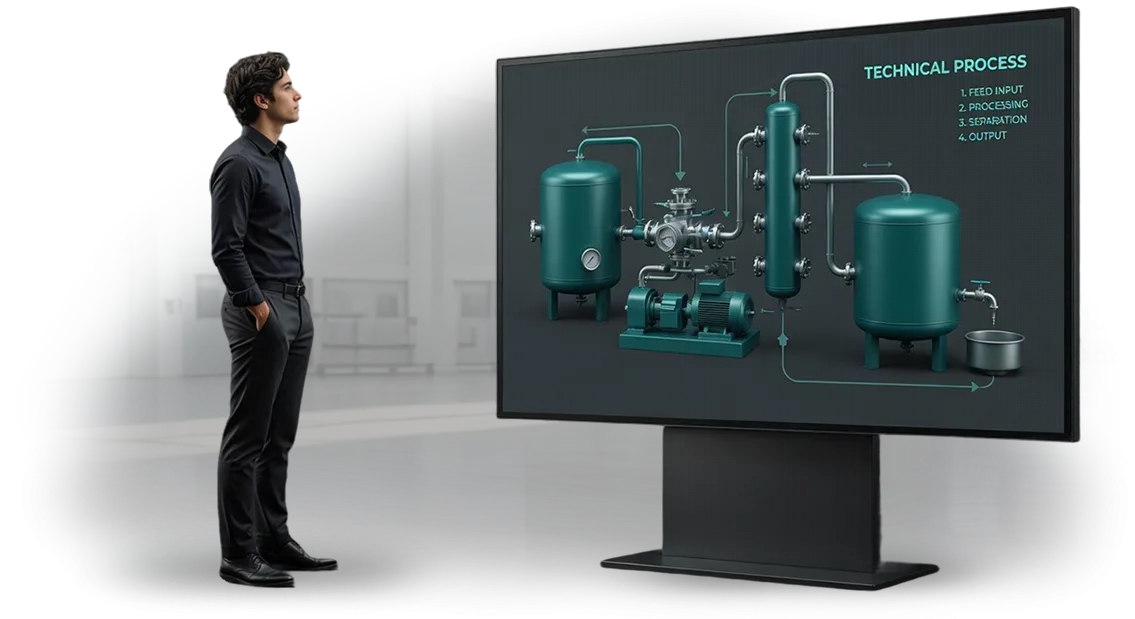
עובדים לא מסיימים לקרוא הוראות: פוטוריאליזם עוזר
הוראות מבוססות טקסט ושקופיות סטטיות הן הסיבה העיקרית לכשלון בהכשרת עובדים ארגונית. אנשים דולפים על מסמכים, סוגרים אותם, ומתייחסים אליהם רק כשזה הכרחי לחלוטין.
וכשמדובר בתהליכים מורכבים או בציוד מסוכן, חוסר תשומת לב כזה מוביל לשגיאות, לבזבוז זמן ולסיכונים עבור החברה.
הבעיה היא שטקסט דורש מאמץ: העובד צריך להרכיב תמונה מנטלית מפסקאות. הוראות וידאו פותרות זאת באופן מיידי — הן מציגות את כל התהליך ללא עמימות. אבל אפילו אנימציה שטוחה רגילה נראית לעיתים קרובות סכמטית ולא מצליחה לעורר אמון.
פוטוריאליזם בהכשרה משנה לחלוטין את התפיסה: העובד רואה עותק מדויק של ציוד, כלים או ממשקים אמיתיים, ולא סקיצות מסוגננות. כתוצאה מכך, הוא זוכר את רצף הפעולות מהר יותר ומיישם אותו בביטחון רב יותר בפועל.
הכשרה ויזואלית המבוססת על גרפיקת תלת-ממד פוטוריאליסטית שומרת על תשומת הלב של עובדים שרגילים לתוכן איכותי בחיי היומיום.
הצילומים נראים כאילו צולמו במצלמה, ובכל זאת אפשר להראות את המבנה הפנימי של מנגנון, תהליכים נסתרים, ואפילו תרחישים מסוכנים ללא סיכון אמיתי.
התוצאה היא מעורבות גבוהה יותר בהכשרה ארגונית, פחות זמן בהטמעת עובדים חדשים, ותקן אחיד לביצוע פעולות.
אנחנו יוצרים הוראות וידאו אלה כך שהעובדים שלכם באמת יצפו בהן עד הסוף ויישמו את הידע בעבודה. תוך ניצול ניסיון של עשר שנים בגרפיקת תלת-ממד, אנחנו הופכים תקנות מורכבות לסרטונים ברורים שקל לשלב במערכת ההכשרה שלכם.
פוטוריאליזם בהכשרה הוא לא רק תמונה יפה — הוא כלי עבודה שמקצר את הדרך מהוראה לפעולה.
מה הוראת וידאו איכותית נותנת לעסק
הכשרת עובדים הופכת לעיתים קרובות לפורמליות: אנשים חדשים מבלים שבועות בלימוד דרך ניסוי וטעייה, בעוד שמנטורים מבזבזים שעות בחזרה על אותן הוראות. טעויות עולות ביוקר — מלקוחות שאבדו ועד להשבתת ציוד.
הוראת וידאו איכותית פותרת בעיה זו באופן שיטתי: במקום הסברים מילוליים, העובד מקבל תרחיש ויזואלי ומובן של פעולות נכונות.
הפורמט של שיעורי וידאו קצרים עם ויזואליה ריאליסטית נקלט מהר יותר מטקסט או דיאגרמות. העובד רואה את סדר הפעולות המדויק וזוכר אותו. זה עובד בכל רמה — מפס הייצור ועד נהלי משרד.
הטמעה מהירה יותר של עובדים חדשים
ככל שמתחיל מתחיל לעבוד באופן עצמאי מהר יותר, כך פחות עומס על הצוות. הוראת וידאו מקצרת את תקופת ההטמעה פי שניים עד שלושה: העובד לומד את החומר בקצב שלו וחוזר אליו כשצריך.
ההסתגלות כבר לא תלויה בזמינות של מנטור. אדם חדש לא מחכה שעמית ימצא זמן פנוי, אלא מקבל מיד את התמונה המלאה של תהליכי העבודה. התוצאה היא פחות כאוס ויציבות גם עם תחלופת עובדים גבוהה.
פחות שגיאות ואיכות גבוהה יותר
גרפיקת תלת-ממד ריאליסטית מציגה כל שלב בעבודה ללא פרטים מיותרים. העובד רואה את התנועות הנכונות, את הכלי הנכון ואת התוצאה הצפויה — זה מפחית את מספר התקלות והפגמים בתהליך. זה חיסכון ישיר בחומרים ובזמן המושקע בתיקונים.
סטנדרטיזציה באמצעות וידאו משווה את רמת ההכנה של כל העובדים. ללא קשר לניסיון, כולם פועלים לפי אמת מידה אחת, והמנהל מתמודד עם פחות מקרי חירום ויותר יכולת חיזוי.
חיסכון בזמן של מנטורים
מומחים מנוסים מפסיקים לבזבז ימים על הכשרת עובדים חדשים וחוזרים לתפקידיהם הליבה. הוראת וידאו שנוצרה פעם אחת עובדת ללא הגבלת זמן: אפשר להציג אותה לכל משמרת חדשה מבלי לאבד איכות.
המנהל מקבל כלי בקרה מוכן — תמיד ברור מהווידאו בדיוק על מה הוכשר העובד. זה מפחית את העומס על הצוות ומאיץ את קנה המידה העסקי. השקעות בהכשרה משתלמות דרך המהירות והיציבות של עבודת כל עובד.
פורמטים של וידאו הכשרה: מדיאגרמות לפוטוריאליזם
בחירת הפורמט קובעת ישירות באיזו מהירות העובד מבין את החומר ועד כמה הוא זוכר אותו לעומק.
אין פתרון אוניברסלי: לעבודה בתוכנה, מספיק צילום מסך; להיכרות עם ציוד חדש, עדיף ויזואליזציה פוטוריאליסטית. אנחנו מציעים שלושה פורמטים מעשיים שמכסים כמעט כל משימת הכשרה.
| פורמט | מתאים למשימות כמו | מה הוא נותן ללקוח |
|---|---|---|
| צילום מסך — הקלטת מסך עם קריינות | הכשרה על תוכנה, הגדרת ממשק, מדריכי "איך לעשות" קצרים | הפקה מהירה, עלות נמוכה, קל לעדכן. העובד רואה את סדר הפעולות המדויק |
| אנימציה דו-ממדית סכמטית | הסברת תהליכים, אלגוריתמים, דיאגרמות מופשטות ואינטראקציות בין מחלקות | הופכת נושאים מורכבים לויזואליה ברורה, שומרת על תשומת לב, קל לבצע עריכות ללא צילום מחדש |
| ויזואליזציה פוטוריאליסטית בתלת-ממד | הדגמת ציוד, מכשירים, הרכבה, תקנות בטיחות | מעורבות מקסימלית, תחושת נוכחות, תקן הכשרה אחיד לכל הסניפים והמשמרות |
ההתמקדות צריכה להיות במשימה, לא ב"קישוטים". צילום מסך מתאים להוראות "היכן ללחוץ", אנימציה סכמטית ללוגיקת תהליכים, ופוטוריאליזם כאשר יש להציג אובייקט בפירוט וללא סיכון לציוד אמיתי.
זו הסיבה שבגללה, לנושאים תעשייתיים וטכניים מורכבים, ויזואליזציה פוטוריאליסטית בתלת-ממד מספקת את התוצאה הטובה ביותר: העובד רואה את האובייקט כמו בחיים האמיתיים, לא כתמונה מפושטת.
אנחנו עוזרים לכם לבחור את הפורמט בשלב הבריף — תוך התחשבות במורכבות החומר, בקהל ובצירי הזמן להשקה.
אם מעורב ציוד יקר או שעובדים צריכים הכשרה בערים שונות, פוטוריאליזם משתלם על ידי קיצור זמן ההטמעה ומספר שגיאות העבודה.
איך אנחנו עובדים על הפרויקט שלכם: שלבים ולוחות זמנים
אנחנו פועלים לפי תהליך שקוף: אתם תמיד יודעים באיזה שלב נמצא הווידאו ומה יקרה בהמשך. גישה זו מבטלת הפתעות בלוחות זמנים ובתיקונים — אתם מקבלים תוצאה צפויה מבלי לאבד איכות.
- בריף וניתוח משימה. אנחנו קובעים לאילו עובדים הווידאו מיועד, אילו כישורים צריך לפתח, וכיצד למדוד את התוצאה. התוצאה היא מפרט טכני שמגן מפני אי-הבנות בתחילת הדרך והוצאות מיותרות.
- תסריט וסטוריבורד. אנחנו הופכים את חומר ההכשרה לנרטיב: הלוגיקה של השלבים, דגש על פעולות קריטיות וטקסט הקריין. התסריט מאושר לפני תחילת ההפקה — שינויים בשלב זה הם זולים.
- אישור סגנון. אנחנו מציגים רפרנסים ופתרונות ויזואליים: איך נראים הציוד, הממשקים ופעולות הצוות. ה"תמונה" מאושרת לפני שמשקיעים משאבים ברינדור סופי.
- הפקת תוכן תלת-ממדי. אנחנו יוצרים מודל של סביבת העבודה, הכלים ואנימציית הפעולות. אנחנו עובדים על ציוד מקצועי כדי להשיג פוטוריאליזם ותמונה יציבה לכל מסך.
- עריכה, קריינות, גימור. אנחנו מרכיבים את הווידאו, מקליטים את הקריין ומוסיפים כתוביות ורמזי ממשק. אתם מקבלים גרסת ביניים לסקירה והערות.
- השקה ותמיכה. אנחנו מספקים קבצים סופיים בכל הפורמטים הנדרשים ועוזרים לכם למקם את הווידאו במערכת ההכשרה שלכם. במידת הצורך, אנחנו מבצעים עריכות ממוקדות ללא צילום מחדש מלא.
כל שלב מסתיים בנקודת בקרה: אתם רואים את התוצאה, משאירים הערות ומאשרים את האיטרציה הבאה.
לוחות הזמנים נקבעים בתחילת הפרויקט ואנחנו לוקחים אחריות על עמידה בהם — בממוצע, וידאו ארגוני לוקח 3–5 שבועות בהתאם למורכבות הסצנות ולמספר פעולות העובד.
תהליך עבודה זה הוכח בעשרות פרויקטים עבור חברות ייצור ושירות. שלבים שקופים, מדדים ברורים בכל שלב ואיש קשר ייעודי — אתם תמיד יודעים מי אחראי על התוצאה.
מה כלול במסירה: חבילה מלאה להשקה
אתם מקבלים לא רק וידאו פוטוריאליסטי מוגמר אלא חבילה מלאה להשקת ההכשרה. אנחנו מוסרים קבצים, זכויות והוראות — כל מה שהעובדים שלכם צריכים כדי להתחיל לעבוד עם הווידאו יום אחרי המסירה.
החומרים מועלים לאחסון ענן, והגישה מוגדרת עבור הצוות שלכם. להלן מה שכלול בחבילה ומה כל פריט נותן לכם.
כל האלמנטים מקושרים זה לזה, כך שלא תצטרכו לנווט במבנה של מישהו אחר: הווידאו, קבצי המקור והמסמכים נמצאים כולם במקום אחד.
- וידאו מוגמר במספר פורמטים: לפורטל ההכשרה, למסנג'רים ולמסכים לא מקוונים.
- קבצי פרויקט מקוריים — אתם יכולים לבצע עריכות בעצמכם או להזמין אותן מאיתנו.
- זכויות וידאו: אישור מתועד שניתן להשתמש בתוכן ללא הגבלות בתוך החברה.
- הוראות שימוש: מדריך קצר להעלאה, הגדרת גישה ואיסוף סטטיסטיקות צפייה.
- תסריט וסטוריבורד מאושרים — אתם רואים את מבנה ההכשרה ויכולים לאשר אותו לפני הגרסה הסופית.
- יכולת עדכון: אם תקנה או תהליך משתנים, אנחנו מעדכנים במהירות את הסצנות הנדרשות.
- תמיכה באינטגרציה: אנחנו עוזרים לחבר את הווידאו למערכת ניהול הלמידה שלכם.
- גרסה עם כתוביות ותסריט טקסטואלי — לנוחות העובדים ולסקירת התוכן.
מקרה בוחן: איך שיפרנו את איכות ההכשרה בייצור
במפעל לבניית מכונות עם יותר מ-600 עובדים, הכשרת מפעילים חדשים ארכה עד שבועיים. בגלל שגיאות הרכבה, המפעל איבד חלק מתוכנית הייצור מדי חודש: פגמים, עבודות חוזרות, השבתת ציוד.
הוראות נייר לא עבדו — עולים חדשים חזרו על אותן אי-דיוקים, ועובדים מנוסים בזבזו זמן על הסברים.
הצוות שלנו הציע להחליף תקנות טקסט בווידאו פוטוריאליסטי בתלת-ממד. יחד עם מהנדסי תהליך, ניתחנו את 12 ההרכבות המורכבות ביותר, מידלנו כל שלב הרכבה והראינו פרטים נסתרים שלא ניתן לראות על היחידה האמיתית מבלי לפרק אותה. העובד רואה לא דיאגרמה אלא את רצף הפעולות המדויק עם הכלי והכוח הנכונים.
איך ההכשרה השתנתה
חודשיים לאחר היישום, מספר שגיאות ההרכבה ירד ב-40%. הכשרת עובדים חדשים קוצרה משבועיים לארבעה ימים — המפעל החל לאייש משרות פנויות מהר יותר והפחית את העומס על המנטורים.
הווידאוים משמשים הן להכנה עם ציוד חדש והן כחומר עזר לעובדים מנוסים.
מנהל הייצור ציין שהוראות הווידאו הפכו לכלי ההכשרה המרכזי: הם נסקרים לפני משמרות, משמשים בהסמכה ובניתוח פעולות מורכבות. פגמי פס ייצור ירדו, ותוכנית הייצור הפסיקה "להישרף" בגלל השבתות.
הלקוח היה מרוצה מהתוצאה וחידש את החוזה לפיתוח 15 הוראות נוספות לאזורי סדנה אחרים.
מקרה זה מראה שאנימציית תלת-ממד פוטוריאליסטית משתלמת בתוך החודשים הראשונים כאשר היא בנויה סביב אתגרי ייצור אמיתיים.
אנחנו לא רק מרנדרים תמונה — אנחנו מתרגמים את הידע של מומחים מנוסים לפורמט ויזואלי שמפחית עלויות ומאיץ עבודה.
איך לבחור את הפורמט הנכון להוראת וידאו?
בחירת פורמט הכשרה היא לא עניין של "תמונה יפה" אלא של המשימה הספציפית. אותה הוראה יכולה להיות מצולמת כווידאו חי, צילום מסך או אנימציית תלת-ממד פוטוריאליסטית — וכל אפשרות מתאימה למצב שלה.
הקריטריון הראשון הוא מורכבות התהליך. אם צריך להראות לעובד את רצף הלחיצות בתוכנית, הקלטת מסך מספיקה.
אבל כשמדובר בציוד מורכב, הרכבה של יחידה או תהליכים שלא ניתן לראות בעין בלתי מזוינת, רק וידאו CGI עם פוטוריאליזם יכול להראות את כל הפרטים והמבנה הפנימי מבלי לאבד איכות.
הקריטריון השני הוא הקהל. עובדים מנוסים יבינו וידאו סכמטי מהר יותר, בעוד שעולים חדשים צריכים את התרחיש הוויזואלי וה"חי" ביותר.
אנימציה פוטוריאליסטית מורידה את סף הכניסה: אדם מבין מיד איך האובייקט נראה במציאות וזוכר את רצף הפעולות מהר יותר.
הגורם השלישי הוא תקציב ומהירות הפקה. צילום חי הוא לפעמים מהיר יותר אבל דורש מיקום, ציוד וצילומים חוזרים במקרה של שגיאות.
ווידאו תלת-ממדי עם פוטוריאליזם לוקח יותר זמן בהתחלה אבל קל לעדכן: שיניתם חלק או את סדר הפעולות — רנדרו מחדש את הסצנה במקום לצלם מחדש את כל החומר. לכן, להכשרת תקני איכות ארוכת טווח, CGI הוא לעיתים קרובות חסכוני יותר.
אין פורמט נכון יחיד — רק זה שמתאים למשימה שלכם. אנחנו עוזרים לכם לבחור אותו בשלב הבריף: אנחנו מעריכים מורכבות, קהל ואורך חיים צפוי של ההוראה. לאחר מכן אנחנו מפתחים וידאו שעובדים באמת מסיימים לצפות בו ומיישמים בעבודתם.
שאלות נפוצות על פיתוח הוראות וידאו
ריכזנו את השאלות שנשאלות לרוב לפני תחילת פרויקטים כאלה. אנחנו עונים בכנות ולעניין כדי שתבינו איך אנחנו עובדים ומה לצפות.
כמה זמן לוקח לפתח הוראת וידאו?
לוח הזמנים תלוי במורכבות התסריט ובכמות החומר. בממוצע, הוראה אחת מוכנה תוך 2–4 שבועות: אתם מקבלים תוכנית ברורה של שלבים ותאריכים לסקירות ביניים. אם צריך בדחיפות, אפשר לדון בלוח זמנים נפרד ובתעדוף עבודה.
האם אפשר לבצע עריכות לאחר שהפיתוח התחיל?
כן, וזה תהליך נורמלי. אנחנו מבנים את העבודה כך שאתם רואים גרסאות ביניים בכל שלב — מהסטוריבורד ועד לרינדור הסופי. ניתן לבצע עריכות בכל שלב, ואנחנו עוקבים אחריהן במסמך משותף כדי ששום דבר לא יאבד או ינפח את לוח הזמנים.
כמה ריאליסטית האנימציה?
אנחנו משתמשים בציוד מקצועי ובכלי רינדור מוכחים, כך שהתוצאה מתקרבת לצילום וידאו אמיתי. האנימציה משחזרת במדויק את התנועות, החומרים והתאורה של ציוד אמיתי.
במידת הצורך, אנחנו יכולים ליצור וידאו הדגמה באתר שלכם — תוכלו לסקור ולהעריך אותו לפני חתימת החוזה הראשי.
האם אתם יכולים להראות תהליך טכני מורכב שקשה לצלם במצלמה?
זו בדיוק המטרה של אנימציית תלת-ממד. מנגנונים פנימיים, חתכים, תהליכים בלתי נראים, זוויות שונות — אנחנו מראים את כל זה בבירור ובבטחה לעובדים. הוראת הווידאו מסבירה מה קורה בתוך הציוד מבלי לעצור או לפרק אותו.
מה קורה לאחר מסירת הפרויקט? האם יש תמיכה?
במשך חודש לאחר ההשקה, אנחנו מבצעים עריכות קטנות ללא תשלום ועונים על שאלות הצוות שמשתמש בווידאו. אם תקנות או ציוד משתנים מאוחר יותר, נשפר את הווידאו לפי בקשה נפרדת. אתם אף פעם לא נשארים לבד עם קובץ מוגמר.
אם עדיין יש לכם שאלה — שאלו אותה בתגובות או דרך הטופס, ונשיב תוך יום עסקים אחד.הזמינו הוראת וידאו היום
עובדים לומדים תהליכים חדשים מהר יותר כשהם רואים אותם בפעולה במקום לקרוא הוראות מרובות עמודים. אבל כדי שווידאו באמת יעבוד, הוא חייב להיות ברור, קצר ולשקף במדויק את התקנות שלכם.
אנחנו יוצרים בדיוק הוראות וידאו כאלה — מתסריט ועד עריכה סופית, תוך התחשבות במאפייני החברה שלכם וברמות המיומנות של הצוות.
הזמינו הוראת וידאו היום — וקבלו ייעוץ ועלות מחושבת לאחר אודיט כבר בהתחלה. זה לא מחייב: נדון במשימה, נציע פורמט שמתאים לעובדים שלכם וניתן לכם את לוח הזמנים. אתם לא צריכים להבין בפרטי ההפקה — אנחנו נטפל בכל השלבים.
מה אתם מקבלים מיד לאחר ההזמנה:
- ייעוץ אישי על הפורמט והתוכן של הוראת הווידאו;
- עלות מדויקת מחושבת לאחר אודיט על סמך המשימה שלכם ומספר הווידאוים;
- שיחת חוזר ממנהל תוך יום עסקים אחד — בלי המתנה ובלי מיילים ארוכים;
- תוכנית עבודה ראשונית: בריף, תסריט, שלבי הפקה ותאריך מסירה;
- מפיק פרויקט ייעודי שעונה על שאלות בכל שלב;
- דוגמאות של הוראות הווידאו שלנו לתעשייה שלכם;
- תחילת פרויקט מיד לאחר אישור התסריט — בלי אישורים מיותרים.
קחו את הצעד הראשון — השאירו בקשה באתר. נתקשר אליכם בחזרה, נבהיר את הפרטים ונציע פתרון שמקצר את זמן הטמעת העובדים ומוריד את מספר שגיאות העבודה. נתחיל עם בריף קצר — אנחנו נטפל בשאר.