

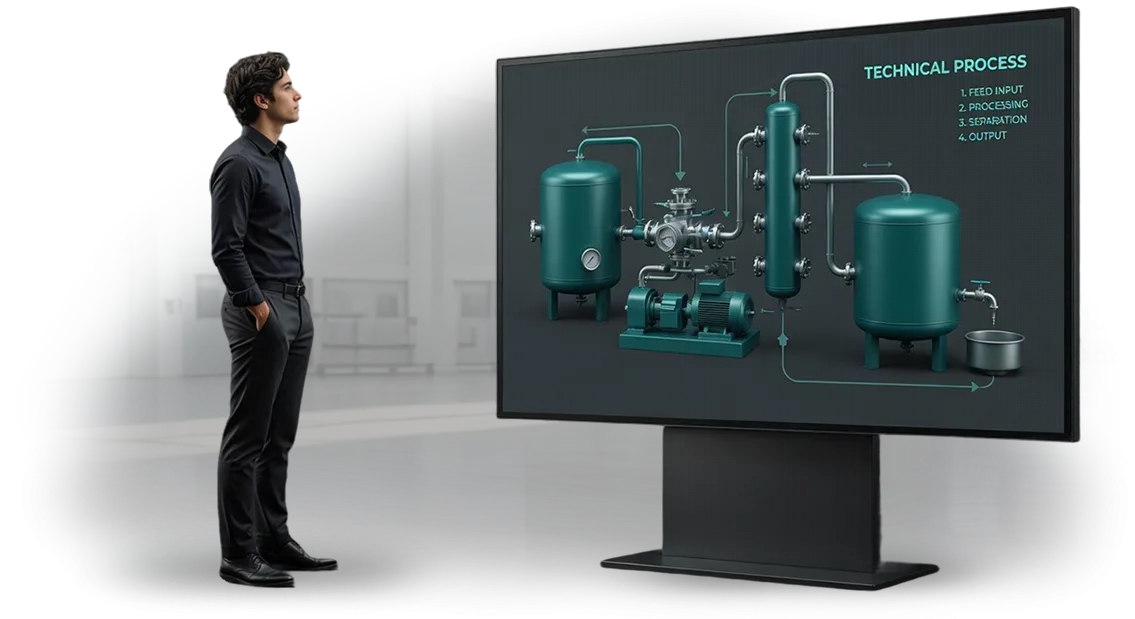
למה הוראות טקסט לא עובדות: אתה צריך ויזואליזציה של תהליך
הוראות טקסט ותקנות יבשות הן דרך מוכרת אך לא יעילה להכשיר עובדים. עובד קורא עמוד אחר עמוד, מפרש את הכתוב בדרכו שלו, ובכל זאת מפספס שלבים חשובים.
אנשים חדשים לוקחים שבועות כדי להשתלב, עובדים מנוסים עושים טעויות כשתקני העבודה משתנים. התוצאה — עבודה חוזרת, נזק חומרי, השבתה ובזבוז זמן של המנהל.
למה זה קורה? טקסט נתפס בצורה מופשטת: כל אחד רואה תמונה שונה של מה שקורה. ויזואליזציה של תהליך מציגה את רצף הפעולות ישירות — תנועה, מרחב, תוצאה.
העובד רואה את מחזור העבודה המלא דרך עיני המבצע: איזה כלי לקחת, איזה כפתור ללחוץ, באיזה סדר לחבר רכיבים. המוח קולט אנימציה ויזואלית מהר יותר מפסקאות טקסט ושומר אותה בזיכרון.
הוראות וידאו המבוססות על ויזואליזציה של תהליך פותרות את בעיית הכשרת העובדים באופן מערכתי: עובד חדש פועל בביטחון מהיום הראשון, תקן העבודה זהה לכולם, וזמן ההשתלבות מצטמצם dramatically.
טעויות עובדים מפסיקות להיות כאב ראש למנהל — זה פשוט עניין של מעקב אחר התרחיש המוצג.
אנחנו מפתחים הוראות וידאו כאלה לתהליך האמיתי שלך: מפעולה ידנית ועד תנועה של קו ייצור שלם. הראה לנו את המשימה שלך — נכין דוגמה של ויזואליזציה לתהליך העבודה שלך.
מה וידאו CGI מציע להכשרת עובדים ולעסק
עובדים חדשים מגיעים עם ניסיון שונה, ולכל חברה יש כללי עבודה משלה. הוראות טקסט נקראות בצורה שונה: חלק מדלגים על פרטים, חלק לומדים כמה ימים, והתוצאה עדיין לא תואמת את התקן. מצגות וקבצי PDF מפוזרים מתיישנים, וטעויות עולות לעסק ביוקר.
וידאו CGI עם ויזואליזציה של תהליך פותר את המשימה הזו אחרת. במקום טקסט מופשט, העובד רואה תרחיש עבודה ברור — מהמסך הראשון של המערכת ועד לתוצאה הסופית.
וידאו כזה נתפס מהר יותר וברור יותר: עובד חדש שולט בתהליכים תוך כמה ימים במקום שבוע, והמנהל לא צריך לבזבז זמן על הסברים אישיים. זה מאיץ את ההסתגלות ומפחית את העומס על המנטורים.
תקן הכשרה אחיד הוא יתרון חשוב נוסף. הוראת וידאו מציגה אלגוריתם ברור אחד, וכל עובד פועל באותה דרך. זה מפחית את מספר הטעויות בפעולות שגרתיות ומשפר את איכות העבודה: משירות לקוחות ועד עבודה עם מערכות פנימיות. טעויות הופכות לנדירות, לא לנורמה.
חיסכון בהכשרה ברור כשמתרחבים. וידאו שנוצר פעם אחת יכול לשמש את כל העובדים החדשים ללא הגבלות. אין צורך לשכור אולם בכל פעם, לאסוף קבוצה ולהסיח את דעתם של מומחים — הווידאו עובד לבד.
בנוסף, קל לעדכן אותו כשתהליך משתנה, במקום לפתח הכשרה מאפס. ההשקעה בווידאו מחזירה את עצמה תוך כמה מחזורי השתלבות בלבד.
ויזואליזציה של תהליך בצורת אנימציית CGI הופכת את ההכשרה לחיה ובלתי נשכחת. עובדים מתחברים בקלות רבה יותר, ומיומנויות נתפסות מהר יותר. עבור העסק, זה אומר עלויות כוח אדם נמוכות יותר, תוצאות צפויות וביטחון שכל חבר צוות יודע לעבוד נכון.
פורמטים של וידאו הכשרה: ויזואליזציה של תהליך לכל תרחיש
ויזואליזציה של תהליך פותרת משימות שונות: מתדריך וידאו קצר ועד קורס מלא לעובדים חדשים. אנחנו בוחרים את הפורמט לתרחיש ספציפי — וידאו תלת-ממדי מלא, היברידי עם גרפיקה דו-ממדית, או אנימציית ממשק.
העיקר שהווידאו מכסה את המשימה העסקית שלך ועובדים באמת קולטים את החומר.
להלן טבלת פורמטים להוראות וידאו ארגוניות. היא תעזור לך להבין איזו אפשרות מתאימה למשימה שלך ומה התוצאה שהיא מביאה.
| פורמט | למי | מה זה נותן ללקוח |
|---|---|---|
| וידאו CGI מלא (אנימציית תהליך תלת-ממדית) | ייצור, לוגיסטיקה, בנייה | מציג מנגנונים נסתרים בחתך. הכשרה ללא עצירת ציוד ותקן פעולות אחיד. |
| היברידי עם גרפיקה דו-ממדית | מחלקות מכירות, שירות, הכשרה לתקנים | מחייה דיאגרמות ותקנות, שומר על תשומת לב. מביא עובדים למהירות עבודה מהר יותר. |
| אנימציית ממשק | חברות עם CRM ומערכות פנימיות | מציג כל שלב בתוכנית. מפחית טעויות של מתחילים ומאיץ את ההסתגלות שלהם. |
ניתן לשלב פורמטים בווידאו אחד: קטע תלת-ממדי מסביר תהליך פיזי, אנימציית מסך מכסה עבודה במערכת. העובד רואה את כל השרשרת ועובר מתיאוריה לפרקטיקה מהר יותר.
בהתחלה, אנחנו מנתחים את המשימה שלך ומציעים את הפורמט המתאים. תקבל וידאו שקל להטמיע במערכת למידה מרחוק ולהשתמש בו להכשרת עובדים המונית ללא מדריכים.
איך עובד פיתוח הוראת וידאו ארגונית
פיתוח הוראת וידאו ארגונית הוא לא מסירת וידאו חד-פעמית, אלא תהליך מובנה. בכל שלב, אתה רואה את התוצאה, מבצע עריכות ושולט בלוחות זמנים, בעוד הצוות שלנו מטפל בכל הצד ההפקתי.
גישה זו מבטלת מצבים שבהם החומר הסופי לא עונה על הציפיות ומאפשרת לך להשיק הכשרת עובדים ללא עיכובים.
- בריף וסקירת חומרים. אנחנו בוחנים את התקנות, ההוראות וחומרי ההכשרה הקיימים שלך, ומגדירים מטרות: מה עובד צריך לעשות אחרי הצפייה.
- תסריט וסטוריבורד. אנחנו הופכים נקודות הוראה יבשות לרצף ויזואלי ברור. אישור התסריט לוקח סבב אחד או שניים, ולאחר מכן אתה מאשר את הטקסט ואת הלוגיקה של הווידאו.
- הפקת תלת-ממד וויזואליזציה של תהליך. אנחנו יוצרים אנימציה שמציגה את תהליך העבודה שלב אחר שלב: מהפעלת ציוד ועד בקרת תוצאות. פעולות מורכבות הופכות לברורות.
- טיוטה ותיקונים. אתה מקבל גרסת ביניים, בוחן אותה עם מומחים ומגיש הערות. אנחנו מבצעים שינויים בטקסט, בתזמון ובפרטים ויזואליים.
- גרסה סופית והשקת הכשרה. אנחנו מספקים את הווידאו המוגמר בפורמט הנדרש עבור ה-LMS או הפורטל הפנימי שלך ועוזרים להגדיר גישה ולוודא השמעה במכשירי עבודה.
- תמיכה ועדכונים. חומרי הכשרה חיים יותר מיום אחד. אם תקנות או ציוד משתנים, אנחנו מעדכנים במהירות את הסצנות הנדרשות — ללא צילום מחדש של כל הווידאו.
התוצאה היא תהליך הפקת וידאו צפוי עם נקודות בקרה ברורות. אתה תמיד יודע באיזה שלב נמצא הפרויקט ומקבל הוראה שעובדים באמת צופים בה ומיישמים אותה בעבודה.
מה כלול במסירה: מתסריט ועד וידאו סופי
אתה מקבל לא רק וידאו מוגמר אלא חבילה מלאה שאפשר לעבוד איתה מיד. כל מה שצריך כדי להשיק הכשרה — מתסריט ועד קבצי מקור — מרוכז במסירה אחת ומוכן לשימוש.
- תסריט וידאו הכשרה. אנחנו מגדירים מטרות, קהל ושלבי תהליך מרכזיים. אתה מאשר את הטקסט לפני תחילת ההפקה — עריכות בשלב זה לא דורשות ביצוע מחדש של אנימציה.
- סטוריבורד שלב אחר שלב. אנחנו מראים איך כל שלב בתהליך ייראה על המסך. זה מאפשר לך להסכים על הסגנון הוויזואלי והלוגיקה הסיפורית מראש.
- ויזואליזציה תלת-ממדית של התהליך. אנחנו מציגים פעולות עובד בפורמט ברור: ציוד, כלים, תנועות ורצף פעולות — כל מה שקשה להסביר בטקסט או בתמונות.
- קריינות ועיצוב סאונד. הקלטת קול מקצועית עם הפסקות במקומות הנכונים והדגשה על פעולות חשובות. הווידאו נתפס בצורה הוליסטית, ללא צורך לקרוא הוראות ארוכות.
- עריכה והרכבה סופית. אנחנו משלבים אנימציה, קריינות וכתוביות ליצירה אחת. הפלט הוא וידאו באורך ובפורמט הנדרשים למערכת ההכשרה שלך.
- קבצי מקור וקבצי פרויקט. אנחנו מוסרים חומרי מקור והגדרות כדי שתוכל לבצע עריכות במהירות כשהתקנות משתנות, ללא הזמנת וידאו מאפס.
- מדריך שילוב. אנחנו מתארים איך להעלות את הווידאו ל-LMS, להגדיר גישה ולהטמיע אותו בקורס או בהוראת בטיחות בעבודה.
חבילה זו מכסה את כל המחזור: אישור, הפקה והשקת הכשרה. כל מה שנשאר לך זה לפרסם את החומר ולהקצות עובדים — כל השאר כבר מחושב ומוכן לשימוש.
מקרה בוחן: איך אנימציית תלת-ממד קיצצה את זמן ההכשרה בחצי
הוראה ויזואלית בפורמט אנימציית תלת-ממד פותרת משימה שתקנות טקסט ותמונות לא יכולות לכסות: העובד רואה כל שלב בתהליך בסדר הנכון.
זה בדיוק המקרה שיישמנו עבור קבוצת תעשייה — החברה גילתה שמפעילים חדשים לקחו יותר משבוע לשלוט בהגדרת מכונות מורכבות, וטעויות ייצור עלו ביוקר.
פיתחנו סדרה של הוראות וידאו ארגוניות באמצעות ויזואליזציה של תהליך: כל וידאו מציג תהליך עבודה אמיתי מהפעלת ציוד ועד בקרת איכות — ללא תיאוריה מיותרת או דיאגרמות מופשטות.
במקום מאות עמודים של הוראות, עובדים קיבלו תרחישים קצרים וברורים שיכלו לעיין בהם ממש במקום העבודה.
תוצאות היישום
קורס ההיכרות למפעילים קוצר מ-8 ל-4 שעות — זמן ההכשרה הופחת בדיוק בחצי.
במקביל, מספר הטעויות במשמרות העצמאיות הראשונות ירד בשליש, כי עובדים שיננו את אלגוריתם הפעולה ויזואלית במקום לשנן טקסט.
המקרה הראה: וידאו CGI מחזיר את ההשקעה לא דרך "מודרניות" מופשטת אלא דרך מדדים עסקיים קונקרטיים.
מנטורים הפסיקו לבזבז זמן על הסברים חוזרים, עובדים חדשים הגיעו לפרודוקטיביות מתוכננת מהר יותר, ותחלופת עובדים בחודש הראשון של תקופת הניסיון ירדה בזכות התחלה ברורה.
החברה המשיכה את השותפות והזמינה וידאו לאזורים סמוכים — היישום החוזר אישר את האפקט המערכתי של ויזואליזציה של תהליך. עבורנו, זה האות המרכזי: הלקוח ראה תוצאה מדידה, לא רק תמונות יפות.
שאלות נפוצות על יישום הכשרת CGI
הכשרה ארגונית דרך וידאו CGI עם ויזואליזציה של תהליך נראית מסובכת רק במבט ראשון. בפועל, לקוחות שואלים שלוש או ארבע שאלות טיפוסיות: כמה זמן עד לתוצאה, האם הם צריכים תסריט משלהם, ומה קורה עם תיקונים. אנחנו נענה עליהן — כדי שתבין איך אנחנו עובדים ומה תוצאה תקבל.
כמה זמן לוקח להפיק וידאו הכשרה CGI?
לוח הזמנים תלוי במורכבות התסריט ובמספר הסצנות. וידאו סטנדרטי של 3–5 דקות לוקח 3–4 שבועות. אנחנו קובעים את התאריך בחוזה ועומדים בו: אתה מקבל את החומר המוגמר עם זמן פנוי לפני השקת ההכשרה.
האם הלקוח צריך תסריט מוכן?
לא, אנחנו מטפלים בתסריט ובסטוריבורד בעצמנו. כל מה שאנחנו צריכים ממך זה חומר: תקנות, הוראות, תיאורי תהליכים. אנחנו הופכים אותם לתסריט ברור שאנחנו מיישרים איתך לפני תחילת הוויזואליזציה התלת-ממדית.
מה אם נדרשים תיקונים אחרי שהווידאו אושר?
אנחנו מבצעים תיקונים מהרשימה שלך פעמיים ללא תשלום. אם שינויים כוללים סצנה חדשה או קריינות, נדון באומדן בנפרד. כל התיקונים במעקב — אתה תמיד רואה את הסטטוס ולעולם לא מפסיד לוחות זמנים.
איך הווידאו מותאם לתקני החברה?
אנחנו משתמשים בצבעי החברה, בטרמינולוגיה ובלוגיקת התהליך שלך. CGI מאפשר לנו להציג מצבים טיפוסיים בסגנון אחיד — עובדים קולטים את החומר מהר יותר, והמותג נראה מגובש.
אם עדיין יש לך שאלה — פנה אלינו ישירות, ונענה בפירוט המותאם לתרחיש ההכשרה שלך.איך לבחור פורמט הוראת וידאו למשימה שלך?
בחירת הפורמט צריכה להתחיל לא ביכולות טכניות אלא בשלוש שאלות: כמה מורכב התהליך, מי ילמד, ומה התקציב המוקצה להפקה.
התשובות מצמצמות מיד את הטווח — מסרטוני אנימציה קצרים ועד ויזואליזציה תלת-ממדית מלאה.
מורכבות התהליך היא הקריטריון המרכזי. אם עובד צריך להבין רצף של 3–5 שלבים, דיאגרמה פשוטה או הקלטת מסך מספיקות.
זה עניין אחר כשעובדים עם ציוד מסוכן, הרכבה רב-שלבית, הגדרת תוכנה — כשטעות עולה ביוקר.
שם נדרשת ויזואליזציה של תהליך: אנימציית תלת-ממד מציגה את המכשיר מבפנים, חותכת דרך המעטפת, מגדילה רכיבים והופכת תהליכים בלתי נראים לברורים.
פורמט זה קוצץ את זמן ההכשרה dramatically כי אדם רואה את כל הלוגיקה בבת אחת, לא בקטעים.
הקריטריון השני הוא הקהל. עובדים חדשים ללא ניסיון צריכים וידאו מפורט ביותר עם דגש על כל שלב. עובדים מנוסים, לעומת זאת, צריכים רק הוראת תזכורת קצרה שמראה פעולות מפתח.
קחו בחשבון גם רמות מיומנות שונות: לדוגמה, ויזואליזציה של תהליך עונה על השאלה "מה יש בפנים?" שלעתים קרובות מעכבת מתחילים ומונעת מהם לעבוד בביטחון.
השלישי הוא תקציב, אבל צריך למדוד אותו לא בעלות הווידאו אלא בעלות הטעות. פגם אחד בפס הייצור, תאונה אחת או לקוח אחד שאבד בגלל שירות שנמסר לא נכון עולים לעתים קרובות יותר מיצירת הוראה תלת-ממדית איכותית.
וידאו CGI גם מחזיר את ההשקעה כי אפשר להשתמש בו שנים: לעדכן סצנות בודדות, לתרגם לשפות אחרות, להטמיע במערכת למידה מרחוק ללא צילומים חדשים.
כלל מעשי: אם התהליך מורכב ועלות הטעות גבוהה — בחר ויזואליזציה של תהליך. אם התהליך פשוט וליניארי — הקלטות מסך או צילומי וידאו יספיקו.
וכשאתה בספק, התחל עם תהליך מפתח אחד: צור וידאו פיילוט, מדוד מהירות הכשרה ושיעורי טעויות — ותקבל החלטות על הנושאים הנותרים על סמך מספרים, לא רגשות.
אנחנו עוזרים בבחירה זו בייעוץ: אנחנו בוחנים את התהליכים, הקהל והתקציב שלך, ומציעים את הפורמט האופטימלי.
דון בתרחיש שלך: התחל בבריף
השאר בקשה לבריף — ותקבל לא רק תשובות לשאלות אלא בסיס מוכן להשקת הפרויקט.
ניצור איתך קשר תוך יום עסקים אחד, נבחן את התרחיש שלך ונעזור לך להגדיר מטרות כך שהווידאו ההכשרתי באמת ישנה את התנהגות העובדים.
יחד נמלא בריף פיתוח — זה לוקח 15–20 דקות אבל מיד מבהיר מטרות, קהל, פורמט ותוצאות רצויות. על סמך הבריף, תקבל אומדן פרויקט ראשוני: לוח זמנים, היקף עבודה וטווח תקציב. אין שלבים נסתרים — רק מה שבאמת נחוץ למשימה שלך.
הנה מה שאתה מקבל בשלב הדיון:
- מפרט טכני מובנה — מסמך ברור שמתעד את כל ההסכמות ומפחית סיכונים בהתחלה.
- לוחות זמנים ברורים — פירוט לפי שלבים עם תאריכים ריאליים, לא "בעוד חודש" מעורפל.
- המלצות תסריט — נציע איזה סוג ויזואליזציה יעבוד הכי טוב למשימה שלך: דיאגרמת שלבים, אנימציית תהליך או פורמט משולב.
- הערכת מורכבות כנה — נסביר אילו אלמנטים יחסכו תקציב ואיפה אסור לחסוך, כדי שהווידאו לא יאבד מערכו.
- עלות קבועה לאחר אישור — המחיר לא ישתנה במהלך התהליך אלא אם תשנה את המפרט המקורי.
- איש קשר ייעודי של מנהל פרויקט — האדם שמוביל את הפרויקט מהיום הראשון ועונה על שאלותיך ללא מתווכים.
כך, אתה יודע מראש מה אתה מקבל תמורת ההשקעה שלך ויכול לתכנן את ההשקה בשלווה. ואם התרחיש הוא עדיין רק רעיון — זה בסדר: נעזור לבנות אותו ונציע הצעות משלנו.
כדי להזמין הוראת וידאו, פשוט כתוב לנו או התקשר — נדון בפרטים בנוחות שלך. נתחיל עם בריף, ואז תחליט אם להמשיך או לא. אין התחייבות, אבל אתה מקבל בהירות מלאה על הפרויקט. צור איתנו קשר היום — נגיב במהירות ולעניין.