

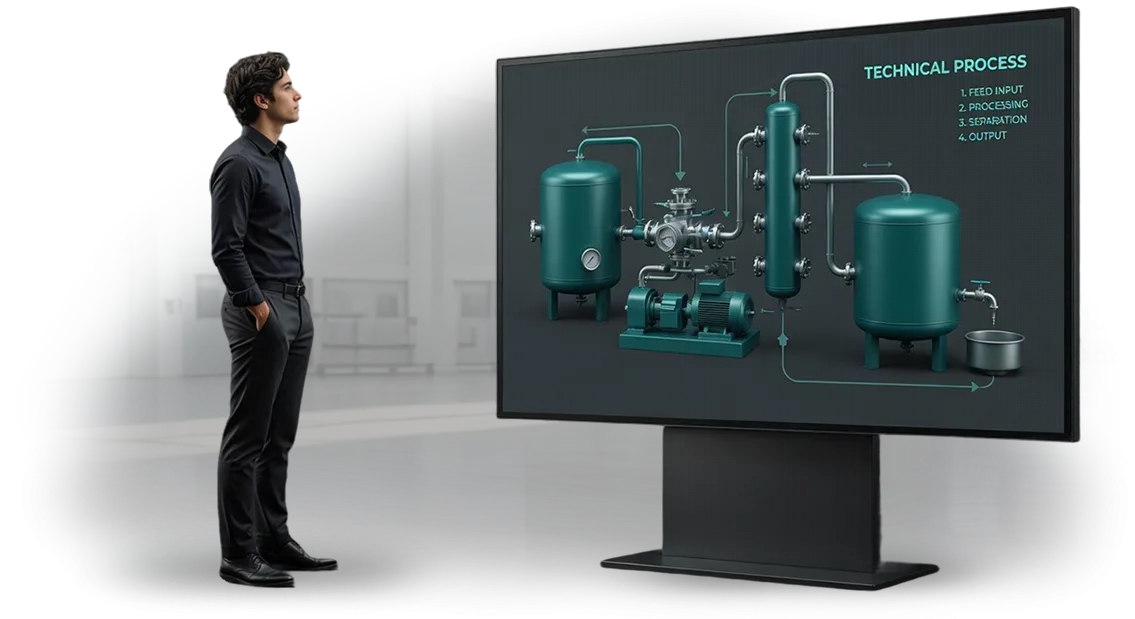
מדוע תעשיית הכימיה אינה יכולה להסתדר ללא הוראות וידאו
בייצור כימי, מחיר הטעות נמדד לא בכסף, אלא בבריאות האנשים ובמוניטין של החברה.
תקנות טקסט רגילות ופוסטרים של בטיחות בעבודה נקראים רק על ידי מעטים — העובדים זוכרים רק חלק קטן מההוראות, ובמצב חירום הם פועלים באקראיות.
לכן הכשרת צוות במפעלים כימיים דורשת חומרים ויזואליים שעובדים בתנאים אמיתיים, ולא קיימים באופן פורמלי רק לצורך בדיקות.
כאשר עובד רואה ציוד רק על דיאגרמה, הוא אינו מבין את הדקויות של אופן פעולתו ואינו מודע לסיכונים.
זה מוביל לשיבוש התהליך הטכנולוגי, תקלות בציוד יקר, והגרוע מכל — תאונות עם דליפות של חומרים מסוכנים.
הוראות וידאו לתעשיית הכימיה פותרות בעיה זו: הן מציגות את רצף הפעולות המדויק, את הציוד הנכון ואת ההתנהגות הנכונה במצב חירום.
הוראות תלת-ממד לתעשיות מסוכנות מאפשרות לבחון כל רכיב בציוד בפירוט מלא מבלי לחשוף את העובד לאיום אמיתי.
אדם רואה מראש כיצד לפתוח שסתומים, להחליף מסננים, להגיב לדליפה — ובמתקן האמיתי הם כבר פועלים בביטחון, ללא פחד או חיפזון.
הוראות בטיחות ויזואליות הופכות חוקים מופשטים לאלגוריתמים ויזואליים מובנים שקל ללמוד וקשה לשכוח.
אנו יוצרים הוראות וידאו להכשרה המבוססות על התקנות והשרטוטים שלכם, ומתאימים אותן לרמת המיומנות של כל עובד — ממתחיל ועד מפעיל מנוסה.
כתוצאה מכך, הצוות נכנס לתפקיד מהר יותר, עושה פחות טעויות ויודע בבירור כיצד לפעול במצב קריטי. המנהל מקבל כלי שמפחית את שיעור התאונות, מקצר זמני השבתה ומגן על אנשים, ולכן מגן על העסק מהפסדים חמורים.
אילו יתרונות מקבל מפעל מסרטוני הכשרה
עבודה בתעשיית הכימיה קשורה לדרישות בטיחות מוגברות, ומחיר הטעות של עובד כאן נמדד לא בזמן אבוד, אלא בבריאות האנשים ובמוניטין של המפעל.
הכשרה מסורתית של "מפה לאוזן" מובילה בהכרח לעיוותים: כל חונך מלמד בדרכו שלו, והעובד החדש זוכר רק חלק מההוראות.
הוראות וידאו יוצרות תקן אחיד שמבטל פערים ומבטיח שכל עובד למד בדיוק את התקנה שאושרה במפעל.
היתרון של הכשרת וידאו הוא בכך שהיא נוטלת על עצמה את החלק השגרתי של עבודת החונכים. מומחים מנוסים מפסיקים לבזבז שעות בחזרה על אותן פעולות למתחילים — השיעור המוקלט עושה זאת עבורם, באותה יסודיות בכל שעה ביום.
זה מפחית את העומס על הצוות הקווי ומאיץ את המעבר של המתחיל לעבודה עצמאית: הם יכולים לחזור על רכיבי ציוד מורכבים כמה פעמים שצריך מבלי להסיח את דעתם של עמיתים.
במקביל, המפעל חוסך בהכשרה פרונטלית, כי קיום שיעורים תוך ניתוק מהייצור הוא תמיד יקר. הפורמט הווידאו אינו דורש השכרת אולמות, נסיעות של מורים, או הסחת דעת של משמרת שלמה לצורך הרצאה.
מספיק לתת לעובד 20–30 דקות במקום העבודה — והוא שולט בחומר ללא פגיעה בפרודוקטיביות של כל הסדנה.
בנפרד, כדאי להזכיר את בקרת הידע. ההנהלה רואה אילו עובדים באמת השלימו את ההכשרה ומי רק ברשימות.
כל צפייה נרשמת במערכת, מה שנותן תמונה שקופה של מוכנות הצוות לעבודה עם חומרים וציוד מסוכנים. כל זה יוצר תרבות בטיחות שבה עמידה בתקנות הופכת להרגל, לא לפורמליות.
בסופו של דבר, הכשרת וידאו היא לא רק תחליף להרצאה, אלא כלי לניהול איכות הכשרת הצוות. היא מקצרת את זמן ההסתגלות, מתאמת את הידע של כל המשמרות ומגנה על המפעל מסיכונים הקשורים לחוסר מיומנות של הצוות.
השקעה בהוראות כאלה משתלמת בשקט הנפשי של המנהל ובביטחון שהתהליך הטכנולוגי מתנהל לפי התרחיש המאושר.
פורמטים של הוראות וידאו למשימה שלכם
במתקן ייצור כימי, אותה הוראה נחוצה לאנשים שונים: מתחיל צריך להבין את התהליך מאפס, מפעיל מנוסה צריך לרענן את הזיכרון במהירות לפני משמרת, ומנהל צריך לוודא שהתקנה נשמרת.
וידאו אוניברסלי אינו פותר את כל המשימות. לכן חילקנו את פורמטי ההכשרה לתרחישי עבודה ספציפיים.
| פורמט | למי | מה הוא נותן ללקוח |
|---|---|---|
| קורס מלא | עובדים חדשים, חניכים, צוות בתהליך קליטה | הכשרה שיטתית עם בדיקת ידע, קיצור תקופת הסתגלות |
| וידאו קצר | עובדים מנוסים, צוות משמרות | תזכורת מהירה לפעולות מפתח לפני תחילת העבודה, פחות טעויות |
| הוראה אינטראקטיבית | צוות האחראי על תיקונים, תחזוקה, מצבי חירום | תרגול תרחישי "מה לעשות אם...", בקרת הבנת התקנות |
וידאו קצר נוח לצפייה בטאבלט או בטלפון ממש בסדנה — עובד מרענן את סדר הפעולות ב-2–3 דקות מבלי להתנתק מהמשמרת. קורס מלא מתאים להכשרת חובה בעת גיוס או לריענון שנתי.
והוראה אינטראקטיבית עוזרת לשחק תרחישי חירום כשמחיר הטעות גבוה במיוחד.
נעזור לכם לבחור פורמט למשימה שלכם או לשלב ביניהם. לדוגמה, עבור מפעל כימי אחד יצרנו סדרת וידאו קצרים למפעילים ומודול אינטראקטיבי לעובדים האחראים על עצירת ציוד.
כתוצאה מכך, זמן ההכשרה המחודשת קוצר בשליש, ומספר הטעויות בביצוע נהלים מוסדרים ירד באופן ניכר.
שלבי יצירת הוראות וידאו לתעשיית הכימיה
פיתוח הוראות וידאו לציוד מורכב אינו רק צילום או אנימציה. זהו תהליך מנוהל שבו כל שלב קשור לבקרת איכות ובטיחות, כי מחיר הטעות בתעשיית הכימיה גבוה.
בנינו את התהליך כך שבכל שלב אתם רואים את התוצאה ויכולים להשפיע עליה, במקום לקבל "קופסה שחורה" בסוף.
- בריף וסקירת ציוד. אנו מתעדים את המשימה: אילו פעולות להציג, מי יצפה, באילו מתקנים. אנו לומדים שרטוטים ותקנות — זה הבסיס למודל תלת-ממדי מדויק טכנית.
- אישור תסריט. אנו כותבים תוכנית פריים אחר פריים: כל רכיב, פעולה, אזהרה. אתם מאשרים את התסריט, ורק אז מתחיל הייצור — ללא אלתורים.
- יצירה וטקסטורינג של מודלים תלת-ממדיים. אנו מעבירים את שרטוטי ה-CAD שלכם למודל תלת-ממדי עם פרופורציות וחומרים מדויקים. בשלב זה, אתם יכולים לראות איך הציוד נראה ומתנהג — עוד לפני הצילום.
- סטוריבורד ואנימציה. אנו יוצרים גרסה ראשונית של הווידאו עם פריימים מרכזיים ומציגים אותה לכם. זו הזדמנות להתאים את המיקוד לפני שמשקיעים משאבים ברינדור הסופי.
- הפקת תוכן וידאו. אנו מרכיבים את האנימציה התלת-ממדית הסופית, מוסיפים קריינות, כתוביות ונקודות בקרה. אנו בוחנים את הווידאו יחד אתכם.
- בדיקות ובקרה. אנו מריצים את ההוראה על עובדים אמיתיים — בודקים שהיא מובנת וניתנת לביצוע. אנו מבצעים שינויים אם התסריט מעלה שאלות.
- השקה ותמיכה. אנו מעבירים את הווידאו המוגמר למערכת ההכשרה שלכם ומספקים אחריות תמיכה: אם התקנה משתנה, אנו מתאימים את ההוראה ללא פגיעה באיכות.
בסופו של דבר, אתם מקבלים לא רק וידאו, אלא כלי הכשרה מוכן שמפחית את הסיכון לטעויות צוות ומאיץ קליטה. לכל שלב יש נקודות בקרה ואישורים, כך שהתוצאה הסופית עומדת בדרישות הבטיחות והייצור שלכם.
מה כלול במסירה: חבילה מלאה למחלקת ההכשרה
החבילה המלאה היא לא רק סרטונים, אלא כלי מוכן למחלקת ההכשרה. אתם מקבלים כל מה שצריך כדי להשיק את התוכנית ללא פיתוח נוסף ואישורים ארוכים: מהלוגיקה המאושרת ועד חומרים למורה ולעובדים.
החבילה מורכבת למשימה שלכם ובהתאם למאפייני הציוד והתקנות, עשויה לכלול:
- תסריט וסטוריבורד. אתם מאשרים את הלוגיקה של כל וידאו לפני הייצור: אתם רואים אילו פעולות מוצגות, אילו דגשים מושמים על בטיחות או נקודות בקרה מרכזיות. זה מבטל צילומים חוזרים עקב ציפיות לא תואמות.
- הוראות וידאו בפורמטים המתאימים למערכת הלמידה מרחוק שלכם ולנגן רגיל. עובדים בסדנה או באתרים מרוחקים יכולים ללמוד מכל מכשיר — מחשב שולחני, טאבלט, טלפון.
- חומרי הוראה למורה. המלצות כיצד לשלב את הסרטונים בתוכנית הלימודים, אילו שאלות לשאול לאחר הצפייה, וכיצד לבדוק הבנה של החומר. אין צורך להבין לבד איך להציג את הוראת הווידאו.
- תזכורות לעובדים. סיכומים קצרים של פעולות מפתח — נוח להדפיס או לשמור במקום העבודה. זהו דף רמאות קבוע שמפחית את מספר הטעויות בימים הראשונים לאחר ההכשרה.
- הוראות לעדכון תוכן. כאשר התקנה או הציוד משתנים, אתם מבינים כיצד לבצע עריכות במהירות בווידאו ובחומרי ההוראה. אין צורך להזמין הכל מאפס — רק לעדכן את הקטע הנדרש.
- מודלים תלת-ממדיים ואנימציות מקוריים, אם נוצרו עבור הפרויקט. אתם יכולים ליצור באופן עצמאי זוויות חדשות של הציוד או להשתמש בחומרים למצגות טכניות ולתקשורת פנים-ארגונית.
החומרים מועברים בשלבים כדי שיהיה לכם זמן לשלב אותם בתהליך ההכשרה. ראשית, אתם מאשרים את התסריט והסטוריבורד, לאחר מכן אתם מקבלים את הסרטונים, ולאחר מכן את המסמכים ההוראתיים והתזכורות. בכל שלב, יש לכם אפשרות לבצע עריכות מבלי לאבד תקציב ולוחות זמנים.
מקרה בוחן: כיצד הוראות וידאו קיצרו את זמן הקליטה ב-40%
עבור המפעל הכימי Volgakhim פיתחנו הוראות וידאו למפעילי ציוד מורכב. העובדים הלכו לאיבוד במאה עמודים של תיעוד, וטעויות בעבודה עם ציוד כימי הובילו לזמני השבתה.
בעבר, הכשרת מומחה חדש ארכה שבועיים: תחילה תיאוריה על דיאגרמה, אחר כך עבודה עם חונך במתקן אמיתי.
במקום זאת, יצרנו מודלים תלת-ממדיים של הציוד משרטוטי CAD והרכבנו מהם סרטונים עם פירוט מלא של כל הרכיבים.
המפעיל רואה את מבנה המתקן בחתך, לומד את סדר הפעולות בפורמט בטוח וחוזר על האלגוריתם בסימולטור. הוראות וידאו החליפו טקסטים ארוכים ודיאגרמות שלא סיפקו תמונה מלאה.
התחלנו עם האזור הקשה ביותר כדי להוכיח את האפקטיביות. הכשרת קבוצת המפעילים הראשונה הראתה תוצאות גבוהות, וההנהלה אישרה מיד את הרחבת הפרויקט.
תוצאה
זמן הקליטה קוצר מ-14 ימים ל-3 — חיסכון של 40%. מתחילים עושים 60% פחות טעויות בשבוע הראשון, וחונכים מבלים דקות במקום שעות בהסברים.
המפעל קיבל תקן הכשרה אחיד: כל העובדים עוברים הוראות מובנות באותה מידה, ללא קשר לניסיון.
לאחר ההשקה המוצלחת, הלקוח הזמין תשע הוראות וידאו נוספות לסדנאות אחרות.
אחד המנהלים ציין: "עכשיו עובדים מגיעים למשמרת בשלושה ימים, לא בחצי חודש, ומרגישים בטוחים." תוצאה זו התאפשרה הודות לעבודה צמודה עם הטכנולוגים של המפעל ושימוש בכלי מידול מקצועיים.
המקרה מראה: השקעה בהכשרת תלת-ממד משתלמת דרך מהירות ההכנה והפחתת העומס על מומחים מנוסים. הפתרון ניתן להרחבה לכל ציוד — ממשאבות ועד קווי ייצור שלמים — ועוזר להתאים עובדים במהירות לסטנדרטים חדשים של עבודה.
כיצד לבחור את פורמט הוראת הווידאו הנכון?
בחירת פורמט הוראת וידאו מתחילה לא בטכנולוגיה, אלא בשתי שאלות: מי יצפה בווידאו ועד כמה מורכב הציוד שצריך להסביר.
להכשרה המונית של עובדים חדשים, סרטוני סקירה קצרים מתאימים, בעוד לתיקון או הפעלה של יחידות מורכבות — הוראות מפורטות שלב אחר שלב עם דגש על כל פעולה.
אם העובדים שלכם עובדים עם משאבות, כורים או צנרת, הדיוק חשוב: המפעיל חייב לראות כל רכיב, כל חיבור כפי שהוא נראה במציאות.
כאן מודל תלת-ממדי הבנוי משרטוטי ה-CAD שלכם עובד הכי טוב: ניתן "לפרק" אותו לחלקים, להציג מבנה פנימי ואלמנטים נסתרים שאינם נראים בצילום וידאו רגיל.
לתעשיות מסוכנות ונהלים מוסדרים, בחרו פורמט עם דגש על בטיחות: וידאו שבו רצף הפעולות מוצג ללא "מילוי" מיותר, עם דגש ברור על נקודות קריטיות.
וידאו כזה מפחית את מספר הטעויות ומקל על החונכים — העובד חוזר על הקטע כמה פעמים שצריך מבלי להסיח את דעתם של עמיתים.
רמת המיומנות של הצוות גם קובעת את הפורמט. מתחילים צריכים הסברים מאפס וקצב איטי, מנוסים צריכים אלגוריתמי פעולה מוכנים ונקודות בקרה. אנו מציעים מבנה מודולרי: ציוד אחד, כמה סרטונים בעומקים שונים. אתם מכסים גם הכשרה ראשונית וגם הכשרה מתקדמת מבלי לשלם יותר מדי עבור תוכן כפול.
הקריטריון המרכזי לבחירה הוא התוצאה, לא הפורמט עצמו. אנו עוזרים לקבוע את סוג הווידאו הנדרש בשלב הבריף: אנו מנתחים את הציוד, התקנות והמשימות, ואז מציעים שילוב אופטימלי של פורמטים.
כך אתם מקבלים הוראה שעובדים באמת צופים בה עד הסוף ומיישמים בעבודתם, לא רק קובץ במערכת ההכשרה.
שאלות נפוצות וספקות של לקוחות
לקוחות לעיתים קרובות מהססים לפני הזמנת סרטוני הכשרה: נראה שהוראות תלת-ממד קשות לתפיסה, והפיתוח ייקח הרבה זמן. בפועל, זה נפתר עם הצגה נכונה ותהליך יעיל. אנו עונים על השאלות המרכזיות כדי שתוכלו לקבל החלטה ללא הפסקות מיותרות.
עובדים בתעשיית הכימיה רגילים להוראות נייר — האם הווידאו לא יהיה קשה מדי עבורם?
אנו בונים סרטונים סביב מצב עבודה אמיתי: המפעיל רואה את הציוד ואת רצף הפעולות כמו בסדנה, אבל עם דגש על רכיבים חשובים.
מודלים תלת-ממדיים עוזרים להציג את המבנה הפנימי שאי אפשר לראות בשרטוט, והנחיות קוליות מנחות את העובד שלב אחר שלב.
אנו בודקים תפיסה על קבוצת מיקוד לפני העריכה הסופית. אם פריים עמוס מדי, אנו מפשטים אותו — כתוצאה מכך, הווידאו מובן אפילו לעובדים חדשים ללא ניסיון עם מכשיר ספציפי.
הצוות שלכם מקבל לא "סרטים מצוירים" מופשטים, אלא הוראה מדויקת המשכפלת את התקנה של המפעל.
כמה עולה פיתוח הוראת וידאו וכיצד נוצר המחיר?
העלות תלויה במספר הסצנות, במורכבות הציוד וברמת פירוט המודל. אנו מעריכים את הפרויקט לאחר הבריף ומספקים הערכת עלות מפורטת לפי שלבים: הכנת מודלים תלת-ממדיים, אנימציה, הקלטת קול, עריכה. שקוף: אתם רואים על מה אתם משלמים.
כאן חשוב לחסוך בקנה מידה. הוראת וידאו איכותית אחת מחליפה כמה הכשרות פרונטליות ומקצרת את זמן ההכשרה המקדימה.
חשבו כמה עולות שעות של חונך וזמני השבתה של ציוד — עלות הווידאו מחזירה את עצמה כבר לאחר השימוש הראשון בתהליך ההכשרה.
כמה מהר אתם יכולים ליצור וידאו? יש לנו לוחות זמנים צפופים להשקה.
המחזור הסטנדרטי הוא בין כמה שבועות לחודש בהתאם להיקף. למשימות דחופות, יש לנו מצב פיתוח מואץ: אנו מקצרים אישורים, עובדים במקביל על אנימציה וקריינות, ומספקים את התוצאה בזמן דחוס.
בהתחלה, אנו קובעים את לוח הזמנים בחוזה ושולחים גרסאות ביניים לכל שלב. אתם לא נשארים בחושך: בכל רגע אתם יכולים לראות מה מוכן ומה בתהליך.
אם אתם צריכים רק חלק מבוא קצר — אנחנו יכולים לעשות זאת אפילו מהר יותר, ולהשלים את הגרסה המלאה לאחר ההשקה.
טכנולוגיות וציוד משתנים — האם נצטרך לצלם הכל מחדש מאפס?
אנו מתכננים הוראות וידאו עם עדכונים עתידיים בראש. המודל התלת-ממדי מורכב מרכיבים נפרדים, כך שכאשר חלק מוחלף, מספיק להחליף קטע אחד של אנימציה במקום ליצור מחדש את כל הווידאו. זה חל גם על שינויים בתקנות: אנו מעדכנים רק את השלבים המושפעים.
בעת ההזמנה, אתם מקבלים את קבצי המקור של הפרויקט. הצוות שלכם או הקבלן שלנו יוכלו לבצע עריכות בעתיד ללא סנכרון ממושך. בנוסף, אנו נותנים המלצות כיצד לבנות ספריית הוראות כך שתישאר רלוונטית לשנים.
אם עדיין יש לכם שאלות על הפורמט, לוחות הזמנים או התקציב — כתבו לנו, נשלח דוגמאות של פרויקטים דומים לתעשיית הכימיה וחישוב מפורט למשימה שלכם.הזמינו הוראות וידאו — וקבלו חבילת הכשרה לעובדים
השאירו פנייה — ונכין פתרון למשימה שלכם. במהלך ייעוץ של 10–15 דקות, נבהיר אילו תהליכים צריך לכסות: מהכשרת עובדים חדשים ועד הסבה של צוות בעבודה עם ציוד. לאחר מכן, תקבלו הצעה מסחרית עם היקף עבודה ברור ולוחות זמנים.
אנו לוקחים על עצמנו את כל מחזור פיתוח ההכשרה במפתח מלא: מניתוח שרטוטים ותהליכים טכניים ועד הוראות וידאו מוכנות שעובדים יכולים לצפות בהן בכל מכשיר. אין צורך להבין פרטים טכניים — אנו מדברים בשפת התוצאות.
מה אתם מקבלים לאחר פנייה אלינו:
- ייעוץ הכשרה: מומחיות במשימה שלכם, בחירת פורמט הוראה — מודלים תלת-ממדיים, טקסטורינג, תרחישים אינטראקטיביים.
- פיתוח הכשרה במפתח מלא: הוראות המותאמות לתקנות שלכם, לציוד ולרמת המיומנות של הצוות.
- חומרים ויזואליים לקליטה מהירה: העובד רואה כל פרט ורצף פעולות.
- הפחתת מספר הטעויות ומצבי החירום באמצעות תקן אחיד לביצוע עבודה.
- חבילה מוכנה להסמכה ובקרת ידע פנימית — מרחוק או בסדנה.
- הצעה מסחרית עם לוחות זמנים ושלבים קבועים — ללא תנאים נסתרים.
כל חבילה מבוססת על מודלי CAD אמיתיים של הציוד שלכם, כך שהוראות הווידאו תואמות בדיוק למה שאנשים עובדים איתו. ואם תהליכים משתנים — נעדכן את החומרים במהירות.
השאירו פנייה — נחזור אליכם תוך יום עסקים, נענה על שאלותיכם ונכין הצעה למשימה שלכם. אתם יכולים להזמין הוראות וידאו בלחיצה אחת: פשוט מלאו את הטופס למטה.