

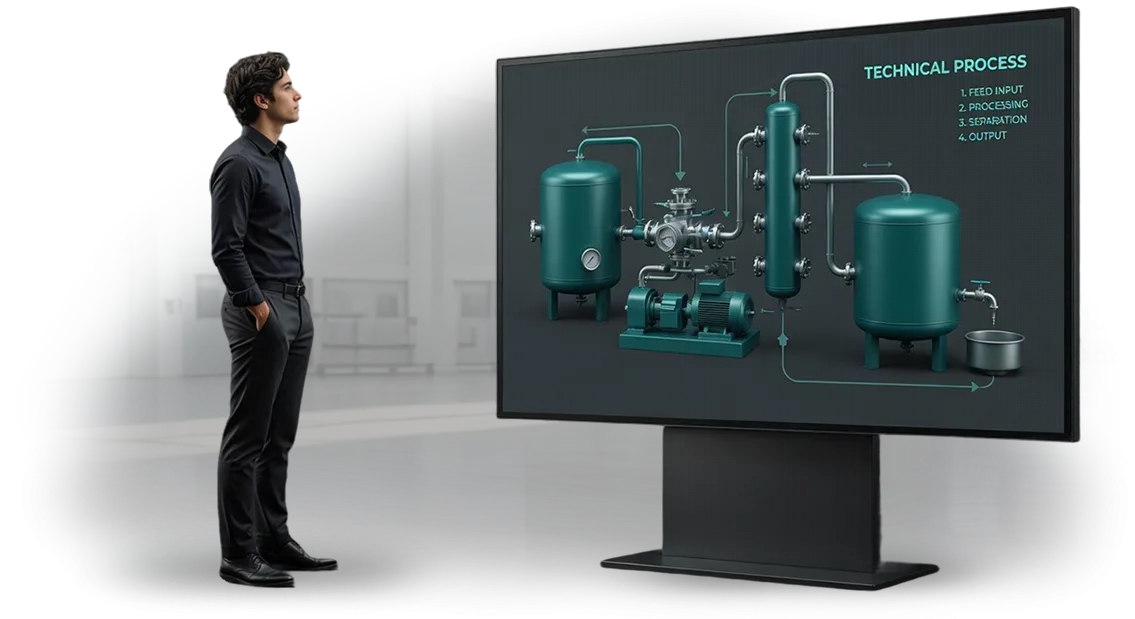
מדוע תעשיית המכונות מאבדת כישורים כשעובדים עוזבים
בכל עזיבה של מהנדס או מפעיל מכונות מנוסה, מפעל לתעשיית מכונות מאבד לא רק עובד, אלא כישורים שנצברו במשך שנים.
ניואנסים טכנולוגיים, מצבי עיבוד, פתרונות לא סטנדרטיים — כל אלה נשארים בראשו של המומחה ועוזבים איתו.
על רקע תחלופת עובדים ומחסור במומחים מוסמכים בתעשיית המכונות, זה הופך לבעיה מערכתית: הייצור מואט, הפגמים גדלים והמועדים נדחים.
עובדים חדשים נאלצים לבנות ידע מחדש באמצעות ניסוי וטעייה. הכשרת עובדים אורכת חודשים, ואיכות העבודה של עובד חדש לוקחת זמן רב עד שהיא מגיעה לסטנדרטים של המפעל.
הוראות מילוליות ותרשימי זרימה אינם מעבירים את מלוא הניסיון, במיוחד כשמדובר בציוד מורכב ובפעולות לא סטנדרטיות.
בינתיים, כל אובדן כזה פוגע ישירות בתוצאה הכספית: עבודה חוזרת, השבתות, עלויות נוספות להכשרת עובדים ובמקרה הגרוע — אובדן הזמנות. הייצור הופך לתלוי בכמה מומחי מפתח, ועזיבתם הופכת לסיכון רציני לכל העסק.
הוראות וידאו ארגוניות פותרות בעיה זו: חומרי הדרכה שצולמו באופן מקצועי לוכדים ידע ומאפשרים להעבירו ללא מעורבותו של המומחה שעזב.
גישה זו הופכת את קליטת העובדים מתהליך כאוטי וארוך למערכת ניתנת לניהול, משמרת את המומחיות של המפעל ומגנה על הייצור מפני תנודתיות בכוח האדם.
היתרונות שלך: מהכשרה לצמיחה בפריון
עובדי ייצור לומדים מהר יותר כשהם רואים רצף פעולות מדויק במקום לקרוא הוראות מרובות עמודים. הוראות וידאו המבוססות על הנהלים שלך הופכות פעולות מורכבות לאלגוריתמים ברורים שקל לשכפל אותם ישירות ליד המכונה.
הכשרה שיטתית משפיעה ישירות על הפריון ברצפת הייצור. עובד לא עוצר כדי להיזכר בסדר הפעולה אלא עוקב אחר דוגמת וידאו. כשכולם מבצעים עבודה לפי סטנדרט אחד, יש פחות עיכובים ופחות עבודה חוזרת, והתפוקה עולה.
שגיאות במהלך הרכבה וכיול הן יקרות: הן משמעותן פגמים, מועדים שהוחמצו והוצאות נוספות. הוראות וידאו מפחיתות את הסיכון של הגורם האנושי — העובד רואה נקודות בקרה מרכזיות לפני תחילת העבודה. זה חשוב במיוחד לעובדים חדשים וכשמציגים ציוד חדש.
הכשרה איכותית מגבירה את המעורבות. כשעובד מרגיש שהקליטה שלו שיטתית, הוא נקלט מהר יותר ומהסס פחות. סרטוני וידאו ברורים עוזרים לשלוט בפעולות נלוות, מרחיבים את יכולת ההחלפה והופכים את הצוות לגמיש יותר.
כתוצאה מכך, אתה מקבל הכשרה שעובדת עבור העסק: התאמה מהירה, איכות צפויה וצמיחה בפריון ללא הגדלת כוח אדם. זה לא חומר חד-פעמי אלא כלי שמחזיר את עצמו עם כל עובד חדש.
פורמטים של הוראות וידאו להכשרה למשימות שלך
מצבים שונים דורשים פורמטי הכשרה שונים. עובד מנוסה צריך רק טיפ קצר לפני עבודה עם יחידה ספציפית, בעוד עובד חדש צריך רצף פעולות מפורט עם הסברים.
הוראות לינאריות ועלונים כבר לא תופסים תשומת לב ואינם מספקים ידע בנתחים ניתנים לעיכול — העובד זוכר רק חלק מהמידע ומתחיל לעבוד עם שגיאות.
אנחנו בוחרים את הפורמט למשימה ולקהל ספציפיים. עבור מפעלי תעשיית מכונות, זה חשוב במיוחד: אותה פעולה עשויה להתבצע בצורה שונה על מכונות שונות ולדרוש עומק פירוט שונה.
לכן, כל משימה מקבלת סוג משלה של הוראות וידאו, מאנימציית תלת-ממד מפורטת ועד להקלטות מסך קצרות לעבודה עם פאנלים דיגיטליים.
| פורמט וידאו | למי ובאיזה מצב | מה זה נותן ללקוח |
|---|---|---|
| אנימציית תלת-ממד של ציוד | ללימוד מבנה היחידות, עקרונות פעולת המנגנונים ורצפי הרכבה/פירוק. אידיאלי כשמציגים ציוד חדש | בהירות חזותית מלאה ללא סיכון של נזק לציוד. עובדים זוכרים במהירות את המבנה והקונסטרוקציה |
| וידאו אינטראקטיבי | לבדיקת ידע לפני מתן גישה לעבודה, להסמכה ולהסבה | שליטה ברורה בהבנת החומר. המנהל רואה מי באמת מוכן לעבודה עצמאית |
| הקלטת מסך | להכשרה על תוכנות, מערכות בקרה ופאנלים אלקטרוניים של מכונות CNC | קליטה מהירה ללא מעורבות חונך. העובד עוקב אחר הווידאו בקצב שלו |
| פורמט משולב | לפעולות מורכבות שבהן נראים תנועות ידיים, החלק על המסך וחתך תלת-ממדי של היחידה | מפחית את מספר השגיאות וקוצץ את זמן ההכשרה פי 2–3. וידאו אחד מכסה מספר תרחישים בבת אחת |
אם אף אחד מהסוגים לא מתאים, נבנה פורמט היברידי לשרשרת הייצור הספציפית שלך. בהתחלה, נרשום אילו פעולות צריך להראות, למי ובאיזה רצף, ונציע פתרון שמתאים גם לעובדים מנוסים וגם לעובדים חדשים.
איך אנחנו יוצרים הוראות וידאו: 6 שלבים מהבריף ועד ההשקה
הוראות וידאו ארגוניות שימושיות רק כשתהליך יצירתן שקוף וניתן לניהול. מבננו את העבודה שלנו כך שתבינו בכל שלב מה קורה ומה תקבלו כתוצאה.
להלן ששת השלבים שכל פרויקט עובר, מהבריף הראשון ועד למסירת החומר המוגמר.
-
בריף — אנחנו לומדים את המשימה שלך. אתם מספרים לנו עבור אילו עובדים נוצר הווידאו, עם איזה ציוד הם עובדים ואילו פעולות צריך להסביר. אנו מתעדים את המטרות, לוח הזמנים וקריטריוני הקבלה.
-
אישור תסריט ומבנה. בהתבסס על הבריף, אנו מתארים אילו יחידות ופעולות יוצגו, באיזה סדר ועם אילו הסברים. אתם רואים את התסריט לפני תחילת ההפקה ויכולים לבצע עריכות — זה מונע עבודה חוזרת מיותרת.
-
הכנת מודלי תלת-ממד המבוססים על הציוד שלך. אנו משתמשים בשרטוטים ובתיעוד שלך כדי ליצור מודל תלת-ממד מדויק של המכונה או המנגנון. כך העובד לומד את המכשיר האמיתי ולא תמונה מפושטת.
-
יצירת הווידאו. בהתבסס על התסריט המאושר, אנו יוצרים אנימציה של היחידות, מוסיפים קריינות וכתוביות. אתם רואים גרסאות ביניים כבר בשלב זה ויכולים להעריך את הקצב והדגשים.
-
אישור סופי. אנו מציגים את הווידאו המוגמר, אוספים הערות ממומחי מפתח ומבצעים עריכות אחרונות. לאחר אישורכם, הפרויקט נחשב שהושלם.
-
השקה ומסירת חומרים. אתם מקבלים את הווידאו בפורמטים הנדרשים, וכן גישה לספריית הוראות אם יש כמה. במידת הצורך, אנו עוזרים לשלב את הסרטונים במערכת ניהול למידה או בפורטל פנימי.
זרימת עבודה זו מגנה על התקציב ולוח הזמנים שלכם: כל שלב מאושר, ואתם תמיד יודעים מה תקבלו. התוצאה היא הוראת וידאו ברורה שמקצרת את זמן קליטת העובד ומפחיתה שגיאות בעבודה עם ציוד.
מה כלול במסירה: חבילה מלאה למחלקת ההכשרה
אינכם צריכים להרכיב צוות של במאי, עורך, מעצב תלת-ממד ומהנדס תהליכים — אנו מספקים את התוצאה המוגמרת. כל החומרים מותאמים למשימות ולתקנים הפנימיים שלכם, ולאחר מסירת הפרויקט, מחלקת ההכשרה שומרת על ארסנל עבודה מלא.
נקודת המפתח היא ששום דבר לא הולך לאיבוד במסירה: אתם מקבלים גם את ה"תמונה" וגם את קבצי המקור. זה מאפשר לכם לעדכן הוראות כשהציוד משתנה ללא הזמנת צילום חדש.
- הוראות וידאו מוכנות — סרטונים סופיים בפורמט וברזולוציה הנדרשים עבור LMS, מסכי טלוויזיה ברצפת הייצור או מכשירים ניידים.
- תסריט ותוכנית פריים אחר פריים — טקסט מאושר עם ההיגיון ההכשרתי ותיאור של כל שלב, כדי שתוכלו לאשר את החומר לפני העריכה ולהשתמש בו למדריך ההכשרה.
- מודלי תלת-ממד של ציוד המבוססים על שרטוטי ה-CAD שלך — עותק תלת-ממדי מדויק של מכונות ויחידות: פירוקים, חתכים, סיבוב חלקים שאי אפשר בצילום של עצם אמיתי.
- קבצי מקור של סצנת התלת-ממד — קבצים ניתנים לעריכה לשינויים מהירים בעת מודרניזציה של קו או החלפת רכיבים.
- עריכה מוגמרת עם קריינות וכתוביות — סגנון ארגוני עקבי, טקסט קריין או כתוביות ברוסית ובאנגלית.
- קבצים סופיים לערוצים שונים — גרסאות נפרדות עבור LMS, פורטל ארגוני, יוטיוב והכשרה פרונטלית עם מדריך.
- המלצות מתודולוגיות — כיצד לשלב הוראות וידאו בתוכנית ההכשרה ולבדוק ידע של עובדים.
חבילה זו מכסה את כל המסע מ"אנחנו לא יודעים איך להסביר" ועד "העובד צפה, הבין ועשה נכון". כל מה שנדרש מכם הוא להעביר את הווידאו לצוות ולעקוב אחר ההתקדמות באמצעות החומר.
מקרה בוחן: כיצד הוראות וידאו האיצו את קליטת העובדים במפעל
עבור מפעל תעשיית המכונות Prommash, פיתחנו סדרת הוראות וידאו על הרכבה ותחזוקה של מכבשים הידראוליים. בעבר, מפעילים חדשים הוכשרו תוך כדי עבודה: חונך הוסח למשך 2–3 שבועות, ונאלצו לתקן שגיאות על ציוד אמיתי. בשל תחלופת עובדים גבוהה, המפעל איבד עד 40% מזמן העבודה ברצפת הייצור על הסבה חוזרת.
הכנו סדרת סרטונים קצרים עם הדמיית תלת-ממד של מנגנונים המבוססת על שרטוטי המפעל. העובד רואה כל יחידה בחתך, את רצף הפעולות ואת השגיאות האופייניות — ללא צורך בפירוק המכונה.
הסרטונים זמינים בטאבלטים ובטלפונים, כך שההכשרה מתרחשת ישירות בבית המלאכה, בקצב נוח.
ההשפעה נמדדה לאחר שלושה חודשים. זמן קליטת מפעיל חדש ירד משלושה שבועות לארבעה ימים — כמעט פי חמישה. העומס על החונכים ירד: הם כבר לא נאלצו לחזור על אותו רצף עשר פעמים.
השגיאות במשמרות הראשונות ירדו ב-30%, ותחלופת העובדים בחודשיים הראשונים פחתה — אנשים החלו להרגיש בטוחים יותר מהר.
בעקבות פרויקט הפיילוט, המפעל הזמין סדרת הוראות נוספת לבתי מלאכה אחרים וכלל קורסי וידאו בתוכנית הקליטה הסטנדרטית שלו.
שנה לאחר מכן, הלקוח ציין שחיסכון בזמן ההכשרה הסתכם בכ-1,500 שעות עבודה, והפרות בטיחות חוזרות פחתו באופן ניכר.
איך לבחור את פורמט הוראות הווידאו הנכון?
אין פורמט אוניברסלי — הבחירה תלויה במה שהעובדים צריכים ללמוד ובכמה מורכבות הפעולות במתקן הייצור שלכם.
למשימת תדרוך פשוטה, מספיק סרטון קצר עם צילומי לייב, אבל כשמדובר בהרכבת יחידות, עבודה עם מכונות מסוכנות או תחזוקה של ציוד יקר, תמונה שטוחה לא מעבירה את כל הפרטים.
במקרים כאלה, הוראות תלת-ממדיות המבוססות על מודלי תלת-ממד שנוצרו משרטוטי ה-CAD שלכם הן יעילות. העובד רואה את המנגנון מכל זווית, יכול לפרק אותו וירטואלית ולהבין כיצד החלקים מתקשרים מבלי לגעת ביחידה בפועל.
זה מפחית את הסיכון לשגיאות עוד לפני שאדם ניגש לראשונה למכונה ומקצר את זמן ההכשרה המקדימה.
שימו לב לפרטים הספציפיים של הייצור שלכם: האם יש אזורים מסוכנים באתר, האם הציוד דורש רצף הפעלה מיוחד, באיזו תדירות הטכנולוגיה משתנה?
אם הנהלים מתעדכנים כל הזמן, בחרו בפורמט אדפטיבי שניתן להשלים ולהרכיב מחדש במהירות ללא צילום מחדש של הכל מההתחלה. אם התהליכים יציבים, ההשקעה בהוראה מפורטת משתלמת כי היא עובדת במשך שנים.
אנחנו עוזרים לכם לבחור פורמט למשימות שלכם: אנו מנתחים את הפעולות, את רמת המיומנות של העובדים ואת תנאי העבודה בבית המלאכה.
לאחר מכן אנו מציעים פתרון שמספק תוצאה מדידה — קליטה מהירה לעובדים חדשים, פחות פגמים ופחות קריאות לחונך. אתם לא צריכים להבין בטכנולוגיית הפקת וידאו — רק ציינו בבירור מה העובדים צריכים ללמוד, ואנחנו נטפל בשאר.
שאלות נפוצות על פיתוח הוראות וידאו
כל הוראת עובד היא השקעה של זמן ותקציב, ולכן לפני תחילת הפרויקט, ללקוחות יש באופן טבעי שאלות. ריכזנו את החששות במקום אחד כדי להראות שהתהליך שקוף והתוצאה צפויה. להלן תשובות לשאלות שמנהלי ייצור ומחלקות הכשרה שואלים לרוב.
כמה זמן לוקח ליצור הוראת וידאו משרטוטי ציוד?
לוח הזמנים תלוי במורכבות היחידות ובמספר הפעולות שצריך להראות. הרכבה פשוטה של 5–7 שלבים אורכת כשבוע; יחידה גדולה או הליך תחזוקה מלא אורכים עד שלושה שבועות.
בשלב הבריף, אנו קובעים את תאריך המסירה, מאשרים גרסאות ביניים בכל שלב ואינם משנים תוכניות ללא אישורכם.
מה קורה אם הציוד או הטכנולוגיה משתנים לאחר פרסום ההוראה?
אף הוראה לא נמשכת לנצח, אבל אנחנו מתכננים אותה עם אפשרות לעריכות ממוקדות. החלפת יחידה אחת, עדכון פרמטרים או רצף פעולות חדש אינם סיבה לצלם הכל מחדש.
אנו מעדכנים את הסצנות הנדרשות תוך שמירה על הסגנון ומספור השלבים העקבי, כך שעובדים לא מתבלבלים מגרסאות שונות.
האם אתם מבטיחים שההוראה תהיה ברורה לעובד חדש?
כן. אנו בודקים את התסריט על אנשים עם ניסיון מינימלי — בדרך כלל עובדים מבית מלאכה שכן או מתמחים. אם נשארות שאלות לאחר הבדיקה, אנו מעבדים מחדש את ההצגה לפני שההוראה מוכנסת למערכת ההכשרה שלכם. אתם מקבלים מוצר מוגמר שבאמת עובד, לא ויזואליה פורמלית.
האם סרטונים כאלה מתאימים להסמכה ולבדיקות ידע?
זו למעשה הסיבה הנפוצה ביותר להזמנתם. אנו יוצרים סרטונים מודולריים: בלוק קצר של "איך לעבוד", ואז הפסקה לשאלה או משימה מעשית.
פורמט זה קל לשילוב בתוכנית ההסמכה שלכם, וניתן לתעד תוצאות הכשרה עבור כל עובד.
אם השאלה שלכם לא מופיעה כאן — צרו קשר: נשלח דוגמאות של פרויקטים דומים ונחשב את לוח הזמנים והעלות למשימה שלכם. המטרה העיקרית היא שעובדים יתחילו לעבוד בביטחון, לא ב"ניסוי וטעייה".הזמינו הוראות וידאו לתעשיית מכונות — התחילו עם בריף
כל דקת השבתה בייצור משמעותה מועדים שהוחמצו ומשאבים שאבדו. הכשרת עובדים חדשים על מכונות וציוד לא צריכה להסיח את דעתם של חונכים מנוסים מהמשימות שלהם.
הוראות וידאו שנוצרו משרטוטי ה-CAD שלכם מקצרות את זמן הקליטה והופכות את ההכשרה למובנת באותה מידה לכל משמרת.
כדי להזמין הוראות וידאו כאלה לתעשיית מכונות, כל מה שנדרש הוא להתחיל עם בריף. נאסוף את כל הדרישות לציוד, לתסריט ולקריינות, ונציע פורמט ולוח זמנים מתאימים.
בהתבסס על הבריף, נכין הצעה מסחרית שקופה — ללא שלבים נסתרים או עלויות נוספות בלתי צפויות.
מה תקבלו לאחר פנייתכם אלינו:
- הערכת עלות ולוח זמנים לבקשתכם — בהתבסס על המספר בפועל של חלקים ורמת הפירוט.
- ייעוץ על פורמט: מאנימציית מודל CAD ועד וידאו שצולם על ידי מפעיל ייצור.
- המלצות על מבנה ההוראה: רצף פעולות, יחידות שצריך להראות בתקריב.
- אישור בריף ומודל/תוכנית — אתם רואים את התסריט לפני תחילת העבודה.
- גרסאות ביניים של חומרים והזכות לבצע עריכות בכל שלב.
- חבילת קבצים מוכנה: סרטונים, כתוביות וסצנות נפרדות לשימוש עתידי.
- תמיכה לאחר הפקה: התאמה למסכים שונים ולמערכות למידה מרחוק.
מלאו את הבריף או התקשרו אלינו — זה לוקח כעשר דקות. לאחר מכן, תקבלו הערכת עלות והמלצות למשימות הייצור שלכם.