

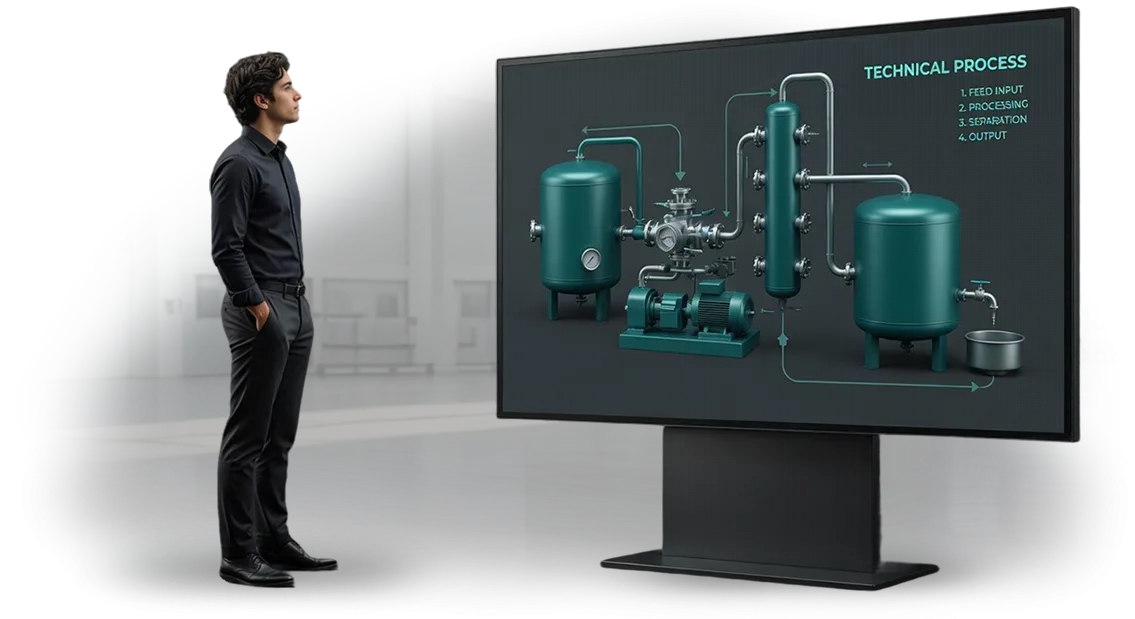
אנימציית פירוק SolidWorks: כשהשרטוטים לא עובדים
כל עובד חדש מתמודד עם אותה בעיה: שרטוטים והוראות סטטיות דורשים חשיבה מרחבית שעדיין אין למתחיל.
הרכבה מתרשימים שטוחים הופכת לניחושים — "החלק הזה הולך כאן, זה בזווית הזו." כתוצאה מכך, ההכשרה נמשכת שבועות, ואותן טעויות ראשוניות חוזרות שוב ושוב.
המחיר של טעויות כאלה נראה מיד: עבודות חוזרות, פגמים, חומרים שאבדו, והזמן של מנטורים מנוסים שנאלצים להפסיק את עבודתם כדי להסביר. ככל שהמוצר מורכב יותר, כך כל אי-דיוק הופך ליקר יותר.
בינתיים, מדריכי וידאו רגילים לא עוזרים — הם מראים את ההרכבה המוגמרת כמכלול, אבל אי אפשר לראות באיזה רצף ובאופן מדויק החלקים מחוברים.
כאן נכנסת לתמונה אנימציית פירוק SolidWorks: דיאגרמת הפירוק התלת-ממדית מתעוררת לחיים, וכל רכיב נע בנפרד לאורך הציר שלו, ומראה את רצף ההרכבה המדויק.
העובד רואה לא שרטוט מופשט, אלא תנועה תלת-ממדית ברורה של חלקים — מהפעולה הראשונה ועד האחרונה. זה לוקח את בהירות ההדרכה לרמה חדשה: לא נשאר ספק לגבי הרצף.
הכשרת ההרכבה מואצת פי כמה: אפילו יחידה מורכבת נלמדת ביום-יומיים במקום שבוע. הפחתת השגיאות מתרחשת באופן טבעי — אדם זוכר את המכניקה הנכונה של התנועות במקום לשנן דיאגרמה.
והאנימציה עצמה ניתנת לשימוש חוזר: בגיליונות ניתוב, בטאבלטים בתחנות עבודה, ובקורסים מרחוק לצוותים חדשים.
אנחנו יוצרים אנימציות תלת-ממדיות הדרכתיות כאלה על ציוד מקצועי, ומתאימים אותן למוצרים ולתקנות שלכם. הווידאו המוגמר עונה על הצורך הייצורי המרכזי: קליטה מהירה וללא שגיאות של עובדים, בלי עבודות חוזרות או הסברים מיותרים.
מה אנימציית פירוק נותנת לעסק שלכם ולמה היא משתלמת
עובד שלא מבין את המבנה של יחידה מורכבת פועל באקראי — ומכאן חלקים פגומים, זמן אבוד וקריאות תמיכה מיותרות. דיאגרמות והוראות מסורתיות דורשות כישורי קריאת שרטוטים שחסרים למתאמנים.
אנימציית פירוק ב-SolidWorks מראה את רצף ההרכבה והפירוק בבירור, כמו הוראת וידאו בסמארטפון.
אנחנו מייצרים סרטונים אלה להכשרה ארגונית. הם משתלמים כבר לאחר השימוש הראשון; הנה מה שהם מביאים לעסק.
קליטה מהירה יותר
עובד חדש לומד את הציוד תוך 2–3 ימים במקום שבועות. הוא מבצע מיד פעולות סטנדרטיות בלי שאלות מתמדות — המנטור משקיע זמן רק במקרים מורכבים.
פחות פגמים ושגיאות
כשרואים איך חלק אמור להשתלב במקום, הסיכון לבלבל את רצף ההרכבה הוא מינימלי. בממוצע, הפגמים במהלך הרכבה ותיקון יורדים בשליש — זה חיסכון ישיר בחומרים ובעבודות חוזרות.
איכות שירות טובה יותר
מהנדס שירות מאתר תקלה מהר יותר אם הוא מכיר את המבנה הפנימי של היחידה. הלקוח מקבל פתרון בביקור אחד — שביעות רצון גבוהה יותר, יותר הזמנות חוזרות.
חיסכון במדריכים
הוראת וידאו מחליפה חלק מההכשרה בכיתה: סרטון יחיד נמצא בשימוש מאות פעמים ללא עלויות חוזרות. צוות ההכשרה מתרחב בלי לגייס מדריכים נוספים.
כתוצאה מכך, ההשקעה באנימציה משתלמת תוך חודשיים: פחות גרוטאות, התאקלמות מהירה יותר, נאמנות לקוחות גבוהה יותר. אנחנו מתאימים את הסרטון לציוד שלכם — הראו לנו מה צריך להראות, ותקבלו חומר הדרכה מוכן.
פורמטי אנימציה לכל משימה: מהצגה ועד אינטראקטיבי
משימות שונות דורשות פורמטים שונים. סרטון קצר מתאים להיכרות ראשונית, הוראת וידאו שלב-אחר-שלב מתאימה לפרוצדורה, ופורמט אינטראקטיבי מתאים לתרגול מיומנויות על יחידות מורכבות. בחירת הפורמט משפיעה על לוחות הזמנים ועל המהירות שבה עובדים מתחילים לעבוד ללא שגיאות.
אנחנו בונים אנימציה על בסיס המודלים התלת-ממדיים שלכם, כך שכל שלב בפירוק משקף במדויק את רצף ההרכבה האמיתי.
אנחנו עובדים עם SolidWorks בין שאר הכלים, ומספקים את התוצאה בכל צורה שנוחה לעובדים שלכם: וידאו, אינטראקטיב, או מסמך עם פריימים שלב-אחר-שלב.
| פורמט | למי | מה הוא נותן ללקוח |
|---|---|---|
| סרטון קצר (1–2 דקות) | עובדים חדשים, מתאמנים | קליטה מהירה: העובד החדש רואה את כל הפעולה ושואל פחות שאלות |
| אנימציית פירוק הרכבה | צוות טכני, מפקחים | הבנה ברורה של מבנה היחידה וסדר הפירוק/ההרכבה — פחות פגמים ופחות זמן השבתה |
| הוראה אינטראקטיבית עם שליטה שלב-אחר-שלב | עובדים מנוסים, שירותי תיקון | לימוד עצמי של פעולה לא סטנדרטית ללא מנטור |
| קורס הכשרה מלא עם סרטונים ומבחנים | מנהלים ומחלקת משאבי אנוש | תקן הכשרה אחיד והערכה שקופה של התקדמות כל עובד |
איך אנחנו בונים תהליך אנימציית SolidWorks ב-6 שלבים
עיצבנו את התהליך כך שתראו את התוצאה בכל שלב ותוכלו להשפיע עליה. אין המתנות ארוכות או שלבים נסתרים: אתם מקבלים תוצרים ברורים, ואנחנו מקבלים הבנה מדויקת של המשימה.
אנחנו עובדים עם המודל שלכם ב-SolidWorks או יוצרים אותו מאפס — ואז זה שישה שלבים עד לאנימציה המוגמרת.
- בריף — אנחנו מתעדים אילו יחידות ומנגנונים להראות, למי מיועד הסרטון, איזה סגנון ואורך. זה מבטל תיקונים מיותרים.
- הכנת מודל — אנחנו בודקים את הגיאומטריה, מסירים את המיותר, מגדירים סצנות וחומרים. המודל מוכן לאנימציה.
- סטוריבורד — אנחנו מגדירים את רצף הפירוק, זוויות מצלמה ותזמונים. אתם רואים את הווידאו העתידי לפני הרינדור.
- אישור — אנחנו מראים טיוטה ברזולוציה נמוכה, ואתם עורכים שינויים במהירות, בהדגשות ובכתוביות לפני האישור הסופי.
- רינדור ועריכה — אנחנו מפיקים את הווידאו באיכות גבוהה, מוסיפים קריינות, טקסט ולוגו. אנחנו מאשרים את הקובץ הסופי.
- השקה — אנחנו מייצאים בפורמטים הנדרשים (MP4, SCORM) ומוסרים קבצי מקור. אנחנו מייעצים כיצד להטמיע את האנימציה במערכת ה-LMS שלכם ונשארים זמינים לאחר ההשקה.
מה כלול במסירת האנימציה ובחבילת התיעוד המלאה
אנחנו מוסרים לא רק וידאו אלא חבילת עבודה מוכנה לשימוש שניתן להשתמש בה מיד ולהתאים אותה למשימות חדשות. המסירה כוללת גרסאות סופיות, חומרי מקור והנחיות הדרכה — כך שאינכם תלויים בנו לעדכונים ושיפורים.
- סרטונים סופיים בפורמטים הנדרשים: ל-LMS, להדרכה בכיתה ולמכשירים ניידים של עובדים.
- קבצי מקור ופרויקטים של האנימציה: כשהתקנות או הציוד משתנים, תוכלו לבצע עריכות במהירות עם הצוות שלכם או עם כל קבלן.
- הנחיות הדרכה: כיצד להטמיע הוראות וידאו בתהליך ההכשרה, באיזה שלב להראות אותן וכיצד להעריך הבנה.
- חבילת זכויות שימוש מלאה: ניתן להשתמש באנימציה למטרות ארגוניות ללא הגבלות על משך או מספר עובדים.
- תיעוד מבנה קבצים: מתאר מה נמצא בכל תיקייה, לשם מה כל קובץ וכיצד לעדכן אותו.
- מפגש הכשרה למומחים שלכם: אנחנו מכסים כיצד לבצע עריכות בעצמכם ולשמור על הוראות הווידאו מעודכנות.
- תמיכה לחודש הראשון: אנחנו עונים על שאלות ועוזרים לשלב חומרים במערכת ההכשרה שלכם.
חבילה זו מבטלת את הסיכון המרכזי — תלות בקבלן יחיד. אתם מקבלים את התוצאה, את הזכויות ואת הכלים לתחזוקה, לא "קופסה שחורה" שעובדת רק כל עוד אנחנו בסביבה.
מקרה בוחן: כיצד אנימציית פירוק קיצצה את זמן ההרכבה ב-40%
הלקוח שלנו הוא מפעל ההנדסה Technomash, המייצר מכונות תעשייתיות. בעבר, מרכיבים חדשים למדו מהוראות נייר ומשרטוטים סטטיים: שליטה בפעולה אחת ארכה עד שבועיים, וכל יחידה רביעית הורכבה עם שגיאות. זה האט את כל מחזור הייצור.
הצענו להחליף תיאורים טקסטואליים בפירוקים מונפשים. כעת העובד רואה על המסך את הסדר המדויק של חיבור חלקים, את המיקום הנכון של אטמים ואת רגע ההידוק של מחברים.
ניתן להשהות את האנימציה, להאט אותה או להריץ שוב על קטע קשה — זה כמו מנטור אישי שתמיד נמצא שם.
התוצאה עלתה על הציפיות: זמן ההרכבה המלא ירד ב-40%, ומספר הפגמים צנח בחצי. עובדים חדשים הגיעו לפריון מתוכנן פי שניים מהר יותר, ומרכיבים מנוסים הפסיקו להפריע לעבודתם כדי להכשיר והתמקדו במשימות הישירות שלהם.
לאחר ההצלחה הראשונה, הלקוח הרחיב את הפרויקט: יצרנו עוד כמה אנימציות ליחידות אחרות, וכעת הן מוטמעות במערכת ההכשרה הארגונית. החומרים משמשים גם לגיוס וגם לפיתוח מקצועי של עובדים קיימים.
אנחנו מוכנים לעשות את אותו פרויקט עבור הייצור שלכם — ספרו לנו על המשימה שלכם, ונראה כיצד אנימציה תאיץ את ההרכבה ותפחית עלויות.
חששות נפוצים של לקוחות לגבי אנימציית פירוק
בהזמנת אנימציית פירוק, למנהלים יש לעתים קרובות שאלות: מה אם המודל התלת-ממדי עדיין לא מוכן? האם יהיה צורך לעשות מחדש את הווידאו לאחר שינויים? כמה זה עולה? אלה חששות לגיטימיים — בואו נסביר איך אנחנו עובדים ואילו אפשרויות אנו מציעים.
מה אם המודל התלת-ממדי עדיין לא קיים או לא שלם?
אנחנו עובדים בשני פורמטים. אם המודל מוכן, אנחנו משתמשים בו כבסיס, והאנימציה תתאים במדויק לשרטוטים. אם אין מודל, המהנדסים שלנו יוצרים הרכבות תלת-ממדיות מפושטות מהשרטוטים או מהדוגמיות שלכם. אתם מקבלים סכמה ויזואלית שניתן לחדד מאוחר יותר כשהמודל המלא יהיה זמין.
באיזו תדירות יהיה צורך לעדכן את האנימציה לאחר שינויי תכנון?
כל עריכה מתבצעת בקבצי המקור, כך שהרינדור מחדש אורך ימים, לא חודשים. אנחנו שומרים על תיעוד הפרויקט ומתחזקים את האנימציה במצב מעודכן.
אם השינויים משמעותיים, אתם מקבלים גרסה חדשה של הווידאו בתעריפים מוסכמים, בלי לבנות מחדש את כל הפרויקט.
כמה זה יקר?
העלות תלויה במורכבות המוצר וברמת הפירוט באנימציה. בדרך כלל זה זול פי כמה מצילום תהליך אמיתי או הפקת וידאו עם צלם.
אתם משלמים על כלי הדרכה מוכן: אתם חוסכים זמן של מדריכים ומפחיתים שגיאות עובדים. אנחנו מספקים את העלות המדויקת לאחר הבריף — אנחנו קובעים את המחיר בחוזה ולא משנים אותו במהלך התהליך.
כמה מהר נוכל לקבל את האנימציה המוגמרת?
פרויקט טיפוסי אורך 2–3 שבועות. אם לוחות הזמנים דחופים, אנחנו יכולים ליצור גרסה מואצת תוך כמה ימים על ידי הפחתת רמת הפירוט. כל המועדים קבועים בחוזה כך שאתם יודעים את לוח הזמנים מראש.
הזמינו פיתוח אנימציית פירוק עבור המוצר שלכם
רוצים להראות לעובדים בבירור איך מוצר בנוי ואיך להרכיב אותו נכון?
אנימציית פירוק הופכת הוראה מורכבת לרצף ויזואלי קל למעקב: אדם רואה כל יחידה, את סדר ההתקנה ואת הסבולות הקריטיים בלי לקרוא מפרטים מרובי עמודים. חומר כזה מקצר את זמן הקליטה ומפחית את מספר השגיאות ברצפת הייצור.
תארו את המשימה שלכם — שרטוט, מודל תלת-ממדי, או אפילו רק תיאור מוצר מספיק. המהנדסים שלנו ינתחו את מורכבות התכנון ויכינו הערכת זמן ועלות, וכן יציגו דוגמאות של אנימציות שיצרנו למשימות דומות.
תקבלו הצעה מסחרית שקופה ללא סעיפים נסתרים ותוכלו לקבל החלטה לפני תחילת העבודה.
מה התשובה שלנו לבקשתכם כוללת:
- הערכת עלות וזמן ראשונית עבור המוצר שלכם;
- דוגמאות של פירוקים לפריטים במורכבות דומה;
- המלצת פורמט: סרטון הדרכה, דיאגרמה אינטראקטיבית או סדרת סרטונים קצרים;
- תוכנית עבודה וטיוטת מפרט טכני;
- תקציב קבוע — המחיר לא ישתנה במהלך התהליך;
- תמיכה לאחר המסירה ושיפורי המשך במידת הצורך.
כדי להזמין אנימציה עבור המוצר שלכם, שלחו לנו תיאור מוצר ותוצאת ההכשרה הרצויה — נשיב עם הערכה, לוחות זמנים ודוגמאות.
נציע גם כיצד להשיק את הפקת הווידאו מהר יותר כך שהעובדים שלכם ירכשו את הידע הדרוש בתוך השבועות הקרובים.
איך לבחור פורמט אנימציה למשימות ספציפיות?
אין פורמט אוניברסלי לסרטוני הדרכה — וזה נורמלי. חלק מהעובדים צריכים רק סקירה קצרה, בעוד אחרים צריכים הדגמה שלב-אחר-שלב עם דגש על כל פעולה.
אז עדיף להתחיל לבחור פורמט לא מתבניות מוכנות אלא משתי שאלות: מה בדיוק הצוות שלכם צריך להבין, ומה רמת המיומנות הנוכחית שלהם?
הסתכלו על המאפיינים של המוצר שלכם: אם יש לכם ציוד מורכב עם עשרות חלקים, שבו שגיאת הרכבה מובילה לתקלה, אז פירוק שלב-אחר-שלב עם הסברים הופך לבסיס.
הוא מראה את הסדר שבו מחוברות יחידות, היכן להפעיל כוח וכיצד להימנע מטעויות אופייניות. לפעולות פשוטות או לתדריכי בטיחות, מספיק סרטון קצר שעובד יכול לצפות בו תוך כמה דקות לפני תחילת העבודה.
רמת המיומנות גם משנה את הפורמט. מתחילים צריכים קצב איטי, חזרה על נקודות מפתח ודגש על בטיחות.
עובדים מנוסים קולטים טוב יותר סרטונים קומפקטיים ללא הסברים מיותרים — עבורם חשוב יותר להדגיש את נקודות התורפה שמעלות שאלות בתדירות הגבוהה ביותר.
לכן, לפני יצירת אנימציה, אנחנו מבהירים לא רק את התיעוד ההנדסי אלא גם את תרחישי העבודה האמיתיים ברצפת הייצור.
אנחנו עוזרים לא רק לצייר פירוק ב-SolidWorks, אלא לבחור את הפורמט הנכון למשימה שלכם: מסרטונים קצרים לקליטה מהירה ועד מודולים מפורטים עם נקודות בדיקה.
כך אתם מקבלים כלי שעובדים באמת משתמשים בו, לא ארכיון קבצים "ליופי." ספרו לנו עם איזה ציוד אתם עובדים ואיזו תוצאה אתם מצפים — נציע אפשרות שמשתלמת כבר במפגש ההכשרה הראשון.