

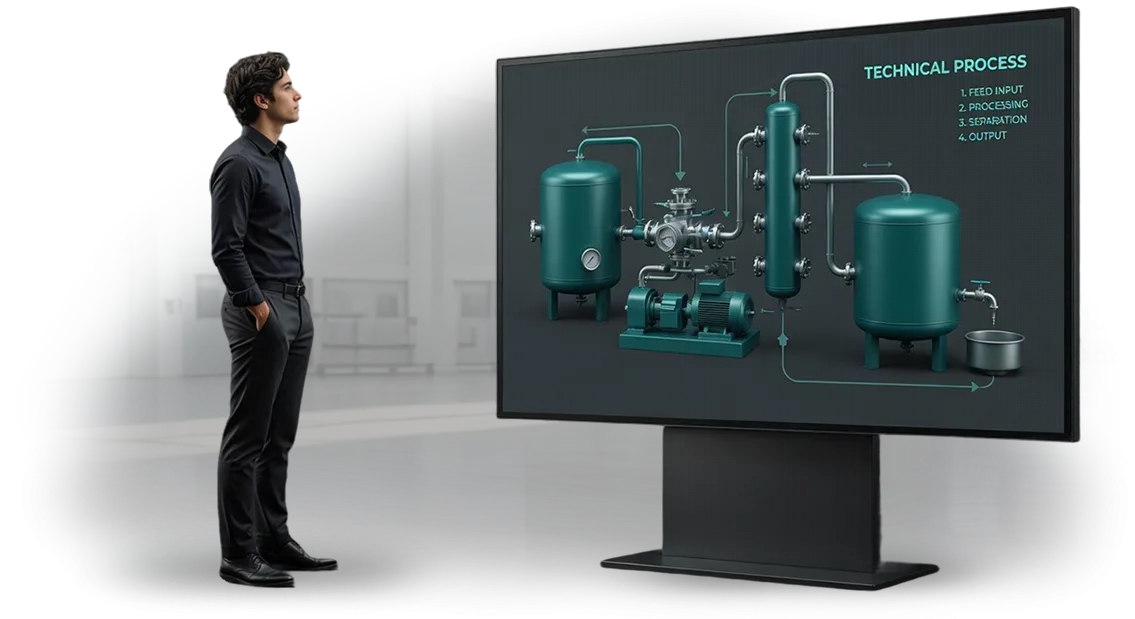
סרטוני הדרכה תלת־ממדיים ארגוניים להכשרת עובדים
הכשרת עובדים חדשים קורסת כאשר מדריך ההפעלה כתוב בשפה צפופה ורשמית: מאות עמודים של טקסט, דיאגרמות וטבלאות.
העובד אינו זוכר את סדר הפעולות, עושה טעויות, והחונך חוזר על אותו דבר עשר פעמים במקום לבצע את העבודה שלו. כתוצאה מכך, שיעור הפגמים עולה, לוחות הזמנים נדחים, ועלויות ההכשרה מחדש גדלות.
סרטוני הדרכה תלת־ממדיים ארגוניים משנים את זה: הנוהל הפנימי הופך להוראות חזותיות ברורות שבהן כל פרט וסדר הפעולות הנכון נראים לעין.
אדם רואה בדיוק איך הרכיב נראה, היכן ללחוץ, ובאיזה סדר לבצע את השלבים—ומשחזר את הפעולה מיד, ללא טעויות. הכשרת עובדים על סרטונים כאלה אורכת פי כמה פחות זמן מאשר קריאת מסמכים או צפייה בחונך.
לפי הנתונים שלנו, לאחר אימוץ סרטוני תלת־ממד, חברות מצמצמות בחצי את זמן הקליטה של עובדים חדשים ומפחיתות את מספר הטעויות בשלב הראשוני.
לדוגמה, עבור רשת בתי קפה שחזרנו בתלת־ממד את כל תהליך העבודה של הבריסטה, מכיול מכונת האספרסו ועד שטיפת הציוד. במקום שבועיים של הרצאות, יש סרטונים קצרים של 2–3 דקות שעובדים חדשים צופים בהם בטאבלט במשמרת.
הקליטה ירדה ליומיים, והזמנות חוזרות לסרטוני הדרכה כאלה הגיעו מיד לאחר ההשקה.
אנחנו מטפלים בזה: אנחנו לוקחים את הנוהל או התקן הקיים שלכם, עובדים על התסריט עם המומחים שלכם, ומפיקים סרטוני אנימציה ברמת הפירוט שאתם צריכים—מהקדמה ברמת סקירה למקום העבודה ועד לפעולות הקטנות ביותר.
אתם מקבלים תוכנית הכשרה מוכנה שאין צורך לשכתב בכל פעם. עובדים פונים להוראות וידאו במקום ל"אולי אני אראה לך", ומנהלים חוסכים שעות על חונכות תוך שהם רואים תקן אחיד בכל סניף.
למה עובדים לומדים מיומנויות מהר יותר עם הוראות תלת־ממדיות
עובדים לומדים מיומנויות מהר יותר כשהם רואים את התהליך בפעולה במקום לקרוא עליו בטקסט. מצגות רגילות וסרטונים שטוחים לא מעבירים את כל הפרטים ולעתים קרובות דורשים הסברים נוספים.
הוראות תלת־ממדיות מציגות כל שלב בשלושה ממדים—כפי שזה קורה בפועל—ועוזרות למשתמשים לזכור את רצף הפעולות הנכון.
אנחנו יוצרים הוראות כאלה באמצעות כלי תלת־ממד מקצועיים. להפקת המודלים, אנו משתמשים ב-Autodesk Maya—זה מספק תמונה ריאליסטית והתאמה מדויקת לציוד שלכם.
קליטה מהירה של עובדים חדשים
עובד חדש לא צריך להרכיב מידע ממסמכים מפוזרים. הוא רואה מודל תלת־ממדי מלא של תהליך העבודה ומבין מיד כיצד לבצע את המשימה. זה מקצר את הזמן הממוצע עד לתפוקה מלאה פי 2–3 ומקל על העומס של החונכים.
פחות טעויות
תמונה תלת־ממדית עוזרת לעובדים לזכור את רצף הפעולות המדויק. עובדים מדלגים על שלבים פחות ומבצעים אותם באופן שגוי פחות—מה שאומר פחות פגמים, פחות תקלות ציוד ופחות פציעות.
תקן אחיד
כל העובדים מתאמנים על אותו מודל חזותי. "שיטות אישיות" וחוסר עקביות בהוראות נעלמים. החברה מקבלת איכות עבודה עקבית בכל המחלקות, והניטור אחר עמידה בדרישות הופך לשקוף.
הדרכה ללא סיכון
פעולות מסוכנות ויקרות אפשר לתרגל על מודל וירטואלי ללא ציוד אמיתי. העובד מתאמן כמה שצריך ומגיע למקום העבודה כבר מוכן. זה חשוב במיוחד כשעובדים עם מכונות יקרות או בסביבות בסיכון גבוה.
פורמטים של סרטוני הדרכה ארגוניים: מ-2D ועד אינטראקטיבי
משימות הדרכה שונות דורשות פורמטים שונים: להכיר לעובד חדש נוהל זה דבר אחד, לתרגל פעולות על ציוד מורכב זה דבר אחר. אם הפורמט לא תואם למשימה, עובדים מאבדים ריכוז וההדרכה הופכת לפורמליות.
בחירת הפורמט משפיעה ישירות על כמה זמן עובד מבלה בקורס וכמה מהר הוא מתחיל לעבוד ללא טעויות.
אנחנו בוחרים את הפורמט על סמך המטרה והקהל שלכם, ולא "עושים סרטונים לשם סרטונים". להלן השוואה של האפשרויות העיקריות כדי שתוכלו לראות איזו מהן תוביל לתוצאה הרצויה מהר יותר.
השוואת פורמטים
| פורמט | למי | מה זה נותן ללקוח |
|---|---|---|
| אנימציית 2D | להדרכה המונית על חוקים, נהלים ותהליכים | הפקה מהירה, עדכונים קלים, ברור אפילו למתחילים—עד 40% קליטה מהירה יותר |
| סרטוני תלת־ממד | לעבודה עם ציוד, מנגנונים ופעולות מורכבות | ממחיש את המבנה הפנימי ללא סיכון של שבירה; העובד רואה את התהליך "מבפנים" וזוכר את הרצף |
| סרטונים אינטראקטיביים | לתרגול מיומנויות ובדיקת הבנה | העובד עושה בחירות, ואתם רואים טעויות לפני שהן קורות על עצם אמיתי |
| פורמט משולב | לתוכניות שכוללות גם תיאוריה וגם פרקטיקה | קורס אחד מכסה את שניהם: מנוהל ועד סימולטור, פחות זמן מושקע בהכשרה חוזרת |
הטבלה מציגה תרחישים אופייניים, אבל בפועל אנחנו часто משלבים פורמטים. לדוגמה, אנימציית 2D לפתיח + פירוק תלת־ממדי של רכיב + בדיקה אינטראקטיבית בסוף.
כך אתם מקבלים קורס שבאמת משנה את התנהגות העובדים, לא רק "וי" על צפייה. ואם צריך, ננתח את התהליך שלכם ונציע תוכנית אופטימלית—החל ממודול פיילוט אחד.
איך נוצר קורס וידאו ארגוני
בנינו את יצירת סרטוני ההדרכה התלת־ממדיים כתהליך ברור שלב אחר שלב. אתם משתתפים בנקודות מפתח: מהבריף ועד לאישור הסופי. כתוצאה מכך, התוצאה צפויה, ואתם יודעים בדיוק מה תקבלו ומתי.
- בריף והבנת המשימה. אנחנו לומדים איך בנויה עבודת העובדים, אילו פעולות צריך לכסות, ואילו טעויות קריטי למנוע.
- תסריט וסטוריבורד. אנחנו כותבים כל פעולה ורצף חזותי: מה קורה על המסך, אילו הערות ורמזים המשתמש רואה.
- אישור תסריט. אתם עורכים תיקונים לפני תחילת ההפקה—זה חוסך זמן ותקציב.
- שלב ההפקה: אנחנו יוצרים סצנות תלת־ממד, אנימציה ומקליטים קריינות. אתם רואים גרסאות ביניים של סצנות מפתח.
- עריכה וגרפיקה. אנחנו מרכיבים את הסרטון, מוסיפים הדגשות, הפסקות ונקודות בדיקה כדי שלעובד יהיה זמן לעכל את החומר.
- אישור סופי והשקה. אתם מקבלים את קורס הווידאו המוגמר, מקבלים קבצים בכל הפורמטים הנדרשים, והוראות להטמעה במערכת הלמידה שלכם.
כך אתם מקבלים סרטוני הדרכה תלת־ממדיים שפותרים משימת הדרכה ספציפית—בלי הפתעות או לוחות זמנים מתמשכים. אתם שולטים בתהליך בכל שלב, ואנחנו מטפלים בכל היישום הטכני.
מה כלול במסירה של מערכת קורסי וידאו ארגוניים
אנחנו מוסרים לא רק סט של סרטונים, אלא מערכת הדרכה שלמה שאפשר להטמיע מיד. להלן חבילת המסירה המלאה כדי שתבינו בדיוק מה נשאר בידיים שלכם לאחר סיום הפרויקט.
- סרטונים מוגמרים לכל התרחישים המאושרים—בפורמטים לפורטל הארגוני, ל-LMS ולמצגות לא מקוונות. כל סרטון מותאם למסכים של העובדים ואינו דורש עיבוד נוסף.
- תסריטים ב-PDF—תיאור מפורט של כל סרטון: טקסט, תזמון וההיגיון של כל פריים. אפשר להשתמש בהם כדי לעדכן את הקורס במהירות עם הצוות שלכם או כדי להתיישר עם מנהלים חדשים.
- קבצי מקור וחומרי עבודה—כל הפרויקטים, הגרפיקה והנכסים נשארים רכושכם. הגישה היא בלתי מוגבלת בזמן, כך שאינכם תלויים בנו לשינויים עתידיים.
- המלצות מתודולוגיות—איך לשלב את קורס הווידאו במערכת ההדרכה שלכם, אילו מטלות ומבחנים להוסיף כדי לחזק את החומר, ואיך למדוד את צמיחת הכישורים של העובדים.
- הוראות למנהל מערכת—מדריך שלב אחר שלב: איך להעלות סרטונים, להגדיר גישה למחלקות ולעקוב אחר התקדמות כל עובד. מתאים אפילו למומחים לא טכניים.
- גישה לספריית פתרונות ותבניות—אוסף של תרחישים אופייניים, דוגמאות והמלצות לפיתוח קורסי וידאו ארגוניים. אתם מקבלים אותה מיד ויכולים להשתמש בה בפרויקטים עתידיים.
- תמיכה לאחר ההשקה—תמיכת אחריות לתקופה מוסכמת: אנחנו עונים על שאלות, עוזרים בהגדרת השמעה ומטפלים במהירות בכל משוב.
מקרה בוחן: הפחתת זמן הכשרת מפעילים ב-45%
עבדנו עם AgroProm, יצרנית אריזות גדולה, שבה קליטת מפעיל אחד ארכה עד 20 משמרות עבודה. עובדים מנוסים הסבירו דברים אחרת בכל פעם, כך שעובדים חדשים בלבלו את הרצף, ייצרו פגמים והיו איטיים להגיע למהירות מלאה.
חונכים הוסחו מהמשמרות שלהם, ותוכנית הקליטה פיגרה כל הזמן.
עבדנו על התרחישים עם טכנולוגים והמפעילים הטובים ביותר, ולאחר מכן הפקנו הוראות תלת־ממד מדויקות להגדרה ותחזוקה של שלושה קווי ייצור.
הסרטון מציג כל רכיב, זווית הזנה וסובלנות קריטית—העובד לומד באותה דרך כמו בעבודה עם הציוד, אבל ללא סיכון של שבירה.
כל החומרים מועלים לסביבה אחת: המנהל יכול לראות מי השלים את המודול ואילו שלבים גורמים לקשיים.
תוצאה עסקית
זמן הכשרת המפעילים ירד מ-20 משמרות ל-11—הפחתה של 45%. חלק הפעולות שבוצעו נכון בניסיון הראשון גדל, ופגמי ההגדרה ירדו בשליש בערך.
תחלופת החונכים הפסיקה להיות צוואר בקבוק: הידע נשאר בחברה גם אחרי שעובדים מנוסים עוזבים, ומפעילים חדשים מובאים למהירות מלאה ללא מעורבותם המתמדת.
המדדים שכנעו את ההנהלה, וכעבור שישה חודשים קיבלנו הזמנה חוזרת—הספרייה הורחבה לשני קווים נוספים והסרטונים עודכנו לאריזות החדשות.
הלקוח העריך את האפקט הכלכלי עם חישוב עלויות לאחר ביקורת: ירידה בזמני השבתה, עלויות הכשרה חוזרת נמוכות יותר ואיכות יציבה. לפי הלקוח, הפרויקט החזיר את עצמו בשלושה חודשים. היום, הוראות תלת־ממד הן חלק מתקן הקליטה בכל האתרים.
תשובות לשאלות על סרטוני הדרכה תלת־ממדיים
מנהלים לעתים קרובות דוחים הזמנת סרטוני הדרכה תלת־ממדיים בגלל אי־ודאות: כמה זה עולה, כמה מהר אפשר להטמיע, האם זה יעבוד על המכשירים שלהם, ואיך לעדכן את החומר. בואו נעבור על השאלות האופייניות—בקצרה ולעניין.
כמה עולה הוראה תלת־ממדית?
העלות תלויה במורכבות התרחיש ובמספר הסצנות. עבור סרטון קצר של 1–2 דקות היא מתחילה ברמה נמוכה; עבור סרטון מפורט יותר היא גבוהה יותר. העלות המדויקת מחושבת לאחר ביקורת של התרחיש הספציפי שלכם. נכין הערכת עלות למשימה שלכם.
כמה זמן לוקח ליצור סרטון?
סרטון אופייני של 3 דקות לוקח 3–4 שבועות: תסריט, פיתוח גרפיקה, אנימציה ואישור. אם צריך, אפשר לדחוס ל-2 שבועות, אבל זה מגדיל את התקציב.
האם הסרטון יעבוד על המחשבים והטאבלטים שלנו?
כן. אנחנו מוסרים את הסרטון בפורמט אוניברסלי שמופעל על כל מכשיר—ממחשב משרדי ועד סמארטפון. העובדים לא יצטרכו ציוד מיוחד.
איך נעדכן את הסרטון כשהנוהל משתנה?
אנחנו שומרים את פרויקט המקור ועורכים שינויים לאחר עדכונים: אנחנו משנים פרטים, רצפי שלבים או אלמנטים בממשק. זה בדרך כלל לוקח כמה ימים ועולה משמעותית פחות מהפקה חדשה.
אילו אחריות ותמיכה אתם מספקים לאחר ההשקה?
אנחנו מבטיחים שהסרטון תואם לתסריט המאושר. לאחר המסירה, אנחנו תומכים בפרויקט: עונים על שאלות, מטפלים במשוב בתוך תקופת האחריות ועוזרים לשלב את הסרטון במערכת ההדרכה שלכם.
הזמינו קורסי וידאו הדרכתיים המותאמים לתקנים שלכם
כדי שההדרכה באמת תעבוד ולא תצבור אבק בארכיון, היא צריכה להיות משולבת בנהלים ובתקנים שלכם.
אנחנו יוצרים קורסי וידאו הדרכתיים במפתח מלא: מנתחים את התהליכים שלכם, הופכים אותם לתסריטים ברורים ואורזים אותם לסרטונים שעובדים צופים בהם עד הסוף ומיישמים בעבודה.
הזמנת קורס וידאו מאיתנו פירושה קבלת לא רק תמונה, אלא כלי מוכן לקליטת עובדים חדשים, שיפור מיומנויות ועבודה עם טעויות אופייניות. אנחנו דואגים למתודולוגיה, הפקה, עריכה והמרת החומר לפורמט הנדרש. כל מה שנשאר לכם הוא לאשר את התסריט ולהשיק את ההדרכה.
השאירו פנייה, ותוך יום נדון במשימה שלכם, נחשב עלות ולוחות זמנים. נראה לכם סרטון הדגמה כדי שתוכלו לראות את הפורמט לפני תחילת העבודה. בלי סיסמאות ובלי הבטחות מעורפלות—רק תוכנית קונקרטית לדרישות הספציפיות שלכם.
מה תקבלו לאחר שליחת הפנייה:
- ייעוץ ראשוני על הפורמט והיקף ההדרכה;
- הערכת עלות ולוחות זמנים המותאמת לתקנים שלכם;
- סרטון הדגמה המבוסס על החומר שלכם או על תרחיש אופייני;
- תוכנית הטמעה לקורס והמלצות להנעת עובדים;
- הערכת עלות קבועה ללא תוספות נסתרות;
- תמיכה בכל שלב—מהתסריט ועד ההשקה.
כך, עוד לפני שמתחילים, אתם יודעים את התקציב, לוחות הזמנים והפורמט של הקורס העתידי. הזמינו את קורס הווידאו שלכם היום—נכין הצעה למשימה שלכם ונענה על כל השאלות תוך יום עסקים אחד.
איך לבחור את הפורמט הנכון לקורס וידאו?
התשובה הקצרה: אין קורס אחד שמתאים לכולם—הפורמט נבחר על סמך המשימה. תהליך הנדסי מורכב עם ציוד מסוכן עדיף להסביר בתלת־ממד, בעוד שאנימציה פשוטה עובדת להדרכה המונית.
אנחנו עוזרים לכם להחליט על סמך שלושה קריטריונים: מורכבות הפעולות, מספר העובדים ועלות הטעות.
ככל שהעבודה מורכבת ומסוכנת יותר, כך הגיוני יותר להשתמש בסרטון הדרכה תלת־ממדי: הוא מציג את המבנה הפנימי, רצף הפעולות ותרחישי טעות—ללא סיכון לאנשים או לציוד.
לנהלים פשוטים, צילומי וידאו אמיתיים מספיקים; לבדיקות ידע, שילובים אינטראקטיביים. הנה טבלת השוואה של פורמטים אופייניים:
| פורמט | למי | מה זה נותן ללקוח |
|---|---|---|
| סרטון הדרכה תלת־ממדי | תהליכים מורכבים, ציוד מסוכן, כוח אדם חדש | פחות טעויות, זמן קצר עד לתפוקה מלאה, בטיחות |
| צילומי וידאו אמיתיים | פעולות פשוטות, מקום עבודה אמיתי | בהירות חזותית, תקציב השקה נמוך |
| אנימציית 2D | נהלים, תדריכים, כוח אדם המוני | תקן אחיד, עדכוני חוקים קלים |
| שילובים אינטראקטיביים | בדיקות ידע, תרגול שלבים | מעקב אחר התקדמות, חזרתיות של מיומנויות |
ברוב הפרויקטים, אנחנו משלבים פורמטים: תלת־ממד לפעולות מפתח, אינטראקטיבי לבקרה, צילומי וידאו אמיתיים להקשר. אם אתם צריכים פתרון יחיד, תלת־ממד הוא לרוב זה שמכסה את הסיכונים הייצוריים העיקריים.
אנחנו מתחילים את הבחירה בביקורת ראשונית של המשימות שלכם: אנחנו מציגים אב טיפוס של מודול לפני תשלום מלא. אם העובדים קולטים את החומר, אנחנו מרחיבים; אם לא, אנחנו משנים את הגישה ללא עלות נוספת בשלב הפרויקט. כך אתם מקבלים פורמט שבאמת חוסך זמן וכסף על הדרכה.