

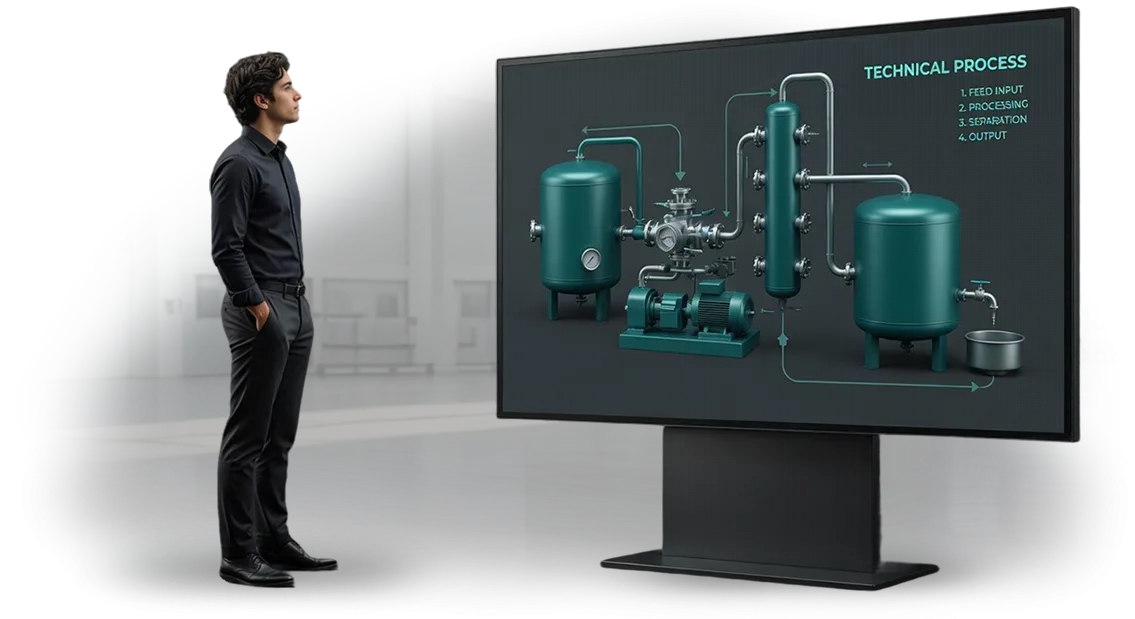
דוגמאות עיבוד תלת-ממד שמשאירות את העובדים מעורבים בהדרכה
עובדים לא קוראים הוראות טקסט ארוכות — זו עובדה. כשחברה מציגה מערכת או נוהל חדש, רוב הקולגות מעייפים את המסמך ופועלים לפי אינטואיציה.
התוצאה היא שגיאות, פניות חוזרות לתמיכה, ובזבוז זמן של חונכים שמסבירים את אותו דבר לאנשים שונים. הוראות משעממות לא עובדות: המוח מתעלם ממונוטוניות, ותשומת הלב של העובד נשמרת רק על ידי משהו ויזואלי ודינמי.
דוגמאות עיבוד תלת-ממד הופכות טקסט מופשט לתרחיש ויזואלי. העובדים רואים כל שלב בתלת-ממד, יכולים לבחון פרטים, להבין את ההיגיון של הפעולה, ואפילו לזכור את הרצף ללא למידה בעל-פה.
הדרכה ויזואלית מפעילה זיכרון חזותי, כך שהחומר נקלט מהר יותר ונשאר בזיכרון זמן רב יותר — חודש לאחר מכן, אנשים עדיין זוכרים כיצד לבצע את הפעולה כראוי. במקום דיאגרמות יבשות, הם מקבלים תמונה ריאליסטית שמדברת בעד עצמה.
עבור עסקים, זה ערך מדיד: עובדים חדשים מגיעים לקצב עבודה מלא פי שניים עד שלושה מהר יותר, מספר השגיאות יורד באופן ניכר, וחונכים מפסיקים לבזבז שעות בחזרות.
סרטון תלת-ממד שנוצר פעם אחת מכסה גם הדרכה ראשונית וגם רענונים תקופתיים — הוא לא מאבד רלוונטיות, ואם התהליך משתנה, ניתן לעדכן את הסרטון בדיוק במקום הנדרש. זה חיסכון ישיר בזמן ובכסף, במיוחד עם גיוס קבוע או תחלופה גבוהה.
אנחנו יוצרים דוגמאות עיבוד תלת-ממד כאלה למשימות האמיתיות שלכם: אנחנו מראים בדיוק איך לעשות דברים נכון, עם רמת הפירוט הנדרשת וללא מידע מיותר.
העובדים צופים בהדרכה עד הסוף כי הם מוצאים אותה מעניינת — והמנהל מקבל תוצאה צפויה ועצמאות מהסכמים מילוליים. אם אתם רוצים שההדרכה תעבוד, התחילו עם תרחיש ויזואלי — נייעץ לכם איזה פורמט יעבוד הכי טוב.
אילו יתרונות דוגמאות ויזואליות מביאות להדרכה
העובדים מבינים משימה מהר יותר כשהם רואים את התוצאה המוגמרת במקום לקרוא הוראה מופשטת. דוגמאות ויזואליות מסירות פרשנויות כפולות: אנשים משווים את פעולותיהם לתמונת ייחוס ומבחינים מיד בסטיות. עבור עסקים, זה אומר זמן קליטה קצר יותר ופחות שגיאות בשבועות הראשונים בעבודה.
מהירות ההסתגלות עולה פי כמה — עובד חדש מפסיק להטריד את החונך בשאלות טריוויאליות ומגיע לביצועים יעד מוקדם יותר. ניתן לצפות בסרטון הדרכה בכל עת, כך שהידע לא אובד בגלל גורמים אנושיים. המנהל לא צריך לבזבז שעות בחזרות על אותו דבר — קישור לסרטון מספיק.
דיוק בביצוע פעולות משפיע ישירות על איכות המוצר ועל שיעור הפגמים. כאשר כל שלב מוצג בהוראה, העובדים נוטים פחות לפספס פרטים קריטיים ופחות נוטים לפעול באקראי.
כתוצאה מכך, העלויות עבור עבודה חוזרת, החזרות ובדיקות תקלות יורדות. זה חוסך לא רק כסף אלא גם את העצבים של הצוות.
גם המעורבות משתנה: במקום תקנון טקסט משעמם, העובדים צופים בסרטון קצר וברור ומרגישים שהחברה השקיעה בפיתוחם. הדרכה כזו נתפסת כדאגה, לא כמטלה. כתוצאה — נאמנות גבוהה יותר, תחלופה נמוכה יותר, ורצון גדול יותר לעשות עבודה איכותית.
במצטבר, זה מייצר אפקט מדיד: הסתגלות מהירה יותר, איכות יציבה, פחות שגיאות, ומנהל רגוע שמשקיע זמן בפיתוח ולא בפיקוח.
דוגמאות ויזואליות מחזירות את ההשקעה אחרי הגל הראשון של גיוסים — צריך רק ליצור סרטון טוב אחד ולהשתמש בו שנים.
פורמטים של הוראות וידאו להדרכה לעובדים
העובדים קולטים חומר בצורה שונה: לחלק מספיקה דיאגרמה; לאחרים נדרש מודל ריאליסטי של האובייקט. פורמט הווידאו חייב להתאים למשימה — אחרת, אפילו הוראה מדויקת תישאר ללא צפייה.
לכן אנו משתמשים גם באנימציית 2D וגם בעיבוד תלת-ממד בפיתוח הוראות וידאו ארגוניות, ואנחנו מתחילים בבחירת הפורמט על ידי ניתוח המשימה.
להלן שלושה פורמטים בסיסיים המכסים את רוב המשימות: מתזכירים קצרים ועד הדרכה מפורטת על עבודה עם ציוד. בבחירת השורה המתאימה, התמקדו בקהל שלכם ובמטרת הסרטון.
| פורמט | למי זה מיועד | מה זה נותן ללקוח |
|---|---|---|
| אנימציית 2D | הוראות המוניות: עבודה במערכות הנהלת חשבונות, כללי בטיחות, תקנות | יצירה מהירה, עדכון קל. ברור לכל העובדים, מצוין להצגת רצפי שלבים ודיאגרמות |
| עיבוד תלת-ממד | הדרכה על עבודה עם ציוד, מכונות, הרכבה ותחזוקה | נראות "פנימית": ניתן לראות את מבנה החלקים וחתכים. מפחית את הסיכון לתקלות ושגיאות הפעלה |
| משולב | תרחישים שבהם נדרשים גם הקשר כללי וגם פרטי תהליך פיזי | גמישות: 2D מסביר את ההיגיון, 3D מציג את מבנה האובייקט. מתאים לציוד מורכב וקהלים מעורבים |
הפורמט לא צריך להיות מטרה בפני עצמה. אנחנו בוחרים אותו לאחר ביקורת על המשימה ומציגים דוגמאות עיבוד תלת-ממד מפרויקטים שהושלמו כדי שתבינו מיד איך הסרטון שלכם ייראה. לאחר המסירה, אנחנו נשארים בקשר ומעדכנים את הסרטון אם הנוהל משתנה.
איך אנחנו יוצרים הוראות ויזואליות: תהליך שלב אחר שלב
אנחנו מבנים את התהליך כך שתבינו מה קורה בכל שלב ועל מה אנחנו אחראים. אתם מקבלים יותר מסתם קובץ וידאו — אתם מקבלים נתיב שקוף ממשימה להוראה מוגמרת שבאמת מדריכה עובדים.
-
בריף וניתוח משימה. אנו מנתחים את הקהל שאליו מיועדת ההוראה, איזו פעולה צריך להראות, ואיזו תוצאה העובד צריך להשיג לאחר הצפייה. אנו קובעים מועדים וקריטריוני קבלה.
-
תסריט ומבנה. אנו מתארים את ההיגיון של הסרטון: רצף השלבים, טקסט הקריין, פריימים מרכזיים ונקודות מיקוד. אתם מאשרים את התסריט לפני תחילת הוויזואליזציה — זה מבטל את רוב התיקונים בשלב מאוחר יותר.
-
יצירת סצנות תלת-ממד. המהנדסים שלנו מדמים אובייקטים ותהליכים בתלת-ממד, ומציגים פרטים שאי אפשר ללכוד בצילום רגיל. בשלב זה, אנו שולחים פריימים ראשוניים כדי שתוכלו לראות איך הסרטון העתידי ייראה.
-
הרכבת וידאו וקריינות. אנו מרכיבים את הסרטון מסצנות תלת-ממד, מוסיפים גרפיקה, כתוביות וקריינות. אתם מקבלים גרסת טיוטה עם היגיון ותזמון נכונים.
-
תיקונים ואישור סופי. אנו מבצעים שינויים על פי הערותיכם — מתקנים הדגשות, מהירות השמעה וטקסט. אנו משכללים את הסרטון עד שהוא מוכן לשימוש.
-
מסירת חומרים ותמיכה. אנו מספקים קבצים סופיים בפורמטים הנדרשים יחד עם קבצי מקור, ומסייעים בהעלאה לפלטפורמה הפנימית שלכם או למערכת ניהול הלמידה. אם התהליך משתנה, נעדכן את ההוראה לפי בקשה נפרדת.
בסופו של דבר, אתם מקבלים הוראה ויזואלית מוגמרת שמקצרת את זמן הקליטה ומפחיתה את מספר השגיאות בקרב עובדים חדשים. כל התהליך אורך משבועיים ומעלה, תלוי במורכבות התרחיש, ואתם שולטים אישית בכל שלב.
מה כלול: חבילה מלאה להדרכה שלכם
אתם מקבלים לא רק סרטונים מוגמרים, אלא חבילה מלאה להשקת הדרכה. אנו מספקים את כל חומרי המקור, המלצות מתודולוגיות, ותמיכה בהטמעה — כך שתוכלו להשתמש בסרטונים מיד במקום להבין מה לעשות איתם.
המוצר המוגמר כולל:
- סרטונים סופיים — בפורמטים וברזולוציות הנדרשים לפורטל ההדרכה שלכם, פלטפורמות וידאו ואירועים לא מקוונים. כל סרטון נבדק על כל מכשירי העובדים.
- חומרי מקור — כל הפריימים, הגרפיקה, הטקסטים ורצועות האודיו במבנה מאורגן. אם תצטרכו לבצע עריכות או לדבב מחדש קטע, לא תצטרכו להזמין עבודה מאפס.
- מדריך מתודולוגי — המלצות כיצד לשלב את הסרטונים בתהליך ההדרכה: תרחישים, שאלות לבדיקת ידע, אפשרויות לשימוש קבוצתי ואישי.
- הדרכת מנהלים — אנו מראים לעובדיכם כיצד לעבוד עם החומרים, לבצע שינויים ולפרסם סרטונים ללא מעורבות מפתחים.
- תמיכה טכנית — במהלך תקופת האחריות, אנו עונים על שאלות הקשורות לנגינה, פורמטים ואינטגרציה. אתם אף פעם לא נשארים לבד עם בעיה.
- תמיכה בהשקה — אנו עוזרים לכם להגדיר כראוי גישת עובדים לסרטוני ההדרכה ולעקוב אחר השלמה.
כל החבילה נמסרת בתוך הזמן המוסכם. אתם מקבלים כלי הדרכה עובד, לא קבצים "גולמיים" שעדיין צריך להבין איך להשתמש בהם.
מקרה בוחן: כיצד הוראות ויזואליות שיפרו את דיוק התפעול
שגיאות ברצפת הייצור עולות יותר ממה שנראה: חלקים מקולקלים, השבתת קו, וזמנם של חונכים מנוסים. עובדים חדשים מתאמנים שבועות, והסיכון לטעות אנוש נשאר גם בקרב מפעילים ותיקים.
אנחנו פותרים בעיה זו עם הוראות ויזואליות שמראות כל שלב בפעולה ללא עמימות. עבור צוות מנוסה, זו גם הדרכה מחודשת מהירה כשהנוהלים משתנים או מודל חדש מושק.
פרויקט בולט — הדרכת מפעילי פסי ייצור עבור Bosch, אחת המובילות העולמיות בכלי עבודה חשמליים. במקום קריאת שרטוטים ותקנות טקסט, העובדים רואים את החלק בתלת-ממד על המסך, יחד עם רצף הפעולות, נקודות בקרה וטעויות אופייניות. פורמט זה ברור למתחיל מהיום הראשון ואינו תלוי בסגנון האישי של החונך.
הלקוח מדד תוצאות על קבוצות בקרה: שיעור השגיאות על הקו ירד בשליש, וזמן ההדרכה למפעיל חדש ירד משלושה שבועות לחמישה ימים.
חודשיים לאחר מכן, מחלקת ההדרכה ביקשה שלב שני — הרחבנו את ההוראות לשתי סדנאות סמוכות והתאמנו אותן למשמרת לילה. זה אישר שהפורמט הוויזואלי עובד בכל סביבה, לא רק במצב "אידיאלי" של יום.
עבורכם, זה אומר איכות תפעול צפויה ללא הגדלת עלויות שכר או תחלופה. ההדרכה הופכת לסטנדרטית: כל עובד מקבל את אותו בסיס ברור במקום סיכום של הרצאה.
המנהל רואה מי השלים את החומר ולא מבזבז זמן בניסיון להבין "למה כולם עושים דברים אחרת." הוראות ויזואליות מחזירות את ההשקעה במחזור הגיוס הראשון ואז ממשיכות לעבוד להפחתת פגמים ולהאצת הגעה לביצועי יעד.
שאלות נפוצות על יצירת הוראות וידאו ארגוניות
אפילו הוראת וידאו מעוצבת היטב מעלה שאלות לפני תחילת הפרויקט. ריכזנו תשובות לשאלות הנפוצות ביותר — כדי שתבינו לוחות זמנים, תקציב, וכיצד אנו מבטיחים תוצאות.
כמה זמן לוקחת הוראת וידאו אחת?
לוח זמנים טיפוסי הוא 3 עד 6 שבועות, תלוי בהיקף התסריט ובמספר הסצנות התלת-ממדיות. במקרים דחופים, אנחנו יכולים להתאים ל-2 שבועות אם החומרים שלכם כבר מוכנים ואנחנו לא צריכים לחכות להערות בכל שלב.
למה המחיר משתנה מפרויקט לפרויקט?
המחיר תלוי באורך, במספר הסצנות המעובדות, בהקלטת קריינות ובעומק התיקונים. סרטון מינימלי של 3-5 דקות עולה סכום המחושב לאחר ביקורת; גרסה מורכבת יותר עם כתוביות וגרסאות מרובות עולה יותר. אנו מכינים הערכה מדויקת ללא תשלום לאחר הבריף.
מה אם אצטרך שינויים לאחר השלמה?
אנו כוללים 2-3 סבבי תיקונים בכל שלב — זה מספיק כדי לדייק פרטים ללא חיובים נוספים. אם התיקונים חורגים ממה שסוכם, תדעו את עלותם מראש: חבילה קבועה לשעת עבודה או תעריף שעתי. שקוף וללא הפתעות.
אילו ערבויות איכות אתם מספקים?
אנחנו עובדים תחת חוזה עם לוחות זמנים ותקציב קבועים. רק אתם מקבלים את התוצאה: עד לאותו רגע, אנו משכללים את הסרטון ללא תשלום, גם אם נדרשות יותר איטרציות.
אנו מספקים קבצי מקור בפורמט נוח לכם — תוכלו לעדכן את ההוראות בעצמכם בכל עת או להזמין מאיתנו גרסה חדשה.
מוכנים לדון במשימה שלכם? השאירו בקשה
כדי שהוראת וידאו באמת תעבוד והעובדים יצפו בה עד הסוף, חשוב להבין מראש את המטרה, הפורמט והקהל. זה קורה לעתים קרובות כך: הלקוח יודע שהוא צריך וידאו, אבל אין תוכנית ואין תקציב ברור.
אנחנו הופכים את ה"רוצה" הזה לפרויקט ברור עם עלות קבועה, כך שתוכלו לנהל את התהליך ללא סיכון של החמצת מועדים או תשלום יתר.
השאירו בקשה לפיתוח — ותוך כמה ימי עבודה תקבלו:
- ייעוץ מפיק: ננתח את המשימה שלכם, קהל היעד וערוצי ההפצה (LMS, YouTube, מסכים לא מקוונים).
- דוגמאות עיבוד תלת-ממד ואנימציה רלוונטיות לתעשייה שלכם — תראו את הסגנון הוויזואלי לפני תחילת העבודה.
- חישוב עלות: לאחר בריף קצר, ניתן לכם את המספר המדויק וננעל אותו בחוזה.
- תוכנית הפקה עם תאריכים: תסריט, עיבוד פריימים מרכזיים, קריינות ועריכה — תראו את לוח הזמנים בכל שלב.
- המלצת פורמט: אורך וסגנון (הקלטת מסך, אנימציית תלת-ממד, צילום משולב) שמתאימים לתקציב שלכם.
- מפרט טכני מוכן לאישור פנימי — עורכי הדין והמנהלים שלכם ידעו בדיוק מה יסופק.
גישה זו חוסכת זמן ועצבים: הערכות שקופות, מועדים ברורים ותסריט מאושר לפני חתימה על ניירת. השאירו בקשה — בשיחה הבאה כבר יהיו לכם התוכנית, העלות ותאריך המסירה, ונתחיל בעבודה ללא הפתעות.
איך לבחור את הפורמט האופטימלי למשימות הדרכה ספציפיות?
אין פורמט אוניברסלי: אותה הוראה יכולה להיות מושלמת לתעשייה אחת וחסרת תועלת לאחרת. לכן הבחירה מבוססת על שלושה קריטריונים — מורכבות תפעולית, מאפייני קהל ותקציב.
אנחנו עוזרים ללקוח לנווט ולבחור את האפשרות שתוביל את העובד לתוצאה הרצויה במהירות הרבה ביותר.
הקריטריון הראשון הוא מורכבות תפעולית. אם התהליך פשוט ("מלא טופס," "חתום על מסמך"), הוראת וידאו קצרה עם הקלטת מסך מספיקה.
אם מדובר בהרכבת ציוד, עבודה עם חומרים מסוכנים או הגדרת מכונות, נדרש מודל תלת-ממד מפורט שבו כל רכיב ותנועה נראים. פורמט זה מסיר את הפחד מ"לשבור משהו" ומפחית את מספר השגיאות בהתחלה.
הקריטריון השני הוא מי ילמד. עובדי ייצור נוח להם יותר עם סצנת תלת-ממד ריאליסטית שמשקפת את הסדנה: הם לא מבזבזים זמן בפענוח דיאגרמות ושרטוטים.
עובדי משרד, לעומת זאת, מעדיפים סרטונים קצרים עם ממשק התוכנה וכפתורים מודגשים. אנו מנתחים את הקהל ומציעים פורמט שמדבר בשפתו.
הקריטריון השלישי הוא תקציב ולוח זמנים להטמעה. עיבוד תלת-ממד מלא דורש השקעה גבוהה יותר, אבל הוא מחזיר את ההשקעה באמצעות הפחתת פגמים, תאונות והדרכות חוזרות.
אם התקציב מוגבל, אפשר לשלב: להראות רכיבים קריטיים בתלת-ממד, ושלבים פשוטים עם צילום רגיל או הקלטות מסך. אנו מעריכים את העלות של שתי האפשרויות מראש ומציינים היכן כל אחת מניבה את התשואה המקסימלית.
ההחלטה הסופית תמיד בידי הלקוח, אבל אנחנו לא משאירים אותו לבד עם השאלה.
המהנדסים שלנו בוחרים את הפורמט למשימה הספציפית, מציגים דוגמאות עבודה מהתעשייה שלכם, ונותנים המלצה: איזו אפשרות צפויה להביא את השינוי הרצוי במיומנויות העובדים. זה חוסך זמן, תקציב ועצבים — וההדרכה מתחילה לעבוד.