

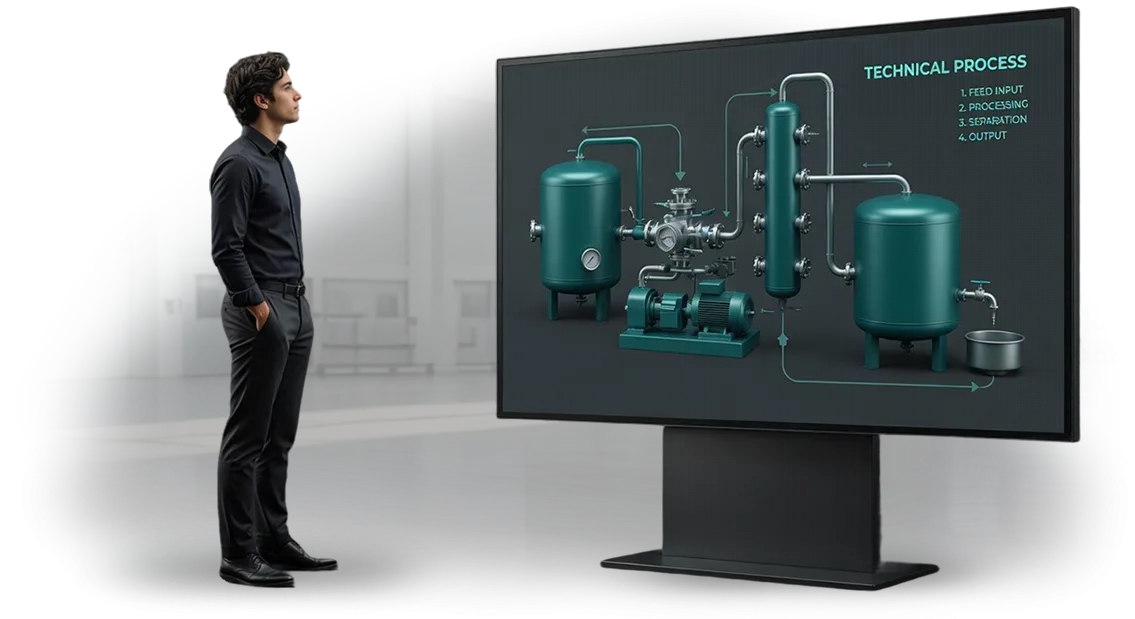
שגיאות הרכבה במנוף-מניפולטור מבזבזות תקציב וזמן
שגיאות הרכבה במנוף-מניפולטור עולות יותר ממה שנראה במבט ראשון. חיבור שהודק שלא כהלכה, שימון שהוחמץ, או רצף פעולות שנשבר — והמכונה יורדת לתיקונים באמצע המשמרת. הסיבה היא טעות אנוש, לא בלאי רכיבים.
כל שעת השבתה משמעותה החמצת מועדים, צוות בטל והפסד הכנסות. אם מתגלה פגם רק במהלך הבדיקות, עלות התיקון גבוהה פי כמה ומשבשת את לוח הזמנים של המסירה ללקוח. הפסדים כאלה פוגעים גם בתקציב וגם במוניטין.
הכשרת צוות לעבודה בטוחה היא סעיף עלות נפרד. תדריכים גוזלים מזמנם של מדריכים מנוסים, ומתחילים עדיין חוזרים על טעויות של אחרים: נהלים כתובים ודיאגרמות נזכרים בצורה גרועה. עובד רואה את התהליך חי פעם אחת, ואז עובד מהזיכרון.
אנו פותרים את נקודת הכאב הזו עם הוראות וידאו להנדסת מכונות. במקום הוראות מופשטות — תהליך ויזואלי וברור של הרכבה, פירוק ותחזוקה של המנוף-מניפולטור.
אנו הופכים את התהליך האמיתי לפורמט וידאו קל להבנה, תוך ביטול תיאוריה מיותרת.
העובד רואה כל רכיב ואת רצף הפעולות — זה מפחית את מספר שגיאות ההרכבה. תקלה אחת שנמנעה מכסה את ההשקעה, והשבתות הציוד מפסיקות להיות בעיה כרונית.
מה וידאו הדרכה איכותי נותן לצוות במקום מסמכים יבשים
וידאו הדרכה איכותי להפעלת מנוף-מניפולטור פותר את מה שהוראות יבשות לא יכולות: עובדים קולטים חומר בצורה שונה, ופערי ידע הופכים לשגיאות והשבתות.
כאשר אדם רואה את רצף הפעולות המדויק על ציוד אמיתי במקום טקסט מופשט, ההבנה הופכת לאחידה עבור כולם — ממתחילים ועד מפעילים מנוסים.
מה הצוות מרוויח לאחר היישום:
- [ ] קליטה מהירה יותר — במקום שבועות של קריאת תיעוד, עובד שולט בנהלים תוך כמה ימים
- [ ] פחות שגיאות — דוגמאות ברורות לפעולות נכונות ומסוכנות מפחיתות את הסיכון לתקלות ופציעות
- [ ] סטנדרטים אחידים — כל מפעיל עוקב אחר אותו תהליך ייחוס, ללא "פרשנויות אישיות"
- [ ] שיעור תאונות מופחת — רכיבים מרכזיים ואזורי סיכון של המנוף מתורגלים עד כדי אוטומטיות
אם נשווה בין הגישות, ההבדל הופך ברור:
| היבט | מסמכים בלבד | הוראת וידאו |
|---|---|---|
| מהירות למידה | תלויה במיומנות קריאה | כולם רואים את אותו תהליך |
| יכולת זכירה | חלקית, דרך קריאה חוזרת | זיכרון ויזואלי + תרגול |
| אחידות | פרשנויות שונות לטקסט | סטנדרט ייחוס אחד לכולם |
| בקרת איכות | קשה לאמת הבנה | שאלות מבחן לאחר הווידאו |
לכן, עבור חברות שעובדות עם מנופים-מניפולטורים, הוראת וידאו היא לא מותרות אלא דרך להפחית את עלות השגיאות ולהאיץ את קליטת הצוות. אנו מפיקים סרטונים אלה על בסיס הנהלים והציוד שלכם, כך שהצוות שלכם יעבוד במדויק ובבטחה.
פורמטים של הוראות וידאו תלת-ממדיות למנופים-מניפולטורים למשימות שונות
כל פעולה עם מנוף-מניפולטור היא עניין של אחריות לבטיחות אנשים ולשלמות הציוד. אבל עובדים זוכרים נהלים יבשים ושרטוטים בצורה גרועה: גם לאחר קורס, הם עושים טעויות בהרכבה, תחזוקה ובדיקות טרום-משמרת.
פורמט ההצגה פותר בעיה זו — הווידאו הנכון מחזק את אלגוריתם הפעולה מהר יותר ממסמך רב-עמודים.
אנו מפתחים פורמטים של הוראות וידאו באנימציה תלת-ממדית, כך שתוכלו לתת מענה לכל משימת הדרכה בנפרד. הטבלה שלהלן מראה איזה וידאו מתאים למצב שלכם.
פורמטים למשימות שונות
| פורמט | קהל יעד | מה הוא מספק ללקוח |
|---|---|---|
| אנימציית הרכבה תלת-ממדית | עובדים חדשים, מפעילים חסרי ניסיון | אלגוריתם התקנה ופירוק ויזואלי: פחות שגיאות במהלך ההפעלה, דרך מהירה יותר לעבודה עצמאית |
| וידאו תחזוקה | צוות שירות, מכונאים | רצף ברור של תחזוקה שוטפת והחלפת רכיבים: פחות השבתות, פחות תקלות חירום |
| הוראה אינטראקטיבית | כל העובדים לפני כל משמרת | בדיקת ידע בפורמט שאלה-תשובה: מבטל עבודה ללא בדיקות חובה של מצב המנוף |
| וידאו בדיקת טרום-משמרת | מפעילים, צוות משמרות | סטנדרט בדיקה אחיד: סיכון נמוך יותר לפציעות ותקלות — כולם עובדים לפי רשימת בדיקה |
אתם לא חייבים לבחור רק אחד — אנו משלבים פורמטים למערכת הדרכה אחידה. לדוגמה, אנימציית הרכבה תלת-ממדית משמשת בקורס המבוא, בעוד ההוראה האינטראקטיבית מזכירה למפעילים את הכללים לפני כל משמרת.
אתם מקבלים חבילת חומרים שמשתלבת בהדרכה הקיימת שלכם ללא ארגון מחדש של תהליכים וללא עומס נוסף על המומחים שלכם.
איך התהליך עובד: מהגדרת המשימה ועד השקת הוראת הווידאו
עבור חברות שבהן עובדים עובדים עם מנופים-מניפולטורים, הכשרת צוות מהירה וללא שגיאות היא קריטית.
בנינו את התהליך כך שתראו תוצאות בכל שלב — מהגדרת המשימה ועד פריסת ההוראה המוגמרת במערכת ההדרכה שלכם. להלן השלבים שכל הפרויקטים שלנו עוברים.
-
תדרוך וסקירת חומרים. אנו אוספים את הנהלים, הדיאגרמות והתיעוד הטכני שלכם, ומראיינים מפעילים מנוסים. התוצאה היא מפרט טכני ברור הלוכד את כל הרכיבים, הפעולות ונקודות הבקרה.
-
פיתוח תסריט. המתודולוגים שלנו הופכים את ההוראה לתסריט שלב-אחר-שלב: מה קורה על המסך, אילו פעולות המפעיל מבצע, והיכן מתחילים טועים לרוב. אתם מקבלים מסמך שניתן לסקור בקלות עם טכנולוגים וצוות קו.
-
סקירה ואישור. אנו מבצעים תיקונים עד שהתסריט הופך להעתק מדויק של תהליך הייצור שלכם. אתם מאשרים כל פרט — ורק אז אנו מתחילים בהפקה. זה מבטל עבודה חוזרת בשלב הסופי.
-
הפקת וידאו תלת-ממדי. אנו מדמים את המנוף-מניפולטור ואת כל הרכיבים הפועלים, מבצעים אנימציה של התנועות, ומראים פעולות נכונות ושגויות. זה נראה כמו המכונה האמיתית אך ללא סיכון או עצירת ייצור.
-
עריכה, קריינות וכתוביות. אנו מוסיפים קול קריין, רמזים על המסך והדגשות לרגעים קריטיים. הווידאו המוגמר נארז בפורמטים הדרושים לכם — לפורטל למידה, תחנות עבודה או מכשירים ניידים.
-
השקה ותמיכה. אנו מספקים את קבצי המקור והוראות השימוש, ומשלבים את הווידאו במערכת הלמידה מרחוק שלכם במידת הצורך. אנו ממשיכים לתמוך בכם לאחר ההשקה: אנו מעדכנים את הוראות הווידאו אם העיצוב או הנהלים משתנים.
מה כלול במסירה ואילו חומרים הלקוח מקבל
הכנו חבילת חומרים מלאה המאפשרת לכם להכשיר את הצוות ללא מעורבות מפתחים וללא בזבוז זמן בפענוח שרטוטים. כל מה שאתם מקבלים הוא פתרון סוהר שמשתלב בתוכנית ההדרכה שלכם ועובד מהיום הראשון.
- הוראות וידאו תלת-ממדיות מוכנות — סרטונים על הרכבה, תחזוקה ותיקון של מנופים-מניפולטורים. הם כבר מוקלטים בקריינות, כוללים כתוביות ונפתחים כראוי בכל מכשיר: ממסך ועד טאבלט ברצפת הייצור.
- קבצי מקור ופרויקטי עריכה — נשארים ברשותכם. אם העיצוב משתנה או שיש צורך בעיבוד מחדש של סצנות, תוכלו להעביר במהירות את החומרים לקבלן או לשפר אותם ללא צילום מחדש.
- חומרים מתודולוגיים — תוכנית תדריך מוכנה, שאלות מבחן ותבנית הערכה. זה מאיץ את קליטת המתחילים ומפחית את העומס על המדריכים.
- גישה לפורטל פרטי — כל ההוראות, הגרסאות והטפסים מאוחסנים במקום אחד. אתם מנהלים את הרשאות הגישה בעצמכם, ועדכונים מופיעים אוטומטית לעובדים האחראים.
- המלצות להערכת ידע — קריטריוני הערכה לבדיקות לאחר הצפייה, כך שתוכלו לראות את האפקטיביות האמיתית של ההדרכה.
- תמיכה לאחר ההשקה — אנו מספקים ייעוץ יישום, עוזרים לשלב את ההוראות בלוח ההדרכה, ומתאימים חומרים כאשר דגם הציוד משתנה.
יחד, זו לא רק קבוצת קבצים אלא מערכת הדרכה ניתנת לניהול שמחזירה את השקעתה על ידי הפחתת שגיאות והאצת קליטת הצוות. אתם מקבלים שליטה על התוכן ובסיס לפיתוח מאגר ידע בתוך החברה שלכם.
מקרה בוחן: כיצד הוראות תלת-ממדיות הפחיתו השבתות ושגיאות צוות
עבדנו עם יצרן ציוד מיוחד שבו מפעילי מנוף-מניפולטור הוכשרו באמצעות נהלי נייר ושרטוטים יבשים.
מתחיל נזקק לעד שבועיים כדי לשלוט בפעולות הבסיסיות, ושגיאות הרכבה ותחזוקה גרמו להשבתות ציוד של כמה שעות בכל משמרת. הבעיה הייתה מערכתית: ידע אבד, והכשרה חוזרת של כל עובד דרך מדריכים הייתה יקרה ואיטית.
הצענו להחליף הוראות מבוססות טקסט בהוראות וידאו תלת-ממדיות אינטראקטיביות להרכבה ותחזוקה של מנופים-מניפולטורים.
במקום דיאגרמות מופשטות — אלגוריתמים ויזואליים שבהם כל רכיב ורצף פעולות מוצגים "בחיים". העובד רואה לא רק תמונה אלא תהליך: כיצד להדק חיבור כראוי, לחבר רכיבים ולבצע תחזוקה שוטפת.
תוצאות היישום היו מדידות:
- שגיאות צוות בביצוע עבודות מתוזמנות ירדו ב-38% כבר ברבעון הראשון — פחות גרוטאות ופחות פעולות תיקון.
- זמן הקליטה של מפעיל חדש ירד משבועיים ל-שלושה ימים: אין צורך לחכות למדריך, פשוט מפעילים את הווידאו הרלוונטי.
- השבתות ציוד שנגרמו על ידי צוות ירדו פי 2.3 — הוראות הווידאו משמשות גם כדף רמז וגם כמערכת בקרה.
הסוד הוא שאדם זוכר אלגוריתם ויזואלי ב-60% טוב יותר מאשר טקסט. המפעיל סוקר רכיב מורכב לפני תחילת העבודה, עוקב אחר השלבים בדיוק, והמפקח רואה אילו פעולות גורמות לקושי ומתאים את תוכנית ההדרכה.
חברת הלקוח החזירה את ההשקעה בפרויקט באמצעות הפחתת השבתות תוך חודשיים והזמינה הרחבה של ספריית ההוראות לדגמי ציוד חדשים.
אותה גישה יכולה להיות מיושמת במתקן הייצור שלכם: אנו יוצרים הוראה תלת-ממדית המותאמת לציוד ולתהליכים שלכם, ומספקים תוצאות מהירות וסטטיסטיקת הדרכה שקופה.
איך לבחור את הפורמט הנכון למשימה שלכם?
כדי לבחור את פורמט הוראת הווידאו הנכון, ענו על שלוש שאלות: מי ילמד, עד כמה הפעולה מורכבת, וכמה פעמים היא מבוצעת.
עובד מנוסה צריך רק וידאו תזכורת קצר, בעוד מתחיל צריך הוראה שלב-אחר-שלב שמסבירה כל פעולה.
כשמדובר בהרכבה או תחזוקה של מנוף-מניפולטור, טעות עולה ביוקר — והבהירות תופסת מקום מרכזי.
הוראה תלת-ממדית מעמיקה מציגה את המנגנון מבפנים, הופכת רכיבים המוסתרים על ידי המעטפת לגלויים, ומדגימה את רצף הפעולות הנכון מראש. פורמט זה מאיץ את ההדרכה ומפחית את הסיכון לנזק לציוד או לפציעה.
בפועל, אנו משתמשים במספר סוגים של סרטוני הדרכה: קליפים קצרים לסקירת נהלים, קורסים מעמיקים להכשרה ראשונית, ומודולי בדיקת ידע לפני אישור עבודה.
הראשונים שומרים על מיומנויות חדות, השניים בונים הבנה שיטתית, והשלישיים מאשרים שהעובד אכן קלט את החומר. הבחירה תלויה במשימה שלכם וברמת המיומנות של הצוות.
אם אינכם בטוחים איזה פורמט מתאים לכם, שלחו לנו תיאור של תהליך הייצור שלכם. נעזור לכם לקבוע כיצד לבחור הוראת וידאו שתעלה את העובדים שלכם למהירות מהר יותר ותפחית את מספר השגיאות בעבודה עם מנופים-מניפולטורים.
התייחסות לחששות נפוצים של לקוחות
לפני ההזמנה, כמעט כל לקוח שואל את אותן שאלות: האם העובדים יבינו את הפורמט התלת-ממדי, כמה זמן ייקח הפיתוח, והאם הסרטונים יתיישנו כאשר דגמי המנוף-מניפולטור מתעדכנים? אנו עונים על החששות העיקריים כך שההחלטה שלכם תתבסס על עובדות, לא על פחדים.
העובדים רגילים להוראות נייר ושרטוטים — האם וידאו תלת-ממדי לא יהיה קשה יותר למעקב?
בדרך כלל, זה ההפך: הווידאו ברור יותר משרטוטים כי ההרכבה מוצגת שלב אחר שלב, רכיבים נראים מהזווית הנכונה, וההסברים מחוזקים בקול קריין.
העובד לא קורא דיאגרמה אלא עוקב אחר הפעולות על המסך — זמן הקליטה מצטמצם בשליש בערך.
כמה זמן לוקח פיתוח הוראת וידאו?
וידאו הרכבה סטנדרטי למנוף-מניפולטור מוכן תוך 2-4 שבועות לאחר אישור התסריט. אנו קובעים את לוח הזמנים בחוזה ושולחים גרסאות ביניים מדי שבוע, כך שתוכלו לראות את ההתקדמות ולהשפיע על התהליך.
מה קורה כאשר דגם מנוף-מניפולטור חדש יוצא? ומה זה יעלה?
הפרויקט בנוי מודולרית: אם רכיב אחד משתנה, אנו מעדכנים רק את הקטע הזה במקום לבצע מחדש את כל הווידאו.
עלות תיקון היא חלק קטן מהגרסה הראשונה, והעלות המדויקת מחושבת לאחר הסקירה: היא תלויה במספר המנגנונים והשלבים, לא בתעריפים ממוצעים.
מה קורה לאחר מסירת הסרטונים?
אנו מוסרים את כל החומרים, עוזרים לשלב את הסרטונים בתוכנית ההדרכה, ונשארים זמינים לתיקונים. שיפורים במסגרת האחריות בתוך התסריט המאושר מבוצעים ללא עלות.
אם השאלה שלכם לא ברשימה — נשלח תשובה מפורטת תוך יום עסקים אחד.שלחו בקשה וקבלו תוכנית יישום למשימה שלכם
שלחו בקשה באתר, ונכין תוכנית יישום למשימה שלכם. אתם יכולים להזמין הוראת וידאו בכמה קליקים, והצוות שלנו יטפל בכל השלבים: מניתוח התהליך ועד סרטון ההדרכה המוגמר.
תחסכו זמן ותקבלו משאב ויזואלי שמאיץ את קליטת העובדים החדשים ומפחית את מספר השגיאות במהלך הרכבת ציוד ותחזוקתו.
מה קורה לאחר פנייתכם:
- ייעוץ עם מנהל: אנו דנים במשימה שלכם, במספר העובדים ובפרטי העבודה עם מנופים-מניפולטורים. אנו מבהירים אילו פעולות צריך להציג בווידאו.
- ניתוח חומרים: אנו סוקרים הוראות קיימות, נהלים ופרטי הציוד שלכם. זה עוזר לנו לשקף במדויק את כל הניואנסים בתסריט.
- פיתוח הצעה: אנו מציעים את הפורמט האופטימלי — הוראה תלת-ממדית, אנימציה או וידאו משולב. אנו מגדירים את לוח הזמנים, השלבים והיקף העבודה.
- אישור תסריט: אנו מציגים את המבנה של הווידאו הקרוב ומפרטים כל פעולה. אתם יכולים לבצע עריכות לפני תחילת ההפקה.
- הפקה: יצירת מודלים תלת-ממדיים, אנימציה, קריינות ועריכה. בכל שלב, אתם מקבלים גרסאות ביניים לסקירה.
- תיקונים: אנו מתאימים את הווידאו לפי הערותיכם ללא עלות נוספת במסגרת ההיקף המוסכם.
- מסירה סופית: אתם מקבלים את הקבצים בפורמטים הנדרשים להצבה במערכת למידה מרחוק או בפורטל פנימי.
גישה זו מספקת תוצאה צפויה ומאפשרת לכם להשיק הדרכה תוך מספר שבועות. שליחת בקשה לפיתוח הוראת מנוף-מניפולטור תלת-ממדית היא פשוטה: מלאו את הטופס למטה או התקשרו אלינו.
מנהל יענה על שאלותיכם, יבהיר את הפרטים ויכין הצעה אישית. התחילו בשיחה קצרה — אנחנו נטפל בשאר.