

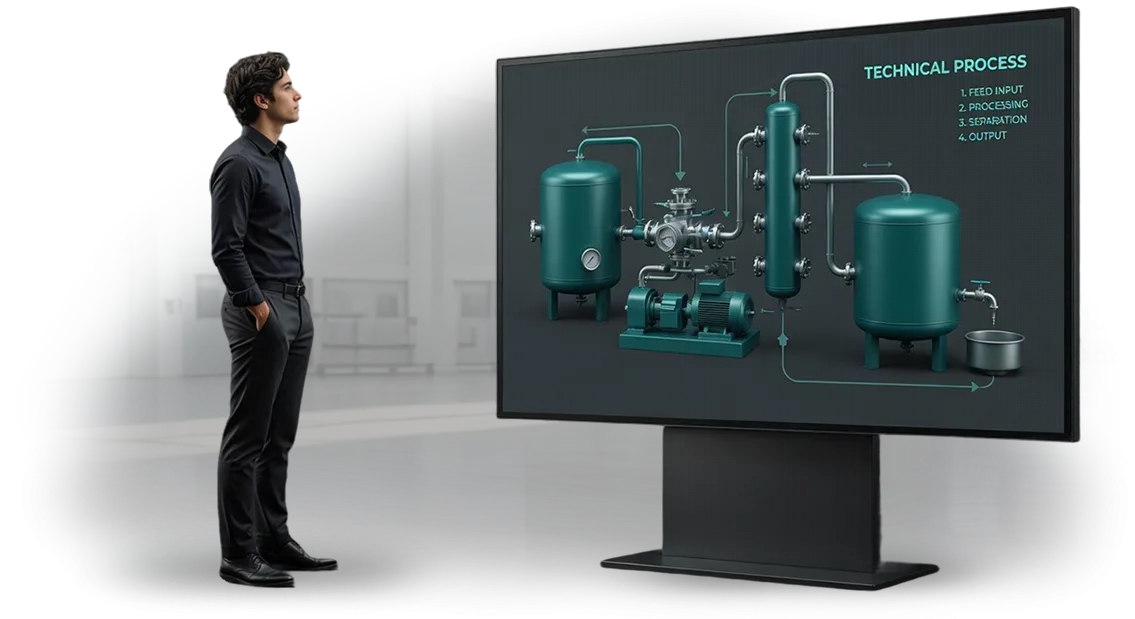
מדוע שגיאות בעבודה עם רובוטים תעשייתיים כה יקרות?
כל דקה של השבתת קו ייצור משמעותה מוצרים שלא יוצרו, החמצת מועדים ואובדן הכנסות. כאשר מפעיל פועל בחוסר ביטחון או מהזיכרון, הסיכון לעצירת רובוט עקב פקודה שגויה מוכפל, וחיסול ההשלכות אורך שעות.
תאונות על רצפת הייצור יקרות אף יותר. הפרת רצף התחזוקה או התעלמות מהתקנות משמעותן לא רק ציוד פגום אלא גם איום על בריאות העובדים, כמו גם הליכים מול רשויות הפיקוח. אירוע חמור אחד מוחק שנה שלמה של חיסכון בהדרכה.
הוראות טקסט סטנדרטיות לא עובדות: אדם זוכר רק חלק קטן ממה שקרא, ובמצב חירום הוא פועל באקראיות. זה מוביל לפגמים, תקלות ופציעות שניתן היה למנוע.
אנחנו סוגרים את הפער הזה עם הוראות וידאו תלת-ממדיות חזותיות שמראות כל שלב בעבודה עם רובוט תעשייתי בדיוק כפי שהוא מבוצע במציאות. העובד רואה את הפעולות הנכונות, זוכר אותן וחוזר עליהן בביטחון — ללא שגיאות, השבתות או סיכון לחיים.
מה הוראת וידאו איכותית מעניקה למפעל?
הוראת וידאו איכותית לצוות פותרת את הבעיה הייצורית המרכזית — איכות לא עקבית עקב הגורם האנושי. אפילו עובדים מנוסים עובדים בצורה שונה, ומתחילים מבלים שבועות בשליטה בתהליך.
הווידאו סוגר את הפער הזה מיד: אלגוריתם חזותי אחד שכולם יכולים להבין, ללא קשר לניסיון ולקצב הלמידה.
הפחתת שגיאות ופגמים
הוראת וידאו מבטלת עיוות מידע: העובד רואה את רצף הפעולות המדויק במקום שמיעה מחדש מפי עמית.
זה חשוב במיוחד בהרכבה ותחזוקה של רובוטים תעשייתיים — טעות עלולה להרוס ציוד יקר או ליצור פגמים בכל אצווה.
הטמעת וידאו מפחיתה את מספר העבודות החוזרות וההפסדים החומריים — החיסכון נמדד באחוזים ממחזור המפעל.
הדרכה מהירה יותר לעובדים חדשים
עובד חדש שולט בתהליך פי כמה מהר יותר כאשר הוראה חזותית נמצאת מול עיניו וניתן לחזור אליה בכל רגע. המתאמן לא מחכה שמנטור יתפנה ולא מסיח את דעתם של עמיתים בשאלות.
עבור המפעל, זו הזדמנות למלא במהירות פערי כוח אדם, להגביר את קצב העבודה ולא להוריד את רף האיכות בתקופת ההסתגלות — ההדרכה בעבודה הופכת לאפקטיבית וצפויה.
תקן אחיד לכולם
הוראת וידאו קובעת אלגוריתם עבודה אחד מאושר במפעל. המפעיל במשמרת הראשונה והשלישית מבצע פעולות באופן זהה, ללא קשר לניסיון ולרקע האישי.
זה מפשט את הבקרה, הופך את התהליך לשקוף לביקורות פנימיות ומאפשר לשכפל את התקן לאתרים או סניפים חדשים — סטנדרטיזציה של תהליכים כבר לא תלויה בגורם האנושי.
הפחתת תאונות והשבתות
הדגמה חזותית של אזורים מסוכנים וכללי תחזוקה מפחיתה את הסיכון לפציעות ולעצירות לא מתוכננות. העובד רואה את ההשלכות של פעולה שגויה מראש במקום ללמוד אותן מניסיון אישי.
עבור המפעל, זה אומר לא רק בטיחות עובדים אלא גם ניצול יציב של הציוד ללא השבתות — הגנה על בריאות העובדים משפיעה ישירות על השורה התחתונה הפיננסית.
פורמטים של הוראת וידאו להדרכה על רובוטים תעשייתיים
רובוטים תעשייתיים דורשים פעולות מדויקות: שגיאה בהרכבה או בתחזוקה גורמת להשבתות ותיקונים יקרים. עובדים לעתים קרובות לא קוראים הוראות טקסט ושרטוטים — הם צריכים דוגמה חזותית שהם יכולים לצפות בה ולחזור עליה.
אנחנו ממירים תהליכים לפורמט וידאו המובן לכל עובד. אותו חומר יכול להיות מוצג בדרכים שונות — מאנימציה קצרה ועד קורס מלא עם הערכת ידע. הבחירה תלויה במשימה וברמת המיומנות של הצוות.
איזה פורמט לבחור
| פורמט | למי | מה הוא מספק |
|---|---|---|
| אנימציה תלת-ממדית קצרה (1–3 דקות) | כל העובדים, תחלופת עובדים גבוהה | הבנה מהירה של האלגוריתם ללא קריאת תיעוד, פחות שגיאות |
| הוראת וידאו מפורטת (5–15 דקות) | עובדים חדשים, צוותי תחזוקה | מחזור פעולה מלא עם פרשנות מומחה, בסיס חזותי להדרכה ראשונית |
| הוראה אינטראקטיבית (מצב שלב-אחר-שלב) | מפעילים, מהנדסי שירות | בקרה על כל שלב, רמזים ברגע הנכון, בדיקות שימור ידע |
| קורס מקיף (סדרת וידאו + מבחנים) | מרכזי הדרכה, מחלקות למידה ופיתוח | תוכנית הדרכה אחידה, הערכה אובייקטיבית של התקדמות העובדים |
| תחליף חזותי לתיעוד טכני | כל קטגוריות העובדים | גישה מהירה לפעולה הנדרשת, הפחתת השבתות ציוד |
לא בטוחים מאיפה להתחיל? נערוך ביקורת קצרה: נבדוק היכן העובדים עושים הכי הרבה טעויות ונציע את הפורמט האופטימלי לפעולות שלכם. כל החומרים נשארים במאגר הידע שלכם וקל לעדכן אותם כשהתהליכים משתנים.
איך נוצרת הוראת וידאו: שלבים ולוחות זמנים
בנינו את התהליך כך שאתם שולטים בכל שלב פיתוח מבלי לבזבז את הזמן שלכם עליו. אנחנו מתחילים בבריף להוראת וידאו, מאשרים את התסריט ורק אז מתחילים בהפקת וידאו תלת-ממדי — כך אתם מקבלים תוצאה צפויה במסגרת הזמן המוסכמת.
שלבי הפיתוח
-
בריף וביקורת משימה. אנו דנים באיזו פעולה נדרשת ההוראה, מי יצפה בה ואיזו תוצאה אתם מצפים. על בסיס זה אנו קובעים את הפורמט, רמת הפירוט ולוח הזמנים.
-
תסריט ואישורו. אנו מתארים מה קורה על המסך: אילו רכיבי רובוט מוצגים, באיזה רצף ואילו רמזים מופיעים. אנו מאשרים את טקסט הקריינות כך שיתאים למינוח של הייצור שלכם.
-
מידול תלת-ממדי. אנו יוצרים עותק וירטואלי של הציוד — בדיוק כמו זה שבסדנה שלכם. העובד רואה רכיבים ותנועות אמיתיים, לא דיאגרמות מופשטות.
-
אישור ביניים. אנו מציגים טיוטת אנימציה. תיקונים בשלב זה נעשים במהירות ואינם דורשים עשייה מחדש של הווידאו הסופי.
-
רנדור סופי ועריכה. אנו משלימים את הפקת הווידאו התלת-ממדי: רנדור, קריינות, כתוביות והדגשה של פעולות חשובות. אתם מקבלים את הקובץ המוגמר בפורמט הנדרש.
-
הטמעה ותמיכה. אנו עוזרים להעלות את ההוראה למערכת ניהול הלמידה ובמידת הצורך מבצעים התאמות לאחר הצפיות הראשונות.
לוח זמנים
מחזור טיפוסי אורך 2–4 שבועות בהתאם למורכבות הציוד ולמספר הפעולות. אתם מקבלים לא וידאו "גולמי" אלא כלי מוגמר שעובדים יתחילו להשתמש בו כבר באותו חודש.
מה כלול במסירה: חבילה מלאה למחלקת ההדרכה
אתם מקבלים לא רק סרטונים — אלא מערכת מוכנה למחלקת ההדרכה. החומרים בנויים כך שתוכלו להשיק הדרכה ראשונית או הסבה מיד לאחר קבלת החבילה, ללא קבלנים חיצוניים.
הנה מה שכלול במסירה:
-
הוראות וידאו בפורמטים הנדרשים — מגרסה לפורטל הארגוני ועד גרסה לצפייה לא מקוונת בטאבלט על רצפת הייצור. כל עובד מקבל גישה לפורמט הנוח ביותר לתנאיו.
-
תקנונים טקסטואליים ורשימות בדיקה — נהלים שלב-אחר-שלב להרכבה, תחזוקה ואבחון של רובוטים תעשייתיים. ניתן להדפיס אותם, לתלות בעמדת העבודה או להשתמש בהם כבסיס לתקן פנימי.
-
מדריך למדריך — תוכנית שיעור מוכנה, תסריט ושאלות מבחן. המנטור לא צריך להמציא את מבנה השיעור: הוא פותח את המדריך ומוביל את הקבוצה.
-
קבצי מקור לכל הסרטונים — סצנות בודדות, מודלים תלת-ממדיים ואנימציות לא ערוכות. כשהתהליכים משתנים, המחלקה שלכם יכולה לעדכן את הסרטונים עם המומחים שלה.
-
משימות מבחן להערכת ידע — שאלות ותרחישים מעשיים שמראים עד כמה העובד קלט את החומר ומוכן לעלות לקו.
-
תמיכה במהלך ההשקה — מדריך קצר לכל מסמך וייעוץ כיצד לבנות את השיעור הראשון. לא תישארו לבד עם החומרים לאחר מסירת הפרויקט.
כל פריט בחבילה מועבר עם הוראות שימוש קצרות. הכל מאורגן במבנה תיקיות ברור — אפילו מתחיל בהדרכת וידאו יבין אותו.
מקרה בוחן: כיצד הוראה תלת-ממדית הפחיתה שגיאות וזמן הרכבה
יצרן רובוטים תעשייתיים גדול, PromRoboTech, התמודד עם בעיה אופיינית לענף: כל יחידה עשירית הורכבה עם שגיאה, והגעה למהירות יציבה ארכה לעובד חדש עד שלושה שבועות.
הדרכת מומחים רק על ציוד אמיתי הייתה יקרה ומסוכנת, והוראות נייר ושרטוטים לא סיפקו תמונה מלאה.
פיתחנו סדרה של הוראות וידאו תלת-ממדיות להרכבה ותחזוקה שלב-אחר-שלב של מתחמים רובוטיים. במקום דיאגרמות שטוחות — אנימציות תלת-ממדיות עם מיקום מדויק של כל רכיב, רמזים אוטומטיים על הכלי הנדרש ובקרת תקינות בכל שלב.
ההדרכה החלה להתבצע ישירות על רצפת הייצור באמצעות טאבלטים, ללא צורך להסיח את דעתו של מנטור.
תוצאות ההטמעה
חודש לאחר ההשקה, מדדנו מדדי מפתח יחד עם הלקוח. זמן ההרכבה של יחידה סטנדרטית ירד ב-35% — מ-48 ל-31 דקות. מספר שגיאות ההרכבה ירד בחצי, ותקופת ההכשרה למתחילים התקצרה משלושה שבועות לעשרה ימים.
היעילות הכלכלית נראתה במהירות: הפגמים הופחתו, העומס על המדריכים ירד וקו הייצור הגיע לתפוקה המתוכננת ללא שעות נוספות. שגיאות שהתגלו בעבר רק במהלך ריצות מבחן נמנעות כעת בשלב ההרכבה.
המלצת לקוח
ראש המחלקה הטכנית ציין: "נהגנו להכשיר עובדים במשך חודשים, אבל ההוראות התלת-ממדיות סיפקו מיד תמונה ברורה.
אנשים עובדים בביטחון רב יותר, ואנחנו לא צריכים לבזבז זמן על הסברים חוזרים." לאחר פרויקט הפיילוט, הלקוח הזמין שבע הוראות וידאו נוספות לקווים אחרים. מקרה זה מראה: הוראה המוצגת כראוי מחזירה את עצמה בתוך החודש הראשון לשימוש.
איך לבחור את פורמט הוראת הווידאו הנכון למשימות המפעל שלכם?
בחירת פורמט הוראת וידאו תמיד תלויה במשימות הספציפיות של המפעל שלכם: איזה סוג פעולות צריך להסביר, כמה עובדים יוכשרו ועד כמה התהליכים עצמם מורכבים.
לקו אחד מספיק וידאו קצר, בעוד שתחזוקה מורכבת של רובוטים תעשייתיים דורשת סדרה שלב-אחר-שלב עם ויזואליזציה מפורטת. אין כאן פתרון אוניברסלי — וזה נורמלי.
לכן אנחנו קודם כל לומדים את המאפיינים שלכם: מספר המשמרות, הרכב העובדים, רמת המיומנות שלהם והתקנות שכבר קיימות באתר הייצור שלכם.
זה קובע אם אתם צריכים הוראה עם קריינות, כתוביות, הדגשות בטיחות או אלמנטים של מציאות רבודה. אנו בוחרים את האורך והמבנה כך שהווידאו באמת ישמש בעבודה, לא רק יאוחסן בארכיון.
דרישות אישיות הן הבסיס לפרויקט. אנו מתעדים את רצונותיכם בשלב הבריף: אילו רכיבי רובוט מעלים הכי הרבה שאלות, אילו טעויות עובדים חדשים עושים ואילו תקנים חייבים להתקיים.
זה מאפשר לנו ליצור חומר שמתייחס לבעיות הספציפיות שלכם ולא ל"עקרונות כלליים" מופשטים. אתם מקבלים הוראת וידאו שמשתלבת במערכת ההדרכה שלכם וקל לעדכן אותה כשהתהליכים משתנים.
אם אתם לא בטוחים איזה פורמט יעבוד, זה שלב נורמלי. אנו מציעים ייעוץ: אנו מנתחים את המצב שלכם, מציגים דוגמאות לפתרונות למפעלים דומים ומציעים את האפשרות האופטימלית לתקציב וללוח הזמנים שלכם.
אתם לא צריכים להבין בפרטים הטכניים — פשוט תארו את המשימה, ואנחנו נייעץ מה יהיה אפקטיבי עבור רובוטים תעשייתיים ועבור העובדים שלכם.
כתוצאה מכך, אתם מקבלים לא רק וידאו אלא כלי הדרכה מוכן שמקצר את זמן ההכשרה, מפחית את מספר השגיאות והופך תהליכים לשקופים. בחירת הפורמט היא החלטה משותפת שאנחנו עוזרים לכם לקבל במהירות וללא עלויות מיותרות.
מענה לשאלותיכם: לוחות זמנים, עדכונים, אחריות ועלות
לפני הזמנת הוראות וידאו ארגוניות, לכל מנהל יש אותן שאלות: כמה זמן זה ייקח, מה קורה אם התקנות משתנות ואילו אחריות אנחנו מספקים. אנו עונים ישירות — ללא אותיות קטנות, ללא תנאים נסתרים. אנו מתייחסים לחששות טיפוסיים כדי שתוכלו לקבל החלטה בביטחון.
מהם לוחות הזמנים לפיתוח הוראת וידאו לעבודה עם רובוטים תעשייתיים?
פרויקט סטנדרטי אורך 2–4 שבועות: מהבריף ועד הווידאו המוגמר. לוח הזמנים תלוי במספר הפעולות, במורכבות התנועה ובצורך במידול תלת-ממדי.
לאחר הבריף, אנו קובעים את לוח הזמנים המדויק בחוזה ועומדים בו — החמצת מועדים פוגעת בהדרכת העובדים, ולכן אנו לוקחים על עצמנו התחייבויות אמיתיות.
מה קורה אם ההוראה מתיישנת?
ציוד עובר מודרניזציה והתקנות משתנות — זה נורמלי. לכן אנחנו בונים הוראות עם מחשבה על עריכות עתידיות: המבנה המודולרי מאפשר להחליף רק את הקטע ששונה במקום לצלם מחדש את כל הווידאו.
עדכון אורך כמה ימים ועולה משמעותית פחות מהפיתוח המקורי. לשינויים תכופים, אנו מציעים מנוי תחזוקה — אתם לא דואגים לגרסאות, אנחנו עוקבים אחר הרלוונטיות בעצמנו.
אילו אחריות איכות אתם מספקים?
אחריות עבורנו היא לא רק "הווידאו מוכן" — אלא שהעובד באמת קולט את התהליך. אנו מאשרים את התסריט עם הטכנולוגים והמומחים שלכם ומציגים גרסאות טיוטה בשלב העריכה.
אם לאחר המסירה פעולה כלשהי מוצגת בצורה לא ברורה, אנו משפרים את הקטע הזה בחינם. המטרה היא שמפעיל חדש יבצע בביטחון את כל השלבים לאחר הצפייה, ללא עזרת מנטור.
איך מחושבת העלות והאם אפשר לחסוך?
המחיר מורכב משלושה חלקים: פיתוח תסריט, יצירת מידול/אנימציה תלת-ממדית ועריכה עם קריינות. לכן הטווח כן: וידאו פשוט עולה פי כמה פחות מאנימציה מורכבת עם מנגנונים מפורטים.
בשלב הבריף, נציע 2–3 אפשרויות לתקציב שלכם — למשל, פישוט גרפיקה או הפחתת מספר זוויות המצלמה תוך שמירה על האפקט ההדרכתי. ללא תוספות נסתרות: כל התיקונים הכלולים באישור מפורטים מראש.
אם עדיין יש לכם שאלה — שאלו אותה ישירות, ונכלול את התשובה בהצעה המסחרית.הזמינו פיתוח של הוראת וידאו תלת-ממדית לעובדים שלכם
השאירו פנייה — ותוך יום עסקים אחד נכין פתרון ראשוני למשימה שלכם. נראה כיצד הוראת וידאו תלת-ממדית תקצר את זמן ההכשרה של עובדים חדשים, תפחית את הסיכון לשגיאות ותאיץ את ההגעה לפרודוקטיביות מלאה.
מה תקבלו לאחר הפנייה:
- ייעוץ מומחה — ננתח את המצב שלכם ונייעץ איזה פורמט מתאים לכם: הוראה מלאה, מודול הסבה או קטע לפעולה ספציפית.
- חישוב עלות ולוח זמנים — תוכנית עבודה שקופה עם שלבים ותוצאות ברורים.
- הדגמת גישה — נציג דוגמאות לפרויקטים דומים כדי שתראו את רמת הפירוט וסגנון ההצגה.
- שילוב במערכת ההדרכה שלכם — ההוראה משתלבת בקלות ב-LMS, בפורטל הארגוני או עובדת לא מקוונת בטאבלט ליד המכונה.
- תמיכה לאחר ההשקה — עדכונים והתאמות אם דגמי הציוד או התקנות משתנים.
אנחנו עובדים מרחוק בכל רחבי המדינה, כך שלא משנה היכן נמצאים אתרי הייצור שלכם. במשך יותר מ-10 שנים יצרנו יותר ממאה הוראות וידאו למפעלים תעשייתיים — מסרטונים בודדים ועד ספריות שלמות של חומרי הדרכה.
השאירו פנייה עכשיו — וקבלו ייעוץ plus חישוב עלות ראשוני המותאם למשימה שלכם. ספרו לנו עם אילו רובוטים העובדים שלכם עובדים — נציע את הפתרון האופטימלי כבר בשיחה הראשונה.