

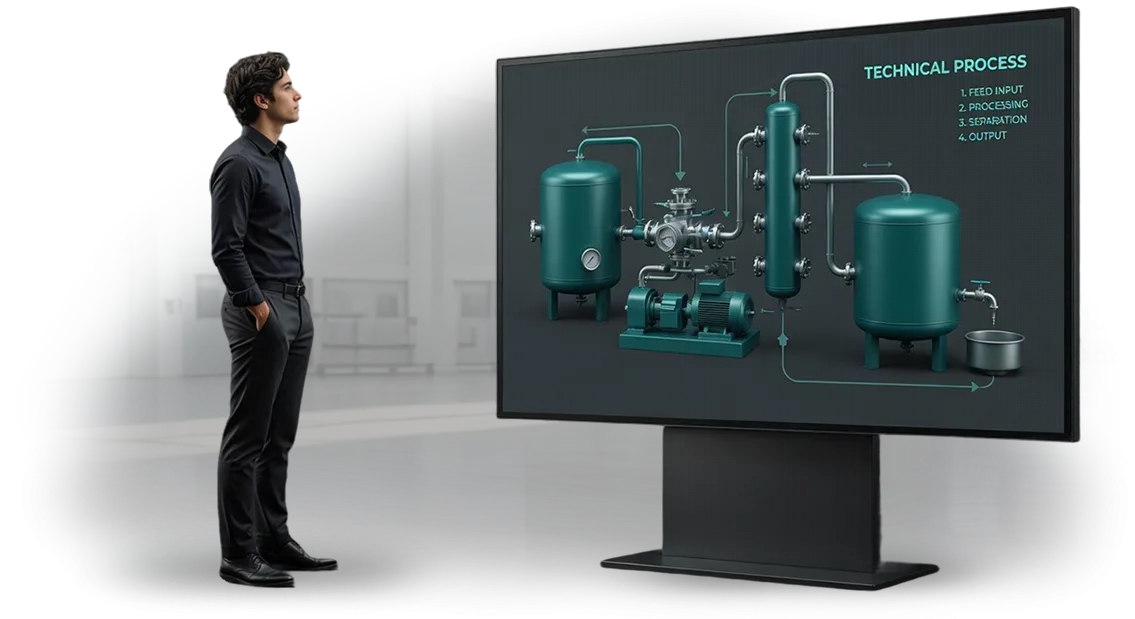
עובדים לא מוכנים לדליפת גז מסוכנת? העסק שלך בסיכון
סיכונים תעשייתיים לא סולחים על חיפזון. כאשר עובדים לא תרגלו את נהלי התגובה שלהם עד כדי אוטומטיזציה, כל מצב חירום הקשור לגז הופך לזמן השבתה בייצור, קנסות ונזק תדמיתי.
יש מודעות לסכנה, אבל אין כישורים קונקרטיים — וברגע קריטי, הצוות פועל באקראיות, מבזבז דקות יקרות.
הדרכת בטיחות מסתכמת לעיתים קרובות בהרצאות ותדריכים שעובדים מתעלמים מהם. כתוצאה מכך, במהלך תרגיל אמיתי או איום ממשי, הפער בין ידע תיאורטי ליכולת לפעול הופך ברור. כל פער כזה הוא סיכון לחיי אדם וליציבות הפיננסית של החברה.
לכן אנו מפתחים סרטוני הדרכה המדמים תאונת דליפת גז עם גרפיקה ריאליסטית. העובד רואה את התרחיש מבפנים: היכן מקור הדליפה, כיצד מתפתח הענן, לאן להתפנות ומתי לסגור שסתומים.
התרחישים הללו נצרבים בזיכרון טוב יותר מכל תזכורת טקסטואלית — כפי שהניסיון שלנו מאשר: לאחר צפייה בהדרכות, מהירות התגובה של הצוות במהלך תרגילי חירום עולה פי כמה.
אנו מעמידים את טכנולוגיית תוכן הווידאו לשירות הבטיחות שלך: במקום שקופיות מופשטות, אנו מספקים נהלים ברורים וויזואליים שעובדים זוכרים כמו חוויה אישית.
זה מפחית את העומס על המדריכים, מקצר את זמן ההכשרה ומהפך את ההכנה לתאונות אמיתיות לשיטתית ולא פורמלית.
אם הצוות שלך עדיין לא תרגל תגובה לדליפת גז בפורמט קרוב למציאות, אז האיום קרוב יותר ממה שנדמה. בואו נסגור את הפער הזה יחד.
מה נותנת הדרכת וידאו: בטיחות, חיסכון, יציבות
הוראות נייר לטיפול בגז מסוכן נשארות לעיתים קרובות פורמליות: עובד חותם ביומן ושוכח את הנוהל תוך שעה. והמחיר של דליפה הוא בריאות אנשים, השבתת ייצור וסנקציות חמורות.
הדרכת וידאו מעבירה את הבטיחות התעסוקתית מ"סימון וי" לפעולה אמיתית: אדם רואה את הסכנה, מבין את ההשלכות וזוכר את התגובה הנכונה.
עבור המנהל, זו רשימת יתרונות ברורה. הדרכה ארגונית עם סרטוני וידאו מהצוות שלנו מספקת:
- הפחתת פציעות. העובד לומד מתרחישי דליפת גז מסוכנת ויזואליים, כך שבמצב חירום הוא פועל לא באקראיות אלא לפי נוהל מתורגל.
- עמידה בתקנות. ניתן להוכיח בקלות למפקח את עובדת השלמת ההכשרה: קיימים חומרים ואישורי צפייה, לא רק "אמרנו להם בערך".
- חיסכון בזמן ובתקציב. סרטון איכותי אחד מחליף עשרות הרצאות חוזרות. אין צורך לאסוף אנשים בכיתה או למשוך אותם מהמשמרות — ההכשרה מתבצעת בנוחות ובלי לאבד זמן עבודה.
- הכנה עקבית. כל עובד מקבל מידע מלא ושווה. התוצאה אינה תלויה בעייפות המדריך או בחוסר קשב של המאזין.
- אמון הצוות. כאשר החברה משקיעה בהדרכות וידאו ברורות, העובדים מרגישים דאגה. זה מגביר משמעת ומפחית תחלופה במתקן.
הדרכת וידאו היא לא רק הקלטה של נוהל; זו מערכת בטיחות ניתנת להרחבה. ברגע שיוצרים סרטון, מבטיחים הכשרה עקבית לעובדים חדשים, משמרות שונות וסניפים — ללא פגיעה באיכות.
פורמטים של סרטוני הדרכה לתרחישי דליפת גז
משימות שונות דורשות גישות שונות: עובד חדש צריך תרחיש פעולה מלא, עובד מנוסה צריך תזכורת מהירה, ותאונה נדירה דורשת תמונה ריאליסטית שנשארת בזיכרון.
לכן, אנו מפיקים סרטוני הדרכה במספר פורמטים — כל אחד מכסה משימה ספציפית ועובד למען הבטיחות.
| פורמט | למי מיועד | מה הוא נותן ללקוח |
|---|---|---|
| סרטון הדרכה מלא | עובדים חדשים ומשמרות | ידע מובנה של כל השלבים מהיום הראשון — פחות טעויות במתקן ועבודה עצמאית מהירה יותר |
| תזכורות קצרות | עובדים מנוסים, חזרה תקופתית | רענון מהיר של כישורים ללא הפרעה לעבודה — ערנות גבוהה יותר וסיכון נמוך יותר לטעות אנוש |
| סימולציית CGI | תאונות נדירות, תרגילים | תרחיש ריאליסטי ללא סיכון אמיתי — הצוות מוכן למצב חריג ופועל ללא פאניקה |
אתה לא חייב לבחור פורמט אחד. הפתרון הטוב ביותר הוא סט: קורס וידאו מלא מספק את הבסיס, סרטונים קצרים שומרים על כישורים, וסימולציית CGI של דליפת גז מסוכנת מכינה לתרחישים הקשים ביותר.
כך העובדים מקבלים גם תיאוריה וגם ניסיון מעשי, ואתה מקבל שקט נפשי לגבי בטיחות ועמידה ברגולציה.
כיצד מפתחים סרטון הדרכה
כדי שסרטון הדרכה באמת ילמד עובדים כיצד לפעול במהלך דליפת גז מסוכנת, התהליך חייב להיות שקוף וניתן לניהול. אנו מחלקים את העבודה לשלבים — אתה תמיד יודע מה קורה, מי אחראי על מה ומתי לצפות לתוצאה. בכל שלב אתה מקבל תוצר ביניים, כך שהמסירה הסופית אינה כוללת הפתעות.
- תחקיר וניתוח משימה. אנו אוספים מידע: תרחישי דליפה, פעולות צוות, דרישות בטיחות תעסוקתית. הפלט הוא מסמך אפיון שמגדיר את מטרות הסרטון וקריטריוני קבלה.
- תסריט וסטוריבורד. אנו מתארים כל פריים: מה הסרטון מראה, איזו פעולת עובד הוא מדגים, איזה טקסט ודיאלוג מופיעים על המסך. אתה מאשר את התסריט לפני תחילת ההפקה — רק אז אנו משיקים את הגרפיקה.
- אישור ותיקונים. אנו מבצעים שינויים בשלב מוקדם, כשהם לא דורשים צילומים חוזרים או חישוב מחדש של אנימציה. תיקוני תסריט אורכים ימים, לא שבועות, ואינם מנפחים את התקציב.
- הפקת אנימציית CGI. אנו יוצרים סימולציה ריאליסטית של דליפת גז מסוכנת ללא סיכון לאנשים או לציוד. העובד רואה את הסכנה בפירוט: איך נראה הענן, היכן המקורות, כיצד לעזוב את האזור כראוי.
- קריינות ועריכה. אנו מוסיפים קול קריין, כתוביות ודיאגרמות פינוי. אנו מרכיבים סרטון אחד באורך הנדרש — מתזכורת קצרה ועד להדרכה מפורטת.
- העברת זכויות וחומרים. אנו מספקים קבצי מקור, גרסאות סופיות בפורמטים הנדרשים וחבילה להטמעה במערכת ניהול למידה או בפורטל פנימי. זכויות השימוש נשארות אצלך.
התהליך כולו אורך בדרך כלל שבועיים עד ארבעה שבועות, והאישורים מתבצעים בערוץ נוח עבורך — ללא פגישות מיותרות ושרשורי מייל. אתה מקבל סרטון מוגמר שקל לשלב בתוכנית ההכשרה שלך ולעדכן כאשר התקנות משתנות.
מה כלול במסירה: חבילה למחלקת הבטיחות התעסוקתית
אתה מקבל לא רק קבצי וידאו אלא מערכת מוכנה להכשרת עובדים בתגובה לדליפת גז מסוכנת. חבילת המסירה מורכבת כך שמחלקת הבטיחות התעסוקתית תוכל להשיק את התוכנית ללא פיתוח נוסף או אישורים ארוכים.
- סרטוני הדרכה — מספר תרחישים עם סימולציית דליפת גז: מבט מגוף ראשון ומבט של צופה, כך שעובדים רואים את המצב דרך עיניו של משתתף.
- תסריטים וסטוריבורדים — גרסאות טקסט של כל סרטון לאישור, שילוב בחומרי הדרכה ושימוש חוזר ביצירת הוראות חדשות.
- נוהל הטמעה — תוכנית שלב-אחר-שלב לשילוב הסרטון במערכת התדריכים וההכשרה הקיימת: מתי להציג אותו, למי ולכמה זמן.
- הנחיות למדריך — טיפים למה להדגיש לאחר הצפייה, אילו שאלות לשאול וכיצד לסקור טעויות אופייניות.
- מבחני ידע — שאלות לכל תרחיש כדי לוודא שהעובד קלט את החומר ומוכן לפעול.
- מסמכי דיווח — תבניות ליומנים ופרוטוקולים של הכשרה שהושלמה, המקובלות בבדיקות פנימיות וחיצוניות.
- זכויות שימוש — זכויות רשמיות לסרטון ולכל החומרים ללא הגבלת משך או מספר עובדים.
המסמכים בחבילה מותאמים לדרישות הסטנדרטיות של מחלקת בטיחות תעסוקתית, כך שתוכל ליישר אותם בקלות עם התקנות הפנימיות שלך.
זכויות השימוש בסרטון מוסדרות רשמית — ניתן להשתמש בתוכן להכשרת עובדים חדשים, בסניפים ובמהלך תדריכי רענון.
עם הסט הזה, אתה משיק הכשרה תוך מספר ימים במקום לבזבז חודשים על הכנת חומרים. זה סוגר את נושא בטיחות הצוות ומפחית סיכונים במהלך בדיקות — כל הרשומות והפרוטוקולים הנדרשים כבר בהישג יד.
מקרה בוחן: כיצד מפעל הפחית תקריות לאחר הדרכת וידאו
מפעל כימי פנה אלינו עם בעיה: תדריך הבטיחות הראשוני שלהם היה פורמליות.
עובדים הקשיבו להרצאה, חתמו ביומן, אבל במקרה של דליפת גז מסוכנת אמיתית הם פעלו באקראיות — במהלך השנה היו 12 תקריות, חלקן עצרו את קו הייצור.
הצענו להחליף חלק מההרצאה בסימולציית CGI של דליפת גז מסוכנת. במקום שקופיות יבשות — סרטון הדרכה עם תרחיש ויזואלי מאותת החיישן הראשון ועד הפינוי.
העובד רואה איך נראה אזור הסכנה, לאן ללכת, היכן לסגור שסתום — ועושה זאת בסביבה וירטואלית בטוחה ללא סיכון לחיים.
ההשפעה נמדדה כעבור שישה חודשים. הצוות שלנו הכין דוח השוואתי ללקוח: התקריות ירדו ב-40%, וזמן התדריך הראשוני קוצץ בחצי — משעתיים לשעה.
עובדים הפסיקו לשבת בפינה: סרטון הדרכה מעורר עניין, ושאלות אימות הראו שהחומר נקלט פי 3 טוב יותר מאשר טקסט.
עבור מנהל, זה לא רק בטיחות אלא גם כלכלה. פחות תקריות משמעותן פחות השבתה, פחות קנסות ופחות ביורוקרטיה. תדריך מהיר יותר משמעותו שעובדים חדשים מתחילים משמרות מוקדם יותר.
לאחר התוצאות הראשונות, המפעל הזמין מאיתנו סרטונים דומים לשני בתי מלאכה נוספים — הזמנה חוזרת היא ההוכחה הטובה ביותר שהמקרה עובד.
איך לבחור את הפורמט המתאים למשימה שלך?
פורמט ההכשרה נקבע לא לפי כמות החומר אלא לפי המשימה. לתרגול תגובה לדליפת גז, עובד חדש צריך פירוט שלב-אחר-שלב, בעוד שעובד מנוסה צריך תזכורת קצרה על הסדר ואמצעי הבטיחות. הבנת ההבדלים הללו עוזרת לבחור סרטון שעובד למען מטרה ספציפית.
השוואת סרטונים לפי פורמט מראה איזה סרטון מתאים להכשרה ראשונית, לתדריכים שוטפים ולמצבי חירום. הטבלה שלהלן נותנת קריטריונים בסיסיים: משך, רמת פירוט ואופן יישום.
| פורמט | משך | פירוט | לאילו משימות הוא מיועד |
|---|---|---|---|
| מיני וידאו | 1–2 דקות | רצף פעולות כללי | רענון לפני משמרת |
| וידאו בינוני | 5–7 דקות | נוהל מלא עם שלבים מרכזיים | הכשרה ראשונית והסמכה |
| קורס מפורט | 10–15 דקות | כל התרחישים מכוסים, כולל חריגים | הכנת מומחים במתקנים מסוכנים |
להכשרה ראשונית, בחר פורמט מפורט — הוא נותן לעובד תמונה מלאה ומפחית את הסיכון לטעויות במתקן אמיתי. לחזרה שוטפת, סרטוני מיני עדיפים, שכן קל לשלב אותם בתדריך קצר.
אם אינך בטוח איזו אפשרות הצוות שלך צריך, התחל עם מטרת ההכשרה המרכזית. אנו נעזור לך לבחור את הפורמט ולהתאים את התרחיש לתקנות שלך — מסרטון בודד ועד לסדרה למחלקות שונות.
תשובות לשאלותיך על לוחות זמנים, תקציב ואחריות
בהזמנת סרטוני הדרכה, אתה רוצה להיות בטוח בתוצאה: שהסרטון לא יתיישן, שלוחות הזמנים לא יידחו ושהתקציב לא יגדל. אנו מסירים את הספקות הללו לפני ההתחלה — אנו קובעים את התנאים בחוזה ומראים כיצד אנו עובדים.
מה אם תקנות הבטיחות ישתנו?
הסרטון יתיישן רק אם תשאיר אותו ללא טיפול. לאחר המסירה, אנו מספקים לך חומרי מקור, כך שכאשר הכללים משתנים תוכל לבצע תיקונים במהירות או להזמין מאיתנו לשכתב את הקטע הדרוש. זה זול ומהיר יותר מאשר יצירת סרטון מאפס.
איך אתה מבטיח שלא תפספס מועדים?
לפני ההתחלה, אנו יוצרים לוח זמנים מפורט: אישור תסריט, הכנת מודלים, יצירת גרפיקה ועריכה. בחוזה, אנו מציינים אחריות לכל שלב, ואתה מקבל נקודות בקרה.
ב-10+ שנות עבודה, מעולם לא פספסנו מסירת פרויקט — תוכל למצוא אישור בדוגמאות העבודה שלנו.
למי שייכות הזכויות על הסרטון המוגמר?
לך. לאחר התשלום הסופי, אתה מקבל זכויות בלעדיות לסרטון ולחומרי המקור. השתמש בסרטון בהכשרה, ערוך אותו מחדש ועדכן אותו ללא אישורים נוספים מאיתנו. בצוות שלנו, תנאי זה נמצא בחוזה מהיום הראשון.
הזמן סרטון הדרכה שיגן על עובדים
כל דקה של היסוס במהלך דליפת גז מסוכנת עלולה לעלות בבריאות, ולפעמים בחיים. תדריכים רגילים אינם בונים כישורים מתמשכים: עובדים עוברים מבחן פורמלי ומיד שוכחים את רצף הפעולות.
סרטון הדרכה עם סימולציה מדויקת של תאונה מאפשר לתרגל את הנוהל בתנאים בטוחים ולזכור אותו ברמת רפלקס.
אנו יוצרים סרטונים שקל לשלב במערכת ההכשרה: העובד רואה את רצף הפעולות האמיתי, רמזים על המסך והתגובה הנכונה לכל תרחיש.
כתוצאה מכך, הצוות פועל בביטחון רב יותר, והמנהל מקבל עלייה מדידה במוכנות למצב חירום.
כדי להזמין סרטון הדרכה, נדרשים רק 5 שלבים:
- השאר פנייה באתר שלנו — ניצור קשר תוך יום עסקים ונבהיר את המשימות שלך.
- קבל ייעוץ: יחד נגדיר תרחישי דליפה, קהל יעד וקריטריוני איכות להכשרה.
- קבל הערכת עלות ולוחות זמנים עם אפשרויות פורמט — מסרטון מסך קצר ועד סימולציית תלת-ממד מלאה.
- אנו מסכימים על תוכנית העבודה והשלבים כך שתשלוט בתהליך ללא פגישות מיותרות.
- אנו מכינים את ההפקה: תסריט, סטוריבורד, מודלי תלת-ממד, קריינות ועריכה.
- אנו מספקים את הסרטון המוגמר בפורמטים למערכות ניהול למידה, פלטפורמות וידאו ומצגות פרונטליות, עם זכות עריכה.
העבודה לא מסתיימת שם: לאחר ההשקה, אנו יכולים לעדכן את הסרטון כאשר התקנות משתנות. השאר פנייה עכשיו — תוך יום עסקים אחד תקבל הצעה מסחרית עם לוחות זמנים ועלות מדויקים.