

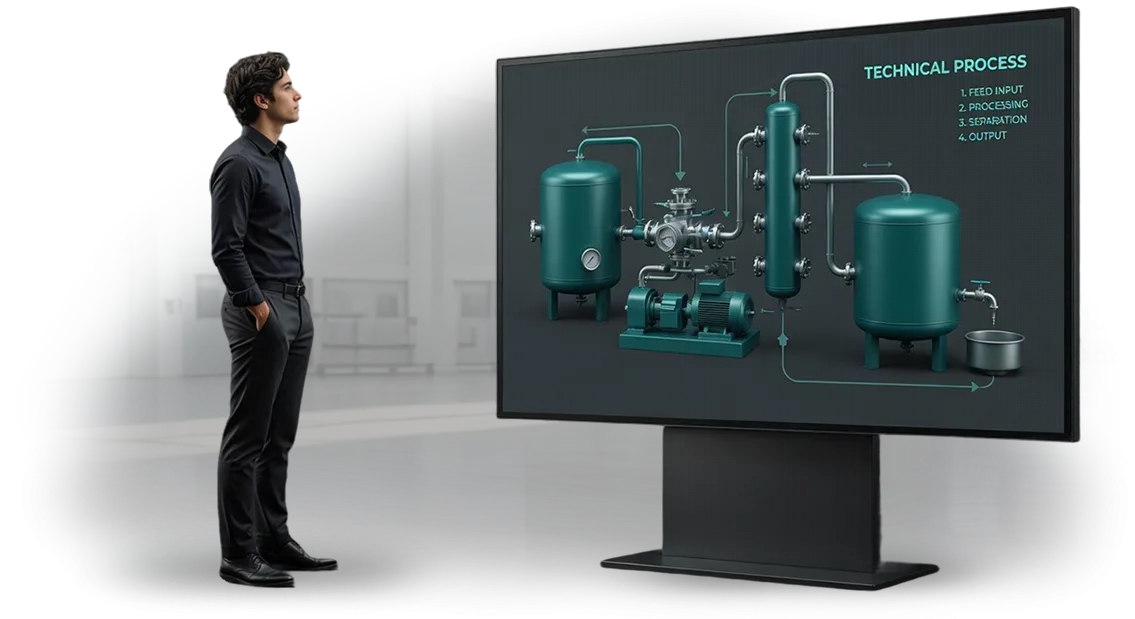
למה למדל הצפת חדר בהדרכה
כאשר מתרחשת הצפת חדר במתקן, הספירה היא בדקות: לסגור את העלייה, לנתק את החשמל באזור, לפנות אנשים, לשמור על ציוד ומסמכים. בתקלה אמיתית העובדים פועלים בכאוס — מישהו מחפש הוראה, מישהו מתקשר למנהל הלא נכון, מישהו פשוט ממתין.
הסיבה אינה רשלנות: האנשים מעולם לא הועמדו במצב כזה, ואימון "בחיים" משמעותו להציף מתקן פעיל, לעצור תהליכים ולסכן רכוש. בדיוק משום כך הדרכת עובדים לפעולה בתקלה נשארת לרוב על הנייר — עד לתקלה האמיתית הראשונה.
סימולציה של תקלה מסירה את הסתירה הזו. אנו משחזרים הצפת חדר בסרטון הדרכה: העובד רואה כיצד המים מגיעים לחדר השרתים או למחסן, כיצד מתפתחת בהלה, ובעיקר — אילו צעדים ובאיזה סדר מחזירים את המצב לשליטה.
פורמט כזה נותן את מה שלא נותנים לא תקנון על הקיר ולא שקופיות: תמונה מזוהה, שלפיה האדם ייזכר באופן מיידי בסדר הפעולות כאשר הדבר יידרש באמת.
עבור המנהל מדובר בכסף ישיר ובמוניטין. תקלה אחת שנמנעה — משמעה ציוד שנשמר, היעדר השבתה, היעדר תשלומים והתדיינויות, וכן לקוחות רגועים שלא ידעו על התקלה. הבטיחות במתקן מפסיקה להיות תלויה בשאלה מי במשמרת היום והאם הוא זוכר את ההוראה.
אנו סוגרים את המשימה הזו מקצה לקצה: לומדים את התהליכים ואת נקודות הסיכון שלכם, כותבים תרחיש תקלה המותאם למתקן שלכם, מצלמים ומרכיבים סרטון הדרכה שניתן להטמיע בקליטת עובדים חדשים ובתרגולים תקופתיים. לאחר מכן אתם פשוט מציגים אותו לצוות — ומקבלים עובדים המוכנים להצפת חדר עוד לפני שהיא מתרחשת.
מה מקבל המזמין מסרטוני הדרכה עם סימולציה
סרטון הדרכה עם סימולציה של הצפת חלל נדרש למזמין לא כ"סרטון יפה", אלא ככלי שמפחית נזק והופך את התנהגות הצוות לצפויה. כאשר העובד רואה על המסך חלל מוכר, את לוח החשמל ואת מקום סגירת המים, הוא פועל ברגע הקריטי לפי תרחיש מתורגל, ולא מחפש הוראה בתיקייה. זו התועלת העיקרית: מהירות התגובה עולה, והיקף ההשלכות של התקלה יורד.
התוצאה השנייה — תקן פעולה אחיד לכל המשמרת. עובד חדש, קבלן או משמרת לילה מקבלים את אותה רצף פעולות: היכן לסגור, את מי ליידע, מה לנתק מחשמל, ולאן לדווח הלאה. פרשנויות שונות של "איך נכון" נעלמות, ואיתן — השבתות בגלל בירורים והדרכה חוזרת. אנחנו דואגים שההוראה תעבוד למען האנשים, ולא תשב בשביל ה'וי'.
היתרון השלישי — מוכנות לבדיקות. כאשר הנהלים מאושרים בחומר חזותי וביומן מעבר, לגופי הפיקוח ולבקרה הפנימית יש פחות שאלות לגבי האופן שבו מאורגנת הבטיחות באתר. סרטון עם סימולציה של הצפת חלל סוגר בבת אחת מספר דרישות: הדרכת עובדים, תרגול פעולות בעת תקלה, תיעוד תדרוך.
בפועל זה נראה כך: אנחנו משחזרים את החללים והציוד האמיתיים שלכם, מציגים את תרחיש התקלה ואת התגובה הנכונה, ולאחר מכן מוסרים חומר מוכן להדרכה שוטפת. המזמין מקבל לא סרטון חד-פעמי, אלא נכס עובד — ניתן לעשות בו שימוש חוזר בקליטת עובדים חדשים, בהחלפת ציוד ובהכנה לבדיקות.
פורמטים של סרטוני CGI למשימות הדרכה
הפורמט של הסרטון קובע לא את "יופי התמונה", אלא את השאלה עד כמה מהר העובד יקבל את ההחלטה הנכונה בתקלה אמיתית. לכן אנחנו קודם כול מנתחים את המשימה שלכם — את מי אנחנו מלמדים, איזה תרחיש תקלה אנחנו מתרגלים, מה האדם צריך לעשות בסופו של דבר — ורק אחר כך מציעים פורמט. להלן — אפשרויות עבודה אשר לרוב מכסות משימות של הצפת חלל.
| פורמט | למי מתאים | מה נותן ללקוח |
|---|---|---|
| סצנה קצרה (1–2 דקות) | צוות קווי, משמרות, תורנויות | תדריך מבוא מהיר: העובד רואה איך נראית הצפה מתחילה וזוכר את הפעולות הראשונות |
| הנחיית וידאו שלב-אחר-שלב | תורנים, צוות טכני, אבטחה | תרגול האלגוריתם שלב אחר שלב: לסגור, לנתק מחשמל, להודיע — הפחתת טעויות בדקות הראשונות |
| ניתוח תקלה אמיתית | מנהלים, מהנדסים, שירות תפעול | לומדים מניסיון של אחרים: רואים היכן איבדו זמן ואיך לא לחזור על כך |
| הדרכה אינטראקטיבית | כל מי שעובר תדריך קבוע | העובד בוחר פעולה ורואה את ההשלכות — החומר נזכר טוב פי כמה מאשר צפייה פסיבית |
| סדרת סרטונים מקושרים | חברות עם אתרים מפוזרים | תקן אחיד לתגובה בכל האתרים, קל יותר להרחיב ולעדכן |
סרטון CGI חשוב כאן בכך שהוא מראה הצפת חלל במקום שבו אי אפשר או מסוכן לצלם בטבע: חדר שרתים, מחסן, מרתף, אולם ייצור. אנחנו מדמים מים, התפשטות על הרצפה, תגובת הציוד — ומגישים זאת כך שהעובד לא ייבהל, אלא יבין את סדר הפעולות.
שילוב של פורמטים נותן את התוצאה הטובה ביותר: סצנה קצרה להיכרות ראשונית, הדרכה אינטראקטיבית לחיזוק, ניתוח תקלה למנהלים. בדוגמאות של הפרויקטים שלנו רואים שסט כזה מקצר את זמן הכנסת עובד חדש לנורמה ומפחית את מספר ההפרות החוזרות.
איך מתנהל פרויקט: מהבריף ועד ההטמעה
אנחנו בונים את הפרויקט כך שבכל שלב תדעו מה קורה ומה תקבלו בסופו. בלי "הפתעות בסוף": את התרחיש, לוחות הזמנים והפורמט מתאמים מראש, ואתם מתחברים רק בנקודות המפתח.
איך נראה המסלול מהמשימה ועד לסרטון המוגמר
- בריף. דנים במשימה: את מי מלמדים, איזה תרחיש של הצפת חלל יש להראות, מה העובד צריך לעשות ומה אסור שיקרה. מגדירים את המטרה — לצמצם נזק, לזרז תגובה, לתרגל את סדר הפעולות.
- תרחיש וסטוריבורד. המהנדסים והתסריטאים שלנו מרכיבים סיפור שלב אחר שלב: היכן פורץ, איך מתפשטים המים, אילו פעולות נכונות ואילו מחמירות את המצב. אתם רואים את ההיגיון לפני תחילת ההפקה.
- אישור. מציגים את התרחיש ואת הפריימים הגולמיים, ומכניסים תיקונים לפי הנהלים והטרמינולוגיה של החברה שלכם. תיקונים בשלב הזה זולים ומהירים יותר מצילום מחדש.
- הפקה. יוצרים ויזואליזציה של הצפת חלל, קריינות, כתוביות ורמזים. עובדים בציוד מקצועי — התמונה נראית אמינה ולא מסיחה מהעיקר.
- קבלה. אתם מקבלים סרטון מוגמר בפורמטים הנדרשים: לפורטל הפנימי, למכשירים ניידים, להצגה לא מקוונת בהדרכה.
- הטמעה. עוזרים להטמיע את הווידאו בתוכנית ההדרכה, מוסיפים שאלות בקרה, ובמידת הצורך מכינים גרסאות עבור מחלקות שונות.
- תמיכה. מעדכנים את הסרטון כשמשתנים הנהלים או הציוד — העובדים תמיד לומדים לפי ההוראה העדכנית.
סדר כזה חוסך לכם זמן: אתם לא צוללים לתוך ההפקה, אלא מקבלים החלטות לפי המשמעות. הזמן הממוצע מהבריף ועד לסרטון המוגמר — משבועיים עד ארבעה שבועות, בהתאם להיקף הסצנות ומספר האישורים.
מה ייכלל באספקה
המזמין מקבל לא אוסף קבצים, אלא כלי הדרכה מוכן שאפשר להפעיל בעבודה מיד. להלן — מה בדיוק ייכלל באספקה עבור שירות סרטוני הדרכה עם סימולציה של הצפת חלל.
- סרטונים מוכנים לפי תרחישים: פעולות העובדים עם גילוי נזילה, סדר סגירת התקשורת, פינוי אנשים וציוד, עבודה עם ציוד באזור ההצפה. כל סרטון — סיפור שלם עם רצף ברור של צעדים.
- סימולציית הצפה — המחזה ריאליסטי של התפתחות התקלה: כיצד המים מתפשטים בחלל, היכן נקודות קריטיות, כמה זמן יש לתגובה. העובד רואה את השלכות הטעות בלי סיכון לאובייקט אמיתי.
- חומרים מתודיים — תרחישי שיעורים, שאלות בקרה, רשימות בדיקה של פעולות וקריטריונים להערכה. האחראי על ההדרכה מנהל קורס לפי תוכנית מוכנה, בלי הכנה נוספת.
- גרסאות לערוצים שונים — סרטונים בפורמט אופקי ואנכי, גרסאות קצרות לתפוצות ולתזכירים, קבצים לפורטל הפנימי ולמכשירים ניידים של העובדים.
- מפגש הדרכה לאחראים — מראים כיצד לשלב את החומרים בתוכנית הקליטה ובתדרוכים חוזרים, כיצד לעקוב אחר מי שעבר את ההדרכה.
- קבצי מקור וזכויות שימוש — אתם נשארים הבעלים של החומרים ויכולים לעדכן אותם בכוחות עצמכם כאשר התקנות משתנות.
- ליווי לאחר מסירה — עוזרים עם תיקונים והתאמה לתרחישים חדשים, כאשר התהליכים או הציוד משתנים.
ערכה כזו סוגרת את המשימה כולה: העובדים מתרגלים פעולות על סימולציה בטוחה, והמנהל מקבל תוצאה מדידה — פחות טעויות בתקלות אמיתיות ודיווח ברור על ההדרכה.
מקרה בוחן: כיצד סימולציית הצפה הפחיתה נזק
אחד מהפרויקטים שלנו — סרטון CGI הדרכתי עם סימולציית הצפה של חלל עבור חברת ניהול גדולה. הלקוח הגיע עם כאב טיפוסי: העובדים ידעו את הנהלים על הנייר, אבל ברגע של תקלה אמיתית הם איבדו את העשתונות, וחלפו דקות יקרות עד לסגירת המים.
הצענו לא עוד הוראה טקסטואלית, אלא סימולציה חזותית — העובד רואה במו עיניו כיצד מתפתחת ההצפה ומה קורה כאשר מתמהמהים.
מה היה לפני ומה השתנה אחרי
לפני הפרויקט, התגובה לתרגיל אזעקה ארכה בממוצע כשבע דקות, וחלק מהעובדים לא ידעו היכן נמצא צומת הסגירה. לאחר הטמעת הסרטון בתוכנית ההדרכה, זמן התגובה הממוצע הצטמצם כמעט בחצי, ושיעור העובדים שמציינים בביטחון את סדר הפעולות עלה משליש לרוב.
חברת הניהול ציינה את האפקט המרכזי: ההדרכה הפסיקה להיות פורמליות. מנהל התחום אמר ישירות שלראשונה העובדים דנים בנהלים ביניהם ומספרים עליהם לעמיתים — בעבר דבר כזה לא קרה.
התוצאה במספרים שחשובים לעסק
לפי הערכת הלקוח, שיעור הנזק הנמנע בתרחישי תרגול עלה באופן משמעותי: חלק מהתקלות הצליחו לבודד לפני הגעת שירות החירום. יתרון נוסף — הסרטון משמש גם לקליטת עובדים חדשים, ולכן הזמנות חוזרות לתרחישים חדשים הגיעו כבר במסגרת אותה תוכנית הדרכה.
כיצד לבחור את הפורמט המתאים למשימה?
את הפורמט בוחרים לא לפי יופי התמונה, אלא לפי המשימה: מה העובד צריך להבין ולעשות לאחר הצפייה. אם המטרה היא לתרגל את סדר הפעולות בעת הצפת חדר, תתאים הנחיה קצרה שלב-אחר-שלב עם הצגת הציוד האמיתי ונקודות החסימה.
אם יש צורך לעצב תרבות בטיחות ולהראות את היקף ההשלכות, חזק יותר פועל סרטון CGI עם סימולציה של הצפה — הוא מדגים באופן חזותי כיצד מתפתחת התקלה ולמה מוביל עיכוב.
הקריטריון הראשון — סוג המתקן. עבור מחסן, חדר שרתים, אולם ייצור או משרד עם ארכיון הסיכונים ונקודות הקשב שונים, ולכן התסריט והחזות נבנים עבור החדר הספציפי והאזורים הפגיעים שלו.
הקריטריון השני — מספר העובדים: עבור צוות קטן מספיקה הנחיה אוניברסלית אחת, ואילו עבור סגל מפוזר הגיוני ליצור קורס מודולרי עם פרקים קצרים, כך שכל מחלקה תראה רק את שלה.
הקריטריון השלישי — תדירות הבדיקות וההדרכות. במקום שבו יש לאמת ידע באופן קבוע, משתלם יותר פורמט עם שאלות אינטראקטיביות ומערכת תיעוד ברורה, ואילו היכרות חד-פעמית נסגרת בסרטון רגיל.
הרביעי — מורכבות התהליך עצמו: ככל שיש יותר שלבים ומשתתפים, כך חשוב יותר להראות את הרצף ואת השלכות הטעויות.
בפועל כמעט תמיד משלבים את הפורמטים: סימולציית CGI יוצרת רגש ונזכרת, ואילו הנחיות קצרות מקבעות את סדר הפעולות. אנו עוזרים להתאים את השילוב הזה למתקן שלכם, לסגל ולנוהל הבדיקות — כך שההדרכה פותרת את המשימה, ולא רק גוזלת זמן מהעובדים.
ספקות נפוצים של לקוחות
הספקות בדרך כלל זהים: "מה אם הציוד יתקלקל", "איך אחר כך לשנות משהו", "האם נצטרך להחזיק אדם נפרד למשימה הזו". אלו שאלות לגיטימיות של מנהל ששוקל לא את האפקטיביות אלא את הסיכונים. נבחן כל אחת מהן — בלי הבטחות ש"הכל יהיה מושלם" ובלי אותיות קטנות.
מה אם הטכניקה תתקלקל
אנחנו לא מביאים עותק בודד. באתר תמיד יש ערכת גיבוי של הרכיבים המרכזיים, ומהנדס מלווה את ההצגה מהניסיון הראשון ועד הסשן האחרון. אם משהו מתקלקל — ההחלפה אורכת דקות, לא שעות, והתוכנית לא נעצרת. במהלך שנות העבודה מעולם לא ביטלנו הצגה בגלל ציוד.
איך לעדכן את הסרטון
התסריט, הסצנות והחומרים נשמרים אצלכם, לא רק אצלנו. כשמשתנה העיצוב הפנימי, התקנון או המיתוג — אנחנו מבצעים תיקונים בקבצי המקור ומרכיבים מחדש את הסרטון, בלי לצלם הכל מחדש. שינויים קטנים (כתוביות, לוגו, קול) נעשים בתוך יומיים, גדולים — לפי תוכנית נפרדת.
האם נדרש מומחה משלנו
לא. הסרטון מופעל בלחיצה אחת, ואת השליטה אנחנו מעבירים לצוות שלכם בהדרכה — בדרך כלל זה לוקח הסבר קצר אחד. לאחר מכן אנחנו לוקחים על עצמנו את הליווי: עוקבים אחר התקינות, מעדכנים חומרים ועונים על שאלות במהלך כל תקופת התמיכה.
ואם נרצה להציג את הסרטון באירוע שלנו?
אנחנו מעבירים את הקובץ בפורמט הנדרש והוראות הפעלה קצרות — הצוות שלכם יסתדר בלעדינו. אם נדרשת עזרה במקום, המהנדס יגיע ויבצע את ההצגה.
מה כלול בתמיכה לאחר המסירה?
ליווי אחריות, עדכון חומרים לפי התיקונים שלכם וייעוץ בנוגע להפעלה. התנאים והתקופה נקבעים בחוזה לפני תחילת העבודה.
נדון במשימה שלכם
כשמדובר בהצפת חלל, מחיר הטעות גבוה מדי: העובדים חייבים לפעול לפי אלגוריתם ברור, ולא להיזכר בהוראות ברגע התקלה. בדיוק משום כך אנחנו יוצרים לא סרטונים מופשטים, אלא כלי הדרכה עובד — תסריט שמוביל את האדם שלב אחר שלב, והמחזה שבו רואים את ההשלכות של כל פעולה לפני שהן מתרחשות במציאות.
תארו את המשימה — נחזור עם הערכה ותוכנית. משם העבודה מתנהלת בשקיפות: אתם רואים כל שלב ומשפיעים על התוצאה עד למסירה הסופית.
- ניתוח המשימה ותוכנית העבודה — מה העובד צריך להטמיע, אילו תרחישי הצפה קריטיים דווקא למתקן שלכם, ובאיזה סדר מצלמים.
- תסריט וסטוריבורד — נתאם את הטקסט, פעולות הדמויות ונקודות הבקרה המרכזיות, כך שהסרטון יתאים לתקנונים שלכם ולא לתפיסות כלליות.
- סרטון פיילוט — מפיקים פרק אחד בשלמותו, אתם צופים בו עם העובדים שלכם ומחליטים אם לשכפל את הגישה לתרחישים האחרים.
- צילום והמחזה — מציגים את סגירת הברזים, סגירת הקווים האנכיים, פינוי אנשים ועבודה עם ציוד כך שזה ייזכר מהצפייה הראשונה.
- עריכה והתאמה לפלטפורמות — גרסאות לפורטל הפנימי, למכשירים ניידים ולהצגה לא מקוונת בתדרוך.
- הטמעה וליווי — עוזרים לשלב את הסרטונים בתוכנית ההדרכה, מעדכנים את החומר כשמשתנים התקנונים או פריסת החללים.
- משוב על התוצאות — בוחנים יחד איתכם כיצד העובדים עוברים את ההדרכה, ומשפרים את מה שמעורר שאלות.
גישה כזו מסירה את הסיכון המרכזי — לבזבז תקציב על וידאו שאף אחד לא צופה בו. סרטון הפיילוט נותן לכם ביטחון לפני ההרחבה, והליווי — שההנחיה נשארת רלוונטית ולא מתיישנת חצי שנה אחרי המסירה.