

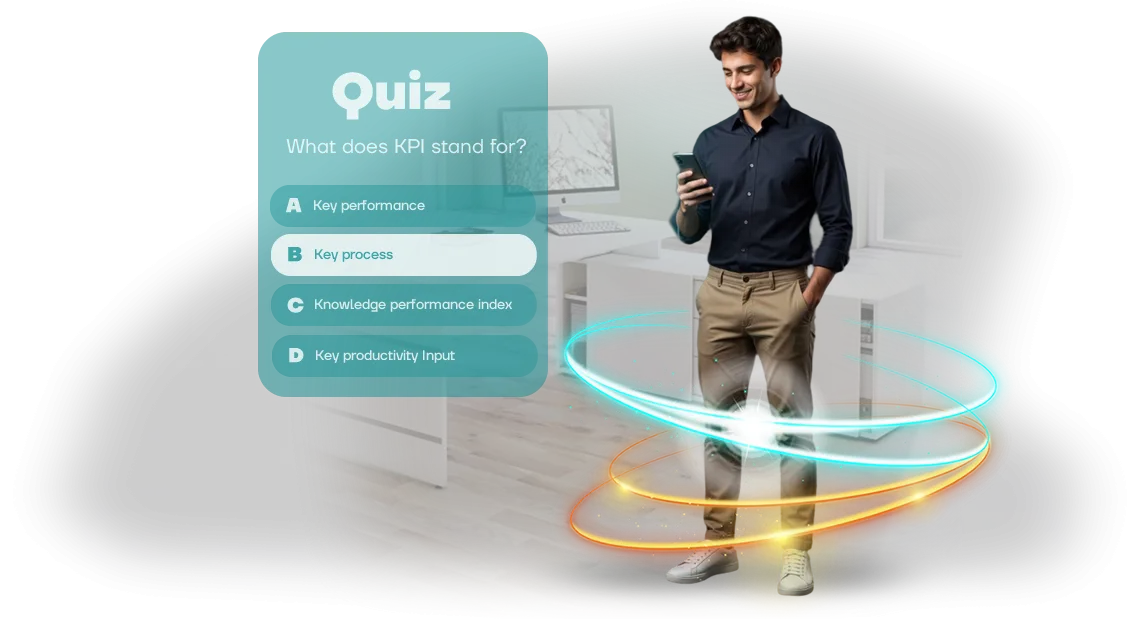
הדרכת ציות ודרישות רגולטוריות: סיכונים וקנסות
הפרות של דרישות רגולטוריות עולות לעסקים יותר ממה שנראה: קנסות על טעויות של עובדים, תביעות של רשויות הפיקוח, הפסדים מוניטיניים ושיבושים בפעילות המחלקות.
מחירו של אירוע בודד אינו רק עלויות ישירות, אלא גם תהליכים שנעצרו, אובדן אמון של שותפים ובדיקות נוספות.
המנהל אחראי לתוצאה, והתוצאה תלויה ישירות במידת ההבנה האמיתית של כל עובד את הכללים וביישומם בעבודה היומיומית.
קורסי ציות סטנדרטיים הופכים פעמים רבות לפורמליות: עובדים צופים במצגת, עוברים מבחן עם רמזים, ובתוך שבוע שוכחים את הכללים המרכזיים. המידע מוצג בצורה מופשטת ואינו קשור למצבים האמיתיים שבהם נתקלים העובדים.
כתוצאה מכך, ההדרכה יוצרת מראית עין של הכנה אך אינה מפחיתה את הסיכונים להפרות – וזו המשימה העיקרית שלשמה היא מופעלת.
כדי שההדרכה תעבוד, היא חייבת לעניין את העובד ולבחון לא שינון טקסט אלא את היכולת לקבל החלטה נכונה במצב ספציפי.
חידונים ותרחישים הקרובים למשימות עבודה אמיתיות מאלצים עובדים לנתח, לטעות בסביבה בטוחה ולקבל הסברים על ההשלכות.
גישה זו בונה מיומנויות מתמשכות: העובד זוכר את הכלל כי הוא חווה אישית את ההשלכות של אי-ציות לו.
אנו מפתחים חידוני הדרכה אינטראקטיביים על פלטפורמה מקצועית שהופכים ציות משעמם למשחק עם חוקים ברורים ומשוב מיידי. החברה מקבלת לא "וי" על הדרכה, אלא רמת מוכנות ברורה של הצוות וכלי לשליטה בסיכונים.
כך, הדרכת ציות ורגולציה הופכת למערכת הגנה עסקית ולא לעוד הליך חובה.
מה מפתח פיתוח עובדים שיטתי: פחות סיכונים, יותר אמון
פחות תקריות וקנסות
חידוני הדרכה הופכים כללי ציות לתרחישים ברורים. עובדים זוכרים את רצף הפעולות ומפרים דרישות בתדירות נמוכה יותר – מספר התקריות יורד כבר לאחר מחזורי ההדרכה הראשונים.
פחות הפרות משמעותן פחות קנסות, פחות סיכונים משפטיים ופחות עלויות לתיקון נזקים. עבור העסק, זהו חיסכון תקציבי ישיר והגנה על המוניטין.
אמון הרגולטור וביקורת פנימית
כאשר הדרכה מתבצעת באופן קבוע והתוצאות מתועדות, רגולטורים ומבקרים מקבלים ביטחון בחברה. בדיקות עוברות מהר יותר, והדיווח הופך לשקוף יותר.
הביקורת הפנימית מקבלת נתונים ברורים: מי השלים את ההדרכה, אילו נושאים גרמו לקשיים. זה מאפשר לסגור פערים בזמן ולהדגים שליטה בסיכונים.
חוסן ארגוני ומשמעת עובדים
עובדים שמבינים את ההשלכות של מעשיהם עובדים במודעות רבה יותר. הציות מפסיק להיות "פיסת נייר" והופך לחלק מהתרבות – החברה הופכת עמידה בפני שינויים רגולטוריים.
משמעת העובדים משתפרת: פחות הפרות, פחות תחלופה הנגרמת מטעויות. בסופו של דבר, העסק חוסך בגיוס ובקליטה, והצוות פועל ביציבות רבה יותר.
אנו יוצרים חידונים שמפתחים מיומנויות אלה באופן שיטתי. גם לאחר מחזור הדרכה קצר, עובדים עונים בביטחון על שאלות ביקורת ופועלים בהתאם לתקנות.
פורמטי תוכנית: מבחנים, סימולציות, גיימיפיקציה
בהדרכת ציות ורגולציה חשוב שעובדים לא רק יקראו את התקנה אלא יוכלו ליישם אותה במצב אמיתי.
קהלים שונים דורשים פורמטי הדרכה שונים: למתחילים – בדיקות ידע מהירות, לעובדים מנוסים – תרחישים מורכבים, לכל החברה – משחק מרתק. אנו בוחרים פורמט המתאים למשימה ולתרבות הארגונית שלכם.
| פורמט | למי | מה הוא נותן ללקוח |
|---|---|---|
| מבחנים וחידונים | כל העובדים, הדרכה המונית | בדיקת ידע מהירה, סטטיסטיקה שקופה לפי מחלקות |
| סימולציות ציות | מנהלים, מנהלי סיכונים, מכירות | תרגול טיפול במצבים מורכבים ללא השלכות על העסק |
| הדרכה בגיימיפיקציה | עובדים צעירים, צוותים גדולים | הגברת מעורבות ושימור חומר |
| מטא-משחק | כל החברה, צוותים חוצי-תחומים | מוטיבציה ארוכת טווח ותרבות של ציות רגולטורי |
מבחנים וחידונים הם הדרך המהירה ביותר לבדוק ידע לאחר קורס ולזהות אזורים בעייתיים. סימולציות מאפשרות לעובדים "לחיות" מקרה מורכב ולראות את ההשלכות של החלטות מבלי לפגוע בעסק.
גיימיפיקציה מוסיפה תחרותיות, ומטא-משחק משלב מספר מודולים לעלילה אחת שמחזיקה עניין במשך שבועות.
כל פורמט יכול לשמש בנפרד או בשילוב ליצירת תוכנית לקהל ספציפי. אנו נעזור לכם לבחור את הסט האופטימלי – כך שהדרכת ציות תניב תוצאות מדידות ולא תהפוך לפורמליות.
כיצד מתבצע היישום: בריף, תוכנית, אישור, השקה
יישום חידוני הדרכה עובד כמו מסלול ברור עם נקודות ביקורת. אתם לא נשארים לבד עם המשימה – כל שלב כולל אישור, משוב ולוחות זמנים ברורים. גישה זו מבטלת את הסיכונים המרכזיים: עיכובים, ציפיות לא תואמות וכשלי השקה.
- בריף פיתוח – אנו מתעדים מטרות, קהל, נושאי ציות ותוצאות צפויות.
- תוכנית יישום התוכנית – לוחות זמנים, שלבים, נקודות אישור ואנשי קשר אחראיים מצידכם.
- אישור פרויקט – אנו מציגים את התרחיש, מבנה החידון ולוגיקת הניקוד.
- יישום במערכת – אנו ממלאים שאלות, מגדירים תפקידי עובדים וכללי השלמה.
- ריצת ניסיון – אנו בודקים את התרחיש עם קבוצת מיקוד ומבצעים עריכות לפני ההשקה.
- השקת החידון – אנו מאמנים מנהלי מערכת ומכינים הוראות לעובדים.
- תמיכה לאחר ההשקה – אנו תומכים בתוכנית, מעדכנים שאלות ומסייעים בניתוח נתונים.
התוצאה היא יישום תוכנית ללא עומס יתר על הצוות שלכם. עובדים משלימים הדרכת ציות בפורמט נוח, ואתם מקבלים תוצאה מדידה: אחוז השלמה, ציון ממוצע ותחומים הטעונים שיפור. הדרישות הרגולטוריות מטופלות באופן שיטתי, לא בלחץ רגע לפני בדיקה.
מה כלול במסירה: ערכת מחלקת משאבי אנוש
אתם מקבלים ערכה מוכנה – אין צורך לפתח דבר מאפס. בפנים כל מה שמחלקת משאבי אנוש צריכה: מתרחישים ועד דוחות. כל שנותר הוא לשייך עובדים ולהשיק.
- תרחישי חידון – מכניקות מוכנות למגוון נושאים: מהדרכת היכרות ועד בדיקות ידע על דרישות רגולטוריות. כל תרחיש מותאם לפורמט ההדרכה ולרמת המיומנות של העובד.
- שאלות לבדיקת ידע – מאגר משימות עם אפשרויות תשובה והסברים. השאלות נועדו לבחון הבנה ולא זיכרון: העובד מנתח מצב במקום לנחש את הניסוח.
- הוראות למנהל מערכת – מדריך שלב-אחר-שלב: כיצד לשייך חידון לקבוצה, לשנות מועדים ולהוסיף עובדים חדשים. מתאים גם למי שמשתמש בפלטפורמה בפעם הראשונה.
- דוחות השלמה – נתונים ברורים לכל עובד וקבוצה: מי השלים, מי טעה, אילו נושאים גורמים לקשיים. אין יותר איסוף ידני של תוצאות בדוא"ל.
- חומרי תקשורת – טקסטים מוכנים לתפוצה לעובדים: למה נועד החידון, כיצד להשלים אותו ומה קורה בהמשך. אתם מורידים מעצמכם את השגרה ומקבלים סגנון הודעה אחיד.
- אפשרות עדכון תוכן – כאשר הדרישות משתנות או מתווספות תקנות חדשות, אנו מעדכנים את השאלות והתרחישים. ההדרכה נשארת תמיד עדכנית, ואינכם צריכים לחפש ספק חדש.
אנו מוסרים את כל הערכה בפורמט שמשתלב מיד במערכת ההדרכה שלכם – ללא הכנות ארוכות או צורך במומחים טכניים מצד הלקוח.
עובדים רואים ממשק ברור, משאבי אנוש מקבלים תוצאות שקופות, וההנהלה מקבלת ביטחון שבדיקת הידע אכן בוצעה, לא רק הוגדרה.
מקרה בוחן: כיצד חידונים ארגוניים הפחיתו הפרות
קבוצת פיננסים עם מספר ישויות משפטיות התמודדה עם כאב אופייני: עובדים השלימו הדרכת ציות באופן פורמלי, אך ההפרות המשיכו לחזור.
כל הפרה משמעותה סיכון לקנסות ולפגיעה מוניטינית, ולכן המשימה שלנו הייתה לגרום להדרכה לעבוד בפועל ולא "למראית עין". הצענו להחליף הרצאות משעממות בחידון ארגוני – למידה באמצעות תחרות ומעורבות.
תוצאות מפתח של הפרויקט
במקום "ישבו שעתיים ושכחו", העובדים קיבלו משחק שבו נדרשו ליישם את הידע בתרחישים מעשיים. תוך שישה חודשים, מספר ההפרות המתועדות בקבוצה ירד פי שלושה.
בדיקות המשך הראו שעובדים לא רק שיננו את הכללים אלא שינו את התנהגותם במצבי עבודה אמיתיים.
השלמת החידון ארכה לעובדים 20–30 דקות במקום סמינר מקוון של שעתיים – והתוצאה הייתה טובה יותר באופן ניכר. ראשי מחלקות ראו סטטיסטיקה חיה: כמה אנשים השלימו את ההדרכה, אילו נושאים גרמו לקשיים ואילו חטיבות סבלו מתקריות חוזרות.
זה אפשר להם לחזק נקודות חלשות באופן ממוקד במקום לדחוף את כולם באותה תוכנית.
הקבוצה הפיננסית העריכה גם את משוב העובדים: 87% מהמשתתפים אמרו שפורמט החידון היה ברור ומעניין יותר מהתדריכים הרגילים.
אנשים העבירו שאלות זה לזה ודנו במקרים מורכבים בצ'אטים של העבודה – ההדרכה הפסיקה להיות חובה והפכה לסיבה לתקשורת.
למה זה עבד
הסוד אינו משחק לשמו אלא המכניקה הנכונה: החידון בנוי על אירועים אמיתיים מהפרקטיקה של הקבוצה, לא על שאלות תיאורטיות מופשטות.
העובד רואה את ההשלכות של החלטותיו מיד ובסביבה בטוחה, והמערכת על פלטפורמת Unity אוספת נתונים על טעויות אופייניות לפי מחלקה.
לאחר הפיילוט, הקבוצה הרחיבה את התוכנית לכל החטיבות והזמינה חידון לעובדים חדשים. החיסכון בקנסות ובתיקון השלכות ההפרות עלה בהרבה על עלות הפיתוח – עבור העסק, זהו הטיעון החזק ביותר.
כיצד לבחור את הפורמט המתאים למשימה שלכם?
בחירת פורמט החידון תלויה ישירות במשימה שאתם פותרים בתוך החברה. אין פתרון אחד שמתאים לכולם: מה שעובד להעברת דרישות חדשות להמונים אינו תמיד יעיל לבדיקת ידע של צוותים מומחים.
לכן אנו תמיד מתחילים בשתי שאלות מפתח: מה העובדים צריכים לדעת וכיצד תשתמשו בתוצאות.
השלב הראשון הוא הערכת קהל: כמה אנשים מוכשרים, כיצד הם מפוזרים בין מחלקות ומהי רמת המיומנות הנוכחית שלהם.
לחברה גדולה עם אלפי עובדים, פורמט חידון קצר שניתן להשלים בכל זמן ומכל מכשיר הוא נוח.
אם אתם צריכים לעקוב אחר שליטה בהליכים רגולטוריים מורכבים בקרב קבוצות ספציפיות, יידרש פורמט מעמיק יותר עם ניתוח מקרים ותוצאות חובה.
השלב השני הוא דרישות ספציפיות: הדרכה חובה, תדירות, צורך במסמכים תומכים ודיווח.
אנו מתאימים את התוכנית למציאות שלכם: אנו לוקחים חומרי ציות ורגולציה קיימים והופכים אותם לתרחישי שאלות ודינמיקה, ולא להפך. זה עוזר להימנע מתשלום יתר על מודולים שאינם בשימוש ולקבל בדיוק את התוצאה שהעסק צריך.
בסופו של דבר, ההיגיון שלנו פשוט: ראשית אנו מבינים איזו משימה ההדרכה חייבת להשיג, לאחר מכן אנו בוחרים פורמט התואם את מורכבותה והיקפה, ורק אז בונים את החידון.
גישה זו מעניקה עלות שקופה ותוצאות מדידות – אתם יודעים מה תקבלו עוד לפני תחילת העבודה. ועם עשר שנות ניסיון מעשי בפרויקטים דומים, אנו יכולים להציע את הפתרון האופטימלי ללא ניסויים על חשבונכם.
שאלות ותשובות: חששות נפוצים לפני תחילת פרויקט
בהזמנת חידון הדרכה, לקוחות בדרך כלל מודאגים מדבר אחד: כיצד לגרום לעובדים להשלים אותו ולזכור בפועל את הכללים, במקום ללחוץ על התשובות רק כדי לסמן "וי".
אנו עובדים עם דרישות ציות ורגולציה כבר זמן רב, ולכן אנו יודעים שהתוצאה אינה מגיעה מכפייה אלא ממכניקת מעורבות נכונה. להלן תשובות לשאלות שאנו מקבלים לפני תחילת פרויקט.
אנו לא מבטיחים "כפתור קסם", אך אנו מספקים תהליך ברור, תמיכה בכל שלב והבטחות ברורות: החידון יושק, יפעל ללא תקלות ויישאר פונקציונלי לאחר המסירה. לפרטים נוספים, ראו את התשובות לחששות הנפוצים.
האם העובדים ישלימו את החידון או יתעלמו ממנו?
המוטיבציה מובנית בתרחיש ובחוקים: תחרות בין מחלקות, לוח תוצאות גלוי, סיבובים קצרים של 5–7 דקות ותגמולים על תוצאות. אנו לא מסתמכים על כוחה של פקודה – אנו כוללים מכניקות שגורמות לעובדים לרצות לחזור ולהשלים.
אילו ערבויות יש לכך שהחידון יניב תוצאות אמיתיות?
אנו מציגים מדדי השלמה לפני ההשקה הסופית: היקף הגעה, זמן מעורבות ושיעור תשובות נכונות. אם ההגעה נמוכה מהצפוי בפיילוט, אנו משנים את המכניקה במקום "לדחוף" אנשים באמצעות כפייה. המוצר מתקבל לפי רשימת בדיקה שאתם מאשרים לפני ההשקה.
מה קורה אם מתרחשת תקלה במהלך ההשקה?
להשקות קריטיות, יש לנו מהנדס זמין: הוא עוקב אחר העומס ופותר בעיות בזמן אמת. אתם לא נשארים לבד עם מסך שגיאה – אנו לוקחים אחריות על היציבות ומשחזרים במהירות את הגישה לעובדים.
מי תומך בפרויקט לאחר ההשקה?
אנו נשארים בקשר לאחר המסירה: מסייעים בעדכוני שאלות, כוונון מכניקות ותמיכה טכנית למשתמשים. אם מופיעות דרישות רגולטוריות חדשות, אנו מעדכנים את החידון בהתאם במקום להשאיר אתכם להתמודד לבד.
מוכנים לדון במשימה שלכם? בואו נתחיל בבריף.
השאירו פנייה – ללא התחייבות. בשיחה של 15 דקות, נבהיר את המשימה ונראה כיצד חידון משתלב בהדרכת ציות ורגולציה.
בדרך כלל לקוחות מגיעים עם בקשה "לערוך הדרכה", ולאחר הבריף מתברר שחשוב יותר להגביר מעורבות ולהפחית את מספר ההפרות. אנו נעזור לכם להגדיר את המטרה ולבחור את המכניקה – מסיבובים קצרים ועד משחק נרטיבי.
- בקשת הדרכה: אתם מתארים אילו עובדים ולפי אילו כללים צריך להכשיר – זה מספיק לשלב ראשון.
- בריף: אנו שואלים שאלות הבהרה ומציעים תרחיש חידון המותאם לרמת הסיכון ולמאפייני החברה שלכם.
- חישוב עלות: הערכה שקופה לפי שלבים – ללא תוספות נסתרות או אפשרויות "הכרחיות" שצצות פתאום.
- ייעוץ תוכנית: נדון כיצד החידון ישתלב עם ההדרכה הקיימת, היכן להטמיע מבחנים ואילו מדדי ביצוע לעקוב.
- תחילת פרויקט: לאחר שתאשרו את התוכנית, אנו מוכנים להתחיל בפיתוח כבר ביום שני הקרוב.
חידון אינו מחליף הרצאות; הוא מחזק את החומר באמצעות תרגול – עובדים זוכרים את הכללים מהר יותר ומפרים אותם בתדירות נמוכה יותר. כך, עוד לפני שמתחילים, אתם יודעים מה תקבלו, כמה זמן זה ייקח וכיצד זה ישפיע על המעורבות.
מלאו טופס קצר או כתבו לנו – נשיב תוך יום עסקים אחד ונעזור לכם לקבל החלטה.