

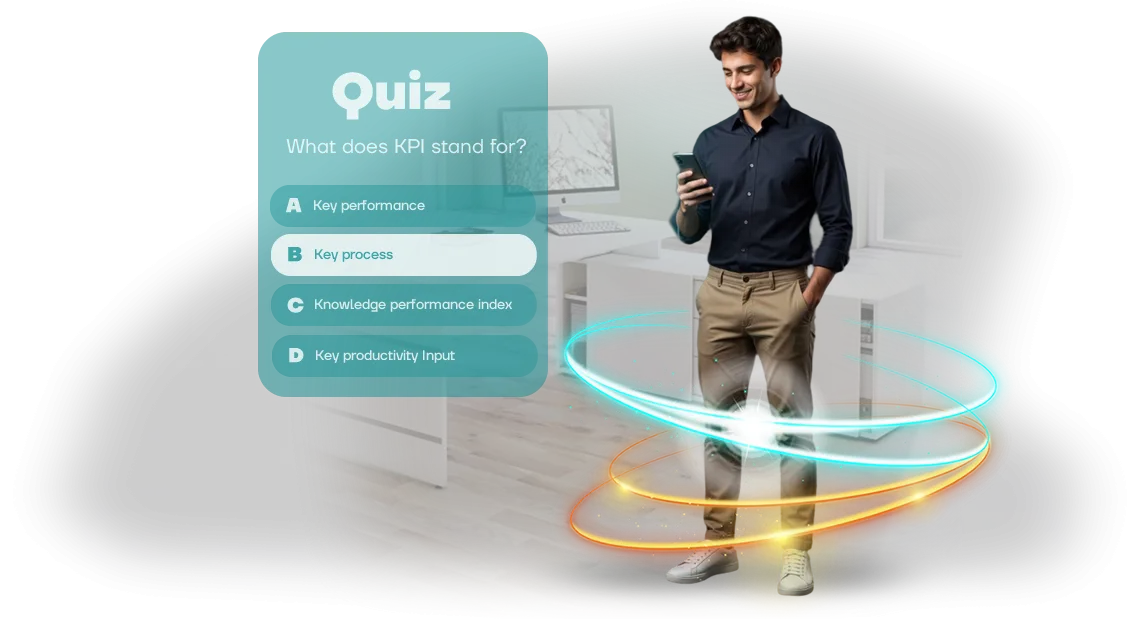
מדוע עובדים מאבדים עניין בלמידה ללא Corporate Minimalist
הדרכה ארגונית נכשלת לעיתים קרובות לא בגלל תוכן חלש, אלא בגלל האופן שבו היא מוצגת. שקופיות צפופות, שפע של צבעים, טקסט קטן ורשימות אינסופיות — כל אלה מעמיסים על המוח.
תוך דקות ספורות, תשומת הלב של העובדים נודדת, והם מתחילים לדפדף בחומר בצורה מכנית מבלי לזכור את הנקודות המרכזיות.
ללא סביבה ויזואלית מעוצבת היטב, אפילו ידע בעל ערך לא זוכה לתשומת לב. הסגנון Corporate Minimalist פותר בעיה זו: מסכים נקיים, אלמנטים מסיחים מינימליים, היררכיית מידע ברורה.
העובדים לא צריכים לפענח תרשימים מורכבים — הם מיד רואים את העיקר ועוקבים בקלות אחר תרחיש ההדרכה.
גישה זו אינה רק אטרקטיבית יותר — היא פועלת למען תוצאות. כאשר הרעש הוויזואלי נעלם, המעורבות בלמידה גדלה: אנשים מתעייפים פחות, שומרים על ריכוז לאורך זמן רב יותר וסופגים חומר טוב יותר.
כתוצאה מכך, הדרכת עובדים מפסיקה להיות פורמליות ומתחילה להניב ערך מדיד לעסק.
אנו משלבים את המכניקות המוכחות של תוכניות חינוכיות עם הסגנון Corporate Minimalist. כל מסך חידון עוזר לשמור על תשומת לב, כך שהעובדים מגיעים לסוף הקורס וחוזרים בשמחה לנושאים הבאים.
זו בדיוק הגישה שהופכת הדרכה ארגונית לכלי לצמיחה, לא לנטל חובה.
מה מקבלים מחידון עם גרפיקת תלת-ממד
הדרכה ארגונית נתפסת לעיתים קרובות כפורמליות. עובדים עונים על מבחנים "למראית עין" ושוכחים את החומר תוך שבוע.
אם אתם צריכים הטמעה אמיתית של כללים, שקופיות וסקרים סטנדרטיים לא מספיקים — אתם צריכים סביבה מרתקת ששומרת על תשומת לב ויוצרת חיבור רגשי לתוכן.
גרפיקת תלת-ממד בהדרכה הופכת חידון עובדים מסקר משעמם למרחב משחק. במקום טקסט שטוח, האדם רואה סצנות תלת-ממדיות שמקושרות למצבי עבודה אמיתיים.
תמונות כאלה נזכרות באופן טבעי: המוח שומר מידע טוב יותר כשהוא מוצג דרך פעולה וחוויה ויזואלית.
העיקר הוא מעורבות הצוות. מכניקת משחק עם עולם עשיר ויזואלית מעוררת עניין אפילו אצל אלה שבדרך כלל רק סובלים הדרכות. עובדים עוברים את החידון לא באופן פורמלי, אלא מתוך רצון לחקור את המרחב, לענות על שאלות ולשפר את התוצאות שלהם. זה מעלה את שיעורי השלמת הקורס ומקצר את הזמן המושקע בהסבר חוזר של כללים.
יתרון נוסף הוא חיזוק מותג המעסיק. משחקי הדרכה בסגנון Corporate Minimalist נראים מודרניים ויוקרתיים: קווים נקיים, פלטת צבעים רגועה, גרפיקה מסודרת.
הדרכה כזו מראה דאגה לפיתוח הצוות ויוצרת תחושה שהחברה מתקדמת עם הזמן. זה גם עובד על התדמית החיצונית כשעובדים משתפים את ההתרשמות שלהם.
בסופו של דבר, אתם מקבלים חידון שפותר שלוש משימות בבת אחת: מגביר מעורבות עובדים, משפר את שימור החומר ומחזק את מותג משאבי האנוש.
יתר על כן, סגנון העיצוב מתאים למינימליזם הארגוני שלכם, ותהליך ההכנה אינו דורש מכם ידע טכני.
פורמטים של חידוני הדרכה בסגנון Corporate Minimalist
חידון הדרכה הוא לא רק מבחן, אלא כלי שפועל למען תוצאות עסקיות: הוא משבץ עובדים חדשים מהר יותר, בודק ידע ללא לחץ ושומר על תשומת לב.
חידון ארגוני בסגנון Corporate Minimalist פותר משימה זו ללא רעש מיותר: ממשק תמציתי, ניווט ברור, ושום דבר שלא יסיח את דעת העובד מהחומר.
אנו משתמשים בשלושה פורמטי חידון בסיסיים — כל אחד מכסה צורך משלו. הם משתלבים בקלות, והבחירה תלויה במה שהצוות שלכם צריך: להציג נושא, לבדוק מה נלמד, או לתרגל מיומנות עד שהיא הופכת לאוטומטית.
| פורמט | למי | מה הוא נותן ללקוח |
|---|---|---|
| סקר קל | לכל העובדים כשצריך להעריך במהירות הבנה של נושא | מעורבות תוך 5–7 דקות, מספק סטטיסטיקת צוות אנונימית ומראה מיד אזורים בעייתיים |
| מסע לעובדים | לצוותים שצריכים ללמוד מוצר, תקנה או נוהל תוך כדי פעולה | הופך הדרכה למשחק: עובדים עוברים בין מיקומים, מיישמים ידע בתרחישים וזוכרים חומר דרך תרגול |
| סימולטור הדרכה | לעובדים שצריכים תרגול בטוח לפני משימה אמיתית | מאפשר לטעות ללא השלכות, בודק החלטות אוטומטית ומכין עובדים לעבוד בביטחון |
אנו עוזרים לכם לבחור פורמט או לשלב אותם לתוכנית אחת — למשל, להתחיל בסקר קל ואז להשיק מסע לחיזוק.
כל הפורמטים עובדים בסגנון Corporate Minimalist אחיד ומתאימים בקלות לעיצוב המותג שלכם, כך שההדרכה נראית מגובשת ומקצועית.
איך אנחנו מפתחים חידון: 6 שלבים
בנינו את תהליך פיתוח החידון כך שתמיד תדעו מה קורה ומה תקבלו כתוצאה. אין "קופסאות שחורות": אחרי כל שלב, אתם רואים תוצאה ביניים ויכולים לערוך שינויים כשזה עדיין זול מבחינת זמן. להלן ששת השלבים שהפרויקט שלכם עובר.
שישה שלבים של יצירת הדרכה
-
בריף חידון — שאלון קצר או שיחה: אנו דנים בקהל, מטרות, רמת קושי של שאלות וסגנון עיצוב. אתם מקבלים מסמך עם היקף עבודה ולוח זמנים קבועים.
-
תרחיש ומכניקות — אנו מפתחים את קו העלילה, מבנה השאלות, פורמט המשוב ומערכת הניקוד. בשלב זה, אתם מאשרים את החלק הטקסטואלי ואת לוגיקת ההתקדמות.
-
אב-טיפוס בסגנון Corporate Minimalist — אנו בונים את הגרסה הבסיסית: ממשק, מסכים, מעברים. אתם רואים איך החידון נראה ומרגיש לפני שמשקיעים משאבים בגרפיקה סופית.
-
מודלים ומיקומים בתלת-ממד — באמצעות מנוע Unity המקצועי, אנו מרנדרים חללים וירטואליים לשאלות, דמויות ואובייקטים באסתטיקה ארגונית מאופקת. התוצאה היא סגנון ויזואלי מזוהה שתומך במותג.
-
אישור חידון — אנו מספקים גרסת עבודה לבדיקה עם עובדים, אוספים משוב ומבצעים תיקונים. אתם מקבלים את ההחלטה כשהכל עובד כמתוכנן.
-
השקה ותמיכה — אנו מפרסמים את החידון, מגדירים גישה ותומכים בפרויקט לאחר ההשקה: אנו עוקבים אחר יציבות, מעדכנים שאלות ומוסיפים בלוקים חדשים.
התוצאה היא תהליך חלק וצפוי ללא הפתעות. כל שלב ביצירת הדרכה מסתיים בתוצר ברור — מהבריף ועד חידון עובד שניתן לגשת אליו מטלפון או מחשב. אם צריך, אנו משנים תוכן או מרחיבים פונקציונליות לאחר ההשקה.
מה כלול בחבילת מסירת החידון
כשאתם מזמינים חידון הדרכה, חשוב להבין בדיוק מה אתם מקבלים. אנו מרכיבים חבילת מסירה מלאה — כך שאחרי מסירת הפרויקט, תוכלו להשיק הדרכה ללא מעורבות של מומחים נוספים או אישורים מיותרים.
החבילה כוללת:
- תרחיש חידון — שאלות ואפשרויות תשובה מפותחות היטב בנושא שלכם, עם הסברים לפתרונות נכונים. התרחיש מתאים לרמת המיומנות של העובדים ולמאפייני החברה שלכם.
- מודלים ומיקומים בתלת-ממד בסגנון Corporate Minimalist — עיצוב ויזואלי שתומך בסגנון העסקי של המותג ואינו מסיח מהתוכן ההדרכתי. כל האובייקטים נוצרים באופן אישי לפרויקט.
- מדריך מנהל — הוראות שלב-אחר-שלב כיצד להשיק את החידון, להגדיר גישה לעובדים ולייצא תוצאות. זה מאפשר לכם להעביר הדרכה בעצמכם ללא פנייה למפתחים.
- חומרי הדרכה לעובדים — תזכורות קצרות וטיפים שעוזרים למשתתפים להבין במהירות את הממשק ולהתמקד בשאלות במקום בפרטים טכניים.
- פאנל ניהול — כלי פשוט שדרכו אתם מעדכנים שאלות בעצמכם, משנים מועדי סיום וצופים בסטטיסטיקה לכל עובד.
- תיעוד טכני — תיאור של כל הפונקציות והיכולות של החידון הנדרשות לתקנות פנימיות ולשיפורים עתידיים.
כל פריט בחבילה נבדק יחד עם הלקוח: אתם מקבלים את הגרסה הסופית שתואמת בדיוק לציפיות, לא "טיוטת מפתח." אנו משתמשים בכלים מוכחים, כולל Unity, כך שהחידון פועל ביציבות על מחשבים ומכשירים ניידים של עובדים.
לאחר מסירת החבילה, נשאר לכם מוצר ברור שקל לשלב בתהליכים קיימים. ואם צריך לעדכן שאלות או להוסיף תרחישים חדשים — כבר יש לכם הוראות ותמיכה מהצוות שלנו.
מקרה בוחן: איך חידון הגביר מעורבות עובדים
רשת בתי מרקחת עם מאה סניפים התמודדה עם בעיה טיפוסית: רוקחים תפסו הדרכה כפורמליות ושכחו מידע מפתח על תרופות חדשות אחרי התדריך. כתוצאה מכך, מהירות השירות ירדה וההמרה למכירות נוספות נפלה.
מנהל ההדרכה רצה לא רק "סימון השלמה" אלא שינוי אמיתי בביצועים.
הצוות שלנו הציע להפוך את ההדרכה לחידון בסגנון Corporate Minimalist — ממשק נקי ללא פרטים מסיחים, סבבים קצרים וניווט ברור.
העובדים שיחקו במשחק מהטלפונים שלהם בזמנים נוחים, והמערכת הראתה מיד אילו נושאים בפיגור. היישום ארך שלושה שבועות — מהבריף ועד ההשקה.
תוצאות היישום
חודש לאחר ההשקה, מעורבות העובדים גדלה ב-40%: במקום "חובה," החידון הושלם מרצון ואפילו שוחק שוב לתוצאות טובות יותר.
הציון הממוצע במפגשי הערכה עלה ב-25%, והזמן המושקע בלמידה על תרופה חדשה קוצץ בחצי — הרוקחים מוצאים מידע נדרש מהר יותר בממשק המשחק.
הם גם ציינו את ההשפעה על עובדים חדשים: הם נקלטים מהר יותר כי החידון משתמש באותו סגנון ויזואלי כמו התקנים הפנימיים של הרשת. בונוס נחמד נוסף — מנהלי בתי המרקחת קיבלו אנליטיקה ברורה לכל עובד ללא איסוף דוחות ידני.
אחרי ההשקה הראשונה, הלקוח הזמין חידון שני למחלקה אחרת, ולאחר מכן סדרה קבועה של עדכונים. אנו ממשיכים לפתח את המשחק: מוסיפים שאלות חדשות, מתאימים רמת קושי ועוקבים אחר תוצאות הדרכה יחד עם הלקוח.
איך לבחור פורמט חידון למשימה שלכם?
אין פורמט אוניברסלי — הבחירה תלויה במשימה שההדרכה פותרת. היכרות ראשונית עם מוצר או תקנה דורשת גישה אחת, בעוד שבדיקות ידע קבועות דורשות גישה שונה לחלוטין.
אם מערבבים ביניהם, העובדים או מאבדים מוטיבציה להדרכה או "עוברים" את המבחן באופן פורמלי מבלי לספוג את החומר.
להדרכה ראשונית, עומק ההתעמקות חשוב: עובד חדש עובר תרחיש מסועף שבו תשובות שונות מובילות לתוצאות שונות, ועוזר לו לזכור את לוגיקת ההחלטות.
פורמט זה מספק הקשר ששאלון פשוט לא יכול להעביר — האדם לא רק משנן תשובות נכונות אלא מבין איך ליישם אותן בפועל.
לבדיקות ידע קבועות, פורמט קצר עובד טוב יותר — 5–7 שאלות פעם בחודש. הוא לא דורש התנתקות ממשימות עבודה, אורך לא יותר מכמה דקות ומראה את הדינמיקה של שליטה בחומר.
חידון קצר משמש כאינדיקטור: אם שיעור התשובות הנכונות יורד, זה אות למנהל שצריך הדרכה חוזרת או סקירת טעויות צוות.
יש גם אפשרות ביניים — "בדיקה לפני פעולה": למשל, תרחיש שעובד עובר לפני השקת תהליך חשוב או עבודה עם לקוח.
הוא משלב את החוזקות של שתי הגישות: פורמט קומפקטי אבל עם התעמקות מלאה במצב. פורמט זה מפחית את הסיכון לטעויות ברגע קריטי ומגביר את ביטחון העובד.
אנו עוזרים לכם לבחור פורמט למשימה הספציפית שלכם: אנו מחשבים את העומס על הצוות, תדירות השלמות ועומק החומר.
העיקרון המרכזי הוא שהחידון צריך לפתור בעיה עסקית, לא להיות רק "מבחן לשם מבחן." בחירה ברורה של פורמט חוסכת זמן לעובדים ונותנת למנהל תמונה שקופה של רמת המיומנות של הצוות.
שאלות נפוצות על פיתוח חידונים
אנו שומעים לעיתים קרובות את אותם ספקות מלקוחות לפני שהם מחליטים לפתח חידון הדרכה. לכן ריכזנו תשובות לשאלות החשובות ביותר — על לוחות זמנים, ערבויות והתאמה לסגנון המותג.
כמה זמן לוקח פיתוח חידון?
חידון סטנדרטי למותג ולמשימות שלכם מוכן תוך 1–3 שבועות. לוח הזמנים המדויק נקבע בחוזה לאחר הבריף ואינו משתנה במהלך העבודה.
האם אפשר להתאים את החידון לסגנון הארגוני?
כן, אנו משתמשים בצבעי המותג, בלוגו ובפונטים, ויוצרים את העיצוב בסגנון Corporate Minimalist התמציתי. החידון המוגמר ייראה כמו חלק מהמערכת האקולוגית שלכם ויהיה מזוהה לעובדים.
אילו ערבויות אתם מספקים?
כל ההתחייבויות מפורטות בחוזה: לוחות זמנים, היקף עבודה, תנאי תיקונים. בשלב הבדיקות, אתם מבצעים עריכות, ורק לאחר אישורכם החידון נכנס לפעולה.
מה קורה אחרי ההשקה?
אנחנו לא נעלמים אחרי המסירה. ניתנת תמיכה טכנית: אנו עוזרים לעדכן שאלות, להוסיף עובדים חדשים ולעקוב אחר יציבות. אפשר לפנות אלינו בכל עת.
מוכנים לדון בחידון שלכם?
השאירו פנייה — ובשיחה הראשונה תבינו איך חידון משתלב בתוכנית ההדרכה שלכם ואילו משימות הוא יפתור. אנחנו לא מוכרים "מוצר ארוז": קודם מקשיבים, אחר כך מציעים פורמט והערכה לתרחיש, לתקציב וללוח הזמנים שלכם.
ספרו לנו מה אתם רוצים ללמד את העובדים שלכם ואיזו תוצאה אתם מצפים. בתגובה, נשלח מבחר מעבודותינו בסגנון דומה ותוכנית יישום — כך שתוכלו לראות את היקף העבודה והערך לפני שאפילו מתחילים.
מה תקבלו אחרי הפנייה:
- ייעוץ: נסקור את התרחיש שלכם, מטרות ההדרכה ונציע מכניקות חידון שיחזיקו את תשומת לב העובדים;
- הערכה מוקדמת: חישוב שקוף להיקף שלכם, ללא תוספות נסתרות או "הפתעות" בדרך;
- דוגמאות פרויקטים שהושלמו: נראה איך פתרנו משימות דומות בענף שלכם — כך יהיה לכם קל יותר להחליט;
- המלצות כיסוי: נייעץ כיצד לערב צוותים מבוזרים ולבדוק ידע מבלי להפריע לעבודה;
- תוכנית ברורה ולוח זמנים: מהיום הראשון, אתם יודעים מתי תקבלו את החידון המוגמר ואילו שלבים נעבור;
- תמיכה לאחר השקה: נעזור לשלב את החידון במערכת ה-LMS שלכם, לעדכן שאלות כשהחומר משתנה ולבצע עריכות במהירות.
השאירו פניית פיתוח — נגיב תוך יום עסקים, נבהיר את הפרטים ונציע פתרון שיחזק את ההדרכה ויניב תוצאות מדידות. נתחיל בייעוץ: נדון במשימה שלכם ונראה איך החידון שלכם יכול להיראות.