

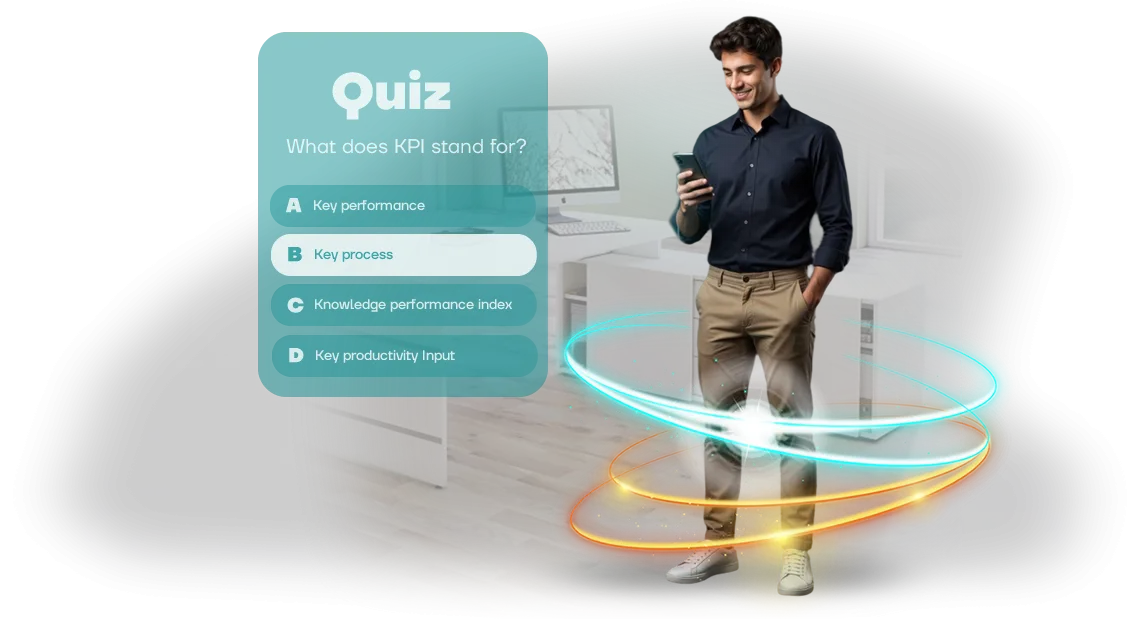
מדוע מינימליזם בחידוני תלת-ממד משפר את שיעורי השלמת ההכשרה
העובדים כבר עמוסים במשימות: תהליכים חדשים, דרישות דיווח, מדיניות פנימית. כשמוסיפים לזה הכשרה בצורת מצגת נוצצת או סצנת תלת-ממד עמוסה עם עשרות פרטים מסיחים, המוח מתעייף עוד לפני השאלה הראשונה.
גרפיקה מורכבת לבדה לא עוזרת לאנשים לזכור את החומר — היא יוצרת רעש ויזואלי שמוריד ריכוז והורג את הרצון לסיים את הקורס. התוצאה היא שחידון הופך לתרגיל של סימון וי, שאנשים רוצים לסגור כמה שיותר מהר, ולא לכלי פיתוח.
מינימליזם בגרפיקת תלת-ממד עובד הפוך. כשהדמות, הפנים והממשק עוקבים אחרי סגנון מאופק, עם פלטת צבעים מוגבלת ודגש ברור על העיקר, העובד מבין מיד לאן להסתכל ומה לעשות.
העומס הקוגניטיבי יורד: אין צורך לעבד רעש ויזואלי ואת משמעות השאלה בו-זמנית. תשומת הלב נשארת על התוכן — מה שאומר מעורבות גבוהה יותר ותשובות נכונות יותר.
צורות פשוטות קלות יותר לקריאה, כך שעובדים עוברים בין שאלות מהר יותר ולא מאבדים את ההיגיון של התרחיש.
מינימליזם גם מביא תועלת אסתטית. מראה נקי ומודרני נתפס כמקצועי ומעורר אמון: ההכשרה נתפסת כמוצר ארגוני מחושב, לא כפרויקט טכני חובבני.
זה משפיע ישירות על שיעורי ההשלמה — אנשים מוכנים יותר לסיים את הקורס, לשתף את ההתרשמות שלהם ולחזור לחזרות. כתוצאה מכך, פחות עובדים שואלים שאלות הבהרה, ועובדים חדשים נכנסים לקצב העבודה מהר יותר.
אנחנו משתמשים במודע בסצנות תלת-ממד מינימליסטיות לחידוני הכשרה. המיקומים שלנו בנויים על מנוע מקצועי, אבל המפתח כאן הוא לא הטכנולוגיה — אלא התוצאה: פחות הסחות דעת, שיעורי השלמה גבוהים יותר, ושימור עקבי של החוקים.
אם אתם מחפשים פורמט שבאמת מעסיק את העובדים שלכם, מינימליזם מספק בדיוק את רמת הפשטות שהופכת הכשרה ממטלה לתועלת.
היתרונות המרכזיים של מינימליזם במיקומי תלת-ממד לחידוני הכשרה
מינימליזם במיקומי תלת-ממד הוא לא דרך לחסוך בפרטים אלא פתרון מחושב להכשרה ארגונית. כשהממשק והסביבה לא עמוסים, עובדים מתמקדים מהר יותר בליבה של החידון — השאלות, התרחישים והחוקים. החלל עובד למען המשימה במקום להסיח ממנה.
היתרון הראשון הוא מהירות קליטת הידע. סביבה מינימליסטית מכילה אין רעש ויזואלי: כל אובייקט על המסך נושא משמעות. עובדים לא מבזבזים תשומת לב על פענוח פרטים מיותרים — הם מיד תופסים את מה שחשוב.
זה חשוב במיוחד כשצריך להכשיר צוות גדול בזמן קצר ולוודא שהידע באמת נטמע.
היתרון השני הוא שיעורי השלמה גבוהים יותר. מיקומים פשוטים וברורים מפחיתים עומס קוגניטיבי: אנשים לא מתעייפים משפע של צבעים וצורות, כך שקל יותר להגיע לסוף החידון.
התוצאה היא פחות תרחישים נטושים ויותר עובדים שמסיימים את ההכשרה וסופגים את החוקים המרכזיים. וזה אומר תוצאה עסקית חזקה יותר בשטח.
היתרון השלישי הוא התאמה קלה למותג של החברה שלכם. הסגנון המינימליסטי ניתן להתאמה מהירה לצבעי החברה, ללוגו ולשפת העיצוב הכללית. אתם מקבלים משחק הכשרה שנראה אורגני במערכת האקולוגית שלכם בלי שינויים ארוכים ויקרים. זה נוח אם אתם מתכננים לעדכן חידונים באופן קבוע עבור תקנות או מוצרים חדשים.
היתרון הרביעי הוא חיסכון בעיבוד. מינימליזם מקצר את זמן הפיתוח ואת עלויות הייצור של מיקומים כי הוא לא דורש טקסטורות מורכבות, פרטים עדינים או אפקטים ריאליסטיים. במקביל, האיכות נשארת גבוהה: מודלי תלת-ממד מקצועיים נראים נקיים ומודרניים. אתם מקבלים השקה מהירה של הכשרה ותקציב צפוי — בלי לאבד את אפקט המעורבות.
עבורנו, מינימליזם הוא כלי מודע, לא פישוט כפוי. אנחנו משלבים אותו עם מכניקת משחק כך שהחידון פותר את המשימה העסקית שלכם: הוא מאמן עובדים, בודק ידע ומניע אותם לחזור לחומר. התוצאה היא הכשרה שעובדת למען ה-KPI שלכם, לא רק תמונה יפה.
פורמטים של חידוני הכשרה למטרות עסקיות שונות
חידוני הכשרה נותנים מענה למשימות עסקיות שונות: הצגת מוצר, בדיקת ידע בתקנות, תרגול מיומנויות. אבל פורמט שאידיאלי להטמעת עובדים חדשים לרוב לא מספק כשמסמיכים עובדים מנוסים.
לכן אנחנו מתאימים את הפורמט למטרה ולקהל הספציפיים במקום פשוט למלא תבנית בשאלות.
להלן הפורמטים של חידונים שבהם אנחנו משתמשים בהכשרה ארגונית. הם נבדלים בעומק המעורבות, במורכבות ההכנה ובסוג התוצאה.
| פורמט חידון | קהל יעד | מה הוא מספק ללקוח |
|---|---|---|
| מבחן שאלות-תשובות קלאסי | הכשרה המונית, בדיקות ידע | תוצאות מהירות וסטטיסטיקה ברורה על כל הצוות |
| חידון אינטראקטיבי עם טיימר ורמזים | תפקידי מכירות ושירות שבהם מהירות התגובה חשובה | תרגול מיומנויות בתנאים קרובים למציאות |
| מסע תרחישים עם בחירות פעולה | מנהלים ומחלקות קשורות | פיתוח חשיבה מערכתית והבנת השלכות החלטות |
| מסע תלת-ממד בסגנון מינימליסטי | קו מוצר חדש, השקת הכשרה | חוויה בלתי נשכחת שמגבירה מעורבות ושימור ידע |
לא משנה איזה פורמט תבחרו, אנחנו מתאימים אותו למטרות העסקיות שלכם: אנחנו כותבים את התרחיש, מדמים את המיקומים ומכווננים את המכניקה. עבור מסעות תלת-ממד, אנחנו משתמשים ב-Unity כדי ליצור עולמות מינימליסטיים שרצים בצורה חלקה על כל מחשב עבודה.
אפשר גם לשלב פורמטים: להתחיל עם מבחן קצר ולסיים עם מסע תלת-ממד — זה הופך את ההכשרה לאירוע שאנשים זוכרים.
שלבי יצירת חידון הכשרה: מהבריף ועד ההשקה
בעלי עסקים ומנהלי הכשרה חוששים לעתים קרובות שפיתוח חידון ייקח חודשים וידרוש פיקוח מתמיד. אנחנו מבננו את התהליך כך שתוכלו לראות התקדמות בכל שלב ולהתערב רק בנקודות אישור מרכזיות.
- בריף ומטרות הכשרה. אנחנו עורכים ראיון קצר ומנתחים את הקהל ואת היעדים. אנחנו מסכמים על קריטריוני הצלחה: היקף, ציון ממוצע, זמן השלמה.
- קונספט ותרחיש. אנחנו מפתחים את מבנה החידון: נושאים, שאלות ומכניקת משחק. אנחנו קובעים את הטון ומאשרים את התרחיש לפני תחילת הייצור.
- סגנון ויזואלי. אנחנו יוצרים מיקומי תלת-ממד בסגנון מינימליסטי — חללים תמציתיים שעוזרים לעובדים להתמקד בלמידה. אנחנו משתפים רפרנסים וסקיצות לאישור.
- ייצור תוכן. אנחנו ממלאים את החידון בשאלות, תשובות ורמזים, ומגדירים את לוגיקת הניקוד. אנחנו מרכיבים מוצר שלם עם ממשק אינטואיטיבי.
- בדיקות ועידון. אנחנו בודקים על מכשירים שונים, מתקנים באגים ומבצעים אופטימיזציה למהירות הטעינה. אתם מקבלים גישת הדגמה לפני ההשקה.
- השקה ותמיכה. אנחנו פורסים את החידון לעובדים, מגדירים גישה ומכשירים מנהלים. אנחנו נשארים זמינים לעדכונים.
תהליך העבודה הזה מבטל הפתעות: אתם יודעים את לוח הזמנים מראש ושומרים על התקציב בשליטה. הסגנון המינימליסטי הופך את החידון למודרני וקל לניווט. אחרי ההשקה, אפשר לשנות שאלות או להוסיף חדשות — בלי להתחיל מאפס.
מה כלול במסירה: ערכת השקה מלאה
אתם מקבלים חבילה מוכנה לשימוש שניתן להשיק מיד אחרי המסירה. אין צורך להבין לבד, לחפש קבלנים או להיכנס לצד הטכני — הכל כבר מורכב ונבדק.
- מיקומי תלת-ממד ודמויות. חללים מינימליסטיים מושלמים: אזורי הכשרה מרובים, אווטארים ואובייקטים אינטראקטיביים. זה נותן לעובדים תחושה של משחק מודרני במקום הרצאה משעממת.
- ממשק ובקרות. מסכים מחושבים, ניווט ומערכת רמזים. עובדים מבינים מיד מה לעשות, ואתם לא צריכים להסביר איך החידון עובד.
- תרחיש עם שאלות בנושא שלכם. אנחנו ממלאים את החידון בשאלות שאתם מאשרים או משלבים את מאגר השאלות הקיים שלכם. אפשר לעדכן שאלות מאוחר יותר בלי מפתחים.
- מדריך מתודולוגי למנהלים. הוראות איך להשיק את החידון, לעקוב אחרי השלמה ולאסוף תוצאות. כל עובד יכול להתמודד עם זה, בלי רקע טכני.
- מיתוג לחברה שלכם. לוגו וצבעי חברה משולבים בממשק ובמיקומים. ההכשרה מרגישה טבעית, לא כמו אפליקציה של צד שלישי.
- תיעוד טכני ותמיכה. תיאור של כל הרכיבים, בתוספת בדיקות סופיות על מחשבים שונים. אתם מקבלים מוצר יציב בלי הפתעות ביום ההשקה.
החבילה הזו הופכת פיתוח מותאם אישית למוצר סטנדרטי שנשאר אצלכם. אפשר להשתמש בו כמה פעמים שצריך ולעדכן את התוכן ככל שהחברה גדלה.
מקרה בוחן: איך מינימליזם בעולם תלת-ממד הגדיל את ההשלמה ב-40%
עבור רשת ההיפרמרקטים "פלטפורמה", פיתחנו חידון להכשרת עובדים על תקני שירות לקוחות חדשים. בעבר, ההכשרה כללה הוראות טקסט ומבחנים — וכמעט מחצית מהצוות נטש אותה באמצע. המשימה הייתה פשוטה: להפוך הכשרה שאנשים באמת רוצים לסיים.
הצענו פורמט חידון תלת-ממד: עובדים נעים במיקומים מינימליסטיים ועונים על שאלות. ההחלטה המרכזית הייתה מינימליזם. במקום סצנות עמוסות, שמר�ו על צורות נקיות, פלטת צבעים רגועה ואובייקטים אינטראקטיביים גדולים.
זה מפחית עומס קוגניטיבי: עובדים לא מוסחים מרעש ויזואלי, הם מתמקדים בנרטיב ובשאלות.
היישום רץ על Unity — פלטפורמה שמבטיחה סצנות תלת-ממד מהירות ומגיבות. המיקומים עקבו אחרי העיקרון של "נושא אחד, חלל אחד": מחסן, אולם מכירות, אזור קופה. כל פרט שירת תפקיד ולא קישוט. זה גם האיץ את הפיתוח — כל החידון נבנה בשלושה שבועות.
התוצאות עלו על הציפיות. חלק העובדים שסיימו את ההכשרה גדל ב-40% — מ-48% ל-68%. זמן ההשלמה ירד בשליש כי עובדים הפסיקו לקרוא מחדש הוראות ועברו ישר לפעולה.
במקביל, הציון הממוצע במבחנים הסופיים לא ירד — מינימליזם לא פישט את התוכן, הוא הסיר את העודף.
ראינו גם שאחרי השקת החידון, מספר הפניות למוקד התמיכה של המערכת הפנימית ירד — עובדים זכרו את הנהלים טוב יותר. הלקוח היה כל כך מרוצה מהתוצאה עד שהזמין חידון שני להטמעת עובדים חדשים.
המקרה הזה מראה בבירור שמינימליזם בעולם תלת-ממד עובד למען העסק: הוא מגביר מעורבות, מקצר את זמן ההכשרה ומעלה את אחוז העובדים שמסיימים את הקורס עד הסוף.
מה אם עובדים לא אוהבים מינימליזם? התייחסות לחששות
כששומעים "מינימליזם" בהקשר של הכשרה, מתחילים ספקות: מה אם העובדים ימצאו את זה משעמם, או שהסגנון לא מתאים למותג שלנו?
למעשה, מינימליזם הוא בדיוק מה ששומר על הפוקוס בחומר ועוזר להבנה — ואנחנו פותרים את החששות האלה עם גישות מוכחות.
האם עובדים ימצאו מינימליזם משעמם?
שעמום נובע מכאוס, לא מפשטות. בפורמט החידון הזה אין עומס: כל תשומת הלב הולכת לשאלה ולתשובות. השחקן לא צריך להבין את הממשק — הוא צולל לתהליך כמעט מיד וסופג את החומר. פחות רקעים ואנימציות מסיחים — תוצאות מבחנים גבוהות יותר.
האם מינימליזם נראה פשוט וזול מדי?
זה לא פישוט — זה אריזה. אנחנו ממלאים את התרחישים במשימות מרתקות, רמזים בלתי צפויים ומכניקה מחושבת: הצורה נשארת נקייה והתוכן נשאר עשיר. הצגה כזו נתפסת כמוצר פרימיום ומודרני.
מה אם הסגנון מתנגש עם המותג שלנו?
אנחנו מתאימים את הפלטה, הטיפוגרפיה ועיצוב הדמויות להנחיות המותג שלכם. מינימליזם הוא לא תבנית — זו גישה: צבעי חברה וסגנון משתלבים בה באופן טבעי, והמשחק נראה אורגני לעובדים שלכם.
כפי שמתברר, מינימליזם הוא לא מגבלה — זה כלי מיקוד. הוא מסיר את העודף, עוזר לעובדים להתרכז וממקם את ההכשרה כפורמט מודרני שמכבד את הזמן שלהם. עבור כל חברה, אנחנו מתאימים את הסגנון ואת רמת הקושי כך שהחידון משתלב בצורה חלקה בשגרת העבודה ומגביר מעורבות.הזמינו חידון תלת-ממד מותאם אישית לעובדים שלכם
הזמנת חידון תלת-ממד לעובדים שלכם מתחילה בפנייה קצרה — זה כל מה שאנחנו צריכים כדי לצלול למשימה שלכם. אנחנו לא מציעים פתרונות מוכנים: קודם אנחנו מבררים איזה ידע צריך לחזק, מי יעבור את החידון ואיזו תוצאה אתם רוצים להשיג. אחר כך אנחנו בוחרים את הפורמט, הסגנון והתרחיש שיתאימו למטרות שלכם.
מה נעשה אחרי שתשלחו את הפנייה:
- ניצור איתכם קשר בזמן נוח ונשאל שאלות הבהרה: נושא ההכשרה, רמת הקושי, מספר העובדים וההיקף הרצוי.
- נבחר את הסגנון הוויזואלי למיקומי התלת-ממד ולממשק — ממינימליסטי ועד עשיר יותר, בהתאם למותג שלכם.
- נפתח את מבנה החידון: סבבים, סוגי שאלות, מגבלות זמן, מערכת רמזים ומדדי תוצאה.
- נציע אפשרויות אינטגרציה עם תוכנית ההכשרה שלכם — מהשקה חד-פעמית ועד מפגשים חוזרים עם עדכוני שאלות.
- נכין הצעה מסחרית עם לוחות זמנים ברורים ותמחור שקוף, בלי שלבים נסתרים או תשלומים נוספים.
- אחרי האישור, נעצב את מודלי התלת-ממד והמיקומים, נרכיב את החידון ונבדוק אותו על מחשבים וטאבלטים.
- יחד איתכם, נבדוק את המוצר המוגמר, נבצע תיקונים ונעזור לכם להשיק את ההכשרה לכל העובדים.
בסופו של דבר, אתם מקבלים חידון תלת-ממד מוכן שמשתלב בתוכנית ההכשרה שלכם ומניע עובדים לעבד את החומר. אם אתם לא בטוחים לגבי הפורמט עדיין — אין בעיה: בייעוץ הראשון, נציע אפשרויות ונראה דוגמאות מהעבודה שלנו.
שלחו פנייה, ונשוחח על הפרטים, נמצא את הסגנון המתאים ונכין הצעה מסחרית המותאמת במיוחד למשימה שלכם.