

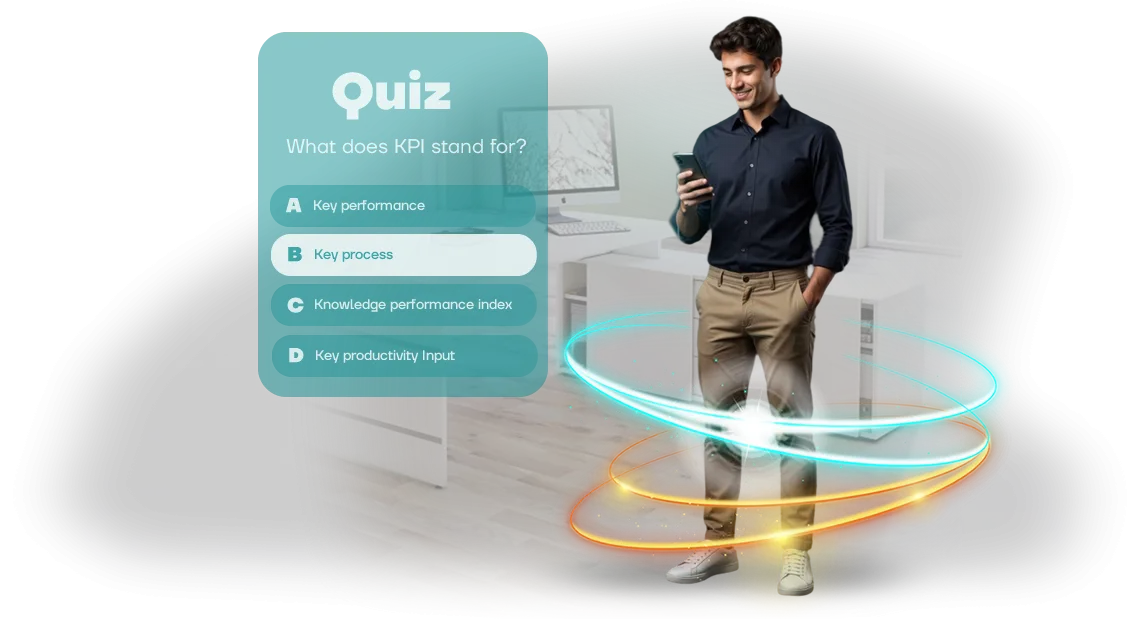
תדריכים משעממים לא עובדים: חידוני Blueprint
כל בעל עסק יודע: אפילו התדריך המעוצב ביותר נשכח תוך שבוע. העובדים מהנהנים במהלך ההכשרה החובה, אבל תוך חודש הם חוזרים להרגלים הישנים—עם טעויות, בזבוז זמן וסיכונים.
האשם הוא הפורמט: מצגות ארוכות ומסמכים יבשים לא מעוררים עניין, ובלי עניין אין שימור ידע.
הפתרון הוא להפוך את ההכשרה לחידון. אבל לא מבחן משעמם עם שאלות—אלא פורמט Blueprint: שרטוט טכני מתעורר לחיים, העובד רואה את התהליך מבפנים, עונה על שאלות ומקבל משוב מיידי.
זה הופך את הלמידה למשחק, ואת המשחק לכלי לתוצאות עסקיות אמיתיות: פחות טעויות, קליטת עובדים מהירה יותר, ומעורבות גבוהה יותר עם הנהלים.
פורמט ה-Blueprint יעיל במיוחד לתפקידים טכניים, מכירות ושירות—בכל מקום שבו חשוב להבין איך תהליך עובד, לא רק לשנן נקודות.
העובד לא רק קורא מדריך; הוא רואה איך העבודה בנויה: שלבים, רכיבים, חיבורים. החידון שומר על תשומת הלב, והאלמנט התחרותי מוסיף התרגשות.
עבור העסק, זה אומר תוצאות מדידות. מנהלים רואים מי באמת קלט את החומר ומי רק "סימן נוכחות." מעורבות ההכשרה גדלה, שיעורי הטעויות החוזרות יורדים, והנהלים מתחילים לעבוד בפועל במקום לשבת כקובץ על השרת.
אנחנו יוצרים את חידוני ה-Blueprint האלה לצרכים הספציפיים של החברה שלך: מקליטת עובדים ועד לבדיקות ידע תקופתיות. אנחנו מנתחים את התהליך שלך, הופכים אותו לשרטוט ויזואלי, וממלאים אותו בשאלות שבאמת חשובות לתפקיד. השאר הוא עניין של ביצוע: העובדים נהנים ללמוד, ואתם נהנים לראות תוצאות.
אילו יתרונות מביא חידון הכשרה לעסק
חידון הכשרה הוא לא רק מבחן—זה כלי שמשנה את הדרך שבה עובדים מתייחסים ללמידה. במקום הוראות משעממות, אנשים מקבלים משחק עם חוקים ברורים, משוב מהיר והתרגשות.
בצוות שלנו אנחנו משתמשים בפורמט הזה כדי לגרום להכשרה לעבוד באמת עבור העסק ולהניב תוצאות מדידות.
הנה היתרונות העיקריים שתקבלו:
-
פיתוח מיומנויות בלי לעצור את העבודה. העובדים משלימים סבבים קצרים בכל זמן שנוח להם, רואים מיד את הטעויות שלהם וסוגרים פערי ידע. אין צורך לאסוף קבוצה באולם הרצאות—הכל קורה בקצב של יום העבודה.
-
שיפור מדדים. חזרה קבועה בפורמט משחק עוזרת לשמר ידע. אחרי כמה מחזורים, מספר הטעויות יורד באופן ניכר, מהירות ביצוע המשימות עולה, והאינטראקציות עם הלקוחות משתפרות.
-
נאמנות ומעורבות. אלמנטים תחרותיים, דירוגים ותגמולים יוצרים התרגשות בריאה. העובדים חוזרים להכשרה מיוזמתם במקום לחכות לתזכורת כפויה.
-
שימור ידע. החידון ממסמר תקנים, נהלים ופרטים טכניים בזיכרון ארוך הטווח. עובדים חדשים משתלבים מהר יותר, ומנוסים לא שוכחים את מה שחשוב.
-
אנליטיקה שקופה. אתם רואים אילו נושאים נשלטו ואיפה הצוות מתקשה. זה לא ניחוש—זה נתונים: מי מוכן, מי צריך עוד עבודה, ואיפה למקד את ההכשרות הבאות.
כל חידון מותאם למשימה שלכם: לצוות קדמי, למנהלים או לכל החברה. כבר יצרנו והשקנו עשרות משחקי הכשרה—ברמות קושי וסגנונות ויזואליים שונים. ספרו לנו את המטרה שלכם, ונראה לכם איך חידון יכול לעזור לכם להשיג אותה.
פורמטים של חידוני Blueprint לאתגרים עסקיים
בחירת פורמט החידון קובעת אם ההכשרה באמת פותרת אתגר עסקי: הכנסת עובדים חדשים למוצר, בדיקת ידע או גיוס צוות לתחרות.
חידון Blueprint משלב מודל תלת-ממדי עם היגיון של שרטוט טכני: העובד מתקשר עם האובייקט, מוצא רכיבים ועובד דרך רצף ההרכבה במקום רק להיזכר בתיאוריה.
המשתתפים רואים מיד את התוצאה של פעולותיהם, ואתם מקבלים תמונה אובייקטיבית: מי שלט בחומר ומי צריך עבודה נוספת.
| פורמט | למי | מה הוא נותן ללקוח |
|---|---|---|
| מסע הכשרה מבוסס שרטוט | עובדים חדשים, מתמחים | התעמקות מהירה במוצר בלי הרצאות—חקירת המודל התלת-ממדי במקום שקופיות |
| הערכה לפי רכיבים וחלקים | צוותי ייצור, צוותי תחזוקה | בדיקת ידע אובייקטיבית: ברור אילו סעיפים גורמים לקושי |
| טורניר קבוצתי | מחלקות ויחידות סמוכות | מעורבות ורוח תחרותית: החומר נזכר דרך משחק |
הפורמט נבחר לפי המשימה: מסע עובד לקליטה, הערכה לבקרת ידע וטורניר לבניית צוות. אם צריך, אפשר לשלב תרחישים: קודם הכשרה, אחר כך בדיקה, ולבסוף תחרות.
אנחנו עוזרים לכם לבחור את הפורמט בשלב התדריך: אנחנו מתחשבים במספר המשתתפים, בזמן הפנוי ובמדד שאתם צריכים—שיעור השלמה, חלק התשובות הנכונות או כיסוי ההכשרה. החידון נבנה מהשרטוטים והמודלים התלת-ממדיים שלכם בסגנון Blueprint.
איך מפתחים חידון: שלבים ובקרה
עבור הלקוח, יכולת החיזוי חשובה: צריך להיות ברור מה קורה, מי אחראי על מה ומתי התוצאה תהיה מוכנה.
בנינו את פיתוח החידון כסדרה של שלבים קצרים—בכל אחד מהם אתם רואים תוצאה ביניים ויכולים לבצע שינויים לפני שנמשיך הלאה.
- תדרוך ומטרות — אנחנו מקיימים שיחה, קובעים את הנושא, הקהל והתרחיש: מה העובדים צריכים לזכור ואיך לבדוק את זה. אנחנו מסכימים על הפורמט—מבוסס טקסט, עם וידאו או בסגנון שרטוט טכני, כמו Blueprint.
- מבנה ותרחיש — אנחנו מרכיבים שאלות, אפשרויות תשובה והסברים. אתם מאשרים את התוכן: הוא נשאר כולו ברשותכם וניתן לשימוש חוזר בתוכניות הכשרה עתידיות.
- עיצוב ומכניקה — אנחנו יוצרים את הסגנון הוויזואלי: סגנון שרטוט קפדני, תעשייתי או קרוב למותג שלכם. אנחנו מגדירים את היגיון הזרימה, הניקוד והרמזים—כדי שגם עובדים חדשים וגם מנוסים ימצאו את זה ברור.
- בניית אב טיפוס — אנחנו מרכיבים גרסה עובדת. לסצנות בסגנון Blueprint אנחנו משתמשים ב-Unity—זה נותן גרפיקה חלקה ועיבוד עקבי במכשירים של הצוות שלכם.
- בדיקות ותיקונים — החידון עובר בדיקות פנימיות, ואז אתם מקבלים קישור לבדיקה. כלולות שתי סבבי תיקונים: אנחנו מתקנים שאלות, ניסוחים, תזמון פריימים וממשק—לפני שהחידון מגיע לעובדים.
- השקה ותמיכה — אנחנו מפרסמים את החידון לשימוש שלכם: כגרסת web, בפורטל הארגוני או במערכת LMS. אנחנו עוזרים בהשקה ובמידת הצורך מרכיבים דוח השלמה.
לוחות הזמנים תלויים בהיקף ובמורכבות: חידון טיפוסי עם 15–30 שאלות לוקח 2–3 שבועות. בכל שלב אתם מקבלים תוצר ברור—תרחיש, עיצוב, אב טיפוס, גרסת בדיקה—כך שהתהליך נשאר שקוף וניתן לניהול מלא.
מה כלול במסירה של חידון לעובדים
כשאתם מזמינים חידון, אתם מקבלים ערכה מלאה להפעלת הכשרה. היא מכילה כל מה שמנהל משאבי אנוש או מנהל צריך: המשחק, חומרי הגדרה ונתוני תוצאות. עם הערכה הזו, אתם יכולים להשיק הכשרה בלי לערב מפתחים.
חבילת המסירה כוללת:
- משחק מוכן בסגנון שרטוט טכני (Blueprint): מודלים תלת-ממדיים ומיקומים מטביעים את העובדים באווירה של דיוק הנדסי ושומרים על תשומת הלב עד הסוף.
- תוכן מותאם לפרטים שלכם—שאלות ותרחישים המותאמים לנהלים ולתהליכים הטכנולוגיים שלכם.
- היגיון תרחיש ומשימה: רצף, רמזים ומשוב כדי שהעובדים יבינו מה מצופה מהם.
- פאנל ניהול—אתם יכולים לשנות שאלות, תקופות גישה וחוקי השלמה בעצמכם, בלי לפנות למפתחים.
- הוראות למשתתפים ולמנהל—מדריכים קצרים על איך לעבור את החידון ואיך להגדיר אותו לקבוצת עובדים.
- דוח תוצאות—נתונים לכל משתתף: מי השלים, איזה ציון, איפה היו הטעויות. זה משמש בסיס לבדיקות ידע והתאמות הכשרה.
כל רכיבי החבילה נמסרים אחרי בדיקות: אתם מקבלים כלי עובד שניתן להשתמש בו מיד—לקורס קליטה לעובדים חדשים, לבדיקות אחרי הכשרה או להערכת מיומנויות תקופתית.
אם משהו לא נחוץ או חסר, נדון בזה במהלך התיאום ונתאים את המסירה. אנחנו רוצים שתקבלו בדיוק את הסט שמאפשר לכם להשיק הכשרה במהירות ולראות תוצאות.
מקרה בוחן: איך חידון הגדיל את שיעורי השלמת התדריכים
עבור חברות רבות, תדריכי בטיחות הופכים לפורמליות: עובדים לוחצים על שקופיות מכנית, ושבוע אחר כך הם עושים את אותן טעויות שוב.
זה היה האתגר שמפעל Technoprom הביא אלינו: הם היו צריכים שכללי הבטיחות באמת ייזכרו, לא רק "ייקראו."
פיתחנו חידון הכשרה בסגנון שרטוט טכני ויזואלי—Blueprint. במקום הרצאות משעממות, העובדים עברו תרחיש מבוסס משחק: מצבי עבודה במיקומים של רצפת הייצור, שאלות בטיחות ומשוב מיידי לתשובות נכונות. אפשר היה לשחק במשחק מכל מכשיר בלי צורך בהתקנה.
תוצאות אחרי ההשקה
- שיעור השלמת התדריכים בזמן עלה מ-61% ל-98% בקרב כל 240 העובדים.
- מספר הטעויות במבחנים ירד בשליש תוך מחזור אחד בלבד.
- העובדים השקיעו בממוצע 25 דקות בשבוע בחידונים חוזרים—במקום שעתיים בפגישה.
- משאבי האנוש הפסיקו לאסוף חתימות נייר: הדוח נוצר אוטומטית.
ראש מחלקת הבטיחות ציין: "בפעם הראשונה ראיתי אנשים עוברים תדריך עם עניין אמיתי ובאמת זוכרים את הכללים." אחרי שלושה חודשים, המפעל הזמין חידון שני—המכסה את הנהלים החדשים.
שאלות נפוצות על פיתוח חידונים
לקוחות שואלים לעתים קרובות אם הפיתוח יימשך, אם קשה לשלב חידון בתהליכים קיימים ומי יתמוך במשחק אחרי ההשקה. הנה תשובות קצרות לשאלות המרכזיות—כדי שתבינו איך אנחנו עובדים ומה אתם מקבלים.
כמה זמן לוקח פיתוח חידון?
לוחות הזמנים תלויים בפורמט ובמספר השאלות. פרויקט טיפוסי לוקח שבועיים עד ארבעה: במהלך הזמן הזה אנחנו מטפלים בתרחיש, בתוכן, בעיצוב ובבדיקות. אם נדרשת אינטגרציה עם מערכת למידה פנימית, אנחנו מוסיפים כמה ימים לתיאום.
האם קשה לשלב את החידון במערכת שלנו?
לא. אנחנו בונים את החידון כמודול עצמאי שנפתח דרך קישור או מוטמע בפורטל הארגוני. אנחנו יכולים לחבר אימות ארגוני במידת הצורך, כך שהעובדים יוכלו להתחבר בלי שלבים נוספים. אתם לא צריכים לשנות את הפלטפורמה שלכם.
מי יתמוך בחידון אחרי ההשקה?
אנחנו לוקחים על עצמנו את התמיכה: אנחנו מעדכנים שאלות, מפקחים על פעולה חלקה ומתאימים את העיצוב למותג חדש במידת הצורך. אם עולות רעיונות לשיפור, אנחנו מבצעים את השינויים—אתם לא צריכים מפתח ייעודי בצוות.
האם נוכל לעדכן את השאלות בעצמנו?
כן, אנחנו יכולים להפעיל פאנל ניהול פשוט לפי בקשה. תוכלו לשנות שאלות, תשובות ותקופות השלמה בלי העזרה שלנו—זה נוח כשהחידון נמצא בשימוש קבוע.
אם יש לכם שאלות נוספות—אל תהססו לפנות אלינו ישירות. נכין הצעה למשימה שלכם ונראה דוגמאות של פרויקטים דומים.איך לבחור פורמט חידון שמתאים לצוות שלכם?
אין פורמט מושלם—יש פורמט שמתאים למשימה הספציפית ולמאפייני הצוות שלכם.
לפני שבוחרים בין מבחנים, מקרי מבחן או תרחישים, ענו על שתי שאלות: מה בדיוק אתם רוצים לשנות בהתנהגות העובדים, ומי הם האנשים האלה מבחינת רמת מיומנות. אם המטרה היא לבדוק ידע אחרי קורס, מבחנים קצרים עם תוצאות מיידיות עובדים היטב.
אם אתם צריכים ללמד אנשים לפעול במצבים לא סטנדרטיים, אי אפשר להימנע מתרחישים מעשיים וניתוח טעויות.
הקריטריון השני הוא הקהל. עולים חדשים צריכים חוקים ברורים והצלחות מהירות, או שהם יאבדו מוטיבציה כבר בשאלה השלישית. מומחים מנוסים, לעומת זאת, צריכים אתגר: שילובים מורכבים, מגבלות זמן ואפשרויות לא ברורות.
צוות שמשגשג על תחרות יגיב לדירוגים ולסיבובים קבוצתיים; מומחים רגועים יותר מועדפים על ידי סקירות מקרה מחושבות בלי מרוץ נגד השעון.
כדאי גם לשקול איך העובדים מתקשרים זה עם זה: עבור צוותים מבוזרים, היכולת לעבור את החידון בזמן נוח חשובה; עבור משרד, פורמט חי ושיתופי עובד טוב יותר.
הנקודה השלישית היא הצגה. תוכן למידה נספג טוב יותר כשהוא קשור לשפה ולדימויים המוכרים לצוות. לדוגמה, חידון שרטוט טכני בסגנון Blueprint עובד מצוין למהנדסים וקבוצות פרויקטים שמעריכים דיוק, היגיון ובהירות.
פורמט אוניברסלי עם מיני-סיפורים ומכניקת משחק מתאים לצוותים מעורבים שבהם המעורבות של כל משתתף חשובה. אנחנו משתמשים בכלי ויזואליזציה מודרניים על Unity כדי להפוך את ההכשרה לוויזואלית ושומרת תשומת לב—אבל הצד הטכני נשאר אצלנו, ואתם מקבלים כלי עובד.
העצה המעשית העיקרית: אל תבחרו פורמט "ישר מהראש"; במקום זאת, התחילו מאילוצים. כמה זמן יכול עובד להקדיש באופן ריאלי—חמש דקות בין משימות או שעה בסוף השבוע? אילו פערי ידע מופיעים הכי הרבה בעבודה היומיומית?
התשובות מצמצמות את האפשרויות לאחת או שתיים מתאימות. חידון טוב תמיד נותן לעובדים משוב: הוא לא רק מצביע על טעות—הוא מסביר למה התשובה הנכונה היא הנכונה. ככה בונים מיומנויות, לא שינון עיוור.
פורמט החידון הנכון הוא פשרה בין מטרה, קהל וזמן פנוי. הרכיבו תיאור קצר של הצוות והמשימות שלכם—נעזור לכם לבחור תרחיש מתאים, לא רק לארוז מחדש חומר לשאלות.
זה יחסוך לכם כמה איטרציות בדיקה ויניב תוצאה שגם ההנהלה וגם העובדים ישימו לב אליה.
שלחו בקשה וקבלו אב טיפוס חידון תוך 5 ימים
שלחו בקשה—וביום העסקים הבא נתחיל בייעוץ קצר. נבין את מי אנחנו מאמנים, אילו נושאים צריך לכסות ואיך החידון משתלב בהכשרת העובדים הנוכחית שלכם.
מיד אחרי זה, תקבלו הערכת עלות ולוחות זמנים שקופה—בלי שלבים נסתרים, בלי תוספות מפתיעות. אם הפורמט מתאים לכם, נראה אב טיפוס עובד תוך 5 ימים.
ככה העבודה מתנהלת:
- ייעוץ (יום 1) — אנחנו דנים במטרות, בקהל ובתרחיש החידון. אנחנו מבהירים איך למדוד תוצאות: השלמות, ציונים, ניסיונות חוזרים.
- הערכת עלות ותוכנית (ימים 1–2) — אנחנו קובעים את מספר השאלות, המכניקה והעיצוב. אתם מקבלים הערכת עלות ברורה ולוח זמנים להשקה.
- אב טיפוס תוך 5 ימים — גרסת חידון אינטראקטיבית בסגנון Blueprint: שרטוטים טכניים, מודלים תלת-ממדיים, היגיון שאלות ורמזים. זה כבר ניתן ללחיצה ומשחק.
- סקירה ותיקונים — אתם רואים את התוצאה בשידור חי, לא רק על הנייר. אנחנו מבצעים שינויים בתרחיש ובעיצוב עד לקבלה מלאה.
- השקה ותמיכה — אנחנו פורסים את החידון בפלטפורמה שלכם, עוזרים לחבר עובדים ואוספים את התוצאות הראשונות.
- צמיחת החידון — אחרי ההשקה, אנחנו מציעים בלוקים חדשים של שאלות ועדכוני מכניקה למשימות מתפתחות.
הודות לתהליך הזה, אתם מבינים את כל הפרטים לפני שמתחילים: עלות, לוחות זמנים והתוצאה שתקבלו. אב הטיפוס מסיר את הסיכון המרכזי—אתם רואים איך העובדים יתפסו את הפורמט ויש לכם זמן לחדד את התרחיש לפני הפריסה המלאה. שלחו בקשה—ובעוד 5 ימים נראה לכם דוגמה עובדת של חידון ההכשרה העתידי שלכם.