

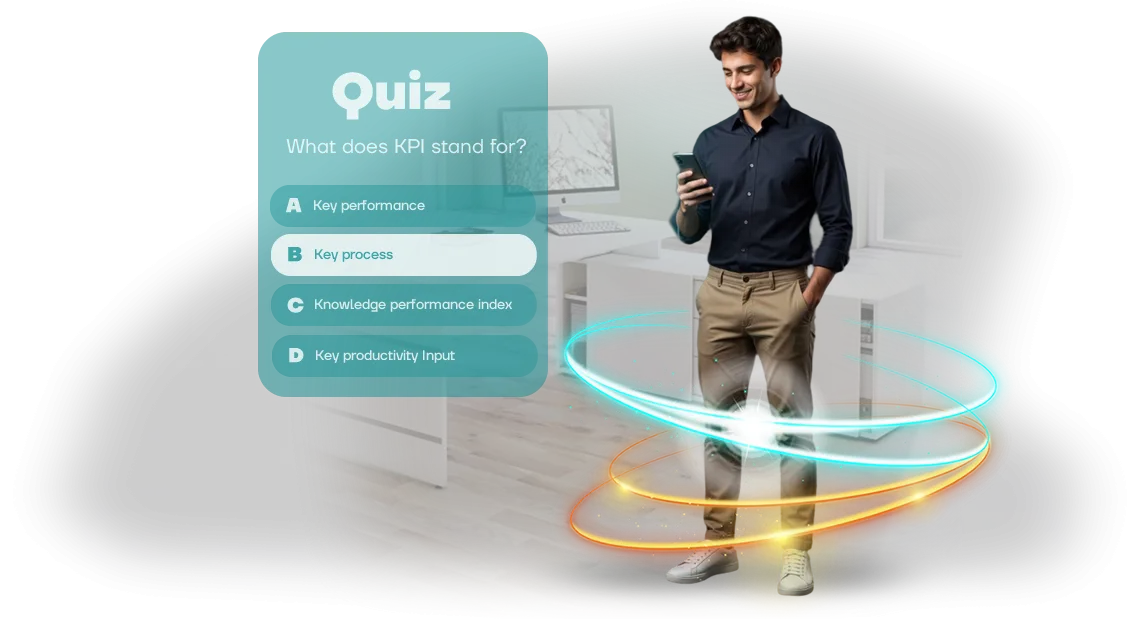
למה חינוך ארגוני לא מספיק: חידונים הם הפתרון
חברות משקיעות תקציבים רציניים בהכשרה ארגונית: קורסים, סדנאות, סמינרים. אבל שבוע או שבועיים אחר כך, העובדים חוזרים לשגרה הרגילה שלהם, והידע החדש נשאר כלוא במצגות.
מנהלים רואים את זה בטעויות, בתהליכים איטיים ובשאלות חוזרות—ומבינים: היעילות של ההכשרה קרובה לאפס.
למה זה קורה? הכשרה בנויה פעמים רבות כהרצאה: עובדים מקשיבים באופן פסיבי אבל לא מתחברים לחומר. בלי תרגול ומעורבות רגשית, מידע נעלם מהזיכרון במהירות.
כתוצאה מכך, ההשקעות לא מצליחות לייצר תוצאות מדידות—לא לעסק ולא לעובדים עצמם.
כדי שידע באמת יעבוד, מעורבות עובדים היא חיונית. אנשים זוכרים מה שהם עושים בעצמם, לא מה שהם רק ראו על מסך.
פורמטים אינטראקטיביים הופכים למידה מחובה למשחק: ההתרגשות נכנסת, הקשב גדל, והחומר נקלט דרך תרגול.
בדיוק בגלל זה אנחנו מפתחים חידונים חינוכיים. הם לא תחליף לתוכניות מלאות אלא כלי שהופך את החינוך ליעיל: עובדים עונים על שאלות, מיישמים ידע בתרחישים מציאותיים, ומיד רואים את ההתקדמות שלהם. הגישה הזו מכפילה את שימור החומר בהשוואה ללחיצה פסיבית על מצגות.
אנחנו עובדים מרחוק ובונים חידונים המותאמים למטרות עסקיות—מקליטת עובדים חדשים ועד בדיקות ידע על מוצר. העובדים משלימים אותם בקצב שלהם, ואתם מקבלים אנליטיקה ברורה לכל משתתף. הכי חשוב: ההכשרה מפסיקה להיות פורמליות ומתחילה להניב תוצאות.
גיימיפיקציה של למידה: יתרונות מרכזיים לחברה
הכשרת עובדים הופכת פעמים רבות לפורמליות: החומר נשכח תוך שבוע, והמעורבות צונחת כבר בשקופית השנייה. גיימיפיקציה מגבירה את יעילות ההכשרה על ידי הפיכת התהליך למשחק עם מטרות ברורות, תגמולים ומשוב.
הגישה שבה אנחנו משתמשים בצוות שלנו עוזרת לחברות לחרוג מעבר ל"השלמת קורס" בלבד ולשנות בפועל את התנהגות העובדים.
הנה היתרונות המרכזיים של גיימיפיקציה:
- מעורבות גבוהה יותר. עובדים משלימים הכשרה לא "לפרוטוקול" אלא כי זה באמת מעניין: תחרות ונקודות מעלות את המוטיבציה של הצוות.
- קליטת ידע מהירה יותר. תרחישים אינטראקטיביים ומשוב מיידי מבססים ידע פי 2-3 מהר יותר מהרצאות.
- תוצאות מדידות. המערכת מתעדת כל תשובה: אתם רואים אילו נושאים קשים ואיך הידע גדל לפני ואחרי החידון. ההכשרה הופכת לתהליך עסקי ניתן לניהול.
- סטנדרט אחיד וחיסכון בזמן. החידון קובע רף ידע משותף ומעביר ציפיות לכולם, בעוד סבבים קצרים של 10-15 דקות משתלבים ביום העבודה.
התוצאה היא הכשרה שעובדים משלימים בהתלהבות, ומנהלים רואים את ההשפעה שלה במספרים. בקשו מאיתנו חידון ניסיון—נדגים על הצוות שלכם איך המעורבות גדלה.
פורמטים של חידונים חינוכיים להכשרה ארגונית
הכשרה ארגונית לא יכולה להצטמצם לחידון אחד. קליטת עובד חדש, הסמכה שנתית וחיזוק מיומנויות אחרי סדנה פותרים משימות שונות—אז צריך פורמטים שונים.
להלן איך אנחנו מתאימים את סוג המשחק למטרה העסקית. המפתח הוא לא "לעשות חידון" אלא להשיג תוצאה מדידה: קליטה מהירה של עובדים, הערכת ידע אובייקטיבית או הפחתת אובדן מידע חודש אחרי ההכשרה.
| פורמט חידון | למי | מה זה נותן ללקוח |
|---|---|---|
| חידון קליטה | עובדים חדשים, מתמחים | היכרות עם המוצר והנהלים בפורמט קליל. מקצר את זמן הקליטה משבוע לכמה ימים. |
| משחק הסמכה | כל העובדים, בדיקות תקופתיות | נתוני ידע אובייקטיביים ללא לחץ על הצוות. המנהל רואה פערים לפי מחלקה ומתכנן הכשרה ממוקדת. |
| רענון אחרי הכשרה | משתתפי תוכניות הכשרה | מחזק את החומר אחרי 2-3 שבועות. משפר את שימור הידע ומכסה את עלויות ההכשרה. |
| חידון צוותי | מחלקות, צוותים שכנים | בונה תקשורת ותחרות בריאה. מניע אנשים ללמוד את החומר כדי לא לאכזב את הקולגות. |
בחירת הפורמט תלויה במקום שבו נקודת הכאב: תחלופה בשלב הקליטה, יחס פורמלי להסמכה או מיומנויות שנשכחות אחרי קורסים.
בצוות שלנו, במשך יותר מ-10 שנים הרצנו יותר מ-300 משחקים ארגוניים ולעתים קרובות משלבים פורמטים—לדוגמה, אנחנו משתמשים באותו מנוע חידון גם לקליטה וגם להערכות תקופתיות.
זה נוח: העובדים מתרגלים לממשק, ואתם מקבלים מאגר תוצאות אחיד בכל תחומי ההכשרה. הגישה הזו מקצרת את זמן ההכנה לכל משחק והופכת את מדידת הידע לשיטתית—לא לאירוע חד-פעמי.
שלבי פיתוח חידון: מבריף ועד השקה
תהליך שקוף הוא מה שמבדיל פרויקט צפוי מ"קופסה שחורה". אתם תמיד יודעים איפה עומד החידון, מה כבר נעשה ומה הלאה.
בנינו את זרימת העבודה כך שכל שלב מתואם איתכם ולא דורש מכם להיכנס לפרטים טכניים.
- בריף והבנת המשימה. אנחנו קובעים את מטרות ההכשרה, הקהל והנושאים. אתם מקבלים מסמך ברור עם יעדים וקריטריוני הצלחה.
- תוכנית ולוח זמנים. אנחנו מסכמים על שלבים, מועדים ופורמט החידון. אתם רואים נקודות בקרה ויודעים מתי רכיבים מרכזיים יהיו מוכנים.
- תסריט ושאלות. יחד אנחנו מחדדים את התסריט, ניסוח השאלות והלוגיקה של המשוב. אנחנו משלבים תיקונים לפני שההרכבה מתחילה.
- עיצוב וממשק. אנחנו מציגים אבות טיפוס של מסכים בסגנון מוכר—אתם רואים איך החידון ייראה לעובדים ומאשרים את הוויזואליה.
- בנייה ובדיקות. אנחנו מרכיבים את החידון על פלטפורמה מקצועית ובודקים אותו על פני מכשירים. אתם מקבלים גישת בדיקה ורואים את התוצאה לפני ההשקה.
- השקה ותמיכה. אנחנו פורסים את החידון במערכת הלמידה שלכם ועוזרים להגדיר גישה. אחרי ההשקה, אנחנו מספקים תמיכה: אוספים סטטיסטיקות, מעדכנים שאלות ומכניקות לפי הצורך.
כל התהליך אורך בין שבועיים לארבעה שבועות תלוי בכמות החומר. אתם שומרים על שליטה בלוח הזמנים ובתקציב בכל שלב, ואתם אישית מאשרים את התוצאה הסופית—בלי הפתעות ובלי "נסיים אחר כך".
מה כלול בחבילת החידון
אחרי ההשקה, אתם מקבלים לא תוכנת "קופסה" אלא חבילת חידון מלאה—כלי עבודה שחי ומתפתח עם החברה שלכם. המסירה כוללת את כל חומרי המקור והפתרונות כדי שההכשרה לא תיתקע אחרי ההשקה הראשונה.
- חומרי מקור — כל אלמנט שנוצר עבור החידון: טקסטים של שאלות, תסריט, עיצוב, גרפיקה. אתם נשארים הבעלים המלאים של התוכן ויכולים לשנות אותו ללא הצוות שלנו.
- פאנל ניהול — ממשק ידידותי לניהול שאלות, תשובות והגדרות. הוסיפו נושא חדש או התאימו שאלה תוך דקות—בלי צורך במתכנת.
- הוראות לצוות — מדריכים שלב-אחר-שלב להפעלה, ניהול ועדכון של החידון. אתם לא תלויים במומחה יחיד: הידע נשאר בתוך החברה שלכם.
- אנליטיקה ודוחות — סטטיסטיקות השלמה, תוצאות לפי מחלקה ודינמיקת ידע. אתם רואים אילו נושאים נשלטו ואיפה העובדים צריכים תמיכה נוספת.
- סמינר הכשרה לצוות — מפגש קצר שבו אנחנו מראים איך להשתמש בחידון ולהטמיע אותו במערכת הלמידה שלכם.
- תמיכה לאחר ההשקה — אנחנו מסייעים בהגדרה, עונים על שאלות ונשארים איתכם לאורך תקופת האחריות.
חבילת החידון הזו מכסה את כל צרכי הלקוח: אתם מקבלים לא פרויקט חד-פעמי אלא כלי הכשרה משלכם. חומרי המקור ופאנל הניהול מאפשרים לכם לעדכן תוכן בעצמכם, בעוד האנליטיקה חושפת אילו נושאים צריכים חיזוק או גישה חדשה.
במידת הצורך, אנחנו תמיד יכולים להרחיב את הפונקציונליות—לדוגמה, להוסיף פורמטים חדשים של שאלות או לשלב את החידון עם הפורטל הפנימי שלכם. בסופו של דבר, אתם משקיעים בפתרון שנשאר איתכם ומספק ערך בכל יום מחדש.
מקרה בוחן: איך חידון שיפר את תוצאות ההכשרה
רשת קמעונאית גדולה עם 400 עובדים בשש חנויות נתקלה בנקודת כאב מוכרת: רק 15% מהצוות השלימו הכשרת חובה. מחלקת משאבי אנוש בילתה שבועות על תזכורות, ובכל זאת מדדי איכות השירות נותרו נמוכים. הצענו להפוך מבחן משעמם לחידון קצר עם אלמנטים תחרותיים.
במקום שאלון סטנדרטי, בנינו חידון על Unity עם תרחישים מציאותיים ממצבי עבודה אמיתיים, משוב מיידי ולוח תוצאות מחלקתי.
רמזים אדפטיביים וגיימיפיקציה הפכו את התהליך לטבעי: עובדים השלימו הכשרה בין משימות בלי להקדיש זמן מיוחד.
התוצאות עלו על הציפיות: בתוך החודש הראשון, השלמת ההכשרה זינקה ב-80%—מ-15% ל-95%. ציון הבנת החומר הממוצע עלה בשליש, וזמן ההכנה נחתך בחצי.
ראש ההכשרה הארגונית ציין: "לראשונה, הצוות הזכיר לנו על הסבב הבא."
אחרי פיילוט מוצלח, החברה הזמינה שלושה חידונים נוספים למחלקות שונות—מקופאים ועד מנהלים.
החידון הפך לחלק מההכשרה השוטפת והשפיע ישירות על מדדי KPI: התחלופה בתקופת הניסיון ירדה, וציוני איכות השירות בבדיקות קונה מסתורי השתפרו.
המקרה הזה מאשר: חידון חינוכי הוא לא בידור—זה כלי צמיחה מדיד. פורמט מעוצב היטב מייצר תוצאות הנראות בדוחות ומכסה את עצמו בתוך החודש הראשון.
אם גם העובדים שלכם דוחים הכשרה—אולי הבעיה היא לא מוטיבציה אלא פורמט המסירה.
איך לבחור פורמט חידון למשימה של החברה שלכם?
פורמט חידון נבחר תמיד לפי המשימה, לא להיפך. אם אתם צריכים ללמד עובדים חדשים במהירות את כללי ההפעלה—זה תרחיש אחד. אם אתם צריכים לבדוק ידע אחרי קורס או לערב את הצוות באירוע ארגוני—זה תרחיש שונה לחלוטין. אנחנו לא מתחילים עם "איזה חידון נראה יפה יותר" אלא עם איזו תוצאה חשובה לכם.
חשבו מי ישחק ואיפה: כמה אנשים במשרד או עובדים מפוזרים על סמארטפונים. מורכבות המשחק, זמן ההשלמה ועלות הפיתוח של ההערכה תלויים בזה.
חידון פשוט לצוות קטן לא צריך פונקציונליות נוספת, בעוד טורניר כלל-חברה הוא סיפור אחר לגמרי.
מצב השימוש חשוב גם הוא. אירוע חד-פעמי דורש משחק בלתי נשכח עם לוחות תוצאות וטיימרים. להכשרה שוטפת של עובדים חדשים, פורמט קומפקטי עובד הכי טוב—כזה שבו קל לעדכן שאלות ונראית התקדמות אישית.
משימות חוזרות מטופלות טוב יותר עם פתרון שמאפשר לכם לרענן את החידון בלי פיתוח חדש.
בגלל זה אנחנו מתחילים עם בריף קצר: אנחנו דנים במטרות, בקהל, במספר המשתתפים ובאפקט הרצוי. אחר כך אנחנו מציעים שתיים או שלוש אפשרויות פורמט עם הבדל ברור בהיקף העבודה ובתוצאה הצפויה. אתם בוחרים לא "משחק" מופשט אלא פתרון המותאם לדרישות הספציפיות שלכם.
כך, אתם לא משלמים יותר מדי על תכונות שלעולם לא ישמשו, ואתם מקבלים חידון שבאמת פותר את הבעיה. אם יתברר אחרי ההשקה שאפשר לשפר את הפורמט, נחדד אותו על סמך המשוב שלכם.
חששות נפוצים של לקוחות לפני הזמנת חידון
אנחנו מבינים: לפני הזמנת חידון, יכולות להיות לכם שאלות—איך לשלב אותו בהכשרה הנוכחית, האם עובדים יתייחסו אליו ברצינות, וכמה אמין הכל יעבוד. להלן, אנחנו עונים על החששות הנפוצים שאנחנו שומעים מלקוחות במהלך דיונים.
האם קשה לשלב חידון בתהליכי הכשרה קיימים?
לא. אפשר להפעיל את החידון בפורטל הארגוני, במערכת ניהול הלמידה או פשוט דרך קישור—אתם בוחרים את הפורמט הנוח. מצידנו, אנחנו מגדירים את האינטגרציה כך שלא תצטרכו לשנות תהליכים מוכרים או לבזבז זמן על אישורים ארוכים.
איך אנחנו מבטיחים שעובדים ישתתפו במקום להגיב בספקנות?
הפורמט המשחקי מטבעו עולה על מבחנים רגילים: לוחות תוצאות, נקודות, מגבלות זמן ורוח תחרותית יוצרים התרגשות. אנחנו מוסיפים מכניקות שמתאימות לתרבות הארגונית שלכם—מתגמולים פנימיים ועד ניקוד קבוצתי. כתוצאה מכך, החידון מושלם כי הוא מרתק, לא בכפייה.
כמה מאובטח החידון, והאם נתוני עובדים מוגנים?
אנחנו משתמשים בארכיטקטורת שרת מקצועית ובפרוטוקולי הצפנה—לא תצטרכו לדאוג לדליפות או להשבתות. לפני ההשקה, אנחנו מריצים בדיקות מלאות בעומס שיא כך שמאות או אלפי עובדים יוכלו לגשת לחידון בו-זמנית ללא עיכובים.
מה קורה אחרי ההשקה—אם משהו משתבש?
אנחנו תומכים בפרויקט אחרי ההשקה: אנחנו פותרים בעיות במהירות, מתאימים תרחישים ומוסיפים שאלות חדשות. כל ההתחייבויות מתועדות בחוזה כך שאתם יודעים בדיוק במה אנחנו אחראים.
הגישה הזו קיימת כבר שנים—לקוחות חוזרים אלינו לחידונים חדשים בדיוק בגלל האמינות שלנו.
אם החשש שלכם לא מופיע כאן—שאלו אותנו ישירות, ונענה תוך יום עסקים אחד. אנחנו מפתחים חידונים חינוכיים לעסקים כבר יותר מעשור ויודעים איך להפוך את התוצאה לצפויה ואת התהליך לשקוף עבורכם.מוכנים לקבל חידון שעובד בשבילכם?
מוכנים להשיק הכשרה שעובדים משלימים בעניין אמיתי? אתם לא צריכים להבין במכניקת משחקים או להכין מפרט טכני. פשוט שלחו בקשת ייעוץ—אנחנו ניקח את התהליך משם, ותקבלו תוצאות בשלבים ברורים.
אחרי הפנייה הראשונה שלכם, תקבלו:
- ייעוץ על המשימה שלכם: אנחנו קובעים איזה ידע צריך להיבחן, מי הקהל, ובאיזו תדירות מתוכננת ההכשרה;
- בחירת פורמט חידון: שלבים, שאלות, שיטת ניקוד—מותאמים לסגנון שלכם, ללוח הזמנים ולתרבות הארגונית;
- קונספט השקה: איך המשחק ישתלב בהכשרה הנוכחית ומה יהפוך את ההשלמה למשמעותית ומהנה;
- תוכנית עבודה עם הערכה מפורטת לפי שלבים: אתם רואים על מה אתם משלמים ויודעים מתי המשחק המוגמר יהיה מוכן;
- שאלות לדוגמה ותצוגות עיצוב מקדימות: תבינו מראש איך החידון נראה ומרגיש לעובד;
- גרסת בדיקה לפני ההשקה: אנחנו מאמתים את תסריט המשחק עם קבוצת מיקוד או משתמשי פיילוט שלכם;
- מנהל ייעודי: איש קשר אחד לכל השאלות, בלי קפיצה בין מחלקות או אובדן הקשר.
אנחנו ממעטים להגביל את עצמנו למשחק אחד: אחרי ההשקה, מגיעים נושאים חדשים, עדכוני שאלות והרחבה למחלקות אחרות. בגלל זה אנחנו בונים את הפתרון כבר מהבקשה הראשונה כך שיהיה קל להרחיב ולהתאים.
כדי להזמין חידון או להתחיל עם פורמט פשוט, שלחו בקשת ייעוץ. ניצור איתכם קשר תוך יום עסקים אחד, נענה על השאלות שלכם ונכין הצעה אישית.