

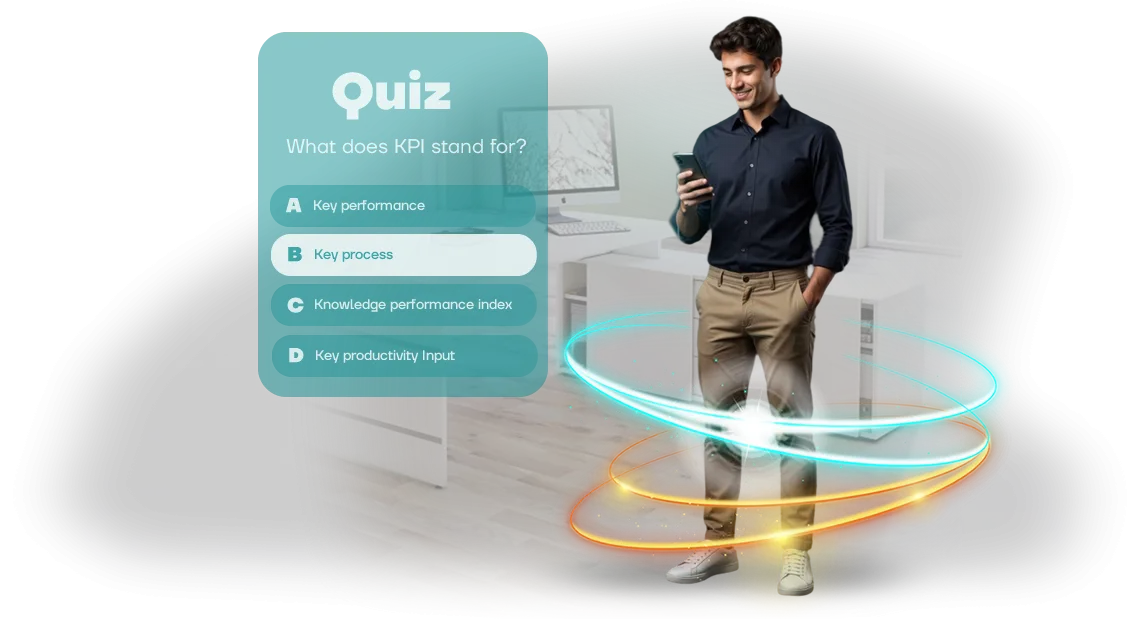
מדוע עובדי בניין משתעממים במהלך ההדרכה?
בענף הבנייה, המחיר של טעות גבוה במיוחד: הפרת טכנולוגיה, תקנות בטיחות או נהלים עלולה לעלות בלוחות זמנים, במוניטין ואפילו בחיי אדם. לכן הכשרת עובדים כאן אינה פורמליות אלא הכרח.
עם זאת, תדריכים סטנדרטיים, הרצאות ומצגות ברוב החברות נתפסים כמטלה: אנשים יושבים, מוסחים על ידי הטלפונים שלהם, וזוכרים רק חלק קטן מהחומר.
זוהי הבעיה הקלאסית של הדרכה — הידע לא נצמד, ושבוע לאחר מכן נשארים רק זיכרונות מקוטעים.
הסיבה אינה עצלנות של עובדים ולא מדריכים גרועים. המוח הבוגר בנוי כך שהקשבה פסיבית מפסיקה במהירות להחזיק תשומת לב. כאשר עובד צופה בשקופיות במשך שעה, המעורבות שלו צונחת תוך 10–15 דקות.
זה בולט במיוחד באתר בנייה, שבו אנשים רגילים לעבודה פעילה עם הידיים ולא לרישום הערות. התוצאה היא נוכחות פורמלית במקום הבנה אמיתית, טעויות בשטח ובדיקות נוספות.
הדרכה אינטראקטיבית משנה גישה זו. חידון צוות הופך הערכת ידע למשחק: שאלות רב-ברירתיות, תרחישים מהחיים ומשוב מיידי. עובדים מתחרים, מנתחים מקרים ורואים את הפערים שלהם.
פורמט זה מחזיק תשומת לב, גורם לאנשים לחשוב ומחזק זיכרון באמצעות פעולה. עבור חברות בנייה, משמעות הדבר היא שהכשרת עובדים הופכת לכלי שימושי ולא לבזבוז זמן.
הטמעת חידונים בתהליך ההדרכה פותרת את הבעיות העיקריות של ההדרכה — פורמט לא מעניין, מעורבות נמוכה וחוסר הערכת תוצאות.
עובדים זוכרים מהר יותר תקני בטיחות, הוראות וכרטיסים טכנולוגיים, ומנהל תמיד רואה מי באמת הבין את החומר ומי זקוק לחזרה נוספת.
כתוצאה מכך, מספר ההפרות יורד, פחות זמן מושקע בהסברים חוזרים, ורמת המיומנות הכוללת של הצוות עולה.
כיצד חידונים מגבירים מעורבות צוות וידע
הדרכה טיפוסית לעובדי בניין ומנהלי עבודה היא הרצאות ומסמכי PDF. הם קוראים אותם רק כדי לסמן וי, ובתוך שבוע התקנות המרכזיות נשכחות.
זה מוביל לטעויות בשטח, עבודה חוזרת ושאלות שצריך לחזור עליהן מספר פעמים, בתוספת שעות של זמן מנהל לתדריכים חוזרים.
יתרון החידון: מעורבות עובדים באמצעות תחרות
חידון הופך בדיקת ידע למשחק: עובדים עונים על שאלות, רואים את התוצאות שלהם ומשווים אותן עם עמיתים. זה מפעיל מוטיבציה פנימית — אנשים חוזרים לחומר בעצמם כדי לשפר את הציונים שלהם. ציון קבוצתי בין צוותים מוסיף התרגשות בריאה ורצון להתעמק בנושא.
יתרון החידון: בקרת ידע ללא עצירת עבודה
מנהלים רואים מי קלט את כללי הבטיחות, עבודה עם תיעוד או כרטיסים טכנולוגיים ומי לא. אין צורך לאסוף צוות בחדר ישיבות: המבחן נעשה ישירות באפליקציה, והתוצאות נאספות בדוח ברור. כך קל להבין איזה נושא צריך תשומת לב בישיבת התכנון הבאה.
יתרון החידון: חוסך זמן הדרכה ומפחית טעויות
חידון אחד בנוי היטב מחליף מספר שעות של תדריכים פנים אל פנים. בדיקות קבועות במתכונת משחק מפחיתות את מספר ההפרות: עובדים זוכרים דרישות טוב יותר ופועלים פחות על אוטומט.
לעובדים חדשים, זו כניסה מהירה לתקני החברה; לעובדים מנוסים, זה שומר על חדות המיומנויות.
אנו מפתחים חידונים כאלה לצרכים של חברות בנייה, מתקנים ארגוניים ועד דרישות בטיחות תעסוקתית. אפשר לשחק בטלפון, בטאבלט או במחשב, ואנחנו מטפלים בצד הטכני ובתוכן השאלות.
השאירו פנייה — נראה לכם איך ייראה חידון עבור הצוות שלכם ואילו תוצאות הוא יכול להשיג.
פורמטים של חידונים לבנייה: ממבחן למשחק
חידוני בנייה הם לא רק דרך לבדוק ידע. הפורמט הנבחר קובע אם עובדים ישמרו את כללי הבטיחות, טכנולוגיות העבודה והתקנות.
בשלבים מסוימים, מבחן מהיר מספיק; באחרים, צריך משחק חידון מלא שמערב ומלמד ללא שעמום.
להלן טבלה המראה כיצד לבחור פורמט למשימה של החברה שלכם.
| פורמט | לאיזו משימה | מה הוא נותן לחברה |
|---|---|---|
| מבחן חידון | בדיקת ידע מהירה לאחר תדריך | פרופיל שגיאות ברור לכל עובד, זמן מינימלי להשלמה |
| חידון עם הסבר תשובה | לימוד כללי בטיחות והפרות אופייניות | עובדים רואים את הטעות שלהם ומיד לומדים את התשובה הנכונה; הידע מתחזק ללא תדריכים חוזרים |
| חידון תחרותי קבוצתי | הגברת עניין בהדרכות בנייה | התרגשות ומעורבות, פעילות מוגברת, יחס פחות פורמלי לשיעורים |
| משחק חידון עם תרחישי אתר בנייה | תרגול תגובה למצבי חירום | מיומנויות קבלת החלטות מוכנות, פחות הפרות ותאונות |
חברות בנייה עוברות לעתים קרובות מפשוט למורכב: תחילה הן משיקות מבחן חידון כדי לבנות קו בסיס, ואז מוסיפות חידון עם ניתוח שגיאות, ולבסוף הופכות את ההדרכה למשחק חידון מונחה סיפור.
אנחנו תומכים בכם בכל שלב — עוזרים לבחור את הפורמט הנכון, למלא אותו בתקנות שלכם ולהשיק אותו כך שעובדים ייקחו את ההדרכה בעניין.
שלבי פיתוח חידון בנייה: מבריף ועד השקה
פיתוח חידון לענף הבנייה אינו רק אוסף שאלות — זה כלי שמדבר בשפת העובדים שלכם: בטיחות, הערכות, תקנים ומצבים אמיתיים בשטח.
ביצענו עשרות פרויקטים כאלה ואנחנו יודעים להפוך חומר טכני לחידון מרתק שאנשים באמת רוצים לעשות.
- בריף והבנת התחום. אנו מכירים את המטרות שלכם: מה אנחנו בודקים — ידע, מוטיבציה או קליטת עובדים חדשים. אנו אוספים שאלות אמיתיות מהפרקטיקה שלכם, תקנות ונהלים פנימיים.
- סקר קהל. אנו קובעים את רמות המיומנות והמוטיבציה של השחקנים. זה מאפשר לנו לבחור טון שאלות, קצב ורמת קושי שעובדים לכולם.
- יצירת התסריט והשאלות. אנו מפתחים את מכניקת החידון: רב-ברירה, משימות מצביות, רצפים. לבנייה, אנו משתמשים לעתים קרובות בתרחישים של "בחר את הפעולה הנכונה בשטח".
- עיצוב וממשק. אנו מעצבים את החידון כך שיתאים לחברה שלכם: לוגו, צבעים, אייקונים ברורים. המשחק חייב להיות קל לשימוש גם לעובדים שלעתים רחוקות משתמשים במכשירים.
- יישום ואינטגרציה. אנו בונים את החידון על פלטפורמה מקצועית ומגדירים גישה: דרך טלפון, טאבלט או מחשב, במשרד או בשטח.
- בדיקות והשקה. אנו בודקים ביצועים במכשירים שונים, מתקנים בעיות ומשיקים. יחד אתכם, אנו מנתחים תוצאות ראשוניות ומשוב עובדים.
- תמיכה וצמיחה. אנו עוזרים לעדכן שאלות, להוסיף רמות חדשות וסטטיסטיקות כך שהחידון יישאר רלוונטי וישמור על מעורבות הצוות.
מה מקבלים עם החידון: חבילה ודיווח
אתם מקבלים חידון הדרכה פעיל לחלוטין המותאם למטרות חברת הבנייה שלכם. החבילה כוללת תוכן, ממשק אינטואיטיבי, דיווח וזכויות שימוש.
החבילה כוללת:
- תוכן מוכן: שאלות על בטיחות, תקנים ומצבים אופייניים בשטח. עובדים מנתחים מקרים אמיתיים במקום לשנן כללים יבשים.
- ממשק ברור: מותאם לטאבלטים ומחשבים, כפתורים גדולים, ניווט שאינו דורש הכשרה. אפשר להשלים את החידון ב-10–15 דקות בהפסקה.
- מערכת דיווח: תוצאות לכל עובד וצוות, אחוז תשובות נכונות וטעויות אופייניות. אפשר לראות אילו נושאים דורשים חזרה ומי זקוק להכשרה נוספת.
- רמת קושי מתכווננת וסיבוב שאלות: הסט מתאים לתפקידים ולרמות מיומנות — מעובד חדש ועד מנהל צוות.
- לוח ניהול: הוספת שאלות ושינוי תרחישים ללא מעורבות מפתחים.
- זכויות שימוש: אנו מעבירים את חומרי המקור והזכויות לחידון — תוכלו לפתח אותו הלאה בתוך החברה.
אנו מתאימים את הדיווח לפורמט שלכם: מטבלת ציונים פשוטה ועד אנליטיקה לפי מחלקה. כך תוכלו להעריך באופן אובייקטיבי את כיסוי ההדרכה ולהתאים את התוכנית בזמן.
כל החומרים נשארים שלכם: טקסטים, הגדרות, ממשק. במידת הצורך, אנו מתאימים את התוכן לתקנות חדשות או מרחיבים את החידון לחטיבות אחרות בחברה.
מקרה בוחן: חידון בנייה שיפר את הבטיחות בעבודה
ענף הבנייה הוא אחד הקשים להדרכה: לעובדים יש מעט זמן, ותדריכים נתפסים לעתים קרובות כפורמליות. כתוצאה מכך, כללי הבטיחות מופרים שוב ושוב, והמחיר של טעות הוא בריאות אנשים והשבתת פרויקטים.
יצרנו חידון עבור StroyAlliance, חברה שעובדת באתרים תעשייתיים. במקום מבחני נייר והרצאות, הכנו חידון קצר במתכונת משחק עם שאלות על בטיחות תעסוקתית, בטיחות אש והפעלת ציוד. עובדים עשו אותו בפורמט נייד — בטלפונים שלהם, בזמן נוח.
תוצאות
במשך ארבעה שבועות, 1,200 עובדי בניין ומנהלי עבודה השלימו את ההדרכה. זה לקח בממוצע 12 דקות, בעוד שתדריך נהג לקחת שעה.
והכי חשוב, מספר הפרות הבטיחות באתרים ירד ב-40%, ובדיקות המשך הראו שעובדים באמת זכרו את הכללים ולא רק סימנו וי.
מנהל הבטיחות התעסוקתית של החברה ציין: "לראשונה, לא היינו צריכים להכריח אנשים להתאמן — הם ביקשו גישה לחידון בעצמם. ראינו מספרים אמיתיים: מי השלים, איפה הפערים ואילו נושאים צריכים חיזוק. זה החליף עבורנו שלושה חודשים של תדריכים."
ניסיון שעובד
הפורמט הזה הוכיח עצמו כל כך נוח שהלקוח האריך את החידון לעונה חדשה והוסיף קורסים לעובדים חדשים. עכשיו ההדרכה אורכת דקות, ובטיחות האתר היא תהליך מבוקר עם סטטיסטיקות ברורות.
עבורנו, זה מאשר שפורמט משחק לא רק מבדר — הוא פותר בעיות עסקיות. אם אתם צריכים להעלות במהירות את רמת הידע של העובדים ולקבל תוצאות מדידות, בואו נדון במקרה שלכם בפגישת ייעוץ.
שאלות נפוצות על הטמעת חידוני עובדים
הטמעת חידון הדרכה בענף הבנייה מעלה בדרך כלל חששות: האם קשה להגדיר, כמה זמן ייקח, והאם אפשר להשתמש בחומרים משלכם? אספנו תשובות לשאלות אלה כדי שתוכלו להבין את התהליך והתוצאה מראש.
האם קשה מדי להטמיע חידון?
לא. אנו מטפלים בכל העבודה הטכנית: אנו מארחים את החידון בפלטפורמה שלכם, מגדירים גישה וחשבון אישי למנהל. אין צורך לערב מפתחים משלכם — פשוט שלחו את הקישור לעובדים שלכם.
מהם לוחות הזמנים ליישום?
פרויקט סטנדרטי לוקח 2–3 שבועות מרגע מסירת החומרים. אם התקנות והתדריכים שלכם כבר מוכנים, נוכל להשיק את החידון תוך שבוע.
אנו קובעים תאריכים מדויקים בחוזה ולוקחים אחריות על עמידה בהם — פספוס מועדים אינו אינטרס שלכם או שלנו.
האם אפשר להתאים את החידון לחומרים שלנו?
כן, זה הבסיס לגישה שלנו: החידון בנוי מהתדריכים שלכם, תקני בטיחות תעסוקתית, צווים פנימיים וכרטיסים טכנולוגיים. אנו מבנים את המסמכים לשאלות ברורות תוך שמירה על שפה מקצועית ותרחישי בנייה אמיתיים. כתוצאה מכך, עובדים רואים ניסוח מוכר וקולטים את החומר טוב יותר.
מה אם עובדים נתקלים בבעיות?
החידון עובד על מחשבים וסמארטפונים ללא התקנה, והממשק ברור לעובדים ללא הכשרה מיוחדת. אם בכל זאת עולות שאלות, צוות התמיכה שלנו פותר אותן במהירות כך שההדרכה לא מופרעת.
היישום לוקח זמן מינימלי ואינו דורש ידע מיוחד: אנו מטפלים בכל הנושאים הטכניים. השאירו פנייה להדגמה — נראה לכם חידון המבוסס על החומרים שלכם ונדון בפרטים אישיים.הזמינו חידון והתחילו הדרכה תוך שבוע
השאירו פנייה להזמנת חידון — ובתוך שבוע העובדים שלכם יתחילו להתאמן בפורמט חדש. מבננו את התהליך כדי להסיר מכם את כל הנטל הטכני: אין צורך להבין בפיתוח, לאשר גרסאות ביניים או לחפש קבלנים. פשוט תארו את המשימה — אנחנו נטפל בשאר.
לאחר הפנייה שלכם, אנו עורכים בריף קצר בטלפון או במסנג'ר, מבהירים את הנושא, רמת הקושי ומספר השאלות. לאחר מכן, תוך יום או יומיים, אנו מכינים תסריט, מאשרים אותו אתכם ומתחילים בפיתוח.
אתם מקבלים חידון 2D מוכן שניתן להפיץ מיד לעובדים — לא משנה כמה יש לכם: חמישה או חמש מאות.
מה מקבלים לאחר ההזמנה:
- תסריט ושאלות מאושרים תוך 48 שעות — ללא תיקונים ארוכים.
- חידון הבנוי על מנוע Unity המקצועי — מהיר, יציב וברור בכל מכשיר.
- התאמה לסגנון הארגוני שלכם: לוגו, צבעים, גופנים — עובדים יזהו מיד הדרכה מהחברה שלהם.
- מסירת גישה פשוטה: קישור או קובץ, ללא התקנה או הגדרה מסובכת.
- לוח ניהול עם תוצאות — אתם רואים מי עשה את החידון, מי טעה ואילו נושאים דורשים חזרה.
- היכולת לשנות שאלות לאחר ההשקה — עדכון חומרים ללא עיבוד מחדש של כל המשחק.
איך להתחיל: פשוט השאירו פנייה בעמוד זה או כתבו לנו במסנג'ר. נשיב עם הצעה מסחרית עם מחיר מחושב לאחר בדיקה ולוחות זמנים מדויקים — ללא עמלות נסתרות או אותיות קטנות. אם התסריט כבר מוכן, הפיתוח ייקח אפילו פחות זמן.
אל תדחו את ההדרכה: החידון מחזיר את עצמו עם ההחלטה הנכונה הראשונה שעובד מקבל באתר בנייה. השאירו פנייה עכשיו — ובעוד שבוע, הצוות שלכם יעבוד עם ידע חדש.
איך לבחור פורמט חידון למשימה של החברה שלכם?
המפתח לבחירת פורמט חידון הוא לקבוע איזו משימה הוא פותר: בדיקת ידע לאחר תדריך ראשוני, הצגת ציוד חדש או חיבור הצוות באירוע חברה.
זה קובע ישירות אם אתם צריכים משחק לשחקן יחיד עם שאלות חובה או טורניר קבוצתי עם מתח והתרגשות.
לענף הבנייה, שני מצבים אופייניים. אם אתם צריכים לוודא שעובדים קלטו תקני בטיחות ותקנות טכנולוגיות, חידון עם הסברים לאחר כל תשובה הוא הבחירה הטובה יותר — טעות הופכת לשיעור מיד.
אם המטרה היא להגביר מעורבות ולהרים את המורל, פורמט תחרותי עם לוח מובילים ופרסים לתוצאה הטובה ביותר מנצח.
הקריטריון השני הוא הקהל ותנאי ההשתתפות. מנהלי עבודה ועובדים בשטח עונים לעתים קרובות מהטלפונים שלהם בהפסקה,所以他们 זקוקים לחידון קצר של 5–7 דקות.
מנהלים ומומחי משרד יכולים להרשות לעצמם תסריט עמוק יותר של 15–20 דקות עם מקרים מהעולם האמיתי. אנו לוקחים בחשבון כמה זמן יש לעובדים, אילו מכשירים הם מעדיפים להשתמש וכמה מורכבות השאלות שהם מוכנים להתמודד איתן.
הפרקטיקה מראה שהתוצאות הטובות ביותר מגיעות לא מפורמט "אוניברסלי" יחיד אלא משילוב. לדוגמה, חידון בסיסי קצר לכל העובדים ואחריו חידון מפורט יותר לתפקידים מרכזיים. גישה זו מספקת כיסוי ידע מלא ללא העמסת יתר על אנשים.
אנו עוזרים לבחור את הפורמט בתחילת הפרויקט: אנו עורכים בריף, מנתחים משימות, קהל וסביבה, ואז מציעים שתיים או שלוש אפשרויות מתאימות עם הסבר על היתרונות של כל אחת.
אתם מקבלים לא רק משחק אלא כלי הדרכה עובד שמפחית את מספר השגיאות באתרים והופך את תהליך הערכת הידע לשקוף עבור ההנהלה.