

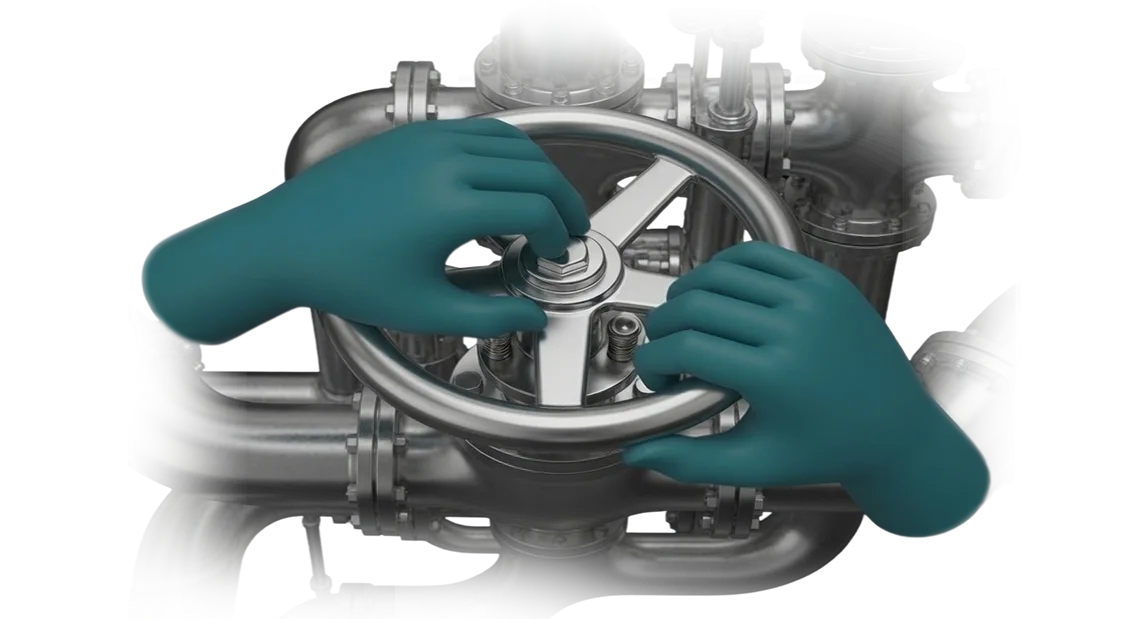
מדוע הדרכה בתחנת שאיבה אמיתית היא יקרה ומסוכנת
הדרכת צוות בתחנת שאיבה פעילה היא דילמה מתמדת בין יעילות לבטיחות. כל טעות של חניך בציוד אמיתי היא סיכון לתקלת ציוד, פציעה או תאונה עם השבתת ייצור יקרה.
המנהל חייב לאפשר לחניך לעבוד תחת פיקוח חונך, תוך הסחת דעתו של עובד מנוסה ממשימותיו, או למתוח את ההדרכה על פני חודשים.
עלויות ישירות מופיעות הרבה לפני המשמרת העצמאית הראשונה. פעולות הדרכה במתקן חי פירושן בלאי ציוד, צריכת חשמל וריאגנטים, ואובדן תפוקה בזמן השבתות.
במקביל, החלק היקר ביותר בהדרכה—תרגול תרחישי חירום—לא ניתן לביצוע במתקן אמיתי: אף אחד לא ייצור בכוונה אובדן בלימה או תקלת יחידת משאבה רק לשם תרגול.
כתוצאה מכך, הצוות שולט רק במצבי פעולה רגילים ונתקל במצב חריג לראשונה בתנאי לחימה אמיתיים. הסיכונים הייצוריים אינם פוחתים מכך—מחיר הטעות רק עולה יחד עם רמת האחריות.
סימולטור VR לתחנת שאיבה סוגר את הפער הזה: הוא מאפשר תרגול בטוח של כל תרחיש על עותק וירטואלי של הציוד, מאיץ את ההדרכה פי כמה, ואינו דורש השבתת ייצור.
מה סימולטור VR נותן למפעל תעשייתי: 5 יתרונות מרכזיים
רוב המפעלים התעשייתיים מתמודדים עם אותה בעיה: הדרכת צוות על ציוד אמיתי היא יקרה ומסוכנת, בעוד שהדרכה בכיתה אינה יעילה.
סימולטור VR מהצוות שלנו פותר בעיה זו: עובד נכנס לעותק וירטואלי של בית מלאכה או תחנת שאיבה שבו הוא יכול לפעול ללא השלכות. עבור הלקוח, זו לא רק טכנולוגיה אלא תועלת מדידה בכסף ובבטיחות.
-
בטיחות תעסוקתית. עובד חדש מתרגל מצבי חירום ללא סיכון לעצמו או לציוד. באמצעות VR ניתן לדמות נזילה, שריפה או תקלת מנגנון בתחנת שאיבה וירטואלית—טעות בסימולטור לא תעצור את הייצור.
-
חיסכון בעלויות הדרכה. אין צורך בצריכת חומרים, השבתת ציוד או שיתוף חונך. אותו תרחיש ניתן להריץ שוב ושוב ללא עלויות נוספות, והסימולטור מחזיר את השקעתו תוך מספר חודשים.
-
מהירות הדרכה. VR מאפשר ללומדים לשלוט בתהליכים פי 2–3 מהר יותר מאשר עם הוראות קלאסיות. העובד רואה מיד את ההשלכות של מעשיו וזוכר את האלגוריתם הנכון מהר יותר.
-
איכות הדרכה. כל החניכים עוברים תרחישים זהים, כך שרמת ההדרכה אינה תלויה במשמרת או במצב הרוח של המדריך. המערכת מתעדת כל פעולה וזמן תגובה, ומספקת נתונים אובייקטיביים להערכת צוות.
-
גמישות תרחישים. ניתן להתאים את הסימולטור בקלות למפעל ספציפי: פריסת ציוד, נהלים ואפילו מצבי חירום נדירים ניתנים לשינוי. זה מאפשר עדכון התוכנית ללא עצירת מחזור הייצור.
פורמטים של סימולטור VR לתחנת שאיבה המותאמים ליעדים עסקיים
כל חברה מתמודדת עם משימות שונות בהדרכת צוות: חלק מהעובדים צריכים להיות מוכשרים לעבודה בתחנת שאיבה מאפס, אחרים צריכים לתרגל פעולות במצבים חריגים, ואחרים צריכים הסבה לציוד חדש.
גישה אחת המתאימה לכולם רק לעתים רחוקות משיגה את התוצאה הרצויה, ולכן אנו מפתחים סימולטורי VR בשלושה פורמטים—המותאמים למטרה ספציפית ולהיקף הדרכה.
הפורמטים נבדלים לא בטכנולוגיה אלא בגישה: עומק ההתעמקות, היקף התרחישים ומידת ההתאמה לתחנה שלך.
זה מאפשר לך לבחור פתרון שמתייחס בדיוק למשימה שלך—מבלי לשלם יתר על אפשרויות נוספות, וללא מגבלות כשאתה זקוק לעותק מלא של המתקן.
| פורמט | למי | מה הוא נותן ללקוח |
|---|---|---|
| סימולטור מלא | עובדים חדשים, מרכזי הדרכה | התעמקות מלאה בעבודת תחנת שאיבה: מהפעלה ועד פעולות שגרתיות. הצוות שולט בכל התהליכים ללא סיכון לציוד, והזמן עד לכשירות מלאה מצטמצם באופן ניכר. |
| סימולטור מודולרי | צוות מנוסה, מחלקות בטיחות | תרגול מיומנויות ספציפיות ומצבי חירום—למשל, פעולות בזמן דליפות, כיבוי משאבה או שריפה. כל מודול פותר משימת הדרכה נפרדת וניתן לשימוש ממוקד. |
| פורמט מותאם אישית | מפעלים עם תשתית ייחודית | עותק דיגיטלי מדויק של תחנת השאיבה שלך, תוך התחשבות בפריסה, מכשירים אמיתיים ונהלים. ההדרכה מתבצעת במתקן מוכר, ומונעת שגיאות בהעברת ידע לציוד אמיתי. |
באיזה פורמט כדאי לבחור? אם יש לך תחלופת עובדים ואתה זקוק להדרכה שיטתית, סימולטור מלא מתאים. אם חשוב יותר להכין צוות במהירות למצבים נדירים אך מסוכנים—לך על תרחישים מודולריים.
וכאשר לתחנה שלך יש תצורה לא סטנדרטית, פתרון מותאם אישית יעיל יותר. אנו גם משלבים פורמטים: למשל, סימולטור בסיסי למתחילים ומודולים נפרדים להדרכה שוטפת של עובדים מנוסים.
נעזור לך לבחור פורמט למשימות ולתקציב שלך—פשוט תאר את המצב הנוכחי שלך, ואנו נציע את האפשרות האופטימלית למפעל שלך.
הסימולטור משולב בתוכנית ההדרכה הקיימת שלך ואינו דורש החלפת ציוד או גיוס מדריכים נוספים.
כיצד אנו יוצרים סימולטור VR: 6 שלבים מבריף ועד השקה
אנו עובדים גם עם מפרט טכני קיים וגם עם הבקשה "תעשו לנו סימולטור, נבין את השאר בעצמנו". בשני המקרים, התהליך שקוף באותה מידה: אתה רואה מה קורה בכל שלב ויכול להשפיע על התוצאה. להלן ששת השלבים שבהם אנו משתמשים ליצירת סימולטור VR לתחנת שאיבה במפתח מלא.
- בריף וסקירת משימה. אנו מתעדים בדיוק אילו מיומנויות ותרחישים העובדים צריכים לתרגל: ממצבים רגילים ועד מצבי חירום. הפלט הוא מסמך עם יעדי הדרכה וקריטריוני הערכה.
- פיתוח תרחיש הסימולטור. יחד עם הטכנולוגים שלך, אנו מגדירים את הלוגיקה: רצף פעולות, שגיאות, רמזים. זהו הבסיס שעליו נבנה כל העולם הווירטואלי.
- יצירת מודל תלת-ממדי של תחנת השאיבה. אנו מדמים ציוד, צנרת ולוחות בקרה ברמת פירוט גבוהה—העובד מזהה את בית המלאכה שלו. במידת הצורך, אנו משתמשים בשרטוטים ובתמונות שלך.
- בניית תרחישים אינטראקטיביים. אנו מגדירים את הפיזיקה של התהליכים ואת תגובת הסימולטור לפעולות החניך. כל מגע, סיבוב שסתום או לחיצת כפתור נותן משוב מיידי.
- בדיקות עם המומחים שלך. אנו מוסרים גרסת טיוטה לטכנולוגים ולמדריכים שלך ואוספים משוב. לאחר עידון, אנו מסיימים את הגרסה להדרכה המונית.
- פריסה ותמיכה. אנו מתקינים את הסימולטור על המחשבים או משקפי ה-VR שלך, מדריכים את המדריכים ומוסרים תיעוד. אנו נשארים בקשר לעדכוני תרחישים.
כל שלב מסתיים בתוצר מוחשי שאתה מאשר. אתה לא משלם על "תהליך"—רק על סימולטור מוגמר שהעובדים שלך יכולים להשתמש בו תוך מספר שבועות לאחר ההשקה.
כך אנו עובדים כבר יותר מ-10 שנים בפרויקטים תעשייתיים, וגישה זו מונעת הפתעות בשלב הסופי.
מה כלול במסירת סימולטור VR למתקן הייצור שלך
אתה מקבל לא רק תוכנה, אלא פתרון מוכן להדרכת צוות: הסימולטור, המתודולוגיה והכלים לניטור תוצאות.
החבילה מורכבת כך שמהנדסים ומפעילים שולטים בעבודת תחנת השאיבה מהר יותר—מהיום הראשון ללא סיכון לציוד או לאנשים.
הנה מה שכלול במסירה:
- סצנות וירטואליות של תחנת שאיבה—מודלים תלת-ממדיים ריאליסטיים של חדרים, יחידות ושסתומי סגירה המשכפלים את האתר האמיתי שלך. העובד פועל בסביבה קרובה ככל האפשר לבית המלאכה, כך שהמיומנויות מועברות לייצור ללא הסבה.
- תרחישי הדרכה מפשוט למורכב—מהפעלת משאבה ועד תגובה לחירום. כל תרחיש מתרגל נוהל ספציפי: הפעלה, כיבוי, מעברים שגרתיים ומצבים חריגים. זה עונה על הצורך בתקן אחיד של פעולות לכל הצוות.
- חומרים מתודולוגיים למדריך—מערכי שיעור מוכנים, דפי הערכה והמלצות לשילוב הסימולטור במערכת ההדרכה הקיימת. אין צורך לפתח תוכנית מאפס: אתה מקבל מסמכים המאפשרים להתחיל לקיים שיעורים והסמכות מיד.
- מערכת אנליטיקה לניטור התקדמות—תיעוד אוטומטי של פעולות כל עובד: זמן ביצוע, שגיאות, שימוש ברמזים. המנהל רואה מי מוכן לעבודה עצמאית ומי זקוק לתרגול נוסף. זה מסיר סובייקטיביות בהערכת צוות.
- תמיכה טכנית ועדכונים—אנו מחברים את הסימולטור לציוד שלך ונשארים בקשר: עונים לשאלות מדריכים, מתקנים תקלות ומעדנים תרחישים ככל שנהלי התהליך משתנים. העובדים שלך לא נשארים לבד עם התוכנה לאחר ההשקה.
- תיעוד והוראות הפעלה—מדריכים ברורים למנהלי מערכת ולמשתמשים, כך שכל עובד יכול להבין את המערכת, לא רק מומחה.
חבילה זו מבטלת את המצב של "קנינו תוכנה, אבל לא ברור מה לעשות איתה". אתה מקבל מערכת הדרכה עובדת: תרחישים לתחנה שלך, חומרים מוכנים למדריך ומדדים שמראים התקדמות אמיתית של הצוות. כל שנותר הוא להקצות את קבוצת החניכים הראשונה.
מקרה בוחן: כיצד סימולטור VR הפחית שיעורי חירום בייצור
כאשר מתרחשת תאונה במתקן פעיל, מחיר הטעות אינו רק תיקון ציוד אלא גם השבתה, פחד של הצוות וסיכון מוניטיני.
לקוח תעשייתי פנה אלינו עם בדיוק בעיה זו: מספר תחנות שאיבה שירתו קווים קריטיים, ומפעילים חדשים עדיין עשו טעויות אופייניות.
הצענו להחליף חלק מהתיאוריה בסימולטור VR שמתרגל תרחישים אמיתיים—ממצבים רגילים ועד מצבים חריגים.
השלב הראשון בוצע באתר אחד. הלקוח, נקרא לו Promenergo, נתן לנו שבועיים להכין תאום דיגיטלי של התחנה.
במקום דגמים יקרים ונסיעות עסקים, המפעילים הרכיבו משקפי VR ומצאו את עצמם בתוך התהליך: הם ראו קריאות מכשירים, שמעו אותות אזעקה וקיבלו החלטות עם הידיים—בדיוק כמו במתקן אמיתי.
תוצאות היישום
במשך שישה חודשים, מספר מצבי החירום שנגרמו על ידי צוות ירד ב-70%—אנשים הפסיקו לפעול מזיכרון והביאו את האלגוריתמים לאוטומטיות.
תקציב ההדרכה נחתך בחצי: עובדים חדשים מוכשרים מהר יותר, ואין צורך במדריך באתר לתרגול מיומנויות.
מדוע הסימולטור יעיל
המפתח אינו "החומרה" עצמה, אלא התרחישים שאנו בונים יחד עם הטכנולוגים של הלקוח. כל תרחיש משכפל נהלים אמיתיים, ושגיאות מתועדות בדוח—המנהל רואה היכן העובד מתקשה.
זו הסיבה שהסימולטור אינו צובר אבק על מדף: הוא משמש לבדיקות כשירות שוטפות ולניתוח תאונות.
מקרה זה מראה ש-VR אינו צעצוע אלא כלי שמחזיר את השקעתו באמצעות הפחתת סיכונים ואופטימיזציה של תהליך ההדרכה. המודל כבר הוטמע באזורים אחרים של המפעל, והלקוח מרחיב את התוכנית.
כיצד לבחור פורמט סימולטור VR המותאם לפרטי הייצור שלך?
כדי לבחור פורמט סימולטור VR, יש להיות מונחים על ידי פרטי הייצור שלך ומשימות ההדרכה הקונקרטיות. עבור תחנת שאיבה, המרכיבים המרכזיים הם רצף הפעולות, פעולות חירום והסמכת צוות לעבודה עצמאית.
כאשר אתה מבין איזו מיומנות צריך לחזק, מתברר איזו רמת התעמקות ומורכבות תרחיש מתאימה.
לפי סוג, סימולטורים מחולקים לתרחישי הדגמה קצרים, סימולציות בקנה מידה מלא ומודולי בדיקת ידע. עבור תחנת שאיבה תעשייתית, בדרך כלל נדרשת הקבוצה השנייה—היא משחקת בבטחה מצבים חריגים: קרע בצנרת, תקלת שסתום, כיבוי חירום. פורמט זה נותן לעובדים ניסיון שלא ניתן להשיג במתקן אמיתי.
בעת הבחירה, שקול את מספר העובדים, לוחות משמרות ודרישות הסמכה. הסימולטור חייב להשתלב במערכת ההדרכה כך שהמדריך יוכל לראות את התוצאות של כל עובד ולקבל החלטת הסמכה. אנו עוזרים להפוך קריטריונים אלה למפרט טכני.
הצוות שלנו מנתח תקנות תהליך והוראות עבודה ולאחר מכן ממליץ על פורמט סימולטור VR ספציפי. אנו יוצרים תרחיש פיילוט לתחנת השאיבה שלך שניתן לבדוק לפני השקת הגרסה המלאה. זה מפחית סיכון ומאפשר לך להעריך את ערך הפתרון על דוגמה אמיתית.
אם אינך בטוח איזה פורמט מתאים, שלח לנו תיאור של המשימות שלך. אנו נבחר אפשרות שמחזירה את השקעתה במהירות באמצעות הפחתת שיעורי חירום וקיצור זמן ההכשרה לכשירות של צוות.
שאלות נפוצות על הטמעת סימולטור VR
הטמעת סימולטור VR לתחנת שאיבה היא החלטה רצינית, ושאלות לפני ההתחלה הן נורמליות לחלוטין. בדרך כלל, החששות סובבים סביב שלושה דברים: כמה זה עולה, כיצד לשלב הדרכה בתהליך הנוכחי, ומי יתחזק את המערכת.
להלן, אנו מתייחסים בדיוק לנושאים אלה—ללא ז'רגון טכני מורכב, עם דגש על התועלת שלך ולוחות זמנים.
כמה קשה לשלב סימולטור VR במערכת הדרכה קיימת?
אנו מטפלים בכל התהליך—מסקירת הנהלים שלך ועד השקה והדרכת מדריכים. עובד מרכיב משקפי VR ונכנס לעותק וירטואלי של תחנת השאיבה המשכפל את זרימת התהליך שלך.
אין צורך בשינויים בתוכניות ההדרכה הקיימות: הסימולטור משלים אותן ומכסה את התרחישים שמסוכנים או יקרים לתרגול במציאות.
האם סימולטור VR הוא הוצאה חד-פעמית או שיש עלויות שוטפות?
העלויות העיקריות הן פיתוח והתאמת הסימולטור לתחנה שלך. לאחר ההשקה, ההוצאות מינימליות: עדכוני תרחישים מתוכננים ותמיכה טכנית במסגרת החוזה.
הציוד עצמו מתוכנן לשימוש אינטנסיבי, כך שלא תראה חיובים נסתרים לאחר חודש או חודשיים.
כמה מהר הסימולטור מחזיר את השקעתו?
הכלכלה נובעת משלושה מקורות: הפחתת השבתות ציוד עקב שגיאות צוות, ירידה בצריכת חומרים בתרגול מצבי חירום והפחתת עלויות עבור מדריכים חיצוניים.
בממוצע, חברות מגיעות להחזר השקעה בתוך השנה הראשונה, ומכאן ואילך הסימולטור מתחיל לייצר חיסכון עם כל מחזור הדרכה שמתבצע.
מי מתחזק את המערכת לאחר ההטמעה?
הצוות שלנו תומך בפרויקט לאחר ההשקה: אנו מעדכנים את הסימולטור כאשר זרימת התהליך שלך משתנה, מסייעים בהחלפת ציוד ומייעצים למדריכים שלך.
ללמד עובד לנהל את המערכת פשוט יותר מהקמת מכונה חדשה: מספיק תדריך קצר, והם יכולים לקיים שיעורים באופן עצמאי.
אנו מבינים ששאלות על הטמעת סימולטור VR נובעות לעתים קרובות מחוסר ודאות ומהחשש מתשלום יתר. לכן, אנו מבנים את העבודה בשקיפות: ראשית, אנו מראים תרחיש פיילוט המבוסס על הנתונים שלך, ורק כאשר אתה רואה את התוצאה אנו מסיימים את היקף הגרסה המלאה. מודל זה משמש את רוב הלקוחות שלנו—הוא מסיר סיכון ושומר על שליטה בכל שלב.מוכן לשפר את יעילות ההדרכה? צור קשר
עבור מפעלים תעשייתיים, הדרכת צוות היא לא רק עלות אלא גם סיכון: טעות על ציוד אמיתי יכולה להיות יקרה. סימולטור VR מאפשר לתרגל מיומנויות בסביבה בטוחה, להפחית את זמן ההדרכה ולשפר את שימור הידע.
כבר עזרנו לעשרות חברות ליישם פתרונות כאלה—עכשיו תורך להשיג תוצאות מוחשיות.
כדי שתוכל להעריך במהירות את התועלת, פיתחנו נתיב פשוט מהמגע הראשון ועד ההשקה:
- צור קשר—שלח בקשה באתר או בטלפון, ונשיב תוך יום עסקים אחד.
- קבל ייעוץ—נדון במשימות שלך, בפרטי הייצור ובמספר העובדים להכשרה.
- קבל הערכת עלות לתרחיש שלך—שקופה, ללא חיובים נסתרים או אפשרויות מיותרות.
- בקש הדגמת VR—נראה את הסימולטור על התהליך שלך כדי שתוכל להעריך את השימושיות והריאליזם שלו.
- שלח בקשה להטמעה—נכין תוכנית השקה, לוח זמנים ותמיכה טכנית.
- דון בפרויקט פיילוט—התחל עם אתר אחד ומדוד את האפקט לפני הרחבה.
כל שלב דורש זמן מינימלי ממך. המטרה שלנו היא לתת לך פתרון ברור שמחזיר את השקעתו באמצעות הפחתת שיעורי חירום, האצת קליטת עובדים והפחתת עלויות הדרכה.
שלח בקשת ייעוץ היום—נחשב את העלות יחד ונארגן הדגמת VR לצוות שלך. כתוב לנו, ונכין הצעה תוך יום עסקים אחד.