

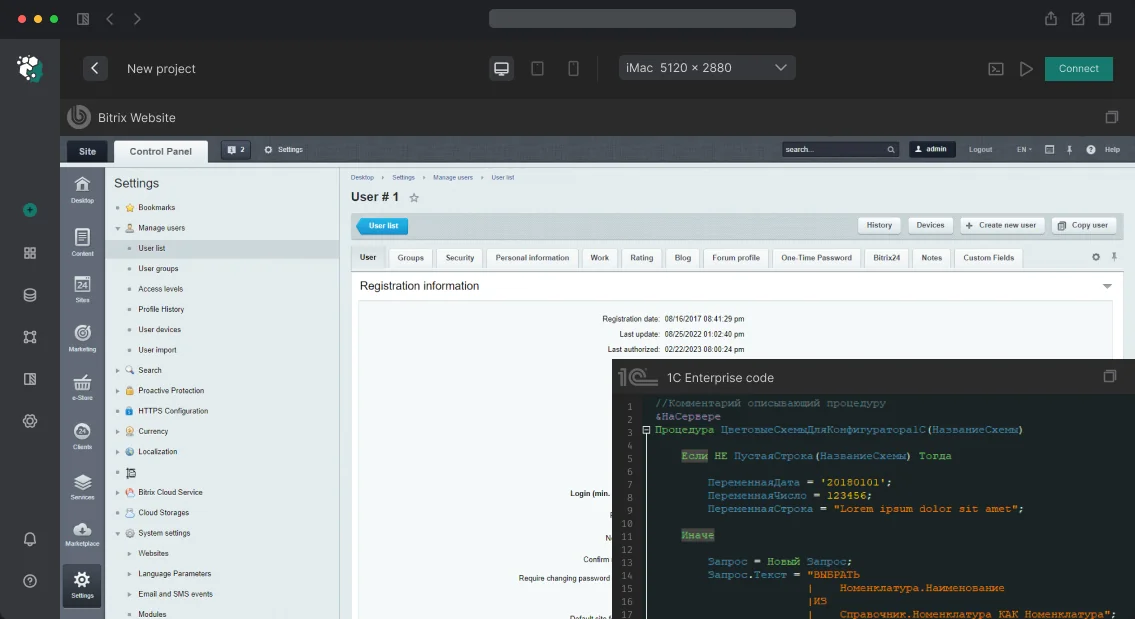
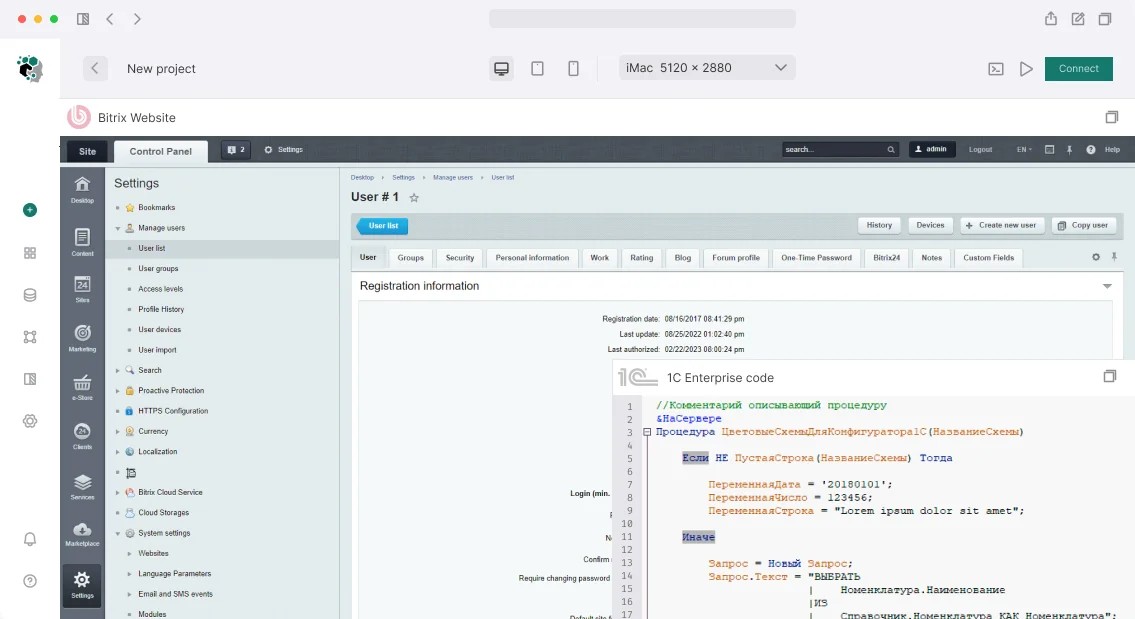
בעיה: מאפייני מוצר לא מיוצאים מ-1C ל-Bitrix
בעת החלפה מ-1C ל-1C-Bitrix, מאפייני מוצר הם אחד מנקודות הכשל הנפוצות ביותר. ב-1C, התכונות נשמרות בבלוק <СвойстваТовара> של קובץ import.xml, וב-Bitrix כמאפייני בלוק מידע. מיפוי אוטומטי דרך XML_ID לא תמיד עובד: ה-GUID ב-1C השתנה, סוג הנתונים אינו תואם, או שהמאפיין כבר קיים אך עם מזהה שונה. התוצאה — מוצרים עם מאפיינים ריקים, אלמנטים כפולים בספריות, או שגיאות ייבוא. לאחרונה, בפרויקט עם קטלוג של 15,000 מוצרים, המאפיינים "הרכב" ו"ארץ מקור" פשוט לא יוצאו, וספריות הצבע והמותג נוצרו עם כפילויות. אנו פותרים בעיה זו תוך 2–4 ימים, עם אחריות להעברת נתונים נכונה ב-100%. להלן אנו דנים בתרחישים אופייניים: ממיפוי פשוט ועד לעיבוד מותאם אישית באמצעות אירועים.
סיבות לכשל במיפוי הסטנדרטי
ב-import.xml, מאפייני מוצר נראים סטנדרטיים:
<Товар>
  <Ид>GUID</Ид>
  <ЗначенияСвойств>
    <ЗначениеСвойства>
      <ИдСвойства>GUID-свойства</ИдСвойства>
      <Значение>Красный</Значение>
    </ЗначениеСвойства>
  </ЗначенияСвойств>
</Товар>
המסווג של המאפיינים מועבר בתחילת <Товар> <Ид>GUID</Ид> <ЗначенияСвойств> <ЗначениеСвойства> <ИдСвойства>GUID-свойства</ИдСвойства> <Значение>Красный</Значение> </ЗначениеСвойства> </ЗначенияСвойств> </Товар> בבלוק import.xml. במהלך ההחלפה הראשונה, Bitrix יוצר אוטומטית מאפייני בלוק מידע — אם הם לא קיימים. אך בהחלפות הבאות, נוצרות לעיתים קרובות אי-התאמות.
שגיאה אופיינית: ה-GUID של מאפיין השתנה ב-1C, אך הישן נשאר ב-Bitrix. או שב-1C השדה היה "מחרוזת" והפך ל"ספרייה" — סוג הנתונים בבלוק המידע אינו תואם. התוצאה: המאפיין לא מתמלא.
לפי תיעוד 1C-Bitrix, מיפוי מאפיינים מתבצע דרך שדה <Свойства> של בלוק המידע. תיעוד 1C-Bitrix
כיצד אנו מגדירים ייצוא: שלב אחר שלב
- עברו לקטלוג → הגדרות החלפת 1C → מיפוי מאפיינים בלוח הניהול של Bitrix.
- עבור כל מאפיין 1C, בחרו את מאפיין בלוק המידע המתאים. המיפוי מבוסס על
XML_ID: בעת יצירת מאפיין, ה-GUID מ-1C נכתב אוטומטית לשדה זה. - אם המאפיין כבר קיים, מלאו ידנית את
XML_IDבהגדרות מאפיין בלוק המידע (בלוקי מידע → [הבלוק הרצוי] → מאפיינים → XML_ID). - בדקו את סוגי הנתונים: ודאו שמחרוזת מ-1C ממופה למאפיין מחרוזת ב-Bitrix, מספר למספר, וספרייה לרשימה.
- בצעו ייבוא ניסיון עם מוצר בודד כדי לוודא את המיפוי.
סוגי נתונים ואחסונם
| סוג ב-1C | מאפיין בלוק מידע ב-Bitrix | טבלה |
|---|---|---|
| מחרוזת | סוג "מחרוזת" | XML_ID |
| מספר | סוג "מספר" | b_iblock_element_prop_s{N} |
| בוליאני (כן/לא) | סוג "רשימה" (Y/N) או "דגל" | b_iblock_element_prop_s{N} |
| ספרייה (רשימת ערכים) | סוג "רשימה" | b_iblock_element_prop_s{N} |
ספריות (צבעים, מותגים) הן סיפור נפרד. ב-1C, הן מאוחסנות כספירות עם GUID. ב-Bitrix — b_iblock_property_enum עם b_iblock_property_enum. במהלך ההחלפה הראשונה, פריטים נוצרים אוטומטית; בהחלפות הבאות, הם מותאמים לפי XML_ID. אם ה-GUID השתנה, הפריטים משוכפלים. פתרון: הקצו ידנית את XML_ID הנכון או מחקו כפילויות באמצעות אירוע.
הגדרת ייצוא של מאפיינים מרובים
בעיקרון, מאפיינים מרובים מוגדרים באותו אופן כמו יחידים, אך עם דגל XML_ID בבלוק המידע. בקובץ ההחלפה, ערכים מרובים מועברים תחת MULTIPLE = Y אחד. אם המטפל הסטנדרטי לא יוצר רשומה מרובה, אנו כותבים מטפל מותאם אישית על אירוע ИдСвойства. לדוגמה, עבור מוצר אחד עשויים להיות כמה ערכי "מידה": טיפול במאפיינים מרובים נפתר תוך כמה ימים, והחיסכון במילוי ידני מגיע עד $1.8k–2.6k בשנה.
דוגמה להגדרת מאפיין מרובה
- בבלוק המידע, צרו מאפיין מסוג "מחרוזת" עם דגל "מרובה".
- ודאו שב-import.xml עבור מוצר אחד יש כמה
OnIBlockChangeעם אותו<ЗначениеСвойства>. - אם זה לא עובד, השתמשו באירוע
<ИдСвойства>כדי לאלץ מילוי.
עיבוד מותאם אישית מעבר למיפוי הסטנדרטי
אם המיפוי הסטנדרטי אינו מספיק (לדוגמה, צריך לשנות ערך — להמיר מספר פריט לאותיות גדולות, להשלים תיאור), אנו משתמשים באירוע:
AddEventHandler('iblock', 'OnBeforeIBlockElementUpdate', function(&$arFields) {
    if ($arFields['IBLOCK_ID'] == CATALOG_IBLOCK_ID) {
        // Кастомная обработка перед сохранением
    }
});
עיבוד מותאם אישית באמצעות אירועים עובד פי 10 מהר יותר מעריכה ידנית של מסד הנתונים. גמישות זו מאפשרת לפתור 95% מבעיות הייצוא. אנו תמיד כוללים שלב זה בפרויקט אם נדרשת לוגיקה לא סטנדרטית. מיפוי פרטים (לדוגמה, מיפוי מספר פריט למאפיין מחרוזת) מטופל גם הוא באמצעות מנגנון זה.
טיפול בבעיות ייצוא מאפייני SKU
מאפייני SKU (צבע, מידה — הבסיס להצעות מסחריות) מועברים ב-OnIBlockChange, לא ב-AddEventHandler('iblock', 'OnBeforeIBlockElementUpdate', function(&$arFields) { if ($arFields['IBLOCK_ID'] == CATALOG_IBLOCK_ID) { // Кастомная обработка перед сохранением } }); . המבנה שלהם דומה; המיפוי מוגדר בנפרד עבור בלוק המידע של הצעות המסחר. שגיאה אופיינית: מאפייני SKU לא נוצרים כי בלוק המידע של ההצעות לא נבחר בהגדרות ההחלפה. אנו בודקים זאת תחילה.
שגיאות אופייניות ופתרונותיהן
| בעיה | סיבה | פתרון |
|---|---|---|
| מאפיין לא נוצר ב-Bitrix | GUID חסר במסווג | בדקו את בלוק offers.xml ב-import.xml |
| מאפיין נוצר אך ללא ערכים | אי-התאמה בסוג הנתונים | הגדירו סוג "רשימה" עבור ספריות |
| פריטי ספירה כפולים | XML_ID חסר לפריטים | הקצו XML_ID ידנית או באמצעות אירוע |
| מאפייני SKU לא מתמלאים | בלוק מידע של הצעות לא נבחר | ציינו את בלוק המידע הנכון בהגדרות |
מה כלול בעבודה (תוצרים)
- ניתוח ההחלפה הנוכחית, זיהוי אי-התאמות.
- הגדרת מיפוי: התאמת מאפיינים לפי XML_ID, יצירת חסרים.
- בדיקות על מוצר ניסיון מ-1C.
- עיבוד מותאם אישית באמצעות אירועים (במידת הצורך).
- תיעוד הגדרות והוראות למנהל.
- הדרכה למנהל על תחזוקת המיפוי.
- אחריות לפעולה תקינה — אנו מתקנים באגים ללא תשלום למשך חודש.
עלות ולוח זמנים
עלות ההגדרה מחושבת בנפרד בהתאם למורכבות הקטלוג ולצורך בעיבוד מותאם אישית. פרויקטים אופייניים עולים בין $400–580. לוח זמנים — בין 2 ל-5 ימי עסקים. הזמן שנחסך במילוי ידני של מאפיינים מחזיר את עלות העבודה תוך 2–3 חודשים, ולעיתים חוסך עד $1.8k–2.6k בשנה. צרו קשר ונחזור אליכם עם הערכה ראשונית של ההחלפה שלכם. השלמנו בהצלחה מעל 50 פרויקטים, עם שיעור תיקון ראשוני של 90% באמצעות CommerceML (פורמט ההחלפה הסטנדרטי). טיפול נכון בספריות 1C ומיפוי XML_ID עקבי הם המפתח למניעת בעיות.