

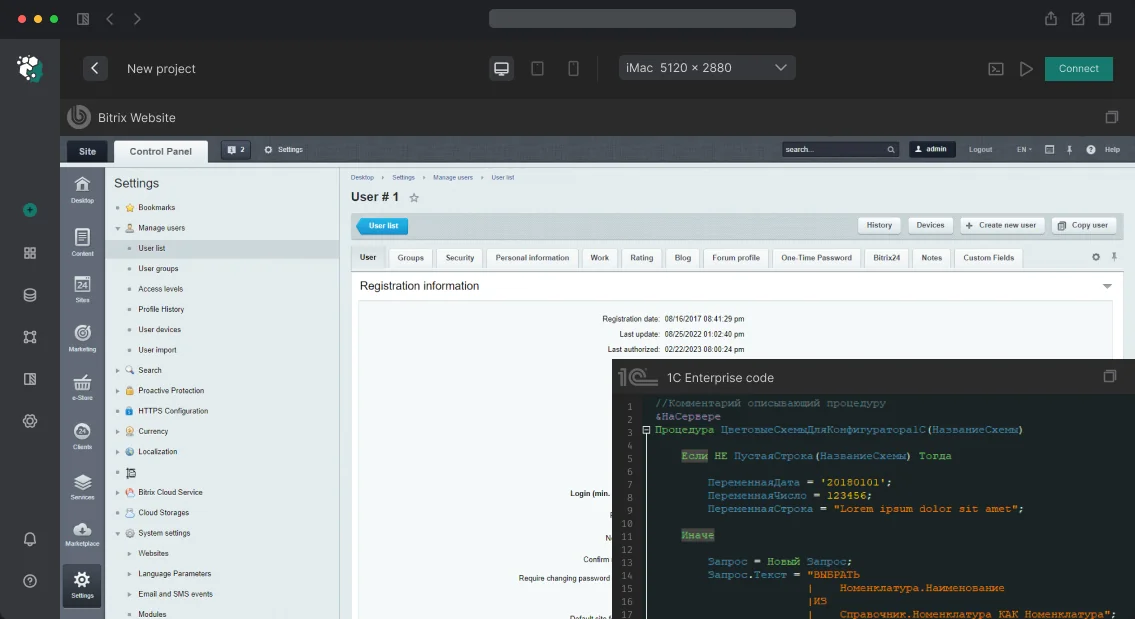
כשבונים חנות מסחר אלקטרוני על 1C-Bitrix עם Vue.js, זה בדרך כלל מתחיל עם קומפוננטה אחת—עגלת קניות או פילטר. חודש לאחר מכן, מופיעות שנייה ושלישית, כל אחת עם לוגיקת שרת, סטור וסגנונות משלה. מצב העגלה בהדר מתפצל מהמצב בפופ-אפ, קוד AJAX משכפל את עצמו, והסגנונות שוברים את הלייאוט. ראינו את זה עשרות פעמים. הפתרון האמין היחיד הוא לא אוסף של קומפוננטות אלא ארכיטקטורה: מערכת שבה כל החלקים חולקים מצב משותף, שכבת API אחידה וטוקנים עיצוביים. לחברה שלנו יש 10+ שנות ניסיון בפיתוח Bitrix, מעל 50 פרויקטים מוצלחים ו-5 שנים בשוק. עם גישה שיטתית, זמן הפיתוח של קומפוננטה חדשה יורד ב-40%, ושגיאות מצטמצמות בחצי. החיסכון השנתי הממוצע בתחזוקה נע בין $2k–5k לפרויקט בינוני. קבעו ייעוץ—נראה לכם איך זה עובד על הפרויקט שלכם.
למה קומפוננטה בודדת היא אינטגרציה, אבל מערכת היא ארכיטקטורה
אינטגרציה: אתם לוקחים קומפוננטת Vue מוכנה ומטמיעים אותה בתבנית. זה עובד, אבל כל קומפוננטה חדשה דורשת קביים חדשים: סטור משלה, HTTP client משלה, לוגיקת טעינה משלה. תוך חצי שנה, האתר מריץ שלוש גרסאות של עגלת הקניות, שתי גישות AJAX והרים של קוד משוכפל. ארכיטקטורה: אתם מגדירים מראש את הליבה של המערכת—קונפיגורציה, סטורים, שכבת API, בסיס UI. כל קומפוננטה חדשה משתמשת בבלוקים מוכנים בלי להמציא את הגלגל מחדש. מערכת קומפוננטות היא מהירה פי 2 לתחזוקה מאשר אוסף של קומפוננטות עצמאיות. לפי המפתח הראשי: "ארכיטקטורה כזו אפשרה לנו לצמצם את זמן ההשקה של תכונות חדשות ב-40%".
איך אנחנו בונים את מערכת הקומפוננטות: 4 שלבים
שלב 1: אתחול אחיד ומצב משותף
הטעות הנפוצה ביותר היא יצירת אפליקציית Vue נפרדת לכל קומפוננטה. זה מוביל לחוסר סנכרון במצב. אנחנו משתמשים ב-Pinia עם מופע יחיד ומרכיבים קומפוננטות דרך data-attributes. כך זה נראה:
// app.ts
import { createApp, defineAsyncComponent } from 'vue'
import { createPinia } from 'pinia'

const componentRegistry: Record<string, any> = {
  'cart-button': defineAsyncComponent(() => import('./components/cart/CartButton.vue')),
  'add-to-cart': defineAsyncComponent(() => import('./components/catalog/AddToCartBtn.vue')),
  'wishlist-btn': defineAsyncComponent(() => import('./components/catalog/WishlistBtn.vue')),
  'compare-btn': defineAsyncComponent(() => import('./components/catalog/CompareBtn.vue')),
  'reviews': defineAsyncComponent(() => import('./components/product/Reviews.vue')),
  'size-advisor': defineAsyncComponent(() => import('./components/product/SizeAdvisor.vue')),
}

const pinia = createPinia()

document.querySelectorAll('[data-vue-component]').forEach((el) => {
  const name = el.getAttribute('data-vue-component')!
  const Component = componentRegistry[name]
  if (!Component) return

  const props: Record<string, any> = {}
  for (const attr of el.attributes) {
    if (attr.name.startsWith('data-prop-')) {
      const propName = attr.name.replace('data-prop-', '').replace(/-./g, m => m[1].toUpperCase())
      props[propName] = JSON.parse(attr.value)
    }
  }

  const app = createApp(Component, props)
  app.use(pinia)
  app.mount(el)
})
נקודה מרכזית: מופע Pinia יחיד מועבר לכל האפליקציות. זה אומר ש-cartStore בהדר ו-cartStore בכרטיס המוצר הם אותו סטור—המצב מסונכרן. טעינה עצלה דרך // app.ts import { createApp, defineAsyncComponent } from 'vue' import { createPinia } from 'pinia' const componentRegistry: Record<string, any> = { 'cart-button': defineAsyncComponent(() => import('./components/cart/CartButton.vue')), 'add-to-cart': defineAsyncComponent(() => import('./components/catalog/AddToCartBtn.vue')), 'wishlist-btn': defineAsyncComponent(() => import('./components/catalog/WishlistBtn.vue')), 'compare-btn': defineAsyncComponent(() => import('./components/catalog/CompareBtn.vue')), 'reviews': defineAsyncComponent(() => import('./components/product/Reviews.vue')), 'size-advisor': defineAsyncComponent(() => import('./components/product/SizeAdvisor.vue')), } const pinia = createPinia() document.querySelectorAll('[data-vue-component]').forEach((el) => { const name = el.getAttribute('data-vue-component')! const Component = componentRegistry[name] if (!Component) return const props: Record<string, any> = {} for (const attr of el.attributes) { if (attr.name.startsWith('data-prop-')) { const propName = attr.name.replace('data-prop-', '').replace(/-./g, m => m[1].toUpperCase()) props[propName] = JSON.parse(attr.value) } } const app = createApp(Component, props) app.use(pinia) app.mount(el) }) + Vite מפצלת אוטומטית את הקוד ל-chunks, כך ש-defineAsyncComponent נטען רק באינטראקציה הראשונה.
שלב 2: שכבת API: HTTP client אחד לכולם
// api/client.ts
const CSRF_TOKEN = (document.querySelector('meta[name="csrf-token"]') as HTMLMetaElement)?.content

async function request<T>(url: string, options: RequestInit = {}): Promise<T> {
  const res = await fetch(url, {
    ...options,
    headers: {
      'Content-Type': 'application/json',
      'X-Bitrix-Csrf-Token': CSRF_TOKEN,
      ...options.headers,
    },
  })

  if (!res.ok) throw new Error(`HTTP ${res.status}: ${await res.text()}`)

  const data = await res.json()

  if (data.errors?.length) throw new Error(data.errors[0].message)

  return data
}

export const apiGet = <T>(url: string) => request<T>(url)

export const apiPost = <T>(url: string, body: unknown) => request<T>(url, {
  method: 'POST',
  body: JSON.stringify(body),
})
כל הקומפוננטות משתמשות ב-CartDrawer.vue / // api/client.ts const CSRF_TOKEN = (document.querySelector('meta[name="csrf-token"]') as HTMLMetaElement)?.content async function request<T>(url: string, options: RequestInit = {}): Promise<T> { const res = await fetch(url, { ...options, headers: { 'Content-Type': 'application/json', 'X-Bitrix-Csrf-Token': CSRF_TOKEN, ...options.headers, }, }) if (!res.ok) throw new Error(`HTTP ${res.status}: ${await res.text()}`) const data = await res.json() if (data.errors?.length) throw new Error(data.errors[0].message) return data } export const apiGet = <T>(url: string) => request<T>(url) export const apiPost = <T>(url: string, body: unknown) => request<T>(url, { method: 'POST', body: JSON.stringify(body) }) —נקודה אחת להוספת כותרות אימות, רישום שגיאות ו-interceptors. זה מפשט את הדיבאג ומבטיח פורמט תגובה אחיד.
שלב 3: מערכת עיצוב דרך משתני CSS
צבעים, פונטים, ריווח—דרך משתני CSS שתואמים למשתני התבנית PHP ב-Bitrix:
:root {
  --color-primary: #0052cc;
  --color-success: #00875a;
  --color-danger: #de350b;
  --spacing-sm: 8px;
  --spacing-md: 16px;
  --border-radius: 4px;
}
קומפוננטת ה-Vue apiGet משתמשת במשתנים אלה—תואמת ויזואלית לשאר האתר. כל שינוי בטוקן בתבנית Bitrix מוחל אוטומטית על הקומפוננטות.
שלב 4: איך לבדוק את המערכת?
בדיקות יחידה לסטורי Pinia עם Vitest:
// stores/cartStore.test.ts
import { setActivePinia, createPinia } from 'pinia'
import { useCartStore } from './cartStore'

describe('cartStore', () => {
  beforeEach(() => setActivePinia(createPinia()))

  it('добавляет товар в корзину', async () => {
    const store = useCartStore()
    await store.add(123, 1)
    expect(store.items).toHaveLength(1)
    expect(store.count).toBe(1)
  })
})
בדיקות קומפוננטות דרך Vue Test Utils + Vitest. הגישה השיטתית מאפשרת לבדוק גם לוגיקה עסקית וגם רנדור, ומעניקה ביטחון במהלך רפקטורינג.
סקירת תוצרים
| תוצר | תיאור |
|---|---|
| תיעוד ארכיטקטורה | תוכנית אינטגרציה, דיאגרמת קומפוננטות, תיאור סטורים ו-API |
| קוד מקור של קומפוננטות | קומפוננטות Vue מיושמות עם טעינה עצלה |
| מאגד Vite מוגדר | קונפיגורציה, פיצול קוד, מיניפיקציה |
| בדיקות | בדיקות יחידה לסטורי Pinia וקומפוננטות, בדיקות אינטגרציה ל-API |
| מדריך להוספת קומפוננטות חדשות | הוראות למפתחים |
| תמיכה למשך שבועיים | ייעוץ ותיקוני באגים לאחר המסירה |
לוחות זמנים ועלות משוערים
| היקף | מה כלול | משך | עלות (דולרים) |
|---|---|---|---|
| מערכת בסיסית (3–5 קומפוננטות) | אתחול, Pinia, שכבת API, בסיס UI | 3–5 שבועות | 150,000–250,000 |
| מערכת מלאה | + עגלה, רשימת משאלות, השוואה, ביקורות | 6–10 שבועות | 350,000–550,000 |
| + מערכת עיצוב, בדיקות, CI | + טוקנים, Vitest, בנייה אוטומטית | +2–3 שבועות | +100,000–150,000 |
העלות מחושבת באופן פרטני—תלויה במורכבות האינטגרציה ובמספר הקומפוננטות.
רשימת בדיקה: טעויות נפוצות בשילוב Vue ב-Bitrix
- יצירת מספר createApp—השתמשו במופע Pinia יחיד.
- אחסון טוקנים ב-localStorage—השתמשו בתג meta ל-CSRF.
- חוסר בשכבת API אחידה—תפסו שגיאות במקום אחד.
- התעלמות מפיצול קוד—ה-bundle הראשוני גדל למגה-בייט.
- ערבוב לוגיקת קומפוננטה ותצוגה—הפרידו סטורים ותצוגות.
ארכיטקטורה זו אידיאלית עבור פיתוח Vue בצד הפרונטאנד של Bitrix ועוזרת לייעל קומפוננטות Vue לתחזוקה.
סיכום
מערכת קומפוננטות היא השקעה בתחזוקה. בלעדיה, הקומפוננטה הראשונה מהירה לכתיבה, אבל העשירית כואבת. עם ארכיטקטורה, כל קומפוננטה חדשה לוקחת 2–3 שעות במקום 2–3 ימים. גישה שיטתית מפחיתה עלויות תחזוקה ב-30–50% ומאיצה את מסירת התכונות החדשות.
צרו קשר כדי לדון בארכיטקטורת הפרויקט שלכם. קבלו ייעוץ על שילוב Vue.js ב-Bitrix—נראה לכם איך לחסוך זמן וכסף. אנחנו מבטיחים איכות ועמידה בלוחות זמנים.
ראו גם: Vue.js בוויקיפדיה