

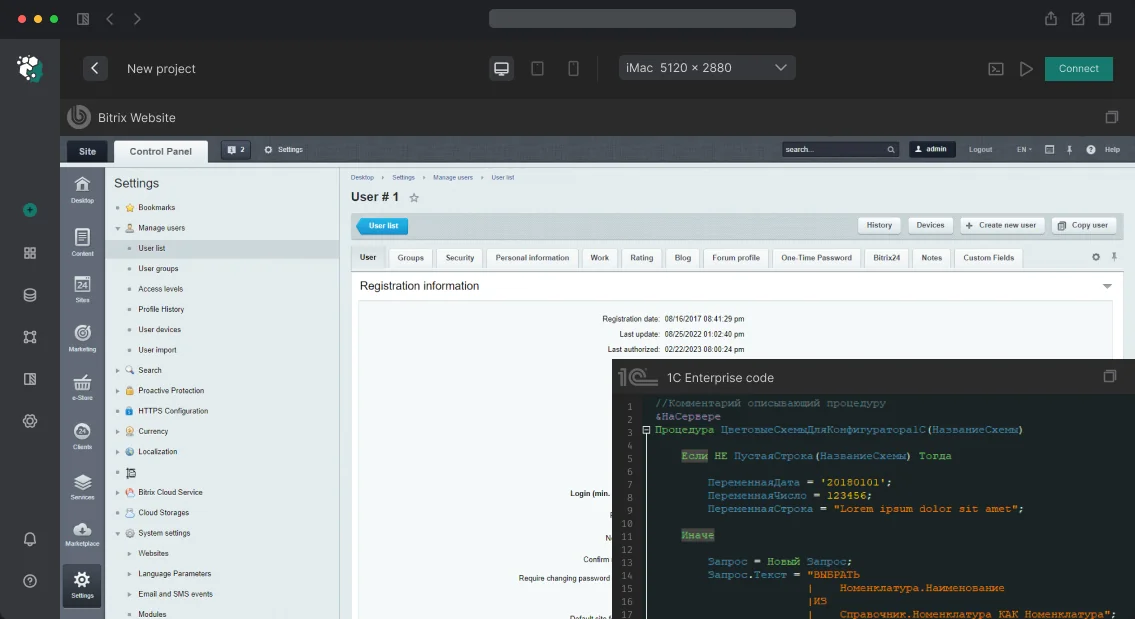
כאשר לחנות מקוונת על 1C-Bitrix יש 10,000 מוצרים וחמש קטגוריות לקוחות (קמעונאי, סיטונאי, מפיץ, VIP, עובדים), הגדרה ידנית של הרשאות ומחירים הופכת לכאב ראש?
לקוחות רואים מחירים של אחרים, הנחות מיושמות באופן שגוי, ומדורים סגורים למפיצים פתוחים לכל אחד. הסיבה היא הגדרה כאוטית של קבוצות קונים ללא קשר להיגיון העסקי.
אנו פותרים בעיה זו במסלול מלא: אנו מתכננים פילוח ל-B2B ו-B2C, מאוטמטים מעברים בין קבוצות בהתבסס על סכומי הזמנות, ומשתלבים עם 1C.
אילו בעיות פותר תצור קבוצות קונים
קישור שגוי של קבוצת מחירים. כל מוצר בקטלוג המסחרי יכול להיות מקושר למספר קבוצות מחירים (בסיסית, סיטונאית, סוחר). אם קונה מקבוצת "קמעונאי" רואה מחיר סוחר, המשמעות היא שלקבוצה שלו יש הרשאות מיותרות.
אנו מתקנים את ההגדרות במקטע "חנות → קטלוג → קבוצות מחירים": משאירים רק את הקישורים הנדרשים. גישה זו מפחיתה תלונות על מחירים שגויים פי 3.
מקטעים סגורים גלויים לכולם. מקטעים עם תיעוד סוחרים או מבצעים פנימיים צריכים להיות נגישים רק לקבוצות מסוימות. ללא תצור הרשאות גישה למקטעי אינפובלוק, כל משתמש יכול לראות את התוכן. אנו מגבילים את הנראות באמצעות CIBlockSectionRights.
ניהול שדרוג ידני. שדרוג אוטומטי של קבוצה בהתבסס על סכום הזמנה הוא משימה טיפוסית ב-B2B. ללא מטפל באירוע OnBeforeUserUpdate או סוכן, מנהלים נאלצים להעביר לקוחות ידנית. הדבר גוזל עד 3 שעות ביום.
כיצד אנו מגדירים קבוצות קונים
ניקח דוגמה של חנות B2B לחומרי בניין. לאחר ביקורת של המבנה הקיים, אנו:
- יצרנו קבוצות: "קמעונאי", "סיטונאי קטן", "סיטונאי גדול", "סוחר", "עובד".
- קישרנו כל אחת לקבוצת מחירים משלה. עבור סוחרים — אזור נסתר עם מחירונים.
- כתבנו מטפל לאירוע
OnSuccessCatalogOrder— כאשר סכום ההזמנה מגיע לסף מסוים, המשתמש מועבר אוטומטית ל"סיטונאי גדול". - הגדרנו סוכן לסנכרון שבועי עם 1C: אם קטגוריית הלקוח משתנה ב-1C, הקבוצה ב-Bitrix מתעדכנת.
תוצאה: לקוחות רואים מחירים נכונים, מנהלים לא מבזבזים זמן על שיוך ידני, ואזורים נסתרים פתוחים רק לסוחרים. האוטומציה מאיצה את שינוי הקבוצה פי 3 בהשוואה לשינוי ידני.
מדוע תצורת קבוצה סטנדרטית אינה מספקת
יכולות Bitrix המובנות מכסות תרחישים בסיסיים: קישור מחירים, הנחות קופון, הגבלות על מדורים. אך עבור לוגיקת B2B מורכבת (מעברים אוטומטיים בין קבוצות, אינטגרציה עם CRM, תנאי משלוח שונים), נדרשות התאמות אישיות.
אנו משתמשים ב-API הסטנדרטי (CGroup, CIBlockSectionRights, CPrice) ללא פתרונות עוקפים. לדוגמה, מנגנון קבוצות המשתמשים ב-Bitrix מבוסס על מודל RBAC הסטנדרטי, אך פילוח דינמי דורש הרחבה.
כיצד להפוך את המעבר בין קבוצות לאוטומטי
דוגמה להגדרה עבור חנות B2B:
- קמעונאי: רק מחיר בסיס זמין
- סיטונאי קטן: שדרוג אוטומטי עם הגעה לסף נמוך יותר
- סיטונאי גדול: עם הגעה לסף גבוה יותר
- מפיץ: גישה לאזור נסתר עם מחירונים
מטפל עבור OnSuccessCatalogOrder בודק את סכום ההזמנה ועם הגעה לסף מעביר את המשתמש לקבוצה הבאה. גישה זו מפחיתה את עומס העבודה על המנהל פי 5 בהשוואה לשדרוג ידני.
מה כוללת העבודה שלנו
- ביקורת של קבוצות קיימות והרשאות גישה
- תכנון סגמנטציה לתהליכים עסקיים
- הגדרת קבוצות, קישור למחירים, הנחות, מדורים
- הטמעת שיוך אוטומטי (אירועים, סוכנים)
- בדיקה על עותק של האתר ומסירת תיעוד
טעויות אופייניות בהגדרת קבוצות קונים
- שכחה להגביל הרשאות למדורי שירות (חלק הניהול נשאר פתוח).
- אי-הסרה של קבוצות מיותרות מקישור המחירים — הקונה מקבל מחיר שגוי.
- בלבול בסדרי העדיפויות של קבוצות כאשר ההרשאות חופפות.
השוואת גישות
| פרמטר | תצורה טיפוסית | תצורה מקצועית |
|---|---|---|
| מהירות | 1-2 שעות | 3-5 שעות (עם אוטומציה עד יומיים) |
| גמישות | רק הקצאה ידנית | מעברים אוטומטיים לפי סכום, סטטוס |
| אינטגרציה עם 1C | לא | כן (CommerceML, REST API) |
| תיעוד | לא | אנו מספקים תיאור הגדרות |
| אחריות | לא | 30 ימי תמיכה חינם |
שלבי העבודה
| שלב | משך | תוצאה |
|---|---|---|
| ניתוח | 1-2 ימים | זיהוי אי-התאמות, תיאור המבנה הנוכחי |
| עיצוב | 0.5-1 יום | מטריצת קבוצות-מחירים-הרשאות, אישור עם הלקוח |
| יישום | 3-5 שעות | יצירת קבוצות, קישורים, כתיבת מטפלים |
| בדיקות | 1-2 ימים | אימות כל התרחישים בדומיין בדיקה |
| פריסה | 0.5 יום | העברה לפרודקשן, הדרכת מנהלים |
לוחות זמנים ועלויות
תצורה בסיסית (עד 4 קבוצות) — בין 3 ל-5 שעות. אם נדרשת אוטומציה לפי סיכומי הזמנות או אינטגרציה עם 1C — בין יום ל-3 ימים. העלות מחושבת באופן אישי לאחר היכרות עם הפרויקט. אנו מעריכים את היקף העבודה ומספקים לוח זמנים קבוע.
אם יש לכם בעיות עם פילוח לקוחות או שלקוחות רואים מחירים של אחרים, פנו אלינו לייעוץ. בקשו ביקורת של קבוצות הקונים הנוכחיות שלכם. אנו עובדים עם Bitrix למעלה מ-10 שנים, השלמנו למעלה מ-100 הטמעות של חנויות מקוונות ומבטיחים תוצאות. הזמינו תצורת קבוצות קונים והיפטרו מבלבול המחירים.
תיעוד רשמי של 1C-Bitrix: "קבוצות משתמשים" — https://dev.1c-bitrix.ru/learning/course/index.php?COURSE_ID=43&LESSON_ID=3436