

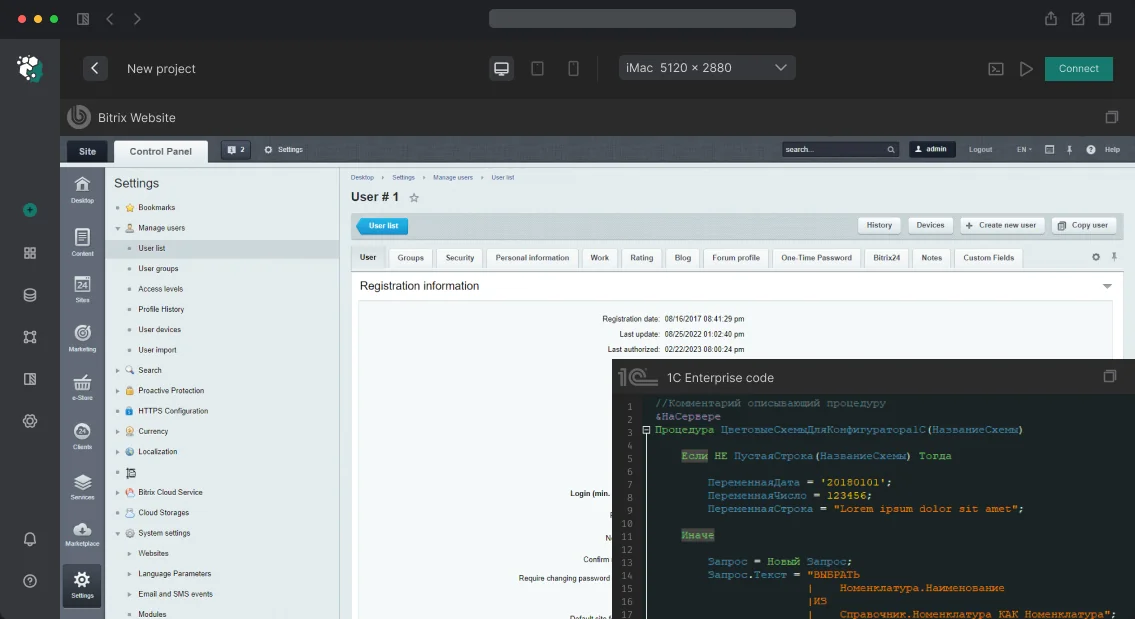
אינטגרציה מהירה עם אפליקציה מקומית של Bitrix24
לעתים קרובות אנו מקבלים שיחות עם אותו כאב: צריך בדחיפות לחבר את Bitrix24 עם מערכת פנימית — 1C, מחסן או CRM מותאם אישית — אבל פרסום ב-Marketplace מיותר. הרישיון מוגבל לפורטל אחד, גישה חיצונית מוגבלת חלקית. אנו מציעים פתרון: אפליקציה מקומית של Bitrix24 — ניתן להגדיר אותה תוך 15 דקות והיא נותנת גישה מלאה ל-REST API ללא ביורוקרטיה. למהנדסים שלנו יש ניסיון של 12+ שנים במערכת Bitrix, לאחר שסיימו 50+ פרויקטי אינטגרציה, מה שמבטיח אמינות בפורטלים עמוסים. אפליקציה מקומית משתלבת 50% מהר יותר מפתרון Marketplace ועולה מ-$1,000 עבור ווידג'טים פשוטים. חיסכון בשגיאות אינטגרציה יכול להגיע ל-$5,000 לפרויקט, ומזעור זמן השבתה חוסך $3,000 בשנה.
כיצד לפתח אפליקציה מקומית עם OAuth?
- רשום את האפליקציה בהגדרות הפורטל (יישומים → מפתחים → אחר → אפליקציה מקומית).
- בחר סוג אימות: Server (OAuth) עבור צד שרת או JavaScript (JS SDK) עבור ממשק משתמש בלבד.
- הגדר הרשאות (crm, task, user וכו') – תכנן את כל ההרשאות מראש כדי למנוע התקנה מחדש.
- פתח את הקוד: טיפול ב-OAuth, יישום קריאות REST, עיבוד אירועים.
- בדוק ופרוס: השתמש ב-ngrok לניפוי באגים, ולאחר מכן עבור לסביבת ייצור.
זרימת OAuth 2.0 Authorization Code: בפתיחה הראשונה, Bitrix24 מעביר את Серверное приложение, JavaScript-приложение, crm במחרוזת השאילתה. השרת שומר את ה-access token, ועם פקיעתו (3600 שניות), מרענן אותו באמצעות POST אל task. ה-Refresh token חי 30 יום, ולכן חיוני לרענן אותו במחזוריות. ספריות כמו user הופכות זאת לאוטומטי. פרטים נוספים בוויקיפדיה. מידע נוסף בתיעוד הרשמי של Bitrix24.
כיצד לבחור בין אפליקציית JavaScript לאפליקציית Server?
| פרמטר | אפליקציית JavaScript | אפליקציית Server |
|---|---|---|
| אימות | Token מפרמטרי URL/postMessage | OAuth 2.0 Authorization Code |
| חלק שרת | לא נדרש | נדרש |
| אחסון סוד | אין סוד | client_secret על השרת |
| עבודה ברקע | לא | כן (cron, תורים) |
| הרשמה לאירועים | דרך BX24.js | דרך event.bind REST |
| מקרה שימוש | ווידג'טים לממשק, לוחות מחוונים | סנכרון, אוטומציה |
סוג JavaScript בונה MVP תוך 1–3 ימים; סוג שרת לוקח 1–3 שבועות לאינטגרציות ארגוניות. אפליקציה מקומית מתחילה 2–3 פעמים מהר יותר מאפליקציה המונית בשל היעדר מודרציה.
דוגמאות קוד מעשיות
אפליקציית JavaScript דוגמה מינימלית:
<!DOCTYPE html>
<html>
<head>
    <script src="//api.bitrix24.com/api/v1/"></script>
</head>
<body>
    <div id="app"></div>
    <script>
        BX24.init(function() {
            var auth = BX24.getAuth();
            // auth.domain — домен портала
            // auth.access_token — токен для REST-запросов
            BX24.callMethod('user.current', {}, function(result) {
                if (result.error()) {
                    document.getElementById('app').innerHTML = 'Ошибка: ' + result.error();
                    return;
                }
                var user = result.data();
                document.getElementById('app').innerHTML = 'Привет, ' + user.NAME + '!';
            });
            BX24.fitWindow();
        });
    </script>
</body>
</html>
ה-JS SDK נטען מ-CDN של Bitrix; אין צורך בחיבור ישיר לפורטל. אפליקציית Server קריאת OAuth ב-Node.js:
ngrok http 3000 # Получаем: https://abc123.ngrok.io בחירת הרשאות ומגבלות
הרשאות גישה קובעות הרשאות קריאה/כתיבה. אפליקציות מקומיות מבקשות אותן בעת ההתקנה. צריך הרשאה חדשה? המשתמש חייב להתקין מחדש (לחץ על כפתור עדכון הרשאות). תכנן הרשאות מראש כדי למנוע שיבושים בייצור.
הרחב את רשימת ההרשאות המלאה
disk — עסקאות, לידים, אנשי קשר, חברות catalog — משימות ופרויקטים client_id — משתמשי פורטל client_secret — קבצים ותיקיות AUTH_ID — אירועי יומן REFRESH_ID — קבוצות וסביבות עבודה AUTH_EXPIRES — קטלוג מוצרים https://{domain}/oauth/token/ — חנות והזמנות <!DOCTYPE html> <html> <head> <script src="//api.bitrix24.com/api/v1/"></script> </head> <body> <div id="app"></div> <script> BX24.init(function() { var auth = BX24.getAuth(); // auth.domain — домен портала // auth.access_token — токен для REST-запросов BX24.callMethod('user.current', {}, function(result) { if (result.error()) { document.getElementById('app').innerHTML = 'Ошибка: ' + result.error(); return; } var user = result.data(); document.getElementById('app').innerHTML = 'Привет, ' + user.NAME + '!'; }); BX24.fitWindow(); }); </script> </body> </html> — שיחות וטלפוניה
מגבלות: פורטל יחיד בלבד, לא ניתן לפרסום ב-Marketplace, שינוי דומיין פורטל דורש הגדרה מחדש, אין תמיכה במספר redirect_uri. עבור רוב האינטגרציות הפנימיות, אלה אינן מפריעות. אם נדרשת הרחבה בעתיד, הקוד עובר בקלות לגרסה המונית.
מה כלול בשירות שלנו
אנו מספקים אפליקציה מקומית מוכנה לשימוש עם:
- ניתוח: הערכת תהליכים קיימים ומערכות חיצוניות
- ארכיטקטורה: תכנון (מיקרוסרוויסים או מונולית) עם יעדי ביצועים (עד 1000 קריאות REST לדקה)
- יישום: שיטות REST לסנכרון, webhooks לעיבוד אירועים
- הגדרת OAuth: אחסון מאובטח של tokens עם רענון אוטומטי
- בדיקות: אימות בפורטל חי
- תיעוד: תיאור API, סכמת הרשאות, מדריך פריסה
- הדרכה: הכשרת מנהלים (מפגש של שעתיים)
- תמיכה: אחריות ל-3 חודשים, תיקון באגים תוך 24 שעות
המחירים מתחילים ב-$1,000 עבור ווידג'טים פשוטים, $5,000–$15,000 עבור אינטגרציות מורכבות. החזר השקעה ממוצע: 200% תוך 6 חודשים בזכות חיסכון באוטומציה. אינטגרציה ארגונית טיפוסית עולה בסביבות $7,500.
| משימה | משך זמן | הערכת עלות |
|---|---|---|
| הגדרת אפליקציה מקומית + אימות בסיסי | 0.5–1 יום | $500–$1,000 |
| ווידג'ט פשוט (CRM לקריאה בלבד) | 1–3 ימים | $1,000–$3,000 |
| אינטגרציה דו-כיוונית בין מערכות | 1–3 שבועות | $5,000–$10,000 |
| אפליקציה ארגונית מלאה | 1–2 חודשים | $10,000–$20,000 |
צור קשר להערכת פרויקט. נציע ארכיטקטורה ולוח זמנים אופטימליים. צוות מפתחי Bitrix24 שלנו יכול גם לסייע באפליקציות Bitrix24 מותאמות אישית ובאינטגרציות Bitrix24 ארגוניות.