

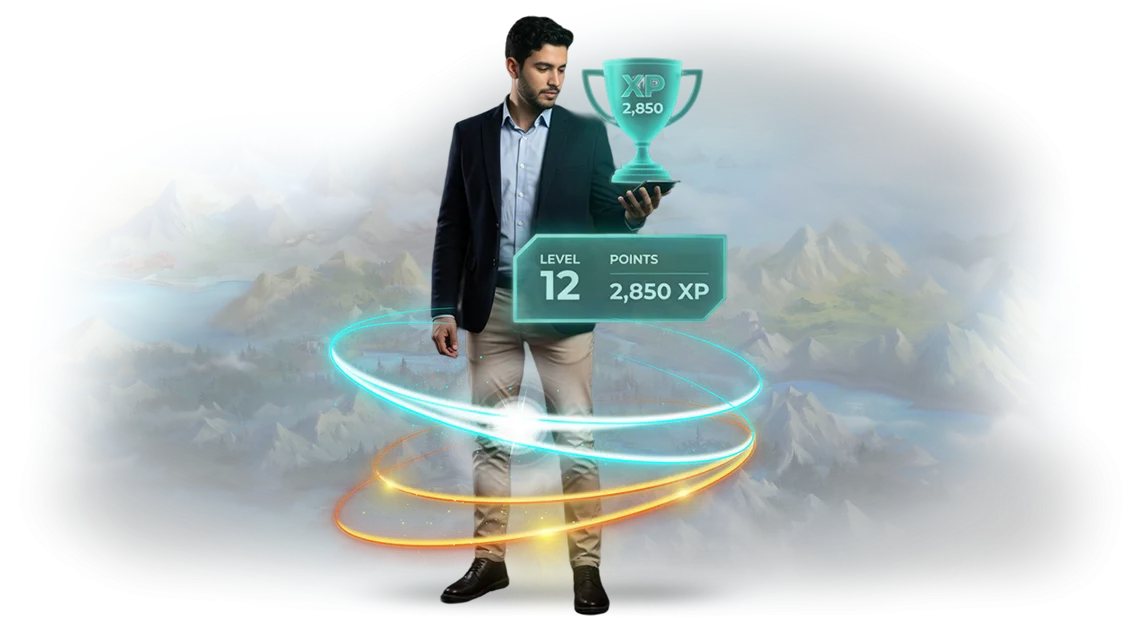
תוצאות הדרכה ארגונית חלשות: מה לעשות
כשההדרכה לא מובילה לשינוי, הדחף הראשון הוא להחליף את התכנית או את המנחה.
אבל הבעיה האמיתית היא בדרך כלל לא התוכן — אלא שהעובדים פשוט לא מתחברים: הם לוחצים דרך הקורס רק כדי לסמן וי, ושבועיים אחר כך הם שוכחים את הכללים המרכזיים.
מעורבות נמוכה היא האויב הגדול ביותר של הדרכה ארגונית. רוב הפורמטים בנויים סביב "להקשיב ולעבור מבחן" — בלי רוח תחרותית, בלי מטרה ברורה, ובלי משוב מהיר. כתוצאה מכך, כסף מושקע בהדרכה, אבל המדדים העסקיים לא זזים.
גימיפיקציה של תהליכים עסקיים סוגרת את הפער הזה.
זה לא על "להדביק תגים על מבחן משעמם" — זה על שינוי מוטיבציה: עובד משלים הדרכה כי הוא רוצה להגיע לרמה הבאה, להישאר לפני הקולגות, ולראות איך הכישורים שלו משפיעים על תוצאות.
מחקרים מאשרים שמכניקות משחק מגבירות משמעותית גם את המוטיבציה וגם את שימור החומר. לדוגמה, מחקר של TalentLMS מראה שרוב העובדים מאבדים עניין בקורסים קלאסיים באמצע הדרך, בעוד שפורמטים מגויימים שומרים על תשומת הלב שלהם עד הסוף.
מנקודת מבט עסקית, זה אומר שכל השקעה בהדרכה מתחילה להניב תוצאות.
אנחנו עוזרים לכם לבנות מערכת שבה הדרכה הופכת מ"חובה" לחלק משגרת היום-יום: הצוות מקבל מטרות ברורות, הערכה מיידית של פעולות, והתקדמות נראית לעין.
אנחנו יוצרים לא רק משחק, אלא גשר בין הדרכה לעבודה. אנחנו מטמיעים תרחישי משחק בתהליכים עסקיים אמיתיים ותומכים בעובדים בכל שלב — מהצעדים הראשונים ועד לאוטומציה של מיומנויות.
בסופו של דבר, אתם מקבלים תוצאה צפויה: הצוות לומד מהר יותר, מיישם ידע ברצון רב יותר, ואתם רואים את זה במספרי המכירות ובמדדי חוויית הלקוח.
מה גימיפיקציה של תהליכים עסקיים מספקת: 5 יתרונות מדידים
הדרכה ארגונית טיפוסית טובעת בזרם המשימות: עובדים משלימים קורסים רק כדי לסמן וי, והידע לא מיושם. גימיפיקציה משנה את המכניקה — היא הופכת הדרכה לרצף של צעדים ברורים עם משוב, תגמולים והתקדמות נראית לעין. זה הופך את התוצאות למדידות ומקושרות ל-KPI עסקיים.
יתרונות לעובדים
- מעורבות מוגברת. עובדים משלימים הדרכה ברצון רב פי 2-3 כשהם רואים התקדמות ומתחרים עם קולגות. זה מפחית עלויות פיקוח ומגביר פעילות אמיתית במערכת.
- שימור ויישום טובים יותר. תרחישי משחק קצרים מחזקים מיומנויות בפועל: טעויות מטופלות מיד, לא אחרי מבחן סופי. ידע הופך להרגל עבודה במקום להישאר בזיכרון לכמה ימים.
יתרונות לעסק
- קליטה מהירה יותר של עובדים חדשים. תכנית קליטה מגויימת מפחיתה את הזמן עד לביצוע מלא ב-30% בממוצע. הצוות מקבל עובד פרודוקטיבי מוקדם יותר.
- תחלופת עובדים נמוכה יותר. אנשים מעריכים מעסיק שמשקיע בהתפתחות שלהם. הדרכה מגויימת מגבירה נאמנות ומפחיתה עזיבת עובדים.
- מודעות למותג ורכישת לקוחות. מכניקות משחק חיצוניות — תחרויות, משימות, חידונים — מושכות קהלים ומכירות להם בעדינות את המוצר. כך הדרכה משמשת גם כערוץ שיווקי.
אנחנו מתכננים גימיפיקציה שמספקת בדיוק את התוצאות המדידות האלה: מהבריף הראשון ועד להשקה ואנליטיקה. הגדירו איתנו את ה-KPI שלכם — ותראו את האפקט במספרים.
פורמטים של גימיפיקציה להדרכה ארגונית: התאמת הפורמט למשימה
בחירת פורמט הגימיפיקציה קובעת ישירות כמה מהר עובדים קולטים את החומר ומתחילים ליישם אותו בעבודה.
אין פתרון אחד שמתאים לכולם: תרחיש אחד דורש בניית מיומנויות מעמיקה, אחר צריך פורמט מהיר ומרתק שלא מסיח את הדעת מהחובות המרכזיות.
מגזר משרדי: למידה שיטתית
צוותי משרד ומנהלים צריכים גישה מקיפה: תרחישים מסועפים, סימולציות של פרויקטים אמיתיים, ומרתונים ארוכי טווח עם ניקוד קבוצתי.
המכניקות האלה בונות הרגל של עבודה לפי סטנדרטים חדשים, כשטעויות נעשות בסביבה בטוחה שלא משפיעה על מדדים עסקיים אמיתיים.
מגזר קמעונאי: תוצאות מהירות
לצוותי חזית ומנהלי חנויות, המפתח הוא פורמטים קצרים שמתאימים ליום העבודה. חידונים ומיני-מרתונים עם משימות יומיות מספקים משוב מיידי ושומרים על מומנטום בלי עומס יתר.
| פורמט | מתאים במיוחד ל | מה הוא נותן ללקוח |
|---|---|---|
| חידון | בדיקות ידע מהירות, קליטת עובדים חדשים | אבחון פערים מיידי, חסם כניסה נמוך, תדירות חזרה גבוהה |
| סימולציה | תרגול משא ומתן מורכב, מכירות, מצבים ניהוליים | תרגול ללא סיכון, ביטחון עצמי לעובד, העברת מיומנויות לעבודה אמיתית |
| מרתון | תכניות הדרכה ארוכות טווח, מוטיבציה קבוצתית | חיזוק קבוע של החומר, רוח תחרותית, התקדמות נראית לעין לכל משתתף |
אנחנו בוחרים את הפורמט למשימה שלכם ומשלבים מכניקות כשצריך: חידון בהתחלה, סימולציה למיומנויות מפתח, ומרתון לחיזוק.
כתוצאה מכך, עובדים לא רק "משלימים קורס" — הם באמת משנים את ההתנהגות שלהם, וזה נראה במדדים עסקיים.
איך הפרויקט עובד: מבריף ועד השקה ותמיכה
כדי לוודא שגימיפיקציה מספקת תוצאות מדידות ולא נשארת "משחק לשם המשחק", בנינו תהליך שקוף. כל שלב מתואם איתכם — אתם רואים איך מעורבות העובדים משתנה ואילו מכניקות עובדות הכי טוב.
להלן מסלול הפרויקט מבריף ועד תמיכה לאחר ההשקה, כולל שילוב גימיפיקציה במערכת הלמידה שלכם.
- בריף וצלילה עמוקה למשימה. אנחנו לומדים את התהליכים העסקיים שלכם, מטרות ההדרכה והקהל. אנחנו מגדירים קריטריוני הצלחה: השלמת קורס גבוהה יותר, קליטת עובדים חדשים מהירה יותר, פחות טעויות.
- עיצוב משחק ואיזון משחקי. אנחנו מעצבים את קו העלילה, התפקידים, הרמות ומערכת תגמולים שמניעה עובדים להמשיך ללמוד. אנחנו מכיילים את רמת הקושי כך שמשימות יהיו מעניינות אבל לא מכריעות.
- אב טיפוס ובדיקת מכניקות. אנחנו בונים אב טיפוס עובד ובודקים אותו עם נציגי קהל היעד. זה חושף חסמים נסתרים ומאפשר לנו להתאים את התרחיש לפני הפיתוח המלא.
- פיתוח והטמעת גימיפיקציה. אנחנו משלבים את המשחק במערכת ניהול הלמידה שלכם, מגדירים תצוגת תוצאות ומחברים לתהליכי HR. אתם מקבלים מוצר מוגמר שקל לעדכן.
- השקת המשחק. אנחנו מתכננים השקה פיילוט עם קבוצה אחת או עם כל החברה, מכינים תקשורת ומכשירים מנהלים. אנחנו אוספים משוב ואנליטיקה מהימים הראשונים.
- תמיכה והתפתחות. אנחנו עוקבים אחר מדדי מעורבות, מתאימים את האיזון ומוסיפים תוכן חדש כדי לשמור על עניין. אנחנו מספקים דוחות קבועים על ההשפעה על ההדרכה.
מי משתתף בפרויקט
בצד שלכם: מנהל הדרכה, HR ונציגי יחידות עסקיות שמכירים את המשימות האמיתיות. בצד שלנו: מעצב משחק, מעצב הדרכה ומפתח. בכל שלב, אתם מתקשרים עם מנהל פרויקט ייעודי אחד שמעדכן אתכם. זה מונע מצב שבו התהליך נתקע בגלל חוסר תקשורת.
מה כלול במסירה: ערכת השקה מלאה לגימיפיקציה
גימיפיקציה משתלמת רק כשהיא מוטמעת בתהליך ועובדת בלי פיקוח מתמיד. לכן אנחנו מספקים אותה כערכה מלאה: אתם מקבלים לא אוסף של קבצים מפוזרים, אלא מערכת שהעובדים שלכם יכולים להשיק ולתחזק בעצמם.
חבילה סטנדרטית
החבילה הסטנדרטית כוללת כל מה שצריך כדי להשיק את המשחק תוך שבועות:
- תרחיש משחק וחוקים. תיאור מפורט של קו העלילה, תפקידי המשתתפים והלוגיקה של ניקוד — מותאם למשימות של ההדרכה הספציפית שלכם.
- איזון ורמות מוכנים. הגדרות קושי מכוילות כך שהמשחק שומר על עניין ונותן למשתתפים משוב ברור.
- חומרים למשתתפים. כרטיסים, טפסים, הוראות ותבניות — בפורמט מודפס ודיגיטלי, מוכנים לשימוש.
- לוח בקרה למשחק. ממשק ברור למנחה: הפעלת סשנים, מעקב אחר התקדמות, צפייה בתוצאות וסיכומים.
- תיעוד. תקנונים, רשימות בדיקה ומדריכים מהירים שמאפשרים למנהל להריץ את המשחק בלי לערב מפתחים.
- הכשרת מנהלים. סשן מקוון שבו הצוות שלכם עובד על הגדרה, הגשה ומצבים טיפוסיים בפועל.
תוספות אופציונליות
אם אתם רוצים להגביר את האפקט, אנחנו מוסיפים תוספות מוכנות:
- תרחישים מותאמים אישית למחלקות ספציפיות או לרמות עובדים.
- אינטגרציה עם מערכת ניהול הלמידה שלכם, כך שתוצאות זורמות לדיווח הכולל שלכם אוטומטית.
- תמיכה בסשני המשחק הראשונים על ידי מנחה מטעמנו — התחלה בטוחה והסתגלות מהירה לצוות שלכם.
בסופו של דבר, אתם מקבלים חבילת מסירה סגורה לחלוטין: אחרי הכשרת מנהלים וההשקה הראשונה, המשחק ממשיך לעבוד ככלי ארגוני פנימי. אין צורך בהכשרות נוספות נסתרות או בשינויים בתשלום כדי להתחיל.
מקרה בוחן: גימיפיקציה של תהליכים עסקיים הגבירה מעורבות ב-40%
בניית הדרכה חובה שעובדים משלימים ברצון ולא "רק כדי לסמן וי" היא אתגר שחברות רבות מתמודדות איתו.
זה תרחיש מוכר: מנהלים פותחים את הקורס, מדפדפים בשקופיות, ושבוע אחר כך שוכחים את התוכן — KPI של איכות עבודה לא משתפרים.
עבור רשת קמעונאית, הבעיה הזו הייתה קריטית: תקן השירות החדש אומץ לאט, והניטור אחר עמידה בו גזל זמן של מנהלים אזוריים.
הצענו להפוך את ההדרכה למשחק שבו כל עובד הופך לחלק מקו עלילה עם מטרות ברורות, רמות ותגמולים.
מה עשינו והתוצאה
במקום הרצאות, בנינו תרחיש משחק מוטמע בזרימת העבודה: עובדים השלימו משימות, צברו נקודות על אינטראקציות נכונות עם לקוחות, וצפו בהתקדמות שלהם בדירוג משותף.
מנהלי מחלקות עקבו בזמן אמת אחר מי שלט בחומר ומי צריך תרגול נוסף.
חודשיים אחרי ההשקה, השווינו את המדדים לתקופה הקודמת וראינו שינוי מדיד:
- מעורבות בהדרכה עלתה ב-40% — אנשים השלימו את הקורס לא כי "חייבים", אלא כי זה היה מעניין.
- הזמן לשליטה בתקן החדש ירד בשליש — עובדים יישמו את הידע מהר יותר בעבודה.
- איכות השירות, שנמדדה ברשימות ביקורת של קונה מסתורי, השתפרה ב-28% — הידע הפסיק להיות מופשט והפך למיומנות.
מנהלת ההדרכה של החברה הגיבה לתוצאות: "מקרה הגימיפיקציה פתר את נקודת הכאב המרכזית שלנו — סוף סוף אנחנו רואים יישום אמיתי של ידע, לא רק סימני צפייה.
הצוות עצמו מבקש המשך, ומנהלים אזוריים משתמשים באנליטיקת המשחק כדי לפתח את העובדים שלהם."
התוצאה המרכזית של היישום היא לא רק מספרים בדוח, אלא שינוי מערכתי: הדרכה הפסיקה להיות פורמליות והפכה לכלי שעובדים משתמשים בו מרצון.
וזה משפיע ישירות על מדדים עסקיים — ממהירות קליטת עובדים חדשים ועד להכנסה לחנות.
איך לבחור את פורמט הגימיפיקציה הנכון למשימה שלכם?
בחירת פורמט גימיפיקציה מתחילה לא במכניקות אופנתיות אלא במשימה העסקית: מה צריך להשתנות בהתנהגות העובד אחרי ההדרכה. אם המטרה היא לתרגל מיומנויות משא ומתן, אתם צריכים סימולציה.
אם צריך לאחד את הצוות, משימת הרפתקה תחרותית מתאימה ביותר. אם מדובר בהדרכה שוטפת, מרתון עם נקודות מצטברות וסטטוסים קרוב יותר.
קריטריון המפתח הוא תוצאה מדידה. החליטו איזה מדד הכי חשוב לכם: מהירות ביצוע, פחות טעויות, המרה גבוהה יותר או מהירות קליטה. לכל מדד יש פורמט מתאים.
לדוגמה, תרחישים מסועפים עובדים היטב לקליטה — עובד חדש חווה את היום הראשון שלו בסביבה בטוחה ולומד את התקנון מיד.
הגורם השני בחשיבותו הוא הקהל והסביבה. להדרכה פרונטלית, משחקי צוות חיים עם פעילות פיזית וקצת התרגשות עובדים היטב. לצוותים מרוחקים, סימולטורים מקוונים ומקרי אינטראקטיביים שרצים בדפדפן בלי התקנה הם אידיאליים.
לקבוצות היברידיות, אנחנו בדרך כלל יוצרים תרחיש שבו חלק מהסשנים רצים במקביל וחלק בלוח זמנים גמיש.
בפועל, הבחירה מסתכמת לרוב בשלוש אפשרויות. מודולים אינטראקטיביים קצרים (15-20 דקות) משתלבים בקורס קיים ומגבירים מעורבות. תרחישי משחק בינוניים (2-3 שעות) מחליפים הדרכות מיושנות ומחזקים מיומנויות דרך תרגול.
משחקים ארוכי טווח (חודש או יותר) מקיימים תרבות למידה דרך תחרות והתקדמות נראית לעין.
אנחנו לא מוכרים "פתרון בקופסה" — קודם אנחנו מאבחנים את המשימה שלכם, ואז בוחרים את הפורמט עבורה. אם אתם יודעים איזו מטרה חשובה אבל לא בטוחים לגבי המכניקה, פשוט התחילו בתיאור התוצאה שאתם רוצים להשיג. אנחנו נעצב את השאר, תוך הסתמכות על ניסיון ביותר מ-200 פרויקטי הדרכה ארגונית.
תשובות לשאלות לקוחות לפני שמתחילים
לפני שפרויקט מתחיל, לקוחות שואלים את אותם דברים: כמה מהר עובדים יתחברו, האם המשחק יתקלקל, ומי יתמוך בו. אספנו את חמש השאלות הנפוצות ביותר וענינו עליהן בקצרה. אנחנו מכסים ערבויות ומה קורה אם משהו נכשל למטה.
- כמה מהר נראה תוצאות? השינויים הראשונים מופיעים תוך כמה שבועות, עם השקה מלאה תוך חודש. אתם רואים תוצאות ביניים לאורך כל הדרך.
- האם המשחק ייתפס ככפייה? אנחנו בונים מכניקות סביב השתתפות מרצון ומוטיבציה פנימית. דירוגים ופרסים יוצרים עניין, לא לחץ.
- האם זה יתאים לסגנון שלנו? אנחנו מתאימים את העיצוב והתרחיש למותג ולתרבות הארגונית שלכם. אנחנו לא משתמשים בתבניות — כל פרויקט הוא ייחודי.
- מי יספק תמיכה? תחזוקה ועדכוני תוכן כלולים בעלות השנה הראשונה. אנחנו לא נעלמים אחרי ההשקה.
- איך מודדים את האפקט? לוח המחוונים שלכם מראה פעילות, התקדמות ותוצאות למידה. הנתונים האלה עוזרים לכם לתגמל מצטיינים ולהתאים את התכנית.
מה אתם מבטיחים ומה קורה אם משהו נכשל?
אנחנו עובדים תחת חוזה עם לוחות זמנים ועלויות קבועים. אם נמצאות שגיאות במהלך התהליך, אנחנו מתקנים אותן על חשבוננו בתוך תקופת האחריות — שהיא 12 חודשים.
לארכיטקטורת השרת יש קיבולת עודפת, כך שגם בעומסי שיא המשחק ימשיך לעבוד. במקרה של תקלה כלשהי, אתם מקבלים תמיכה עדיפות: מהנדס זמין בשעות העבודה, עם מענה תוך שעה.
קבלו גימיפיקציה שמעסיקה עובדים
עם הדרכה סטנדרטית, עובדים עוברים את התנועות: הם מקשיבים, עוברים מבחן, ושוכחים את החומר שבוע אחר כך. מכניקות משחק עוזרות לעסוק בקהל מבוגר — כשאדם יש לו מטרה, חוקים, משוב והתקדמות נראית לעין, הוא מתחבר מעצמו.
אנחנו בונים גימיפיקציה סביב התהליכים העסקיים שלכם, ולא "מדביקים" משחק על תוכן משעמם. בסופו של דבר, אתם מקבלים מערכת שמניעה עובדים ליישם ידע בעבודה, לא רק להשלים קורס פורמלית. בפגישה הראשונה, תבינו איך זה יעבוד בחברה שלכם.
הנה מה שאתם מקבלים אחרי פנייה:
- ייעוץ מעצב משחק: נסקור את המטרות שלכם ונייעץ אילו מכניקות יקבלו תגובה מהירה.
- ביקורת על תכנית ההדרכה והתרחישים הנוכחיים שלכם: נזהה בדיוק איפה העניין אובד ואיך לתקן את זה.
- תכנית יישום ראשונית עם איזון משחקי, רמות ומערכת תגמולים — כדי שתוכלו להעריך את ההיגיון של הפתרון.
- הערכת עלות וזמן משתלמת לקנה המידה שלכם, בלי תוספות מחיר מפתיעות בשלב ההשקה.
- תמיכת פיילוט והתאמות מכניקה לפי משוב עובדים — תוצאות אמיתיות, לא רק "מסירת פרויקט".
- דוגמאות מהפרקטיקה שלנו לתעשייה שלכם: איך נראתה המשימה ומה השתנה אחרי היישום.
השאירו פנייה באתר — נגיב תוך יום עסקים אחד. במהלך הייעוץ, נבהיר את הפרטים, נעזור לחשב עלות ונציע את הצעד הבא. תקבלו מודל מעורבות עובד, לא הבטחות כלליות.