

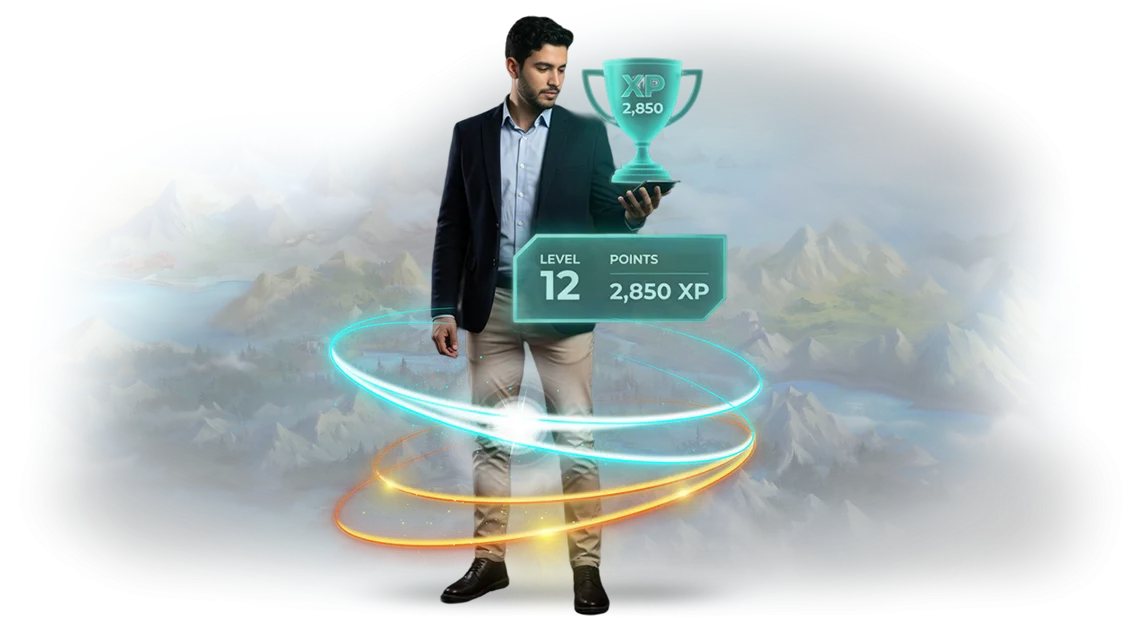
מדוע עובדים חדשים עוזבים בגלל תוכניות אונבורדינג משעממות?
כל מומחה שאתם מגייסים הוא השקעה: כסף לחיפוש, זמן לראיונות, מאמץ לאונבורדינג. אבל כשעובד חדש עוזב בתוך החודשיים-שלושה הראשונים, כל זה יורד לטמיון, והעסק משלם שוב כדי לאייש את אותה משרה.
הבעיה היא בדרך כלל לא האנשים, אלא האונבורדינג המשעמם. עובד חדש מגיע עם עניין ואנרגיה, רק כדי להיתקל בעשרות מצגות יבשות, נהלים ומבחנים שאין להם שום קשר לעבודה בפועל.
המידע לא נקלט, קשרים עם הצוות לא נוצרים, המוטיבציה דועכת—והאדם מחליט לעזוב בלי למצות את הפוטנציאל שלו.
מעורבות מהיום הראשון היא לא עניין של שמירה על המורל—זו דרך ישירה להפחית את עלויות תחלופת העובדים.
כשתהליך האונבורדינג מעוצב כחוויה מרתקת ולא כמטלה, העובדים מגיעים ליעדי הביצועים שלהם מהר יותר ומרגישים מחויבים יותר לחברה.
אנחנו פותרים את זה עם גיימיפיקציה: אנחנו הופכים את האונבורדינג לתהליך ברור, מרתק וניתן לניהול עם יעדים מוגדרים ומשוב מהיר. התוצאה היא פחות התפטרויות, זמן קצר יותר עד להגעה לתפוקה מלאה, ומעורבות עובדים גבוהה יותר.
מה עולם תלת-ממד ארגוני מציע לאונבורדינג ולשימור עובדים
עולם תלת-ממד ארגוני פותר מה שמצגת רגילה לא יכולה: עובד חדש לא רק קורא נהלים, אלא מתוודע למשרד, לעמיתים ולתרבות הארגונית בפורמט של מרחב וירטואלי. הצוות שלנו משתמש בגישה הזו כדי שאונבורדינג יפסיק להיות פורמליות גרידא.
מה משתנה עבור העסק
30 הימים הראשונים קובעים אם עובד יישאר בחברה. במקום הוראות יבשות, אדם מקבל ניווט במשרד וירטואלי, היכרות עם אווטארים תלת-ממדיים של הצוות, ותרחישים של מצבי עבודה טיפוסיים.
זה מקצר את הזמן עד להגעה לתפוקה מלאה, ומעורבות העובדים גדלה עוד לפני שהם נוטלים על עצמם משימות אמיתיות.
יש ערך נוסף במיתוג המעסיק. אונבורדינג דיגיטלי מודרני מבדל חברה בשוק העבודה: מועמדים ועובדים חדשים רואים שהעסק משקיע בטכנולוגיה ובאנשים.
כך, מותג המעסיק מתחזק לא במילים אלא בכלי אמיתי שעובדים מדברים עליו ברשתות החברתיות.
סיפורים קצרים ומשימות אינטראקטיביות בעולם הארגוני קובעים את הטון הנכון מהיום הראשון. עובד חדש זוכר ערכים, מבנה וחוקים לא כתובים מהר יותר, וצוות משאבי האנוש מקבל סטנדרט אחיד לתהליך הקליטה שעובד היטב במחלקות שונות.
עובדה מהשטח
עבור חברת ייצור, בנינו משרד וירטואלי עם אווטארים של מנטורים בתלת-ממד וסדנה שבה עובדים חדשים השלימו משימות בטיחות.
אחרי פיילוט, תקופת האונבורדינג התקצרה בשליש, וחלקם של העובדים שסיימו בהצלחה את תקופת הניסיון גדל בחמישית. הלקוח הרחיב את הפתרון לסניפים אחרים וחזר אלינו כדי לפתח תרחישים למחלקות נוספות.
צוות ההנהלה רואה את התוצאה אחרי הקבוצה הראשונה: פחות זמן מושקע באונבורדינג ידני, תחלופה נמוכה יותר, וקשר חזק יותר בין העובדים למותג. כל מה שנשאר הוא לבחור תרחישים לצרכים הספציפיים שלכם—אנחנו דואגים לצד הטכני.
אילו פורמטים של גיימיפיקציה עובדים עבור תוכניות אונבורדינג?
אונבורדינג של עובדים חדשים הוא לא רק היכרות עם מסמכים; זה טבילה בתרבות הארגונית ובתהליכי העבודה. אם החומר מוצג בצורה משעממת, עובד חדש זוכר מעט ולוקח לו יותר זמן להגיע לקצב הנדרש. לכן אנחנו מפתחים גיימיפיקציה במגוון פורמטים—כל אחד פותר בעיה ספציפית.
הנה הפורמטים המרכזיים של גיימיפיקציה לתוכניות אונבורדינג.
| פורמט | למי זה מיועד | מה זה נותן ללקוח |
|---|---|---|
| משימת תלת-ממד | קבוצות גדולות של עובדים חדשים שצריכים ללמוד במהירות את חוקי החברה והערכים שלה | מטביל אותם בסביבת משחק, מפחית לחץ, עוזר לזכור סטנדרטים ארגוניים בלי שינון |
| סיור וירטואלי | צוותים מבוזרים ואלה שעדיין לא ביקרו במשרד | מציג את מרחב החברה והצוות בפורמט 360°, מקצר את הזמן הדרוש להכרות אישית |
| ראיון וירטואלי | מועמדים ועובדים חדשים בשלב המיון והאונבורדינג הראשוני | מפיג מתח, מעריך כישורים אמיתיים בתרחיש משחק, מאיץ את הזמן עד לתוצאה |
באיזה פורמט לבחור? אם צריך לעסוק במהירות קבוצה גדולה, משימת תלת-ממד מתאימה ביותר. אם חשוב להציג את התשתית, לכו על סיור וירטואלי. ולבחינת כישורים ויצירת קשר ראשון, ראיון וירטואלי עובד היטב.
הפורמטים האלה משולבים לעתים קרובות: מתחילים בסיור, אחר כך משימה, ומסיימים בראיון. אנחנו נעזור לכם לבחור את השילוב האופטימלי למשימה שלכם.
איך אנחנו יוצרים גיימיפיקציה: 6 שלבים עבור הלקוח
כדי שהתוצאה באמת תעבוד ולא תהפוך רק ל"תמונה יפה", בנינו תהליך שבו אתם מבינים בכל שלב מה קורה ומה באחריותכם.
בלי "קופסאות שחורות": אתם רואים מראש את ציר הזמן, היקף העבודה ואת תחום המעורבות שלכם.
פרויקט טיפוסי אורך 3 עד 8 שבועות, תלוי בהיקף ובמוכנות החומרים שלכם. הנה איך נראה המסע מהשיחה הראשונה ועד להשקת משימת תלת-ממד לעובדים חדשים.
- בריף וטבילה במשימה. אנחנו דנים איך האונבורדינג עובד כיום, איפה עובדים חדשים הולכים לאיבוד, ואיזו תוצאה אתם רוצים להשיג. אתם שולחים נהלים פנימיים או פשוט מתארים את התהליכים שלכם—אנחנו הופכים את זה לשפת תסריט.
- קונספט ותוכנית עבודה. אנחנו מציעים פורמט גיימיפיקציה (משימה, סימולטור, חקר עולם ארגוני) שנבחר למשימה שלכם. אנחנו קובעים שלבים, לוחות זמנים ועלות—אתם מאשרים את התוכנית ומבינים על מה אתם משלמים.
- אישור תסריט. אנחנו כותבים את הסיפור, המשימות והלוגיקה של האינטראקציה עם העולם התלת-ממדי. כאן אתם רואים בדיוק איך עובד חדש יתוודע למוצר, לצוות ולחוקים. אנחנו מבצעים תיקונים לפני תחילת הפיתוח—זה חוסך בתקציב.
- פיתוח והדגמות ביניים. אנחנו בונים אווטארים, מיקומים ומכניקה על מנוע מקצועי. כל 1–2 שבועות, אנחנו מציגים תוצאות ביניים כדי שתוכלו לשלוט בתהליך ולהימנע מ"הפתעות" בסוף.
- בדיקות והשקה. אנחנו בודקים את התרחיש במצבים אמיתיים: האם עובד חדש יכול להיכנס בלי הנחיות, האם המשימות ברורות, האם ההתקדמות נשמרת כראוי. אחרי ה"אוקיי" הסופי שלכם, אנחנו פורסים את הפרויקט למחשבי העובדים או לדפדפן.
- תמיכה ופיתוח. אחרי ההשקה, אנחנו עדיין בקשר: אנחנו מתקנים במהירות באגים, עוזרים לעדכן תוכן כשהנהלים משתנים, ומייעצים איך לשפר את התרחיש בהתבסס על השלמות ראשונות.
הרצף הזה חשוב גם ללוחות הזמנים וגם לתקציב: אתם יודעים מראש את נקודות הביקורת, ואנחנו יודעים בדיוק מה חייב להיות מוכן לכל פגישה. זה מסיר את רוב הסיכונים ומאפשר לנו להשיק את הפרויקט בדיוק ביום המוסכם.
אם אתם צריכים לעמוד בלוח זמנים צפוף—למשל, לפני גל גיוסים—יידעו אותנו במהלך הבריף. נבחר את הפורמט האופטימלי וניצור לוח זמנים שלא פוגע באיכות.
מה אתם מקבלים בסוף: חבילת פרויקט מלאה
אתם מקבלים לא רק אוסף קבצים, אלא תוצרי פרויקט מוכנים—פתרון מוגדר במלואו להשקת אונבורדינג מגוים. כל האלמנטים מחוברים זה לזה ופועלים כמערכת אחת שהעובדים שלכם יכולים להבין בלי הכשרה מיוחדת.
הנה מה שכלול בחבילה המלאה:
- עולם תלת-ממד ארגוני — משרד וירטואלי או מרחב מותג שבו עובד חדש יכול למצוא את דרכו בלי לחץ. הם מתוודעים לתרבות הארגונית, להיסטוריה ולערכים בפורמט אינטראקטיבי במקום דרך מצגת משעממת.
- אווטארים של עובדים — כל משתתף בתוכנית יוצר דמות משלו ועובר את ההכשרה מנקודת מבט אישית. זה מגביר מעורבות ועוזר לעובדים חדשים להרגיש חלק מהצוות מהר יותר.
- תרחישי אונבורדינג — מסלולי משחק שלב-אחר-שלב מהיכרות עם עמיתים ועד משימות עבודה ראשונות. אתם מגדירים את השלבים המרכזיים ואת רמת הקושי, ואנחנו הופכים אותם למשימות מרתקות עם מערכת תגמול ברורה.
- לוח מחוונים — אתם רואים את ההתקדמות של כל עובד חדש, מספר השלבים שהושלמו וקשיים אופייניים. כך, משאבי אנוש ומנהלים יכולים להתערב בזמן עבור אלה שצריכים עזרה ולהעריך את יעילות התוכנית.
- הוראות ונהלים — מדריכים מפורטים למנהלי מערכת, לאנשי משאבי אנוש ולעובדים עצמם. בנוסף, סקירות וידאו קצרות כדי שהצוות יוכל ללמוד במהירות איך לעבוד עם המערכת.
החבילה כולה מסופקת עם זכויות שימוש ותמיכה טכנית בתקופת ההשקה. אתם לא צריכים מפתחים פנימיים—רק לעקוב אחרי ההוראות, ועד גל הגיוסים הבא תריצו אונבורדינג בפורמט חדש.
מקרה בוחן: איך רשת קמעונאית קיצצה את זמן האונבורדינג בחצי
תחלופת עובדים בקמעונאות היא לא רק מספרים בדוח. כל עובד חדש דורש זמן ותשומת לב של מנטור, ולוקח שבועות להגיע לתפוקה מלאה.
האונבורדינג הופך לצוואר בקבוק: בזמן שאדם לומד את העבודה, החנות מפסידה הכנסות, והסיכון להתפטרות בחודשים הראשונים נשאר גבוה.
פתרנו את נקודת הכאב הזו עבור רשת הקמעונאות הפדרלית Magnit. עבור מערכת תוכנית האונבורדינג שלהם, יצרנו עולם תלת-ממד ארגוני: עובד חדש מתוודע לתהליכים, מתאמן במצבי לקוח טיפוסיים, ומקבל משוב מיד אחרי כל פעולה.
טעות במשחק לא עולה ללקוח—אבל היא מספקת ניסיון שמשתלם מאוחר יותר על רצפת המכירות האמיתית.
מה השתנה
תקופת האונבורדינג ירדה מארבעה שבועות לשניים. חלקם של העובדים שסיימו בהצלחה את תקופת הניסיון עלה מ-61% ל-84%. מנהלי חנויות הפסיקו לבזבז זמן בהסבר חוזר של נהלים בסיסיים—עובדים חדשים מגיעים כבר מוכנים.
למה זה עבד? מכניקת משחק שומרת על תשומת הלב ומפחיתה את הפחד מטעויות. איש מכירות חדש לא מפחד לגשת לקופה או לענות לשאלת לקוח, כי הוא כבר עשה את זה עשרות פעמים בסביבה בטוחה.
המערכת גם מראה איפה עובד חדש נתקע—כך אנחנו יכולים להתאים את התוכנית בלי לעצור את הפעילות.
אחרי הפיילוט, הרשת הזמינה שלב שני לעובדי מחסן ולוגיסטיקה. התוצאה אושרה: האונבורדינג מואץ, התחלופה יורדת, והכלי מתרחב בלי לאבד איכות.
איך לבחור פורמט גיימיפיקציה למשימה שלכם?
אין פתרון אוניברסלי—הפורמט חייב להתאים למשימה שלכם, לא לטרנד האחרון.
לכן אנחנו מתחילים לא עם ויזואליה אלא עם הגדרת הבעיה: מה גיימיפיקציה של תוכניות אונבורדינג צריכה להשיג, כמה עובדים חדשים מצטרפים בכל שנה, ואיזו תוצאה חשובה לכם יותר—מהירות הכניסה לקצב העבודה או עומק הטבילה בתרבות הארגונית.
אם המטרה העיקרית היא לכוון במהירות עובדים חדשים במבנה ובנהלים, חידון אינטראקטיבי או סיור וירטואלי במשרד מספיקים.
כשצריך להציג ערכי מותג וליצור חיבור רגשי, עולם תלת-ממד עם אווטאר—שבו עובד מבצע משימות בשם החברה—עובד בעוצמה רבה יותר.
הפורמט הזה מורכב יותר, אבל האפקט בולט יותר: אנשים זוכרים לא שקופיות, אלא את החוויה שהם עברו.
כשאנחנו בוחרים פורמט, אנחנו מסתכלים על שלושה פרמטרים: עוצמת הגיוס, אורך חיי התוכנית ותקציב הפרויקט.
הגדרת המשימה חשובה יותר מפרטים טכניים—אנחנו עוזרים לכם לנסח מה עובד צריך להיות אחרי סיום התוכנית, ואז בוחרים את הכלי שיגרום לזה לקרות.
לצוותים קטנים עם תקציבים מוגבלים, אנחנו ממליצים על תרחישים קומפקטיים באורך של עד 20 דקות—הם מכסים צרכים בסיסיים וקלים לעדכון.
לחברות גדולות עם זרם קבוע של עובדים חדשים, משתלם יותר להשקיע בעולם תלת-ממד מלא: הוא מחזיר את ההשקעה דרך השקות חוזרות והפחתת עומס המנטורים.
במהלך ייעוץ חינמי קצר, נלכוד את המטרות שלכם, נעריך את גודל הקהל שלכם, ונציע שתיים או שלוש אפשרויות פורמט עם לוחות זמנים ריאליים. תקבלו תוכנית פעולה ברורה ותוכלו להחליט בלי להיכנס לפרטים טכניים.
שאלות נפוצות על גיימיפיקציה של תהליכים עסקיים
ריכזנו תשובות לשאלות שאנחנו שומעים הכי הרבה ממנהלי משאבי אנוש ומנהלים לפני תחילת פרויקט. הן מכסות מורכבות אינטגרציה, תקציב, לוחות זמנים ומה קורה אחרי ההשקה.
האם גיימיפיקציה היא עוד מערכת שנצטרך להטמיע ולהכשיר עליה עובדים? או שאפשר לעשות את זה בלי כאב למשאבי אנוש?
לא תופיע מערכת נוספת. העולם המגוים משתלב בפלטפורמת הלמידה הקיימת שלכם או בפורטל משאבי האנוש; עובדים ניגשים אליו דרך קישור רגיל. לא תצטרכו לשנות את התהליכים הרגילים שלכם—אנחנו מתאימים את המכניקה לאופן שבו האונבורדינג שלכם כבר מוגדר.
כמה עולה הפיתוח ובמה תלוי התקציב?
העלות תלויה בהיקף התרחישים, במספר הרמות ובעומק העולם התלת-ממדי. פרויקט לאונבורדינג של עובדים חדשים עולה פחות מגיימיפיקציה מלאה של כל התהליכים העסקיים.
אנחנו מכינים הערכת עלות שקופה אחרי הבריף ומסבירים בפירוט על מה אתם משלמים—בלי עמלות נסתרות.
כמה זמן ייקח הפרויקט מהרעיון ועד ההשקה?
פרויקט טיפוסי אורך 4–8 שבועות, מבריף ואב-טיפוס ועד השקת ניסיון. לוחות הזמנים תלויים בהיקף ובמוכנות החומרים שלכם—לדוגמה, אם סטנדרטים ארגוניים ותיאורי תפקידים כבר מנוסחים. בהתחלה, אנחנו מספקים תוכנית מדויקת עם אבני דרך כדי שתוכלו לראות התקדמות כל שבוע.
מה קורה אחרי ההשקה? מי מעדכן תרחישים ומה אם משהו נשבר?
אנחנו לא נוטשים את הפרויקט אחרי הפרסום. אתם מקבלים תמיכה: עדכוני חומרים, עזרה בהוספת תרחישים חדשים, ואחריות לפעילות רציפה. אם מתרחש כשל, התמיכה מגיבה במהירות—תוך יום עסקים—ואנחנו מטפלים בנושאים קריטיים בעדיפות עליונה.
אם עדיין יש לכם שאלות, כתבו לנו—נייעץ לכם מה הכי מתאים למשימה שלכם.מוכנים לדון בגיימיפיקציה לחברה שלכם?
השאירו בקשה לייעוץ, ומנהל מהצוות שלנו יחזור אליכם תוך יום עסקים אחד. להלן מה שתקבלו מיד אחרי הפנייה.
- אישור פנייה: בחרו מסנג'ר נוח, ונחזור תוך יום עסקים.
- ניתוח מהיר של תוכנית האונבורדינג שלכם: אנחנו לומדים את המטרות, נקודות הכאב ותרחישי האונבורדינג לפני הפגישה הראשונה.
- ייעוץ עם מנהל פרויקט: אנחנו דנים במטרות, מדדי הצלחה ואינטגרציה עם תהליכי משאבי האנוש הנוכחיים שלכם.
- הערכה מוקדמת ולוחות זמנים: חישוב עלות ושלבי עבודה בלי עמלות נסתרות או אותיות קטנות.
- דוגמאות של עולמות תלת-ממד ואווטארים: אנחנו מציגים מקרים רלוונטיים כדי שתוכלו להעריך את הרמה והסגנון.
- המלצות פורמט: ממשימה קלה ועד מרחב וירטואלי מלא לעובדים חדשים.
כל זה חינמי וללא התחייבות. אתם רואים דוגמאות, מבינים את התקציב ומקבלים תוכנית ברורה—כדי שתוכלו להחליט בלי לחץ.
השאירו בקשה למטה או כתבו לנו במסנג'ר—נשלח דוגמאות ונחשב את עלות הגיימיפיקציה לתוכניות האונבורדינג שלכם.