

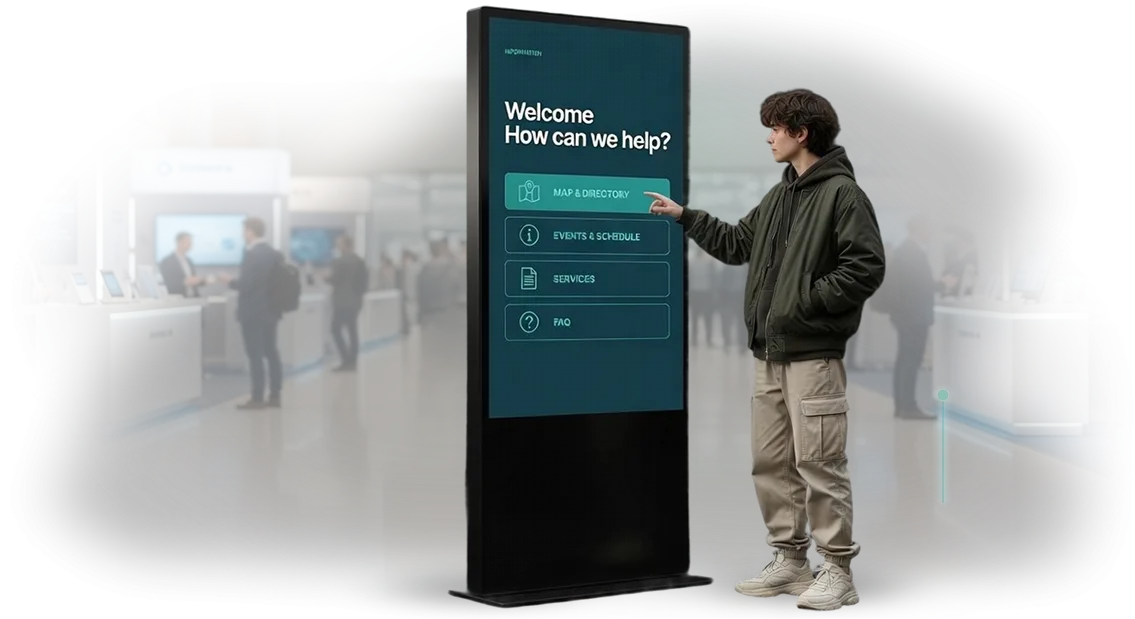
טרמינל שהורס את עיצוב הפנים — ולקוחות אבודים
מבקרים מקבלים החלטת רכישה בתוך הדקות הראשונות להגעתם, ולעיצוב הפנים יש תפקיד מכריע כאן.
קיוסק אינטראקטיבי שנראה כמו ציוד טכני זר הורס את האווירה שעוצבה בקפידה של החלל — במקום לעזור ללקוח, הוא מרגיז ודוחה אותו.
טרמינל המוצב בפנים ללא התחשבות בסגנון, בחומרים או בתאורה נתפס כמכשול. אורחים נמנעים ממנו, לא רוצים ליצור איתו אינטראקציה, וחלקם אף עוזבים ללא ביצוע הזמנה. כך, בחירה גרועה בטכנולוגיה הופכת לאובדן ישיר של לקוחות ולירידה בהכנסות.
אנחנו פותרים בעיה זו בשלב העיצוב: אנו מפתחים קיוסקים שהופכים לחלק אורגני מעיצוב הפנים. המעטפת, הצבע, הצורה והמיקום נבחרים עבור חלל ספציפי — מאזור ישיבה ועד אולם מכירות.
כתוצאה מכך, הטרמינל אינו מתנגש עם הסביבה אלא משלים אותה ושומר על שלמות הרושם.
מבקרים רואים לא "חומרה" אלא כלי נוח המשתלב באופן טבעי בסביבה. הם ניגשים אליו ברצון, גולשים בקטלוג, מבצעים הזמנה וחוזרים שוב.
קיוסק אינטראקטיבי המשולב כראוי משפר את האסתטיקה של החלל והופך טכנולוגיה לנקודת צמיחה במכירות.
מה מקבלים מקיוסק אינטראקטיבי מודרני
קיוסק אינטראקטיבי מודרני הוא לא רק מסך אלא כלי מכירות מלא. הוא עובד עבור המבקר: מושך תשומת לב, מערב אותו בחקר הקטלוג ועוזר לו להחליט לקנות.
אנחנו יוצרים טרמינלים שמשתלבים בעיצוב הפנים ומספקים תוצאות מדידות לעסק שלכם.
משיכת תשומת לב
מסך מגע גדול אי אפשר לפספס — הוא הופך למרכז החזותי של החדר ותופס את העין אפילו של עוברי אורח מזדמנים. בניגוד לפוסטרים סטטיים, קיוסק משנה כל הזמן את התמונות שלו ומתאים את עצמו לתחומי העניין של המשתמש, כך שאנשים רוצים לגשת אליו.
מעורבות מבקרים
כשאדם מקיים אינטראקציה עם מסך, הוא זוכר מידע פי כמה טוב יותר. אורחים גולשים בקטלוג בעצמם, בוחנים פרטים ומשווים אפשרויות — זה יוצר עניין במוצר, וזמן ההמתנה הופך לפעילות שימושית.
מבקרים מבלים כמה דקות בטרמינל ובוחנים את המוצרים והשירותים שלכם. זה מספק הרבה יותר מאשר מבט חטוף בדוכן מודפס — כל מגע הופך לעמוק ומודע יותר.
תדמית מודרנית
טרמינל משולב היטב מראה שהחברה מתעדכנת עם הזמנים. זה מגביר את אמון הלקוחות ויוצר תדמית של עסק טכנולוגי שאכפת לו מהחלל שלו.
קיוסק מודרני הופך לחלק מזהות המותג ומבדל אתכם ממתחרים שעדיין משתמשים בקטלוגי נייר ודוכנים מיושנים.
צמיחה במכירות
קטלוג אינטראקטיבי מציג מוצרים באור הטוב ביותר ומציע מה עוד עשוי לעניין את הלקוח. זה מגדיל את ערך ההזמנה הממוצע ומניע רכישות נוספות — ללא מעורבות של איש מכירות.
הקיוסק עובד ללא הפסקות צהריים או סופי שבוע, ועוזר לכל מבקר. בינתיים, העובדים שלכם מתפנים למשימות מורכבות יותר הדורשות אינטראקציה אישית ומומחיות.
פורמטים של קיוסק אינטראקטיבי למשימה שלכם
בחירת פורמט קיוסק אינה עניין של תמונה יפה. האם הטרמינל מותקן על הרצפה, הקיר או הדלפק קובע אם אורחים ישימו לב אליו, כמה מהר הם יתחילו להשתמש בקטלוג, והאם הוא יישכח אחרי שבוע.
הפורמט הנכון מגדיל את ההמרה להזמנה או לפנייה, בעוד שטעות בשלב זה גורמת לתורים ולעצבנות.
אנחנו מתכננים קטלוגים אינטראקטיביים בשלושה פורמטים עיקריים: עומד על רצפה, צמוד קיר ושולחני. אנו בוחרים את המבנה עבור הפנים והתרחיש שלכם — מאולם תצוגה מרווח ועד אזור המתנה קומפקטי.
השוואת פורמטים: איזה מהם מתאים לכם
| פורמט | למי | מה הוא נותן ללקוח |
|---|---|---|
| קיוסק עומד על רצפה | אולמות תצוגה, אולמות תערוכות, מרכזי קניות | מושך תשומת לב, עובד כאלמנט ניווט עצמאי, מתמודד עם תנועת מבקרים גבוהה |
| טרמינל צמוד קיר | מסדרונות, אזורי המתנה, חללים קטנים | חוסך מקום, תמיד באופק, נוח לעיון מהיר ולסשנים קצרים |
| קיוסק שולחני | דלפקי קבלה, אזורי ייעוץ, חדרי המתנה | קומפקטי, אישי, קל לשילוב בתהליכי עבודה של הצוות ובשירות לקוחות |
בכל פורמט, אנו מתאימים את הממשק לשליטה במגע ולעיצוב הפנים — הטרמינל הופך לחלק מהחלל, לא לציוד זמני. אתם מקבלים קטלוג שאורחים נהנים להשתמש בו ועובדים שמחים להמליץ עליו.
איך אנחנו מפתחים קיוסק: מהבריף ועד ההשקה
כדי שקיוסק באמת יעבוד עבור העסק שלכם, אנחנו לא מתחילים בקוד. קודם כל, אנחנו מבררים היכן הוא יוצב, מי ייגש אליו ואיזו משימה הוא חייב לפתור: להראות את הדרך למוצר, להציג שירותים, לאסוף פנייה.
אתם רואים ומאשרים כל שלב עוקב באופן אישי, כך שהתוצאה צפויה, לא "סתם משהו".
-
בריף וניתוח משימה. אנחנו נפגשים או מקיימים שיחה כדי לדון במיקום ההתקנה, בקהל היעד ובמטרות: מה המבקר צריך לעשות מול המסך. אנו קובעים לוחות זמנים וקריטריוני הצלחה — כדי למנוע מחלוקות מאוחר יותר.
-
אב טיפוס ותרחיש. אנחנו מתכננים את ההיגיון של המסך: כמה צעדים לפעולה הרצויה, איך לשמור על תשומת לב, אילו רמזים לכלול. אתם רואים את המבנה לפני שמשקיעים כסף בעיצוב ובפיתוח.
-
עיצוב בסגנון הפנים. אנחנו יוצרים ממשק שמתאים לפנים ולזהות המותג שלכם: בחירת צבעים, גופנים וקומפוזיציה. בשלב זה כבר ברור איך הקיוסק ייראה בחדר.
-
פיתוח ואינטגרציה. אנחנו הופכים את האבות הטיפוס למערכת עובדת: מחברים את קטלוג המוצרים, מאגר השירותים וטפסי הפנייה. אנו מגדירים זאת כך שתוכלו לעדכן תוכן ללא מתכנת.
-
בדיקות ותיקון תקלות. אנחנו מריצים את כל התרחישים על ציוד אמיתי — מהמגע הראשון ועד אתחול הטרמינל. אנו מבטלים בעיות לפני שהמכשיר רואה את המבקר הראשון שלו.
-
השקה ותמיכה. אנחנו מתקינים את הקיוסק, מגדירים אותו למיקום הספציפי ומכשירים את הצוות. אנחנו נשארים בקשר: מעדכנים תוכן, עוקבים אחר ביצועים ופותרים בעיות במהירות.
כתוצאה מכך, אתם מקבלים קיוסק שמבקרים מבינים ללא הוראות, ואתם יכולים לשנות מחירים ומבצעים בעצמכם. כל התהליך מהבריף ועד ההשקה אורך בממוצע 3–4 שבועות, והתמיכה נשארת איתכם גם לאחר מסירת הפרויקט.
מה כלול במסירת קיוסק אינטראקטיבי
בהזמנת קיוסק אינטראקטיבי, אתם מקבלים פתרון מוכן למפתח — לא רק מכשיר, אלא כלי עבודה שמשתלב מיד בתהליך העסקי שלכם. חשבנו על כל אלמנט במסירה כך שלא תצטרכו לקנות או להגדיר דבר בעצמכם. הנה מה שכלול:
- תוכנת קיוסק — מורשית, מותקנת מראש ומוגדרת למשימות שלכם. הממשק פועל ללא תקלות, עדכונים מותקנים מרחוק, ונתוני הקטלוג מסתנכרנים אוטומטית. אין צורך בעובד נפרד לתחזוקה.
- אבות טיפוס עיצוביים — מפותחים בסגנון הפנים וזהות המותג שלכם. הקיוסק נראה כמו חלק מהחלל, מושך תשומת לב ואינו בולט לרעה מהקונספט הכללי. אבות הטיפוס מותאמים למסך הטרמינל כך שהמידע קל לקריאה.
- התקנה והפעלה — אנו מביאים את הטרמינל לאתר, מחברים אותו, מגדירים תרחישים לפרטים הספציפיים שלכם ובודקים את כל מצבי הפעולה. אתם מקבלים קיוסק עובד ביום ההתקנה, ללא צורך להתעסק בפרטים טכניים.
- הכשרת צוות — אנו מקיימים בריף קצר למנהלים ולמנהלי מערכת: איך להפעיל את הקיוסק, להחליף תוכן ולפתור במהירות בעיות נפוצות. הצוות מרגיש בטוח, ואתם לא מבזבזים זמן על בעיות קטנות.
- מדריכים והוראות — אנו מספקים מסמכים ברורים לצוות ולתמיכה טכנית. הם מתארים תרחישי עבודה, שאלות נפוצות ונהלים למצבים חריגים. הכל כתוב בשפה פשוטה, ללא ז'רגון טכני מורכב.
- אחריות על הטרמינל — אנו מספקים אחריות רשמית ותמיכת שירות. אם המכשיר נכשל, נחליף או נתקן אותו במהירות. לא תישארו ללא קיוסק עובד ברגע קריטי.
כך, אתם מקבלים חבילה מלאה להשקת הקיוסק — כל שנותר הוא לחבר אותו לשקע החשמל. כבר עשינו עבורכם את כל השאר.
מקרה בוחן: קיוסק בעיצוב פנים וצמיחה במכירות
הלקוח — אולמות תצוגה לרהיטים ועיצוב הבית «Interio». יועצים לא יכלו לעמוד בקצב המבקרים בשעות השיא: אורחים עזבו ללא שירות, ומחלקת המכירות איבדה עד רבע מההזמנות הפוטנציאליות.
הבעיה לא הייתה המוצר, אלא העובדה שלאורחים לא הייתה דרך לחקור במהירות את המבחר ולהרכיב הערכת עלות ראשונית.
התקנו קטלוג אינטראקטיבי המשולב בעיצוב אולם התצוגה.
המעטפת הדהדה את סגנון המותג של הסלון, והממשק תאם את עיצוב הקטלוג המודפס של המותג: אורחים בחרו קולקציות בעצמם, סיננו לפי חדרים וחומרים, ראו מחירים והרכבים, וקראו ליועץ בלחיצת כפתור אחת. הטכנולוגיה לא התנגשה עם העיצוב — היא הפכה לחלק ממנו.
נתוני צמיחה במכירות
תוך חודשיים, ערך ההזמנה הממוצע באולם התצוגה גדל ב-18%, ומספר הייעוצים הוכפל. הקיוסק הוריד עומס שגרתי מהצוות: יועצים הפסיקו להסביר מידע בסיסי על כל ספה והתמקדו בפרויקטים מורכבים ומותאמים אישית.
מבקרים בילו 6–7 דקות בטרמינל, ואחד מכל שלושה שמר פריטים נבחרים ל"מועדפים". כתוצאה מכך, אורחים ניגשו ליועץ עם הערכת עלות מוכנה, קיבלו החלטות מהר יותר, והחזירו מוצרים פחות בשל "ציפיות שגויות".
למה המקרה הזה משמעותי
הקיוסק הפך לחלק מהפנים וחלק מתהליך המכירה: הוא משך תשומת לב, החזיק את האורח, סיפק מידע והעביר אותו למנהל.
הלקוח היה כל כך מרוצה מהתוצאה עד שהזמין שלוש יחידות נוספות לאולמות תצוגה אחרים ברשת — זו ההמלצה הטובה ביותר עבורנו.
איך לבחור את פורמט הקיוסק הנכון?
בחירת קיוסק מתחילה לא בעיצוב אלא בשלוש שאלות: מה המכשיר חייב לעשות, היכן הוא יעמוד, וכמה אנשים עוברים במקום בכל יום. פרמטרים אלה קובעים את הדרישות לקיוסק — הפורמט, הממדים והפונקציונליות שלו.
אין פתרון אוניברסלי: מה שמושלם לחנות קטנה יהיה לא נוח במרכז קניות עם תנועה גבוהה.
איך לבחור טרמינל למשימות שלכם? ראשית, הגדירו מה הוא צריך לעשות. אם הקיוסק יהיה קטלוג אינטראקטיבי עם מבחר גדול, אתם צריכים מסך מגע גדול ותפריט פשוט כדי שלקוחות יוכלו למצוא מוצרים בעצמם.
אם הטרמינל מיועד לניווט, דוכן קומפקטי עם מפה ונקודות עניין מספיק. אם אתם מתכננים להציג שירותים ולאסוף פניות, תצטרכו מסך עם טופס משוב.
גודל המסך, מבנה המעטפת ומהירות הממשק תלויים במשימות — ולכן גם עלות הפתרון.
הקריטריון השני הוא שטח ותנועת רגלים. עבור נישה צרה או לובי קטן, אפשרות צמודת קיר עדיפה: היא לא תופסת מקום שימושי ולא מפריעה למבקרים.
עבור מבואה מרווחת או אזור חיצוני, מבנה עומד על רצפה שמתמודד עם תנועה גבוהה ונשאר יציב. במקומות עם תנועה רבה, הקיוסק חייב להגיב במהירות למגעים ולא ליצור תורים, ולכן אנו מתאימים את הממשק לתנאי הפעלה אמיתיים.
הנקודה השלישית היא שילוב בפנים. אם הקיוסק מוצב בחלל מעוצב, חשוב שהמעטפת תשתלב עם הגימורים, התאורה והסגנון הכללי.
אנחנו מייצרים מעטפות עם חומרים וצבעים הניתנים להתאמה אישית, כך שהטרמינל הופך לחלק מהפנים ולא לאובייקט זר.
בפועל, זה נראה כך: אנו מבקרים באתר, מודדים את החלל, מעריכים תנועת רגלים ומגדירים את המשימות יחד איתכם. על סמך זה, אנו מציעים שניים או שלושה פורמטי קיוסק עם הערכת עלות ולוחות זמנים.
אתם בוחרים את המתאים, ואנחנו מספקים את הפרויקט במפתח — מעיצוב ועד התקנה והגדרה. גישה זו מסירה את הסיכון לבחירה שגויה ולקבלת ציוד שאינו מתאים לחלל או אינו יכול לעמוד בעומס.
שאלות נפוצות וחששות לגבי קיוסקים
כל ספק לפני הזמנת קיוסק מסתכם בדרך כלל בשלוש שאלות: "מה אם זה יתקלקל?", "מי ימלא ויעדכן את התוכן?" ו"האם הטרמינל לא יהרוס את עיצוב הפנים?" בואו נענה עליהן מיד — כדי שתדעו מה אתם מקבלים בכל שלב בעבודה.
מה קורה אם הקיוסק מתקלקל?
לכל טרמינל יש אחריות, ואנחנו נשארים בקשר לאחר השקת הפרויקט. אם משהו נשבר, אתם פונים אלינו — אנו מאבחנים את הבעיה מרחוק, מבקרים באתר במידת הצורך או מחליפים מודול במהירות.
זמן ההשבתה של הקיוסק הוא מינימלי: אתם לא מאבדים תנועת לקוחות ולא צריכים להתעסק בחומרה בעצמכם.
מי אחראי על התוכן ואיך הוא מתעדכן?
אנחנו ממלאים ומעדכנים את התוכן — על סמך הבריף ואבות הטיפוס שלכם. עריכות נעשות מרחוק בערוץ מאובטח, ללא קריאה למומחה לאתר.
תפריטים, מבצעים וקטלוגי מוצרים או שירותים משתנים תוך כמה שעות, והטרמינל תמיד מציג מידע עדכני.
האם הקיוסק לא ייראה זר בפנים?
להיפך, המעטפת והממשק מותאמים לעיצוב שלכם: חומרים, צבע, זהות מותג ומיקום המסך. הטרמינל בנוי למיקום ספציפי, כך שהוא נראה כמו חלק מהחלל ולא כמו מכשיר טכני אקראי.
מה עם התוכנה — האם היא תתיישן?
אנחנו מתחזקים ומעדכנים את התוכנה בעצמנו: שיפורים מתוכננים, תאימות לדפדפנים חדשים והגנה מפני קריסות כלולים בשירות. אין צורך להעסיק מומחה נפרד או להתעסק בפרטים טכניים — אנחנו אחראים על פעולת הטרמינל.
מהם לוחות הזמנים להתקנה ולהשקה?
פרויקט סטנדרטי אורך משבועיים עד חודש: מאישור העיצוב ועד התקנה באתר. אנו מספקים לוח זמנים מדויק לאחר הבריף — הוא תלוי במורכבות הממשק ובמספר היחידות. אתם מקבלים קיוסק עובד מוכן עם תוכן מוגדר, לא "הרכבה גולמית".
אחריות, תחזוקה מרחוק והתאמה לעיצוב הפנים כבר כלולים בעבודה. אנחנו מטפלים בכל הבעיות הטכניות עבורכם — אתם מתמקדים בעסק, בעוד הקיוסק עובד למודעות המותג ולמכירות.הזמינו פיתוח קיוסק וקבלו לקוחות החודש
השאירו פנייה לטרמינל — ונחשב עבורכם את עלות הפיתוח עבור הפנים והמשימות שלכם. הקיוסק כבר מוכן להביא לקוחות; כל שחסר הוא התוכן הנכון.
המבקרים הראשונים יוכלו להשתמש בקטלוג החודש, לא לאחר אישורים ארוכים. תקבלו הערכת עלות ברורה ולוח זמנים מראש, כך שתוכלו להחליט ללא סיכון.
במקום "אתר על מסך" מופשט, אתם מקבלים כלי שעובד להכנסות: הוא מדגיש מוצרים, מפחית תורים ומחזק את הרושם מהחברה שלכם. אנחנו צוות — אנו מייצרים פתרונות אינטראקטיביים כבר למעלה מ-10 שנים.
אנו נבחר את המבנה והעיצוב שיתאימו לחלל שלכם, כך שהטרמינל יהפוך לחלק מהפנים ולא למבנה זמני.
מה תקבלו לאחר ההשקה:
- הערכת עלות ולוח זמנים תוך יום עסקים אחד לאחר פנייתכם;
- ממשק שקל לעדכן ללא העסקת מתכנת;
- עיצוב מותאם אישית למותג שלכם ולפרטי המתחם;
- אינטגרציה עם מאגר המוצרים והשירותים שלכם;
- השקה מהירה — מאישור אב הטיפוס ועד ההתקנה;
- תמיכה טכנית ואחריות על הציוד.
כדי להזמין קיוסק, שלחו לנו את תוכנית הרצפה של המתחם ודוגמאות מהקטלוג שלכם. אנחנו נטפל בשאר: נציע את הפורמט הנכון, נכין את התוכן ונשיק את הטרמינל במפתח.
מלאו את הטופס — נחזור אליכם עם הערכת עלות ורשימת יתרונות שתקבלו מיד לאחר ההשקה. תוכלו לפגוש את הלקוחות הראשונים כבר החודש.