

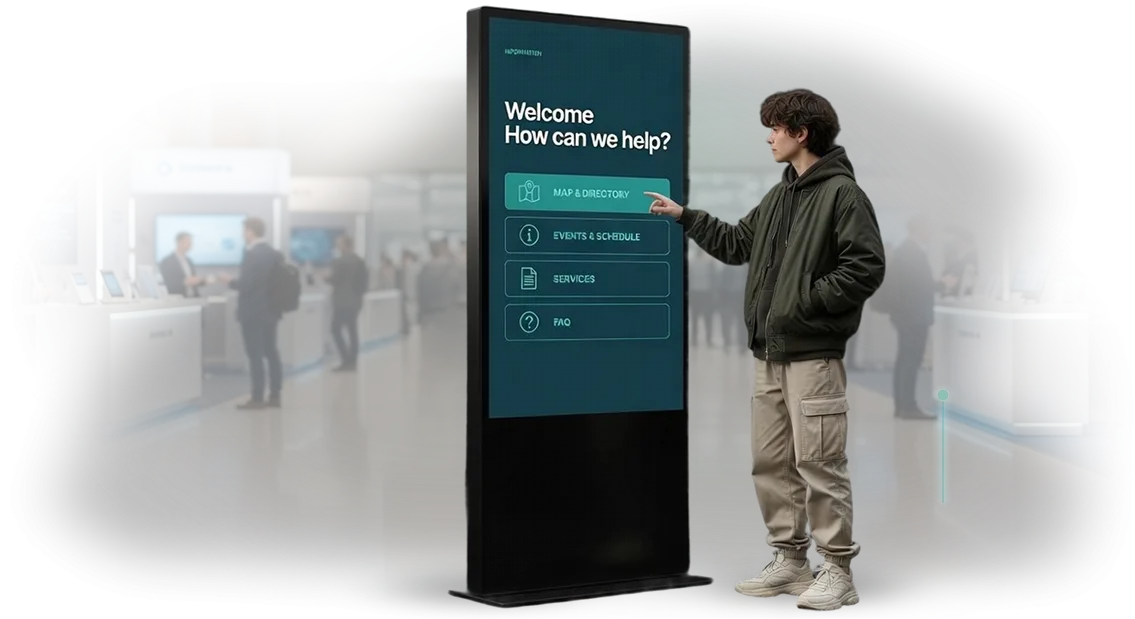
מדוע עסקים זקוקים היום ליישומי מצב קיוסק
מבקר מקבל החלטה תוך דקה: אם הוא לא מקבל את המידע שהוא צריך, הוא פונה למתחרה — וזו אובדן הכנסה ישיר. בעולם הפיזי, הכל נקבע על ידי מהירות: ניווט, זמן תגובה, זמינות השירות.
אם לקוח לא מוצא את מה שהוא צריך על המסך, הוא מחפש דרך אחרת — לעתים קרובות במקום אחר.
אבל כשיש כמה עשרות מכשירים, מתחיל כאוס: גרסאות שונות של ממשקים, תקלות ברגע הגרוע ביותר, אין דרך לעדכן מידע במהירות.
עובדים מוסחים על ידי "תמיכה טכנית," לקוחות מאבדים אמון, ומנהלים מבזבזים שעות בתיאום. כאן בדיוק נחוץ מצב קיוסק — קיוסקים דיגיטליים עם ממשק מבוקר שעובד באופן צפוי ולא נותן למשתמש לסטות מהמסלול.
אפליקציית קיוסק היא לא רק מסך עם תפריט. היא סביבה מבוקרת: האורח רואה רק את הסעיפים הנחוצים ולא יכול לשבור בטעות את המערכת או להיכנס להגדרות שירות.
הפתרון מתרחב בקלות: הוסף מיקום חדש — ותוך שעה הוא עובד לפי אותם כללים כמו השאר. הבעלים מקבל סדר במקום כאוס וחוסך זמן לצוות שלו.
יישום מצבי קיוסק מחזיר את ההשקעה במהירות: פחות לקוחות אבודים, מהירות שירות גבוהה יותר, סטטיסטיקות שימוש שקופות. קיוסקים דיגיטליים הופכים לנקודת צמיחה — מניווט בקניונים ועד לתיאום פגישות במרפאות.
הלקוח מרוצה, העסק מרוויח יותר, ואתם לא צריכים לחשוב על איך זה עובד בפנים — אנחנו מטפלים בחלק הטכני.
מה אתם מקבלים: שליטה, מהירות וצמיחה בהכנסות
הדבר הראשון שאתם מקבלים הוא שליטה מלאה על כל רשת המכשירים שלכם מפאנל אחד. אתם רואים את הסטטוס של כל קיוסק, מבחינים בתקלות בזמן, ומעדכנים תוכן בלי לבקר באתר. זה מפחית זמני השבתה וחותך עלויות תחזוקה: הצוות מתמקד בלקוחות במקום בציוד.
השני הוא מהירות השירות. הקיוסק מטפל בפעולות שגרתיות: תיאום פגישות, תשלום, הנפקת אישורים, עיבוד הזמנות. מבקר מסיים תוך כמה דקות בלי לחכות בתור, והעסק שלכם משרת יותר אנשים בשעות השיא. כל דקה שנחסכת ללקוח מגדילה את הנאמנות שלו.
השלישי הוא צמיחה במכירות. הממשק מציע שירותים נלווים, מציע מנה גדולה יותר, או מזכיר על תוכנית הנאמנות — כך שהסל הממוצע גדל בלי מכירות אגרסיביות. והנתונים על כל שלב מאפשרים לכם לראות מה עובד ולהתאים במהירות את ההצעות שלכם.
הרביעי הוא שימור לקוחות. הקיוסק זוכר העדפות, מזרז ביקורים חוזרים, והופך את השירות לצפוי. אדם חוזר לא כי זה זול יותר, אלא כי זה מהיר ונוח יותר — וזה בסיס איתן להכנסות חוזרות.
בסופו של דבר, אתם מקבלים לא רק מיקומים בודדים אלא רשת מנוהלת שעובדת למען המטרות שלכם: מדדים שקופים מכל מכשיר, דיווח מלא, וקשר ברור בין פעולות הלקוח להכנסות. על זה בנויים הזמנות חוזרות וצמיחה צפויה.
פורמטים של יישומי מצב קיוסק לכל משימה
מצב קיוסק נחוץ למשימה ספציפית: להציג קטלוג, לקבל בקשה, להזמין שירות, להדריך במתחם. אין פתרון אוניברסלי — אחרת תשלמו יותר מדי על תכונות מיותרות או תיתקלו במגבלות.
לכן אנחנו מתאימים את הפורמט לתרחיש שלכם: איפה המסך ממוקם, מי משתמש בו, באיזו תדירות התוכן משתנה.
אנחנו בונים יישומים בארבעה פורמטים עיקריים. השוו אותם מול תרחישים טיפוסיים — זה יעזור לכם לבחור את ההתאמה הטובה ביותר למשימה שלכם.
| פורמט | למי זה מיועד | מה זה נותן ללקוח |
|---|---|---|
| Android Kiosk | לדוכני מגע, מסכים וניווט בקניונים, מרפאות ובתי קפה | השקה מהירה, עלות ציוד נמוכה, עדכוני תוכן פשוטים |
| Windows Kiosk | למסופים עם ציוד היקפי לא סטנדרטי: מדפסות, קוראים, מודולי תשלום | תאימות מקסימלית לחומרה ולמערכות ארגוניות |
| React Native Kiosk | לרשתות שצריכות את אותה אפליקציה על מכשירים שונים | קוד אחד לכל המסכים, חיסכון בתמיכה |
| Browser Kiosk | למבצעים זמניים, תערוכות, השקה מהירה בלי התקנת תוכנה | עדכונים מיידיים, עובד על כל מחשב או טאבלט |
אנחנו מבססים החלטות על המשימה, לא על טכנולוגיה טרנדית. אם התוכן משתנה פעם בשבוע — נציע פורמט דפדפן; אם צריך תיאום פגישות עם רופא והדפסת כרטיסים — נבנה קיוסק Windows משולב עם המערכת שלכם. בכל מקרה, אתם מקבלים פעולה יציבה, ממשק ברור ותמיכה מהמהנדסים שלנו.
שלבי השקת הפרויקט: מהבריף ועד קיוסק עובד
אנחנו מובילים את הפרויקט מתיאור המשימה הראשון ועד קיוסק עובד ומעבר לכך — עם לוחות זמנים ברורים, נקודת אחריות אחת, ובלי הפתעות. כך זה עובד בפועל.
-
בריף ומטרות. אנחנו דנים היכן ימוקם הקיוסק, מי ניגש אליו ולמה, ומה הוא אמור לספק: מכירות, ניווט, מידע. אנחנו קובעים קריטריוני הצלחה — זמן שירות, כיסוי מבקרים, ביקורים חוזרים.
-
אב טיפוס ואישור. בהתבסס על הבריף, אנחנו מכינים את מבנה המסכים ואת לוגיקת הפעולה. אתם רואים איך מבקר יעבור בתרחיש ומאשרים החלטות מפתח לפני תחילת הפיתוח — זה מונע עבודה חוזרת בשלבים הסופיים.
-
עיצוב ותרחישים. אנחנו מעצבים את המראה הוויזואלי כך שיתאים למותג שלכם וחושבים על תרחישים: איך למשוך את הלקוח, לקצר את התור, ולספק הנחיות ברורות.
אנחנו שמים דגש על פונטים, ניגודיות ואזורי מגע גדולים — כך שהקיוסק נוח לאנשים בכל הגילאים.
-
פיתוח ואינטגרציות. המהנדסים שלנו מרכיבים את האפליקציה ומחברים את המערכות הנדרשות: קטלוג, תשלום, CRM, שליחת התראות. אנחנו מגדירים ניהול מרחוק — אתם משנים תוכן ורואים סטטיסטיקות בלי להזמין מומחה.
-
בדיקות והתקנה. אנחנו מוודאים פעולה על חומרה אמיתית בתנאים קרובים לשלכם: בעומס שיא, במהירויות אינטרנט שונות, במהלך עבודה רציפה ארוכה. אנחנו מתקינים את הקיוסק, מגדירים הפעלה אוטומטית, ומגנים מפני תקלות מקריות.
-
השקה ותמיכה. אנחנו מאמנים את הצוות, משיקים את הקיוסק, ונשארים בקשר. אנחנו מספקים תמיכה, מעדכנים תוכן ומנטרים יציבות — אתם מקבלים פעולה צפויה בלי להסיח את דעת הצוות שלכם.
התהליך הזה מוכח בעשרות פרויקטים: הוא מספק לוח זמנים צפוי, עלות ברורה, ותוצאה שבאמת עובדת אחרי ההשקה. כל מה שאנחנו צריכים מכם בהתחלה הוא חצי שעה כדי לתאר את המשימה — אנחנו נטפל בשאר.
מה כלול במסירה: ערכת השקה מלאה
לאחר מסירת הפרויקט, אתם מקבלים לא רק "קיוסק כמוצר" אלא פתרון עבודה מלא — עם כל החומרים להשיק אותו ביום הראשון ולהפעיל אותו בלי תלות בנו ביום-יום.
חבילת המסירה
- יישום מצב קיוסק עובד — מותקן ומוגדר על החומרה שלכם, עם תרחישי שימוש מאומתים.
- תיעוד לצוות שלכם — הוראות קצרות להדלקה, כיבוי, טעינת תוכן וטיפול במצבים נפוצים. בלי פרטים טכניים מורכבים.
- הדרכת צוות — אנחנו מקיימים מפגש מקוון עם אלה שינהלו את הקיוסק: עוברים על תרחישים אמיתיים ועונים על שאלות.
- חומרי מקור — טקסטים, תמונות, מבנה תפריט והגדרות שתוכלו להשתמש בהם לעדכון הבא.
- מדריך ניהול תוכן — מתאר ברור לשינוי תוכן בעצמכם, בלי לערב מפתחים.
- תוצאות בדיקות — אנחנו מאשרים שכל התרחישים עובדים על החומרה שלכם ומוסרים תעודת קבלה.
- המלצות פיתוח — רשימת רעיונות לתרחישים חדשים ומסכים נוספים שיגדילו את ערך הקיוסק.
ההדרכה והתיעוד בנויים כך שהעובדים שלכם יתחילו לעבוד באופן עצמאי במקום לכתוב לנו על כל בעיה. אם משהו משתבש — יש לכם תוכנית פעולה בהישג יד, והתמיכה שלנו נשארת זמינה אחרי המסירה.
מקרה בוחן: איך הכפלנו המרות במיקום אחד
אחד הפרויקטים שלנו — רשת Prime Coffee: 12 מיקומים בקניונים, עם תור שנבנה בקופה בשעות השיא. חלק מהאורחים עזבו בלי לקנות, והקופאי לא עמד בקצב של הצעות ותוספות.
הצענו לפתור את הבעיה עם יישומי מצב קיוסק — החלפת הקופה בטאבלטים עם ממשק מגע פשוט.
עיצבנו והשקנו את התרחיש בארבעה שבועות: האורח בוחר את המשקה שלו, רואה את המחיר הסופי, ומשלם בכרטיס או בטלפון. האלגוריתם מציע אוטומטית סירופ, משקה שני או קינוח — הסל הממוצע גדל בלי מעורבות צוות. הקופאי נשאר לשאלות ותשלומים במזומן.
תוצאות עבור הלקוח
אחרי חודשיים, המדידות הראו: הזמנות מוצלחות במיקום הוכפלו, וחלק המבקרים שעזבו בגלל התור ירד בכמעט 60%. הסל הממוצע גדל ב-18% — ההצעות האוטומטיות עשו את העבודה. עומס העבודה על הצוות ירד: העובדים מקדישים פחות זמן לשגרה ויותר זמן לאורחים.
מנהל המחלקה: "הטאבלטים עם אפליקציית מצב הקיוסק הפכו לתחליף פשוט לקופה: אורחים משרתים את עצמם, ואנחנו מספיקים יותר במשמרת ורואים צמיחה בהמרות כבר בחודש הראשון." אחרי ההשקה, תמכנו בצוות: הדרכנו את העובדים, הגדרנו ניטור הזמנות ועדכוני תפריט — הלקוח קיבל תמיכה בלי השבתות.
עבורנו, המקרה הזה מאשר שאפליקציית קיוסק בנויה היטב מניעה מדדים עסקיים. כל פרויקט מתחיל בניתוח צוואר בקבוק במיקום ומסתיים במספרים ברורים לבעלים: המרות, סל ממוצע, מהירות שירות.
איך לבחור את הפורמט המתאים למשימה שלכם?
בחירת פורמט קיוסק מתחילה לא בדגמי מכשירים אלא במשימה שלכם. ראשית, הגדירו מה המסך אמור לעשות: לספק מידע עזר, להדריך מבקר בקטלוג, לקבל בקשות, או לבדר בזמן ההמתנה. זה קובע את התוכן, הממשק, ואת כמות תשומת הלב שהצוות שלכם יצטרך להקדיש לו.
השלב השני הוא להבין מי ישתמש בקיוסק ובאילו תנאים. לובי קטן וקניון עמוס דורשים גישות שונות: אותו תרחיש יכול להיות מיושם בצורה קומפקטית או כאזור אינטראקטיבי גדול.
אנחנו מתאימים את גודל המסך, המעטפת ושיטת השליטה לזרימת המבקרים בפועל — כך שזה נוח גם לאורחים וגם לצוות שלכם.
דרישות לעדכוני תוכן חשובות לא פחות. אם המידע משתנה לעתים קרובות, אנחנו בוחרים פתרון עם פאנל ניהול פשוט כך שהמנהלים שלכם יוכלו לעדכן טקסטים ותמונות בעצמם.
אם הקיוסק צריך להחליף נתונים עם המערכות שלכם, זה גם משפיע על בחירת הפורמט — אבל הפרטים הטכניים נשארים עלינו; אתם מקבלים תוצאה צפויה.
התקציב קובע מאיפה להתחיל. כדי להשיק, מספיק מיקום אחד עם לוגיקה בסיסית, ואפשר מאוחר יותר להרחיב למספר מסכים או להוסיף מודולים חדשים.
אנחנו מציגים כמה אפשרויות — ממינימלית ועד מורחבת, עם לוחות זמנים ברורים וללא עלויות נסתרות — כך שתוכלו להחליט עם צמיחת הפרויקט בראש.
פורמט שנבחר נכון חוסך עד 30–40% מהתקציב בהתחלה ומספק תוצאות כבר בחודש הראשון לפעולה. ספרו לנו על המשימה שלכם — ונציע פתרון מתאים שמתאים לתהליכים ולתקציב שלכם.
שאלות נפוצות וחששות לפני הזמנה
לפני תחילת פרויקט, כל מנהל שואל את עצמו שאלות דומות: "מה עם אבטחה?", "מי יתחזק את המערכת אחרי ההשקה?", "מה אם משהו ישתבש ברגע הגרוע ביותר?" זה נורמלי — ההימור גבוה, ואתם רוצים פתרון אמין, לא כאב ראש לשנים הבאות.
להלן תשובות לחששות העיקריים שעולים לרוב בשיחות. אם השאלה שלכם לא ברשימה — פשוט כתבו לנו, ונענה בכנות תוך יום עסקים אחד.
אילו ערבויות אתם מספקים לפעולת אפליקציית הקיוסק?
אנחנו עומדים מאחורי כל שורת קוד שכתבנו. בשלב ההשקה, נתעד התחייבויות אחריות בחוזה עם תקופת תוקף ברורה.
אם מתרחשות שגיאות שמשבשות את פעולת הקיוסק במהלך תקופת האחריות — אנחנו לא רק "מבטיחים לתקן," אנחנו מתקנים לפי עדיפות חומרה. תהליך העסקי של האורח לא נעצר, ואתם לא צריכים לחפש קבלן חדש מההתחלה.
מה קורה עם תמיכה טכנית אחרי ההשקה?
קיוסק עובד שנים וזקוק לטיפול שוטף. לכן התמיכה לא מסתיימת ביום ההשקה — היא נמשכת לפי התוכנית שתבחרו.
המהנדסים שלנו מנטרים את יציבות המערכת מרחוק, מעדכנים את התוכנה כשצריך, ותמיד זמינים כשנדרשת התערבות מהירה. אתם מתמקדים במשימות שלכם, והצד הטכני נשאר אצלנו.
עד כמה אפליקציית הקיוסק מוגנת מפני פריצות?
קיוסקים הם לעתים קרובות מכשירים ציבוריים, ולכן אנחנו בונים מנגנוני הגנה ברמת הארכיטקטורה. אנחנו מגבילים גישה לנתוני שירות של המערכת, מבודדים את מצב המשתמש, ומבצעים בדיקות אבטחה שוטפות.
עבורכם, זה אומר שתוכן לא רצוי או הפרעה חיצונית לא יעצרו את הקיוסק או יפגעו במותג שלכם מול האורחים.
מה אם נרצה לשנות פונקציונליות אחרי ההשקה?
שינוי הוא חלק מחייו של כל פרויקט. בסיס הטכנולוגיה שבו אנו משתמשים מאפשר לאפליקציה להתפתח, ולהוסיף תכונות חדשות בהדרגה.
לא "בואו נכתוב הכל מחדש" — רק אפשרויות חדשות שמשתלבות ומתעדכנות על הקיוסק העובד. זה הרבה יותר זול ומהיר מאשר להזמין פתרון חדש לכל משימה.
מוכנים לדון בפרויקט שלכם? השאירו בקשה לייעוץ
השאירו בקשה לפיתוח קיוסק — ונתחיל לעבוד על הפרויקט כבר למחרת. ראשית, נבחן את המשימה, נייעץ כיצד הפורמט יכול לספק ערך מקסימלי בחלל שלכם, וניתן לכם הערכת תקציב ריאלית.
אין התחייבויות בשלב זה: תקבלו את ההערכה וההמלצות גם אם תחליטו לא להמשיך.
אנחנו מבינים שמחיר, לוחות זמנים ותוצאות חשובים יותר ממילים. לכן אחרי הבקשה שלכם, אתם מקבלים לא רק תשובה של מנהל אלא תוכנית שקופה עם שלבים ברורים וערבויות. הנה מה שהתהליך שלנו כולל:
- ייעוץ ראשוני: אנחנו דנים במשימות הקיוסק, בקהל שלכם ובמיקום ההתקנה, וקובעים מטרות פרויקט.
- הערכה: תוך 1–2 ימים, אנחנו מכינים אומדן עם טווח עלויות, היקף עבודה ולוח זמנים ליישום. אתם רואים את התמונה המלאה לפני ההתחלה.
- מפרט טכני: אנחנו מתעדים את הלוגיקה, העיצוב ותרחישי האינטראקציה כך שתדעו מראש איך המערכת תעבוד ואילו תוצאות היא תספק.
- פיתוח מלא: עיצוב, אבות טיפוס של ממשק, בנייה ובדיקות — אתם מקבלים מוצר מוגמר, לא רק אפליקציה.
- השקה ותמיכה: אנחנו עוזרים להגדיר את הקיוסק, מאמנים את הצוות, נשארים בקשר אחרי ההשקה ומבצעים התאמות במהירות.
כך, אתם מסירים מעצמכם את כל הסיכונים: אנחנו לוקחים אחריות על הפרויקט מהרעיון הראשון ועד לפעולה יציבה בחלל שלכם. זה חוסך לכם זמן וכסף בהשוואה לחיפוש קבלנים ותיאום מבצעים בעצמכם.
התוצאה — קיוסק עובד שמועיל למבקרים ומחזיר את ההשקעה דרך צמיחה במעורבות, הזמנות או בקשות.
השאירו את הבקשה שלכם עכשיו: נחזור אליכם תוך יום עסקים אחד, נענה על שאלותיכם, ונראה כיצד יישמנו משימות דומות עבור חברות אחרות.