

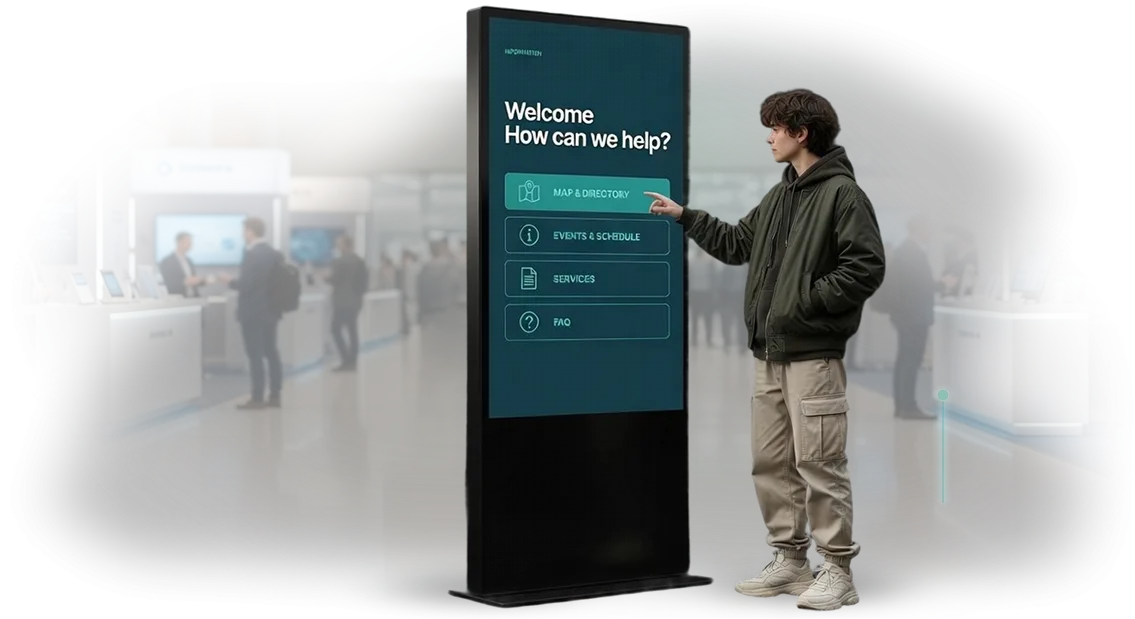
קיוסקים אינטראקטיביים במוזיאונים: איך להגביר את מעורבות המבקרים?
מבקרי מוזיאון מגיעים בשביל חוויה, אבל לעתים קרובות עוזבים אחרי 40 דקות, לאחר שראו רק את המוצגים המרכזיים. שלטים קלאסיים ומדריכי שמע מחזיקים את תשומת הלב של רק חלק מהקהל, בעוד צעירים ומשפחות עם ילדים מאבדים עניין כבר באולם הראשון.
הבעיה אינה מספר המוצגים, אלא איך לערב את האורח בסיפור ולאפשר לו להפוך בעצמו למשתתף בחקירה.
קיוסק אינטראקטיבי פותר בעיה זו: הוא הופך את הביקור למסע, למשחק או לסיור אישי. המבקר בוחר את המסלול שלו, לומד פרטים שמדריך לא היה חולק, ונשאר במוזיאון זמן רב יותר.
עבור המוזיאון, משמעות הדבר היא הגדלת זמן הביקור הממוצע, כיסוי רחב יותר של התערוכה הקבועה, וסיבה לחזור.
אנו יוצרים פתרונות אינטראקטיביים למוזיאונים ולחללי תערוכות כבר למעלה מ-10 שנים. אנו מעצבים ממשקים כך שגם ילדים וגם קשישים יוכלו להשתמש בהם: כפתורים גדולים, תרחישים פשוטים, תגובה מיידית.
התוצאה — מבקרים לא חולפים על פני המוצגים, הם עוצרים, חוקרים, מצלמים ומספרים לאחרים על המוזיאון.
קיוסק אינטראקטיבי במוזיאון הוא לא רק מסך עם מידע, אלא כלי למשיכת קהל ושימורו. הוא מוריד עומס מהצוות, משחרר אותם משאלות חוזרות ונשנות, והופך את התערוכה לנגישה לאנשים עם רמות הכנה שונות. המוזיאון גם מקבל נתונים ברורים על אילו מוצגים מייצרים את העניין הרב ביותר.
אילו יתרונות מביאים קיוסקים אינטראקטיביים למוזיאונים?
מבקרים מודרניים מצפים מהמוזיאון לא רק לוויטרינות, אלא לדיאלוג חי. קיוסקים אינטראקטיביים הם טכנולוגיות מוזיאוניות שהופכות צפייה פסיבית לחקירה פעילה: האורח בוחר את עומק ההתעמקות שלו — מהתייחסות קצרה ועד לסיור מולטימדיה.
הקיוסק עובד כמדריך אישי בכל אולם, מבלי לדרוש מהמוזיאון להרחיב את צוותו.
- מעורבות מוגברת. מסכי מגע ומכניקות משחק שומרים על מבקרים ליד המוצגים פי 2-3 יותר זמן. אורחים מצלמים ומשתפים רשמים ברשתות החברתיות — המוזיאון מקבל סיקור חינמי ברגע האירוע.
- תמיכה במידע. הקיוסק מחליף שלטי נייר וחוברות. הוא מכיל תיאורים עדכניים, חומרי שמע ווידאו והפניות היסטוריות. זה מבטל את הצורך בחומרים מודפסים ומפשט את עדכון המידע לתערוכות חדשות.
- חוויה משופרת. מבקרים בוחרים את הקצב ואת עומק החקירה שלהם — מסקירה קצרה ועד לימוד מעמיק. זה נוח למשפחות, לתיירים ולאנשים עם צרכים מיוחדים: ניתן להתאים גופן, שפה וקריינות.
- יעילות הקיוסק. הצוות משוחרר משאלות חוזרות ונשנות ויכול להקדיש יותר זמן לייעוץ אישי. האנליטיקה של הקיוסק מראה אילו מוצגים מושכים עניין — זהו נתון לפיתוח התערוכה.
- הכרה ונאמנות. מוזיאון שמשתמש בטכנולוגיה מודרנית נתפס כפתוח ומתקדם. זה מגביר את נאמנות המבקרים ומעודד ביקורים חוזרים — במיוחד בקרב קהלים צעירים יותר.
אנו יוצרים פתרונות אינטראקטיביים למוזיאונים כבר למעלה מ-10 שנים. נעזור לכם לבחור תרחיש, לפתח את העיצוב ולספק את הציוד — עם אחריות ותמיכה. כל מה שנשאר למוזיאון הוא ליהנות מהמשוב.
פורמטים של קיוסקים במוזיאונים: באיזה מהם לבחור?
במוזיאון, קיוסק פותר משימות שונות: חלק מהמבקרים רוצים למצוא במהירות את האולם עם ציור מסוים, אחרים רוצים ללמוד את ההיסטוריה של מוצג, וחלק רוצים להתעכב ולחקור שחזור אינטראקטיבי.
אין "קיוסק לכל העניינים" אוניברסלי, וזה נורמלי. הגישה הנכונה היא לבחור פורמט לתרחיש ספציפי — ואז הציוד משתלם דרך עניין האורחים והקלה על הצוות.
אנו מזהים שלושה פורמטים בסיסיים שמכסים כמעט את כל המשימות המוזיאוניות. להלן פירוט קצר של מתי כל קיוסק מביא את הערך הרב ביותר.
| פורמט | למי | מה הוא נותן למבקר |
|---|---|---|
| שולחן מגע | משפחות עם ילדים, קבוצות בית ספר, מבקרים עם תפיסה מישושית | מערב בחקירה משותפת: כמה אנשים יכולים לעבוד על שולחן אחד. מגדיל את הזמן ליד המוצג ויוצר "פינת צילום" טבעית לתמונות ודיון |
| לוח מידע | מבקרים בודדים שרוצים לקבל במהירות הקשר על התערוכה | מציג את האובייקטים המרכזיים ואת ההיגיון של התערוכה תוך דקה. מפחית את זרם השאלות החוזרות למלווים |
| קיוסק ניווט | מבקרים בפעם הראשונה, קבוצות תיירים, אורחים של מתחמים גדולים | עוזר למצוא את האולם הנכון, בית הקפה, מלתחה ולתכנן מסלול. מקל על הצוות, במיוחד בשעות השיא |
איזה פורמט לבחור תלוי בתערוכה שלכם ובזרימת המבקרים.
לתערוכות זמניות, לוח מידע בדרך כלל מספיק; לתערוכה קבועה עם אפקט חווייתי, שולחן מגע עובד הכי טוב; וקיוסק ניווט בלובי מוריד עומס מהצוות בדקות הראשונות של הביקור.
אנו עוזרים לכם לבחור שילוב של פורמטים לתקציב ולמטרות שלכם — ונכין הערכת עלות של תרחישי שימוש כבר בשלב הבריף.
איך פיתוח קיוסק מוזיאוני עובד: שלבים
פיתוח קיוסק למוזיאון הוא תהליך ברור ושקוף. אתם משתתפים בכל שלב, רואים מה קורה ומקבלים תוצאה שעומדת בציפיות שלכם.
-
בריף וניתוח משימה. אנו דנים למי מיועד הקיוסק, אילו פונקציות חשובות ואילו חומרים כבר קיימים. אתם מקבלים תוכנית עבודה והערכת עלות ללא סעיפים נסתרים.
-
אב טיפוס ממשק. אנו מראים טיוטה של המסכים וההיגיון הניווטי כדי שתוכלו להעריך את השימושיות לפני תחילת הפיתוח. כאן מתבצעים התיקונים העיקריים.
-
עיצוב בסגנון המוזיאון. אנו יוצרים מראה שמתאים לתערוכה שלכם וקל לתפיסה עבור מבקרים בכל הגילאים.
-
מילוי תוכן. אנו בונים את המערכת, ומוסיפים את התיאורים, התצלומים והסרטונים שלכם. אתם רואים גרסאות ביניים ומבצעים תיקונים.
-
בדיקות. אנו בודקים כיצד הקיוסק מתפקד לאורך זמן ממושך, כמה מהר הוא מגיב והאם הוא נוח לאורחים.
-
השקה והדרכה. אנו מתקינים את הקיוסק במקום ומראים לצוות שלכם כיצד לעדכן מידע ולנהל את המערכת.
-
תמיכה שוטפת. אנו עוזרים בעדכונים ושינויים, מנטרים פעולה יציבה ומגיבים במהירות לשאלות.
מה כלול באספקת הקיוסק האינטראקטיבי
כאשר מזמינים קיוסק למוזיאון, מה שחשוב הוא לא רק החומרה, אלא כלי מוכן שמתחיל מיד לעבוד עבור המבקרים. לכן האספקה כוללת את כל הדרוש: מהמסוף ועד להדרכת הצוות. להלן הרכב הפתרון.
-
תצורת קיוסק ואספקה. אנו בוחרים את המעטפת והמסך בהתאמה למשימות המוזיאון ולפנים, מספקים ומתקינים במקום הנכון — מבלי להפריע לפעילות התערוכה.
-
ממשק קטלוג אינטראקטיבי. אנו מפתחים את המבנה ואת עיצוב המסכים: מבקרים מוצאים בקלות מוצגים, תיאורים, תמונות וסרטונים. אנו מתחשבים בתרחישים מוזיאוניים: מפגשים קצרים, מצב לכבדי ראייה, שפות מרובות.
-
התקנת קיוסק והגדרה. אנו מאבטחים את הציוד תוך התחשבות בדרישות הבטיחות ובמאפייני החלל, ומגדירים פרמטרי פעולה. אנו בודקים יציבות, נגישות למבקרים והגנה מפני כיבוי מקרי.
-
הדרכת צוות. אנו מקיימים מפגשי הדרכה למלווים ולמנהלים: כיצד להפעיל את הקיוסק, לשנות בלוקי מידע ולסייע למבקרים. אנו מסבירים בשפה פשוטה, ללא טרמינולוגיה מורכבת.
-
השקה ותמיכה טכנית. אנו מוודאים שהקיוסק פועל באופן אמין, מספקים אחריות ונשארים בקשר. אם צריך לעדכן את הקטלוג, אנו עוזרים במהירות — ללא אישורים מיותרים.
כל זה מאפשר לכם להשיק קיוסק במוזיאון מבלי לגייס קבלנים נוספים. אתם מקבלים פתרון סוהר: ציוד, ממשק, התקנה והדרכה — צוות אחד אחראי לתוצאה.
מקרה בוחן: איך קיוסק הגדיל את נוכחות המוזיאון
קיוסקים אינטראקטיביים בפרקטיקה המוזיאונית פותרים בעיה שקשה לטפל בה עם דוכנים ושלטים רגילים. מבקרים רוצים לבחור את המסלול שלהם, לא ללכת לפי תוכנית כפויה.
התקנו קיוסק במוזיאון להיסטוריה עירונית: מסך מגע החליף את מפת הרצפה מנייר והפך למדריך אישי לתערוכה.
תוצאות היישום
שלושה חודשים לאחר ההשקה, מדדנו את ההשפעה על פני מדדי מפתח. הנוכחות הממוצעת גדלה ב-27% — אורחים התחילו להביא חברים וקרובי משפחה לאחר שלמדו על הפורמט המיוחד.
זמן השהייה גדל מ-40 דקות לשעה וחצי: מבקרים לא רק עוברים באולמות, אלא עוקבים אחר מסלול עם מדריך שמע ומשלימים משימות אינטראקטיביות.
גם המדדים הכלכליים השתנו. ביקורים חוזרים בתוך שישה חודשים גדלו ב-15%, והכרטיס הממוצע בבית הקפה ובחנות המזכרות של המוזיאון עלה בכמעט רבע. אנשים נשארים במוזיאון זמן רב יותר, מה שאומר שהם מבלים יותר זמן וכסף בפנים.
למה זה עובד בפרקטיקה המוזיאונית
הקיוסק אינו מחליף מלווה או מדריך, אלא מוריד מהם את העבודה השגרתית. מבקרים מקבלים תשובות לשאלות בלי לחכות בתור, והמוזיאון מקבל נתונים על אילו מוצגים מעניינים את הקהל ביותר. בהתבסס על מידע זה, ניתן להתאים תערוכות ולתכנן את קיבולת האולמות.
עבור צוותי מוזיאון, משמעות הדבר היא פחות ניירת ויותר זמן לעבודה משמעותית. הקיוסק משתלם לא רק באמצעות הגדלת זרימת המבקרים, אלא גם באמצעות חיסכון בחומרים מודפסים ובייעוץ צוות.
לאחר ההשקה, המוזיאון הזמין שני קיוסקים נוספים לסניפים שלו — ההזמנה החוזרת הפכה לאישור הטוב ביותר לתוצאה.
שאלות נפוצות על קיוסקים אינטראקטיביים למוזיאונים
מומחי מוזיאון ממעטים לשאול על מפרטים טכניים — מה שמעסיק אותם ביותר הם עניינים מעשיים: כמה יעלה קיוסק, האם ניתן להתאים אותו לפריסת אולם לא סטנדרטית, וכיצד יעודכן התוכן.
אלה חששות מוצדקים, ואנו מוכנים להתייחס לכל אחד מהם עם דוגמאות מפרויקטים שכבר הושלמו למוזיאונים ולחללי תערוכות.
כמה עולה קיוסק אינטראקטיבי למוזיאון?
העלות מורכבת משלושה מרכיבים: החומרה (דוכן, מסך, הגנה), החלק התוכנתי והאינטגרציה עם התערוכה שלכם.
קיוסק בסיסי זול באופן ניכר ממדריך מולטימדיה מלא עם מודלים תלת-ממדיים, אבל בכל מקרה אתם מקבלים הערכת עלות שקופה לפני תחילת העבודה. אנו בוחרים את התצורה לתקציב ולמשימות שלכם, לא להפך.
האם ניתן להתאים קיוסק לדרישות לא סטנדרטיות של האוסף?
כן, אנו עובדים עם פריסות לא סטנדרטיות, תנאי תאורה מיוחדים, דרישות שימור מוגברות וסביבות נגישות. ניתן לשלב את הקיוסק בוויטרינה קיימת, לתת לו צורה יוצאת דופן, או לשלוט בו לא רק במגע, אלא גם בכפתור ובקול.
העיקר הוא לתאר את המגבלות מראש, ואנו נציע פתרון הנדסי שלא יפריע לקונספט התערוכה.
מה קורה כשצריך לעדכן תוכן או להוסיף מוצגים חדשים בעוד שנה?
אנו מתכננים קיוסקים מתוך מחשבה על צמיחה: עדכון מידע לוקח שעות, לא שבועות. אתם מקבלים פאנל ניהול קל לשימוש שבו הצוות יכול לשנות תיאורים, תמונות וסרטונים בעצמם.
אם צריך לשנות את היגיון הפעולה או להוסיף מדור חדש, אנו נשארים בקשר ונכין עדכון כחלק מהתמיכה.
כדי לפתור שאלות נוספות, התקשרו אלינו. נספר לכם על מקרי בוחן רלוונטיים, נראה כיצד הקיוסק עובד עם התוכן שלכם, ונכין התאמה לאוסף שלכם כבר בשלב המשא ומתן.הזמינו קיוסק אינטראקטיבי למוזיאון שלכם
מבקרי מוזיאון מודרני מצפים לא רק למידע, אלא לדרך מהירה ונוחה לחקור את התערוכה. הזמנת קיוסק מאיתנו פירושה קבלת פתרון סוהר: מהשיחה הראשונה ועד ההשקה והדרכת הצוות. להלן התהליך שלב אחר שלב כיצד נבנה את העבודה לאחר פנייתכם.
- פנייה וייעוץ ראשוני. אתם מתארים את המשימות שלכם ומספרים לנו על המוזיאון, המקום והקהל.
- בחירת פתרון. אנו מציעים את סוג הקיוסק והפורמט הקטלוגי האינטראקטיבי המתאימים לתערוכה שלכם.
- הערכת פרויקט. אנו מכינים את הערכת העלות ולוח הזמנים — אתם מקבלים את ההערכה המקדימה תוך כמה ימי עסקים.
- אישור וחוזה. אנו מגבשים את המבנה, העיצוב, היגיון הקטלוג ואת מלוא היקף העבודה.
- פיתוח ותוכן. אנו יוצרים את הממשק, מעלים מידע על מוצגים ובודקים תרחישי אינטראקציה.
- הדגמת קיוסק. אנו מראים אותו עובד במקום שלכם או באינטרנט ומבצעים תיקונים במהירות.
- השקה ותמיכה. אנו מתקינים את הציוד, מדריכים את הצוות ונשארים בקשר לאחר ההשקה.
מיד לאחר פנייתכם הראשונה, אתם מקבלים תמונה מלאה של הפרויקט. כלול:
- הערכת פרויקט ולוח זמנים מקדימים;
- בחירת פתרון לאולמות, לתערוכה ולמטרות המוזיאון שלכם;
- הדגמת קיוסק לפני התשלום הסופי;
- מבנה קטלוג מובן למבקרים בכל גיל;
- הערכת עלות ולוח עבודה ללא סעיפים נסתרים;
- תמיכה שוטפת ועדכוני תוכן לאחר ההשקה.
השאירו פנייה — בשלב הבא נראה לכם הדגמה של הקיוסק ונכין הערכת פרויקט ספציפית למוזיאון שלכם.
איך לבחור פורמט קיוסק למטרות המוזיאון שלכם?
השלב הראשון הוא לא בחירת מסך, אלא הגדרת מטרות המוזיאון. קיוסק אחד נחוץ לניווט בתערוכה גדולה, אחר להצגת קטלוג האוסף, ושלישי כתוספת אינטראקטיבית למוצג ספציפי.
לכן בחירת הפורמט מתחילה בשאלה: מה המבקרים צריכים לעשות במסוף? אם הם הולכים לאיבוד, קיוסק עומד עם מפת אולמות פותר את הבעיה.
אם צריך לספר סיפור עמוק יותר על אובייקט, מסך מגע צמוד קיר ליד הוויטרינה מתאים יותר. ולקטלוג של כל פריטי האוסף, פורמט שולחני שבו מבקרים יכולים ללמוד חומרים בשקט הוא הנוח ביותר.
קריטריוני הבחירה אינם במפרטי הציוד, אלא בהיגיון של החלל המוזיאוני. העריכו את הנוכחות: עם זרימת מבקרים גבוהה, אתם צריכים מעטפת עמידה ותגובת מגע מהירה.
העריכו את השטח ואת המסלול: היכן מבקרים יאטו, והיכן הם יחלפו על פני? העריכו את נושא התערוכה: אמנות עכשווית מתאימה לעיצוב מינימליסטי, בעוד תוכניות ילדים דורשות ממשק בהיר וגדול. כל הפרמטרים האלה הופכים להמלצות ברורות, לא לטבלת מפרטים.
אנו תמיד ממליצים לבדוק את התרחיש לפני הרכישה: שימו קיוסק באולם אחד וצפו כיצד המבקרים מגיבים.
הניסיון מראה שאין פתרון אוניברסלי — אפילו בתחום המוזיאוני, אותו פורמט מתפקד אחרת במוזיאון היסטוריה מקומית ובגלריה לאמנות עכשווית.
לכן אנו מציעים בחירת פורמט כשירות נפרד: אנו מבקרים, לומדים את המסלול, מבינים את מטרות האוצרים, ותוך כמה ימים מספקים הצעה עם אפשרויות ונימוקים.
בסופו של דבר, בחירת פורמט מסתכמת בשלושה דברים: מטרת מעורבות המבקרים, תנאי אתר ההתקנה והתוצאה הצפויה למוזיאון — הגדלת זמן הצפייה, גידול במבקרים חוזרים או נוחות הצוות.
המשימה שלנו היא לתרגם את הרצונות האלה לקיוסק קונקרטי שלא יישאר בטל. צרו קשר — נעזור לכם להחליט ונכין הערכה למוזיאון שלכם.