

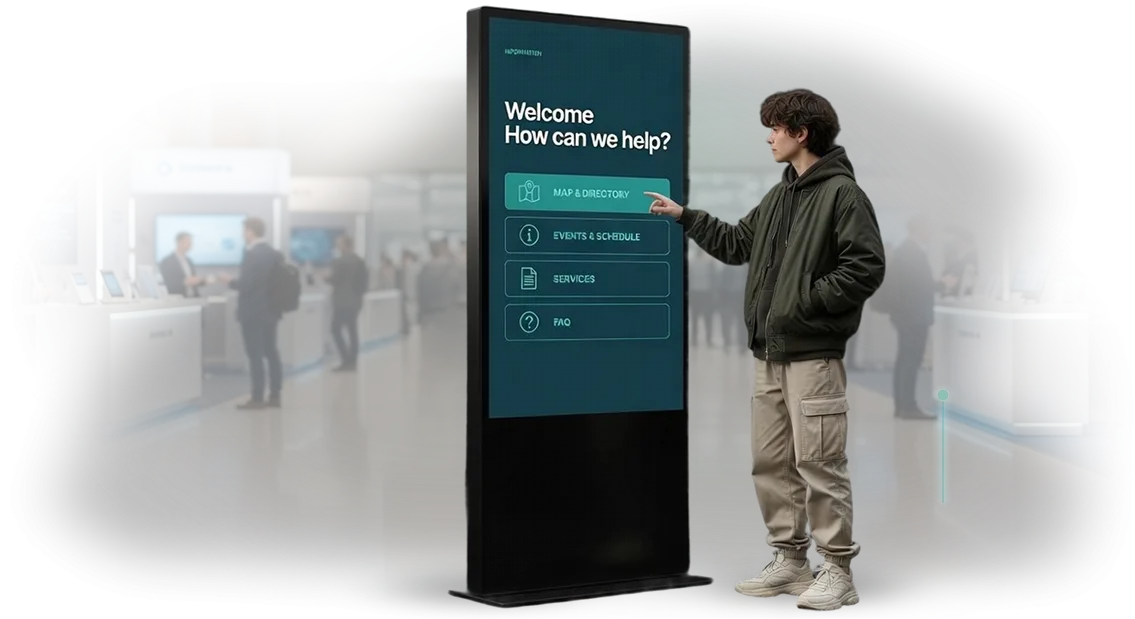
כיצד מרכז מכיל יכול לשמור על תשומת לב המבקרים?
מבקרים במרכז מכיל מגיעים לחוויות, לידע ולנוחות. אבל ללא ניווט ברור, הם הולכים לאיבוד כבר בכניסה: מחפשים את החדר הנכון, קוראים שלטים קטנים, מבקשים עזרה מהצוות.
זה יוצר מתח בדקות הראשונות ממש — אדם מרגיש חוסר ביטחון ומקבל לחץ נוסף במקום רגיעה. בסופו של דבר, אפילו תוכנית מעניינת לא מצילה את המצב: האורחים זוכרים את אי-הנוחות, לא את התוכן.
עבור המרכז, זה אומר עומס על הצוות, תורים בדלפק המידע ודירוגי ביקור נמוכים יותר. הבעיה חריפה במיוחד במוסדות שבהם יש להקפיד על עקרונות סביבה נגישה.
כאן, כל מבקר צריך להיות מסוגל להתמצא במרחב בקלות ובעצמאות — מבלי להסתמך על עזרה מאחרים. קיוסק אינטראקטיבי מסיר את הנטל הזה: הוא נוטל על עצמו את התפקיד של נווט ויועץ קשוב.
קיוסק כזה עוזר לפתור כמה משימות בבת אחת. ראשית, ניווט ברור במרכז: אייקונים גדולים, שלטים בולטים ויכולת לבנות מסלול לאזור הרצוי.
שנית, מידע על אירועים עדכניים, לוחות זמנים של שיעורים ושירותים — המבקרים רואים סקירה מעודכנת ומחליטים לאן ללכת. שלישית, התאמה לצרכים שונים: טקסט מוגדל, קריינות אודיו, שפה פשוטה.
כך, סביבה נגישה הופכת לא לדרישה פורמלית אלא לנוחות אמיתית עבור כולם.
כתוצאה מכך, האורחים מרגישים דאגה וכבוד. הם נעים במרכז בנוחות, מספיקים יותר וחוזרים בשמחה. ואתם מקבלים פחות פניות לצוות, יותר מבקרים מרוצים וביקורות חיוביות.
אנחנו עוזרים ליצור קיוסק כזה — מותאם למאפיינים שלכם, ללא חומרה מיותרת, ממוקד בתועלת אמיתית לאנשים.
מה קיוסק אינטראקטיבי נותן למוסד ולאורחיו
עבור מרכז מכיל, חשוב שכל אורח — ללא קשר לגיל או ליכולת — ירגיש ביטחון. קיוסק אינטראקטיבי מהצוות שלנו הופך את הניווט לתרחיש פשוט: אייקונים גדולים, הנחיות קוליות, כתוביות ומצבי ניגודיות. האורחים מקבלים מידע בעצמם, ללא תורים או לחץ.
נגישות לכל מבקר
הקיוסק תומך במספר פורמטים של אינטראקציה: שליטה במגע, קריינות קולית, טקסט מוגדל והתאמת ניגודיות. אדם עם כל צורך תפיסתי בוחר תרחיש נוח — כך נראית הכלה אמיתית.
עבור המרכז, זה אומר התאמה לעקרונות עיצוב אוניברסלי ואמון גדול יותר. האורחים רואים שהמוסד דואג לכולם ללא יוצא מן הכלל ומוכנים יותר לחזור.
מעורבות מבקרים בחיי המרכז
במקום דוכן סטטי — אינטראקציה חיה: המבקר בוחר קטע, חוקר תוכניות, צופה בסרטונים ונרשם לשיעור בכמה נגיעות.
אינטראקטיביות כזו שומרת על תשומת לב ויוצרת רושם חיובי, מה שמגדיל את הסבירות לביקור חוזר.
הכרת המותג ומוניטין
הקיוסק מעוצב בהתאם לזהות המותג של המרכז, מציג את הלוגו והמסרים המרכזיים. האורחים זוכרים את המותג, ואינטראקטיביות תוססת מעוררת אזכורים ברשתות החברתיות — זו חשיפה חינמית וחיזוק תדמית המוסד.
הקלה על העומס של המנהלים
הקיוסק עונה אוטומטית על שאלות נפוצות: שעות פתיחה, מיקומי חדרים, רישום לשירותים. המנהלים מתמקדים רק במשימות שבאמת דורשות אינטראקציה אנושית — פחות שגרה ושירות מהיר יותר.
פורמטים של קיוסק אינטראקטיבי למרכז מכיל
כל אורח במרכז מכיל מגיע עם צרכים שונים: חלקם צריכים מסלול פשוט למשרד, אחרים זקוקים להצגה ברורה של שירותים, וחלק רוצים לחקור חומרים בקצב שלהם.
קיוסק אוניברסלי יחיד rarely מכסה את כל התרחישים, לכן חשוב לבחור פורמט למשימה ספציפית — ניווט, מידע או חינוך.
אנחנו בוחרים את התצורה עבור החלל והקהל שלכם: מפאנלי מגע קומפקטיים ועד מסופי מידע מלאים. להלן הפורמטים הסטנדרטיים שכבר עובדים במרכזים ומניבים תוצאות.
| פורמט | למי | מה הוא נותן ללקוח |
|---|---|---|
| פאנל ניווט במגע | מבקרים המחפשים חדר או מומחה | מפחית את זרם השאלות למנהל ועוזר לאורחים להתמצא בבניין באופן עצמאי |
| מסוף מידע בלובי | אורחים הממתינים לפגישה | מציג את שירותי המרכז, לוח הזמנים והחדשות; ממלא את זמן ההמתנה בתוכן שימושי |
| קיוסק חינוכי | ילדים ומבוגרים במפגשים קבוצתיים | מערב משתמשים בתרגילים אינטראקטיביים ומאפשר שיעורים ללא הדפסות נוספות או מקרן |
| ויטרינה מולטימדיה | שותפים ואורחים באירועים | מציג את הישגי המרכז, מעורר עניין ובונה אמון בארגון |
בבחירת פורמט, אנו מתחשבים בגובה המסך, גודל הגופן ונגישות המגע כך שהקיוסק יהיה נוח לאנשים עם מצבים בריאותיים שונים. בסופו של דבר, אתם מקבלים כלי שמקל על הצוות ומעצב תדמית מודרנית ואכפתית למרכז.
כיצד פועל פיתוח קיוסק: מהבריף ועד ההשקה
עבור מרכז מכיל, חשוב שהקיוסק יהיה נוח לכל המבקרים: צעירים, אנשים עם מוגבלויות ומבוגרים.
לכן בנינו את תהליך הפיתוח כך שתהיו מעורבים בהחלטות מפתח ותוכלו לראות תוצאות ביניים בכל שלב בפרויקט. אנחנו עובדים מרחוק: כל האישורים מתבצעים באינטרנט, והעריכות מנוטרות ולעולם לא אובדות.
- בריף וחקר קהל. אנו דנים במטרות הקיוסק, בתרחישי השימוש ובדרישות המרכז המכיל.
- אב-טיפוס מסך. אנו מציגים את המבנה והלוגיקה של הניווט — אתם רואים כיצד מבקר יתקשר עם הקיוסק.
- אישור עיצוב. אנו מכינים עיצוב בסגנון המותג שלכם: כפתורים גדולים, צבעים מנוגדים ואייקונים ברורים. אתם מאשרים את המראה לפני תחילת הפיתוח.
- בניית המצגת האינטראקטיבית. אנו מוסיפים אנימציות, קריינות קולית ובקרות מותאמות למגע; אתם מקבלים אב-טיפוס עובד.
- בדיקות משתמשים. אנו בודקים את נוחות הניווט בתרחישים אמיתיים, כולל אנשים עם יכולות תפיסתיות שונות.
- השקה ותמיכה. אנו מתקינים את הקיוסק, מאמנים את הצוות שלכם ונשארים בקשר לאחר הפתיחה.
המחזור המלא אורך בין שבועיים לחודש, תלוי בכמות התוכן ובמספר המסכים. בסופו של דבר, אתם מקבלים כלי שלא רק עובד ביום ההשקה אלא גם קל לעדכון בעתיד.
מה כלול במסירת הקיוסק האינטראקטיבי
קיוסק אינטראקטיבי הוא לא רק מסך מגע בלובי. אנו מספקים פתרון שלם ומפתח ביד: חומרה שנבחרה למשימות המרכז המכיל, ממשק מותאם למבקרים עם צרכים שונים ותוכן הבנוי מהחומרים שלכם. אין צורך לחפש קבלנים בנפרד: אנחנו מטפלים בהכל מהמסירה ועד ההשקה.
החבילה כוללת:
- פאנל מגע עמיד לשימוש אינטנסיבי, עם התאמת גובה לילדים, מבוגרים ומבקרים בכיסאות גלגלים.
- התקנה והגדרה באתר: חיבור, כיול מסך ובדיקת תרחישים בתנאי תאורה אמיתיים. הקיוסק מוכן לחלוטין עד יום הפתיחה.
- ממשק למרכז המכיל: כפתורים גדולים, צבעים מנוגדים, ניווט ברור והנחיה קולית. המבקרים מבינים אותו ללא סיוע צוות.
- מילוי תוכן: הטקסטים שלכם, לוח הזמנים, מפת הקומות, תמונות וסרטונים על הסביבה הנגישה. כל מה שהאורחים צריכים — במקום אחד.
- מערכת עדכון פשוטה: אתם יכולים לשנות הודעות וחדשות בעצמכם דרך פאנל ניהול אינטואיטיבי — ללא מתכנת או אישורים ארוכים.
- הדרכת צוות: מדריך קצר על הפעלה, אתחול וביצוע עריכות מהירות.
- תמיכה לאחר ההשקה: סיוע מרחוק וביקורים באתר במידת הצורך. האחריות על החומרה והעבודה נשארת בתוקף לאורך כל השותפות.
בסופו של דבר, אתם מקבלים לא "חומרה בפינה" אלא כלי עבודה לניווט, מידע וקידום שירותי המרכז. הוא אינו דורש ידע טכני מהצוות שלכם ומספק ערך בכל יום.
מקרה בוחן: כיצד קיוסק עזר למוזיאון למשוך יותר מבקרים
אחד הפרויקטים האחרונים שלנו היה קיוסק מסך מגע עבור המוזיאון להיסטוריה עירונית. המטרה: למשוך יותר מבקרים ולהפוך את התערוכה לנגישה לכולם — כולל אנשים עם מוגבלויות, משפחות עם ילדים ואורחים בינלאומיים.
לפני התקנת הקיוסק, האורחים עברו באולמות תוך 25–30 דקות ולעתים רחוקות חזרו. הצוות חזר על אותו מידע, וחלק מהמבקרים עזבו ללא הסברים. כתוצאה מכך, המוזיאון הפסיד ביקורים חוזרים והמלצות.
התקנו קיוסק אינטראקטיבי עם מצגת מותאמת: גופן גדול, הנחיה קולית, ניווט ברור ומצב ללקויי ראייה. התוצאות הופיעו בתוך החודש הראשון.
זמן הביקור הממוצע בתערוכה גדל לשעה וחצי, ומספר הביקורים החוזרים עלה ב-35%.
תוצאות הפרויקט
בתוך חצי שנה, הקיוסק הפך לעוזר הנפוץ ביותר של האורחים, וטיפל ביותר מ-40,000 אינטראקציות. מספר הסיורים המודרכים גדל ב-20% — לאחר חקר עצמאי, המבקרים מזמינים יותר סיורים מודרכים.
הוספנו מצב משחק למשפחות עם ילדים — כעת הורים מתכננים יותר חגיגות ופעילויות בית ספריות במוזיאון.
גם האפקט השיווקי מוחשי. המוזיאון ניהל קמפיין, 'גלו את היסטוריית העיר': הקיוסק הזמין מבקרים לשתף את התרשמותם ברשתות החברתיות עם תג מיוחד.
במהלך חודשיים, טווח ההגעה של הפרסומים הגיע ל-120,000 משתמשים, ומספר העוקבים בעמוד המוזיאון גדל פי 1.5.
כיום, המוזיאון שוקל התקנת קיוסק שני בסניף שלו. עבורנו, זה המדד המרכזי: כשהלקוח חוזר, הפתרון עובד.
כיצד לבחור את הפורמט הנכון למטרות שלכם?
בחירת פורמט קיוסק אינטראקטיבי אינה עניין של טעם — היא מציאת פתרון לתנאים הספציפיים שלכם. כדי שפאנל מגע יספק ערך, צריך להעריך שלושה פרמטרים: גודל החלל, תנועת המבקרים והתקציב.
החלל קובע היכן הקיוסק יכול לעמוד ואיזה גודל מסך יהיה נוח. עבור לובי קטן, פאנל צמוד קיר עם מסך קומפקטי עדיף — הוא לא תופס מקום.
בפרוזדור מרווח, מסוף עומד עם מסך גדול ימשוך תשומת לב וישרת כמה אורחים בבת אחת. עבור מרכז מכיל, חשוב להתחשב בגובה נוח ובנגישות.
תנועת המבקרים אומרת לכם כמה נקודות אינטראקציה אתם צריכים ואילו תרחישים לבנות. עם תנועה נמוכה, מסוף אחד עם ניווט ולוח זמנים מספיק. עם תנועה כבדה, תצטרכו כמה קיוסקים ומערכת ניהול תורים. זה משפיע על הביצועים והתוכנה.
התקציב אינו מגביל את התוצאה: אנו מציעים אפשרויות מקיוסק בסיסי עם תרחיש יחיד ועד מערכת מולטימדיה המשולבת בתשתית שלכם. במהלך הייעוץ, נמצא את האיזון האופטימלי בין עלות לתכונות כדי שלא תשלמו יותר מדי על מה שאינכם צריכים.
המפתח הוא לגשת לבחירה במודעות. ננתח את החלל שלכם, נעריך את תנועת הרגליים ונציע קיוסק מסך מגע מפתח ביד שמתאים לתקציב שלכם ונוח לכל מבקר. כל מה שנשאר לכם הוא לקבל החלטה — אנחנו נטפל בשאר.
חששות נפוצים לפני הזמנת קיוסק
לפני הזמנת קיוסק אינטראקטיבי, רוב הלקוחות חושבים לא על האפשרויות אלא על הסיכונים: מה אם מסך המגע לא יאתחל? מי אחראי לתקלה? האם האירוע יעבור חלק? זו גישה נכונה — אתם משקיעים תקציב וזמן, ולכן אתם רוצים ודאות, לא הבטחות.
אנחנו מתכננים ומיישמים קיוסקים כבר למעלה מ-10 שנים ולפני זמן רב בנינו תהליך שמסיר את החששות האלה. אחריות, תחזוקה ותמיכה מתועדים בחוזה, לא רק בהסכמים מילוליים. להלן, אנו מתייחסים לחששות הנפוצים ביותר.
מה האחריות מכסה על הקיוסק והתוכן?
אנו מספקים אחריות רשמית על כל הציוד והעבודה: המעטפת, פאנל המגע, התושבות וההתקנה. אם מתרחשת תקלה בתוך תקופת האחריות באשמתנו, אנו מתקנים או מחליפים את המכשיר ללא עלות.
עבורכם, זה אומר שהתקציב מוגן והקיוסק יפעל — גם אם משהו משתבש.
מי מטפל בתחזוקת הקיוסק לאחר ההשקה?
לאחר מסירת הפרויקט, אנחנו נשארים בקשר: אנו מנטרים מרחוק את פעולת המערכת ומעדכנים תוכן והגדרות. אם נדרשת תחזוקה מונעת, אנו מבקרים באתר בזמן שנוח לכם. אין צורך למצוא קבלן נפרד ולהסביר את פעולת הקיוסק לצוות אחר.
מה אם הקיוסק יתקלקל במהלך אירוע?
למקרים כאלה, יש לנו נוהל החלפה מהיר ותוכנית חירום. אתם פונים ישירות למהנדס שלנו, ואנו מאבחנים את הבעיה מרחוק או מספקים תחליף תוך כמה שעות. העיקר הוא שהקיוסק לא יגרום לכישלון אירוע או ליצירת תור של אורחים.
דונו בפרויקט שלכם עם מהנדס עוד היום
יצירת קיוסק אינטראקטיבי למרכז מכיל אינה רק בחירת מסך ותוכנה. חשוב לחשוב כיצד המבקרים שלכם ישתמשו בקיוסק — עם רמות שונות של ניידות, ראייה ושמיעה.
כדי לקבל כלי עובד ולא דוכן יקר, דונו במטרותיכם עם מהנדס לפני תחילת העבודה.
לאחר שליחת הבקשה, אנו מקיימים ייעוץ: המהנדס מבהיר את הקהל, המטרות, תרחישי השימוש והשילוב עם התהליכים שלכם.
לאחר מכן אנו מכינים הערכת עלות ותוכנית יישום כדי שתוכלו לקבל החלטה מושכלת ולאשר את הפרויקט בתוך הארגון שלכם.
מה תקבלו מהפנייה שלכם:
- ייעוץ מהנדס על תרחישי קיוסק לקבוצות מבקרים שונות — מאנשים עם ראייה לקויה ועד אורחים עם מוגבלות בניידות.
- הערכת עלות לפיתוח ושילוב עם היקף עבודה שקוף וללא סעיפים נסתרים.
- מפרט טכני עם תוכנית שלבים, לוחות זמנים ואחראי לכל שלב.
- המלצות ממשק וניווט: אזורי מגע גדולים, אלמנטים מנוגדים, הנחיות קוליות.
- הערכה איזו חומרה תריץ את הקיוסק באופן אמין תחת עומס יומי.
- בחירת פורמט הקיוסק — ממסוף עומד ועד פאנל צמוד קיר — תוך התחשבות בסביבה הנגישה של המרכז שלכם.
- חבילת מסמכים לאישור על ידי ההנהלה, המעצבים והשותפים.
שליחת בקשה אורכת דקה, והייעוץ עצמו יכול לחסוך לכם שבועות של תיקון טעויות לאחר ההשקה. צרו קשר — נמצא זמן נוח לשיחה בתוך יום עסקים אחד. הדיון ללא התחייבות.