

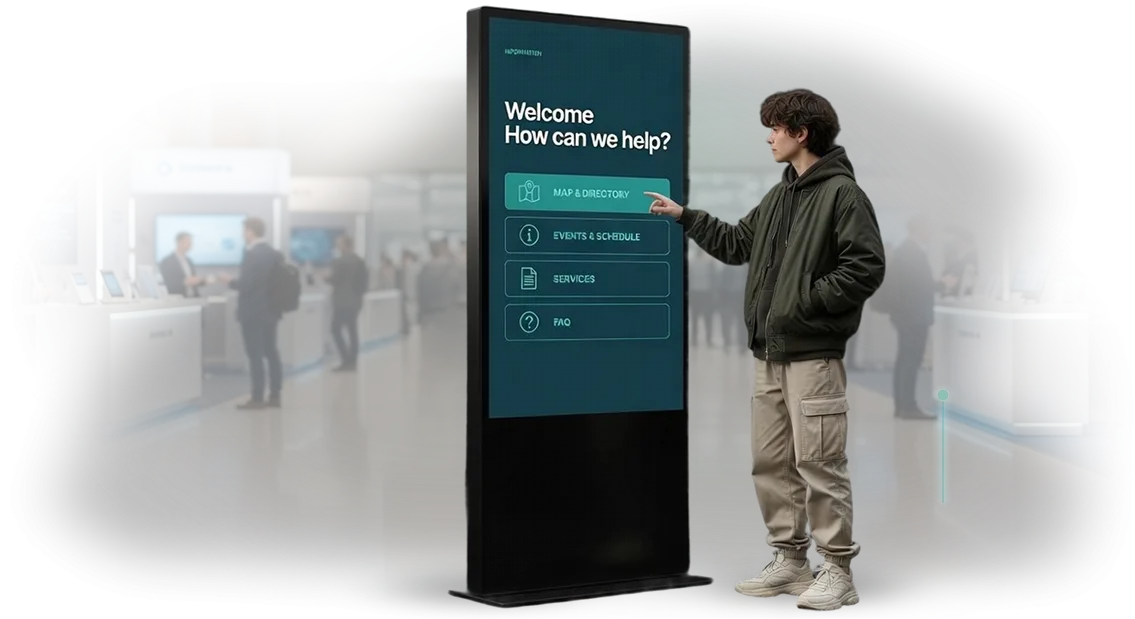
מרכז הדרכה ארגוני מאבד עניין — קיוסקים אינטראקטיביים פותרים את הבעיה
הדרכת עובדים הופכת פעמים רבות לפורמליות גרידא: הרצאות מתנהלות לפי לוח זמנים, אך תשומת הלב של המאזינים נודדת כבר בדקה החמישית.
כל מנהל מרכז הדרכה מכיר את התוצאה — החומר נקלט בצורה שטחית, המוטיבציה יורדת, וההשקעה בהדרכה לא מניבה שיפור בכישורים.
זה בולט במיוחד כשמדובר במספר גדול של עובדים חדשים או בהכשרה שוטפת של עובדים קיימים. כשקבוצה מונה 15–20 איש וכל אחד עובד בקצב שלו, מצגת אחת שמתאימה לכולם לא עובדת.
מישהו רוצה להעמיק, מישהו צריך לחזור על היסודות — וכולם מאבדים עניין ומביטים בשעון. זה יוצר "שחיקת קשב", שמשפיעה ישירות על תחלופת עובדים.
בדיוק למשימות כאלה הצוות שלנו מפתח קיוסקים אינטראקטיביים. זו דרך להפוך הדרכה ארגונית מהקשבה פסיבית למעורבות פעילה.
העובד בוחר בעצמו את הנושא, הקצב ועומק ההתעמקות, והמערכת מגיבה לפעולות שלו באופן מיידי.
בפועל, זה אומר שכל לומד מעורב לחלוטין בתהליך — הוא נוגע במסך, עונה על שאלות ועובר תרחישים במקום לבהות במצגת על הקיר.
קיוסקים אינטראקטיביים פותרים את בעיית המוטיבציה ללא מדריך: גיימיפיקציה, תרחישים מבוססי תפקידים ומשוב מיידי שומרים על תשומת הלב לאורך כל הקורס. הלקוח מקבל כלי שעובד 24/7, אף פעם לא מתעייף ולא תלוי במצב הרוח של המרצה. ההדרכה מפסיקה להיות חובה והופכת לתהליך ברור, נוח וניתן למדידה.
חמישה יתרונות של קיוסקים אינטראקטיביים להדרכה
קיוסקים אינטראקטיביים הופכים הדרכה מצפייה פסיבית לעבודה פעילה עם החומר. לפי המעבדה הלאומית להכשרה, שיעור השימור עם תרגול מעשי מגיע ל-75% — בהשוואה ל-5% בהרצאה טיפוסית.
מבחינה עסקית, זה אומר שעובדים מיישמים ידע מהר יותר, עושים פחות טעויות ומשרתים לקוחות ביעילות רבה יותר.
חמישה יתרונות מרכזיים:
-
מעורבות גבוהה. מסך מגע שומר על תשומת לב פי 2–3 יותר מאשר וידאו או שקופיות. הלומד לוחץ, בוחר ומחליט בעצמו — החומר נזכר ללא מאמץ נוסף.
-
קצב אישי. הקיוסק לא ממהר ולא מחכה לאלה שנשארו מאחור. עובד חדש עובר מודול בזמן שהוא אישית צריך, בעוד שעובד מנוסה מרענן את הידע במהירות.
-
תרגול מיומנויות ללא סיכון. תרחישים מובנים מדמים מצבי עבודה אמיתיים: שיחה עם לקוח, נושא במחלוקת, מקרה חירום. טעות בסימולטור לא עולה לחברה כסף, אבל מספקת ניסיון valuable.
-
חוסך זמן של מדריכים. סרטונים, מבחנים והוראות חוזרים על עצמם אוטומטית — המדריך לא צריך להעביר את אותן שעות מבוא. את הזמן שהתפנה אפשר לנצל לעבודה אישית עם אלה שנשארים מאחור.
-
השפעה על מכירות ושירות. צוות מיומן מציג מוצרים בביטחון רב יותר, מתמודד עם התנגדויות וסוגר מכירות. חברות שמשתמשות בתוכניות אינטראקטיביות מדווחות על עלייה ניכרת בחשבון הממוצע ובפניות חוזרות.
פורמטים של קיוסק אינטראקטיבי למשימות הדרכה
צוות מרכז ההדרכה הארגוני צריך להכיר לעובדים חדשים במהירות ובבהירות את החוקים, התקנות וחומרי הלמידה. פוסטרים וחוברות רגילים לא מעוררים עניין — תשומת הלב נודדת, ונושאים מרכזיים נשכחים.
קיוסקים אינטראקטיביים הופכים הדרכה לתהליך ויזואלי שבו עובדים בוחרים בעצמם מה ללמוד ומקבלים מידע בקצב נוח.
אנחנו מתאימים את פורמט הקיוסק לחלל ולמשימות של המרכז: קיוסק מסך מגע עומד לאזור הכניסה, פאנל מידע צמוד קיר למסדרונות, ומצגת אינטראקטיבית ניידת למפגשים מחוץ למתחם.
גישה זו מכסה תרחישים שונים — מהטמעה ראשונית ועד לחיזוק ידע לאחר מפגש הדרכה.
פורמט למשימה שלך
| פורמט קיוסק | למי | מה הוא נותן ללקוח |
|---|---|---|
| קיוסק מסך מגע עומד | לאזור קבלת פנים של עובדים חדשים | מציג את התשתית והחוקים ללא מעורבות של משאבי אנוש |
| פאנל מידע צמוד קיר | לאזורים משותפים ומסדרונות | מספק בלוקי למידה קצרים והודעות, ללא צורך לעצור |
| מצגת טאבלט ניידת | להדרכות מחוץ למתחם ולסניפים | מבטיח תקן אחיד להעברת תוכן בכל מקום |
אנחנו מלווים את הפרויקט מהתרחיש ועד ההשקה: ממלאים את התוכן, מגדירים ניווט שתואם את היגיון ההדרכה, ומתאימים את הממשק לשליטה במגע.
הלקוח צריך רק לעדכן חומרים ללא מעורבות של מתכנתים — זה מזרז שינויים כשתכניות הדרכה מתעדכנות. כתוצאה מכך, המרכז מקבל כלי מודרני שמחזק את ההכרה בחברה ומפחית את העומס על מתודולוגים.
איך מיושם קיוסק אינטראקטיבי: שלבים
אנחנו הופכים את תהליך היישום לשקוף ככל האפשר: אתה תמיד יודע באיזה שלב נמצא הפרויקט ומה הלאה. אין "קופסאות שחורות" — רק שלבים ברורים, לוחות זמנים ברורים ואישורים בפורמט שנוח לך.
- בריף ומטרות. אנחנו דנים באיזו משימה הקיוסק פותר: עדכון עובדים, ניווט בתכניות הדרכה או הרשמה לקורסים. אנחנו מתעדים ציפיות, קהל יעד וקריטריוני הצלחה.
- קונספט ומבנה. אנחנו מתכננים את זרימת המסכים, היגיון האינטראקציה והטקסטים. אנחנו מאשרים אב טיפוס — אתה רואה את הממשק העתידי לפני תחילת הפיתוח.
- עיצוב ותוכן. אנחנו יוצרים סגנון ויזואלי שמותאם למותג שלך ומכינים טקסטים וחומרים. בשלב הזה כבר ברור איך הקיוסק ישתלב בפנים ובסגנון הארגוני של מרכז ההדרכה.
- הרכבה והתקנה. אנחנו בונים את המצגת האינטראקטיבית על ציוד מקצועי ומתאימים אותה לדגם הספציפי של פאנל המגע. אנחנו בודקים יציבות בתנאים אמיתיים.
- בדיקות והשקה. אנחנו עורכים בדיקות קבלה באתר שלך ומכשירים את הצוות לעבודה עם המערכת. אנחנו משיקים את הקיוסק ומוודאים שהכל פועל ללא תקלות.
- תמיכה ופיתוח. אנחנו נשארים בקשר: מעדכנים תוכן, מוסיפים קורסים חדשים ומשפרים פונקציונליות ככל שתכניות ההדרכה גדלות.
פרויקט ממוצע אורך 3–6 שבועות — מהבריף הראשון ועד קיוסק עובד בלובי של מרכז ההדרכה. כל האישורים נעשים מרחוק: פגישות מקוונות וגרסאות הדגמה לתיקונים חוסכים לך זמן.
אנחנו קובעים את לוח הזמנים ואת היקף העבודה בהתחלה, כך שאתה מקבל תוצאה צפויה בהשקה. ואם עולות משימות חדשות לאחר היישום, אנחנו מרחיבים את המבנה ומעדכנים חומרים ללא עיבוד מחדש של כל המערכת.
מה כלול במסירת קיוסק אינטראקטיבי
כשאתה מזמין קיוסק אינטראקטיבי למרכז הדרכה, אתה מקבל פתרון סוהר. אין צורך להרכיב ערכה מקבלנים שונים: ציוד, תוכן, התקנה והכשרת צוות — הכל מכוסה בחוזה אחד. זה חוסך זמן ומונע עלויות בלתי צפויות.
- ציוד — פאנל מסך מגע מקצועי עם מעטפת נגד ונדליזם והגנה נגד סנוור. המסך קריא באור חזק, והמעטפת עמידה בפני פגיעות מקריות.
- תוכן — מצגת אינטראקטיבית שמותאמת במיוחד למרכז ההדרכה שלך. מבקרים מוצאים את לוח הזמנים, מפות הקומות ומידע על קורסים בעצמם ללא עזרת מנהל.
- התקנה — משלוח, התקנה וחיבור של הקיוסק באתר שלך. אנחנו מסכמים על המיקום, מכינים את האזור ומשיקים את המערכת בזמן שנוח לך.
- הכשרת צוות — בריף קצר למנהלים ומדריכים. העובדים יוכלו להפעיל את הקיוסק, לעדכן מידע ולנטר סטטיסטיקות.
- ערכת מסירה מלאה — כל האלמנטים קבועים בחוזה: פאנל, התקנה, כבלים, הגנה מפני גישה לא מורשית. אין "תצטרך לקנות את זה בנפרד גם".
- אחריות ותמיכה — אחריות רשמית על ציוד והתקנה, ייעוץ מהצוות שלנו לאחר ההשקה. שיחה אחת — והבעיה נפתרת.
גישה זו ברורה לכל מנהל: אתה יודע מראש מה אתה מקבל ויכול לתכנן תקציב. הקיוסק מתחיל לעבוד מהיום הראשון — ללא אישורים ארוכים או הפתעות טכניות.
מקרה בוחן: קיוסק אינטראקטיבי הגביר מעורבות במרכז הדרכה
כשמרכז ההדרכה הארגוני «Gorizont» פנה אלינו, המנהל שלו עמד בפני בעיה טיפוסית: עובדים סיימו קורסים רק "למראית עין", והחומר לא נשמר.
הוראות נייר ומצגות רגילות לא תפסו תשומת לב — תוך דקות המאזינים הוסחו, וההרשמה לתכניות פנימיות הייתה איטית.
הצענו להחליף עמדות סטטיות בקיוסק אינטראקטיבי עם פאנל מגע. כל עובד בוחר את המודול הנדרש, צופה בסרטונים קצרים ובוחן מיד את הידע שלו באמצעות סקר מובנה.
זה הפך את ההדרכה לתהליך חי: אנשים שולטים בקצב שלהם, רואים את ההתקדמות שלהם, והמנהל מקבל סטטיסטיקות ברורות ללא מעקב ידני.
התוצאות היו ניכרות כבר בחודש הראשון. הזמן שהושקע ברישום ובמציאת החומר הנכון כמעט נחצה, וחלקם של העובדים שסיימו את הקורס המלא גדל ב-35%.
התרחישים האינטראקטיביים משכו גם את אלה שנמנעו בעבר ממרכז ההדרכה: מספר הפניות בשעות השיא והביקורים החוזרים גדל ב-40% — אנשים חזרו לנסות מודולים חדשים.
מנהל המרכז העריך את שיתוף הפעולה כך: "בעבר, בזבזנו הרבה זמן בהסבר של אותם דברים, ועכשיו עובדים מבינים את החומר בעצמם.
הקיוסק הפך לנקודת משיכה — תמיד יש מישהו לידו, ועמיתים דנים בשאלות ביניהם.
אנחנו מתכננים להרחיב את הפונקציונליות לכל האתרים שלנו." מקרה זה מראה שאינטראקטיביות שנבחרה היטב משתלמת לא רק בחללי בילוי אלא גם בהדרכה ארגונית.
איך לבחור קיוסק אינטראקטיבי למשימה שלך?
בחירת קיוסק מתחילה לא במפרטים אלא בשאלה: מה העובדים או המבקרים שלך צריכים לעשות ב-30 השניות הראשונות מול המסך?
עבור מרכז הדרכה ארגוני, זה יכול להיות הרשמה לקורס, ניווט בין חדרים, צפייה בלוח זמנים או מבחן קצר. התרחיש הוא שקובע את הגודל הנדרש, סוג פאנל המגע ומיקום ההתקנה.
אין פתרון אוניברסלי, אבל יש שלושה פרמטרים מרכזיים שמצמצמים את הבחירה: מקרה השימוש, מספר המשתמשים בו-זמנית והשטח הפיזי.
אנחנו בוחרים תצורה למשימות שלך במקום להציע "קופסה" עם סט מקסימלי של תכונות שאינך צריך. להלן מדריך שיעזור לך להתחיל.
| פורמט קיוסק | לאילו משימות של מרכז הדרכה | מה הוא נותן ללקוח |
|---|---|---|
| עמדה עומדת עם מסך גדול | הרשמה לקורסים, לוח זמנים אינטראקטיבי, ניווט בין מבנים | תנועת רגלים גבוהה, נראות, נוחות להזנת נתונים מהירה |
| קיוסק צמוד קיר | הצבה במסדרונות, לובי, ליד כיתות | חיסכון במקום, גישה קבועה למידע ללא תורים |
| פאנל שולחני | עבודה בקבוצות קטנות, בדיקות, צפייה בחומר | קומפקטיות, נוחות לשימוש אישי |
| עמדה ניידת | הדרכה בחדרים שונים, אירועים מחוץ למתחם, מצגות | גמישות — קיוסק אחד עובד במספר מיקומים |
גודל המסך וסוג פאנל המגע נבחרים לפי הקהל והתרחיש. לדוגמה, להזנת נתונים מהירה עם מקלדת, קיוסק עומד עם מסך באלכסון של 32 אינץ' או יותר ועמדה יציבה נוח יותר.
אם המשימה העיקרית היא צפייה בהוראות וידאו, פאנל צמוד קיר מספיק. אנחנו מעצבים ממשקים עם אלמנטים גדולים וניווט ברור כך שהמערכת לא דורשת הכשרה ועובדת בצורה אמינה גם בעומס כבד.
הכלל המרכזי: הקיוסק צריך לפתור בעיה, לא ליצור חדשה. לכן אנחנו מתחילים בבריף, מחשבים עומס, מנתחים את המתחם ורק אז מציעים פורמט.
בצוות שלנו אתה מקבל פתרון סוהר — מבחירת מעטפת ועד השקה ותמיכה, עם אחריות שהציוד והממשק יפעלו ביציבות בקצב שלך.
שאלות נפוצות על קיוסקים אינטראקטיביים
לקוחות של מרכזי הדרכה ארגוניים מהססים פעמים רבות לפני השקת קיוסקים אינטראקטיביים: האם הציוד יתקלקל, האם קשה לעדכן תוכן, כמה זמן ייקח היישום? להלן תשובות לשאלות שאנחנו שומעים הכי הרבה. אם לא מצאת את השאלה שלך — פשוט כתוב לנו, ונעזור תוך שעה.
מה אם הקיוסק יתקלקל במהלך אירוע?
אנחנו מספקים אחריות על ציוד ותוכנה, ובמצבים קריטיים מתחברים מרחוק במהירות. ללקוחות קבועים, החלפת מכשיר זמינה תוך יום עסקים אחד — האורחים שלך לעולם לא יישארו ללא מידע.
האם קשה לעדכן מידע על הקיוסק?
העדכון אורך דקות: אתה מעלה קובץ חדש למערכת, והתוכן משתנה בכל הפאנלים. אין צורך במתכנתים או במומחים טכניים. כל מנהל במרכז הדרכה יכול לעשות זאת דרך ממשק ידידותי.
כמה זמן אורך היצירה וההשקה?
פרויקט טיפוסי אורך משבועיים לאחר הבריף. במהלך הזמן הזה, אנחנו מכינים את העיצוב, הפריסה, היגיון הפעולה ובודקים את הקיוסק באתר שלך. אם זה דחוף, אנחנו יכולים להאיץ את ההשקה, אבל האיכות והיציבות יישארו באותה רמה.
איך מחושבת עלות הפרויקט?
העלות תלויה במספר המסכים, במורכבות התרחיש ובצורך באינטגרציה עם המערכות שלך. לאחר בריף קצר, אנחנו מספקים הערכה מדויקת וקובעים אותה בחוזה — אין תשלומים נסתרים או "הפתעות" נוספות במהלך העבודה.
המסקנה פשוטה: אנחנו דואגים לאמינות, לרלוונטיות התוכן ולתמחור שקוף — אתה מקבל קיוסק שעובד לבד ואינו דורש פיקוח מתמיד.הזמן פיתוח של קיוסק אינטראקטיבי להדרכה
הזמן פיתוח של קיוסק אינטראקטיבי להדרכה — ואנחנו נטפל בכל המסע: מהרעיון ועד מכשיר עובד. תקבל כלי מוכן שמכשיר צוות ללא מרצה, עונה על שאלות נפוצות ואוסף סטטיסטיקות השלמה. כל מה שאנחנו צריכים ממך זה חומרי תוכן וכמה שעות לאישור התרחיש.
אנחנו עובדים כפיתוח סוהר: אתה לא צריך לחפש מעצב, מתכנת ומתקין בנפרד. הצוות שלנו אחראי על כל התוצאה — אתה פשוט מקבל את הקיוסק המוגמר.
לאחר ההזמנה, אתה מקבל:
- תרחיש ועיצוב ממשק שמותאמים למרכז ההדרכה הארגוני שלך;
- מילוי תוכן: טקסטים, הוראות, מבחנים, סרטונים — בהתבסס על החומרים שלך;
- התקנת ציוד או המלצות לבחירתו, כך שהקיוסק ישתלב בצורה מושלמת בלובי או באזור ההדרכה שלך;
- הכשרת העובדים שלך: הם יוכלו לשנות חדשות וחומרים בעצמם ללא מתכנת;
- תמיכה טכנית ואחריות על תוכנה — אנחנו עובדים עם כלים מוכחים, כך שתקלות אינן נכללות;
- השקה במסגרת הזמן המוסכם — אנחנו מספקים פרויקטים טיפוסיים ב-10 ימי עסקים.
אל תדחה את אוטומציית ההדרכה למועד מאוחר יותר. פשוט כתוב או התקשר — נסביר איך הקיוסק משתלב בתהליכים שלך ונציע פתרון למשימה שלך. קבל ייעוץ, ללא התחייבות.