

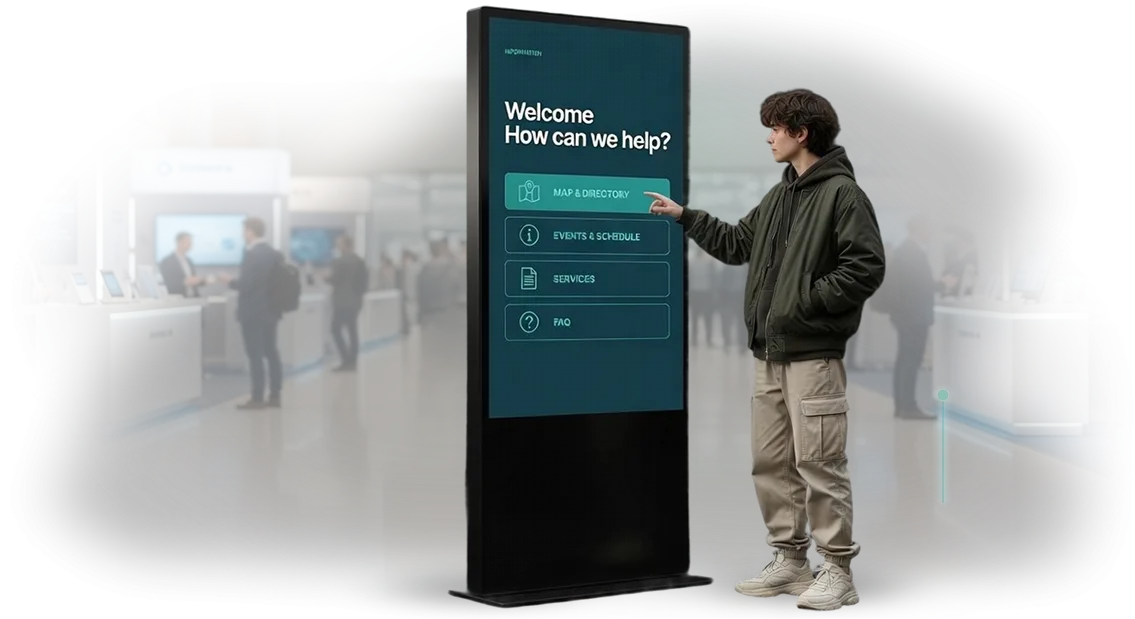
למרכז רפואי: מצגת אינטראקטיבית במקום תורים
מטופלים לא אוהבים תורים או את הבלבול של לא לדעת לאן ללכת. כל אדם שהולך לאיבוד בדלפק הקבלה משמעותו לחץ, איחורים בתורים ושאלות נוספות לאדמיניסטרטורים.
לוח מגע בלובי פותר את זה: במקום זרימה כאוטית — מצגת אינטראקטיבית ברורה למרכז הרפואי. מטופלים מוצאים את המשרד הנכון בעצמם, חוקרים את השירותים ורואים מידע עדכני בלי להסיח את דעתם של הצוות.
הניווט במרפאה הופך לברור: מפות קומות, רשימות רופאים והמסלול למשרד בכמה נגיעות. זה מקצר תורים — האדמיניסטרטור לא מסביר את אותו דבר מאה פעמים, והמטופל מגיע למומחה מהר יותר.
מצגת אינטראקטיבית למרכז רפואי עובדת גם ככלי מידע: לוחות זמנים, מבצעים, הכנה לבדיקות — הכל עדכני ונגיש. המרפאה נראית מודרנית ואכפתית, מה שמשפיע ישירות על אמון וביקורים חוזרים.
מה לוח מגע במרפאה מספק: מהירות וביטחון למטופל
מטופלים לא מגיעים למרפאה בשביל הרפתקאות — הם צריכים לראות את הרופא הנכון במהירות, בלי לשוטט במסדרונות או לחכות לעצות של אדמיניסטרטורים.
לוח המגע הופך לעוזר בלתי נראה: הוא מטפל בשגרה של מציאת המשרד, ניווט ותשובות ראשוניות לשאלות נפוצות. כתוצאה מכך, המטופל מרגיש בטוח יותר, והמרפאה פועלת בצורה רגועה יותר, בלי מהומה מיותרת.
היתרון המרכזי של קיוסק אינטראקטיבי הוא המהירות. במקום לעמוד בתור בדלפק הקבלה, אדם מקבל מסלול למשרד, לוח זמנים של רופא או מידע על הכנה לבדיקה בכמה נגיעות במסך.
זה חשוב במיוחד למטופלים חדשים שלא מכירים את מבנה הבניין, ולמי שמעריך את זמנו.
לוח המגע מקל מאוד על דלפק הקבלה.
אדמיניסטרטורים מפסיקים לענות על אותן שאלות, "איפה הקרדיולוג?", "איך מגיעים למעבדה?" — במקום זאת, הם מתמקדים במשימות מורכבות באמת: תורים, הזמנות ומצבים לא שגרתיים. זרימת המבקרים לא נעצרת, והשירות הופך למהיר יותר עם אותו צוות.
ניווט נוח במרפאה מפחית את הלחץ של המטופל. כשאדם מוצא בקלות את המשרד הנכון, הוא דואג פחות ומוכן טוב יותר לפגישה. חוויה זו בונה נאמנות: המבקר נוטה יותר לחזור למרפאה ולהמליץ עליה לאחרים.
הקיוסק האינטראקטיבי פועל על ציוד מקצועי המיועד לפעילות רציפה ומוגדר בקלות לצרכים הספציפיים של מרכז רפואי מסוים: מפות קומות, רשימות שירותים, לוחות זמנים של מומחים.
עדכון מידע אורך דקות ואינו דורש כישורים מיוחדים מהצוות. כך לוח המגע הופך לכלי שמאיץ את השירות, מקל על האדמיניסטרטורים ומעניק למבקרים תחושת אכפתיות — מה שמביא יותר מטופלים מרוצים שחוזרים שוב.
פורמטים של קיוסק אינטראקטיבי למרכז רפואי: לובי ואזורי המתנה
מבנה המרפאה קובע את צורת קיוסק המגע. בלובי מרווח עם תנועת מבקרים, קיוסק עומד עובד היטב — הוא קובע את המסלול מהכניסה ומקל על האדמיניסטרטור.
ליד משרדים ובאזורי המתנה צרים, מסך צמוד קיר מטפל במשימות מקומיות: צ'ק-אין, ניהול תורים ומידע על מומחים.
בכל מקרה, המטופל מפסיק לחפש משרדים לפי שלטי נייר ולא מסיח את דעתו של הצוות. זה מפחית את העומס על דלפק הקבלה ומאיץ את השירות — הכאוס בזרימה נעלם גם כשבמרפאה יש 30–40 מבקרים בבת אחת.
| פורמט | לאיזה אזור | מה זה נותן למרפאה |
|---|---|---|
| קיוסק עומד בלובי | כניסה ראשית, אזור המתנה | ניווט ישר מהדלת, צ'ק-אין לרופא בלי תור, קידום שירותים נוספים |
| קיוסק צמוד קיר ליד משרדים | מסדרונות, חדר המתנה של מחלקה | טרמינל צ'ק-אין למומחה הנכון, מידע על לוחות זמנים, הפחתת עומס על האחיות |
| לוח מגע קומפקטי לחדר ההמתנה | קבלה, אזור קליטה ראשונית | צ'ק-אין מקוון לביקורים חוזרים, תשלום וסקרים ללא מעורבות אדמיניסטרטור |
שילוב שני הפורמטים מכסה את התרחיש של "ביקור ראשון": היחידה העומדת מדריכה, היחידה הצמודה לקיר פותרת בעיות במחלקה ספציפית. הלובי נשאר נקי ונראה מודרני, ומטופלים יכולים לבצע ביקורים חוזרים בלי לדבר עם אדמיניסטרטור.
הפתרון הזה הוא מהצוות שלנו — נעצב תרחיש לפי המבנה שלכם ונשלב את הקיוסק בפנים כך שלא ייראה כמו מכשיר לא מתאים. נייעץ לכם היכן למקם מסכים כך שיספקו ערך ולא יפריעו לזרימת המטופלים.
שלבי הפרויקט: מבריף ועד השקה בלי להפסיק את פעילות המרפאה
איך העבודה מאורגנת
הטמעת קיוסק מידע במרכז רפואי היא לא רק התקנת פאנל בלובי.
בנינו את התהליך כדי להימנע מהפרעה לפעילות הקבלה או יצירת תורים: מהבריף הראשוני ועד השקת הקיוסק ותמיכה שוטפת, אתם שומרים על שליטה מלאה בעבודה.
- בריף וסקירת אתר. אנו לומדים את מטרות המרפאה, זרימות המבקרים והנקודה האופטימלית ללוח המגע. אנו קובעים את ציר הזמן להטמעה ואבני דרך בפיתוח הקיוסק.
- תוכנית ואישור פרויקט. אנו מכינים את מבנה המסך, הטקסטים והלוגיקה של הניווט. אנו מסכמים על האב-טיפוס ומערך התכונות איתכם לפני תחילת הייצור — עריכות בשלב זה אינן דורשות הוצאות נוספות.
- עיצוב ואב-טיפוס. אנו מפתחים את הממשק בסגנון המותג של המרכז הרפואי. אנו מראים איך ייראו הסעיפים: צ'ק-אין לרופא, שירותים, מיקומי משרדים, אנשי קשר. אתם מאשרים את המראה והתוכן.
- ייצור והגדרה. אנו בונים את לוח המגע עם מארז עמיד לוונדליזם, מתקינים את התוכנה ובודקים את כל תרחישי הפעולה — מהתפריט הראשי ועד אפשרויות גיבוי במקרה של תקלה.
- התקנה והשקת הקיוסק. אנו מתקינים את הפאנל בשעות עם תנועה מועטה (אחרי הצהריים או בסופי שבוע) ומכשירים אדמיניסטרטורים. ההשקה מתרחשת בלי להפסיק את פעילות המרפאה — הקבלה ממשיכה לקבל מטופלים.
- תחזוקה ועדכונים. אנו מעדכנים תוכן מרחוק: מחירים, לוחות זמנים של רופאים, מבצעים. אנו עוקבים אחר ביצועים ומוסיפים סעיפים חדשים בכל פעם שהמרפאה צריכה אותם.
מה כלול במסירה: החבילה שהמרפאה מקבלת
כשמרפאה מזמינה קיוסק אינטראקטיבי, חשוב להבין בדיוק מה מקבלים תמורת הכסף.
אנו מרכיבים חבילה מלאה של מפתח-בודד — מתרחיש ועד שירות אחריות — כך שלא תצטרכו לשכור קבלני משנה, לקנות ציוד נוסף או להיכנס לפרטים טכניים. הכל כבר מחושב ומוגדר.
המחיר כולל:
- תרחיש אינטראקטיבי — מבנה סעיפים, ניווט בין שירותים ורופאים, ולוגיקה של תשובות לשאלות נפוצות של מטופלים. התרחיש מפותח סביב צרכי המרכז שלכם.
- הכנת תוכן — טקסטים, תמונות צוות, תיאורי שירותים ועיצוב תואם למותג המרפאה. אתם מספקים את החומרים; אנו הופכים אותם לפורמט מוכן למסך מגע.
- ציוד — לוח מגע בגודל ובפורמט הנכונים, עם מארז שמתאים ללובי או לאזור ההמתנה. הכל מגיע מוגדר ונבדק.
- התקנה וחיבור — הגדרה במקום הנכון, תצורה פונקציונלית, בדיקות קישוריות והשקה. אין צורך לערב מהנדסים או מנהלי מערכת משלכם.
- הכשרת צוות — מדריך קצר לאדמיניסטרטורים ולצוות הקבלה: איך להפעיל את הקיוסק, לעדכן מידע ולטפל במצבים חריגים. הצוות יכול לשלוט ביסודות ביום אחד.
- הוראות הפעלה ברורות — כרטיס עזר דיגיטלי: הנחיות לטיפול במסך, המלצות מיקום ושאלות נפוצות.
- שירות אחריות — אחריות על ציוד ותמיכה טכנית. אם מתעוררת בעיה, אתם פונים לתמיכה; אנו בודקים את הסטטוס מרחוק ופותרים אותה.
נפרט גם את התחייבויות האחריות בנפרד בחוזה: זמני תגובה לתמיכה, יכולת החלפת ציוד ונוהל עדכון התוכן לאחר ההשקה.
זה מונע מצבים שבהם הקיוסק "עובד, אבל משהו לא בסדר" ואתם נשארים לבד עם הבעיה.
זה חשוב במיוחד למרכז רפואי, כי הקיוסק הוא חלק מהרושם הראשוני של המטופל. אנו מספקים מוצר מוגמר שאנחנו אחראים עליו, לא "חומרה חשופה" שצריכה פתרון תקלות וגימור.
מקרה בוחן: איך קיוסק קיצר את התור בקבלת המרפאה
מטופלים לא אוהבים תורים — זה הדבר הראשון שמשפיע על הרושם שלהם מהמרפאה. תורים בקבלה הם לא רק אי-נוחות; הם מטופלים שאבדו: אם מישהו לא יכול להירשם במהירות, הוא לעיתים קרובות הולך למרפאה אחרת. אדמיניסטרטורים פיזית לא יכלו לעמוד בקצב הזרימה, במיוחד בשעות השיא.
הצענו למרכז הרפואי פתרון פשוט ומוכר — התקנת קיוסק אינטראקטיבי ליד דלפק הקבלה. בלוח המגע, מטופלים בוחרים את הרופא שלהם, רואים משבצות פנויות ונרשמים תוך דקות.
הפיתוח ארך פחות משבועיים, וההשקה לא דרשה החלפת ציוד או הכשרת צוות.
התוצאות היו ניכרות מיד: התור בקבלה התקצר ביותר מחצי, וזמן הצ'ק-אין הממוצע ירד מעשר דקות לשתיים. יותר מ-70% מהמטופלים בוחרים להירשם דרך הקיוסק בניסיון הראשון.
אדמיניסטרטורים הפסיקו לבזבז זמן על משימות שגרתיות והתמקדו בשאלות מורכבות של מטופלים. המטופלים עצמם העריכו את הנוחות — הקיוסק פועל ללא הפסקות ואינו מושפע מעומס העבודה של הצוות.
ראש מרכז הבריאות Health+ שיתף המלצה: "חששנו שמטופלים לא יקבלו את הפורמט החדש. התברר שרוב האנשים מעדיפים להירשם דרך הקיוסק — זה מהיר, ברור ולא דורש לדבר עם אדמיניסטרטור.
התורים נעלמו, ונאמנות המטופלים גדלה." חודש לאחר מכן, המרפאה הזמינה קיוסק שני למחלקת ילדים — הוכחה שהפתרון הוכיח את עצמו בפעילות יומיומית.
מקרה זה מראה שאפילו פתרון מגע יחיד יכול לשנות את זרימת המטופלים ולהקל על הצוות. עבור המרפאה, זה אומר שביעות רצון גבוהה יותר וביקורים חוזרים; עבור אדמיניסטרטורים, יום עבודה רגוע יותר. הניסיון מראה שקיוסק כזה מסתגל בקלות לצרכים של כל מרכז רפואי.
איך לבחור את פורמט לוח המגע הנכון למרפאה שלכם?
שלוש שאלות עוזרות להחליט איזה קיוסק לבחור: גודל הלובי, זרימת המטופלים והמשימות של מסך המגע. אם יש הרבה מקום והרבה אנשים, פאנל עומד הופך לתחנת צ'ק-אין ולא ילך לאיבוד בחלל.
למסדרונות צרים ואזורי המתנה קטנים, יחידה צמודת קיר הגיונית יותר: היא לא חוסמת את המעבר ותמיד בהישג יד.
העריכו את התרחיש. אם מטופלים צריכים להירשם בעצמם, לבחור מחלקה או למצוא משרד במפה — לכו על עומד. קל לגשת אליו עם תיק, ילד או קביים.
אפשרות צמודת קיר מכסה חיפושים מהירים: לוחות זמנים, רשימות מומחים, מבצעים, מפות קומות. אלה עומקי אינטראקציה שונים.
הכלל פשוט: לובי של 20 מ"ר או יותר ויותר מ-50 מבקרים ביום — עומד. מסדרון צר או מבואה צפופה — צמוד קיר. מטופלים מבוגרים מוצאים פאנל נמוך עם זווית נוחה יותר; ילדים צריכים כפתורים גדולים יותר.
הצוות שלנו נושא את שתי התצורות, כך שאנו מתאימים את לוח המגע למבנה שלכם ולתרחישי המטופלים.
התוכן גם משפיע על הבחירה. קיוסק עומד עדיף לצ'ק-אין עצמי וניווט; צמוד קיר להצגת שירותים ומחירים. בשימוש יחד, המטופל קודם חוקר את המידע ואז נרשם עם אותו ספק.
העיקר הוא שהמטופל יבין את זה תוך 10–15 שניות בלי עזרת צוות. שלחו לנו את תוכנית הקומה של המרפאה: נציע דגם, נראה איך הוא משתלב בפנים ונכין הדגמה עם השירותים שלכם.
חששות נפוצים לפני הזמנת לוח מגע למרפאה
לפני הזמנת לוח מגע למרפאה, עולות שאלות טבעיות: האם הציוד יתקלקל, איך מעדכנים לוחות זמנים של רופאים, האם זה בטוח למטופלים. החששות האלה מובנים — הקיוסק צריך לעבוד בצורה אמינה בלי להוסיף עומס לצוות.
אנו מתכננים קיוסקים למידע לצרכי מרכז רפואי, כך שאנו מטפלים באמינות, עדכוני תוכן קלים ובטיחות מראש. להלן תשובות לחששות נפוצים.
מה אם הקיוסק מתקלקל או קופא?
החומרה מיועדת לפעילות מסביב לשעון במצב המתנה: היא משתמשת במשאבים מינימליים לאורך שנה, ותקלות מערכת נפתרות על ידי הפעלות מחדש אוטומטיות.
גם אם מתרחשת בעיה, הפאנל ממשיך להציג את לוח הזמנים — מודול המידע פועל באופן עצמאי מהמערכת הראשית.
אתם לא צריכים להבין בהגדרות: אנו עוקבים אחר ביצועים מרחוק ובמידת הצורך משחזרים את הקיוסק תוך יום עסקים אחד. במהלך תיקונים, אנו מספקים יחידה חלופית כך שמבקרים לעולם לא מאבדים ניווט.
איך מעדכנים לוחות זמנים של רופאים ואנשי קשר?
העדכון אורך כמה דקות ואינו דורש ידע מיוחד. איש הצוות האחראי מבצע שינויים דרך פאנל ניהול פשוט מכל מחשב או סמארטפון — הנתונים מופיעים על מסך הקיוסק מיד.
אם אתם משתמשים במערכת מידע רפואית, אנו יכולים להגדיר סנכרון אוטומטי של לוחות זמנים. במקרה כזה, שינויים נמשכים אוטומטית, ללא מעורבות אדמיניסטרטור.
האם לוח המגע בטוח למטופלים?
לפאנל יש זכוכית מגן ומארז עמיד לחומרי חיטוי. זה חשוב למרפאה: קל לנגב את המסך והוא לא מושפע מניקוי תכוף.
ניתן להגדיר גם שליטה ללא מגע — ריחוף מעל כפתור בלי לגעת — מה שרלוונטי במיוחד בעונת השפעת והקורונה.
העיצוב מתוכנן למנוע נזק מקרי: הקיוסק יציב ואין לו פינות חדות. התקנות נמוכות וכפתורים גדולים יותר זמינים למחלקות ילדים.
איזו אחריות ותמיכה כלולות?
הציוד נושא אחריות של שנתיים לפחות, אבל אורך החיים בפועל של קיוסקים כאלה הוא 7–10 שנים. לאורך כל הזמן הזה, אתם מקבלים תמיכה טכנית: ייעוץ, אבחון מרחוק והחלפה מהירה של רכיבים פגומים.
חלקים מתכלים (כפתורים, מחברים, תאורה אחורית) תמיד במחסן שלנו, כך שתיקונים לא נמשכים. חוזה תחזוקה אינו חובה — אתם יכולים לפנות אלינו בכל עת, ונעזור.
אם אתם לא בטוחים איזו אפשרות מתאימה למרפאה שלכם, נייעץ ונעזור לתכנן את ההתקנה.הזמינו פאנל אינטראקטיבי למרפאה שלכם: בואו נדון במשימה
מרכז רפואי מודרני הוא לא רק רופאים מוסמכים, אלא גם ניווט נוח למטופלים. פאנל אינטראקטיבי עוזר למטופלים למצוא במהירות את המשרד הנכון, לבדוק לוחות זמנים של רופאים, לראות שירותים ולתאם פגישות בלי להסיח את דעתם של אדמיניסטרטורים.
אנו מטפלים בכל הפיתוח של מפתח-בודד — מתרחיש ועד השקה — ומתאימים את הפתרון לצרכים הספציפיים של המרפאה שלכם.
כדי להזמין קיוסק למרפאה שלכם, פשוט שלחו בקשת פיתוח. אנו נספק ייעוץ ללוח מגע, נעזור לכם להחליט על תכונות ונחשב את עלות הקיוסק — בשקיפות, בלי חיובים נסתרים.
מה אתם מקבלים אחרי הפנייה:
- ייעוץ ללוח מגע: נסקור אילו תרחישים יועילו למטופלים שלכם.
- הערכת עלות קיוסק: נכין הצעת מחיר לתקציב שלכם, תוך התחשבות במספר הפאנלים ומורכבות התוכן.
- דוגמאות עבודה למרכזים רפואיים: נראה איך יושמו פרויקטים דומים.
- עיצוב מבנה מידע: מפת מרפאה, לוח זמנים, שירותים, צ'ק-אין מקוון.
- השקה והכשרת צוות: נמסור הוראות ונראה איך לעדכן תוכן.
- אחריות ותמיכה לאחר ההשקה: אנחנו נשארים בקשר ועוזרים בכל שאלה.
שלחו בקשת פיתוח — ונכין הצעה אישית למרכז הרפואי שלכם. זה לא מחייב, אבל זה ייתן לכם תמונה ברורה איך פאנל אינטראקטיבי ישפר את השירות ויקל על הצוות שלכם.