

מדוע מבקרי מוזיאון מאבדים עניין בתערוכה
מבקר מגיע למוזיאון בשביל חוויה, אבל ויטרינה עם תווית מציעה רק טקסט. אחרי חמש עד שבע דקות, תשומת הלב נודדת, המוצגים מתחילים להטשטש, והאדם מאיץ את צעדיו כדי לעבור את האולם מהר יותר. התוצאה — מבט שטחי, כמה תמונות, וכמעט אפס רצון לחזור.
האורח המודרני רגיל לעולם אינטראקטיבי: סמארטפון, טאבלט, מסכים בכל מקום. במוזיאון, הם מצפים לאותו סוג של השתתפות, לא לתפקיד של צופה פסיבי.
כשהמוצג סטטי, נפער פער בציפיות — העניין יורד, והמבקר לא מרגיש מחובר לסיפור שמסופר.
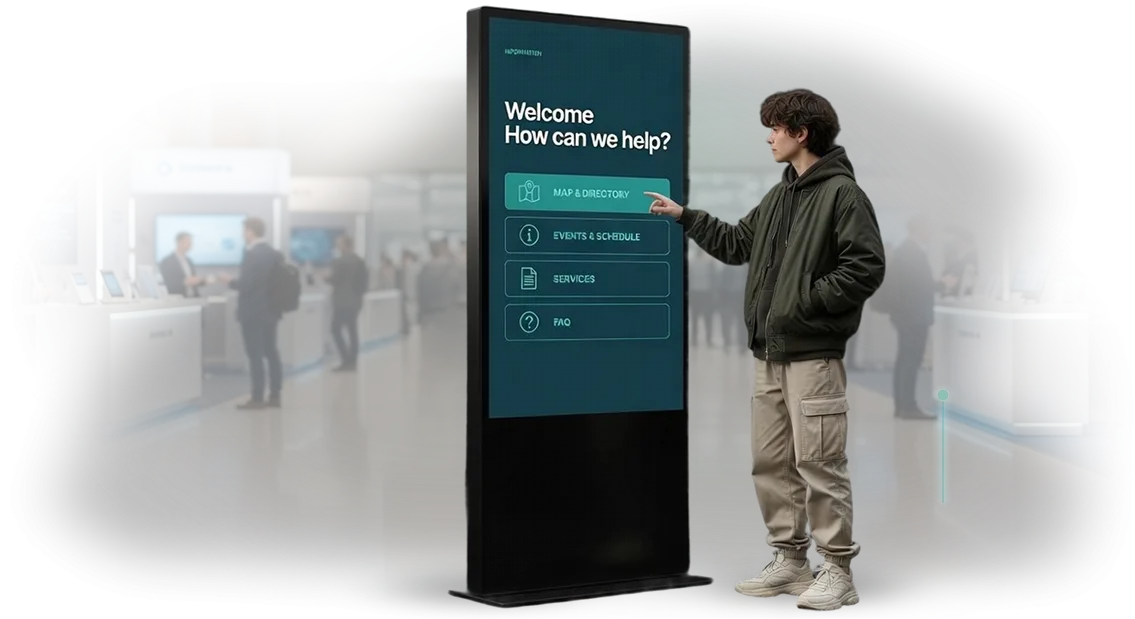
זו הסיבה שקיוסק מידע למוזיאון הפך להכרח, לא לאופציה. פאנל מסך מגע למוזיאון הופך את הצפייה לדיאלוג חי: האורח בוחר מה לחקור לעומק, מנגן סרטונים, ובוחן פרטים שאינם נראים לעין בלתי מזוינת.
אבל הערך אינו במסך עצמו — אלא בתסריט. מצגת אינטראקטיבית למוזיאון, המעוצבת סביב מוצג ספציפי, מכוונת תשומת לב, קובעת קצב, ומשאירה תחושת גילוי.
כשמבקר יוצר אינטראקציה עם מוצג, המעורבות עם התצוגה גדלה באופן טבעי: אנשים שוהים באולם פי שניים עד שלושה יותר זמן, דנים במה שראו, מצלמים, וחוזרים למוזיאון שוב. זה נראה גם בתפוסת האולמות, גם בביקורות, וגם במכירות חוזרות של כרטיסים.
אנחנו מעצבים תסריטים אינטראקטיביים כך שהמוצג מתחיל לדבר עם כל אורח בשפה שלו. קיוסק מידע למוזיאון הוא לא רק מכשיר אלא כלי שמחייה את האוסף והופך ביקור חד-פעמי לסיפור מתמשך עם המוזיאון.
מה קיוסק אינטראקטיבי נותן למבקרים ולניהול
קיוסק אינטראקטיבי הופך סיור רגיל בתערוכה לדיאלוג חי. המבקר בוחר מה לראות: צולל להיסטוריה של חפץ, בוחן פרטים על המסך, פותח תמונות ארכיון או סרטונים.
כך, המוזיאון מפסיק להיות "אולם שקט" — אנשים שוהים, שואלים שאלות, ומשתפים התרשמויות.
לניהול, זו גם תועלת מוחשית: מידע עדכני על מוצגים תמיד בהישג יד, ועדכוני תוכן אורכים דקות ולא ימים. אין צורך להדפיס מחדש תוויות או לחכות לדפוס — העריכות נעשות במקום.
מה המבקרים מקבלים
- מדריך אינטראקטיבי נוח — המוצג מספר את הסיפור שלו, ללא מדריך או תורים.
- חופש בחירה — האורח חוקר מה שמעניין אותו ספציפית, בקצב שלו.
- עומק ללא עומס יתר — התייחסות קצרה להיכרות מהירה וחומרים מעמיקים לסקרנים.
- ניווט ברור — קל למצוא אולם, מוצג, או שירותים ובית קפה.
מה המוזיאון מקבל
- יותר זמן במוצג — מבקרים חוקרים את ההיסטוריה במשך 2–3 דקות במקום 20 שניות.
- הפחתת עומס על הצוות — עובדים עונים על שאלות במקום לחזור על אותו דבר שוב ושוב.
- ניהול תוכן גמיש — פוסטרים, חדשות ותיאורים משתנים דרך פאנל פשוט.
- סטטיסטיקת עניין — אפשר לראות אילו מוצגים מושכים יותר תשומת לב, וזה עוזר לשפר את התצוגה.
אנחנו בונים קיוסקים כאלה "מפתח ביד": אנחנו מעצבים את הממשק עם קהל המוזיאון בראש, מגדירים את לוגיקת התצוגה, ומכשירים את הצוות. כל מה שנדרש מהניהול — הוא לספק את חומרי התוכן בזמן.
בדיקה לפני שמתחילים
- [ ] האורח מבין מאיפה להתחיל — ההנחיה נראית מהמגע הראשון.
- [ ] התסריט למבוגרים ולילדים שונה בעומק ובהצגה.
- [ ] קיים מצב משיכת תשומת לב למקרים שבהם מבקרים חולפים על פני.
- [ ] ניתן לעדכן תוכן בקלות ללא מפתחים או מעצבים.
- [ ] קיימת הגנה מפני ונדליזם ותקלות מערכת.
אם כל זה מכוסה, הקיוסק הופך לנקודת משיכה אהובה ולא רק "מסך בפינה" נוסף. אורחים חוזרים, מביאים חברים, והמוזיאון מקבל כלי שעובד עבור המוניטין שלו כל יום.
פורמטים של קיוסק אינטראקטיבי לפתרון אתגרי מוזיאון
אילו פורמטים של קיוסק אינטראקטיבי מתאימים למוזיאון? הבחירה מתחילה במטרת התערוכה: להציג אובייקט מפתח, להנחות זרמי מבקרים, או לעדכן תוכן במהירות לתערוכה חדשה.
אנחנו בוחרים פתרון על בסיס הלוגיקה של האולם כך שהקיוסק עובד עבור המוזיאון ולא רק תופס מקום.
הנה הפורמטים הסטנדרטיים שאנחנו מעצבים ומשיקים. מה שחשוב אינו המעטפת, אלא איך הוא עוזר למבקר ומפשט את עבודת הצוות שלכם.
השוואת פורמטי קיוסק
| פורמט | למי הוא מיועד | מה הוא נותן למוזיאון |
|---|---|---|
| קיוסק עומד לתערוכת קבע | אולמות מרכזיים, מוצגי מפתח | מציג חומרים שלא נכנסים על תווית: תמונות, סרטונים, סיפורים. שומר על תשומת לב ומגדיל את זמן הצפייה. |
| פאנל מסך מגע קומפקטי לתערוכה זמנית | תערוכות מתחלפות, חללים קטנים | מתעדכן במהירות לתערוכה חדשה, קל להתקנה, תופס מינימום מקום. |
| קיוסק ניווט | לובי, אזורים עם תנועה גבוהה | עוזר למבקרים לבנות מסלול משלהם, מפחית עומס על הצוות. |
| עמדה ניידת | הרצאות, תוכניות ילדים, אירועים | נע בין אולמות, מתאים את עצמו לתסריטים שונים, קל לאחסון. |
כל פורמט מותאם אישית למשימות המוזיאון: מבנה התוכן, הממשק ולוגיקת הניווט מוכנים בנפרד. אם המשימה אינה סטנדרטית — נעצב פתרון לאולם או אירוע ספציפי. הקיוסק צריך לענות על שאלות המבקרים ולהפוך לחלק טבעי מהתערוכה שלכם.
כיצד פיתוח קיוסק אינטראקטיבי עובד מבריף ועד התקנה
תהליך שקוף פירושו תוצאה צפויה. אתם רואים מראש אילו שלבים עוברים הפיתוח וההתקנה, מבינים את לוח הזמנים, ויודעים את תפקידכם באישורים.
שאלות כמו "מה קורה עכשיו?" ו"מתי זה יהיה מוכן?" נעלמות — אנחנו מלווים אתכם מהבריף הראשון ועד קיוסק עובד באולם.
- בריף והתעמקות במשימה. אנחנו דנים למי הקיוסק מיועד, מה המבקר צריך למצוא ב-30 שניות, ואיזו משימה התערוכה פותרת. הפלט — מפרט טכני ותוכנית עבודה ברורה.
- קונספט וסקיצת קיוסק. אנחנו מציעים אפשרויות לעיצוב המעטפת, מיקום המסך וסגנון הממשק כדי להתאים לאסתטיקה של המוזיאון. אתם מאשרים את הכיוון הכללי לפני שאנחנו מתחילים להרכיב הכל.
- אישור פריסה ומבנה. אנחנו מציגים אב-טיפוס אינטראקטיבי של הממשק העתידי: מדורים, ניווט, טקסטים. אתם מבצעים עריכות לפני התכנות — זה מבטל עבודה חוזרת בסוף הפרויקט.
- יישום והרכבה. מעצבים מציירים את המסכים, מהנדסים מרכיבים את המעטפת, מתכנתים מגשימים את התסריטים. אתם מקבלים דוחות צילום מכל שלב הרכבה.
- בדיקה על פאנל מסך המגע. אנחנו בודקים תסריטי מבקרים: איך ילד ומבוגר מתנהגים מול המסך, האם מגעים נקלטים עם כפפות, והאם הממשק מאט באולם עמוס.
- התקנה והשקה. אנחנו מספקים את הקיוסק, מתקינים אותו במקום הנכון, ומחברים חשמל ורשת. אנחנו מגדירים הפעלה אוטומטית, מכשירים את הצוות, ומוסרים את מדריך התפעול.
- תמיכה לאחר ההשקה. אנחנו עוקבים אחר ביצועי המערכת, מעדכנים תוכן, ופותרים תקלות במהירות כך שהקיוסק לעולם לא יושב בטל ולו ליום אחד.
רצף זה מגן מפני הפתעות: כל שלב מסתיים באישור, ואתם תמיד יודעים לאן הולך התקציב. בסופו של דבר, מבקרים מקבלים חוויה אינטראקטיבית ברורה וחיה, והמוזיאון מקבל מוצג עובד ללא כאבי ראש לצוות.
מה כלול במסירת הקיוסק האינטראקטיבי
קיוסק אינטראקטיבי למוזיאון הוא לא רק פאנל מסך מגע בפינת אולם. אנחנו מספקים פתרון שלם "מפתח ביד": מעטפת, עיצוב, תוכן תוכנתי, והוראות לצוות.
לא תצטרכו לקנות חלקים נוספים, לחפש קבלני משנה, או להבין את הצד הטכני — הכל כבר מוגדר ונבדק.
חבילת המסירה כוללת:
- מעטפת הקיוסק האינטראקטיבי — מבנה יציב שמשתלב בתערוכה ומגן על הציוד מפני נזק מקרי.
- מסך המגע ויחידת המערכת — חומרה מקצועית לפעילות 24/7 בחלל ציבורי.
- עיצוב בסגנון מוזיאוני — גרפיקה על המעטפת, שלטים, מדבקות: הקיוסק הופך לחלק מהתערוכה, לא רק "חומרה".
- תוכן תוכנת הקיוסק — מצגת אינטראקטיבית מוכנה עם ניווט, תמונות וטקסטים מהתוכן שלכם.
- מדריך תפעול הקיוסק — התייחסות פשוטה למלווים: הפעלה, אתחול, תחזוקה, החלפת קבצים.
- התקנה, הגדרה והדרכה — אנחנו מתקינים את הקיוסק, מסבירים לצוות כיצד להשתמש בו, ומוסרים את התיעוד.
גישה זו מסירה את כל הדאגות הטכניות מצוות המוזיאון. מלווים עובדים לפי המדריך, מבקרים מקבלים חוויה אינטראקטיבית אמינה, ואתם מקבלים תוצאה צפויה ללא עבודה נסתרת או חלקים נוספים. כל מה שצריך כבר נמצא בחבילה.
מקרה בוחן: כיצד קיוסק אינטראקטיבי החיה תערוכת קבע
תערוכת קבע היא הליבה של כל מוזיאון, אבל דווקא אותה מבקרים עוברים לרוב הכי מהר. ויטרינות מוכרות לא מעוררות שאלות, ואם כן עולה שאלה, אין מי שישאל: המדריך עסוק, התוויות קצרות.
כתוצאה מכך, המוזיאון משקיע מאמץ בעיצוב האולמות, אבל אורחים זוכרים רק כמה מהמוצגים הבולטים ביותר.
הצענו למוזיאון לא לבנות מחדש את התערוכה אלא להוסיף לה קיוסק אינטראקטיבי. פאנלי מסך מגע הופיעו ליד הוויטרינות, שם כל חפץ נחקר לעומק: סיפור יצירתו, אלמנטים נסתרים, ההקשר של התקופה.
המבקר שולט בתשומת הלב שלו, והמוזיאון מקבל עוזר דיגיטלי שעובד ללא ימי חופש ולעולם לא מתעייף מלחזור על אותו דבר.
מה השתנה לאחר ההתקנה
חודש לאחר מכן, המוזיאון השווה התנהגות מבקרים לפני ואחרי. התוצאה הייתה מדהימה: הזמן הממוצע ליד הוויטרינה הוכפל. בעבר, אורחים מיהרו דרך האולם בכמה דקות; עכשיו הם עוצרים, לומדים את הפרטים, ודנים במה שראו זה עם זה. התערוכה החלה לעבוד כמסלול מלא ולא כגלריה למעבר.
מקרה בוחן זה של קיוסק אינטראקטיבי במוזיאון חשף גם אפקט נוסף: המעורבות גדלה ללא מעורבות צוות. המלווים שוחררו מחזרת הסברים, ומבקרים קיבלו הזדמנות לגלות כל חפץ בקצב שלהם.
לאחר החודשים הראשונים של הפעילות, המוזיאון הזמין מאיתנו עוד — קיוסקים לאולם השכן, וזו הייתה האישור הטוב ביותר לתוצאות.
כיצד לבחור את פורמט הקיוסק האינטראקטיבי הנכון?
כדי לבחור את הקיוסק האינטראקטיבי הנכון למוזיאון, אל תתחילו מהמעטפת — התחילו ממטרות התערוכה. מה המבקר צריך לעשות במוצג שלכם: לקבל במהירות התייחסות, לצלול להיסטוריה של האובייקט, או לפתור חידה קשורה?
גם תסריט המסך וגם המבנה הפיזי תלויים בזה — שולחן קומפקטי מספיק להקדמה קצרה, בעוד פאנל עם זווית הטיה נוחה ומקום לשניים או שלושה אנשים נדרש ללימוד ממושך.
הדרישה השנייה — תנועת רגלים וזרימת התנועה באולם. קיוסק עומד עם מעטפת מונוליטית יציבה עומד בקלות בקהל ומגעים מקריים, ולכן הוא עובד הכי טוב באזורים עם תנועה גבוהה וליד מוצגים פופולריים.
באולמות קטנים ובתערוכות זמניות, פאנל צמוד קיר או עמדה קומפקטית נוחים יותר — הם לא מעמיסים על החלל ונכנסים בקלות לתוכנית הפינוי.
במקום שבו הקיוסק נמצא בגישה פתוחה, אנחנו משתמשים בחומרים מקצועיים נגד ונדליזם — זה שומר על מראה מסודר גם בשימוש אינטנסיבי.
הדרישה השלישית — התאמה רגשית לתערוכה. מעטפת עץ מינימליסטית תתמוך באווירה של אולם היסטורי, בעוד תצוגת זכוכית דמוית טאבלט תדגיש את האופי ההייטקי של תערוכה מודרנית.
זה לא עניין קוסמטי: כשהקיוסק נראה כמו חלק מהתערוכה, מבקרים ניגשים אליו ברצון רב יותר ושוהים כמה דקות נוספות מול המסך.
אנחנו בוחרים את פורמט הקיוסק לכל תערוכה בנפרד: אנחנו מייעצים על הפריסה, מבררים את התנועה, ובמידת הצורך, מבקרים באתר כדי להעריך את האולם באופן אישי.
כתוצאה מכך, אתם מקבלים פתרון מוכן — עם תסריט מוגדר, מבנה מתאים, וגרפיקה בסגנון התערוכה שלכם.
גישה זו מבטלת את הניחוש של "מה אם זה לא יתאים" ומבטיחה שהקיוסק מתחיל לספק ערך לקהל מהיום הראשון.
תשובות לשאלות נפוצות על תפעול קיוסק אינטראקטיבי
לפני הזמנת קיוסק אינטראקטיבי, לצוותי מוזיאון יש את אותן דאגות: האם הפאנל לא ייכשל באמצע תערוכה, באיזו תדירות יהיה צורך לעדכן תוכן, מי יטפל בציוד.
ללא תשובות לשאלות אלה, קשה להפקיד חלק חשוב מהתערוכה בידי טכנולוגיה, ולכן הכנו הסברים קצרים — אנחנו מקלים על החששות שלפני ההזמנה ומראים איך אנחנו עובדים בפועל.
העיקר בקצרה: אמינות, תוכן, תחזוקה
עד כמה אמינים פאנלי מסך מגע למוזיאונים?
אנחנו משתמשים בציוד מקצועי המיועד לפעילות אינטנסיבית בחללים ציבוריים. לאורך שנים של פרויקטים למוזיאונים ותערוכות, מעולם לא היה לנו מקרה שבו קיוסק איכזב אותנו בשעות הפתיחה. בנוסף, אנחנו מספקים אחריות ומגדירים ניטור מרחוק של מצב הפאנל.
כיצד מתעדכן תוכן הקיוסק?
עדכון תוכן הקיוסק אינו דורש מתכנת. איש צוות מוזיאון מעלה באופן עצמאי טקסטים, תמונות וסרטונים חדשים דרך פאנל שליטה פשוט — זה אורך דקות, לא ימים. לתערוכות זמניות, ניתן לשנות את התוכן בתדירות של כל יום.
מי מטפל בתחזוקת הקיוסק האינטראקטיבי?
אנחנו לוקחים על עצמנו את התמיכה הטכנית: תחזוקה מונעת, עדכוני תוכנה, והחלפת חלקים מתכלים. אם מתעוררת תקלה, אנחנו פותרים אותה מרחוק או עם ביקור מומחה — המוזיאון ממשיך לעבוד, והקיוסק נשאר זמין למבקרים.
האם צוות המוזיאון צריך הכשרה?
אין צורך בהכשרה מיוחדת: הממשק ברור מהמגע הראשון. למנהלים, אנחנו מספקים הדגמה קצרה, שלאחריה הם מנהלים את הקיוסק בביטחון ללא התמיכה שלנו.
אם עדיין יש לכם ספקות לגבי אמינות פאנלי מסך מגע או תנאי תחזוקה — כתבו לנו, ונספר לכם יותר על פרויקט ספציפי למוזיאון שלכם.דונו איתנו בפרויקט הקיוסק האינטראקטיבי שלכם
כל מוזיאון מחפש דרכים להחזיק את תשומת הלב של המבקר ולהפוך את התערוכה לבלתי נשכחת.
קיוסק אינטראקטיבי לתערוכה פותר בעיה זו, אבל לפני הזמנת פיתוח, חשוב להבין איך הוא ישתלב בחלל שלכם, כמה זמן זה ייקח, ואיזו תוצאה תקבלו. אנחנו עוזרים לכם לגלות זאת לפני חתימת החוזה.
כשאתם שולחים פנייה, אתם מקבלים:
- חישוב עלות קיוסק ראשוני לתערוכה שלכם — ללא חיובים נסתרים.
- אב-טיפוס ממשק: אתם רואים איך המסך ייראה ומבצעים עריכות לפני תחילת העבודה.
- המלצות ציוד: אנחנו בוחרים פאנלי מסך מגע מקצועיים עם הגנה מפני פגיעות חיצוניות, המתאימים לחללים עם תנועה גבוהה.
- תוכנית ולוח זמנים ברורים: פיתוח בשלבים עם נקודות ביקורת שקופות.
- התאמת תוכן: מבנה ועיצוב לתערוכה ולקהל היעד שלכם.
- אינטגרציה עם מערכות המוזיאון, אם נדרש — מחשבונאות ועד אנליטיקה.
- אחריות ותמיכה לאחר ההשקה: הקיוסק פועל באופן אמין, ואתם לעולם לא נשארים לבד עם המשימה.
אנחנו לוקחים על עצמנו את כל המחזור: מרעיון ועד השקה ותמיכה. פיתוח קיוסק מפתח ביד לתערוכה הוא העבודה היומיומית שלנו, כך שאתם מקבלים תוצאה צפויה בלוח זמנים מוסכם. אנחנו עובדים מרחוק בכל רחבי חבר העמים, כך שניתן לדון בפרטים מכל מקום.
השאירו פנייה כדי לקבל חישוב עלות ולוח זמנים למתחם שלכם. הזמנת קיוסק אינטראקטיבי מפתח ביד קלה יותר ממה שזה נראה כשאנשי מקצוע לוקחים על עצמם את העבודה.