

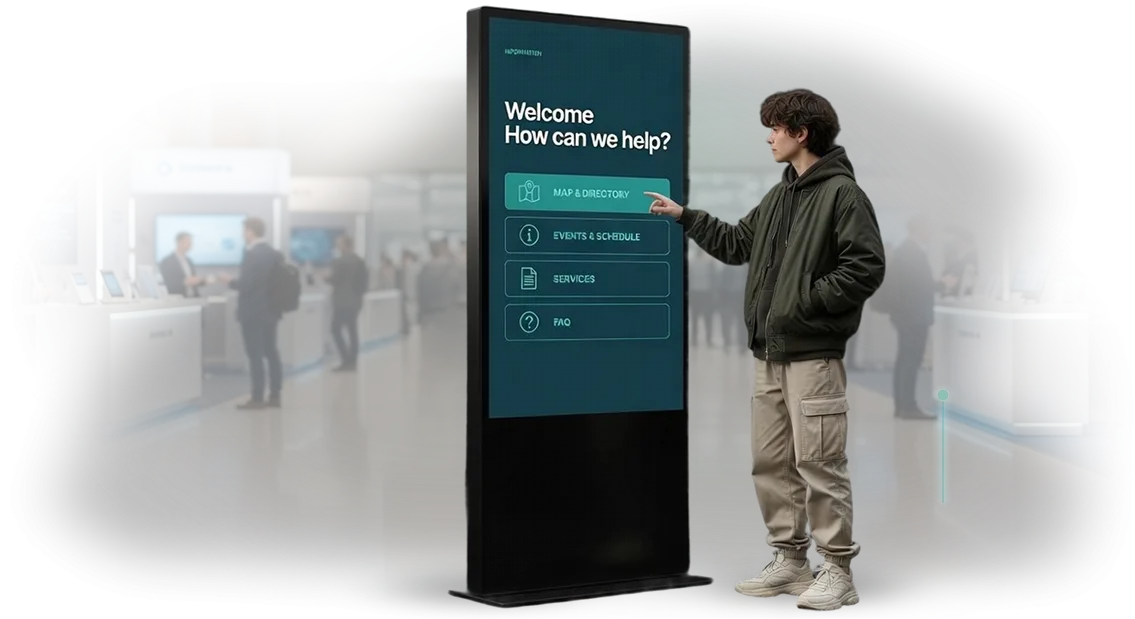
קיוסק למלון או לפנסיון: למה אורחים לא חוזרים?
אורח חוזר למלון כשהוא מרגיש שדואגים לו והשירות צפוי. אבל אם הוא הולך לאיבוד בלובי, לא מוצא את המסעדה, או מבזבז זמן בחיפוש אחר המידע שהוא צריך, הרושם מתקלקל עוד לפני הצ'ק-אין.
במקום נוחות, הם חשים תסכול, וחוויה שלילית נזכרת חזק יותר מחדר טוב או מארוחת בוקר.
כל אורח שהולך לאיבוד הוא לא רק מצב רוח הרוס, אלא גם הכנסה שאבדה. מבקר לא לומד על טיפולי ספא, אולם הכנסים או טיולים פשוט כי לא מצא דרך נוחה לגלות אותם.
הם עוזבים למתחרה שמציע שירות ברור יותר, והמלון מפסיד גם הזמנות חוזרות וגם המלצות לחברים.
אנחנו פותרים את הבעיה הזו עבור פנסיונים ומלונות כבר עשרות שנים. קיוסק אינטראקטיבי הופך לקונסיירז' דיגיטלי: הוא מציג מסלולים בתוך המבנה, מספק מידע על שירותים בשפת האורח, ועוזר להם להתמצא ללא לחץ. הניווט של האורחים הופך ממקור של כאוס לכלי שמרוויח לכם נאמנות.
שירות כזה במלון הוא לא רק מכשיר בלובי. זוהי דרך לנהל רושם: אורחים מגיעים לחדרם מהר יותר, לומדים על האפשרויות הזמינות, ומרגישים שדואגים להם.
כתוצאה מכך, ההוצאה הממוצעת על שירותים נוספים גדלה, ואורחים חוזרים בשמחה וממליצים על המלון לאחרים.
מה קיוסק אינטראקטיבי נותן לאורחים ולצוות שלכם
אורחים לא אוהבים לעמוד בתור בדלפק הקבלה רק כדי לשאול "איפה הבריכה?", והמנהלים שלכם מבזבזים עשרות דקות ביום במענה לשאלות כאלה.
הקיוסק האינטראקטיבי לוקח על עצמו את הבקשות השגרתיות האלה: אורחים מוצאים את המידע בעצמם, והצוות מתמקד במשימות שבאמת דורשות מעורבות אנושית.
הצוות שלנו מפתח קיוסקים עם מסך מגע למלונות ופנסיונים על בסיס התרחישים שלכם — ממפת הנכס ועד תפריט המסעדה והזמנת טיפולי ספא. הנה מה שמשתנה לאחר ההתקנה:
- אורחים מוצאים את דרכם מהר יותר. מפה, לוח זמנים, אנשי קשר לשירותים — הכל במקום אחד, בלי לחכות שצוות יגיב.
- הצוות מוסח פחות. עובדי דלפק הקבלה עונים רק על שאלות מורכבות במקום לחזור על אותו מידע חמש פעמים במשמרת.
- ההוצאה הממוצעת גדלה. הקיוסק מציע בעדינות שירותים נוספים: טיולים, ארוחת ערב במסעדה, הסעה — אורחים רואים את האפשרויות ומזמינים אותן מיד.
- הנאמנות גדלה. אורחים מרגישים שהמלון חשב על השהייה שלהם עד לפרטים הקטנים ביותר, וסביר יותר שיחזרו אליכם שוב.
עבור הצוות שלכם, זה גם כלי ניהול נוח: אתם מחליטים איזה תוכן להציג, משנים מבצעים ומידע בלי להדפיס מחדש עלונים מנייר. הקיוסק הופך לחלק משירות שעובד עבורכם 24/7.
קיוסק אחד מחליף שעות של ייעוץ פנים אל פנים והופך את השירות לצפוי — אפילו בשעות הצ'ק-אין כשיש תור בדלפק הקבלה. אורחים מקבלים תשובות מיידית, ואתם מקבלים יותר זמן לטפל במי שבאמת זקוק לעזרה.
פורמטים של קיוסק אינטראקטיבי: טבלה לפי סוג הנכס שלכם
עבור מלון או פנסיון, חשוב שאורחים יקבלו מידע במהירות בלי תורים בדלפק הקבלה. קיוסק עם מסך מגע פותר זאת בשלושה פורמטים עיקריים — כל אחד מותאם לנקודת מגע ספציפית עם האורח. נעזור לכם לבחור את האפשרות הטובה ביותר עבור הנכס שלכם.
איך לבחור פורמט של פאנל מסך מגע
בחרו פורמט שיתאים לתרחיש השהייה של האורח: ממידע מהיר בלובי ועד ניווט קומה-קומה והצגת שירותים נוספים. הטבלה שלהלן עוזרת לכם להתאים את המשימה לסוג המכשיר.
| פורמט | למי מתאים | מה הוא נותן ללקוח |
|---|---|---|
| קיוסק מסך מגע עומד | מלונות ופנסיונים עם לובי גדול ותנועת אורחים גבוהה | מקל על דלפק הקבלה, עובד כנקודת מידע וכחלון ראווה לשירותים 24/7 |
| פאנל אינטראקטיבי צמוד קיר | מלונות בוטיק, ספא, מסעדות מלון | חוסך מקום, מציג תפריט, שירותים ומפת נכס בכמה נגיעות |
| פאנל אינטראקטיבי על דלפק הקבלה | מלונות קטנים ואכסניות | מאיץ את הצ'ק-אין, עוזר להציג חדרים ושירותים נוספים בלי הדפסות |
בכל פורמט, אורחים מוצאים תשובות לשאלותיהם בעצמם: איפה ארוחת הבוקר, איך מזמינים מונית, מה לראות בעיר. זה משפר את איכות השירות ומפחית את העומס על הצוות.
הבחירה תלויה בגודל הלובי, במספר האורחים ובתקציב. נעזור לכם להחליט על הפורמט ולהכין מצגת אינטראקטיבית שמושכת תשומת לב ומניעה ביקורים חוזרים.
שלבי יצירת מצגת אינטראקטיבית מאפס
לא אמורות להיות הפתעות בפיתוח מצגת אינטראקטיבית לפאנל מסך מגע — לא בלוחות זמנים ולא בתוכן. לכן בנינו תהליך שקוף של שישה שלבים: אתם תמיד יודעים באיזה שלב נמצא הפרויקט, מה תקבלו, ומה נותר לעשות. אין "קופסה שחורה" — רק הסכמות ברורות ותוצאה שאתם מאשרים אישית.
- בריף וסקירת משימה. אנו מנתחים מי הם האורחים שלכם, אילו שאלות הם שואלים הכי הרבה בדלפק הקבלה, ואילו שירותים ונקודות עניין צריך להדגיש קודם. הפלט הוא מבנה למצגת העתידית.
- אב-טיפוס ומפת מסכים. אתם רואים מפת מדורים, רצף מעברים, ואילו כפתורים ורמזים יופיעו. זהו טיוטה של כל המצגת — קל להתאים לפני הפיתוח.
- קונספט עיצובי. אנו יוצרים סגנון ויזואלי למותג שלכם: פונטים, צבעים, קומפוזיציה, תמונות אווירה. המסך צריך לא רק ליידע אלא גם לגרום לאנשים לרצות להשתמש בשירות.
- הרכבה ותוכן. אנו מעבירים את העיצוב לסביבה אינטראקטיבית, מחברים תיאורי חדרים, ספא, מסעדה, הסעות וטיולים. כאן גם אתם עורכים שינויים בטקסטים ובתמונות — אתם מאשרים את התוכן.
- בדיקות והשקה. אנו בודקים על חומרה אמיתית: מהירות תגובה, קריאות ממרחקים שונים, ופעולה תקינה גם לאחר חוסר פעילות ממושך. אנו משיקים על פאנל מסך המגע שלכם או מתקינים על מסך חדש.
- תמיכה ועדכונים. מחירים, מבצעים ושעות פתיחה משתנים — אתם שולחים נתונים חדשים, אנחנו מעדכנים את התוכן. אורחים תמיד רואים הצעות עדכניות, ואתם לא צריכים לחכות למפתח.
כל הפרויקט מנוהל על ידי מנהל ייעודי אחד: הוא מחבר אתכם למעצב ולמהנדס, מתעד שינויים, ושולט בלוחות זמנים. אתם משקיעים זמן מינימלי ומקבלים כלי שנכנס מיד לפעולה ומפחית את העומס על צוות דלפק הקבלה.
מה כלול במסירת קיוסק אינטראקטיבי במפתח מלא
כשמלון או פנסיון מזמין קיוסק אינטראקטיבי, חשוב לקבל לא רק מכשיר אלא כלי עובד שמספק ערך מיידית. "מפתח מלא" פירושו שאנחנו מטפלים בכל המחזור: מעיצוב הממשק ועד השקה והדרכת צוות.
אתם לא צריכים לתאם מספר קבלנים או לסיים משהו אחרי המסירה — הכל כבר מוכן.
מה כלול בחבילה המלאה:
- ממשק מוכן בסגנון המותג שלכם. המסך מקבל את פני האורחים בסגנון הוויזואלי של המלון, עוזר להם למצוא במהירות את המידע הדרוש, ולא נראה כמו אלמנט זר בלובי.
- מילוי תוכן. טקסטים, תמונות, מפות, תיאורי חדרים ושירותים — אנו אוספים ומבנים מידע כך שהוא עונה על שאלות המפתח של האורחים לפני שהם ניגשים למנהל.
- אינטגרציות עם המערכות שלכם. מזג אוויר, שערי חליפין, עדכוני תפריט, רשימת אירועים — נתונים מתעדכנים אוטומטית או דרך פאנל ניהול פשוט שכל עובד יכול לשלוט בו.
- הדרכת צוות. אנו עורכים בריף קצר למנהלים ולצוות ניקיון: איך להפעיל את הקיוסק, לשנות מידע, ולפעול במצבים חריגים. אתם לא צריכים להבין לבד.
- השקה והתקנה באתר. אנו בודקים את פעולת הציוד, סנכרון עם שירותים, והמראה על מסך אמיתי. רק לאחר מכן אנו מוסרים את הקיוסק לשימוש.
- תמיכה טכנית. אם מתרחשת תקלה או שיש לכם שאלות, אתם פונים אלינו ישירות — אין צורך לחפש קבלנים חדשים. האחריות על ציוד ותוכנה תקפה מהיום הראשון.
כתוצאה מכך, אתם מקבלים קיוסק מוכן לחלוטין שמתחיל לספק ערך מהיום הראשון להשקה. אורחים מוצאים את דרכם לשירותים מהר יותר, הצוות מוסח פחות על ידי שאלות חוזרות, והמלון נראה מודרני ואכפתי.
מקרה בוחן: קיוסק אינטראקטיבי הגדיל הכנסות ב-35%
אורחים לרוב לומדים על שירותי המלון רק בדלפק הקבלה — תור, חיפזון, וחצי מהשירותים הנוספים נעלמים מעיניהם. עבור רשת מלונות פלמירה, זה אומר הכנסות שאבדו מהמסעדה, הספא והטיולים.
המשימה הייתה פשוטה: לתת לאורחים אפשרות לגלות את כל שירותי המלון בעצמם בתוך הדקות הראשונות של הצ'ק-אין.
פיתחנו מצגת אינטראקטיבית עם מסך מגע שמחליפה חלק מהייעוץ בדלפק הקבלה. אורחים בוחרים מה מעניין אותם — מתפריט המסעדה ועד הזמנת טיפולי ספא — ומקבלים תשובה בלי לחכות.
המערכת מותקנת על פאנל מסך מגע מקצועי, והממשק מותאם למשתמשים בכל גיל, כך שמהימים הראשונים אנשים משתמשים בקיוסק ללא סיוע צוות.
תוצאת היישום
חודשיים לאחר ההשקה, המכירות הנוספות גדלו ב-35%. ההוצאה הממוצעת של אורח גדלה בזכות הזמנות מסעדה וטיפולי ספא, ומספר הפניות למנהלים עם שאלות פשוטות ירד ניכר — הצוות מצא זמן לטפל באורחים.
המלון האריך את חוזה השירות והציב קיוסקים בשני מבנים נוספים שלו. מקרה הפיתוח הזה הפך כעת לחלק מהמצגת שלנו למלונות אחרים: לקוחות רואים לא הבטחות מופשטות, אלא מספרים שמאשרים החזר השקעה.
איך לבחור מצגת אינטראקטיבית למלון או לפנסיון?
בחירת מצגת אינטראקטיבית מתחילה לא במסך אלא במשימה: מה האורח צריך לעשות בקיוסק — למצוא את החדר שלו, ללמוד על המסעדה, להזמין שירות, או להעביר את הזמן בזמן ההמתנה.
הפורמט תלוי בזה: פאנל קומפקטי צמוד קיר לניווט, קיוסק מסך מגע עומד למידע, או אזור מולטימדיה רחב פורמט לחוויות.
בחירת פורמט לא נכון פירושה קבלת פתרון יקר מדי עם תכונות מיותרות או חוויית אורח ירודה שמשפיעה משמעותית על הרושם שלהם מהמלון.
הקריטריון הראשון הוא נוחות לאורחים. קיוסק מסך מגע במלון צריך לעבוד מהנגיעה הראשונה, בלי תורים או רמזים מהצוות: פונט גדול, מדורים ברורים, תגובה מיידית.
אם הממשק דורש כישורים או הוראות, אורחים פשוט יעברו ליד, וההשקעה לא תשתלם.
השני הוא ניהול תוכן. במלון, תפריטים, אירועים, מבצעים ולוחות זמנים משתנים באופן קבוע. בחרו פתרון שבו עובד ללא הכשרה טכנית יכול לעדכן עמוד בעצמו תוך כמה דקות, במקום לשלוח בקשה למפתחים. זה יחסוך שעות בכל חודש ויאפשר לכם להגיב במהירות לשינויים.
השלישי הוא אמינות ותמיכה. קיוסק עובד מסביב לשעון, ולכן רכיבים איכותיים, הגנה מפני תקלות, ושירות פתרון בעיות מהיר חשובים.
שאלו איך מאורגנים עדכונים מרחוק וניטור מכשירים — זה משפיע ישירות על פעילות רציפה של המלון.
לבסוף, העריכו את העיצוב ואת מידת התאמתו לתדמית המלון. הפאנל או המעמד יכולים להיות קפדניים, קלילים, ולהשתלב בפנים — תוך חיזוק המותג.
אנחנו בוחרים קיוסק למיקום ספציפי ולמשימות כך שאורחים מקבלים ערך, ואתם מקבלים שליטה ותוצאה צפויה.
חששות נפוצים בהזמנת קיוסק אינטראקטיבי
בעלי מלונות ופנסיונים לעתים קרובות דוחים רכישת קיוסק אינטראקטיבי בגלל חששות: כמה מהר ההשקעה תשתלם, האם יהיה קשה לעדכן תוכן, ומה לעשות אם הציוד נכשל.
אנחנו מסבירים איך הבעיות האלה נפתרות בפועל — ולמה הקיוסק הופך לכלי פשוט ואמין עבור הצוות והאורחים שלכם.
כמה קשה לנהל את הקיוסק ולשנות מידע?
פאנל הניהול מיועד לעובדים ללא הכשרה טכנית: שינוי מחירים, מבצעים ותמונות לוקח כמה דקות. אנחנו מדריכים את הצוות, מספקים הוראות ברורות, ונשארים בקשר. תמיכה טכנית לקיוסק פועלת לאחר ההשקה — בטלפון או מרחוק.
האם הפרויקט יימשך חודשים?
קיוסק סטנדרטי למלון מוכן תוך 2–3 שבועות — מהבריף ועד ההתקנה בלובי. לוחות הזמנים קבועים בחוזה, ואנחנו אחראים לעמוד בהם. אם צריך מהר יותר, יש תוכנית עם תבניות עיצוב מוכנות.
איזה תקציב צריך להקצות, והאם לא יהיו תשלומים נסתרים?
תקציב הפרויקט תלוי במספר המסכים, בעיצוב ובאינטגרציות עם מערכת ההזמנות שלכם. אנחנו מציעים חבילות בסיסיות, אופטימליות ופרימיום ומראים אפשרויות חיסכון. האומדן הסופי קבוע בחוזה — המחיר לא משתנה במהלך התהליך.
מה לגבי אחריות ושירות לאחר ההשקה?
הקיוסקים והציוד מגיעים עם אחריות רשמית. במסגרת אחריות השירות, אנחנו מתקנים תקלות ללא תשלום ובמידת הצורך מחליפים את המכשיר. זה מאפשר לכם להפסיק לדאוג לצד הטכני ולהתמקד באורחים.
מה אתם מקבלים לאחר הזמנת קיוסק
כשאתם מזמינים קיוסק אינטראקטיבי מאיתנו, אתם מקבלים לא רק מסך מגע מותקן אלא פרויקט ארוז במלואו ומוכן להשקה. להלן רשימת בדיקה של מה שיהיה לרשותכם לאחר מסירת העבודה.
- מצגת אינטראקטיבית מוכנה לשימוש עם התוכן שלכם: תיאורי חדרים, שירותים, מפות נכס, גלריה ואנשי קשר. היא כבר מוגדרת למסך מגע ומופעלת אוטומטית כשהקיוסק נדלק.
- חומרי מקור ואבות טיפוס עיצוביים. אתם לא בני ערובה של קבלן יחיד: אתם יכולים לעדכן מידע עם צוות הניהול שלכם או לפנות אלינו לשיפורים.
- הדרכה קצרה לצוות. אנחנו מראים למנהלים איך להפעיל מחדש את הקיוסק, להחליף תמונות, לשנות מחירים או להוסיף אירוע חדש — זה לוקח 20-30 דקות.
- הוראות הפעלה ותחזוקה לפאנל. כולל טיפול מונע ושאלות נפוצות, כך שהקיוסק יחזיק מעמד זמן רב ויפעל בצורה חלקה.
- אחריות על כל העבודה והציוד. במהלך תקופת האחריות, אנחנו מתקנים כל שגיאה בפעולת המצגת ללא תשלום ומספקים תמיכה טלפונית.
- תמיכה לאחר ההשקה. אם עולות שאלות או רעיונות, אנחנו זמינים בשעות העבודה ויכולים לבצע שינויים במהירות מרחוק כשצריך.
חבילה זו נותנת מענה לכל החששות האופייניים של בעלי מלונות: הקיוסק מחזיר את השקעתו דרך ניווט עצמי של אורחים, והתחזוקה והעדכון שלו לא קשים יותר משימוש בסמארטפון. אתם מקבלים תוצאה צפויה ושקט נפשי לגבי פעולתו.