

מדוע מבקרים עוזבים קניון מבלי לקנות דבר?
מבקר מגיע לקניון כדי לבצע רכישה ספציפית, אבל במקום זה מוצא מבוך של מחלקות ותור למעלית.
אחרי עשר דקות של שיטוט, הוא מאבד עניין ועוזב בידיים ריקות — אורחים כאלה לא חוזרים ולא ממליצים על הקניון לחברים.
קשה לזכות בחזרה במבקר שאבד: הוא לא משאיר פנייה ולא כותב ביקורת, הוא פשוט נעלם. עבור הבעלים, זה לא רק הכנסות שאבדו, אלא גם פגיעה במודעות המותג — הרושם מהקניון נוצר בדקות הראשונות של הביקור.
ככל שאדם מחפש זמן רב יותר את החנות שהוא צריך, כך יורד הרצון שלו לבצע רכישה ולחזור שוב.
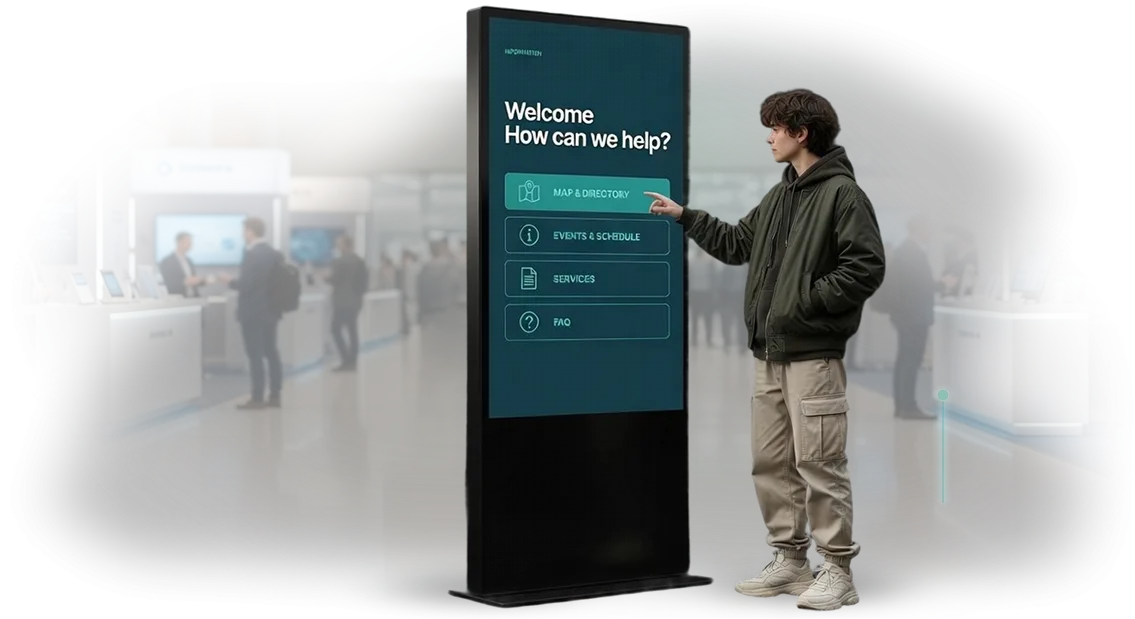
קיוסק מידע לקניון פותר את הבעיה הזו לפני שהמבקר מתאכזב.
פאנל אינטראקטיבי בקניון מציג את המסלול למחלקה הרצויה, מציע מבצעים וחדשות — האורח מבזבז פחות זמן בחיפוש, והקניון עצמו מקבל יותר רכישות מכל ביקור.
הניווט בקניון מפסיק להיות בעיה: אדם רואה את המסלול, את מפות הקומות ואת ההצעות המיוחדות בחלון אחד.
ניווט ברור משפיע ישירות על גידול במכירות: מבקר שמוצא במהירות את המטרה שלו מספיק לבקר בחנויות שכנות ומוכן יותר לחזור. כשקניון משקיע בפתרונות אינטראקטיביים, הוא מרוויח דרך נאמנות וביקורים חוזרים.
אנחנו מתכננים מערכות כאלה כדי להתאים למשימות של מתחם ספציפי — מספריית פשוטה ועד יועץ וירטואלי מלא שמדריך אורחים בין הקומות ועוזר לרכישה להתרחש.
מה קיוסק אינטראקטיבי נותן לעסק שלך
מבקר בקניון מבזבז עד חמש עשרה דקות בניסיון למצוא את החנות, בית הקפה או השירותים שהוא צריך. קיוסק אינטראקטיבי פותר את המשימה הזו תוך שניות ספורות: על המסך — מפת המתחם, קטלוג בוטיקים, הצעות מיוחדות ולוח אירועים.
ככל שקל יותר לאורח לקבל מידע, כך הוא חוזר ברצון רב יותר וממליץ על הקניון לחברים — כך נוחות הופכת לנאמנות מבקרים.
היתרונות של קיוסק אינטראקטיבי חורגים הרבה מעבר לניווט. עבור קניון, זה גם חלון ראווה עובד עבור השוכרים: הצגת חדשות, הנחות ואירועים מושכת תשומת לב לחנויות שבדרך כלל חולפים על פניהן.
המסלול שנבנה על ידי הקיוסק מגדיל את מספר חלונות הראווה שנצפים, ולכן גם את הסבירות לרכישות אימפולסיביות. כל מסלול כזה הוא תרומה להגדלת המכירות בקניון ולגידול בחשבון הממוצע של השוכרים.
ההשפעה על הצוות חשובה לא פחות.
מנהלים ויועצים מפסיקים לענות על אותן שאלות כמו "איפה הסלון" או "אילו מבצעים פעילים כרגע." הזמן שהתפנה מופנה לייעוץ ולעזרה בבחירה — למה שבאמת מגדיל את החשבון הממוצע ואת איכות שירות הלקוחות. וחלוקה אחידה של זרם המבקרים מפחיתה תורים באזורי המידע ובמעליות.
יתרון נוסף הוא הרלוונטיות של מידע בזמן אמת. אתה משנה את רשימת השוכרים, שעות הפעילות וההודעות ישירות בלוח הבקרה, בלי להדפיס מחדש באנרים או להפיץ תוכניות קומה חדשות.
למבקר תמיד יש גישה לנתונים עדכניים, ואתה לא מוציא תקציב על עדכון חומרים מודפסים. קיוסק אינטראקטיבי הופך לנקודה שבה נוחות הלקוח, האינטרסים של השוכרים והיעילות התפעולית של הקניון נפגשים.
פורמטים של קיוסק אינטראקטיבי לקניון
אי אפשר להשתמש באותו קיוסק מגע ביעילות שווה לניווט, לקטלוג ולפרומו — לכל משימה יש היגיון הצגה משלה.
אם תבחר את הפורמט לאזור ספציפי בקניון, הקיוסק עובד כמו איש מכירות נוסף: הוא עוזר למצוא חנות, להציג מוצר או להחזיק את תשומת הלב של האורח ליד תצוגה.
להלן השוואה בין הפורמטים שהכי מזמינים עבור קניונים. זו לא קטגוריזציה נוקשה, אלא מדריך: איזה קיוסק פותר איזו משימה ולמי הוא מתאים.
| פורמט | למי | מה הוא נותן ללקוח |
|---|---|---|
| קיוסק מידע (מידע כללי) | אורחי קניון שצריכים מידע: שעות פתיחה, אירועים, מבצעים | מפחית את העומס על המנהלים ועל דלפק המידע, האורחים מקבלים תשובות מהר יותר |
| קיוסק ניווט (מפת קניון) | מבקרים שמחפשים חנות או שירות ספציפי | מגדיל את תנועת ה"שיטוט" בין הקומות, האורחים לא הולכים לאיבוד ומגיעים לנקודה הנכונה |
| קטלוג מוצרים אינטראקטיבי | קונים שרוצים לבדוק זמינות, מחיר או לעיין במבחר | משלים את התצוגות, עוזר לקבל החלטת רכישה במהירות, מגדיל את החשבון הממוצע |
| מצגת פרומו על פאנל מגע | שיווק הקניון, שוכרים, מותגים שמפעילים מבצעים זמניים | מושך תשומת לב לאזור, מעורב בתרחיש אינטראקטיבי, אוסף אנשי קשר ומגדיל את מודעות המותג |
קיוסק מידע וניווט — הבסיס לכל קניון
פאנל מגע לניווט בקניון הוא הפורמט המבוקש ביותר. האורח רואה את המפה, בוחר חנות, מקבל מסלול ולומד על מבצעים בדרך. זה מפחית את מספר השאלות של "איפה..." ובמקביל מקדם את השוכרים.
קיוסק המידע מכסה את שאר הבקשות השגרתיות: שעות פתיחה, מיקום שירותים, מעליות, כספומטים ולוח אירועים. כל מה שבעבר דרש מעורבות צוות, האורח מוצא עכשיו לבד — במהירות ובלי תורים.
קטלוג ופרומו — הגדלת הכנסות וטווח הגעה
קטלוג מוצרים אינטראקטיבי שימושי במיוחד אם בקניון יש חנויות עם מבחר גדול או דוגמאות תצוגה. הקונה מעיין בפריטים, משווה מחירים, רואה זמינות עדכנית — ונכנס לחנות כבר מוכן לקנות.
מצגת פרומו על פאנל מגע היא פורמט למשיכת תשומת לב למותגים חדשים, מכירות עונתיות או אירועים מיוחדים. אפשר להוסיף מכניקת משחק: חידון, מבחן או "גלגל מזל," שבו השלמת הפעילות מזכה את האורח בהנחה. זה מגביר מעורבות ואוסף אנשי קשר של מבקרים לשליחות עתידיות.
כדי שהפורמט יעבוד, חשוב להתחשב במיקום הקיוסק, בעיצוב שמתאים לסגנון הקניון ובתרחיש עדכון התוכן — זה כבר עניין של ביצוע. בשלב הזה מספיק לבחור 1-2 פורמטים מועדפים על סמך המשימות הנוכחיות של הקניון.
איך הפרויקט מתנהל: מהבריף ועד ההשקה
עבור קניון, קיוסק אינטראקטיבי הוא נקודת מגע עם המבקר וכלי עבור השוכרים. הצוות שלנו מנהל את הפרויקט במפתח מלא: מבריף ועד השקה ותמיכה.
אנחנו מאשרים את התכנון ולוחות הזמנים בכל שלב — אתה מבין מה קורה ולא מקבל הפתעות בסיום. השלבים של יצירת פאנל אינטראקטיבי נראים כך:
- בריף וניתוח. אנחנו חוקרים את זרמי המבקרים, נקודות המיקום ומטרות הקיוסק — ניווט, פרסום, קטלוג מוצרים. אנחנו מתעדים את הדרישות ומכינים הצעה על הפורמט.
- קונספט. אנחנו חושבים על מבנה המסך והיגיון המעברים. אנחנו מאשרים את התרחיש לפני תחילת העיצוב — אתה רואה את המוצר העתידי ועורך שינויים בזמן.
- אב טיפוס עיצובי. אנחנו יוצרים סגנון ויזואלי שמתאים לחלל הפנים של הקניון. אנחנו מאשרים את אבות הטיפוס של המסכים — אחרי זה מתחילה ההרכבה הטכנית.
- פיתוח קיוסק במפתח מלא. אנחנו מכינים את הפאנל: מתקינים את התוכנה, מעלים תוכן, מגדירים עדכונים. הקיוסק קל להתאמה למבצעים ואירועים חדשים.
- התקנה והשקה. אנחנו מתקינים במיקום המוסכם, מחברים ובודקים. אנחנו מוודאים שהמבקרים יכולים להשתמש בפאנל בקלות.
- תמיכה. אנחנו עוזרים לעדכן מידע, מייעצים לצוות ומתחזקים את הציוד. אתה לא מוסח מפרטים טכניים.
מה כלול במסירת קיוסק אינטראקטיבי
כשאתה מזמין קיוסק אינטראקטיבי, אתה מקבל לא רק פאנל מגע, אלא פתרון מוכן במפתח מלא. פיתוח הקיוסק כולל כל מה שצריך כדי להשיק את הנקודה: מחומרה ועד הדרכת צוות.
- חומרה. קיוסק מגע במארז שמתאים לחלל הפנים של הקניון. הציוד מוגדר ונבדק — כל מה שנותר לך הוא לחבר לחשמל.
- תוכנה. מצגת אינטראקטיבית עם ניווט, מפת חנויות, קטלוג מבצעים ובלוקים פרסומיים. ניתן לעדכן את התוכן בקלות על ידי העובדים שלך — בלי מתכנת.
- אבות טיפוס עיצוביים. עיצוב ויזואלי שמתאים למותג שלך: סגנון, צבעים, פונטים. כל המסכים מותאמים לרזולוציית הפאנל כך שהמידע נראה מסודר מכל מרחק.
- התקנה וחיבור. הרכבת הקיוסק במקום הנכון בקניון, הגדרת חשמל ורשת ובדיקה סופית של כל תרחישי ההפעלה.
- הדרכת צוות. בריף קצר למנהלים: איך להדליק ולכבות את הקיוסק, לשנות מידע על המסך ולפתור שאלות פשוטות של מבקרים.
- אחריות ותמיכה. אחריות רשמית על הציוד והתוכנה. מנהל ייעודי נשאר בקשר ועוזר בכל בקשה לאורך כל תקופת ההפעלה.
החבילה הזו מכסה את כל המשימות להשקת נקודה אינטראקטיבית: אתה לא צריך לחפש בנפרד מעצב, אינטגרטור ומתכנת.
אתה מקבל כלי עבודה לניווט ופרסום, ומבקרי הקניון מקבלים שירות נוח שמגביר נאמנות וביקורים חוזרים.
מקרה בוחן: קיוסק אינטראקטיבי וגידול במכירות
כשרשת קמעונאית פנתה אלינו, הבעיה הייתה מוכרת: מבקרים חלפו על פני התצוגות, אבל מעטים הגיעו לקופה. הם חיפשו מידע על מוצרים ומבצעים בטלפונים שלהם, לא בחנות. הצענו קיוסק אינטראקטיבי כנווט וכחלון ראווה באחד.
"אטלס" — כך נקרא לרשת — התקינה את פאנלי המגע שלנו באזור קבוצת הכניסה וליד אזור האיסוף. הלקוח קיבל ממשק ברור: קטלוג, המלצות אישיות, מפת חנות והצעות פרומו. המשימה הייתה לא רק להציג את המוצר, אלא לדחוף את המבקר להחלטת רכישה.
התוצאות מהחודש הראשון מדברות בעד עצמן. החשבון הממוצע גדל ב-18%, וזמן השהייה בחנות עלה ברבע. כל מבקר שני שהשתמש בקיוסק חקר אזורים שלא ביקר בהם קודם.
המעורבות גדלה לא רק במספרים: לקוחות התחילו לשאול על מבצעים יותר, ויועצים בוחרים עכשיו מוצרים מהר יותר.
"הקיוסק האינטראקטיבי הפך לחלק מעיצוב החנות שלנו," ציין ראש הרשת. "אנחנו רואים לא רק שהפאנל נמצא בשימוש, אלא שהוא באמת משפיע על מכירות. זה נדיר עבור ציוד תצוגה."
החברה הזמינה עכשיו סט שני של קיוסקים לכל החנויות שלה. הפרויקט החזיר את עצמו תוך חודשיים, ואנחנו ממשיכים לתמוך בו: מעדכנים תוכן, מוסיפים תרחישים ועוקבים אחרי אנליטיקה.
אם אתה צריך תוצאה דומה — נתחיל בניתוח החלל הקמעונאי שלך ונראה היכן קיוסק יניב את הערך הגדול ביותר.
איך לבחור את פורמט הקיוסק האינטראקטיבי הנכון למשימות שלך?
בחירת קיוסק אינטראקטיבי מתחילה לא במסך ובעיצוב, אלא בשאלה: מה המבקר צריך לעשות ב-30 השניות הראשונות? אם אדם מחפש חנות או יציאה — הוא צריך ניווט.
אם הוא משווה מוצרים או שירותים — קטלוג עם פרטים. אם מותג רוצה להפתיע ולערב — מצגת פרומו או משחק. הפורמט הנכון נקבע על ידי המשימה, לא על ידי גודל הפאנל.
עבור קניון, קיוסק ניווט עם מפה וחיפוש הוא לרוב הבחירה הנכונה. הוא מפחית את זרם השאלות למנהלים ועוזר לאורחים להגיע מהר יותר לנקודות הנכונות.
אבל אם יש לך מבצע גדול או בוטיק חדש, עדיף להתקין מצגת פרומו עם תרחיש בהיר — היא עוצרת מבקרים ומובילה אותם לקופה. קטלוג, לעומת זאת, חיוני כשהמבחר גדול יותר ממה שיועץ יכול להראות.
אנחנו עוזרים לך להחליט על הפורמט לפני תחילת הפיתוח. אנחנו מגיעים לאתר או מקיימים פגישה מקוונת, בוחנים את המשימות, התנועה, נקודות המיקום וקהל היעד.
אחרי ייעוץ קצר, אתה מקבל המלצה: איזה קיוסק אתה צריך, כמה פאנלי מגע יידרשו ואיך הם ישתלבו בחלל הפנים. זה חוסך תקציב ומונע מצב שבו קיוסק יקר עומד בטל.
לעתים קרובות לקוחות מבקשים קיוסק אוניברסלי אחד שמכסה הכל בבת אחת: ניווט, קטלוג ופרומו. זה אפשרי, אבל חשוב לא להעמיס על הממשק.
אנחנו מציעים היררכיה: המסך הראשי הוא ניווט פשוט, והרמה השנייה מכילה מבצעים וחומרים מפורטים. כך האורחים מקבלים תשובה מהירה, והעסק מקבל תועלת מקסימלית מכל פאנל.
אם אתה לא בטוח איזה קיוסק מגע מתאים למשימות שלך — השאר פנייה. במהלך הייעוץ נראה דוגמאות של פתרונות לקניונים, נספר על לוחות זמנים ונעזור לך לבחור אפשרות שתחזיר את עצמה בתוך החודש הראשון להפעלה.
שאלות נפוצות על פיתוח קיוסק אינטראקטיבי
כל בעל קניון שואל את אותן שאלות לפני הזמנת קיוסק אינטראקטיבי: האם הוא יהיה בטוח למבקרים, האם קשה לתחזק אותו, מה העלות האמיתית של הבעלות וכמה מהר אפשר להשיק הכל.
בצוות שלנו אנחנו שומעים את זה בכל פגישה, אז אספנו תשובות לשאלות הנפוצות ביותר — כדי שתוכל לראות את התוצאה לפני חתימת החוזה.
| שאלה | תשובה קצרה |
|---|---|
| האם הקיוסק בטוח למבקרים? | מבנה יציב, כבלים מוסתרים, זכוכית מחוסמת |
| מי יתחזק את הקיוסק? | שירות תמיכה: אבחון מרחוק וביקורים באתר בעת הצורך |
| כמה זמן ייקח הפיתוח? | משבועיים עד חודש תלוי בתוכן |
| מה העלות האמיתית של הבעלות? | חיסכון בכוח אדם ופעילות 24/7 מפחיתים עלויות כוללות |
האם הקיוסק קשה לתפעול?
התפעול נעשה דרך מסך המגע — כמו בטאבלט גדול. עובד צריך רק 15 דקות כדי להבין, ולמבקרים אנחנו מעצבים ממשק שלא צריך הוראות: כפתורים גדולים וסעיפים ברורים. במקרה של תקלה כלשהי, הקיוסק שולח אוטומטית אות לשירות התמיכה שלנו.
מה האחריות והתיקון מכסים?
האחריות מכסה גם את החומרה וגם את התוכנה. במקרה של תקלה, אנחנו מבצעים קודם אבחון מרחוק, ואם צריך להחליף חלקי חילוף, אנחנו מספקים חלק חדש תוך יום או יומיים.
לוחות הזמנים להחלפה ותחזוקת השירות קבועים בחוזה כך שאתה לא נתון לחסדי נסיבות בלתי צפויות.
איך מובטחת בטיחות המבקרים?
המארז יציב ועובר מבחן התהפכות, הפינות מעוגלות והכבלים מוסתרים בתוך הקיוסק. מסך המגע מחוסם ועומד בשימוש אינטנסיבי.
המבנה הזה מבטל סיכונים לאורחים, כולל ילדים, ועומד בדרישות של קניונים.
הזמן פיתוח קיוסק אינטראקטיבי לעסק שלך
מבקרי קניון חולפים על פני האזור שלך ב-3 שניות אם הם לא רואים ערך. קיוסק אינטראקטיבי הופך את הרגע הקצר הזה לדיאלוג: הוא מראה את הדרך למחלקה הרצויה, מציג מבצעים ואוסף אנשי קשר של לקוחות עתידיים.
בהזמנת קיוסק לעסק שלך, אתה מקבל לא רק עוד עמדה עם מסך, אלא כלי שמגדיל טווח הגעה, מעורבות וחזרת מבקרים.
פיתוח קיוסק במפתח מלא הוא מחזור שלם: מתרחיש ועד התקנה ותמיכה. אנחנו מציעים את המבנה בעצמנו, כותבים את הטקסטים, מכינים את העיצוב ומגדירים את ההיגיון כך שאורחים ימצאו בקלות את מה שהם צריכים.
אתה לא צריך להבין בטכנולוגיה — רק ספר לנו איזו משימה הקיוסק פותר, ואנחנו נטפל בשאר.
כדי לחשב את העלות ולהשיק את הפרויקט בלוח הזמנים שלך, בדוק אם שקלת את הנקודות הבאות:
- תרחיש משתמש: איך אדם מגיע מהכניסה למחלקה, מבצע או קטלוג נכונים.
- ממשק מותאם למסך מגע — אלמנטים גדולים, הנחיות ברורות, תגובה מהירה.
- תוכן לקהל שלך: טקסטים קצרים, תמונות וסרטונים בלי עומס.
- נתונים עדכניים: מחירים, רשימת חנויות, אירועים ומפה קלים לעדכון.
- אנליטיקה: מונה מגע מראה במה מבקרים באמת מתעניינים.
- פעולה יציבה מובטחת: התקנה, הגדרה ותמיכה אחרי ההשקה.
השאר פנייה, ואנחנו נכין הערכת עלות, נציע אפשרויות יישום ונענה על השאלות שלך. אתה יכול להזמין קיוסק אינטראקטיבי בלי להיות מוסח מהעסק שלך: אנחנו נספק אותו, נתקין אותו ונדריך את הצוות שלך. אנחנו מתחילים בייעוץ ראשוני — בלי התחייבויות.