

שילוט מיושן בתחנות רכבת מרחיק נוסעים
נוסע בתחנה מעריך זמן וודאות. כאשר הניווט בתחנה מורכב משילוט נייר מיושן ומסכי תצוגה בלתי קריאים, אדם מבזבז דקות נוספות בחיפוש אחר הרציף הנכון, נהיה מתוח ומסתכן בהחמצת הרכבת שלו.
כתוצאה מכך, אפילו לוח זמנים נוח אינו מציל את הרושם: התחנה מרגישה לא מסבירת פנים וטכנולוגית נחשלת, וזה משפיע ישירות על בחירת אמצעי התחבורה בפעם הבאה.
הבעיה חריפה במיוחד בשעות העומס, כאשר תנועת הנוסעים בשיאה והמצב משתנה כל כמה דקות. דלפק מידע שאינו מעודכן ושילוט המוביל ליציאה סגורה כבר יוצרים כאוס ומאלצים אנשים לפנות לצוות.
זה מגביר את עומס העבודה על הצוות ומוסיף מתח לאווירה העמוסה ממילא של התחנה.
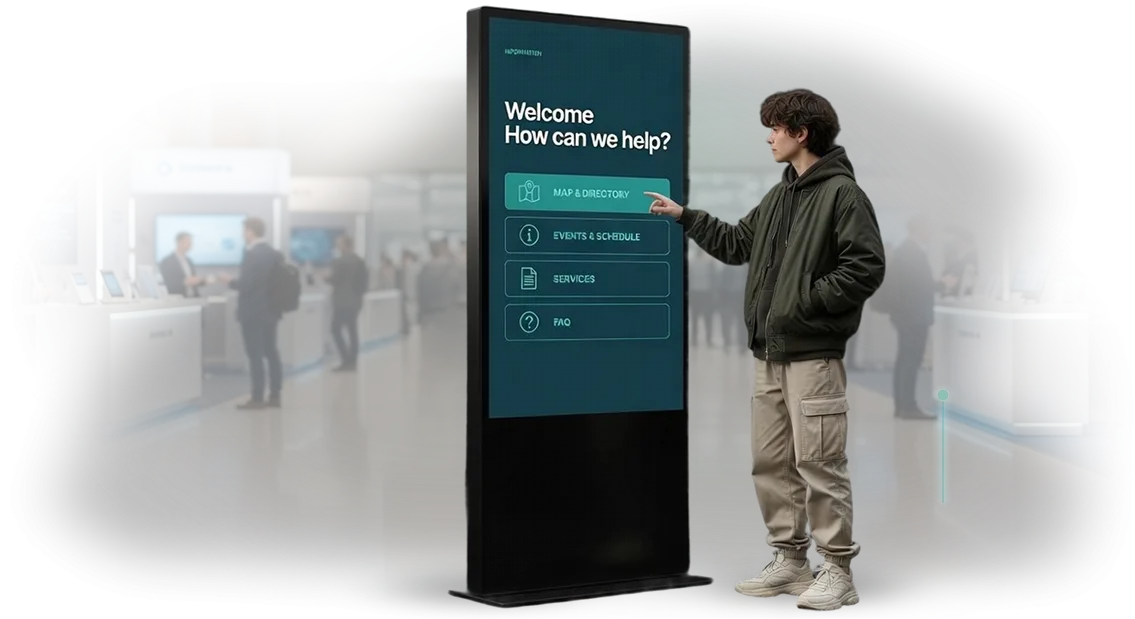
קיוסק אינטראקטיבי לתחנה עונה על צרכים אלה: הנוסע מוצא את הרכבת, הרציף, היציאה או אחסון המזוודות הנכונים בכמה נגיעות במסך.
הניווט בתחנה הופך לחי — הוא לוקח בחשבון את לוח הזמנים העדכני, שינויים זמניים ועוזר לבנות מסלול במתחם המורכב. אדם מרגיש בטוח גם בתחנה לא מוכרת, וההנהלה מקבלת כלי מודרני לניהול תנועות נוסעים.
עבור בעל התשתית, משמעות הדבר היא שביעות רצון מוגברת של הנוסעים, הפחתת זרם הפניות לדלפק המידע ותדמית התחנה כמקום בטוח, היי-טק ומכוון לקוח.
הנוסעים מגיעים לרכבות שלהם מהר יותר, מצטופפים פחות במקומות צרים ומוכנים יותר לחזור בפעם הבאה. במקביל, דלפק המידע פועל באופן אוטונומי, אינו דורש נוכחות קבועה של עובד ומסתגל בקלות למשימות חדשות של התחנה.
אנו מתכננים קיוסקים אינטראקטיביים במיוחד עבור התנאים של תחנה מסוימת: אנו לוקחים בחשבון את תנועת הנוסעים, מיקום אזורי מפתח ותרחישי שימוש אופייניים.
כתוצאה מכך, הלקוח מקבל לא רק מכשיר אלא מערכת ניווט אפקטיבית הפותרת את משימת נוחות הנוסע וחוסכת משאבים של שירותי התחנה.
מה קיוסק אינטראקטיבי נותן לנוסעים ולהנהלה
נוסעים בתחנה מעריכים מהירות וודאות. קיוסק אינטראקטיבי מאפשר להם למצוא את הרכבת, הרציף, שעת היציאה ומפת המסלול הנכונים תוך 10–15 שניות — ללא תורים בדלפק המידע וללא סריקת הלוחות בעיניים.
זה מסיר את מקור הגירוי העיקרי של הנסיעה: אי-ודאות. אדם מקבל תשובה מיד, לא אחרי המתנה בתור.
עבור ההנהלה, הקיוסק הוא דרך להפחית את עומס העבודה על הצוות. אנשים פותרים שאלות טיפוסיות כמו "איפה אחסון המזוודות", "איך מגיעים לרציף", "איפה קונים כרטיס" בעצמם.
עובדי דלפק המידע וסדרני התחנה מתפנים למצבים מורכבים באמת: עזרה לנוסעים עם מוגבלות בניידות, בקשות לא סטנדרטיות ושמירה על הסדר. במקביל, הקיוסק פועל מסביב לשעון ואינו מתעייף.
פתרונות כאלה מפותחים על ידי הצוות שלנו — אנו מייצרים קיוסקים במפתח מלא: מעיצוב הממשק ועד התקנה והשקה. אנו משתמשים בציוד מקצועי המיועד לשימוש אינטנסיבי במגע ולפעולה במקומות ציבוריים.
ההנהלה אינה צריכה להבין בטכנולוגיה: אנו מטפלים בהתקנה, במילוי התוכן ובתמיכה באחריות. עדכון לוח הזמנים או הוספת שירותים חדשים נעשים מרחוק, ללא ביקור של מומחה.
קיוסק מודרני מגביר את נאמנות הנוסעים: התחנה נתפסת כשירות נוח, היי-טק ומכוון לאנשים. זה חשוב במיוחד כאשר אמצעי תחבורה חלופיים נמצאים בקרבת מקום.
החוויה החיובית של נוסע אחד מתפשטת דרך ביקורות ורשתות חברתיות, ומעצבת את המוניטין הכללי של התחנה.
השורה התחתונה פשוטה: הנוסעים חוסכים זמן ועצבים, הצוות מתמקד בתקשורת חיה עם אנשים, וההנהלה מקבלת כלי מודרני שמשתלם דרך הפחתת עומס והגברת שביעות רצון. אלו בדיוק המשימות שאנו פותרים בכל פרויקט לתחנות רכבת.
פורמטים של קיוסק לתחנת רכבת: איזה מהם לבחור
פורמט קיוסק שנבחר כראוי קובע עד כמה בנוחות הנוסעים יכולים לקבל את המידע הדרוש להם ועד כמה אורגני המכשיר משתלב בחלל התחנה.
דגמים עומדים, צמודי קיר ושולחניים נבדלים לא רק במידות — הם פותרים משימות שונות: מניווט באולם ההמתנה ועד מסירת מידע באזור הכרטיסים או ליד הרציפים.
מטרת הקיוסק, זרם האנשים הצפוי ומיקום ההתקנה הם שלושת הקריטריונים המרכזיים שבהם אנו משתמשים לבחירת ציוד עבור התרחיש שלכם.
כיצד לבחור פורמט על פי משימות התחנה
כל סוג של קיוסק מכסה תרחיש פעולה משלו. להלן טבלה קצרה שתעזור לכם להתמצא לפני דיון בפרטים.
| פורמט קיוסק | למי והיכן | מה הוא נותן ללקוח |
|---|---|---|
| עומד | לובי ראשי, אזורי תנועה גבוהה — היכן שנוסעים מחפשים את הדרך לרציף או לדלפק המידע | נקודת ציון נראית, פועל כמודיע מסביב לשעון, מפחית עומס על הצוות |
| צמוד קיר | מסדרונות צרים, מעברים, אזורי כרטוס, דרגנועים | חוסך מקום, גישה מהירה ללוחות זמנים ושירותי כרטוס ללא הפרעה לזרימה |
| שולחני | קופות כרטיסים, דלפקי מנהלה, חדרי המתנה עם ישיבה | פתרון קומפקטי לייעוץ אישי ואיתור מידע מהיר |
מלבד שלוש הצורות הבסיסיות, אנו יכולים להציע עיצוב לא סטנדרטי — למשל, קיוסקים המשולבים בעמוד או באלמנט אדריכלי, אם יש צורך לשמר את קוד העיצוב של התחנה.
אנו לא מוכרים "קופסאות", אלא מתכננים פתרון סביב התרחיש שלכם. בשלב הראשון, אנו מנתחים את תנועת הנוסעים, נקודות ציון ושאלות טיפוסיות של אנשים — ואז משתמשים בזה כבסיס לבחירת הפורמט.
זה מבטיח שלא תשלמו יותר מדי עבור אפשרויות מיותרות ושהקיוסק באמת מבוקש על ידי הנוסעים. כתוצאה מכך, אתם מקבלים כלי שמאיץ את השירות, מגביר את נאמנות המבקרים ומשחרר את צוות התחנה משאלות שגרתיות.
כיצד אנו מפתחים קיוסק: שלבי העבודה
פיתוח קיוסק לתחנת רכבת הוא לא רק מסכים בלובי. זה כלי שמדריך נוסעים במהירות, מפחית את העומס על דלפק המידע ופועל ללא תקלות בשעות השיא.
כדי שהתוצאה תהיה בדיוק כזו, אנו מבנים את התהליך לשלבים ברורים — אתם תמיד יודעים מה קורה ומה הלאה.
-
בריף לפיתוח. אנו דנים במשימות הקיוסק: מי המבקר היעד, אילו תרחישים נדרשים — לוח זמנים, ניווט, רכישת כרטיסים, מידע. אנו מבררים היכן יותקן הפאנל ואיזה ציוד התחנה כבר משתמשת בו.
-
ניתוח ואב-טיפוס. אנו חוקרים את תנועת הנוסעים ושאלות טיפוסיות. אנו יוצרים את מבנה המסכים והלוגיקה של המעברים — אנו מראים לכם את הסכמה לפני שמתחילים לצייר את העיצוב.
-
אישור פרויקט. אנו מסכמים על הסגנון החזותי, הטקסטים והאינטגרציות עם לוחות הזמנים והשירותים של התחנה. אתם רואים את האב-טיפוס על מסך מגע אמיתי ומבצעים עריכות לפני תחילת הפיתוח.
-
פיתוח ממשק. אנו בונים את המסכים, מגדירים אנימציה ובקרות ידידותיות לאצבע. אנו בודקים את מהירות התגובה והקריאות ממרחק זרוע — כך שאנשים בכל גיל יוכלו להשתמש בקיוסק.
-
בדיקות והשקת הקיוסק. אנו מתקינים את הקיוסק, מחברים אותו לרשת התחנה ומנטרים את הסשנים הראשונים. אנו מאמנים את הצוות ונותנים הוראות קצרות למקרה שנוסעים זקוקים לעזרה.
-
תמיכה בקיוסק. אנו נשארים בקשר: מנטרים את הפעולה, מעדכנים לוחות זמנים ומידע עזר, מתקנים תקלות במהירות. כך הקיוסק נשאר שימושי ואינו דורש מומחה צוות ייעודי.
כל שלב מסתיים בתוצאה קונקרטית — אב-טיפוס מאושר, עיצוב מקובל או קיוסק עובד. זה אומר שאתם מבינים על מה אתם משלמים בכל שלב ויכולים להצטרף לתהליך בכל עת.
מה כלול במסירת קיוסק אינטראקטיבי
קיוסק אינטראקטיבי לתחנה הוא לא רק פאנל מגע. אנו מספקים פתרון במפתח מלא: ציוד, תוכנה, תוכן ותיעוד. אתם לא צריכים להבין לבד או לקנות משהו נוסף — הקיוסק עובד מיד לאחר ההתקנה.
ערכת המסירה של הקיוסק כוללת:
- פאנל מגע עם מארז נגד ונדליזם — המיועד לפעולה מסביב לשעון באזורי תנועת נוסעים גבוהה.
- תוכנת קיוסק — ממשק אינטואיטיבי, הגנה מפני קריסות, יכולת עדכון מרחוק.
- מצגת אינטראקטיבית ותוכן לקיוסק — מפות תחנה, לוח זמנים, מידע שירות, מותאם לשליטה במגע.
- מדריך למנהל — מדריך שלב-אחר-שלב להפעלה, החלפת תוכן וטיפול במצבים טיפוסיים.
- אלמנטי הרכבה וכבלים — כל מה שצריך להתקנה מהירה.
- שירות אחריות ותמיכה — לשאלות או תקלות טכניות.
| רכיב | מה כלול | למה זה חשוב לכם |
|---|---|---|
| ציוד | פאנל מגע, מארז, הרכבה, כבלים | הקיוסק עומד בעומסים גבוהים ואינו דורש תחזוקה תכופה |
| תוכנה | תוכנת קיוסק מוכנה המוגדרת למשימות התחנה | הנוסעים מוצאים במהירות את המידע הדרוש, הממשק אינו קופא בשעות השיא |
| תוכן | מצגת אינטראקטיבית, מפות, לוח זמנים | הניווט והמידע תמיד עדכניים ומתעדכנים ללא מתכנת |
| תיעוד | מדריך למנהל, מסמכי אחריות | העובדים שלכם לומדים במהירות, כל ההליכים מתועדים |
כל זה כלול בעלות הפרויקט — אתם מקבלים את החבילה הסופית ביום ההשקה. מעתה, הקיוסק פועל באופן אוטונומי, ובמידת הצורך נעדכן את התוכן או נשפר את הפונקציונליות.
מקרה בוחן: כיצד עזרנו לתחנה תוך חודשיים
נוסעים בתחנות מבלים את הזמן לרוב לא בנסיעה עצמה, אלא בחיפוש אחר הרציף, הקופה או היציאה לעיר הנכונים.
התורים בדלפק המידע גדלים בשעות השיא, העובדים עונים על אותן שאלות, וזה יוצר מתח נוסף במבנה התחנה. ההנהלה פנתה אלינו עם מטרה ספציפית — להקל על דלפק המידע ולעזור לנוסעים למצוא את דרכם מהר יותר.
תוך חודשיים פיתחנו והטמענו קיוסק מידע אינטראקטיבי לתחנה המרכזית. במקום לוח תצוגה קלאסי — פאנל מגע עם מפת המבנה, לוח זמנים עדכני ומסלולים לכל רציף.
עשינו את הממשק עם כפתורים גדולים ורמזים ברורים, כך שגם אנשים מבוגרים וגם נוסעים עם ילדים יכולים להשתמש בו בקלות. הקיוסק הותקן באזור ההמתנה, ליד זרמי הנוסעים הראשיים — הוא נראה בבירור אך אינו חוסם את התנועה. ההתקנה בוצעה בחלון הלילה, כך שהתחנה פעלה כרגיל.
תוצאות היישום
כבר בחודש הראשון, הקיוסק רשם יותר מ-12,000 סשנים — השווה למספר הפניות לדלפק המידע לרבעון שלם.
מספר הפניות הישירות לדלפק המידע ירד בכמעט שליש, וזמן החיפוש הממוצע אחר הרציף הנכון ירד מחמש דקות לדקה אחת.
הנוסעים מגיעים לרכבות שלהם מהר יותר, התורים התקצרו באופן ניכר, ועובדי דלפק המידע יכולים להקדיש יותר תשומת לב לשאלות מורכבות.
"הנוסעים כבר לא הולכים לאיבוד, ושירות המידע עובד ללא לחץ מתמיד. קיבלנו בדיוק את התוצאה שציפינו לה," מציין מנהל התחנה.
חודשיים לאחר מכן, ההנהלה הזמינה מאיתנו שני קיוסקים נוספים — לטרמינל הנוסעים ולכניסה מצד תחנת האוטובוסים. עבורנו, זה האינדיקציה הטובה ביותר לכך שהפרויקט פתר את המשימה.
כיצד לבחור פורמט קיוסק למשימות התחנה שלכם?
כאשר תחנה בוחרת קיוסק, הגורמים המכריעים הם שטח הרצפה, התנועה ורשימת המשימות. תחנה קטנה צריכה רק פאנל עומד קומפקטי; מוקד גדול צריך כמה טרמינלי מידע כדי שהנוסעים לא יעמדו בתור ויוכלו למצוא את דרכם במהירות.
קריטריוני הבחירה של הקיוסק פשוטים: אזור ההתקנה, מספר המבקרים בשיא ומספר השירותים — מלוחות זמנים ועד מכירת כרטיסים ופרסום.
בצוות שלנו אנו בוחרים תצורה לכל תחנה כך שהטרמינל ישתלב בפנים, לא יחסום את זרימת האנשים ויפתור משימות ספציפיות.
עבור תחנה קטנה, פשטות וקומפקטיות חשובות: הקיוסק צריך להיות בולט אך לא לתפוס מקום שימושי.
עבור תחנה גדולה, מדרגיות עולה לקדמת הבמה — כמה טרמינלים מחלקים את העומס ומאפשרים לנוסעים לקבל מידע במהירות גם בשעות השיא.
אנו עוזרים לבחור את הפורמט למיקום התקנה ספציפי: אנו מחשבים את אזור הכיסוי, לוקחים בחשבון מסלולי נוסעים ובוחרים עיצוב שמתאים לחלל. זה מונע הוצאות מיותרות ומבטיח שהקיוסק עובד לצרכי התחנה מהיום הראשון.
שאלות נפוצות על קיוסקים אינטראקטיביים
אספנו שאלות טיפוסיות על קיוסקים שאנו שומעים מלקוחות. הנה תשובות קצרות בנושאי מפתח: אמינות הקיוסק, תחזוקת הקיוסק, תיקון הקיוסק וקלות התפעול.
האם הקיוסק אמין בשימוש יומיומי של מבקרים?
אנו משתמשים ברכיבים תעשייתיים המיועדים לפעולה מסביב לשעון באזורי תנועה גבוהה. המארז מוגן מפני אבק ופגיעות; המסך עמיד בפני מגע מתמיד.
מניסיוננו, הקיוסק פועל ביציבות במשך כמה שנים ללא תקלות, והביקור הראשון של מהנדס הוא בדרך כלל לתחזוקה ולא לתיקון.
מי מתחזק את הקיוסק לאחר ההתקנה?
אנו לוקחים על עצמנו את התחזוקה: אנו מנטרים מרחוק מערכות מפתח ומבקרים רבעונית לתחזוקה מונעת. אתם לא צריכים להעסיק מנהל נפרד. אנו מתזמנים את כל העבודה מראש כך שלא תפריע למבקרים.
מה אם הקיוסק צריך תיקון — כמה מהר אפשר לשחזר אותו?
יש לנו מרכז שירות עם חלקי חילוף זמינים, כך שאנו יכולים להחליף יחידה תוך יום או יומיים. במקרה של תקלה קריטית, אנו מספקים מכשיר חלופי כך שדלפק המידע לא יישאר בטל. העבודה מתבצעת במסגרת הסכם אחריות — אתם יודעים את לוחות הזמנים מראש.
האם קשה לנהל תוכן ומערכת — עד כמה התפעול מורכב?
הניהול פשוט: אתם מעדכנים מידע דרך ממשק אינטרנט, ללא ידע בתכנות. חבר צוות שלכם יכול ללמוד זאת בכמה שעות; אנו מספקים הדרכה במידת הצורך. ניתן להגדיר רמות גישה לאחראים על לוחות זמנים והודעות דחופות.
הזמינו פיתוח קיוסק לתחנה שלכם
פיתוח קיוסק במפתח מלא אומר שאתם משאירים בקשה ואנו לוקחים על עצמנו את כל המחזור: מרעיון ותוכן ועד התקנה ותמיכה באחריות.
עבור תחנת רכבת, זה קריטי: הקיוסק חייב לעמוד בעומסי שיא, לא לבלבל נוסעים בגילאים שונים ולהשתלם במהירות על ידי הפחתת העומס על שירות המידע.
לאחר פנייה אלינו, אתם מקבלים תהליך ברור עם לוחות זמנים שקופים — ללא "קופסה שחורה" וללא אישורים מיותרים. הנה איך שיתוף הפעולה שלנו עובד.
- ייעוץ ראשוני: אנו יוצרים קשר תוך יום עסקים אחד, דנים במשימות שלכם ומייעצים אילו תרחישים מתאימים ביותר לתחנה שלכם.
- בדיקת אתר וניתוח תנועת נוסעים: אנו בוחנים היכן הקיוסק יהיה הכי שימושי ומציעים מיקום אופטימלי.
- בריף ואב-טיפוס: אנו מכינים את מבנה התפריט, הטקסטים ואב-טיפוס חזותי — אתם רואים את הממשק העתידי מראש ויכולים לבצע שינויים.
- פיתוח ובדיקות: אנו בונים את הקיוסק על ציוד מקצועי ובודקים אמינות ושימושיות בתרחישים אמיתיים.
- התקנה, הגדרה והדרכת צוות: אנו מתקינים את הקיוסק, טוענים תוכן ומראים לעובדים שלכם כיצד לעדכן מידע.
- תמיכה לאחר ההשקה: אנו נשארים בקשר — מעדכנים במהירות את לוח הזמנים, מוסיפים מדורים חדשים ועונים על כל שאלה.
כדי להזמין קיוסק, פשוט צרו קשר בכל דרך נוחה. השאירו בקשה — נגיב במהירות, ניתן לכם לוחות זמנים ונציע פתרון שחוסך בתקציב ובזמן שלכם.
פיתוח במפתח מלא לתחנה שלכם פירושו קבלן אחד, לוח זמנים ברור ותוצאה שאתם מקבלים ללא עבודות חוזרות.