

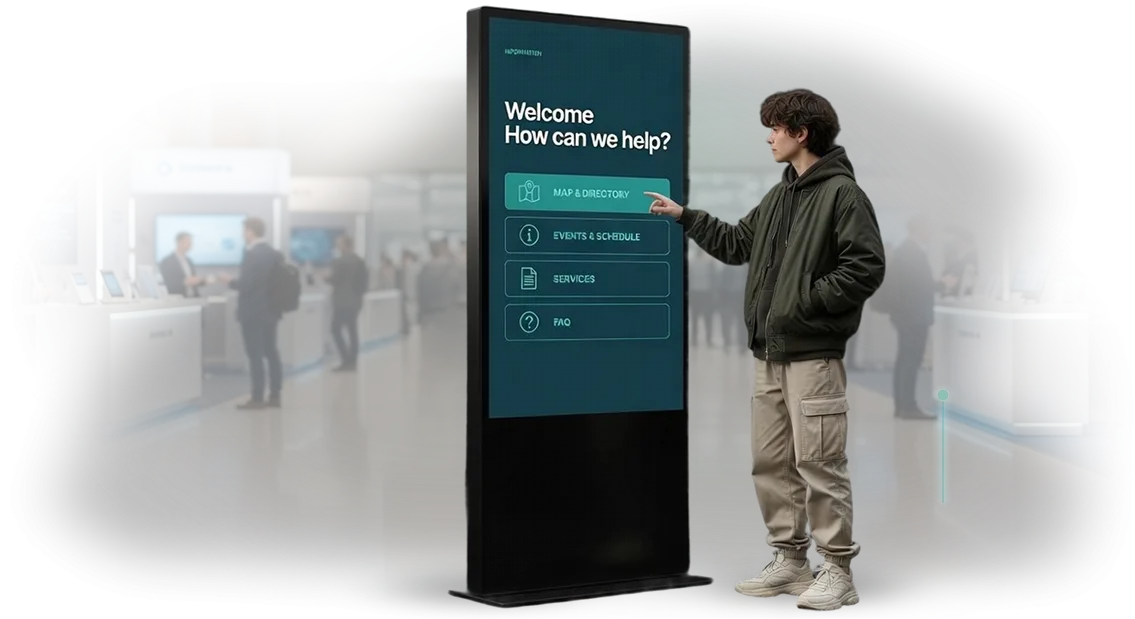
ניווט במפעל תרופות: מדוע זה קריטי
במפעל תרופות, זמן אינו רק משאב — הוא חלק מהרגולציה ומהאיכות עצמה.
כשעובד מבלה עשר דקות בחיפוש אחר הסדנה או המעבדה הנכונה, ואורח מבלה זמן זה בחיפוש אחר חדר ישיבות, תוכניות הייצור נדחות, ציוד ואנשים עומדים בטלים.
הבעיה מחמירה בשל דרישות מחמירות לניקיון אזורים וגישה: אי אפשר פשוט ללכת לכל מקום, וכל מסלול צריך להיות מתוכנן מראש.
זמן שאבד על ניווט פנימי הוא הפסד ישיר. מומחה מנוסה מבלה עד חצי שעה ביום בתנועה ובירור מסלולים. בקנה מידה חודשי, מדובר בכמה ימי עבודה של עובד יקר ערך.
עבור אורחים ומבקרים, ניווט כאוטי הוא אות לחולשה בארגון התהליכים, דבר הפוגע במוניטין החברה ובאמון במתקן הייצור.
מערכת ניווט אינטראקטיבית פותרת זאת ברמת התשתית. עמדות מידע בנקודות מפתח ברחבי המפעל עוזרות לעובדים ולמבקרים לבנות מסלול מיידי לסדנה, למחסן או לחדר הישיבות הנדרש, תוך התחשבות באזורי גישה.
פחות שאלות שמסיחות את דעתם של עמיתים, פחות טעויות וזמני השבתה, ויותר סדר וודאות.
עבור ההנהלה, זהו גם כלי בקרה: ניתן לראות כיצד אנשים נעים, אילו אזורים מבוקשים ביותר, ולייעל את הלוגיסטיקה הפנימית. הניווט מפסיק להיות רק "שילוט על קירות" והופך לחלק מסביבת ייצור יעילה.
כתוצאה מכך, אנו מסירים את הכאוס, מחזירים לעובדים את המיקוד בעבודה, ומעניקים לאורחים ביטחון ורושם מתמשך של מפעל מודרני和高טק.
מה עמדת מידע אינטראקטיבית מביאה למפעל שלך
עמדת מידע אינטראקטיבית באתר ייצור תרופות פותרת כמה משימות בבת אחת, וכולן משפיעות ישירות על היעילות התפעולית והמוניטין.
במקום להסיח את דעתם של הצוות כדי ללוות אורחים ולעבד אישורי כניסה, מערכת הניווט משתלטת על השגרה — העובדים מתמקדים בייצור ולא בעבודה אדמיניסטרטיבית.
חיסכון בזמן מורגש כבר מהימים הראשונים: מבקרים ועובדים מוצאים את הסדנה, המעבדה או המשרד הנכונים בכוחות עצמם דרך ממשק מגע ברור.
הניווט על המסך מציג את המסלול ומתחשב באזורי גישה, ובכך מבטל הליכה חסרת מטרה ברחבי האתר. כתוצאה מכך, זמני ההשבתה מצטמצמים, אישורים וסיורי פיקוח מסתיימים מהר יותר, ותנועה פנימית אינה דורשת עוד ליווי ייעודי.
בטיחות היא גורם מפתח בייצור תרופות, ועמדת המידע מסייעת לשמור עליה באופן גלוי.
המערכת יכולה לוודא שהדרכת בטיחות הושלמה לפני כניסה לאזור נקי, להזכיר למבקרים לחבוש נעלי מגן או חלוק מעבדה, ולהציג את הכללים העדכניים ומסלולי פינוי.
בקרת הגישה הופכת לשקופה: המסך מתעד את הביקור, מקשר אותו ללוח הזמנים ולסטטוס האישור, ותמיד יש לך תמונה ברורה של מי פנה לאן.
ישנה גם השפעה נפרדת על מבקרים ושותפים. כאשר רגולטורים או לקוחות פוטנציאליים רואים ניווט דיגיטלי מודרני, זה מעלה אוטומטית את האמון בחברה.
עמדת מידע כזו היא חלק מהתדמית של מפעל מונע טכנולוגיה ומאורגן היטב, השומר על סדר ובטיחות גם בפרטים הקטנים. זהו טיעון במשא ומתן ובביקורות שפועל לטובת המוניטין שלך.
הטמעת עמדת מידע אינה דורשת עצירת ייצור ואורכת זמן מינימלי — אנו מתאימים את המערכת למבנה ולתקנות הפנימיות שלך.
בסופו של דבר, אתה מקבל לא רק מסך מידע, אלא כלי שחוסך שעות עבודה, מחזק את הבקרה ובונה אמון בקרב קהלים חיצוניים.
פורמטי עמדות מידע לייצור תרופות
לכל אזור במתקן ייצור תרופות — נקודת הביקורת, בניין הייצור, המחסן — יש תפקיד משלו.
אותה עמדת מידע לא יכולה לעבוד ביעילות שווה בכל מקום: ישנם זרמי אנשים שונים, רמות הגנה שונות ותרחישי בקשה שונים. לכן פיתחנו שלושה פורמטים של עמדות מידע, שכל אחד מהם מכסה את הצרכים של אזור ספציפי.
| פורמט | היכן הוא מותקן | איזו משימה הוא פותר | מה הלקוח מקבל |
|---|---|---|---|
| עמדת מידע בנקודת ביקורת | בכניסה לאתר | אימות כניסה מהיר, הדרכת מבקרים, מפת אתר | עובדים ואורחים עוברים מהר יותר, פחות תורים ופחות קריאות למחלקת משאבי אנוש |
| עמדת מידע בבניין הייצור | בלובי או ליד כניסות לסדנאות | ניווט בין מבנים, מציאת המשרד או העובד הנכון, קריאה לאחראי | מומחים מוסחים פחות משאלות, התנועה הופכת למאורגנת יותר |
| עמדת מידע במחסן | באזור הקבלה והשילוח | חיפוש מוצר לפי מדף, סטטוס הזמנה, מסלול למיקום האחסון | איסוף מהיר יותר, פחות שגיאות שילוח, פעולות שקופות |
כל מארז מעוצב לשימוש אינטנסיבי וקל לניקוי — זה חשוב לשמירה על היגיינה בייצור. אנו בוחרים את הפורמט לכל מיקום ומשימה ספציפיים ללא תשלום בשלב הייעוץ.
העיצוב לוקח בחשבון תקנים סניטריים ודרישות בטיחות, כך שעמדת המידע לא תהפוך למקור לבעיות במהלך ביקורות.
כיצד אנו מפתחים עמדת מידע למתקן שלך: 6 שלבים
תהליך ברור הוא חצי מההצלחה של פרויקט. בכל רגע אתה יכול לראות באיזה שלב נמצאת העבודה, מה כבר אושר, ומתי עמדת המידע תתחיל לפעול במתקן שלך.
בלי "קופסאות שחורות": כל שלב מתועד בחוזה, ואתה משפיע על התוצאה לאורך כל הדרך — מהבריף הראשוני ועד ההשקה.
- בריף והתעמקות במשימה. אנו מבקרים באתר או מקיימים פגישה מקוונת עם הצוות שלך. אנו מתעדים מי ישתמש בעמדת המידע (עובדי סדנאות, מבקרים, מבקרים) ואילו תרחישים חשובים: ניווט, הוראות, מסמכים רגולטוריים, חומרי וידאו. הפלט הוא מסמך עם משימות וקריטריוני הצלחה.
- תוכנית ואב-טיפוס של מסכים. אנו מתכננים את המבנה של המערכת העתידית: אילו מדורים יהיו, כיצד המשתמש נע במסך, והיכן למצוא את המידע הנדרש. אנו מציגים לך את הסכמה ואב-טיפוס אינטראקטיבי. אתה רואה את הממשק העתידי לפני תחילת הפיתוח ויכול לערוך שינויים מיד.
- אישור תוכן ועיצוב. יחד אנו מכינים טקסטים, תוכניות קומה, הוראות וגרפיקה. אנו לוקחים בחשבון את המאפיינים של ייצור תרופות: רגולציה, דרישות בטיחות, ניקיון חדרים. אתה מאשר כל מסך — ורק לאחר מכן אנו עוברים ליישום טכני.
- יישום והרכבת עמדת המידע. אנו מגדירים את התוכנה על ציוד מקצועי הפועל ביציבות בסביבה תעשייתית. אנו בוחרים את המארז ומסך המגע עבור האתר שלך: עומד על רצפה, צמוד קיר או על מעמד — תוך התחשבות בתקנים סניטריים ובעוצמת השימוש.
- בדיקות והשקה. אנו בודקים את עמדת המידע באתר: תגובת מגע, ביצועים, דיוק תצוגה ונגישות למשתמשים שונים. אנו מאמנים את הצוות שלך לשרת את המכשיר ולעדכן תוכן בעת הצורך. אנו משיקים את המערכת ומנטרים את יום הפעילות הראשון.
- תמיכה ופיתוח. לאחר ההשקה, אנו נשארים בקשר. אנו מעדכנים תוכן, מוסיפים מדורים חדשים, מנטרים את מצב הציוד ומבצעים תחזוקה מונעת בזמן. אם המבנה משתנה או מוכנסות הוראות חדשות במתקן שלך, עמדת המידע שלך תמיד מעודכנת.
מה כלול במסירת עמדת המידע האינטראקטיבית
עמדת מידע היא לא רק מסך מגע על מעמד. כדי להפוך לכלי עבודה בייצור תרופות, היא זקוקה לחבילה מלאה: חומרה, עיצוב, תוכנה, אינטגרציה והוראות.
אנו מכסים את כל השלבים — אתה מקבל פתרון שעובד "ישר מהקופסה" ואינך מבזבז זמן בתיאום בין קבלנים שונים.
המסירה הסטנדרטית כוללת:
-
חומרה — מעמד עם מארז נגד ונדליזם, מוגן מפני אבק ותנודות טמפרטורה. הוא עומד בשימוש אינטנסיבי בסדנה ובאזורי תנועת עובדים.
-
פרויקט עיצוב — ממשק בסגנון הארגוני שלך: הצבעים, הלוגו ומבנה מדורים ברור. עובד מוצא את האזור או המשרד הנכון במבט אחד.
-
תוכנה — ניווט עם תוכניות קומה, חיפוש לפי שם ומסלולים. המערכת עובדת במהירות גם בעומס גבוה ואינה קורסת בשעות השיא.
-
אינטגרציה — חיבור עמדת המידע לספריות פנימיות ולמערכת האישורים. הנתונים תמיד עדכניים: כשהמבנה משתנה, המידע מתעדכן אוטומטית.
-
הוראות והדרכה — מדריכים למפעילים ולמנהלים, בתוספת מפגש הדרכה קצר לצוות שלך. העובדים מתרגלים במהירות ואינם מוסחים על ידי פתרון תקלות.
-
התקנה והפעלה — אנו מספקים, מתקינים, מגדירים ומאמתים פעולה באתר. אתה מקבל עמדת מידע עובדת לחלוטין ללא מעורבות של המומחים שלך.
כתוצאה מכך, אינך מרכיב פתרון מחלקים המסופקים על ידי קבלנים שונים. אנו אחראים על החבילה כולה — ולכן עמדת המידע עובדת בדיוק כפי שהייצור שלך צריך.
מקרה בוחן: ניווט למתקן מאובטח
באתרים תעשייתיים מאובטחים, ניווט אינו עניין של נוחות אלא עניין של בטיחות ויעילות. במפעל תרופות אחד, מבקרים — מבקרים, מפקחים, קבלנים — בילו עד 20 דקות בחיפוש אחר הבניין הנכון.
צוות האבטחה הוסח כל הזמן, הסביר מסלולים, וביקורות מתוזמנות שובשו עקב עיכובים.
פיתחנו מערכת ניווט אינטראקטיבית על עמדות מגע עבור PharmActive. המאפיין המרכזי היה לולאה סגורה: עמדות המידע פועלות באופן עצמאי, ללא חיבור לרשת המפעל, ומציגות רק את האזורים שהמבקר מורשה לגשת אליהם עם האישור שלו.
עובד בוחר יעד, ועמדת המידע בונה מסלול תוך התחשבות במגבלות אבטחה — דרך מעברים ונקודות ביקורת מורשים.
התוצאה הורגשה כבר בחודש הראשון. זמן ההתמצאות ירד מ-20 דקות ל-5–7 דקות; האבטחה הפסיקה לשמש כ"שירות מידע" והתמקדה בתפקידיה בפועל.
ראוי לציין שביקורות החלו בזמן, מה שהפחית את המתח מול רשויות הפיקוח. תוך חודש, עמדות המידע שימשו יותר מ-2,000 פעמים, והנהלת המפעל ציינה שגם התנועה הפנימית של עובדים בין מבנים הפכה למהירה יותר.
המסקנה העיקרית: גם עבור אתר עם בקרת גישה קפדנית, אפשר ליצור ניווט ברור ובטוח. לקחנו בחשבון את כל המגבלות של הלקוח ומסרנו פתרון שעובד 24/7 ללא מעורבות צוות.
אם יש לך אתגרים דומים — שטח מוגבל, מערכת אישורים, מספר גדול של מבקרים — מקרה זה מראה שהתוצאה ניתנת להשגה.
כיצד לבחור את פורמט עמדת המידע הנכון למשימה שלך?
פורמט עמדת המידע הנכון תלוי לא בטרנדים אלא במשימות הספציפיות שלך ובמיקום ההתקנה.
בייצור תרופות, אותה פונקציונליות יכולה להיראות אחרת: עמדת מידע עומדת לכניסה, מסך קומפקטי צמוד קיר ליד נקודת הביקורת, או מסוף מגע באזור נקי.
לפני הבחירה, ענה על שלוש שאלות. מי יהיה המשתמש — עובדים, קבלנים או אורחים? אילו פעולות המבקר צריך לבצע — למצוא סדנה, לקבל מידע על מוצר, להשלים הדרכה?
ולבסוף, היכן המכשיר יהיה ממוקם פיזית — בלובי, במסדרון או בנקודת הביקורת?
אזור ההתקנה קובע את הדרישות למארז ולעמידות. עמדת מידע עומדת נוחה במקום שבו יש הרבה אנשים ונראות חשובה. אפשרות צמודת קיר חוסכת מקום ומתאימה למסדרונות צרים.
עבור חדרים נקיים, תצטרך מארז אטום שקל לחטא — זה יגן על הייצור מפני הפרות רגולציה.
אנו בוחרים את הפורמט למשימה שלך, לא להיפך. במהלך הדיון המקדים, אנו מנתחים את זרמי העובדים, תרחישי השימוש ותנאי ההפעלה. לאחר מכן אנו מציעים עיצוב שפותר את המשימה ללא תשלום יתר — בזמן ועם מינימום השבתה.
אם אינך בטוח איזו אפשרות מתאימה לך, שלח לנו תיאור של המצב שלך — נחזור תוך יום עסקים אחד עם המלצות על פורמט ומיקום.
תשובות לשאלות נפוצות על עמדות מידע
ללקוחות בייצור תרופות יש לרוב ספקות לגבי שלושה דברים: האם הציוד ייכשל באמצע משמרת, האם ניתן להשיק את הפרויקט מבלי לעצור את הסדנה, ועד כמה הנתונים מוגנים.
נטפל בשאלות אלה — בתוספת עוד אחת על עדכון מידע — כדי שההחלטה תהפוך למובנת מאליה.
מה אם עמדת המידע תתקלקל באמצע משמרת?
אנו משתמשים ברכיבים תעשייתיים המיועדים לפעילות מסביב לשעון. בנוסף, אנו מגדירים ניטור מרחוק: אנו לומדים על תקלה לפני שהעובדים מבחינים בה ומפעילים מחדש את המערכת מרחוק. אם נדרשת התערבות באתר, אנו מגיעים תוך מספר שעות.
כמה זמן לוקח להשיק את עמדות המידע?
פרויקט טיפוסי — מאישור אבות טיפוס ועד עלייה לאוויר — אורך שבועיים עד שלושה שבועות. ההתקנה והבדיקה הסופית אורכות יום או יומיים, מבלי לעצור את מחזור הייצור.
חלק מהעבודה נעשה מרחוק, כך שעמדות המידע מושקות במקביל לפעילות המשמרת הרגילה.
כיצד מובטחת אבטחת הנתונים?
המידע מאוחסן על עמדת המידע עצמה, והגישה להגדרות מוגנת באמצעות סיסמת שירות. ישנו כפתור נסתר לאתחול חירום — נגיעות אקראיות במסך לא יגרמו לתקלה.
עדכוני תוכן נעשים רק דרך חיבור מאובטח, כך שרק עובדים מורשים יכולים לבצע שינויים.
באיזו תדירות ניתן לעדכן מידע?
אתה יכול לשנות מפות גישה, הוראות ותקנות בעצמך — דרך ממשק פשוט ללא מעורבות מתכנת. אם נדרשים עדכונים קבועים, ניקח על עצמנו את התחזוקה ונשמור על התוכן עדכני לפי לוח הזמנים שלך.
אם עדיין יש לך ספקות, שאל מהנדס במהלך הייעוץ הראשוני — נראה לך כיצד אנו פותרים בדיוק את המשימה מסוגך.מוכן לדון בפרויקט שלך? צור קשר
ניווט בייצור תרופות אינו רק מפת מעברים; זהו כלי המשפיע ישירות על מהירות התפעול.
כשעובד מוצא במהירות את הסדנה, המחסן או המעבדה הנכונים, זמני ההשבתה מצטמצמים ומספר השגיאות בהעברת חומרים יורד.
לכן יש לגשת לפיתוח עמדות מידע אינטראקטיביות באופן שיטתי, ולא להגביל את עצמך למפה על הקיר.
אנו עובדים עם משימות כאלה באופן קבוע ומוכנים לטפל בכל השלב המקדים: נלמד את המבנה, נחשוב על מבנה הנתונים, ונציע אפשרויות למיקום וממשק.
כדי להבין איזה פתרון מתאים לך, השאר פנייה — במהלך הייעוץ נבהיר את הפרטים ונכין הערכת עלות ראשונית ללא כל התחייבות מצידך.
מה כוללת הפנייה הראשונה:
- ייעוץ לגבי היכולות של עמדות מגע לייצור תרופות;
- הערכת עלות הפרויקט ולוח זמנים ליישום;
- קביעת המספר האופטימלי של נקודות ניווט ומדורים מרכזיים;
- המלצות למיקום עמדות מידע, תוך התחשבות בזרמי תנועת עובדים;
- רשימת נתונים שעליך להכין כדי שנוכל להתחיל בעבודה;
- אפשרויות לעדכון המערכת כאשר מסלולים משתנים או אזורים חדשים נפתחים.
לאחר קבלת הפנייה שלך, ניצור קשר תוך יום עסקים אחד, נשאל כמה שאלות, ונציע זמן נוח לפגישה או שיחה. איננו זקוקים למסמך טכני מוכן — הבנה ברורה של המשימה מספיקה; את השאר נטפל בעצמנו.
אל תדחה זאת: מערכת ניווט שפותחה עבור הקשר הייצור שלך מחזירה את עצמה באמצעות חיסכון בזמן עובדים וסדר תהליכי גדול יותר. מלא את הטופס, התקשר אלינו או כתוב לנו — נגיב, נחשב, ונציע צעדים קונקרטיים הבאים.