

מבקרים הולכים לאיבוד באתר הבנייה והולכים למתחרים
אתר בנייה הוא אזור של כאוס: מכונות, עובדים, שבילים זמניים ומבנים ללא כתובות. מבקר שמגיע לאתר בפעם הראשונה לא מבין לאן ללכת ומבזבז זמן בחיפוש אחר הבניין או משרד המכירות הנכון.
במקום להתרשם מהפרויקט, הוא מרגיש לחוץ ומקבל רושם שלא דואגים ללקוחות כאן.
התוצאה היא עסקאות אבודות. אדם שלא מוצא את מחלקת המכירות תוך 10 דקות הולך למתחרה שבו הכל ברור מהסף.
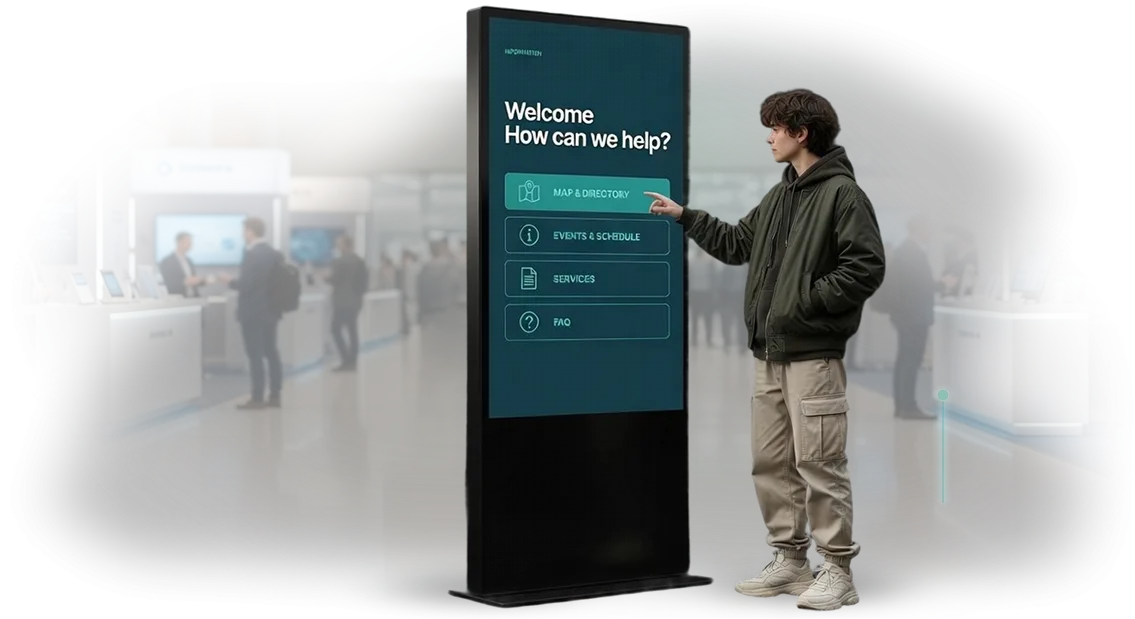
קיוסק אינטראקטיבי לאתר בנייה פותר את הבעיה הזו: האורח רואה מפת אתר, מוצא את הנקודה הנכונה ומגיע אליכם ללא עזרת צוות. זה הופך את הניווט באתר הבנייה ממקור תסכול לכלי מכירות.
אנחנו מטפלים בכאב הזה עם ציוד מקצועי וכלים מוכחים — הלקוח מקבל קיוסק שעובד בצורה אמינה באבק ובתנודות טמפרטורה קיצוניות.
היתרונות המרכזיים של הקיוסק ללקוח ולמבקרים
התחלה בטוחה וניווט ללא תורים
מבקר באתר בנייה — מהלקוח ועד קבלן המשנה — לא צריך לבזבז זמן בחיפוש אחר הבניין או המשרד הנכון.
קיוסק מסך מגע עם מפה אינטראקטיבית ומערכת ניווט פותר זאת מיידית: המשתמש מזין יעד ומקבל מסלול ברור המקושר לבניין, קומה או אזור ספציפיים.
עבורכם, זה אומר סדר באתר וזרימת אנשים צפויה, ללא עומסים בכניסה וללא צוות שמוסח כל הזמן.
ניווט מהיר מפחית איחורים לפגישות ומוריד את העומס מהמנהלים ומהאבטחה — הם מתמקדים במשימות שלהם במקום להסביר את הדרך למבקר העשרים בשעה.
הכרת המותג באתר
הקיוסק הוא לא רק עמדת מידע אלא אלמנט בולט בתשתית שלכם שעובד עבור תדמית החברה.
סגנון המותג על המסך, הלוגו וההצגה המסודרת של מידע על הפרויקט והיזם יוצרים רושם של יזם או קבלן אמין ומתקדם טכנולוגית.
האורחים רואים שאתם משקיעים בנוחות ובסדר — זה בונה אמון במותג והופך את האתר לייצוגי יותר עבור משקיעים ושותפים.
איסוף לידים ופרטי קשר מהקיוסק
כל אורח שמשתמש בקיוסק יכול להשאיר את פרטי הקשר שלו — למשל, בתמורה להצגת פרויקט, הזמנת סיור או הצעה מסחרית. אתם מקבלים מאגר של אנשים מתעניינים ללא עבודה נוספת של מנהלים.
בניגוד ליומני נייר, נתונים מהקיוסק נאספים אוטומטית ונכנסים ישירות ל-CRM שלכם — אין צורך בעיבוד ידני, ואפשר להשתמש בהם מיד לשליחת מיילים ופניות המשך.
שיפור השירות ובקרת איכות
קיוסק מסך המגע מטפל בשאלות השגרתיות של המבקרים: איפה חדר הישיבות, איך מגיעים לאתר, אילו שירותים זמינים. זה משפר באופן ניכר את רמת השירות, במיוחד כשעשרות אנשים נמצאים באתר בו זמנית.
ואתם מקבלים אנליטיקה: אילו מדורים מבוקשים, אילו שאלות נשאלות הכי הרבה. בהתבסס על הנתונים האלה, אפשר להתאים את הניווט, לשפר את חומרי המידע ולהפוך את השירות לדייק ומהיר עוד יותר.
פורמטים של קיוסקים אינטראקטיביים לאתרי בנייה
אתר בנייה הוא לא משרד: מאובק, רועש, ואזורים מוזזים כל הזמן. אותו קיוסק לא יכול גם לקבל אורחים בלובי משרד המכירות וגם להדריך עובדים במחנה האתר.
לכן אנחנו מחלקים קיוסקים אינטראקטיביים לפורמטים וקובעים מראש איזה מהם פותר את המשימה שלכם — בלי לשלם יותר מדי על אפשרויות מיותרות.
| פורמט | למי / למשימות | מה זה נותן ללקוח |
|---|---|---|
| קיוסק מידע עומד | אזור כניסה, לובי משרד מכירות, מחסום מרכזי — לקבלת אורחים ובקרת כניסה | מראה מוצק, מסך גדול עם מפת אתר, הצגה מהירה של המסלול לבניין הרצוי |
| טרמינל מסך מגע צמוד קיר | מסדרונות בניין מנהלה, לובי מעליות, אזורים מוגבלי שטח | קומפקטי: לא חוסם מעבר, מותקן על קיר בכל חלל, מפשט מציאת משרד או מחסן |
| קיוסק בנייה נייד | נקודות זמניות: פגישות באתר, פתיחת מדור חדש, העברת מטה | נע באתר ללא התקנה, מופעל תוך שעה, עובד אוטונומית — אפשר להשתמש גם ללא רשת קבועה |
אנחנו נעזור לכם לבחור את הפורמט הנכון בשלב הבריף, לזהות נקודות התקנה ולתמוך בהשקה — כולל הדרכת צוות ותמיכה טכנית.
איך הפרויקט מיושם: מבריף ועד השקה
עיצבנו את התהליך כך שתמיד תדעו באיזה שלב נמצא הפרויקט ומה קורה בהמשך. בצוות שלנו, כל שלב מאושר והתוצאה מתועדת. בלי הפתעות — רק שלבים ברורים, לוחות זמנים ואנשים אחראיים. כך זה עובד בפועל.
- בריף והתעמקות — אתם מתארים את משימות הקיוסק: אילו תרחישים נדרשים, איפה הוא יוצב ומי ישתמש בו. אנחנו מבהירים פרטים ומציעים קונספט.
- תכנון והערכת עלות — אנחנו קובעים לוח זמנים, היקף עבודה ועלות. לאחר אישורכם, אנחנו משיקים את הפרויקט.
- יצירת מוקאפ עיצובי — אנחנו מפתחים את המראה ומבנה המסך ומציגים לכם לאישור. אפשר לבצע תיקונים לפני תחילת הפיתוח.
- פיתוח והרכבה — אנחנו מתכנתים את לוגיקת הקיוסק, מגדירים את ממשק מסך המגע ומחברים את הציוד. במקביל, אנחנו מכינים את המעטפת וההתקנה לאתר שלכם.
- בדיקות — אנחנו בודקים ביצועים בתרחישים אמיתיים: ניווט, הצגת מידע ועמידות בעומסים. אנחנו מתקנים כל תקלה לפני ההתקנה.
- התקנה והשקה — אנחנו מספקים את הקיוסק, מתקינים אותו באתר, מחברים לרשת ומבצעים הגדרה סופית. אתם מקבלים מערכת מלאה עם הוראות לצוות.
- תמיכת אחריות — אנחנו נשארים בקשר לאחר ההשקה: מעדכנים תוכן, פותרים תקלות ומבקרים באתר בעת הצורך. האחריות על הציוד והעבודה מובטחת בחוזה.
מה כלול במסירה: ערכה מלאה לתוצאות
אתם מקבלים לא רק מכשיר, אלא נקודת ניווט עובדת שפותר משימות באתר מהיום הראשון. אנחנו לוקחים על עצמנו את כל המחזור — מפיתוח מוקאפ ועד התקנה והדרכת צוות — כך שאף אחד לא צריך לפענח הוראות באתר בנייה.
הערכה כוללת הכל להשקה
- ערכת מסירת קיוסק: מעטפת, מסך מגע ואלמנטים מגנים המיועדים לתנאי אתר בנייה — אבק, פגיעות ושינויי טמפרטורה.
- תוכנת קיוסק: ניווט באתר, מפות קומות, מפת מסלולים, מידע על קבלנים וכללי בטיחות. אנחנו מעלים תוכן, מגדירים מדורים ומפעילים עדכונים.
- מוקאפים עיצוביים ותוכן: אנחנו מעצבים את הממשק בסגנון המותג שלכם ומתאימים טקסט וגרפיקה למשימות האתר.
- התקנת קיוסק מסך מגע: אנחנו מספקים, מתקינים, מחברים חשמל ומבצעים הרצה. אין צורך לחפש קבלנים.
- הדרכת צוות: תוך 1-2 שעות, אנחנו מראים לעובדים שלכם איך להפעיל את המערכת, לשנות מידע ולטפל בשאלות מבקרים טיפוסיות.
- תמיכה ואחריות: אם נוצר מצב חריג, אנחנו עוזרים מרחוק ובמידת הצורך מגיעים במהירות לאתר.
איך זה מזרז את העבודה
לאחר ההשקה, הקיוסק מטפל בזרם השאלות: "איפה הצוות?", "איך מגיעים לצריף האתר?", "מי אחראי על האזור?". הצוות שלכם לא מוסח מהעבודה, ומבקרים ועובדים מוצאים את דרכם באתר מהר יותר.
אפשר לעדכן מידע ללא מתכנת — דרך פאנל ניהול פשוט, וכל השינויים מופיעים על המסך מיידית.
מקרה בוחן: איך קיוסק קיצר את התור והגדיל לידים באתר
מבקרים במתחם מגורים חדש בבנייה הלכו לאיבוד לעתים קרובות: למצוא את משרד המכירות בין צריפי האתר והמכונות לא היה משימה קלה.
אנשים הסתובבו באתר, איחרו לפגישות, התור בכניסה גדל ומנהלים בזבזו זמן במתן אותן הוראות במקום לעבוד עם לידים.
עבור היזם Green Quarter, התקנו קיוסק ניווט אינטראקטיבי ממש בכניסה המרכזית. עכשיו כל אורח רואה את המסלול למשרד המכירות, נקודות ציון מקומיות ומתקנים בכמה נגיעות — ללא מעורבות צוות.
איך זה קרה
הקיוסק הוצב באזור הכניסה, שבו תנועת המבקרים היא הגבוהה ביותר. בממשק יש כפתורים גדולים וברורים גם ללא הוראות: "משרד מכירות", "מפות קומות", "השאירו פנייה".
האורח בוחר את המדור שהוא צריך, מקבל מסלול קצר ומיד רואה אפשרויות דירות זמינות.
במקביל, הקיוסק עובד אוטונומית — הוא לא דורש מנהל ולא מתקלקל בתנאי האבק של אתר בנייה. הוא הפך למעין קונסיירז' דיגיטלי שמקבל כל מבקר בתוך השניות הראשונות.
תוצאות עבור היזם
בחודש הראשון בלבד, נעשה שימוש בקיוסק יותר מ-1,200 פעמים. זמן החיפוש הממוצע של המשרד קוצץ בכמעט חצי, והתור בכניסה נעלם.
כל מבקר שלישי השאיר פרטי קשר ישירות בקיוסק — המנהלים קיבלו מאגר מוכן של לקוחות מתעניינים ללא פרסום נוסף.
מספר הפניות לדירות גדל ברבע. לאחר השלמת השלב הראשון, היזם הזמין קיוסק שני לבניין הבא — הפעם עם מפת אתר מלאה ותצוגת יחידות זמינות.
כך הפך הניווט האינטראקטיבי מפתרון טכני למקור של פניות קבועות.
איך לבחור את פורמט הקיוסק הנכון למשימה שלכם?
אין תשובה ישירה כמו "הנה הקיוסק הטוב ביותר לאתר בנייה" — וזה נורמלי. הפורמט הנכון תמיד מסתכם בשני פרמטרים: איפה הקיוסק יוצב ואיזו משימה הוא חייב לפתור. באתר בנייה, התנאים האלה חשובים יותר מאשר במשרד או בקניון.
קודם כל, העריכו את הסביבה. קיוסק בכניסה הראשית, בחוץ או ליד מחנה האתר עובד באבק, בתנודות טמפרטורה ובפגיעות מכניות אפשריות.
במקרים כאלה, שימו לב למעטפת מוגנת ולציפוי מסך עמיד לשברים — זה לא גחמה טכנית אלא ביטוח נגד השבתה באמצע משמרת עבודה.
אם הקיוסק מוצב בחדר נקי, בנייה סטנדרטית מספיקה ואין צורך לשלם יותר מדי על הגנה.
לאחר מכן, קבעו את תרחיש השימוש. לניווט של מבקרים, קבלנים ושירותי משלוחים, קיוסק עומד עם מפת אתר וחיפוש הבניין הרצוי הוא נוח.
לבקרת כניסה, השתמשו בפאנל צמוד קיר במחסום שמדפיס אישורי כניסה חד-פעמיים או בודק מסמכים. לעדכון עובדים על תוכניות, דרישות בטיחות והודעות תפעוליות, בחרו טרמינל עמיד בפני ונדליזם ישירות באתר.
אותו שלד ניתן להגדיר לפונקציות שונות, אבל המכניקה הבסיסית — עמדת ניווט או מסך תדריך צמוד קיר — פותרת משימות מהר יותר.
קחו בחשבון גם ניידות. אתר בנייה אינו סטטי: האתר משתנה, מבנים חדשים מופיעים והמחסום יכול לזוז. אם המשימה זמנית, קיוסק עומד נייד שניתן להזיז באתר ללא התקנה הוא פרקטי יותר.
אם הנקודה קבועה, התקנה מקובעת קלה יותר לתחזוקה ואמינה יותר. חשבו גם מי יהיה המשתמש: העובדים שלכם יסתגלו מהר, אבל אורחים וקבלני משנה יצטרכו ממשק אינטואיטיבי.
בהתחלה, אנחנו שואלים כמה שאלות: מי ישתמש בקיוסק, איפה הוא ימוקם ואיזו תוצאה המבקר צריך לקבל. בהתבסס על התשובות, אנחנו בוחרים את הפורמט הנכון — בלי לשלם יותר מדי על אפשרויות מיותרות.
ניסיון בפיתוח מערכות ניווט אינטראקטיביות מציע פתרון מדויק לאתר ספציפי, לא תבנית אוניברסלית.
שאלות נפוצות על יישום קיוסקים אינטראקטיביים
לפני יישום קיוסק אינטראקטיבי באתר בנייה, לקוחות מודאגים מלוחות זמנים, מורכבות ותקלות. אנחנו עונים על שאלות נפוצות על קיוסקים — ומראים איך אנחנו לוקחים את הסיכונים האלה על עצמנו.
כמה קשה ליישם קיוסק באתר בנייה?
היישום אינו דורש עבודות בנייה: הקיוסק מותקן במיקום מוכן ומחובר לשקע חשמל. אנחנו מטפלים בהגדרה ובהשקה — כל מה שאנחנו צריכים מכם הוא אדם אחראי שיאשר את נקודת ההתקנה.
איזו אחריות ניתנת על הקיוסק, ומה קורה אם הוא מתקלקל?
אחריות הקיוסק מוגדרת בחוזה, והציוד נבדק לפני המשלוח. במקרה של תקלה, אנחנו מבצעים אבחון מרחוק, מחליפים חלק או מגיעים לאתר — התמיכה נמשכת לאחר ההשקה.
כמה זמן לוקח היישום?
בדרך כלל זה לוקח כמה שבועות מבריף ועד השקה. אם נדרשת אינטגרציה עם המערכות שלכם או כמות גדולה של תוכן, לוח הזמנים נדון בנפרד ונקבע בחוזה.
האם הקיוסק מצדיק את ההשקעה?
הקיוסק מקל על הצוות, עוזר למבקרים למצוא את דרכם ומציג את הנכס באור חיובי. סטטיסטיקת הפניות תראה מה מעניין את הקהל — זה יהיה שימושי בשיווק.
הזמינו פיתוח קיוסק אינטראקטיבי לאתר שלכם
מבקרים באתר בנייה כוללים קבלנים, ספקים, מפקחים והלקוחות שלכם. כל אחד מהם מבזבז זמן בחיפוש אחר הבניין הנכון, שואל שאלות אבטחה ועושה תנועות מסוכנות באתר.
קיוסק ניווט אינטראקטיבי פותר את הבעיה הזו: בכמה נגיעות, אדם רואה את המסלול, אזורי גישה והודעות חשובות — בלי להתקשר למוקד או ללכת מיותר.
אנחנו מפתחים קיוסקים כאלה במפתח מלא: מייעוץ על משימות האתר שלכם ועד השקה והדרכת צוות.
הזמינו מאיתנו קיוסק וקבלו פתרון מוכן שעובד בתנאי אבק ולחות של בנייה, עומד בתנודות טמפרטורה ונשאר ברור גם למי שלא מכיר את האתר שלכם.
מה אתם מקבלים בהזמנה:
- פרויקט אישי — הקיוסק משקף את הפריסה המדויקת של האתר שלכם, עם אזורי בטיחות ומחסומים.
- ניווט מהיר — מבקרים מוצאים את היעדים שלהם תוך דקה, בלי להסיח את דעת האבטחה או ליצור תורים.
- מידע עדכני — עדכון תוכניות והודעות לוקח דקות, בלי להחליף באנרים או שלטים.
- עמידות לשימוש אינטנסיבי — המעטפת המוגנת והציוד המקצועי בנויים לשימוש כבד.
- תמיכה לאחר ההשקה — אנחנו נשארים בקשר, מאמנים צוות ועוזרים בעדכונים.
- דוח ביצועים ברור — אתם רואים אילו יעדים מחופשים הכי הרבה ומשפרים מסלולים.
קחו את הצעד הראשון — השאירו פנייה לייעוץ על קיוסקים. אנחנו נבהיר את משימות האתר שלכם, נציע את התצורה האופטימלית ונכין הערכת עלות לקיוסק תוך יום עסקים אחד.
כתבו לנו עכשיו — ותוך שבוע, האתר שלכם יהיה קל יותר לכולם.