

מדוע מבקרים הולכים לאיבוד בבניינים מנהליים?
מבקרים הולכים לאיבוד בבניינים מנהליים לעתים קרובות יותר ממה שנדמה: מסדרונות זהים, שילוט מפוזר, והמשרד שהם צריכים נמצא במקום בלתי צפוי לחלוטין.
כל ביקור כזה הופך לשרשרת של בירורים — עם המאבטח, עם המזכירה, עם עובדים אקראיים. אדם מבזבז 10–15 דקות נוספות, מאחר לפגישה, ומגיע כבר מתוסכל.
עבור הארגון, זה לא עניין של מה בכך אלא בזבוז יומיומי. דלפק קבלה עמוס עונה לאותן שאלות עשרות פעמים ביום, עובדים מוסחים מהמשימות שלהם, והמבקר זוכר לא את המקצועיות של הצוות אלא את הטרחה בניווט.
הרושם הכללי מהבניין נפגם לפני שכל שיחה בכלל מתחילה — וזה משפיע ישירות על המוניטין של החברה.
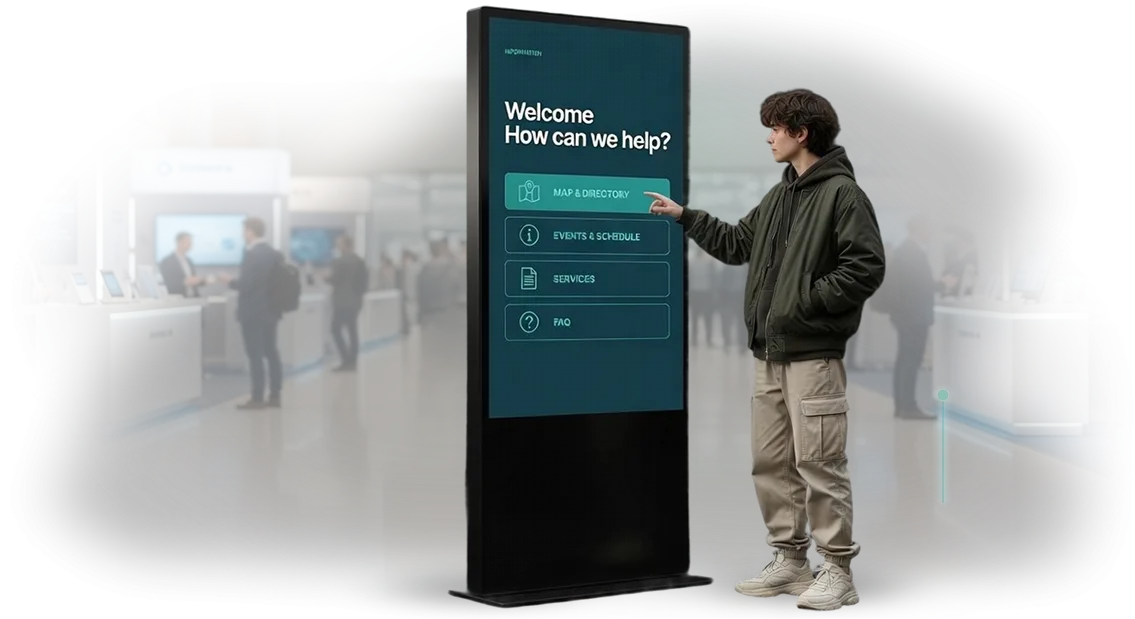
קיוסק אינטראקטיבי פותר את הבעיה בדיוק במקום שבו היא מתרחשת. המבקר בוחר באופן עצמאי את המחלקה הנדרשת על מסך המגע, רואה את המסלול בכמה הקשות, ופונה בביטחון אל היעד ללא סיוע של הצוות.
הניווט בבניין מנהלי הופך לברור וצפוי, ודלפק הקבלה מפסיק לתפקד כמוקד מידע — כל שאלה שגרתית מטופלת אוטומטית.
גישה זו משתלמת מדי יום: האורחים חוסכים זמן ועצבים, העובדים נשארים ממוקדים בעבודה שלהם, והלובי מקבל את פני המבקרים עם מערכת מודרנית וידידותית.
המשימה של הקיוסק פשוטה וספציפית — להסיר את נקודת הכאב הגדולה ביותר של המבקר ולהפוך את הכאוס של המסדרונות למסלול ברור תוך שניות.
מה קיוסק אינטראקטיבי מספק בלובי ובמסדרונות
מבקר בבניין מנהלי מבלה את הדקות הראשונות בניסיון להבין לאן ללכת. הם מחפשים שלטים, שואלים את המאבטח, עוצרים עובדים — ובסופו של דבר מבזבזים זמן, בעוד המזכירה מוסחת מהעבודה על ידי עשרות שאלות זהות.
קיוסק אינטראקטיבי בלובי מסיר את הבעיה הזו: המבקר מוצא את המשרד הנכון בעצמו תוך שניות, ללא סיוע של הצוות.
מהירות ונוחות הן התוצאה העיקרית. האורח מקליד את שם המחלקה או את שמו המלא של העובד ומקבל מסלול למשרד. מסך המגע אינטואיטיבי לכל אחד: אין צורך להסביר איך להשתמש בו או לחכות בתור כדי לראות את האדמיניסטרטור. זה חשוב במיוחד בשעות השיא, כשעומס המבקרים הוא מקסימלי.
העומס על המזכירה יורד. במקום לחזור על אותו דבר עשר פעמים ביום, הם מתמקדים באחריות הליבה שלהם.
הקיוסק מטפל בניווט, עונה על שאלות טיפוסיות על שעות עבודה ומיקומי מחלקות — הצוות חוסך 20–30 דקות בכל יום ועובד עם פחות לחץ.
תדמית ארגונית מודרנית היא בונוס נוסף. האורח רואה שהחברה או המוסד מתעדכנים עם הזמן ודואגים לנוחות של מבקרים ועובדים כאחד. זה בונה אמון לפני ששיחת העסקים בכלל מתחילה.
הקיוסק פועל באופן אוטונומי מסביב לשעון: הוא יציג את המסלול, יציג את מפת הקומה, וישלוף חדשות או מסמכים עדכניים. כל זה — ללא מעורבות של צוות חי, דבר שחשוב במיוחד בבניינים גדולים עם עשרות משרדים.
פורמטים של קיוסק אינטראקטיבי לבניין מנהלי
זרימת המבקרים בבניין מנהלי רחוקה מלהיות אחידה: עובדים ממהרים לפגישות, אורחים מחפשים משרדים, קבלנים מחפשים את המחלקה הנכונה.
כמה מהר אדם מבין לאן ללכת מעצב את הרושם הכללי מהחברה ואת העומס על דלפק הקבלה. קיוסק אינטראקטיבי מקל על העומס הזה — אבל רק אם הפורמט מותאם למיקום ולמשימה הספציפיים, ולא להיפך.
להלן טבלה של פתרונות טיפוסיים לבניינים מנהליים. הרכבנו אותה מפרויקטים אמיתיים כדי שתוכלו לראות מיד איזה פורמט מטפל בנקודת הכאב הספציפית שלכם.
| פורמט | למי | מה זה נותן ללקוח |
|---|---|---|
| קיוסק עומד | מבקרים הנכנסים לבניין בפעם הראשונה | מסלולים ברורים בין הקומות, פחות שאלות למזכירה, התמצאות מהירה |
| קיוסק צמוד קיר | עובדים ואורחים קבועים | איתור מיידי של משרדים ושירותים, תופס מקום מינימלי |
| עמדת מסך מגע | אזורי המתנה ולובי | ניווט בתוספת הצגת שירותים — עובד כ"וויטרינה" חיה |
בחירת פורמט אינה עניין של מפרט טכני אלא של התנהגות אנשים.
קיוסק עומד בכניסה נותן תמונה כללית של הבניין, קיוסק צמוד קיר בלובי המעליות עוזר לאנשים להתמצא בקומה שלהם, ועמדת מסך מגע אידיאלית במקום שבו מבקרים ממתינים ומוכנים לחקור מידע. אנו עוזרים לקבוע את נקודת המיקום ואת הפורמט שיניב את התוצאה הגדולה ביותר.
בחרנו קיוסק עומד ללובי הגדול שלנו — תוך החודש הראשון, שאלות המבקרים לאדמיניסטרטור על "איך מגיעים" ירדו בחצי. הצוות שלנו סוף סוף נשם לרווחה. — ראש המחלקה האדמיניסטרטיבית
שלבי הטמעת הקיוסק: מבריף ועד השקה
הטמעת קיוסק מידע אינה רק התקנת ציוד.
אנו מריצים את הפרויקט דרך שלבים מוגדרים בבירור — מבריף ועד השקה — כך שתישארו בשליטה על התהליך, תדעו את לוח הזמנים מראש, ותקבלו תוצאה עובדת ולא רק "חומרה בלובי."
- בריף וניתוח. אנו לומדים את הבניין, את זרימות המבקרים ואת המשימות שהקיוסק צריך לפתור. יחד, אנו מתעדים דרישות לתוכן, ניווט ומראה.
- קונספט עיצובי. אנו מציעים אב-טיפוס מסך וסגנון ויזואלי ומאשרים אותו איתכם לפני תחילת הפיתוח. אתם רואים איך הקיוסק ייראה לפני שהוא בכלל נבנה.
- פיתוח ממשק. אנו יוצרים מבנה סעיפים ברור, ממלאים את הדפים במידע, ובודקים תרחישי משתמש. עריכות נעשות בשלב זה ללא עלות נוספת.
- ייצור והתקנת הקיוסק. אנו מייצרים את המעטפת לפי העיצוב המאושר, מתקינים את הציוד במיקום הנכון בבניין, ומחברים אותו לאספקת החשמל.
- בדיקות והשקה. אנו מוודאים שכל הסעיפים עובדים, שהתוכן מתעדכן כראוי, והכול מוצג כמו שצריך. לאחר מכן, הקיוסק מוכן לשימוש.
- הדרכת צוות. אנו מעבירים בריף קצר לעובדים: איך לסייע למבקרים, איך לעדכן מידע במהירות, ומה לעשות אם עולות שאלות.
- תמיכה לאחר ההשקה. אנו נשארים זמינים: עונים על שאלות, מבצעים עדכוני תוכן, ומנטרים את הפעולה היציבה של הקיוסק.
מה כלול באספקת הקיוסק וההתקנה
אנו מטפלים בכל המחזור — מבחירת הציוד ועד לרגע שבו הקיוסק מתחיל לעבוד בבניין שלכם.
אינכם צריכים להבין בפרטים הטכניים: אתם מקבלים מערכת ניווט מוכנה שעוזרת למבקרים למצוא את המשרד או השירות הנכון במהירות, והעובדים שלכם מבזבזים פחות זמן בהסברת דרכים.
החבילה הסטנדרטית כוללת:
- חומרת קיוסק מגע — מעטפת נגד ונדליזם, מסך עם הגנה מפני סנוור ושריטות, מודול מחשב חזק. הכול נבחר לפעולה 24/7 במרחב ציבורי ואינו דורש תחזוקה שוטפת.
- התקנה וחיבור — הגדרה במיקום הנכון בבניין, הגדרת רשת וחשמל, וכבילה. הקיוסק מוכן לפעולה ביום ההשקה, ללא מעורבות שלכם.
- תוכנת ניווט — מערכת יציבה שפועלת ללא תקלות ואינה מאטה אפילו בעומסי שיא. עדכונים ותמיכה טכנית כבר כלולים.
- ממשק ניווט — מפות בניין ברורות, חיפוש לפי שם מחלקה או שם משפחה של עובד, ומסלולים למשרד. הממשק בנוי סביב תכנית הקומות והסגנון הוויזואלי שלכם, וקל לשימוש לאנשים בכל גיל.
- טעינת תוכן — אנו מעלים את תכנית הקומה, רשימת המחלקות, מידע עזר ושעות עבודה. במידת הצורך, אנו מוסיפים חדשות והודעות שתוכלו לעדכן בעצמכם.
- הדרכת צוות — אנו מעבירים בריף קצר לאדמיניסטרטורים ולמאבטחים: איך להפעיל את הקיוסק, להחליף חומרים אינפורמטיביים, ולפתור שאלות מבקרים פשוטות.
- הפעלת ניסיון — לאחר ההשקה, אנו בודקים את כל תרחישי הניווט ומתקנים במידת הצורך. אתם מקבלים את המערכת לאחר שהיא פועלת ביציבות בבניין שלכם.
כל פריט בחבילה מתועד בחוזה, כך שאתם תמיד יודעים בדיוק מה כלול בעלות. בדרך כלל, כל התהליך — ממדידת השטח ועד השקת הקיוסק — אורך 2–3 שבועות, תלוי בגודל הבניין ובמספר נקודות הניווט.
מקרה בוחן: איך ניווט במרכז עסקים צמצם איחורים
במרכזים עסקיים עם עשרות שוכרים, מבקרים מבזבזים עד עשר דקות בחיפוש אחר המשרד הנכון. עובדים מאחרים למשא ומתן, ודלפק הקבלה טובע באותן שאלות "איך מגיעים".
אדמיניסטרטורים מוסחים מהתפקידים בפועל שלהם, ואורחים יוצאים עם רושם ראשוני שלילי מהחברה.
עבור מרכז העסקים "אטלנט", פיתחנו מערכת ניווט אינטראקטיבית על קיוסקים עם מסך מגע. אורח מזין את שם החברה — ומקבל מסלול למשרד תוך התחשבות באזורי גישה. הקיוסקים הותקנו בלובי ובצמתי מסדרונות מרכזיים. הגדרת מסד הנתונים של השוכרים והמפות ארכה שבועיים בלבד.
לאחר חודש של פעילות, מדדנו את תוצאות הפרויקט — הן עלו על ציפיות הלקוח.
מה השתנה עבור העסק
- האיחורים לפגישות ירדו ב-40% — עובדים ומבקרים הפסיקו לנדוד בין הקומות.
- עומס דלפק הקבלה ירד פי 2.5: שאלות "איך מגיעים" כמעט נעלמו.
- זמן החיפוש הממוצע אחר משרד ירד משבע דקות לשתיים.
הייתה גם תוצאה נפרדת: משוב חיובי מהשוכרים. הם ציינו שביקורי שותפים מתנהלים חלק יותר, והקיוסקים המודרניים מחזקים את תדמית הבניין.
שישה חודשים לאחר מכן, הלקוח חזר אלינו לקיוסק נוסף לאגף חדש — המדד הטוב ביותר לשביעות רצון.
מקרה הניווט הראה שפתרון שנבחר כראוי מחזיר את ההשקעה בתוך החודשיים הראשונים וממשיך לעבוד במשך שנים. אם מרכז העסקים שלכם מתמודד עם אתגרים דומים, אנו יכולים לעזור ליישם מערכת המותאמת לפרטים הספציפיים שלכם.
איך לבחור את פורמט הקיוסק הנכון למשימה שלכם?
בחירת קיוסק מתחילה לא במראה אלא במיקום שבו הוא יפעל ובמשימה שהוא יפתור.
בבניין מנהלי יש בדרך כלל שלוש משימות כאלה: ניווט מבקרים, קביעת פגישות עם מומחה, ויידוע אנשים על חוקים פנימיים.
אז הצעד הראשון הוא לענות על שתי שאלות: מי ישתמש בקיוסק הכי הרבה (אורחים או עובדים) ואיפה הוא יעמוד (בלובי, במסדרון, או באזור המתנה נפרד).
קיוסק עומד הוא פתרון אוניברסלי ללובי מרווחים. הוא תמיד באופק, נראה בבירור מרחוק, ונוח לאנשים בכל גובה, כולל אורחים עם עגלות.
אם זרימה גדולה של מבקרים המחפשים משרד ספציפי עוברת דרך אזור הכניסה שלכם, דגם עומד עם מסך גדול מפחית באופן ניכר את העומס על המזכירה ומקצר את התור בדלפק הקבלה.
קיוסק צמוד קיר הוא הבחירה למסדרונות, אזורי מעליות ואזורי כניסה. הוא תופס מקום מינימלי, אינו מפריע לניקיון, ומתאים לתרחישים קצרים: בדיקת מספר משרד, צפייה בלוח זמנים, הגשת בקשה.
זוהי האפשרות האופטימלית כאשר צריך לכסות כמה נקודות ניווט ברחבי הבניין מבלי להעמיס על החלל או לשנות את תכנית הקומה.
קיוסק עמדה הוא דרך הביניים המוזהבת לאזורי המתנה ודלפקי רישום. הוא קומפקטי יותר מדגם עומד אך אינו דורש התקנת קיר, כך שקל להזיז אותו במהלך סידור מחדש או מעבר לבניין אחר.
עבור בניין מנהלי, זו בחירה חזקה אם שירות המבקרים משנה מיקום מעת לעת או פועל בלוחות זמנים זמניים.
הקריטריון המרכזי אינו הממדים או מחיר הדגם, אלא כמה מהר הפורמט הנבחר מחזיר את ההשקעה בתרחיש שלכם.
ציוד מקצועי עם מערכת ניווט מכווננת היטב משתלם על ידי הפחתת העומס על הצוות וקיצור הזמן שמבקרים מבזבזים בחיפוש מידע.
עדיף לבחור את סוג הקיוסק על סמך תכנית החלל שלכם וההיגיון של איך אנשים נעים בבניין, ולא מתוך קטלוג.
אנו עוזרים בבחירה זו ללא תשלום: שלחו לנו את תכנית הקומה, ותוך יום נציע שתיים או שלוש אפשרויות מתאימות המותאמות למשימות שלכם.
חששות נפוצים בהזמנת קיוסקים ואיך אנחנו פותרים אותם
לפני הזמנת קיוסק אינטראקטיבי, ללקוחות רבים יש את אותן שאלות: מה קורה אם הציוד נכשל, מי מטפל בעדכוני תוכן, והאם הניהול יהפוך לפרויקט IT מורכב.
החששות האלה אינם על פרטים טכניים אלא על יכולת חיזוי תפעולית ובטיחות תקציבית, ולכן אנו מטפלים בהם לפני שהחוזה נחתם.
אנו מסירים את הפחדים האלה באמצעות אחריות ונהלים ברורים. הקיוסק מגיע עם אחריות רשמית, והתחזוקה מובנית במודל הקשר שלנו עם הלקוח: הגדרה, עדכוני תוכן ותמיכה טכנית — הכול מטופל במפתח אחד.
אינכם צריכים להבין במסכי מגע או בארכיטקטורת שרתים — פשוט ספרו לנו את המשימה, ואנחנו נדאג לשאר.
מה קורה אם הקיוסק מתקלקל במהלך אירוע?
תקלה היא הפחד הנפוץ ביותר, ולכן אנו מתכננים את המערכת עם מרווח ביטחון. לוחות מגע מקצועיים ורכיבים בדרגה תעשייתית בנויים לשימוש יומיומי אינטנסיבי בבניינים מנהליים.
אם אי פעם נדרשת התערבות, נכנס לפעולה נוהל: אבחון מרחוק, החלפה מהירה של המודול הפגום, או יחידת גיבוי למשך משך התיקון. לעולם לא תישארו לבד מול הבעיה — אנו תומכים במערכת לכל אורך חייה.
הזמינו פיתוח קיוסק אינטראקטיבי למתחם שלכם
שלחו בקשה לפיתוח קיוסק אינטראקטיבי — ואנו נציע פתרון המותאם לצרכי הבניין שלכם.
אנו מתחילים באודיט: אנו מנתחים את תנועת הרגליים, נקודות הניווט ובקשות המבקרים הטיפוסיות כך שהקיוסק פותר בעיה אמיתית ולא יהיה רק מסך אטרקטיבי.
עם סיום האודיט, תקבלו חישוב עלות קיוסק — שקוף, ללא עבודה נסתרת או "הפתעות" בשלב ההשקה.
אנו נראה בדיוק על מה מבוסס המחיר ונציע 2–3 אפשרויות תצורה: מניווט בסיסי ועד מערכת עם מפות, חיפוש עובדים ותרחישי מבקרים.
מה תקבלו לאחר ביצוע ההזמנה
- אודיט מתחם — ניתוח זרימות מבקרים, נקודות כניסה ומסלולים טיפוסיים.
- חישוב עלות קיוסק מוקדם — אנו קובעים את האומדן לפני תחילת העבודה.
- הצגת פתרון — אב-טיפוס מסך, מבנה סעיפים והיגיון ניווט.
- תוכנית יישום — לוחות זמנים, שלבים ואחראי לכל שלב.
- תמיכה לאחר ההשקה — עדכוני תוכן, שיפורי סעיפים וסיוע טכני.
- הדרכה להנהלתכם — איך לעדכן מידע בקיוסק ללא מתכנת.
אתם יכולים להזמין פיתוח קיוסק בלחיצה אחת — השאירו את פרטי הקשר שלכם, ונחזור אליכם תוך יום עסקים אחד, נשאל כמה שאלות הבהרה, ונכין את האודיט.
אין שום התחייבות: תקבלו את חישוב העלות ואת ההצגה, ותקבלו את ההחלטה לאחר שתראו את הערך עבור המבקרים והאדמיניסטרטורים שלכם.