

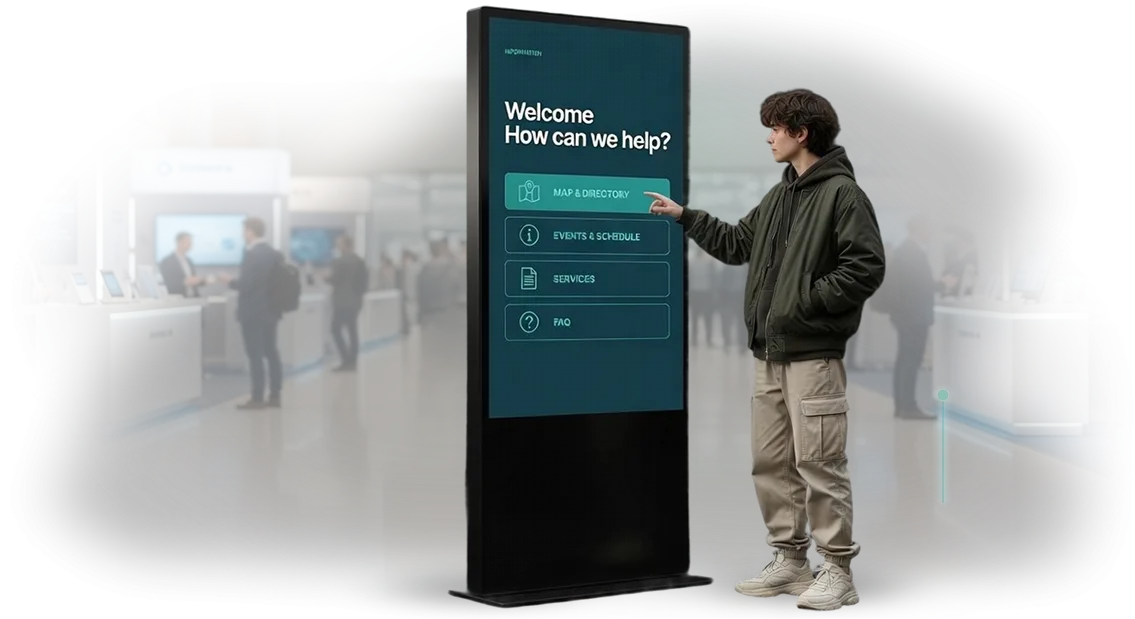
נוסעים הולכים לאיבוד בשדה התעופה: כיצד קיוסקים אינטראקטיביים פותרים את הבעיה
בכל יום עוברים בשדות תעופה אלפי נוסעים, וחלק ניכר מהם נמצאים בבניין בפעם הראשונה. הם לא יודעים היכן הצ'ק-אין, איך מגיעים לעלייה למטוס, היכן אוספים מזוודות, או כמה זמן ייקח המסע.
התוצאה — מבטים מבולבלים, תורים בדלפקי המידע, טיסות שהוחמצו, ולחץ כללי שמקלקל את חוויית הנסיעה עוד לפני שהיא מתחילה.
עבור שדה התעופה, זו לא רק אי-נוחות אלא הפסד ישיר של כסף ומוניטין. נוסע שבילה 40 דקות בחיפוש אחר שער היציאה שלו, לא סביר שיחזור לשדה תעופה זה מרצונו.
הם לא מגיעים לבית קפה או לחנות דיוטי פרי, משאירים ביקורות שליליות, וממליצים לאחרים לטוס דרך שדה תעופה שכן.
בינתיים, צוות שדה התעופה, במקום לעזור במצבים קריטיים, עונה בלי סוף לאותן שאלות "איפה...?" ו"איך מגיעים ל...?".
קיוסקים אינטראקטיביים למידע פותרים בעיה זו באופן שיטתי. נוסע ניגש למסך, בוחר את הנקודה הרצויה — דלפק צ'ק-אין, שער יציאה, אחסון מזוודות, בית מרקחת — ומקבל מיד מסלול ברור עם זמן נסיעה משוער.
הקיוסק פועל מסביב לשעון, לא מתעייף, ולא מתעצבן מהשאלה המאה במשמרת. הוא מציג מידע עדכני על טיסות, עיכובים ושינויים בלוח הזמנים, ומקל על העומס של שירות המידע האנושי.
כשהניווט אורך דקות במקום חצי שעה, הנוסעים נעשים רגועים וידידותיים יותר.
יש להם זמן לעצור בבית קפה, לקנות מזכרות, או פשוט לטייל באזור היציאה — כלומר הכנסה נוספת לשוכרים וצמיחה בהכנסות שאינן תעופתיות עבור שדה התעופה.
מספר המאחרים לשער יורד, עומס העבודה על הצוות מופחת, ושדה התעופה עצמו נראה מודרני ואכפתי.
זו הסיבה שאנחנו מפתחים קיוסקים אינטראקטיביים שמשתלבים בקלות בתשתית הקיימת ומספקים תוצאות מדידות עבור שדה התעופה, השותפים שלו והנוסעים.
מה אתם מקבלים: היתרונות של קיוסקי ניווט עם מסך מגע
נוסע בשדה תעופה מתמודד עם עשרות שאלות: איפה השער, מתי העלייה למטוס, איפה אחסון המזוודות, איך מוצאים בית קפה.
אדם מבולבל מאבד זמן, נהיה עצבני, וניגש לצוות — שמוסח מהתפקידים הישירים שלו כשכבר רועש ומתוח מסביב.
קיוסקי ניווט עם מסך מגע משנים את התמונה הזו: הנוסע מקבל תשובה בכמה הקשות, מסביב לשעון וללא תורים.
פתרון זה מפחית ישירות את העומס על הצוות. העובדים מפסיקים לחזור על אותן דברים ומתמקדים במצבים לא שגרתיים ובשירות שדורש מעורבות חיה.
הקיוסקים מטפלים בבקשות טיפוסיות — המסלול לדלפק הצ'ק-אין, מיקומי השערים, השירותים ואזורי ההמתנה.
בעונות שיא ובעיכובי טיסות, זה בולט במיוחד: מספר הפניות לדלפק המידע יורד, ואין צורך להרחיב את הצוות.
ניווט נוח הוא גם הרושם של הנוסע. ממשק אינטואיטיבי עם שפות מרובות וכפתורים גדולים נוח למבוגרים, ילדים וזרים שנמצאים בשדה התעופה שלכם בפעם הראשונה. אדם מרגיש שמטפלים בו, מתמצא מהר יותר, ונמצא פחות במתח.
פרטים כאלה בונים נאמנות: הנוסע זוכר את שדה התעופה כטכנולוגי וידידותי, מוכן יותר לחזור, וממליץ עליו למכרים — וזה יתרון ישיר למוניטין ולתנועה העתידית.
מסכי הקיוסק הופכים גם למקור הכנסה נוספת. הם יכולים להציג פרסומות לשוכרים, שירותי שדה תעופה, מלונות, שירותים ותוכניות נאמנות.
למעשה, אתם מקבלים ערוץ פרסום חדש שעובד ללא מעורבות צוות ודורש כמעט ללא עלויות תפעול לאחר ההשקה. כך מערכת המידע הופכת לכלי שלא רק עוזר לנוסעים אלא גם מממן את ההטמעה שלו.
הדבר העיקרי שאתם מקבלים בסופו של דבר הוא שלושה אפקטים הקשורים זה בזה: הפחתת עומס העבודה על הצוות, הגברת שביעות רצון הנוסעים, וצמיחה בהכנסות שאינן תעופתיות.
קיוסקים עם מסך מגע הם לא רק תחליף לשילוט נייר אלא מנגנון עבודה לשיפור היעילות הכוללת של שדה התעופה. אנחנו נעזור לפתח וליישם אותו, תוך התחשבות במאפייני הטרמינל שלכם ובזרימת הנוסעים.
קיוסקים אינטראקטיביים לניווט בשדה תעופה: פורמטים לכל משימה
בשדה תעופה, ניווט הוא עניין של זמן: נוסע ממהר לא יבזבז זמן רב בחיפוש תשובה באפליקציה או בדלפק — הוא צריך פתרון כאן ועכשיו.
הפורמט של הקיוסק האינטראקטיבי קובע באיזו מהירות אדם מתמצא והאם הצוות מקבל הקלה. דגם שנבחר כראוי עוזר לנוסעים לנוע בטרמינל ללא לחץ ועוזר לשדה התעופה להפחית תורים בדלפק המידע.
פורמטים עיקריים ותרחישי שימוש
| פורמט | משימות | מה זה נותן ללקוח |
|---|---|---|
| קיוסקים עומדים על הרצפה | אזורי כניסה, אזורי המתנה, מעברים לשערי יציאה | הנוסע רואה את מפת הטרמינל ובונה מסלול בכמה הקשות. פחות מאחרים ופחות שאלות לצוות |
| קיוסקים צמודי קיר | מסדרונות צרים, יציאות, אזורים ליד מעליות ודרגנועים | תופסים מקום מינימלי, עובדים באזורים עם תנועה גבוהה, ועוזרים לקבל החלטה תוך כדי תנועה: ימינה או שמאלה |
| קיוסקי דלפק עם מסך מגע | אולם מרכזי, אזור צ'ק-אין, טרקלין המתנה | חיפוש נוח של טיסות, מלונות, בתי קפה או טרקלינים עסקיים. מתאים לשירות עצמי ללא מעורבות צוות |
| דגמים מובנים | דלפקי מידע, טרמינלים באזורי בידוק | משתלבים אסתטית בפנים ומספקים גישה לניווט גם במקום שבו קיוסק עומד היה חוסם את זרימת הנוסעים |
העיקר הוא לא רק להציב מסך אלא לחשוב על תרחישים אמיתיים: מפה, חיפוש לפי מספר טיסה, רשימת נקודות קרובות, ומסלול לשער.
אנחנו מתכננים כל פורמט לפי המאפיינים הספציפיים של טרמינל מסוים ועל ציוד מקצועי שעובד באופן אמין תחת מגע מתמיד.
כתוצאה מכך, הנוסעים מגיעים לשער הנכון מהר יותר, ושדה התעופה מקבל מערכת ניווט ניתנת לניהול במקום שילוט כאוטי.
בבחירת פורמט איתנו, אתם מקבלים פתרון סוהר — מתרחישים ועד השקה, עם ממשק שאינו דורש הכשרה וקל לעדכון.
כיצד מפתחים מערכת ניווט לקיוסקים: שלבים ולוחות זמנים
פיתוח מערכת ניווט לקיוסקים עם מסך מגע הוא תהליך ברור שאורך מכמה שבועות עד חודשיים, תלוי בהיקף ובמספר הנקודות. חילקנו אותו לשלבים כך שתראו תוצאות בכל שלב ותוכלו לשלוט בלוחות הזמנים.
-
בריף וסקירת צרכים. אנחנו אוספים דרישות, לומדים את פריסת הטרמינל ואת זרימת הנוסעים. התוצאה — מסמך דרישות ותוכנית מיקום קיוסקים.
-
עיצוב ממשק. אנחנו מציירים פריסות מסך ועובדים על תרחישי חיפוש — לפי שם, מספר טיסה, יעד. התוצאה — אב-טיפוס אינטראקטיבי לאישור.
-
עיצוב סוהר. אנחנו מתאימים את הסקיצות לסגנון התאגידי של שדה התעופה ומתחשבים בדרישות נגישות לכל קבוצות הנוסעים. התוצאה — סקיצות מאושרות לפיתוח.
-
פיתוח ושילוב נתונים. אנחנו מחברים את הקיוסקים ללוח הטיסות, למפת האזורים ולמידע על השירותים. התוצאה — קיוסק עובד במצב בדיקה.
-
בדיקות עם נוסעים ושירותים. אנחנו מוודאים תרחישים, מהירות ביצוע ועמידות במצבים לא שגרתיים. התוצאה — כיוונון וגרסה סופית.
-
השקה והכשרת צוות. אנחנו מתקינים תוכן, מגדירים עדכונים אוטומטיים ומבצעים תדרוכים לצוות. התוצאה — קיוסקים פועלים במצב רגיל.
-
תמיכה ופיתוח. אנחנו מעדכנים לוחות זמנים, מוסיפים פונקציות חדשות ועוקבים אחר אנליטיקת שימוש. התוצאה — המערכת נשארת רלוונטית ושימושית.
מה כלול במשלוח: חבילת קיוסק ניווט
כשאתם מזמינים קיוסק ניווט מאיתנו, חבילת המשלוח כוללת לא רק מכשיר אלא פתרון מלא.
אתם מקבלים מפה אינטראקטיבית של שדה התעופה, תוכנה, עיצוב, מערכת ניהול תוכן ותיעוד — כל מה שצריך כדי להשיק ולהפעיל ללא חיפוש קבלנים נוספים.
הנה מה שכלול בחבילת המשלוח הבסיסית של הקיוסק:
- מפה אינטראקטיבית של שדה התעופה — פריסת הטרמינל, שערי יציאה, דלפקי צ'ק-אין, בתי קפה, בתי מרקחת, חניונים. עם חיפוש לפי שם וקטגוריה, כך שנוסע מוצא את המקום הנכון תוך 10 שניות.
- תוכנת קיוסק — ממשק שנפתח מיד ולא מאכזב בשעות השיא. ניהול — דרך פאנל אינטואיטיבי, ללא מתכנתים.
- עיצוב מותאם אישית — עיצוב בסגנון התאגידי שלכם, כך שהקיוסק נראה חלק מחלל שדה התעופה ולא עמדה טכנית זמנית.
- מערכת ניהול תוכן — צוות השיווק שלכם משנה לוחות זמנים, מבצעים, תבניות תנועה ובאנרים פרסומיים תוך דקות ללא עזרה.
- חבילת תיעוד מלאה — הוראות לצוות, תקנות תחזוקה, נהלי החלפת חומרים מתכלים ואנשי הקשר של התמיכה שלנו.
- פורמטים מוכנים — דגמים עומדים, צמודי קיר ונייחים שאנחנו עוזרים לבחור לפי תפוקה, פריסה ודרישות בטיחות.
חבילת משלוח זו מכסה הכל — מהעלאת המפה הראשונה ועד הכשרת הצוות. אתם מקבלים מערכת ניווט סוהרת שעובדת, ואז מנהלים אותה בעצמכם ומתמקדים במשימה המרכזית: לוודא שהנוסעים מוצאים את הטיסה שלהם ללא לחץ.
מקרה בוחן: איך צמצמנו את מספר הטיסות שהוחמצו פי 2
ההטמעה של קיוסקים אינטראקטיביים בשדה התעופה המרכזי החלה בתלונות נוסעים: אנשים הלכו לאיבוד בטרמינל, לא הספיקו לעבור בידוק בזמן, ואיחרו לעלייה למטוס.
הנהלת שדה התעופה רצתה להפחית את העומס על דלפקי המידע ולצמצם את מספר המאחרים, ולכן הצענו מערכת ניווט שמנחה נוסעים במסלול לפי מיקומם הנוכחי והזמן שנותר עד להמראה.
תוך חודשיים מההשקה, מספר הטיסות שהוחמצו ירד פי 2 — מ-8% ל-4% מכלל התנועה. הנוסעים החלו למצוא שערי יציאה, אזורי בידוק ובתי קפה מהר יותר: זמן הנסיעה הממוצע בטרמינל ירד ב-15 דקות.
בשבוע הראשון בלבד, כל קיוסק טיפל ביותר מ-200 בקשות ביום, ועד 400 בשעות השיא.
השתמשנו בקיוסקים מוכחים עם מסך מגע ובתוכנה מקצועית — זה בדיוק מה שסיפק פעולה יציבה ללא תקיעות או שגיאות מסלול. המערכת עצמה מעדכנת מידע על עיכובי טיסות ומחשבת מחדש את המסלול אם נוסע פיגר אחרי לוח הזמנים. עבור שדה התעופה, זה אומר פחות לחץ לאורחים ופחות פניות לדלפק המידע.
יעילות הקיוסקים אושרה גם על ידי מדדי נאמנות: 9 מתוך 10 נוסעים שהשתמשו בניווט דירגו אותו כ"מצוין", ושדה התעופה הזמין הזמנה חוזרת להרחבת המערכת תוך חצי שנה. היום הקיוסקים פועלים בשני הטרמינלים ומשולבים עם האפליקציה הניידת של חברות התעופה.
אם העסק שלכם מתמודד עם אתגר דומה — לעזור ללקוחות להתמצא במהירות ולהימנע מהחמצת מועדים — אנחנו מוכנים לפתח מערכת מקבילה עבור המתקן שלכם. ספרו לנו על המשימות שלכם בבריף, ואנחנו נציע פתרון ונחשב לוחות זמנים.
איך לבחור את פורמט הקיוסק הנכון למשימה שלכם?
בחירת קיוסק היא לא שאלה של מפרט טכני אלא שאלה של המשימות שלכם, זרימת המבקרים והתפקיד שהמכשיר ממלא בחלל.
אותו מיקום בשדה תעופה עשוי לדרוש דלפק קומפקטי בשער יציאה, עמדה גדולה עומדת באזור הגעה, או מסך צמוד קיר ליד דרגנועים — וכל אחת מהתצורות הללו פותרת משימה משלה.
הקריטריון המרכזי הוא תרחיש השימוש. אם נוסע צריך לבדוק במהירות את הטיסה שלו ולפנות לשער, מספיק ממשק פשוט ואינטואיטיבי עם כפתורים גדולים.
אם הקיוסק נועד להקל על דלפק המידע ולענות על שאלות על חנויות, בתי קפה ושירותים — יש צורך במבנה ניווט עמוק יותר, מפת טרמינל וחיפוש לפי קטגוריה.
הפורמט הנכון נקבע לא לפי גודל המסך אלא לפי כמה זמן אדם מוכן להשקיע בו וכמה מורכב המסלול שעליו לעבור.
שיקולי תנועה ומיקום חשובים לא פחות. באזורים עם תנועה גבוהה, הקיוסק חייב לעמוד בפעולה מסביב לשעון ולא ליצור תורים — לשם כך אנחנו בוחרים תצורה המחושבת לעומסי שיא.
באזורים שקטים שבהם נוסעים ממתינים לעלייה למטוס, אפשר להשתמש בדגמים קומפקטיים יותר עם פונקציות נוספות: טעינת מכשירים, מידע על העברות, והצעות פרסום ושירות של חברות תעופה.
אנחנו ניגשים לבחירת הפורמט כעיצוב שירות, לא כרכישת מכשיר. אנחנו מסתכלים על ההיגיון של זרימת הנוסעים, השאלות הטיפוסיות שנשאלות בדלפק המידע, וכיצד הקיוסק ישתלב בעיצוב הפנים.
בהתבסס על זה, אנחנו מציעים את התצורה האופטימלית — עם סט הפונקציות הנכון, ללא תשלום יתר על תכונות מיותרות, ועם מקום להתרחבות עתידית.
אם אתם לא בטוחים איזה פורמט מתאים למשימה הספציפית שלכם, התחילו בייעוץ קצר. נבחן את המצב שלכם, נציע 2-3 אפשרויות עם הערכת עלות בעלות כוללת, ונסביר איזו מהן תחזיר את ההשקעה הכי מהר. זה ללא התחייבות.
שאלות נפוצות על קיוסקי ניווט: טיפול בחששות שלכם
להתלבט לפני הזמנת קיוסקי ניווט זה נורמלי: אתם אחראים על הנוחות של אלפי נוסעים ולא רוצים לקחת סיכונים. להלן אנו מתייחסים לחמשת החששות הנפוצים ביותר לפני הזמנה — ממורכבות ההתקנה ועד אחריות ותחזוקה.
כמה מורכבת התקנת הקיוסקים, והאם שדה התעופה יצטרך להפסיק פעילות?
ההתקנה אורכת כמה ימים ואינה דורשת שיפוץ גדול. אנחנו מנתחים מראש את זרימת הנוסעים, בוחרים נקודות מיקום ומפעילים חשמל על בסיס התשתית הקיימת. העבודה מתוזמנת לשעות של עומס מינימלי — אתם לא מפסידים אף טיסה.
האם זה יקר, וכמה מהר קיוסקים מחזירים את ההשקעה?
הערך המרכזי הוא לא המסך עצמו, אלא הקלה על הצוות וניווט מהיר יותר. נוסעים פונים פחות לדלפקי המידע ומוצאים שערים ודלפקי צ'ק-אין מהר יותר.
זה מפחית את עומס העבודה על העובדים, מגביר דייקנות ושביעות רצון — ולכן גם הכנסות משירותים שאינם תעופתיים.
מה קורה אם קיוסק מתקלקל בעונת השיא?
אנחנו מספקים אחריות רשמית ופועלים תחת הסכם SLA — עם זמני תגובה המוגדרים בחוזה. המערכת עוקבת מרחוק אחר מצבו של כל קיוסק, כך שאנחנו יודעים על תקלות לפני הנוסעים. החלפת רכיבים מהירה, ותמיד קיים תרחיש גיבוי.
מי יעדכן את המידע על הקיוסקים וינהל את התוכן?
אנחנו מטפלים בכל התחזוקה: עדכון לוחות זמנים, מפות וחומרים פרסומיים. אתם לא צריכים להעסיק מתכנת או להתעסק עם הגדרות מורכבות. במידת הצורך, אנחנו משנים תוכן מרחוק תוך שעות מהבקשה.
האם הקיוסקים ישתלבו בעיצוב שדה התעופה ולא יפריעו לנוסעים?
אנחנו מתאימים את העיצוב לסגנון המותג של שדה התעופה — מצורת הגוף ועד ערכת הצבעים של הממשק. הקיוסקים קומפקטיים, לא חוסמים נתיבי פינוי, ולא יוצרים תורים.
המיקום מחושב כך שהניווט מאיץ את זרימת התנועה במקום להאט אותה.
ענינו על השאלה שלכם? אם עדיין יש לכם ספקות — ספרו לנו על המצב שלכם, ואנחנו נציע פתרון עבור שדה התעופה שלכם.מוכנים לשפר את הניווט לנוסעים? הגישו בקשת פיתוח
בלבול בשדה תעופה גדול עולה לנוסעים זמן ולחברות תעופה נאמנות. כשאדם לא יכול למצוא במהירות שער, דלפק צ'ק-אין או טיסת המשך, הוא זוכר את שדה התעופה כלא נוח, גם אם הטיסה עצמה עברה בצורה מושלמת.
קיוסקים אינטראקטיביים עם ניווט ברור פותרים בעיה זו — הנוסעים מרגישים בטוחים, והצוות שלכם מקבל זמן לדברים חשובים באמת.
כדי שתוכלו להעריך את ערך הפתרון במתקן שלכם, אנחנו מציעים תהליך פשוט וברור. לאחר פנייתכם, אתם מקבלים:
- ייעוץ עם מומחה פיתוח ניווט — נדון במשימות ובמאפייני שדה התעופה שלכם;
- סקירת הניווט הנוכחי שלכם וניתוח זרימת נוסעים — נזהה נקודות חלשות ומיקומים שבהם קיוסקים יספקו אפקט מקסימלי;
- המלצות על הפורמט ומספר הקיוסקים לתנועה שלכם — ללא עלויות מיותרות ועם מקום לצמיחה;
- אב-טיפוס ממשק משתמש המבוסס על תרחישי נוסעים: ממציאת השער ועד ביצוע טיסת המשך;
- הערכת עלות שקופה ותוכנית לוח זמנים לפני תחילת העבודה — תדעו בדיוק את התקציב ואת לוח הזמנים;
- תמיכה טכנית ועדכוני תוכן לאחר ההשקה — הקיוסקים נשארים עדכניים ככל ששדה התעופה מתפתח.
מאחורינו שנים של ניסיון במערכות אינטראקטיביות לחללים תחבורתיים וציבוריים. אנחנו עובדים מרחוק, כך שלוחות הזמנים אינם תלויים במיקומכם, ואנחנו משיקים פרויקטים ללא השבתה.
הגישו בקשת פיתוח — ובעצם הייעוץ הראשון, נראה כיצד ניווט יכול להיות נוח לנוסעים ורווחי עבורכם. מלאו את הטופס למטה או התקשרו אלינו: נדון בפרטים ונציע פתרון עבור שדה התעופה שלכם.