

לקוחות עוזבים למתחרים — מבקרי קזינו הולכים לאיבוד בניווט
מבקר קזינו מגיע בשביל ריגוש, נוחות ואווירה — לא בשביל מצוד אחר האולם הנכון. כשהאורח מבזבז 10–15 דקות בניסיון לאתר מסעדה, אזור VIP או שירותים, הוא מאבד את מצב הרוח, והמוסד מאבד זמן וכסף.
אדם מבולבל לא מהמר, לא חוזר לשולחנות, וגרוע מכך — עוזב עם רושם שלילי מהשירות.
אובדן אורחים בקזינו הוא אובדן הכנסה ישיר. אורח שלא הצליח למצוא את דרכו במהירות, סביר שלא יחזור, והפה-לאוזן עובד מיידית בענף הזה: מבקר אחד לא מרוצה לוקח איתו קבוצה שלמה.
ניווט בקזינו הוא לא שלט על הקיר אלא כלי שמנהל את זרימת האורחים ומשפיע על הנכונות שלהם לשחק ולהוציא כסף.
מערכת ניווט אינטראקטיבית פותרת את הבעיה: היא מציגה את המסלול תוך שניות, מדגישה מבצעים ובידור עדכניים, והופכת את השהות של האורח לנוחה. נוחות המבקר מתורגמת ישירות לנאמנות ולהגדלת ההוצאה הממוצעת. ככל שהאורח חושב פחות על לוגיסטיקה, כך הוא ממוקד יותר במשחק ובחוויה.
אנחנו עוזרים לבתי קזינו לסגור את הפער הזה על ידי בניית מערכת שמדריכה את האורח מהכניסה ליעדו ללא שאלות מיותרות לצוות. בהמשך, נסביר איך זה עובד ולמה זה משתלם לעסק שלכם.
מה מקבלים ממערכת ניווט לקיוסק שלכם
מערכת ניווט לקזינו היא לא רק מסך מגע עם מפת קומה, אלא כלי שמשפיע ישירות על חוויית האורח ועל הכנסות המקום. אפרט את היתרונות המרכזיים שתקבלו לאחר ההשקה.
- צמיחה בהכנסות. הקיוסק מראה לאורחים את המסלול הקצר ביותר למסעדה, בר או תוכנית מופע, יחד עם מבצעים והצעות מיוחדות עדכניות. זה מגדיל ביקורי אימפולס באזורי בידור ואוכל ב-20–30%.
- נאמנות גבוהה יותר. אורחים לא מסתובבים במסדרונות או מחפשים אנשי צוות כדי לשאול כיוונים. הם מרגישים שמטפלים בהם וחוזרים — חלק הביקורים החוזרים גדל כבר בחודש הראשון.
- זמן שהייה ארוך יותר. ככל שקל יותר למצוא את האולם, הטורניר או אזור ה-VIP הנכון, כך השחקן נשאר יותר זמן בקזינו. יותר זמן משמעותו יותר הימורים ומחזור גבוה יותר.
- הכרת המותג. קיוסקי מגע ממותגים יוצרים תדמית של מקום מודרני和高טק. זה תומך במוניטין שלכם ומושך קהלים חדשים.
- הקלה על עומס הצוות. מנהלים מפסיקים לענות על אותן שאלות כמו "איפה השירותים" או "איך מגיעים לשולחנות". העובדים מתמקדים בשירות אורחים במקום שבו זה באמת מייצר הכנסה.
- גמישות ניהולית. אתם משנים את תוכן הקיוסק מרחוק — מעדכנים את לוח האירועים, מוסיפים מבצע חדש או משנים את פריסת האזורים. ללא ביקורי טכנאי וללא השבתה.
עבור קזינו Golden Dragon, מדדנו את האפקט לאחר ההשקה: אורחים נשארו באזורי המשחק 15% יותר זמן, ומספר ההרשמות לכרטיס מועדון כמעט הוכפל. זו התוצאה שמקבלים כשכל מסך קיוסק מעוצב סביב הצרכים הספציפיים של המקום.
רוצים אפקט דומה למועדון שלכם? בואו נדבר על איך להתאים את הניווט למאפיינים של המקום שלכם.
פורמטי קיוסק אינטראקטיביים לצורכי קזינו
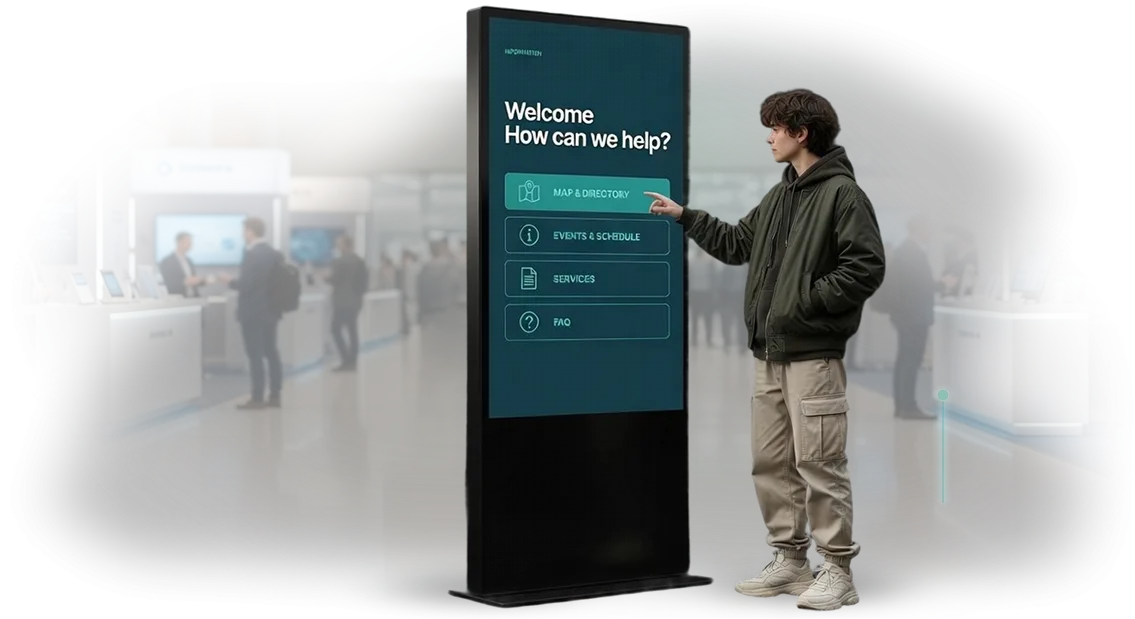
פורמט הקיוסק האינטראקטיבי הנכון קובע באיזו מהירות אורח מוצא את האולם או השולחן הנכון, ועד כמה המסך הדיגיטלי משתלב באופן טבעי בעיצוב הפנים של הקזינו. אזור הלובי, זרימות המבקרים ותרחישי השימוש קובעים היכן הטרמינל יהיה הכי שימושי. להלן השוואת הפורמטים העיקריים שאנו משתמשים בהם בדרך כלל בבתי קזינו.
| פורמט קיוסק | לאילו בתי קזינו הוא מתאים | מה הוא מספק |
|---|---|---|
| טרמינל מידע עומד | מתחמים גדולים עם לובי רחב | ניווט מהיר, תורים קצרים יותר בקבלה, פחות אורחים שאבדו |
| קיוסק מגע צמוד קיר | בתי קזינו עם מסדרונות צרים ומספר קומות | חיסכון במקום, מסלולים נוחים למסעדות ואזורי מופע |
| קיוסק נייד | בתי קזינו עם טורנירים ואירועים זמניים | גמישות: ניתן להזיז את היחידה תוך יום אחד מבלי לשנות את הניווט של הבניין |
| קיוסק דלפק קבלה | בתי קזינו קטנים ואזורי טרקלין | תשובות מיידיות לשאלות אורחים מבלי להסיח את דעת הצוות, נוח להזמנת שולחנות |
עבור בתי קזינו גדולים עם תנועת אורחים כבדה, גישה משולבת עובדת הכי טוב: טרמינלים עומדים בכניסה ויחידות צמודות קיר באזורים מרוחקים — כך שלאורחים תמיד יש מדריך בדרך. עבור מקומות קומפקטיים, קיוסק אחד או שניים צמודים לקיר בנקודות מפתח מספיקים.
אנחנו נבחר חבילה לפי התוכנית שלכם ונכין מפות אינטראקטיביות, לוחות טורנירים ורשימות בידור — האורח מקבל תשובה תוך שניות, בזמן שאתם מפחיתים את עומס הצוות ומפנים יותר זמן לשירות אורחים.
איך אנחנו יוצרים ניווט לקיוסק שלכם
בקזינו, זמן האורח קשור ישירות להכנסות: ככל שהאורח מוצא מהר יותר את האולם, המסעדה או אזור הבידור הנכון, כך שביעות הרצון וההוצאה הממוצעת שלו גבוהות יותר.
קיוסק מגע עם ניווט ברור מבטל שאלות כמו "איפה השולחנות?" ו"איך מגיעים למופע?" ומקל על הצוות. אבל המערכת מספקת ערך רק כשתהליך הניווט בנוי סביב הצרכים האמיתיים שלכם. לכן אנחנו מתחילים עם בריף ועוברים על כל שלב בפיתוח יחד איתכם.
שלבי פיתוח ניווט לקיוסק
-
בריף קיוסק — אנחנו נפגשים, דנים במטרות, נקודות התקנה ופרופיל האורח. אנחנו מתעדים אילו סעיפים הכי חשובים כך שהניווט פותר בדיוק את המשימות שלכם.
-
ניתוח תרחישים — אנחנו חוקרים מסלולי מבקרים טיפוסיים ובקשות נפוצות. כך הקיוסק עונה על שאלות אמיתיות של אורחים ולא רק נראה טוב על הנייר.
-
אב-טיפוס ועיצוב — אנחנו יוצרים את מבנה התפריט והעיצוב החזותי של המסכים. אתם רואים מראש איך המערכת תיראה ויכולים לבצע שינויים לפני ההרכבה.
-
פיתוח ניווט — אנחנו בונים את המערכת, מחברים מפות קומה, לוחות זמנים ומבצעים. כל המידע קל לעדכון, כך שהתוכן תמיד עדכני.
-
בדיקות — אנחנו מוודאים תרחישים על מכשירים אמיתיים ומתקנים בעיות. אנחנו מבטלים שגיאות לפני שאורחים נתקלים בהן.
-
השקת המערכת — אנחנו מתקינים את הקיוסקים, מגדירים תוכן ומכשירים את הצוות שלכם. העובדים מקבלים הוראות ברורות ותמיכה מהיום הראשון.
-
תמיכה שוטפת — אנחנו נשארים בקשר: מעדכנים באנרים, מוסיפים סעיפים ומרעננים מידע לאחר אירועים או שינויים בפריסה.
כתוצאה מכך, אתם מקבלים לא רק "מסך עם מפה" אלא כלי עבודה שחוסך זמן לאורחים ומגביר את נאמנותם. אנחנו מטפלים בכל התהליך — מהבריף ועד השקת המערכת — ושולטים באיכות בכל שלב.
מה כלול במסירה: חבילה מלאה לקיוסק שלכם
חבילת המסירה מעוצבת כך שתקבלו כלי עבודה, לא קופסה של חומרה. תצורת הקיוסק הסטנדרטית כוללת את כל מה שצריך כדי להשיק ניווט ותפריט אינטראקטיבי בקזינו — מהמסך ועד רישיונות תוכנה.
אתם לא מרכיבים את המערכת מחלקים: אנחנו מספקים, מתקינים ומגדירים את המכשיר עבור הלובי, אזור הקבלה או הטרקלין שלכם.
החבילה כוללת:
- תצורת קיוסק מוכנה: מסך מגע, מעטפת והתקנה ביחידה אחת שמתאימה לעיצוב הפנים.
- תוכנת ניווט עם מפה אינטראקטיבית של אולמות, אזורי משחק, מסעדות ויציאות — אורחים מוצאים מיד לאן הם צריכים ללכת.
- תפריט אינטראקטיבי עם תיאורי מנות, ברים ותוכניות מופע שניתן לשנות תוך דקות ללא מתכנת.
- פאנל ניהול לניהול תוכן: מבצעים, פוסטרים לאירועים, שעות פעילות — הכל מתעדכן מרחוק.
- מודול הזמנת שולחנות ואזור VIP: האורח בוחר זמן ומאשר את הבקשה ישירות על המסך.
- ממשק רב-לשוני והתאמה אישית לקטגוריות אורחים שונות — מחדשים ועד שחקנים קבועים.
- מצב צוות: מסלולים לאזורים פנימיים, הוראות וקריאה מהירה לצוות.
כל פריט ניתן להתאמה אישית לצרכים שלכם, כך שהקיוסק באמת מפשט את עבודת הצוות ומאיץ את תנועת האורחים. גישה זו מקצרת את זמן ההשקה לכמה ימים בלבד ומבטלת הפתעות במהלך התפעול.
אם יידרשו שדרוגים בהמשך, נוכל להוסיף תשלום ללא מגע, הדפסת קופונים או שילוב תוכנית נאמנות מבלי לשנות את התצורה הבסיסית.
מקרה בוחן: ניווט למלון עם קזינו — תוצאות
פריסה מורכבת של מלון וקזינו היא מקור נפוץ לתסכול אורחים. מסעדות, ספא, אולם כנסים ואזורי VIP פרוסים על פני קומות שונות — אורחים מבזבזים זמן בחיפוש ולעתים קרובות מדלגים על השירותים לחלוטין.
עבור המלון, זה אומר הזמנות אבודות; עבור הצוות, שאלות אינסופיות של "איך מגיעים לשם". אנחנו פותרים את הכאב הזה עם קיוסקי ניווט עם מסך מגע.
במתחם נופש אחד, בנינו מערכת עבור Royal Grand Hotel & Casino: התקנו קיוסקים אינטראקטיביים בלובי, ליד המעליות ובכניסה לאזור המשחקים.
אורח בוחר יעד על המסך ומקבל מיד מסלול — בלי לחכות בתור למנהל.
תוצאות לאחר ההשקה
בשלושת החודשים הראשונים, הקיוסקים עיבדו יותר מ-18,000 בקשות. הזמן הממוצע למציאת יעד ירד משמונה דקות ל-25 שניות — אורחים הפסיקו להסתובב בקומות.
חלק שאלות ה"איפה..." לצוות ירד ב-60%, והביקורים במסעדות ואזורי בידור גדלו בשליש.
עבור הלקוח, זה ערך מדיד: ניצול גבוה יותר של נקודות המכירה במקום, פחות לחץ על הצוות ורמות לחץ נמוכות יותר לאורחים. לאחר שישה חודשים, המתחם הזמין שלב שני — ניווט בחדרי אורחים ובמרכז הכנסים. ההזמנה החוזרת מאשרת שהפרויקט מספק תוצאות.
אורחים חוזרים לקזינו כשהם מבינים את הפריסה ויכולים להגיע בקלות לכל השירותים. מקרה הבוחן שלנו מראה איך ניווט מגדיל את הרווחיות של אזורים סמוכים ללא פרסום נוסף.
שאלות נפוצות על ניווט בקזינו
פרויקטים של קזינו דורשים סטנדרטים גבוהים של אמינות ועמידה בלוחות זמנים. כשמדובר בקיוסקי מגע ומערכות ניווט, לקוחות שואלים את אותן שאלות. אספנו את העיקריות ועונים בקצרה — תוך התמקדות במה שחשוב לעסק, לא בפרטים טכניים.
כמה זמן לוקח פיתוח קיוסק אינטראקטיבי?
פרויקט סטנדרטי לוקח 4–6 שבועות: מבריף ועד התקנה והשקה. אם נדרש שילוב עם תוכנית נאמנות, לוחות הזמנים נדונים בנפרד. אנחנו מתעדים את השלבים בחוזה ומדווחים בכל אבן דרך — אתם תמיד יודעים איפה הפרויקט עומד.
אילו ערבויות אתם נותנים למערכת הניווט ולציוד?
אנחנו אחראים לביצועי המערכת לאורך כל חיי השירות שלה. תוכנה מגיעה עם אחריות של לפחות 12 חודשים; ציוד נושא באחריות היצרן. בתקופה זו, אנחנו מתקנים כל תקלה ללא עלות, כולל ביקורי מהנדס באתר שלכם.
האם קשה לשנות מידע על הקיוסקים לאחר ההשקה?
לא. עדכון לוחות זמנים, מפות ובאנרים פרסומיים נעשה דרך פאנל שליטה פשוט. הצוות שלכם יכול ללמוד אותו תוך שעת הדרכה — ניתן לשנות תוכן ללא מעורבות מתכנתים.
מה כוללת תחזוקה של קיוסקי מגע?
בדיקות שוטפות של לוחות המגע, ניקוי, עדכוני תוכנה וגיבויים. אנחנו מציעים שני פורמטים: תמיכה בסיסית ותמיכה מלאה — עם ניטור 24/7 ותגובה מהירה. אתם בוחרים את מה שמתאים לעומס ולתקציב שלכם.
הזמינו פיתוח ניווט לקיוסק שלכם עכשיו
מתכננים לעדכן את הניווט בקזינו שלכם או פותחים אולם חדש? אז עכשיו זה הזמן להזמין קיוסק עם פיתוח ניווט מותאם אישית.
השאירו בקשה באתר — ותוך 15 דקות תקבלו ייעוץ עם מהנדס והערכת עלות ראשונית לפרויקט.
הנה מה שתקבלו מיד לאחר יצירת קשר:
- בדיקה ראשונית של המתחם שלכם: מספר ומיקום הקיוסקים עבור הפריסה שלכם.
- אב-טיפוס ממשק ניווט על תוכניות הקומה שלכם — לא טיוטות גסות, אלא בנוי סביב היגיון תנועת האורחים.
- הערכת עלות ולוח זמנים: אנחנו קובעים את העלות ואבני הדרך כך שתבינו את התקציב לפני תחילת העבודה.
- מנהל פרויקט ייעודי שילווה את הפרויקט מבריף ועד השקה.
- גישת בדיקה לגרסת הדגמה של הממשק — אתם רואים את התוצאה לפני הזמנת ייצור.
- המלצות על בחירת המעטפת ומסך המגע כדי להתאים לצרכים ולסגנון המקום שלכם.
בלי הבטחות מופשטות. הצוות שלנו מתכנן מערכות מגע למקומות בילוי כבר למעלה מ-10 שנים, כך שאנחנו יודעים איך ניווט משפיע על זרימת המבקרים ועל תפוסת האזורים.
אתם מקבלים לא רק "קיוסק עם מפה" אלא כלי שמקל על הצוות ומגביר את נאמנות האורחים.
כדי להזמין קיוסק ופיתוח ניווט, פשוט השאירו בקשה בעמוד זה או התקשרו אלינו. לאחר מכן — שיחה, פרטים, חוזה והשקת פרויקט. אנחנו מציעים להתחיל בייעוץ — הוא חינמי וללא התחייבות.
איך לבחור את פורמט הקיוסק הנכון לקזינו שלכם?
איך בוחרים פורמט קיוסק לקזינו? אין תשובה אוניברסלית — הפתרון הנכון תלוי במשימות שאתם רוצים לפתור.
קיוסק אחד עוזר לאורח למצוא במהירות שולחן משחק, אזור מסעדה או יציאה למרפסת; אחר מבדר אותו בזמן ההמתנה, מציג תוכניות מופע או מדגיש מבצעים.
ככל שתגדירו את המטרה בצורה מדויקת יותר, כך קל יותר לקבוע את סוג המכשיר, המבנה שלו ומיקומו.
לבתי קזינו יש מאפיינים ייחודיים — שטחים גדולים, מספר זרימות מבקרים ודרישות גבוהות לאסתטיקה ואמינות. הקיוסק חייב לפעול מסביב לשעון, לעמוד בשימוש אינטנסיבי ועדיין להשתלב בצורה חלקה בעיצוב הפנים.
חשוב לחשוב לא רק על המראה אלא גם על היגיון הממשק: מבקר עם כל רמת ניסיון צריך להבין ללא הנחיות איך לקבל את המידע שהוא צריך ולאן ללכת.
בבחירת פורמט, אנחנו שוקלים מספר פרמטרים: עיצוב עומד או צמוד קיר, גודל מסך, מבנה מעטפת, הגנה מפני גורמים חיצוניים וקלות עדכון תוכן. אבל הקריטריון המרכזי הוא נוחות האורח.
המסלול מהכניסה לשולחן או מסעדה לא אמור לגרום לקושי כלשהו, אחרת הרושם מהקזינו נפגע. קיוסק שנבחר היטב מקצר את זמן החיפוש וחוסך מהצוות שאלות חוזרות.
אנחנו עוזרים לכם לבחור את הפורמט הנכון למאפייני המקום שלכם. מומחה מבקר באתר, לומד את הפריסה, זרימות המבקרים ונקודות ההחלטה המרכזיות.
בהתבסס על הניתוח, אנחנו ממליצים על הפתרון האופטימלי: קיוסק יחיד בלובי או רשת מכשירים באזורים שונים, עם ניווט, מידע על אירועים או תוכן בידורי.
זה לא רק "חומרה" — זה כלי שהופך את השהות של האורחים לנוחה יותר ומגביר נאמנות.
לאחר ההשקה, אנחנו לא נוטשים את הפרויקט: אנו מגדירים עדכוני תוכן, עוקבים אחר ביצועים ומתאימים מסלולים והנחיות בעת הצורך. כך הקיוסק נשאר כלי שימושי — לא רק מתקן יפה בלובי.