

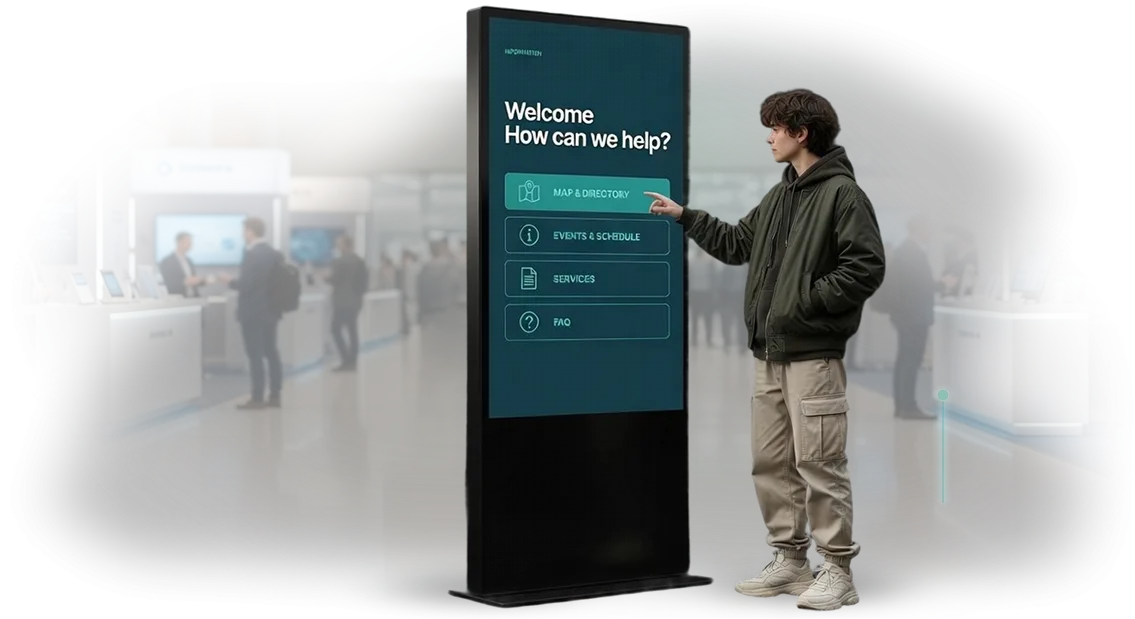
האם לקוחות הולכים לאיבוד במרכז הלוגיסטי שלכם?
מבקרים מגיעים למרכז לוגיסטי בשביל תוצאה קונקרטית: לאסוף מטען, למצוא שוכר, לטפל במסמכים. אבל שטחים גדולים, אזורים מרובים ופריסה לא מוכרת הופכים את הביקור למשימה מאתגרת.
לקוח הולך לאיבוד במרכז, מבזבז חצי שעה נוספת בחיפושים, מפספס את חלון האיסוף — ועוזב עם רושם שלילי. כל מקרה כזה משמעותו הזמנה אבודה, שותף לא מרוצה ועומס נוסף על הצוות שנאלץ להסביר את הדרך שוב ושוב.
עבור בעל מרכז לוגיסטי, זה לא עניין של מה בכך אלא פגיעה ישירה ביעילות. עובדים מוסחים מעבודתם כדי ללוות אנשים למקום הנכון, תורים בדלפק המידע גדלים, ותפוקת המרכז יורדת.
ככל שמבקר מחפש את הדרך זמן רב יותר, כך תקבלו פחות עסקאות ופחות פניות חוזרות. ניווט למחסן מפסיק להיות תוספת נחמדה — הוא הופך לגורם קריטי לרווחיות.
בצוות שלנו אנחנו פותרים את הבעיה הזו עם קיוסקים אינטראקטיביים לניווט. מסך מגע בלובי, במחסן או באזור האיסוף מציג את המסלול למשרד או למדור הנכון — מהר, ברור וללא מעורבות צוות.
המבקר כבר לא הולך לאיבוד, העובדים מתמקדים בתפקידיהם, והמרכז הלוגיסטי פועל כמו מכונה משומנת היטב. כך אנחנו מחזירים את הסדר ומגדילים את זרם הלקוחות המרוצים — וזה בדיוק מה שאנחנו מספקים.
מה ניווט אינטראקטיבי נותן לעסק שלכם
מבקר במרכז לוגיסטי מגיע עם משימה ספציפית — למצוא את הטרמינל, המשרד או נקודת האיסוף הנכונים. אם הוא מבזבז זמן בהסתובבות ושאלות, הרושם הראשוני מהחברה שלכם נפגם עוד לפני שהעסקה מתחילה.
ניווט אינטראקטיבי הופך חיפוש כאוטי למסלול ברור: האדם רואה מפה, נוגע במסך ומבין לאן ללכת תוך דקה.
שביעות רצון לקוחות לא גדלה מעצמה — היא נבנית מפרטים קטנים. כשמבקר מוצא במהירות את המחלקה הנכונה ללא לחץ, הוא נשאר עם תחושת דאגה מצד החברה. זה משפיע ישירות על ביקורים חוזרים והמלצות לשותפים. ניווט עובד בשקט, אבל דווקא היעדרו הוא שגורם לרוב הביקורות השליליות.
הפחתת העומס על הצוות היא תוצאה מדידה נוספת. עובדים מפסיקים לענות על אותן שאלות — "איפה הנהלת החשבונות שלכם?" או "איך מגיעים למחסן?" — ומתמקדים בתפקידיהם הישירים.
עבור מרכז גדול, זה חוסך עשרות שעות עבודה בחודש שהושקעו בעבר בליווי מבקרים.
קיוסק אינטראקטיבי הוא גם כלי מיתוג. מסך מגע מודרני בסגנון הארגוני של החברה שלכם נראה מרשים ומדגיש את מעמדו של מפעיל לוגיסטי.
הוא יכול להציג את הלוגו שלכם, מבצעים עדכניים וחדשות — המרחב עובד לחיזוק המותג גם ברגעי המתנה. כך ניווט הופך מפתרון טכני לחלק משירות הלקוחות והשיווק.
בסופו של דבר, אתם מקבלים דרך פשוטה לשפר את איכות השירות ללא הרחבת הצוות. המבקר מרוצה, הצוות משוחרר מעומס, המותג נראה מודרני — וכל זה ממכשיר אחד שמחזיר את עצמו בזכות הפחתת זמן אבוד והגברת נאמנות.
פורמטי קיוסק לניווט במרכז לוגיסטי
במרכז לוגיסטי, ניווט פותר שלוש משימות: הבאת מבקרים במהירות לאזור הנכון, שחרור הצוות משאלות חוזרות והפחתת כאוס בשעות השיא.
פורמט קיוסק אחד ממעט לכסות את כל התרחישים — בכניסה צריך חיפוש כללי, באזור האיסוף צריך ניתוב מדויק, ובאזורי מעבר צריך הכוונה מבלי לעצור את הזרימה.
בצוות שלנו אנחנו בוחרים את הפורמט למשימה הספציפית: אנחנו משווים עומס, צפיפות תנועה, רמת רעש ותאורה. זה מבטיח שהתקציב המושקע בקיוסק מניב תוצאות מדידות — פחות מבקרים אבודים, פחות עיכובים בנקודות איסוף וצוות רגוע יותר.
פורמטים למשימות מרכז לוגיסטי
| פורמט | למי מיועד | מה הוא נותן ללקוח |
|---|---|---|
| קיוסק מסך מגע | מבקרים עם בקשה ספציפית: מספר הזמנה, אזור איסוף, מחסן | חיפוש עצמי ללא מעורבות צוות — עד 80% מהשאלות מוסרות מדלפק האדמיניסטרציה |
| ניווט רצפתי | אזורי מעבר, לובי, מסדרונות ארוכים | מפריד בין זרמי תנועה, מפחית צפיפות והתנגשויות עגלות בשעות השיא |
| עמדת מידע | אזור כניסה, נקודות איסוף, אזור המתנה | סקירה מהירה של כל אזורי המרכז ומסלולים ברורים לקטגוריות מבקרים שונות |
| פאנל צמוד קיר | אזורים ליד מעליות, גרמי מדרגות, מעברים | מפה זעירה במקום הנכון — המבקר לא צריך לחזור אחורה ולא יוצר צווארי בקבוק |
עבור כל פורמט אנחנו מתכננים את תרחיש המגע: בקיוסק מסך מגע — כפתורים גדולים ועמידות למגעים מקריים; בניווט רצפתי — גרפיקה בניגודיות גבוהה הניתנת לקריאה ממרחק; בעמדת מידע — גישה נוחה גם למבקרים וגם לנהגים.
כתוצאה מכך, המרכז הלוגיסטי מקבל מערכת ניווט אחידה שעובדת ביום רגיל וגם בעומס שיא, והצוות מטפל במשימות תפעוליות במקום להסביר דרכים.
איך אנחנו מיישמים את הפרויקט: 5 שלבים
בנינו את התהליך כך שתמיד תדעו באיזה שלב נמצא הפרויקט ומה הצעד הבא. כל שלבי פיתוח הקיוסק מתואמים אתכם — מהבריף הראשוני ועד השקת הניווט — כך שאין הפתעות בלוח הזמנים או בתקציב.
-
בריף ומומחיות. אנחנו מנתחים את המשימות של המרכז הלוגיסטי שלכם: אילו אזורים צריך לחבר, מי ישתמש בקיוסקים — מבקרים, נהגים, עובדים — ואילו תרחישי ניווט הם הנפוצים ביותר. אנחנו מגדירים יעדים, לוחות זמנים וקריטריוני קבלה.
-
אב טיפוס ותוכנית עבודה. אנחנו מכינים פריסת מדורים והגיון התנועה במתחם. אתם רואים את מבנה המערכת העתידי לפני תחילת הפיתוח ויכולים להתאים אותו לזרימות האנשים האמיתיות שלכם.
-
עיצוב ותוכן. אנחנו יוצרים ממשק שאינו דורש הכשרה: כפתורים גדולים, הנחיות פשוטות, מפה ברורה עם מסלולים. טקסטים ופתרונות חזותיים מותאמים למותג שלכם ולמערכת השילוט הקיימת במרכז.
-
הרכבת קיוסק והגדרה. אנחנו מגדירים את הצד התוכנתי של הקיוסקים, טעינת נתונים וגיבוי. אנחנו שמים דגש מיוחד על יציבות — גם בשעות השיא, הניווט ממשיך לפעול ללא עיכובים.
-
בדיקות והשקת ניווט. אנחנו בודקים תרחישים עם מבקרים, מתקנים תקלות ומעלים את המערכת לפעולה. לאחר ההשקה אנחנו נשארים בקשר: עוזרים לעדכן מפות, להוסיף נקודות חדשות ולהתאים מסלולים.
כל שלב מסתיים בתוצר ברור — אתם שולטים בהתקדמות ומבינים בעד מה אתם משלמים. פיתוח קיוסק מסופק במפתח פתוח: אין צורך לתאם בנפרד מעצבים, מתכנתים וקבלנים. צוות אחד עושה הכל ואחראי לתוצאה.
מה אתם מקבלים בחבילה
אתם מזמינים לא רק מכשיר עם מסך, אלא פתרון מלא לניווט ומידע במרכז הלוגיסטי שלכם.
חבילת האספקה כוללת כל מה שצריך — מקיוסקי מסך מגע ועד הדרכת צוות ותמיכה טכנית — כך שהמערכת עובדת מהיום הראשון.
הציוד מגיע מוגדר במלואו: מתחם, מסך, תוכנה. כל מה שנותר לכם הוא לחבר לחשמל ולהפעיל.
הנה ממה מורכבת החבילה הסופית:
-
חבילת אספקה — קיוסקי מסך מגע במתחמים מוגנים, עמידים לאבק, לחות ושימוש אינטנסיבי באזורים עם תנועה רגלית מתמדת. החומרה מתוכננת לפעולה מסביב לשעון.
-
ממשק ניווט — היגיון תפריט פשוט, אזורי מגע גדולים, מפות ומסלולים שמבקרים מבינים ללא הנחיות. לקוחות מוצאים את האזור שהם צריכים בפחות מדקה.
-
תוכן קיוסק — תרשימי אתר, מפות פנים, רשימת שוכרים, אנשי קשר, הוראות וחדשות. הכל מסודר בסגנון האחיד של החברה שלכם ומובנה לגישה מהירה.
-
הדרכת צוות — אנחנו מקיימים מפגש הדרכה לעובדים שלכם: איך לעדכן מידע, להוסיף אובייקטים חדשים, לשנות חומרי עזר. אין צורך בידע מיוחד — כישורים סטנדרטיים מספיקים.
-
תמיכה טכנית — אנחנו שומרים על המערכת פעילה לאחר ההשקה: ניטור מרחוק, תגובה מהירה לשאלות, עזרה בעדכון מידע. אפשר ליצור איתנו קשר בטלפון או בהודעות.
-
התקנה והשקה — אנחנו מספקים את הציוד, מתקינים אותו במיקומים הנבחרים, מחברים, בודקים ומוסרים לפעולה במסגרת לוח הזמנים המוסכם.
אתם מקבלים חבילה אחת שאנחנו אחראים עליה במלואה: הקיוסק פועל באופן אמין, התוכן נשאר עדכני והצוות מודרך. כל מה שנותר לכם הוא להשתמש בפתרון.
מקרה בוחן: איך ניווט הגדיל את תפוקת המחסן
במרכז לוגיסטי, כל שעה אבודה משמעותה הפסדים ישירים. בזמן שמבקר מחפש את האזור הנכון, ציוד עומד בטל, משלוחים מתעכבים ותורים גדלים.
שילוט רגיל אינו מספיק: מחסן הוא מקום חי ומשתנה כל הזמן, ואדם צריך לא את התשובה "איפה אזור B," אלא "איך מגיעים לשם עכשיו."
מרכז הפצה בשם "לוגיסטיקה-יוג" בשטח של למעלה מ-40,000 מ"ר פנה אלינו. בשעות השיא, מאות נהגים, עובדי מחסן ועובדים היו שם בו זמנית — כל אדם שלישי בזבז זמן בשאלות על דרכים.
התקנו קיוסקי מסך מגע עם מפה אינטראקטיבית המשולבת במערכת ניהול המחסן הפנימית. מבקר מזין מספר הזמנה או אזור רצוי, מקבל מסלול ובודק את התקדמותו מול מסכי אישור לאורך הדרך. הצד הטכני פשוט למשתמש, אבל מגובה בארכיטקטורת שרת אמינה.
תוצאות הפרויקט
- מספר המבקרים האבודים ירד ב-40% — מתועד על ידי המערכת ומאושר על ידי הצוות.
- הזמן הממוצע מהכניסה ועד האזור היעד ירד בשליש. דיספאצ'רים הפסיקו להיות מוסחים על ידי מתן הוראות והתמקדו במשימות הישירות שלהם.
- תפוקת המחסן גדלה ב-12%: פחות זמני השבתה באזור השילוח, עיבוד מהיר יותר של כלי רכב.
הלקוח קיבל לא רק מפה אלא כלי ניהולי: אפשר לשנות מסלולים כשמסדרים מחדש מדפים, להוסיף אזורים זמניים ולצפות בסטטיסטיקות תנועה.
חודש לאחר מכן קיבלנו הזמנה חוזרת לניווט בבניין השני — התוצאות מדברות בעד עצמן. ספרו לנו על המרכז הלוגיסטי שלכם, ואנחנו נחשב איזו השפעה תהיה לניווט ספציפית עבורכם.
תשובות לחששות נפוצים
כל פרויקט אוטומציה מתחיל בספקות — זה נורמלי. אספנו את השאלות הנפוצות ביותר מבעלי מרכזים לוגיסטיים ועונים עליהן עוד לפני שאתם מקבלים החלטה.
אנחנו מבינים שקיוסק הוא לא רק מסך, אלא כלי עבודה שמשפיע על מהירות תנועת המטען ונוחות הצוות. לכן שאלות על אמינות ותמיכה אינן פורמליות עבורנו — הן חלק מתהליך התכנון.
מה אם הקיוסק יתקלקל ואין לנו מהנדס משלנו?
אנחנו משתמשים בציוד מקצועי המיועד לפעולה מסביב לשעון בחללים ציבוריים. הוא מגיע עם אחריות, ובמידת הצורך — אבחון מרחוק והחלפת מודול תוך מספר ימים. התהליך הלוגיסטי לא נעצר בינתיים.
האם העובדים יתקשו עם מסך המגע?
הממשק מעוצב כך שירגיש מוכר — כמו סמארטפון: כפתורים גדולים, הנחיות, חזרה פשוטה לתפריט הראשי. ההדרכה אורכת 10–15 דקות, והוראות מובנות מדריכות את המשתמש בכל שלב.
האם קשה לשלב את הקיוסקים עם מערכת המחסן שלנו?
ממשקים פתוחים מאפשרים לחבר את הקיוסקים למערכת החשבונאות שלכם מבלי לעצור את הפעילות. המומחים שלנו מגדירים סנכרון בהתאמה לתהליכים שלכם — אפשר להשתמש במערכת הישנה ובחדשה במקביל.
מה קורה לאחר ההשקה? האם פשוט תשאירו אותנו עם הקיוסקים?
אנחנו נשארים בקשר: תמיכה טכנית בטלפון ובהודעות, עדכוני תוכן וחידוד תרחישים. אם התהליכים הלוגיסטיים שלכם משתנים — אנחנו מתאימים את המערכת לדרישות החדשות.
קבלו הערכת עלות עכשיו
מרכז לוגיסטי משמעותו מאות מבקרים ועובדים שצריכים למצוא במהירות את הטרמינל, המשרד או אזור הפריקה הנכון. דקות שבוזבזות בחיפוש ניווט הופכות לזמן אבוד וללקוחות לא מרוצים.
קיוסק אינטראקטיבי פותר את הבעיה הזו, אבל כדי להבין את התקציב, צריך לחשב את ההיקף והפונקציונליות. לכן אנחנו מציעים צעד ראשון פשוט — בקשה להערכת עלות.
השאירו פנייה באתר שלנו — ותוך יום עסקים אחד תקבלו ייעוץ אישי והערכת עלות מלאה לפרויקט. אין צורך להבין בפרטים טכניים: המומחה שלנו ישאל את השאלות הנכונות ויציע את הפתרון האופטימלי למשימות שלכם.
מה תקבלו לאחר פנייה אלינו:
- ייעוץ מומחה: אנחנו מסבירים אילו פונקציות המרכז שלכם צריך — מחיפוש לפי שם חברה ועד הוראות הגעה לרמפת העמסה.
- הערכת עלות ראשונית: חישוב עלות שקוף לפיתוח ממשק, עיצוב והגדרת קיוסק. בהערכה לא יהיו חיובים נסתרים.
- דוגמאות לעבודות שלנו: אנחנו מציגים קיוסקים אינטראקטיביים למתקנים לוגיסטיים ומחסנים כדי שתוכלו להעריך סגנון, נוחות ופונקציונליות.
- הערכת לוח זמנים: אנחנו נותנים תאריכי השקה מדויקים — מתיאור המשימה הראשוני ועד אספקת המכשיר המוגמר והפעלתו.
- המלצות מיקום: אנחנו מייעצים היכן במרכז להתקין קיוסקים כדי לשחרר את הצוות ולהאיץ את זרימת המבקרים.
- אפשרויות פונקציונליות נוספות: הדפסת מסלולים, תמיכה רב-לשונית, אינטגרציה עם מערכת החשבונאות של המחסן ואפילו מעקב וידאו על אזור הקיוסק.
אנחנו עובדים מרחוק ובמשך למעלה מ-10 שנים סיפקנו עשרות פרויקטים למתחמי מחסנים ומתקני ייצור. ניסיון זה מאפשר לנו להעריך תקציבים במדויק ולצפות את כל הסיכונים מראש.
תקבלו חישוב מלא ללא התחייבות — ותוכלו לתכנן את התקציב שלכם בביטחון.
כתבו לנו עכשיו — תוך 15 דקות נתחיל להכין את הערכת העלות האישית שלכם. הייעוץ וחישוב העלות הם שלב ראשון.
איך לבחור את הפורמט הנכון למשימה שלכם?
קיוסק אוניברסלי אינו קיים: הפורמט הנכון תלוי בתנאים של המרכז הלוגיסטי הספציפי שלכם.
ראשית, אנחנו בוחנים שלושה דברים — מיקום ההתקנה, מי ישתמש בקיוסק ואיזו משימה הוא פותר: ניווט במתחם, קטלוג שירותים או טיפול בפניות. זה עוזר לחסל אפשרויות מיותרות ולהימנע מתשלום יתר.
המיקום קובע את העיצוב: ללובי מרווח, מסך עומד עם מפה גדולה עובד היטב; למסדרונות צרים, פאנל צמוד קיר לאורך המסלול עדיף.
מספר המשתמשים משפיע על עמידות המתחם ומהירות התגובה: ככל שתנועת הרגלים גבוהה יותר, כך חשוב יותר שהקיוסק לא יקפא ולא ייצור תורים. על ידי מענה על שאלות אלה, כבר תחסלו חצי מהדגמים הלא מתאימים.
| פורמט | מתי הוא מתאים | מה הוא נותן ללקוח |
|---|---|---|
| קיוסק עומד | לובי מרכזי או אזור כניסה | ניווט מהיר, פחות שאלות לצוות |
| פאנל צמוד קיר | מסדרונות, מעברים, לובי מעליות | חוסך מקום, זמין תמיד |
| דלפק קיוסק | אזור המתנה, טיפול בפניות | פחות תורים, שירות מהיר יותר |
| עמדה ניידת | אזורים זמניים ונקודות עונתיות | גמישות מיקום ללא שיפוצים |
כדי לא לנחש מתוך קטלוג, אנחנו מבקרים באתר, לומדים את הזרימות והמרחב, ואז מכינים תוכנית מיקום: עיצוב, ממשק, לוח זמנים. אתם מקבלים פתרון שפותר את המשימה של המרכז הלוגיסטי שלכם ואינו דורש תיקונים לאחר ההתקנה.